
“Each ability feels like it could have been the central mechanic of its own game.” We ask a fellow developer what makes NTE: Neverness to Everness so impressive
Indie-Us-Games CEO Masahiko Nakamura talks about the the strengths of NTE: Neverness to Everness from a dev's perspective.


Earlier this year, Perfect World Games released NTE: Neverness to Everness (hereafter NTE), a free-to-play open-world action RPG where players track down and contain supernatural “Anomalies” scattered across an urban setting. The game comes with a colorful cast of playable characters who, beyond differing appearances and stats, offer unique abilities like gravity manipulation or skill copying, fundamentally changing the way combat and exploration play out.
The title has also attracted attention for its vast cityscapes built in Unreal Engine 5 and reality-warping Anomaly scenes. Hoping to learn more about what makes NTE impressive from a technical point of view, AUTOMATON Japan recently spoke with Masahiko Nakamura, technical artist and head of Indie-us Games, a studio specializing in Unreal Engine development. In this installment, we focus on the technical ingenuity behind NTE’s character abilities and visual effects.
—I believe one of NTE’s stand-out features is its unique character abilities, but was there anything that stood out to you technically in this respect?
Nakamura:
The signature abilities of the featured characters so far, such as Nanally’s gravity manipulation, Xun’s time stop, and Lacrimosa’s copy ability, have really stood out to me.
I think these are the kind of core mechanics that, in any other game, would be considered the “selling point” which the whole game is built upon. And yet, in NTE, they’re all introduced as individual abilities of specific characters.
What’s more, not only are features like these difficult to implement, but they also come with extremely high debugging costs. For example, Nanally’s gravity control isn’t particularly extraordinary in itself, given that Unreal Engine already has a Custom Gravity feature, but NTE’s world is packed with objects, and players have a great deal of freedom to move around. Once you start changing the direction of gravity in that kind of environment, it’s impossible to predict what all could happen.
In fact, there was actually a bug that caused players to be launched into the air due to gravity behaving incorrectly, which got patched out in an update. I imagine the developers fully expected issues like that to crop up. Even so, the game gives me the impression that the team went, “It’s fun, so let’s do it, bugs be damned.” I find it impressive that they made a feature that’s inherently so trouble-prone one of the game’s stand-out mechanics.
—Do you think the high risk of bugs would make many developers shy away from that kind of feature?
Nakamura:
Yes. Even if you can anticipate problems, the cost of actually debugging them can be astronomical. But with NTE, I get the feeling they’ve simply resigned themselves to that reality (laughs).
The time-stop ability is another feature that can be a headache. In Unreal Engine, things running on the CPU are relatively easy to “pause,” but effects running on the GPU aren’t. If you stop time in NTE, you’ll notice that the wind and ocean waves continue moving, but rain and snow do not. The developers cleverly create an illusion of stopped time by removing the original particle effects and swapping in separate ones showing static raindrops or snowflakes.
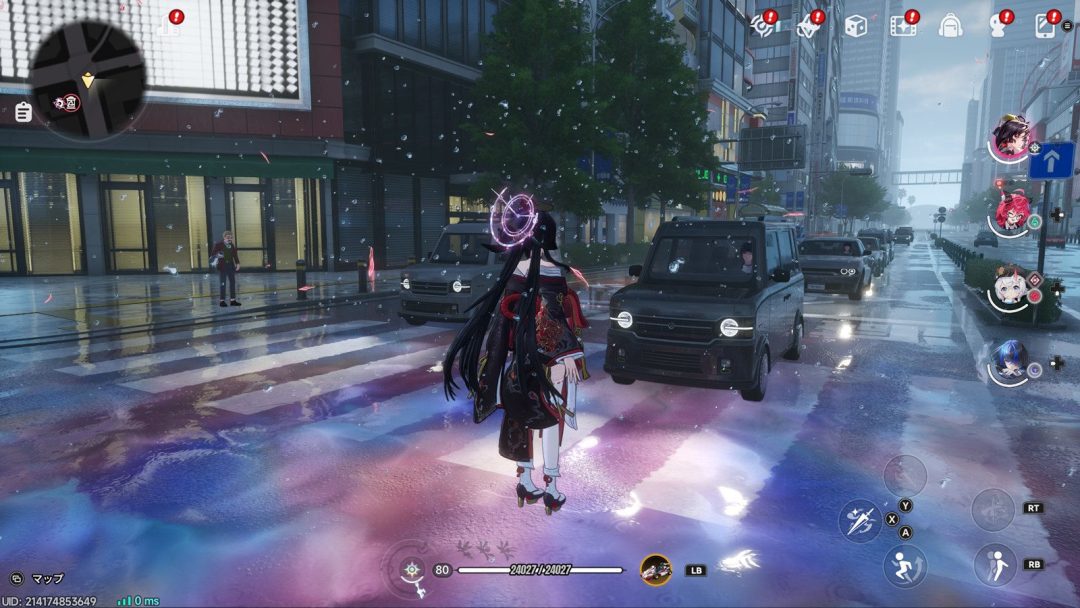
—That sounds like something only a fellow engineer would notice.
Nakamura:
Most players probably wouldn’t think twice about it, but from a developer’s perspective, the difference between what’s moving and what’s stopped is quite stark. If QA filed a bug saying, “This doesn’t stop when time freezes,” I’d probably respond, “I really don’t want to fix that” because of how much work it is (laughs).
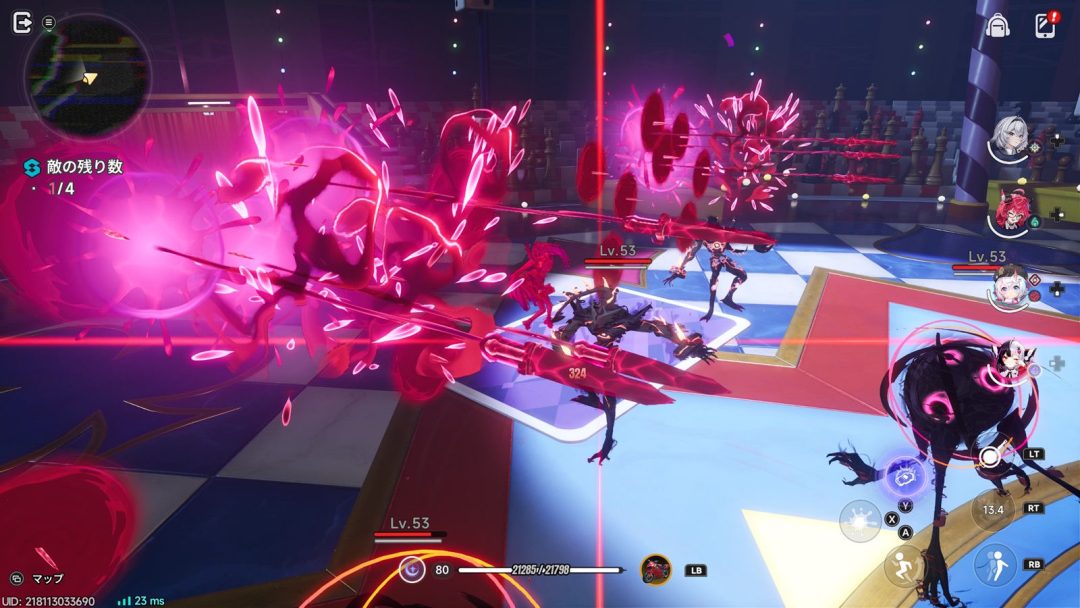
Lacrimosa’s copy ability is also an ambitious feature. It basically works like Kirby’s copy ability, which means the more enemy types you add, the more abilities you have to implement. Every new enemy requires another unique ability, so it essentially creates an endless workload.
Not only that, but each time you add another copied ability, you also have to make sure it doesn’t cause bugs or create conflict with all the prior ones. As more enemies with unique mechanics are introduced, this becomes increasingly more daunting. I certainly wouldn’t want to do that job myself (laughs). But that’s exactly why I feel like the developers are clearly prioritizing making NTE a fun game.
—The PC version also supports ray tracing and path tracing. What did you think of the game’s lighting?
Nakamura:
First of all, I’m fairly certain NTE uses Unreal Engine’s Lumen lighting system, specifically its software ray tracing. Compared to hardware ray tracing, software ray tracing runs well even without a high-end GPU, and because it’s simpler, it’s generally faster.
That said, while NTE’s PC version offers ray tracing and path tracing, those are actually separate from Lumen’s ray tracing. Lumen’s software ray tracing cannot produce accurate reflections, so I think NTE is using it only for global illumination.
To explain the difference briefly, ray tracing works by casting rays at objects visible on screen and calculating how that light reflects. Since calculating every possible ray would be extremely demanding performance-wise, calculations are limited to what is necessary only.
On the other hand, path tracing goes a step further by tracing light paths to calculate as many reflections as possible. The more reflective surfaces there are, the richer the graphics tend to appear. NTE’s rainy city streets are a great example of the kind of scenes that greatly benefit from path tracing. That said, being such a heavy feature, I think it’s mainly intended for a select group of players who want the highest level of visual fidelity.
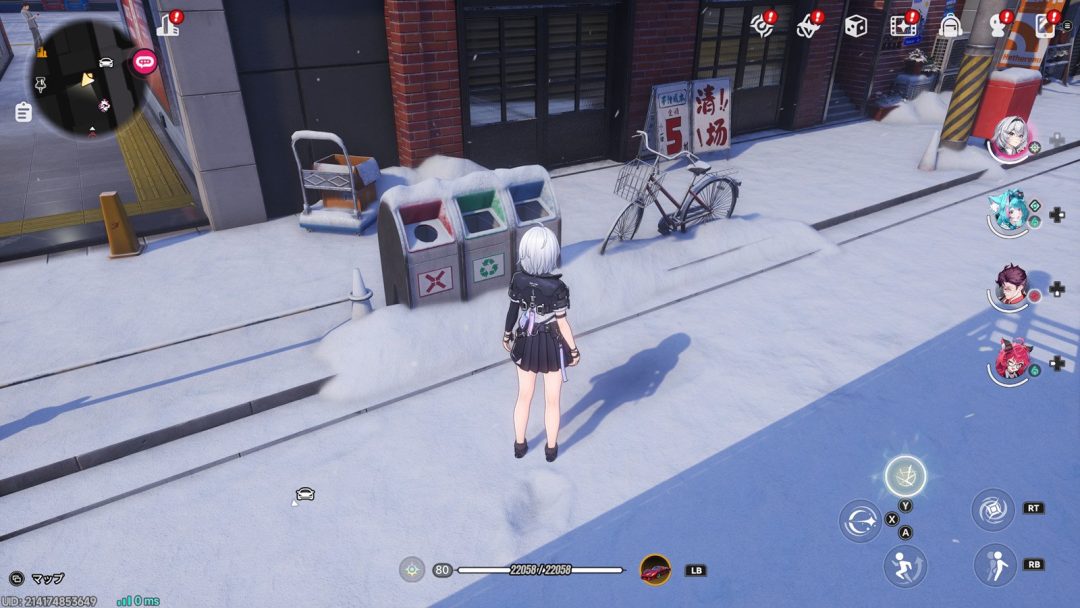
—The way snow accumulates dynamically in the game is also quite striking.
Nakamura:
That’s achieved using a technique called “render textures”, where information is embedded directly into the textures. It’s similar to how footprints are created by drawing them onto the ground where a character has walked.
For snow, you can also move polygon vertices to create actual unevenness to the surface. Since leaving those effects active forever would slow down the game, they’re likely implemented as temporary effects that gradually disappear over time in NTE, but I think it’s wonderful that the developers included this kind of feature as if it were a given.
—Was there anything in NTE’s presentation that particularly caught your attention?
Nakamura:
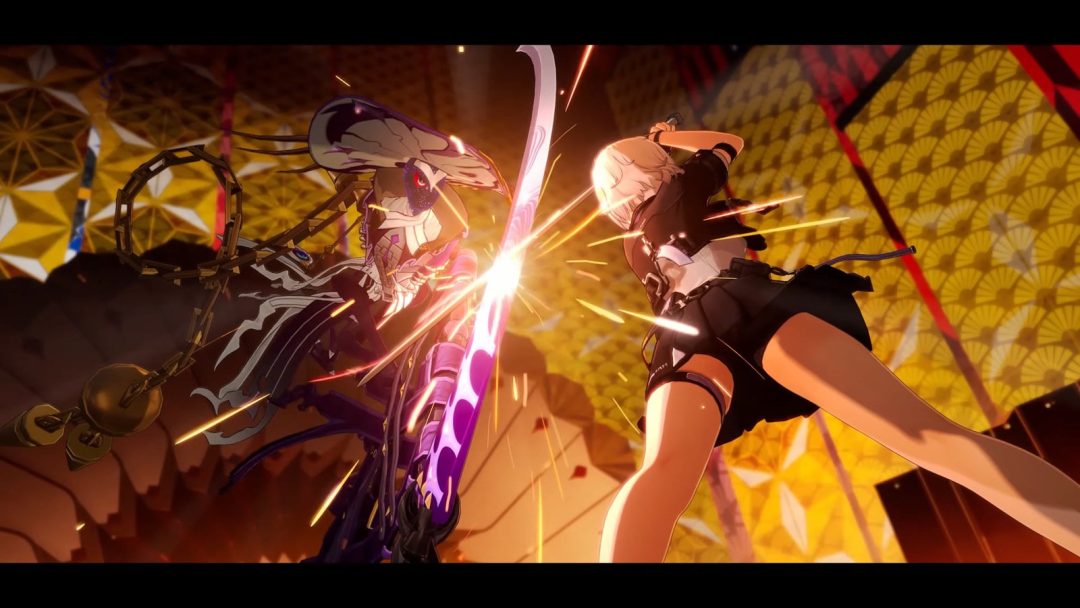
The portrayal of Anomaly Zones first of all. There are so many striking sequences, like when things shift into a horror environment, or an underwater tunnel suddenly opens into a vast wasteland as you drive through it. These are executed at a really high level.
I understand the technical side of how they’re built in Unreal Engine, but actually creating them takes an enormous amount of work. With the tunnel warp, for example, it’s clear that they’re switching the environment while the player is moving through the portal, but the transition is made almost completely seamlessly. The Anomaly Zones are packed with these kinds of unique effects, and the amount of work the developers have put into them is truly impressive.
Another point worth mentioning is the event cinematics. NTE’s cutscenes are of exceptionally high quality, but you’ll notice that characters revert to their default state once a cutscene starts. Many modern games reflect your equipped skins in real time, but NTE likely uses pre-rendered footage. However, by making that tradeoff, they’ve significantly increased the visual quality. I imagine the video team alone must have incurred substantial costs. There are so many visual effects in there that wouldn’t be feasible without pre-rendering. If they were actually rendered in real time, I’d honestly wonder, “How on earth did they make this?” (laughs)
—As a developer yourself, was there anything you encountered in NTE that you’d like to incorporate into your own work?
Nakamura:
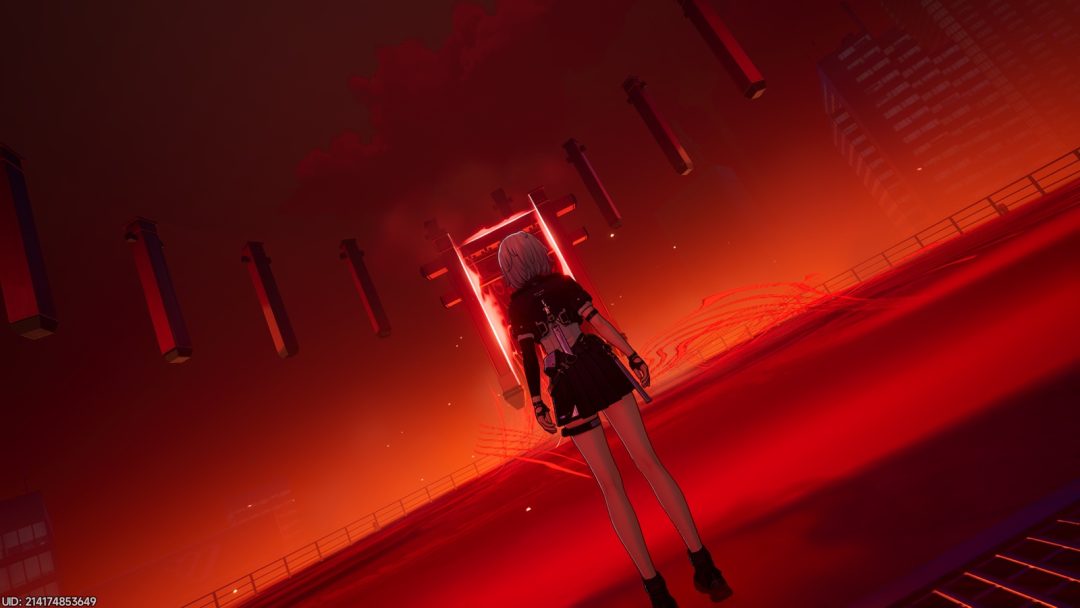
It’s full of clever ideas, so it’s hard for me to choose just one. But the transitions when entering Anomaly Zones really left an impression on me, with how the screen suddenly spins upside down, or the entire environment transforms instantly. I know how it’s done technically, but the amount of preparation involved is tremendous. They also serve as an excellent visual cue that combat is about to begin, and they create the illusion that the entire world has changed without a loading screen. It’s the kind of effect that makes me want to imitate it, but it also makes me keenly aware of how much hard work goes into the game.
—Thank you very much.
NTE: Neverness to Everness is available as a free-to-play title on PC, PS5, iOS, and Android.
Meanwhile, Indie-us Games is currently developing the Unreal Engine action game UNDEFEATED: Genesis. Those interested might want to take a look.

AUTOMATON WEST
Articles: 210Related Posts

Bro.. Lol. It’s the same as ZZZ (zenless zone zero) among others when it comes to abilities.. Nothing totally new and innovative at all.
Impressive? Nothing about the game is impressive. Maybe the combat system because of how fluid it is, but that’s it.
Everything else is basically a gacha clone with incredibly cringey dialogue. What makes it truly terrible though is the community. A bunch of deranged individuals obsessing over taking upskirts of the characters (even the young ones) and then ACTUALLY defending their actions. Just go read through the subreddit for the game. It’s atrocious. Turned me completely away from playing the game after the first week.
Plenty of better titles to invest your time in.