

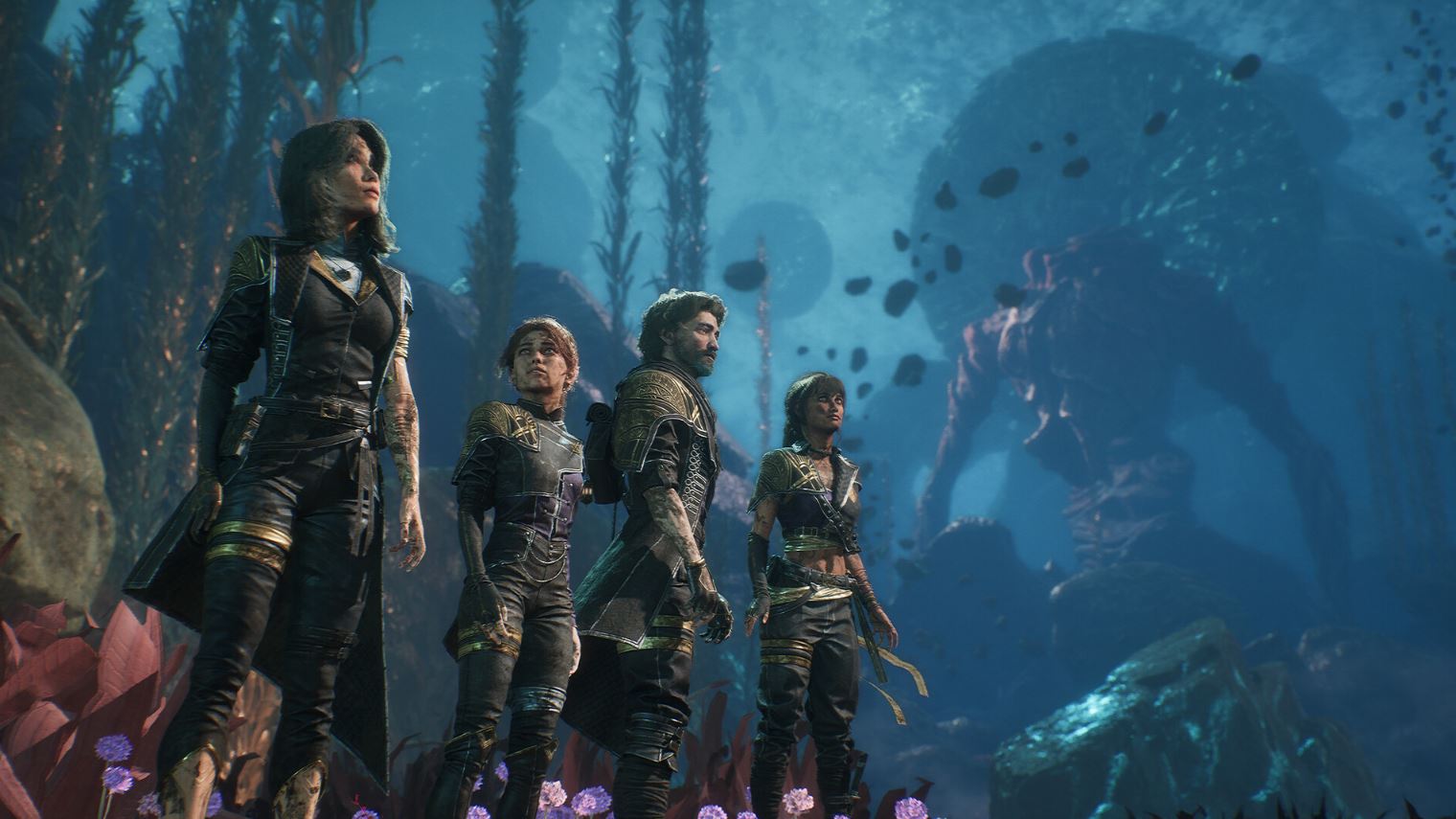
Epic Games Japan and Sandfall Interactive recently hosted a Clair Obscur: Expedition 33 postmortem event in Yokohama, Japan, offering a behind-the-scenes look at the development of 2025’s Game of the Year. After the presentation, AUTOMATON sat down with the developers to discuss their Japanese influences, their views on JRPGs, why Unreal Engine was the right choice for their small team, and why the studio has no intention of significantly increasing its headcount.
Participants are as follows:
Guillaume Broche – Sandfall Interactive CEO and Creative Director
Tom Guillermin – Sandfall Interactive Co-founder and CTO
Alan Reynaud – Lead Character and Concept Artist
Alexandre Breton – Technical Artist
For more about Sandfall Interactive’s views on physical disc production ending, check out part two of this interview.
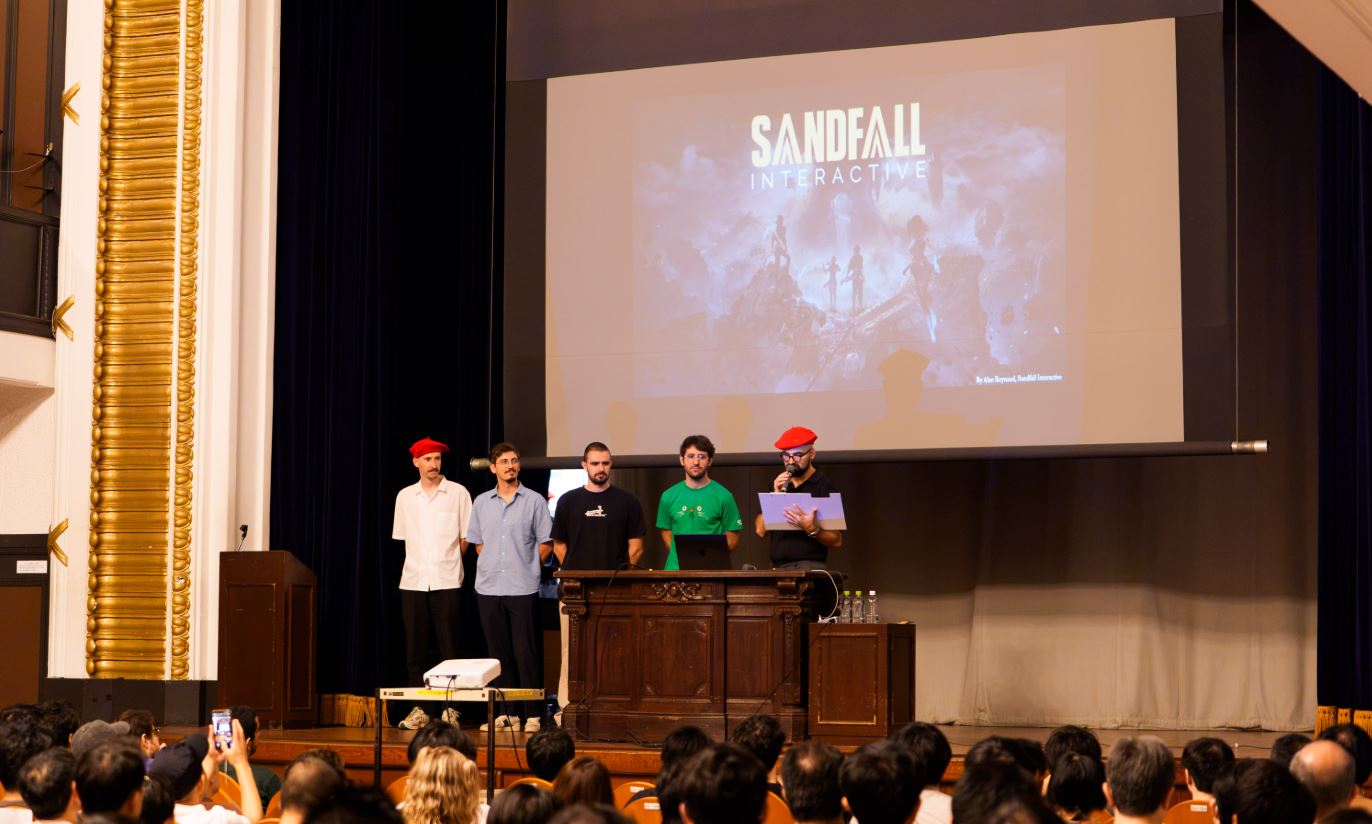
Making a game that would fill the gap left by Lost Odyssey
—Could you tell me about the influence Japanese games and anime have had on your approach to game design? What were some of the biggest Japanese influences on Expedition 33?
Guillaume Broche: Growing up, I’d say 95% of the games I was playing were Japanese games, so I’ve always been super influenced by them. My first real video game memory was Final Fantasy VIII on PS1. Before that, I’d also played some games on the Mega Drive, but they were smaller titles and I don’t remember them very well because I was too young. But to this day, JRPGs in particular continue to be one of my favorite genres.
And of course, one of the main influences in my life is the Final Fantasy series and the work of Hironobu Sakaguchi, including titles like Lost Odyssey and Blue Dragon. Other JRPGs that have influenced me include the Shin Megami Tensei and Persona series, the Atelier series, and Tales of Vesperia. I’ve said it a million times by now, but I pretty much play almost all JRPGs available at the time. Not every single one, but really a lot.
Obviously, Expedition 33’s gameplay is very much inspired by the older Final Fantasy games. It’s turn-based, and you have three characters facing three monsters, so they were definitely a massive inspiration.
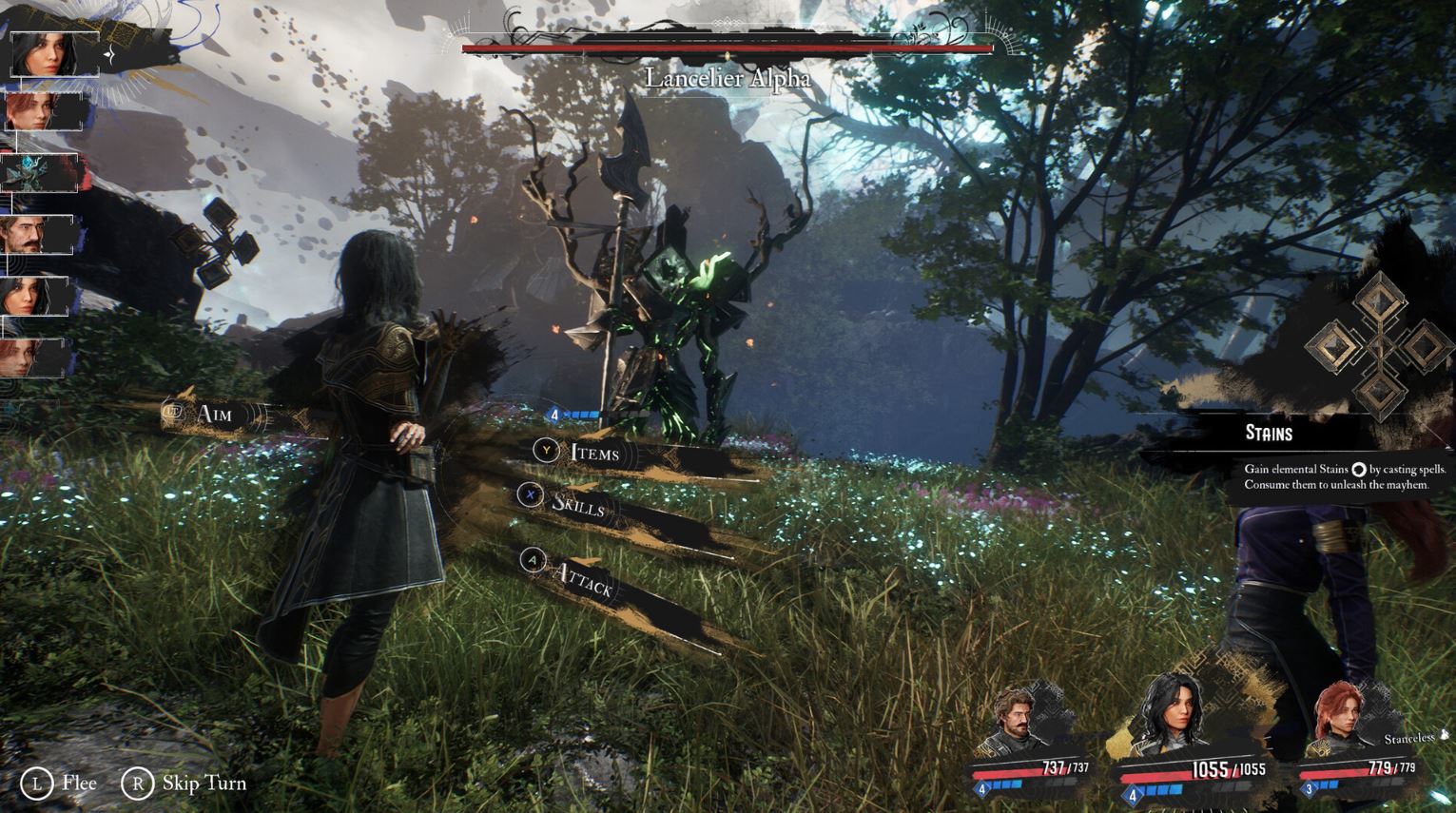
Also, as I grew up, I think I’d been missing that kind of game ever since Lost Odyssey. Lost Odyssey was, for me, the last big realistic turn-based game. You still have titles like Yakuza and Persona coming out now, but they’re more stylized. On the other hand, I felt like the grand, epic, realistic kind of turn-based games like Final Fantasy X and Last Odyssey didn’t exist anymore. Since that’s my favorite type of game personally, I just wanted to make it.
—How about anime? I believe you’ve mentioned being a big Ghibli fan, but have you drawn influence from any specific titles?
Guillaume Broche: Yes, I know that for a lot of people in the West, Disney is a big part of their childhood memories, but for me, it’s Ghibli. Especially Spirited Away. I think I’ve seen that movie 50 times, no joke. It’s a masterpiece from A to Z, and I also love other films by the studio.
Also, I think one of the anime that inspired me for Expedition 33’s story was Attack on Titan. I really like the idea of a group of heroes fighting together, and I especially love the uniform. When you see any character from Attack on Titan, you instantly know they’re an Attack on Titan character because of the uniform. That’s something I really wanted to bring over into Expedition 33, making the game recognizable just from its uniforms.
In fact, I’m rewatching Attack on Titan right now because I haven’t watched it for at least six years. I’m on season four now, almost at the end, and really, it’s an absolute masterpiece for me.
Alan Reynaud: For the characters, there were a lot of anime that had a big influence on us. One of them is Bleach. I have to mention Bleach because the character designs in the series are spectacular. One of the things we took from it was designs that are super simple yet incredibly memorable. We wanted to have something like that, with a “rule of cool” approach. I’d say that was a big inspiration for the character creation.
—In your acceptance speech after winning Game of The Year, you extended thanks to Hironobu Sakaguchi. Could you tell me more about why you decided to thank him specifically?
Guillaume Broche: Because I see him as the original man behind Final Fantasy, which very obviously inspired me. It’s the series that really made me fall in love with video games. And I’ve played literally all of them. It’s one of, or maybe the most influential series in my life. I know all the characters by heart, and I know all the music by heart. The Final Fantasy soundtracks are probably the soundtracks I’ve listened to the most in my entire life. Simply, it’s a universe I’ve been living in ever since I was little, and it’s the only one that has so strongly ingrained itself in me.
We went to Akihabara yesterday and the day before. There was a Final Fantasy Eorzea Cafe, and I was literally like a kid going, “This is so cool!” (laughs). It’s so important to me that I just thought it would be right to thank the person that allowed us to ship the game through their influence.
It’s also the message of the game – “For those who come after.” What you make today can influence what others make tomorrow. That’s why I wanted to express respect toward the one who laid the trail for us.
—What, in your opinion, are the main differences between Western RPGs and Japanese RPGs?
Guillaume Broche: I think “RPG” is a very big term. There are a lot of different games that are considered RPGs. Perhaps, when we think about Western RPGs, we think more of games like Baldur’s Gate, Fallout or Skyrim, where the character you play changes the story and you kind of become the protagonist yourself. You make choices that affect how other characters react and how the story’s ending plays out. In general, I’d say Western RPGs let you make your own story, though not all the time.
On the other hand, with Japanese RPGs, you get a protagonist, you get the characters, and the story being told is quite linear. I personally prefer this because I feel like it allows you to tell a stronger story and make more memorable characters. But there are also a lot of very good Western RPGs where you feel like you are directing the story yourself because of the choices you get to make. In JRPGs, you do get some smaller choices, but in general, the story is linear, the ending is the ending, and the beginning is the beginning, from A to Z. I feel that’s the main distinguishing factor, apart from the obvious differences in art direction, writing direction and the like. But in terms of gameplay, I think that’s the main difference.
—Where does your preference lie between turn-based versus action combat?
Guillaume Broche: I don’t have a preference, actually. I think it really depends. Sometimes I can go for either genre as long as the game is good. Sometimes I just want to play a turn-based game, and other times, I just want to play an action game. When I start a game, I almost don’t care if it’s turn-based or action, as long as the combat system is tight and the surrounding aspects like the story and characters are good.
For me, it’s like being asked if I prefer pizza or sushi. You can’t compare them. I love both. (laughs)
A Switch 2 port would be a big technical challenge
—When developing Expedition 33, what were the main benefits of using Unreal Engine, as opposed to other game engines?
Guillaume Broche: Blueprints. (laughs) For real.
For starters, Unreal Engine has all the tools you need to make a game that looks big, even if you’re not a big team. And we were very lucky with the release timing of some of Unreal’s newer tools. Unreal Engine 5 itself came at the right time in production, then Meta Human came at the right time, and so did Nanite and Lumen – everything came at the right time. So we were very lucky with that.
I’d say it empowers small teams to make things that look a lot bigger than what they could produce without it. Basically, it gives you all the tools you need to make something great. Blueprints, especially, are very important. Blueprints are like a visual scripting method that allows pretty much anybody in the team to write code thanks to how easy it is. It’s like chaining blocks together. In our studio, we have four programmers, but every game designer and every technical artist uses Blueprints to make game logic or environment logic, and that’s crucial for us to be able to ship this kind of game and this kind of quality.
Alexandre Breton: Also, this is something I mentioned in my conference, but for me, Blueprints are part of an ecosystem. It’s visual scripting, so it’s very ludic and you can learn it very easily. It’s part of an ecosystem because a lot of people are using it and sharing content, so you can also find resources like tutorials everywhere. You can also find Blueprint Packs and learn from them. People give them away for free or sell them, and it’s never too expensive. Overall, it’s a system that’s very cool to use.
—I think your fans are quite curious about a Switch 2 version. Do you think Expedition 33 would be able to run on the Switch 2? And do you have any such plans at the moment?
Guillaume Broche: We are interested in looking for a way to do it, but it’s too early for us to announce anything at this point.
Tom Guillermin: It’s a big technical challenge because we tried to do something beautiful with the game, but of course, the Switch 2 is not as powerful as the PlayStation or the Xbox Series X. So, it’s an important thing for us to consider, especially given the size of our studio.
—Do you think Unreal Engine 5 is also a challenge when trying to bring Expedition 33 to the Switch 2?
Guillaume Broche: Yes, a lot of features don’t work on Switch 2.
Alan Reynaud: They’re introducing features like Lumen Lite now, which is easier to run than the standard Lumen, but these things take time to roll out, so we’ll have to consider the updates coming from Unreal Engine to determine what to do.
Expedition 33 is what it is because of the limitations we faced. Eliminating them would be a mistake
—Your studio location is quite unique, like a big mansion. It’s quite unusual compared to Japanese offices. What’s the story behind it?
Guillaume Broche: I wouldn’t call it big, it’s not super big (laughs). But the office space we’d used before, when we had around 10 people on board, was quite… let’s say bad quality. And very, very small.
When we got money from our publisher and decided to build a team, we were looking for offices, and the Montpellier municipal government gave us the opportunity to visit what we call “The Manor” now. When we visited, we’d already made the manor in our game, and when we opened the door, we just went “It’s the same!” (laughs). That’s why we just had to take it.
Our philosophy was, if you come to the office, it shouldn’t feel like coming to an office, it should feel like entering a house where you’re just making games with friends. We wanted it to feel warm. So now, we have this manor, though it’s not like a massive manor with crazy gardens and everything. It’s quite small, but everybody’s close to each other, which makes it easier to communicate. We also have a garden now where we play Pétanque and Ping Pong regularly.
I think it’s really important for us, in order to keep this independent spirit, to have an office that’s just like a house where everybody feels welcome and good, and where everybody finds it easy to joke around.
—In terms of team size, you’ve mentioned you don’t want to expand too much going forward. How big is your team now and what is the reason you prefer to keep a tight team size?
Guillaume Broche: I think we have 26 people at the moment, if I’m not mistaken. We adapt to the period of the project, and right now, we have more than enough people for the pre-production of our next project and the things we want to accomplish. Also, I think it’s good to have limitations. When you have more money, it’s very easy to just bring in a lot of people and say “We need to make it bigger and bigger!” and “We’re going to fix every single little pain point we had in Expedition 33.” But I think that’s a big mistake because limitations are what breeds creativity. If we know we can’t do everything, we have to focus on what matters, and I think that philosophy is what made Expedition 33 what it is. It feels very focused, everything has a purpose, and everything is made for a reason. It doesn’t feel like something too big for its own good.
That’s why we want to stay small, keep a very strong creative vision, and make sure that everything we produce has a real reason to be.
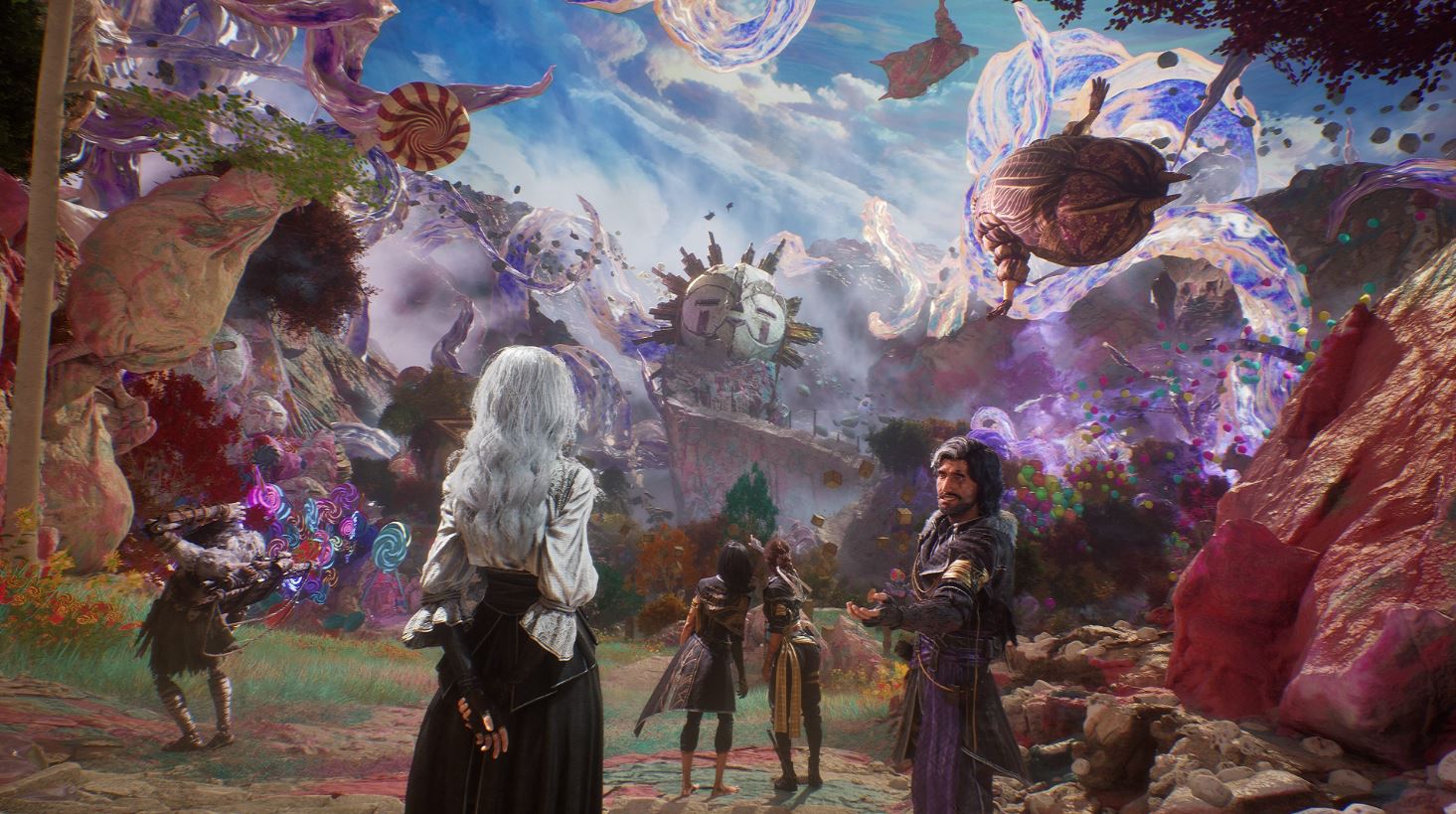
—For your next project, you’ve mentioned wanting to make something different from Expedition 33. Is there anything you can say about it?
Guillaume Broche: It’s too early to say anything precise, but we had a lot of fun creating Expedition 33, and it’s a game that we all love internally, so we want to find this flame, this passion again for the next project.
Expedition 33 was quite a long project too. Especially for me, it was six years. For Tom it was five and a half, and for most of the other members it was between four and five years. That’s also why we want to let ourselves dream again and be creative again. We’re going to go a bit crazy.
—Thank you for your time!
Clair Obscur: Expedition 33 is available for PC (Steam), PS5 and Xbox Series X|S.
Clearly its the way to go.. companies who have 15 levels of manager are insane.. games cannot be made by committee, if it wants success.. idk how long it’ll take the west to remember.. all the western legacy studios are crap now..thank goodness the East keeps us eating good.. and without activist drivel and reddit tier writing, aswell as ugly as sin woman (trans coded).. those same games which fail miserably..
Curious…People are complaining that Japan is woke now and are boycotting in advance Persona 4 remake because somehow they know it will be changed to be woke.
If you needed another reason to think the Guillame is the goat… He’s an AOT fan. Also just finished rewatching the series for a 3rd time myself.