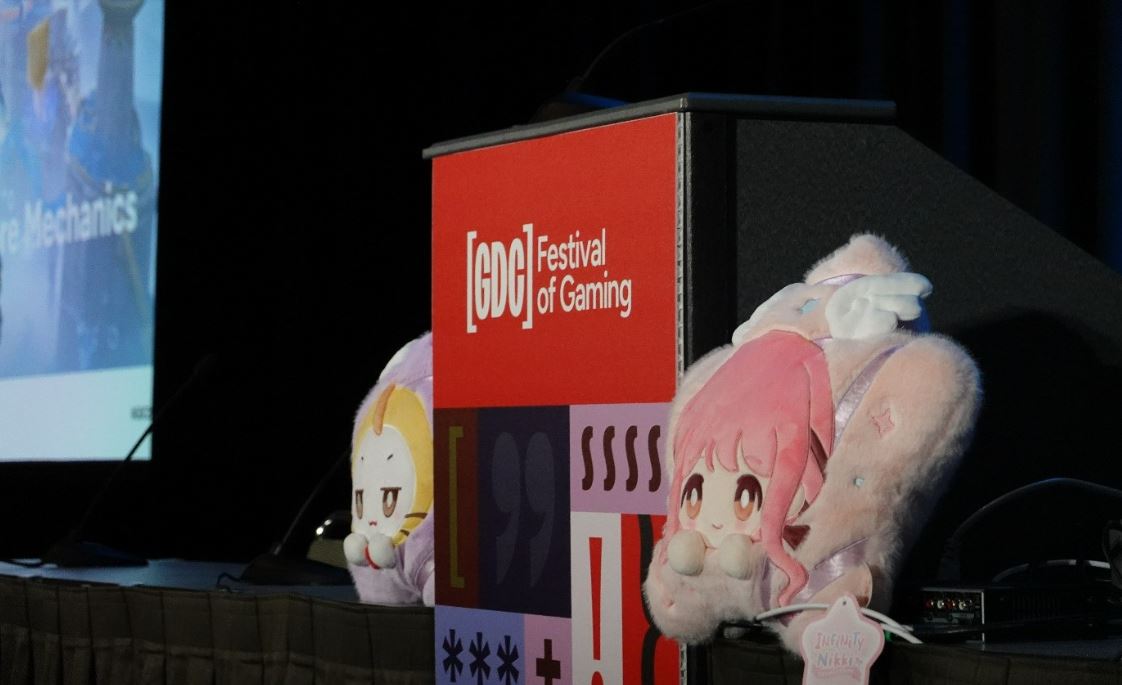
At this year’s Game Developers Conference (GDC), Infold Games held a series of talks about the development of its flagship titles. This includes hit open-world dress-up game Infinity Nikki, which launched as a free-to-play title in December 2024. During GDC, Infinity Nikki’s level designer PR, who was the lead for the game’s major version 2.0 update from November last year, talked at length about the extensive trial-and-error that went into expanding the title’s gameplay systems without compromising balance, particularly when it comes to world-bending features like Nikki’s Gigantify ability.
In this article, we bring you the full lecture by PR, courtesy of Infold Games.
Version 2.0 came with sky-high expectations and demands from players
When I was a primary school student, I started “working” for my dad. My job was to operate his game characters to level them up, and this was exactly where my life as a gamer officially began. During college, my favorite game was Minecraft. I loved building various production lines and fortifications in it, and I also loved going out to explore. It is exactly these years of gaming experience that prompted me to choose to become a game designer after graduating from college. What I am going to share with you is—the long-term design and evolution of the core mechanics of Infinity Nikki, one year after its launch.
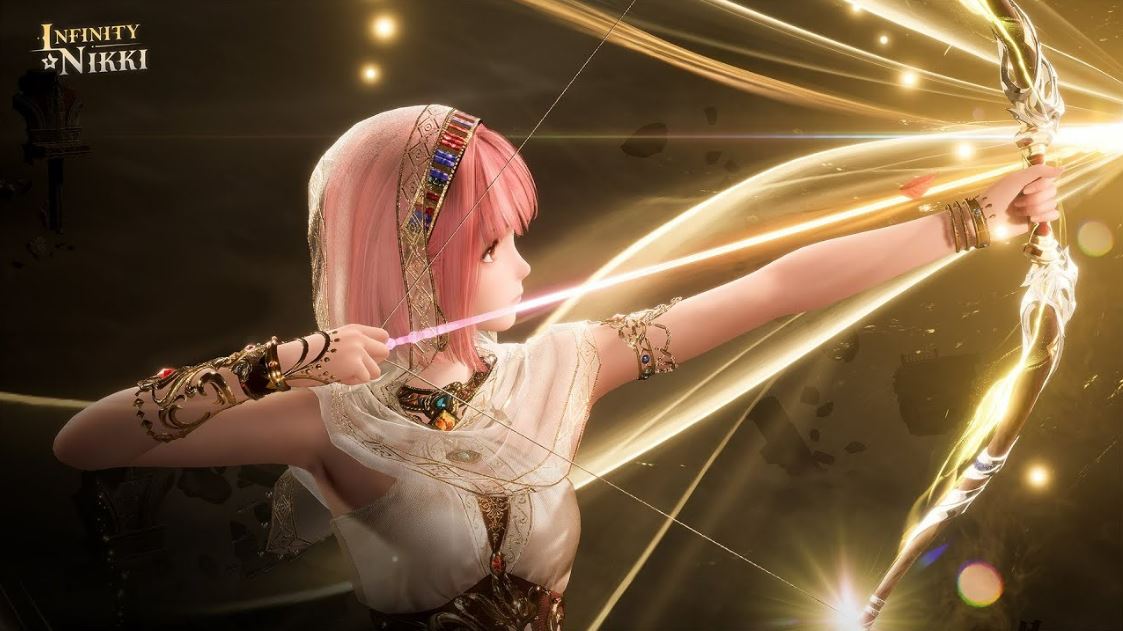
Before that, I would like to introduce the game Infinity Nikki. It is a relaxing and healing open-world dress-up adventure game featuring “Nikki” as the protagonist. The core gameplay revolves around platform jumping and dressing up. Unlike the single-player games you might be more familiar with, Infinity Nikki is a free-to-play game released simultaneously worldwide on PC, mobile, and console platforms. This information is very important (laughs), as it will be a crucial element in my upcoming sharing.
I wonder if you have ever tried the traditional Chinese dish Mapo Tofu. If not, you should give it a try; it goes perfectly with rice. A classic Mapo Tofu usually consists of tofu, garnishes (minced pork or beef) and seasonings (the core seasonings being Doubanjiang and Sichuan peppercorns). As it spread around the world, various improved flavors emerged. For example, some places replaced the seasonings with miso and sweet bean sauce, while others directly used pre-made Mapo Tofu sauce, all omitting the Sichuan peppercorn entirely. When developing version 2.0 of Infinity Nikki, I was like a chef, improving upon a classic dish of Mapo Tofu (which represents our version 1.0). We needed to create a sense of freshness to surprise our returning customers while satisfying their tastes, and simultaneously try to attract more new diners.
Version 2.0 is the first version to update the open-world regions one year after Infinity Nikki’s launch, so players had very high demands and expectations for it. The diners wanted a brand-new flavor – brand-new map abilities; a more distinctive tofu – new styles of maps; rich garnishes – more interesting map gameplay. I needed to lead my team to cook up this Mapo Tofu 2.0 within a year. At that time, we defined the map abilities as Gigantify and Sticky Claw. The map themes were Elderwood Forest and Spira. However, our garnishes, which were the gameplay mechanics within the maps, had not been fully confirmed at that time. Due to time constraints, I will focus on sharing the “seasonings”, which is the map abilities part of Infinity Nikki, and detail the adjustments and improvements we made to each.
The most important is a common issue—ability growth and goal establishment. The core ability in 1.0 was “Float,” along with regional abilities “Glide” and “Shrink.” To lower the barrier to entry for players, we gave them the fully realized abilities the moment they acquired them. The benefit of this is that the abilities are relatively easy to pick up, and players can have a good experience right from the start. But the ensuing problem was: throughout the entire game progression, players had no pursuit of developing these abilities. Therefore, we couldn’t establish a positive experience loop of: Exploring the map, establishing goals, improving abilities, exploring better. Humans are goal-driven creatures. Just like a mouse in a maze is always chasing cheese, players also need us to constantly throw out various short-term goals during their gameplay.
Compared to version 1.0, we made a rather bold attempt for Infinity Nikki in 2.0. First, just like in version 1.0, we designed the fully realized abilities right from the start. After that, we broke down the fully realized abilities into several modules from an experiential dimension, and then differentiated some experiences from these modules. Thus, we derived the initial abilities and player progression goals. Players need to explore the map and collect Whimstars to upgrade their abilities in order to achieve a better exploration experience. I will explain exactly how we did this in detail later.
Going back to the Mapo Tofu, what do you think makes a good seasoning when it comes to cooking? Generally speaking, it needs to satisfy two points. First, catering to the diners’ tastes. Different diners have different requirements for flavor. I come from Sichuan, China, the hometown of giant pandas, so I absolutely love the spicy and numbing “mala” flavor; As far as I know, friends from some regions prefer milder tastes; while those from other places might prefer sweetness. Everyone’s tastes are incredibly complex. Similarly, different players have drastically different demands for their gaming experience. Second, the seasoning itself must be of excellent quality. If the seasoning is not fresh and authentic enough, even if cooked according to the most perfect recipe, the final taste will not meet expectations. With this in mind, what we needed to do became very clear.
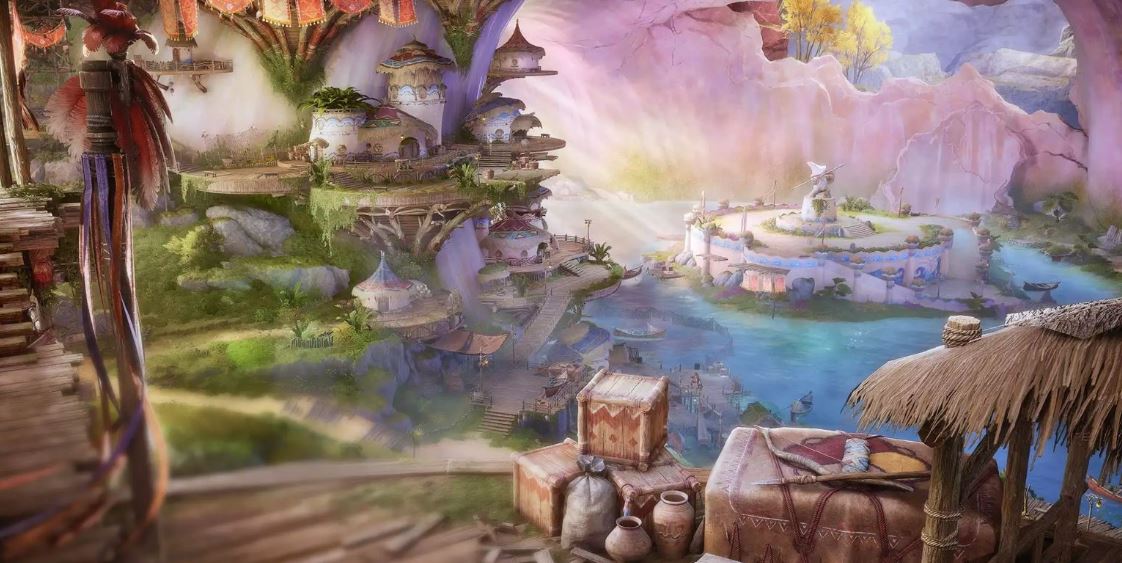
First, we had to cater to the tastes of our largest customer base. After the launch of version 1.0, we received a massive amount of player feedback and actual game data, which helped us greatly in judging what kind of experience current Infinity Nikki players want. Second, we needed to ensure the seasoning itself was top-notch, meaning we had to guarantee the fundamental experience of the abilities was excellent. Tofu can have various flavors; it can be Mapo Tofu, or made into cold tossed tofu, braised tofu, red-cooked tofu, or even sweet tofu. Different customers have different preferences. Abilities can also offer different experiences. We found that the majority of players prefer a simple and exhilarating gameplay experience. This is determined by the game positioning of Infinity Nikki. We are a free-to-play game released across all platforms. Many players play the game on their mobile phones during fragmented time. In this context, overly complex, slow-paced operations that are unsuited for mobile devices will degrade the experience. Starting from “simple and exhilarating,” we first established our design anchors. The ultimate experience of Gigantify is “to allow players to run freely in a massive primeval forest, fearless of any dangers and obstacles.” The ultimate experience of Sticky Claw is “to let players nimbly weave through the multi-layered Snail Town like Spider-Man.” With clear experiential goals, the next step was to select suitable, high-quality seasonings.
Implementing Gigantify was a disaster at first
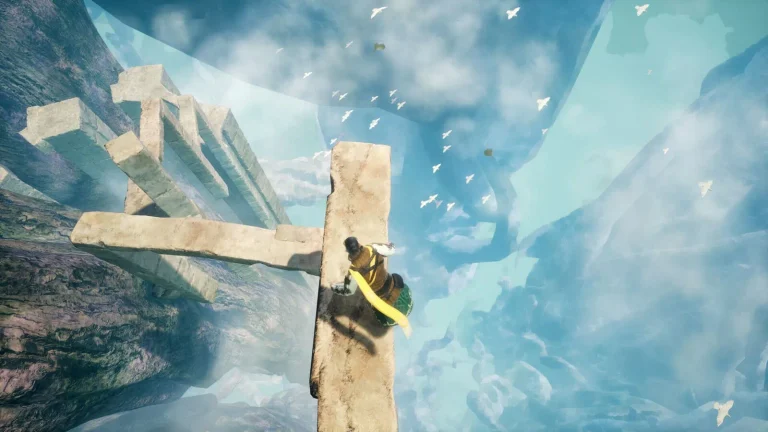
Let’s introduce Gigantify first. As the name suggests, upon activating the ability, Nikki becomes three times her normal size, gains faster movement speed, and acquires a roaring ability. At that time, this ability had three very prominent issues, which I will explain one by one below. The first issue was weak visual representation. In a 3D platformer game, the position of the main camera affects the player’s judgment of spatial positioning. When we are in a 2D space, no matter how we pull the camera, it won’t affect our judgment of spatial distance, but in a 3D space, it’s different. When we zoom the camera in and out, our perception of object positions changes due to perspective.
During the initial design, our designers wanted to reduce the learning curve for players in this regard, insisting on keeping the final camera effects consistent between normal and Giant Nikki.
The second issue arose with the control feel. When we were thinking about how to strengthen the feeling of “Gigantify,” the initially considered plan was to “create a clumsy feeling similar to an elephant or a bear after enlarging.” Doing this indeed made Giant Nikki look very lively, but this only worked smoothly in a completely flat white-box level. What happened when Nikki entered the rugged, obstacle-filled open world? A disaster struck. As you can see, the open world is covered with various obstacles. Being a platformer game, players naturally want to overcome these obstacles by jumping, but Giant Nikki’s heavy jumping animation turned this into a torment.
The third point is the implementation issue of gameplay derived from the ability. In the initial design, the Gigantify gameplay mainly revolved around two experiences: “wading through water” and “roaring to stun giant beasts.” Let’s talk about wading first. In the original concept, normal Nikki is 1.6 meters tall, and Giant Nikki is 6 meters tall. This allowed her to cross waters less than 4 meters deep (normal Nikki’s wading depth is 1 meter). So we could create lots of gameplay scenarios requiring players to Gigantify to cross waters. This sounded very promising! However, when we truly started building the open world, a problem emerged—Infinity Nikki is a game with a realistic art style. When compared to Minecraft for example, I believe it’s easy for everyone to notice that under a normal game camera perspective, in an environment like Infinity Nikki, it’s almost impossible for us to distinguish the depth of the water. This leads to two kinds of player decisions. First, they will default to assuming all waters are dangerous and avoid them completely. Second, they will walk into the water without clues and accidentally drown. Regardless of which decision the player makes, it is not what we want.
Having finished with the water issue, let’s talk about the giant beasts. The second major core gameplay of Gigantify is: Gigantify, roar to stun giant beasts, and use them as stepping platforms to reach high places and obtain rewards. In the original design, this part of the gameplay was meant to fill the vast land areas in the map above. The gameplay roughly revolved around “Shrink and stealth, then Gigantify and roar to attract the beast, shrink and stealth again, approach the beast, Gigantify and roar to stun it, and finally use the beast as a platform to reach high places for rewards.” But in subsequent development and testing, we found that the “low margin of error” and “overwhelming sense of oppression and crisis-ridden experience” brought by this gameplay ran completely counter to the relaxing and healing vibe our diners (players) were seeking. —We sprinkled too much Sichuan pepper powder! The diners didn’t like overly spicy Mapo Tofu; they wanted a little more sweetness and a little less numbness.
To address the three major issues of Gigantify, we quickly made the following adjustments: First, adjusting the screen-to-body ratio. Because during actual gameplay in the open world, we do not strictly validate players’ operating skills; it can even be said to be quite lenient. Therefore, keeping the camera effects consistent with normal Nikki became less important, and we decisively abandoned it. Second, removing the sluggishness in turning and jumping, and abandoning the pursuit of absolute realism. A realistic first impression might indeed amaze players, but considering we want Gigantify to be an ability players use for a long time, relaxed controls are far more appropriate. We gave Giant Nikki the same jumping feel as normal Nikki, along with stronger obstacle-crossing abilities. Finally, resolving the application environment of the ability. Starting with the issue of the small water area, this matter relates to our main dish: the map. We cannot make a piece of tofu possess the traits of being “structurally stable, highly absorbent of flavor, and silky smooth” all at the same time. We also currently cannot make the map design simultaneously satisfy the three points of “aesthetic pursuit, world consistency, and platforming functionality.” During the production of the 1.0 version open world, the design team and the art team frequently discussed this impossible triangle. When creating the 2.0 version open world, we had to face this problem again and try to find a solution. The art team couldn’t suddenly turn the entire Elderwood Forest into a water area, nor could they create water bodies with sharp, rigid edges. When the impossible triangle cannot be satisfied, we must make some trade-offs. Regarding the trade-offs of ingredient characteristics, the key lies in grasping the cooking secret of this dish. For Mapo Tofu, the cooking secret is “seasoning”—letting the sauce fully coat and infuse into the tofu, combining with its silky texture to bring joy to the taste buds. Therefore, the tofu we ultimately selected for Mapo Tofu always centered around being “highly absorbent of flavor.”
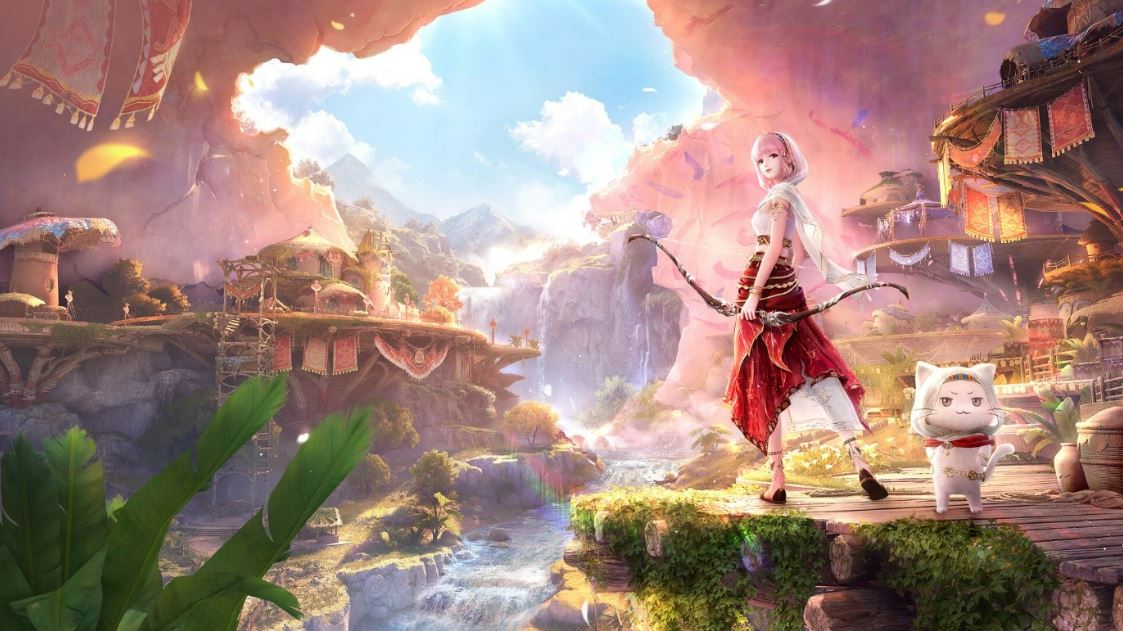
So, what is the most important thing for Infinity Nikki? Is it constant challenge and growth? I don’t think it’s entirely that; after all, we are a game with a relaxing and healing tone. Is it beautiful scenery? I don’t think that’s quite it either. We are a “game,” and one of the players’ expectations for us must surely be that it is “fun to play,” rather than just a travel simulator. As the head chef, for version 2.0 of Infinity Nikki, I believe its cooking secret is “immersion.” Immersion means that we need to create a world that players can believe in and lose themselves in. To achieve such a goal, we need this world to satisfy three points: Believable, meaning it must be realistic enough and its lore self-consistent; Comfortable, it should have harmonious visuals and a fluid traversal experience; Attractive, the map needs to have enough fantasy elements and rich gameplay so players feel a strong desire to explore it.
Alright, back to our problem itself. To solve this problem, we needed to handle two things: One, players have difficulty distinguishing river depths. Under the premise of not breaking immersion, which means maintaining a certain degree of realism, we decided to not require players to distinguish river depths. We set all rivers to be under 4 meters deep, guaranteeing that Giant Nikki can definitively pass through. Two, the water area was too small. Obviously, it was too late to change the entire forest into a water map, but modifying a certain local area into a water zone was still worth trying. So, we started thinking about where to begin. At the same time, we were also facing the issue of map landscapes being too similar. Therefore, we selected the area of the Mothershroom Woods to create a fantastical low-gravity zone. Normal-sized Nikki, as well as relatively light objects and local Shroomlings, will all be affected by mysterious forces within the area. They will be encapsulated by bubbles and constantly float upwards, preventing free movement. However, when Nikki Gigantifies, her weight increases, allowing her to land steadily and walk across the map. Finally, we adjusted the giant beast gameplay from “Nikki needs to constantly dodge the giant beasts” to “Nikki can make the giant beasts friendly using her cleaning ability,” making this gameplay simpler and more in line with the vibe of our game. Furthermore, we added more interactive gameplay elements for Giant Nikki.
After the above work, we achieved a fully realized Gigantify ability with a good experience. Next, we could proceed with our module breakdown work! We broke down Gigantify into four dimensions: “duration,” “movement speed,” “destructive power,” and “flexibility.” By differentiating experiences from these, we obtained several progression goals: The Gigantified state requires consuming energy, and the energy recovery speed can be upgraded. Slightly reduce the movement speed after enlarging, but add a dash state that can provide a faster speed. Make it so Gigantify cannot break rocks initially, requiring progression to strengthen this ability. When players use roaring to engage with giant beasts, a shorter skill aftercast animation can provide higher flexibility.
Sticky Claw caused a several month clash between the level designers and environment artists
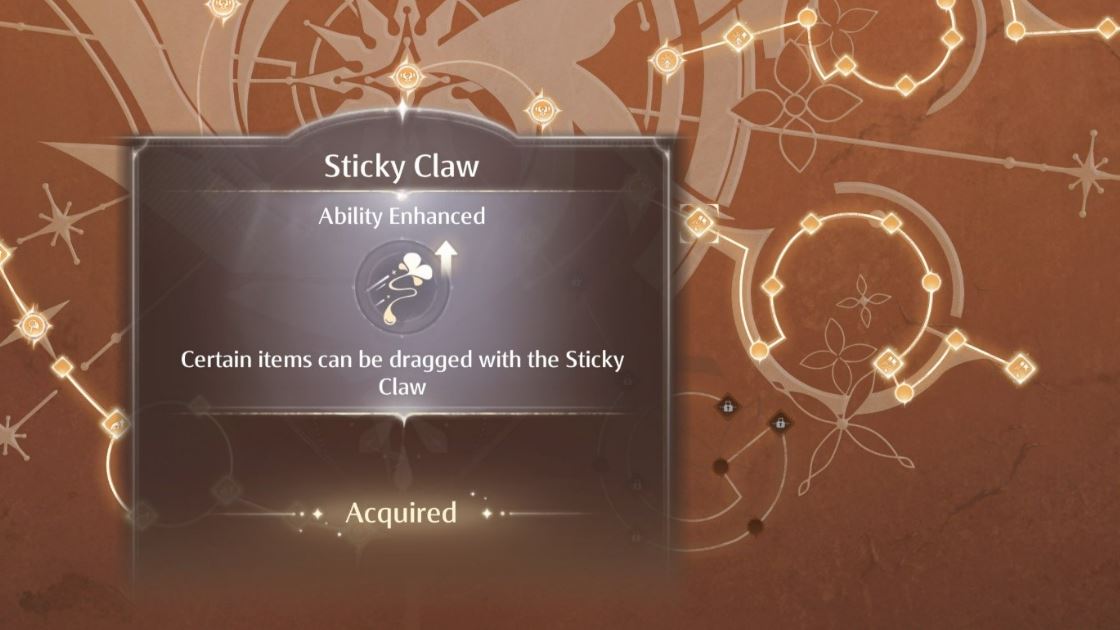
Having finished discussing the Gigantify issues, let’s talk about the Sticky Claw. Nikki can shoot the Sticky Claw at objects made of the yellow material “Sticky Amber.” This anchor point will pull Nikki towards it, much like Spider-Man. As a relatively common type of ability, its problems were simpler, mainly focusing on two points. The first issue stemmed from mobile controls. In a primitive version of the Sticky Claw, the player needed to activate the crosshair, aim at the Sticky Amber in the scene and shoot the Sticky Claw. The fun of the gameplay lay in aiming and finding the right timing to shoot. This experience was fine on a PC, but when it came to mobile, if you’ve ever played shooter games on a mobile device, you can probably imagine how disastrous it was.
The second issue arose from scene production. Based on the aforementioned aim-and-shoot gameplay, the scene required a large number of “easily identifiable” Sticky Amber targets—the solution at the time was to paint Sticky Amber on the edges of the platforms in the red box below, supplemented by some simple interactive objects, such as the Sticky Amber box directly above. The Level Designers wanted these “targets” to be as numerous and conspicuous as possible, but the Environment Artists had their own aesthetic pursuits. They wouldn’t allow these strange things to appear in massive quantities in the world of Infinity Nikki. Thus, both sides engaged in a tug-of-war that lasted for months.
Finally, we reached a Sticky Amber density that both sides could barely accept, but with such a “target” density, one could easily imagine that the player’s gaming experience wouldn’t be very good. This part was relatively simple to fix as well. The specific adjustment was that we removed the aim-and-shoot mechanic and changed the Sticky Claw to a point-to-point interaction. Namely, when there is a graspable Sticky Amber nearby, an interactive UI will appear on it. Simply using the Sticky Claw ability while facing the UI will trigger the launch. Such a modification allowed players to directly skip the middle two steps of operation, significantly improving convenience. In addition, to provide a better traversal experience, we added a massive number of mid-air Sticky Claw points in the scene, allowing players to weave through Snail Town to their hearts’ content. The Sticky Claw is a purer ability, so its progression dimensions are somewhat fewer. So we outlined three modules: “Launch Distance,” “Strength,” and “Flexibility.” Afterwards, similar to Gigantify, we differentiated some experiences and finally derived a batch of progression goals.
Version 2.0 officially launched at the end of November 2025. All of these adjusted contents received relatively good player feedback. It seems we did a pretty good job with this improved Mapo Tofu. That concludes my sharing regarding ability evolution.
Next is just a little bit of my personal reflection on the work itself. In my view, identifying problems and finding solutions to them isn’t actually that difficult. In game development, what’s more difficult is making brave decisions under unknown circumstances and firmly pushing them forward. The smooth implementation of all the adjustments mentioned above would be impossible without the hard work of all the members of the version 2.0 development team. I officially became the lead for version 2.0 in November 2024. Counting from when I started, its actual development time was about one year. The limited time and the uncertainty brought by the unknown made every decision we made during the development process thrilling and nerve-wracking. Therefore, I want to specially thank all the members of our 2.0 R&D team for their trust and effort.
Infinity Nikki is available as a free-to-play title for PC (Steam/Epic Games Store), PS5, iOS and Android.