

In its recent shareholder briefings, Capcom has said that it will not be using AI-generated assets in its games, but that it does plan to use the technology to boost its efficiency and productivity in game development. While these statements have been quite general, Capcom’s engineers recently shared some more details on their policy regarding generative AI, as well as the nature of the company’s collaboration with Google Cloud and agentic AI adoption.
Talking to 4Gamer, Capcom’s game development platform and AI solutions VP Shinichi Inoue says the company does not plan to use AI for the creation of graphical and other game assets. “What we in the entertainment industry consider extremely important in contrast to artificial intelligence is human sensibility. Even top-tier AI still cannot match our creators when it comes to sensibility. That’s the current reality. Because of that, concentrating human effort on work requiring this kind of sensibility is more efficient from the standpoint of human capital management, and it’s also important for coexistence with creators,” he explains.
Interestingly, this seems to somewhat contradict Capcom’s experimental AI initiatives from 2025, when the company announced it was working with Google Cloud to figure out a way to streamline the process of brainstorming and conceptualizing the tens of thousands of objects needed for an AAA game (an example used at the time was that of coming up with a fictional TV design for a game’s environment). While this workflow was intended for the proposal stage and not final asset production, it seems to clash with Capcom’s current stance on not using AI for the creation of in-game assets, suggesting the company might have changed its views somewhere along the way.
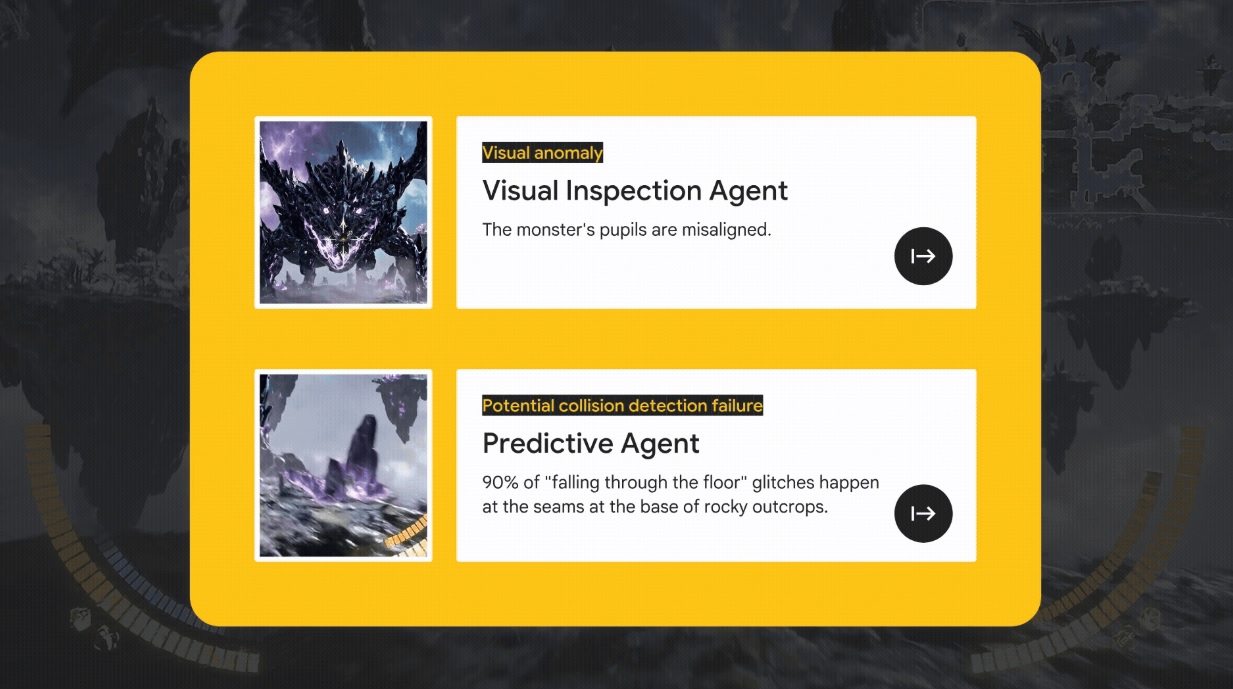
What is Capcom using AI for, then? According to Inoue, streamlining testing and communication-related tasks is the most urgent challenge AAA development faces, because this “routine work” increases exponentially as games grow in scale. That’s why his team is working on a playtesting system that leverages Gemini alongside several AI agents trained in-house.
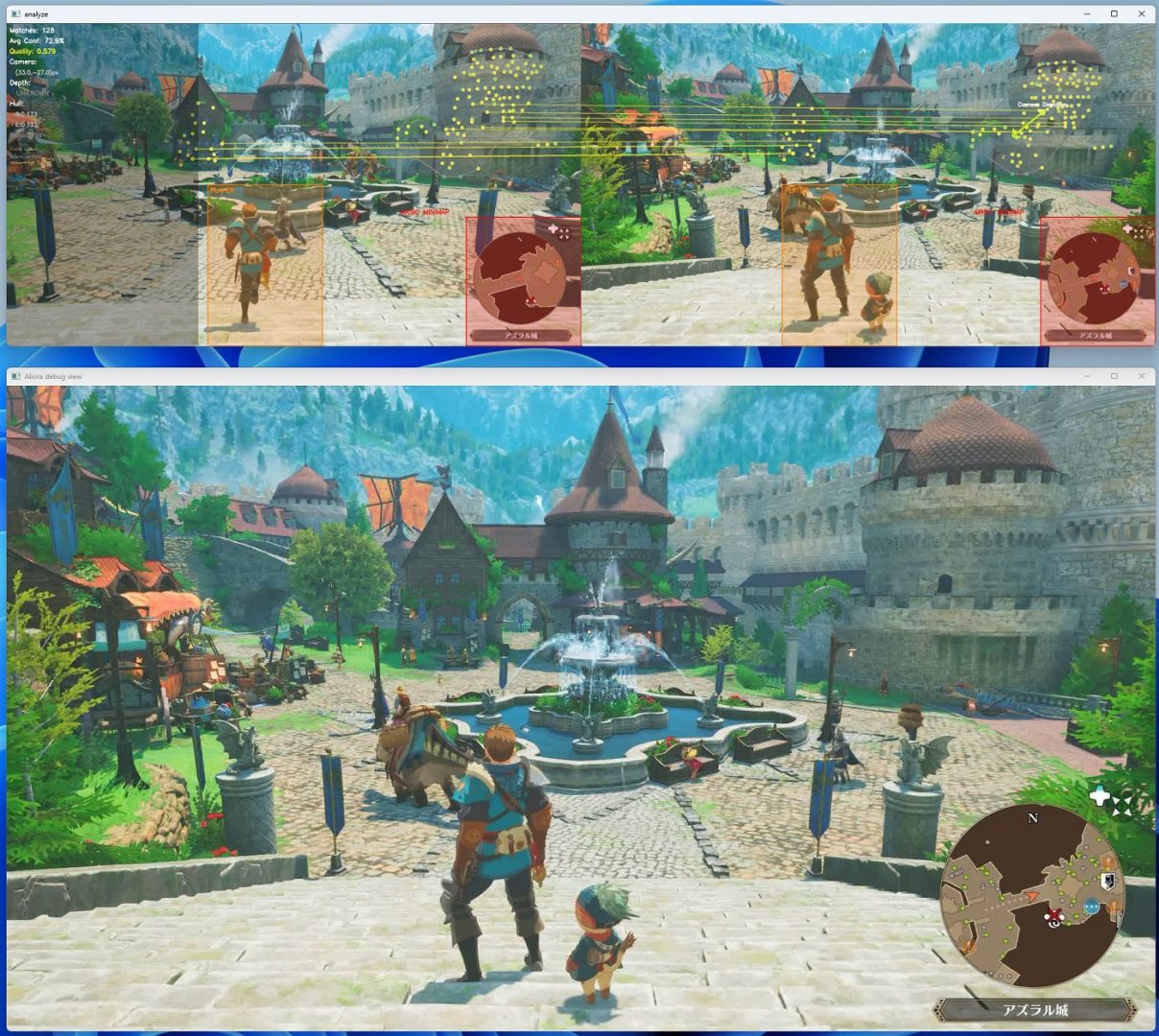
“The AI reports its findings to debugging check agents, but rather than leaving everything to humans, another agent first evaluates the reports against the game director’s concept. A huge volume of this checking and evaluation work is carried out while humans are asleep. After that, the system screens for issues that are highly likely to be ‘incorrect when compared to the game’s intended concept’ and presents them. Because the AI performs these checks in advance, humans no longer need to carry out enormous amounts of manual verification work themselves,” Inoue tells 4Gamer.
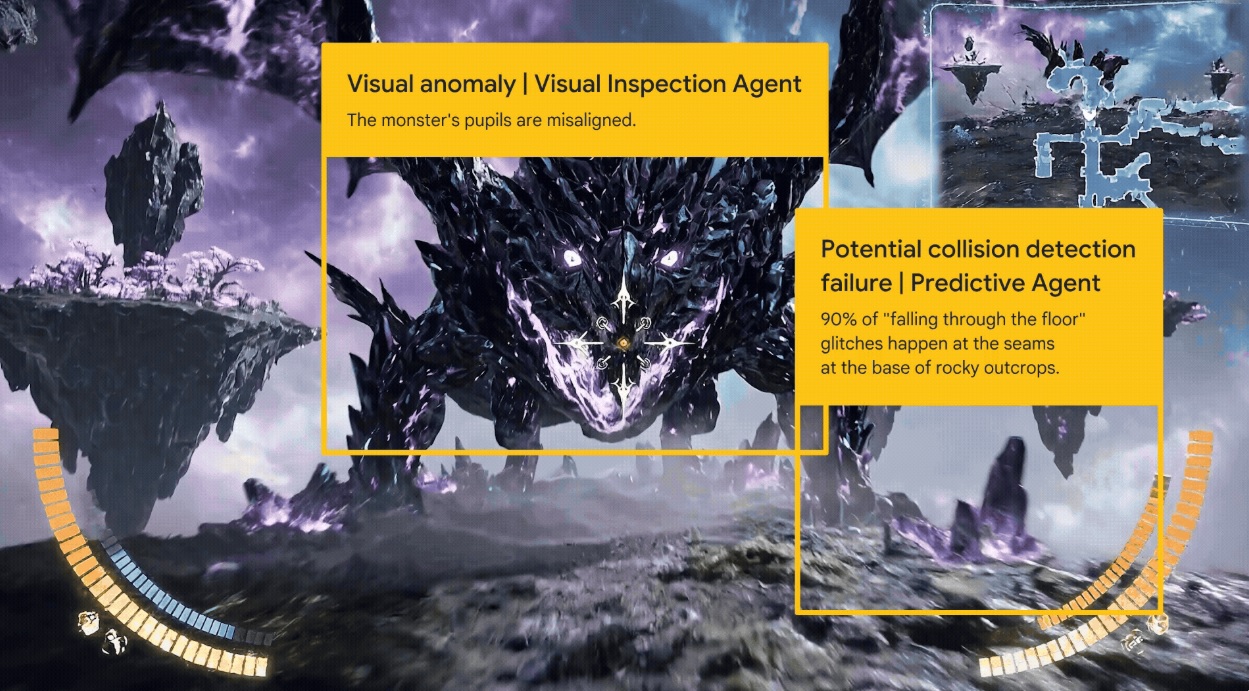
According to a press release by Google Cloud from April, Capcom’s playtesting system handles about 30,000 hours of testing work per month, freeing up developers’ hands significantly. The AI agents use Gemini Vision to “look” at the game screen and discover technical failures, while distinguishing actual errors from intentional design choices based on data they’re trained on. Additionally, the AI analyzes past data to predict where the game system is likely to “break” next and prioritizes testing high-risk areas instead of testing randomly.




The entire industry is adopting this talking point besides Level 5 who just came out with it. Everyone else is pretending their AI use is minimal to avoid backlash being severe. Japan can’t outright fire employees like the West, but they can setup programs to get the to quit when the time comes.
Capcom and Bamco are developing their own AI generation themselves if right, so their ambition is going beyond most. One can hope their reason is what was said, yet they are a corporation that has it’s question positioning and actions brushed aside because of recent games.
I can see smaller studios trusting in their teams easier, it’s just my intuition talking considering Capcom has near exhausted their big remakes and have to dig further to avoid having to take risks altogether again with new IP. Remaking the first DMC is the last gasp before considering how the can rework MegaMan, who is always their side option.
I’m realizing new developers are not as skilled as prior generation and have experience with limitations, and a bit of irony given Capcom is going to use NVidias crap AI feature. No idea if the walked back. I get it if so, yet it’s the obvious lie of routine tasks only as if you don’t start cutting back more and debs forget how to do them. The AI will remember, so it’s no different than blaming economy later when time to get voluntary dismissals.
Yeah, no, anyone who’s actually working with AI tools for their actual jobs understands the “promise” of AI is mostly hype. These models are not capable of producing anything without constant human monitoring and intervention, except for straight slop. If Capcom has grander ambitions for AI than what they’ve stated, my guess is it will fail. After all, whether LLMs are actually AI is debatable. These models are a tool for humans to use, not a replacement for them.
Exactly right. But then people can’t witch hunt and act like they don’t have a variant of AI psychosis.
Even companies supposedly replacing employees with AI agents, ultimately hire people in countries like India to man those AI agents. All AI in those cases is, is a smokescreen to deprive front line employees in their own countries for cheaper employees in other countries, and it works, because of people like our AI psychotic friend you replied to.
Human sensibility = good taste
They’re doing what most places are doing in tech, that don’t have deluded CEOs and Boards. This is a non-issue. It’s what AI is best at (and still isn’t that good, as it can delete random things and, if helping code, can suddenly insert code that’s outdated, so it just helps reduce time, it isn’t a perfect replacement).