
Even from a developer’s perspective, Wuthering Waves’ use of Unreal Engine is borderline perverse. A UE4 game decked out in custom technology
We talk to a Japanese developer about what makes Wuthering Waves' graphics and performance impressive from a technical standpoint.


Whether it be the elaborate character models or the scenic environments, it doesn’t take an expert to tell that Kuro Games’ Wuthering Waves is a beautiful looking game. But the average player probably doesn’t know what makes its level of quality so impressive in a technical sense.
With that in mind, AUTOMATON Japan spoke to Masahiko Nakamura, head of Indie-us Games and a technical artist well-versed in Unreal Engine, to break down the strengths of Wuthering Waves. From the perspective of a game developer, we explore what makes the live-service RPG so remarkable, and the mechanisms behind it. This article focuses specifically on how Unreal Engine, the game engine Wuthering Waves is built in, is actually put to use in the game.
Incidentally, Indie-us Games is currently developing a new action title, UNDEFEATED: Genesis, in Unreal Engine. Those interested may want to check it out.
What it means to build a mobile-compatible game with Unreal Engine
—Since you lead a studio specializing in Unreal Engine (hereafter UE), I’d like to take a look at Wuthering Waves’ technology from your perspective. To get us started, please introduce yourself.
Masahiko Nakamura (hereafter Nakamura):
I’m Masahiko Nakamura, head of Indie-us Games. Thanks for having me. I wasn’t involved in the development of Wuthering Waves, so what I’ll be sharing here is speculation about how the developers may have pulled off certain things, based on my experience with UE. So please take it with a grain of salt (laughs).
—Understood! You come from a technical artist’s background, so I take it you have a grasp of both graphics and systems?
Nakamura:
Yes. I’m a technical artist, and I handle a wide range of areas, including core game systems.
—I notice you often post on social media about the high quality of Chinese-developed games. What’s your impression of Wuthering Waves in that respect?
Nakamura:
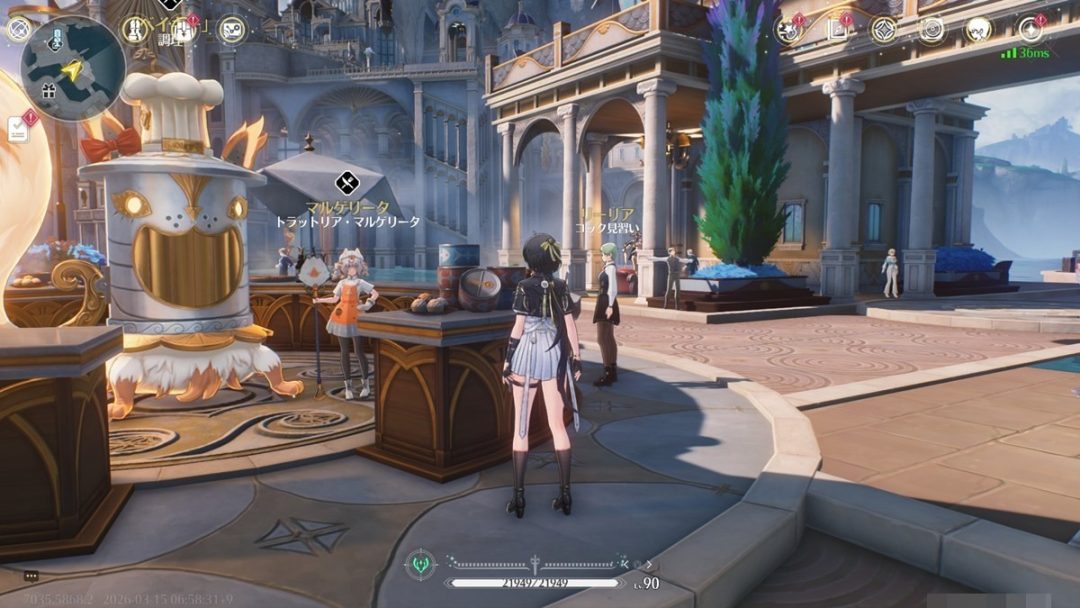
Speaking personally, I see it as a frontrunner among anime-style games built in UE, both as a mobile game and as a PC game. It uses a number of very high-end graphical techniques and is cutting edge while still maintaining compatibility as a mobile title, which is amazing.
—What makes developing mobile-compatible games in UE challenging? I notice there’s a common perception that Unity is better suited for mobile.
Nakamura:
Fundamentally, it’s not really true that Unity is inherently superior to UE for mobile development. Whether it’s graphics or in-game mechanics, Unity doesn’t necessarily have an advantage.
So why then, is Unity more commonly used and generally seen as a stronger engine for mobile? Historically, many Unity titles have targeted mobile platforms, and as a result, a community of developers focusing on mobile development grew around it. There’s now a huge amount of information, support resources, and third-party frameworks and libraries available for mobile development in Unity. Given these circumstances, it’s only natural that Unity has emerged as the popular choice when making mobile games.
UE also has strong technical advantages, but it does lag behind in terms of available information and supporting libraries. That relative lack of resources likely contributes to the perception that UE isn’t quite as suited for mobile development.
Rich visuals created by bringing UE5 tech into UE4
—What’s your impression of Wuthering Waves’ graphics?
Nakamura:
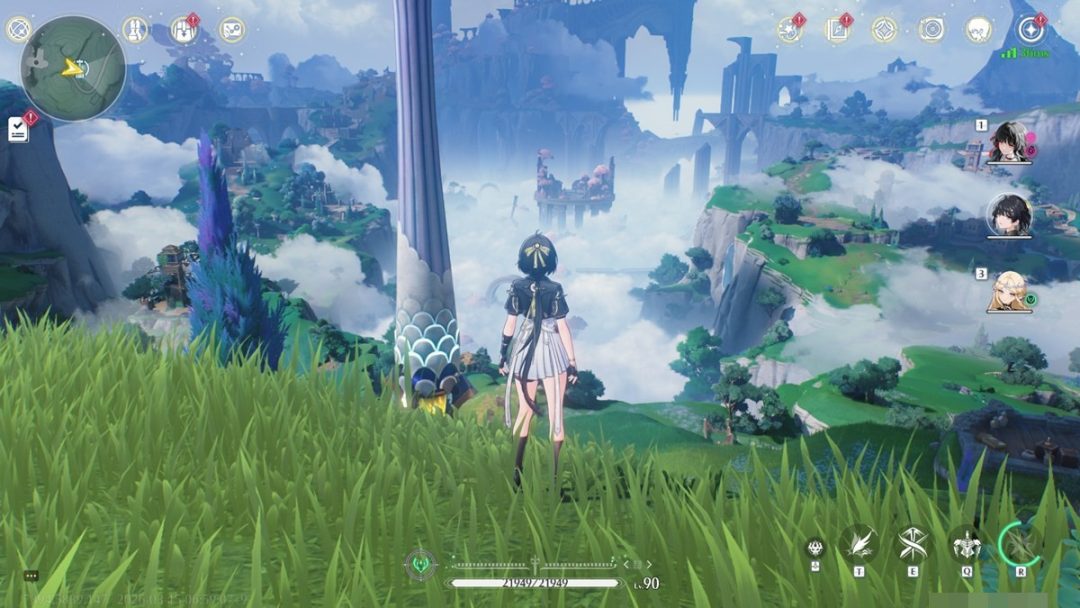
Firstly, I think most players can feel that the game successfully combines anime-style characters with beautiful background graphics – the environments look stunning, and the character designs feel lavishly detailed.
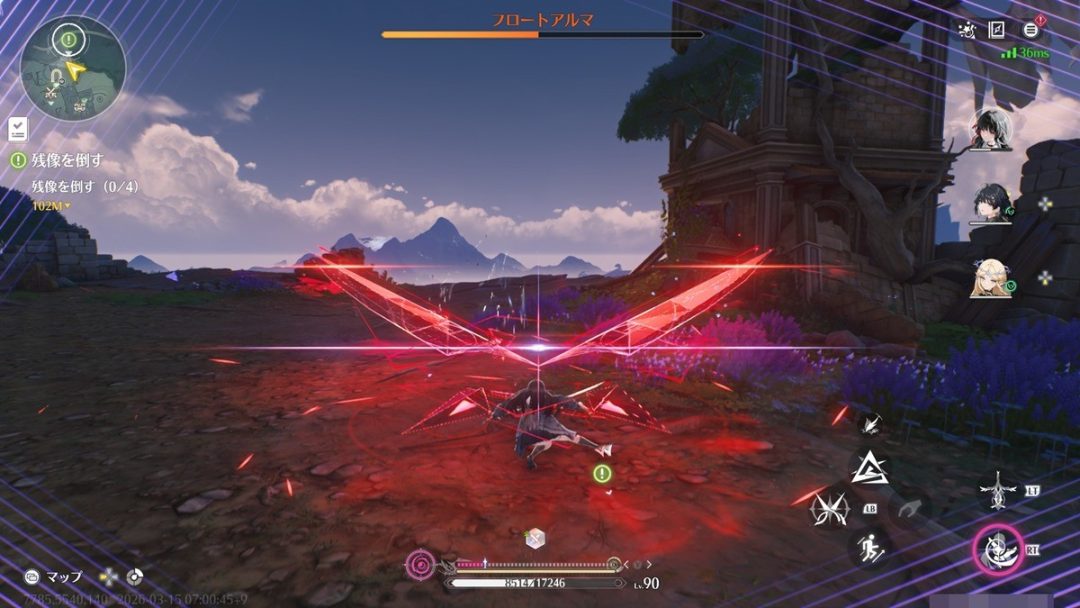
At the same time, it’s not just a simple anime style. If you look at recently added characters, the range of expression is incredibly diverse, with a lot of care and detail packed into each one. We’re seeing more and more presentation that goes a step beyond what you’d call a traditional anime style.
As for the environments, the game incorporates many techniques from PC gaming, including the use of Lumen, a UE5 technology. However, since Wuthering Waves runs on UE4, they’ve ported those features from UE5 into UE4 and are using them as core technology. Thanks to these efforts, even though it’s technically a UE4 game, it looks as sophisticated as something from the UE5 generation.
I think the way they’ve blended anime-style characters into these richly detailed, realistic environments is particularly impressive.
—What stood out most to you from a technical standpoint?
Nakamura:
Their proactive efforts to integrate new technologies into UE4. Wuthering Waves currently isn’t in a position to migrate to UE5, likely for the same reasons as the Final Fantasy VII Remake series (related article). However, in their determination to achieve rich graphics within UE4, the technology they’ve developed to bring over UE5 features is truly impressive.
—Why can’t they simply transition from UE4 to UE5?
Nakamura:
Keep in mind that this is just speculation, but when development of Wuthering Waves began, UE4 was still the dominant engine. It wasn’t until around the time they released Punishing: Gray Raven (built in Unity), which launched before Wuthering Waves, that I suspect they might have started researching UE. I believe they spent a lot of time studying it and became very familiar with UE4. Then, as development work on Wuthering Waves continued, UE4 would have been heavily customized.
Even with all those customizations, it would probably be possible to move to UE5 in theory. However, UE5 is now at version 5.7, while Wuthering Waves uses UE4.26. You might think you can just jump straight from 4.26 to 5.7, but that’s extremely difficult.
—Why is that?
Nakamura:
Version upgrades have to be executed in stages. For example, from 4.26 to 4.27, then 5.0, 5.1, 5.2. With some luck, it might be possible to skip 5.4, but basically, versions are updated one at a time, moving on to 5.5, 5.6, and so on.
If you don’t, the features you’ve built will start breaking one after another. Considering the risks, jumping multiple versions at once is essentially impossible. This is the main reason why, even in titles I’ve worked on in the past, we could only skip one major update at most. So, given the scale of Wuthering Waves right now, if they were to update one version at a time, there’s a possibility the process wouldn’t be finished even after a full year. That’s just my approximation, though.
Not only that, but when you consider spending over a year on updates, and then having to handle all the custom modifications made internally without any support… my view is that it simply wouldn’t be worth the cost.
—I suppose that’s especially the case for a live-service game, where new content is continuously being made.
Nakamura:
Exactly. In such cases, I think most developers choose not to maintain compatibility, but rather draw the line at a certain point and start over as a completely separate project. Back in the day, Blade & Soul also updated to the next generation UE, but I recall that they had to rebuild a significant portion of the game.
—From a player’s perspective, engine updates don’t seem that impactful, but for developers it sounds extremely risky.
Nakamura:
UE4 and UE5 may be part of the same UE family, but they’re practically treated like different engines, so you can’t just “push an upgrade button.” It takes time, and for live-service titles, stability is critical, which complicates things further. You really need the same level of commitment as if you were launching an entirely new title.
Decked out UE4 customization means limited support from Epic
—What UE5 features have been incorporated into Wuthering Waves, as far as you can tell?
Nakamura:
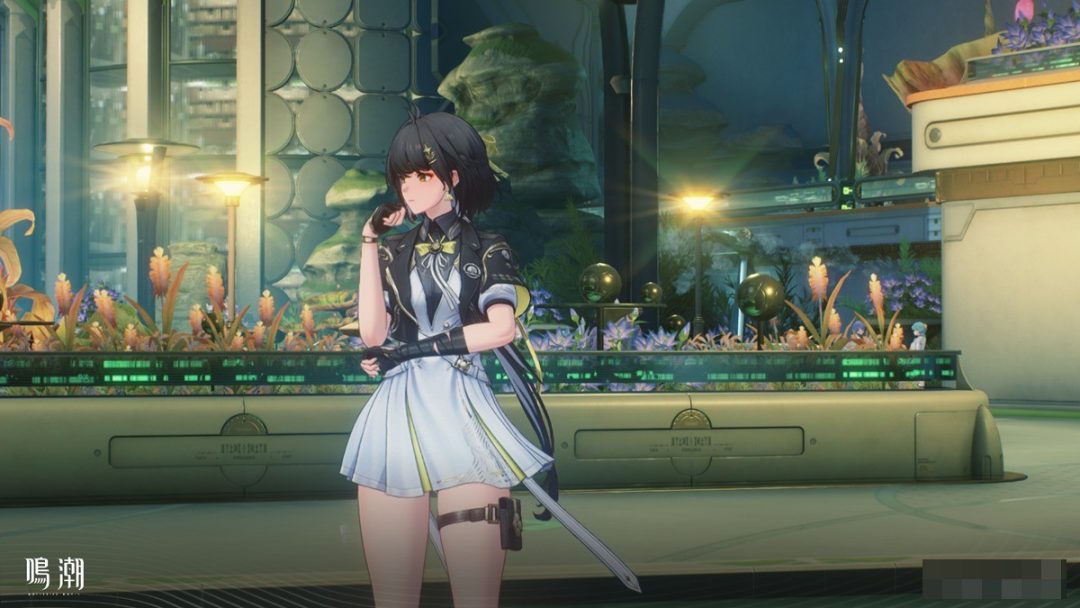
The game appears to implement a custom ray tracing system based on Lumen’s Hardware Ray Tracing, which doesn’t exist in standard UE4. This ray tracing system also includes a custom implementation of character toon/cel shading, which isn’t found in Lumen, and incorporates proprietary processing to ensure that even with high-fidelity lighting, the anime-style characters still appear soft and natural. Achieving all of this while keeping performance optimized is technically very challenging.
—And since these are custom modifications, the developers can’t rely on Epic Games for support?
Nakamura:
Basically, no. To begin with, there’s very limited support for UE4 itself now, and once you go that far, completely customizing it into something unique, you’re effectively on your own. If something goes wrong, you can’t just say “this is a UE issue” (laughs).
—So everything becomes your responsibility.
Nakamura:
For developers, not being able to consult Epic when something seems off with the engine is actually a big deal. If we can’t rely on them, we end up having to handle all the support ourselves, and at that point, the cost is almost the same as building a game in a proprietary engine.
—Does this also complicate optimization for mobile devices, given Wuthering Waves’ large-scale environments and sophisticated graphics?
Nakamura:
If it were just a matter of optimization, it would be possible with general knowledge. But in Wuthering Waves’ case, they also have to handle platform-specific support entirely on their own.
It’s one thing if you’re only targeting PC, but the game also runs on PS5 and mobile. Especially for consoles, expertise is scarce, so developers often need external support. However, if they can’t rely on Epic, they’re likely handling that internally as well, which suggests they have highly experienced, deeply knowledgeable staff.
—That was very insightful. Thank you for your time.
Wuthering Waves is available as a free-to-play title on iOS, Android, PS5, and PC (Windows/Steam/Epic Games Store/Mac App Store).
Indie-us Games is currently developing UNDEFEATED: Genesis in Unreal Engine.

AUTOMATON WEST
Articles: 208Related Posts
9.9 out of 10 games that run on PC AND mobile, are trash. You are no exception. DO BETTER
This comment is trash, because you:
A) surely didn’t play 100 mobile and pc compatible games
B) this post is about technology, and gives amazing insight about it. I learned a lot
You are too special for this website, I think you should redirect yourself to Twitter.
You are actually retarded 💀💀🙏🙏
Go back to twitter lil bro. You’re too retarded for sites like these
The game runs extremely poorly on my 5070 ti max setting one lower dosnt change 130 fps drops to 40 fps.l adn that on every spell you do
No thanks sir (1440p)
I also have a 5070ti and run on 1440p and I get a comfortable 110-120fps with FG×2 at near max settings. In the middle of Lah Roi, I drop to around 80fps which is 40fps base but that is the only location it does this so Id say it isnt that bad on new hardware and you likely have a bottleneck or some other issue causing you to have those horrible fps drops.
Also for context, my CPU is an ancient i7 8700k currently OC to 4.6gz with a .06uv so not exactly some insane CPU and I also have a bottleneck as a result.
“What it means to build a mobile-compatible game with Unreal Engine”
Wuthering Waves hardly runs well on phones though, just spend 30 minutes on the wuwa sub and discord and you’ll know from hundreds of posts and comments that the performance is genuinely awful on phones, subpar to awful on PCs and mediocre on the PS5. Lahai Roi, which is the newest region, has been reportedly a stuttering mess since it was introduced, and the optimization issues started with Septimont, the region that came about a year before Lahai Roi. It’s certainly one of the most graphically impressive gachas on the market, but it hardly runs well
Game’s great but shame they gave up on optimizing it in Septimont update. I hate playing with fake frames on :/
Cool article!
Wuthering Waves is certainly not trash. Stay away from it, sir, if you don’t like it.