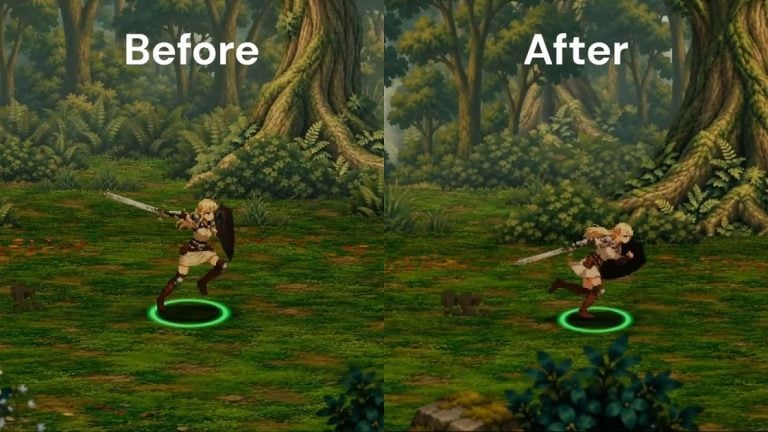
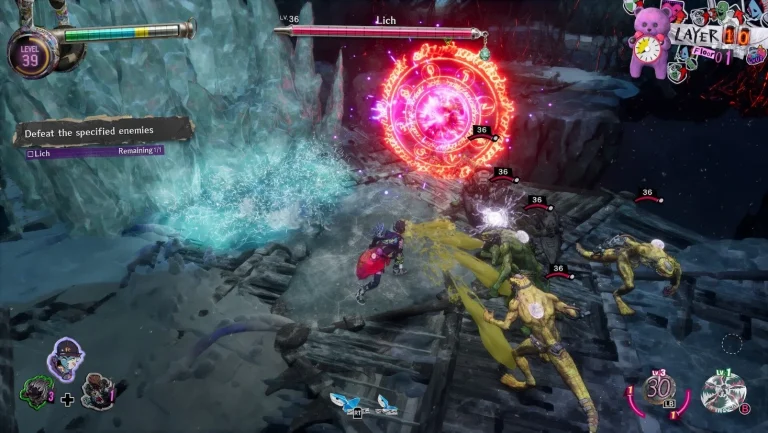
Wuthering Waves is full of beautiful technical headaches that would make the average UE developer say “please don’t make me do this.” From Mornye’s crystal legs to Camellya’s acrobatics
We talk to Japanese game developer Masahiko Nakamura about what makes Wuthering Waves impressive, or even intimidating, from a technical perspective.


Ever since its launch in 2024, Kuro Games’ anime-style open-world RPG Wuthering Waves has earned praise for its impressive graphics. Although it doesn’t take an expert to tell that it’s a beautiful looking game, the average player probably doesn’t know what makes Wuthering Waves’s level of quality stand out in a technical sense.
With that in mind, AUTOMATON Japan spoke to Masahiko Nakamura, head of Indie-us Games and a technical artist well-versed in Unreal Engine, to break down the strengths of the game from the perspective of a game developer. In this installment, we explore from a technical perspective what’s actually going on “under the hood” in Wuthering Waves’s highly praised visual direction and presentation.
You can check out part one of this series for a look at Wuthering Waves’s use of Unreal Engine 4)
Mornye’s transparent legs are something many developers wouldn’t even attempt
—We’d like you to analyze some of Wuthering Waves’ finer technical details. For example, there’s been a lot of talk on social media, about how detailed the hair physics on Chisa are. Is there some kind of special technique being used here?
Nakamura:
I believe the hair physics system is probably using a plugin called KawaiiPhysics, created by Okazu-san, who formerly worked at Epic Games and is now active independently. He mentioned it himself on X, so there’s a high chance the hair movement is thanks to KawaiiPhysics.
But actually, what’s really impressive about the hair is the construction itself. Character hair contains internal “bones,” and those have been placed very carefully and thoroughly. On top of that, the skin weights, which determine how smoothly the polygons deform against the skeleton, have also been meticulously applied. What stands out most to me is the modelers’ craftsmanship in carefully tuning everything so the hair moves naturally during animation.
—That’s fascinating. Another thing that stands out in Wuthering Waves is the characters’ eye movements. Players also often praise the game’s facial expressions, but what are your thoughts on that?
Nakamura:
The depiction of highlights inside the eyes moving around isn’t itself particularly difficult to achieve. With anime-style eyes, you can create something like three separate layers for the iris, the sclera, and the highlights, and control them individually.
What’s impressive here, though, is how carefully they synchronize the movements of the eyes, eyebrows, and mouth to express different emotions and facial expressions. Nowadays, facial animation is generally driven by facial tracking techniques. In Unreal Engine especially, there’s the famous MetaHuman service and toolset, which allows you to easily track and capture facial movement with just a camera.
However, applying real human facial motions directly onto anime-style characters is extremely difficult and requires a huge amount of adjustment. That’s why, in the case of Wuthering Waves, I suspect they aren’t relying very heavily on facial tracking.
—Does that mean it mostly comes down to manual animation?
Nakamura:
I think everything is manual, yes, including the facial expressions and the subtle “tremble” of the eyes. This is just speculation, but I imagine each cutscene has storyboards, and there’s someone directing exactly what kind of expression they want in each shot, giving detailed instructions for everything, and then the animators craft the expressions around that. That’s my guess, anyway.
—So, although there’s sophisticated technology underneath, the finer details ultimately come down to craftsmanship. From a player’s perspective, it’s easy to assume there must be some kind of “magic” at work, but really, it’s the accumulation of countless small details.
Nakamura:
Yes, you can really feel the manpower behind it. I imagine they have a lot of highly skilled staff. The turnaround between updates is pretty short, but if you have enough talented staff, you can divide up the work and distribute the load, making large-scale production possible. Plus, if there’s a strong director overseeing everything and giving precise instructions, then you can create these kinds of incredibly elaborate, soulful scenes.
—Was there anything that personally really impressed you in Wuthering Waves?
Nakamura:
I’d like to bring attention to the character Mornye, who was added in the latter half of Ver.3.0. Her lower body is transparent like glass, with these sparkling legs… Honestly, it’s so impressive that I would never even want to attempt it.

—(Laughs) You wouldn’t want to?
Nakamura:
One of the classic examples of things game developers don’t want to deal with is translucency. With translucent objects, you need to make them see-through so that the objects behind them are also visible, but modern games (not just Unreal Engine-developed titles) have a technical problem where it becomes extremely difficult to determine the rendering order of overlapping translucent objects.
Games use something called a G-Buffer to render various graphical effects. By combining G-Buffers, developers can later composite various visual effects together. But the weakness of this method is that it loses the ability to properly preserve translucency information partway through.
The buffer essentially treats front-and-back depth relationships as 2D information instead of full 3D data. Because of that, engines like Unreal Engine use separate rendering methods specifically for translucent objects. Within the rendering pipeline, translucent materials follow an entirely different rendering route from ordinary 3D meshes.
That approach lets developers preserve depth relationships to some extent in 3D space, but that’s where another major problem arises: effects. Once particle effects and translucent objects overlap, the engine can no longer properly determine which one should appear in front of the other.
And yet, Mornye constantly has transparent legs while effects appear around her, and it all still looks natural. Honestly, I can only assume they struggled tremendously with this and are doing something special behind the scenes.
An ordinary developer would never want to do something this… (laughs). If someone told me to implement this, I’d probably ask them to give up or make it opaque instead.
—So you reckon there really might be some kind of “wizardry” behind Mornye’s transparency?
Nakamura:
(Laughs) From a technical standpoint, I’m pretty curious about it. I really want KURO GAMES to explain how they did it, though I think only a small number of developers like me even care about this sort of thing. To sum things up, Mornye is amazing. Her animations are impressive too, but the technical foundation behind the character is also incredibly impressive.
Camellya, the kind of character who makes developers cry
—In Ver. 3.1, an update was implemented that made characters’ feet properly align with stairs when going up and down steps, which also got players talking on social media. I believe this has become fairly common in modern games, but is there any particular difficulty involved in achieving realistic feet positioning?
Nakamura:
In UE5, there’s already a template feature for matching foot placement on stairs, so it’s not like people use some especially extraordinary technology for it nowadays. However, there is one really impressive thing connected to this whole foot-placement-on-stairs topic, and that’s the attack animations of the character Camellya.
—She’s one of the earlier Wuthering Waves characters, right?
Nakamura:
That’s right. Camellya’s animations are obviously amazing to begin with, but there’s this one move among her attack combos where she balances on one leg while swinging the other leg in a full circular motion from back to front, almost like rhythmic gymnastics. Even while she’s in that one-legged stance, there’s still a mechanism in place that correctly restores her foot positioning.
The technology used to properly handle stair movement is called IK (Inverse Kinematics). With IK, it’s relatively easy to move a foot forward and plant it in the correct position. But having a foot swing all the way around from behind and then return to its original position like that usually isn’t something the system is designed to account for.
—Now that you mention it, it’s not exactly the kind of movement you see very often in the first place.
Nakamura:
And yet, it’s built in a way where IK processing still works perfectly without the form of the body being compromised at all, so I think there’s probably some sophisticated technical control going on there. It’s also an enormous hassle, so from the perspective of someone making games, it’s another thing I’d probably just opt not to even attempt… (laughs).
—(Laughs) So, the stair technology itself is fairly standard, but Kuro Games is taking on challenges in related areas.
Nakamura:
Yes. And it’s not just stairs, slopes are tricky too. Even a single rock can be troublesome. Rock surfaces are uneven, which means collision detection isn’t smooth either. So even for something as simple as placing a foot on top of a rock, there’s usually a good deal of adjustment work done behind the scenes to prevent things from breaking visually.
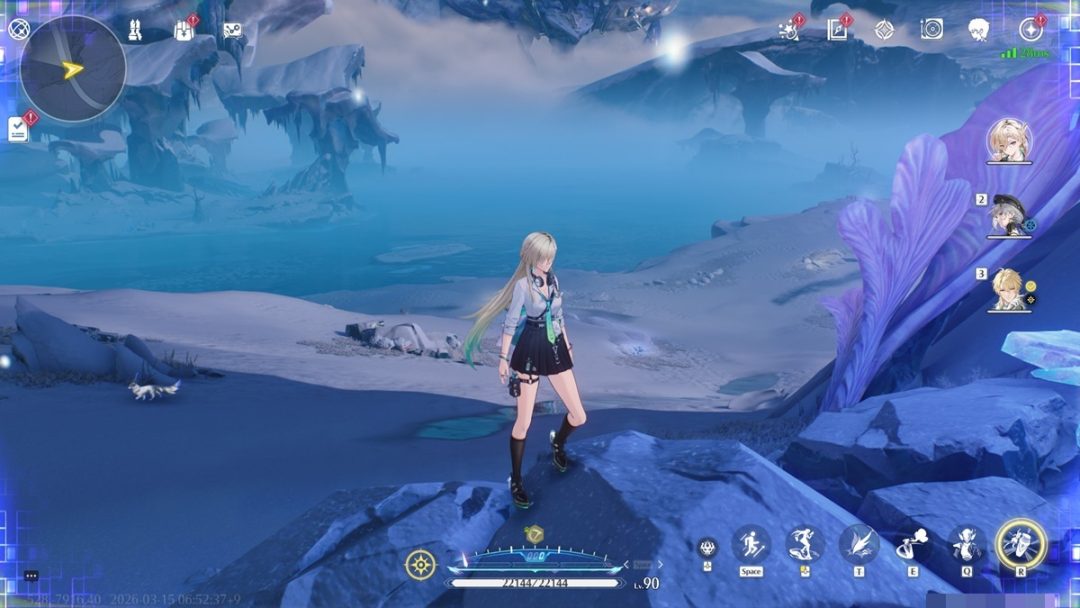
On top of that, character height changes things too. In other games, when developers try to use IK for stair movement on short characters, if the steps are too high, the system can fail to process them correctly, so sometimes they end up “adjusting the staircase height to fit the character.” It’s something environment artists have to take into account as much as engineers do. So even with IK processing, matching foot placement properly is still a complex task. As for Camellya, not only does she have that leg-swinging motion I mentioned earlier, but her whole design is generally very demanding, so I imagine they’ve spent an enormous amount of time fine-tuning her.
—Incidentally, there’s also an animation where Camellya is suspended by vines from above. What do you think of that?
Nakamura:
That also looks incredibly demanding… honestly, I’m not even entirely sure how they’re controlling it. I doubt they’re using actual physics simulation there, but if physics were involved, it would become unbelievably complicated. The vines would need to stretch and contract like springs in response to the character’s movement, and that would affect all sorts of other elements too. It also seems like it would be extremely difficult to create with motion capture, so it might even be hand-animated. Either way, Camellya really feels like the kind of character who makes developers cry.
—It’s fascinating how even among fellow developers, there are all sorts of expressions that seem almost unimaginable to recreate.
A UE4 title with lighting on par with UE5 games
—Another thing I wanted to ask about is Wuthering Waves’ lighting. It gives off a slightly faded look that enhances the atmosphere of scenes. What did you think of it?
Nakamura:
KURO GAMES has integrated Lumen, one of UE5’s signature features into UE4 for Wuthering Waves, so the visual quality of the lighting has definitely improved. Also, starting from Ver. 2.4, the game added an “Ultra Quality” graphics setting, where various features beyond just Lumen are enabled. That further improves the quality of the lighting, and they’re also pushing post-processing effects to the absolute limit, so the visuals end up looking extremely rich.
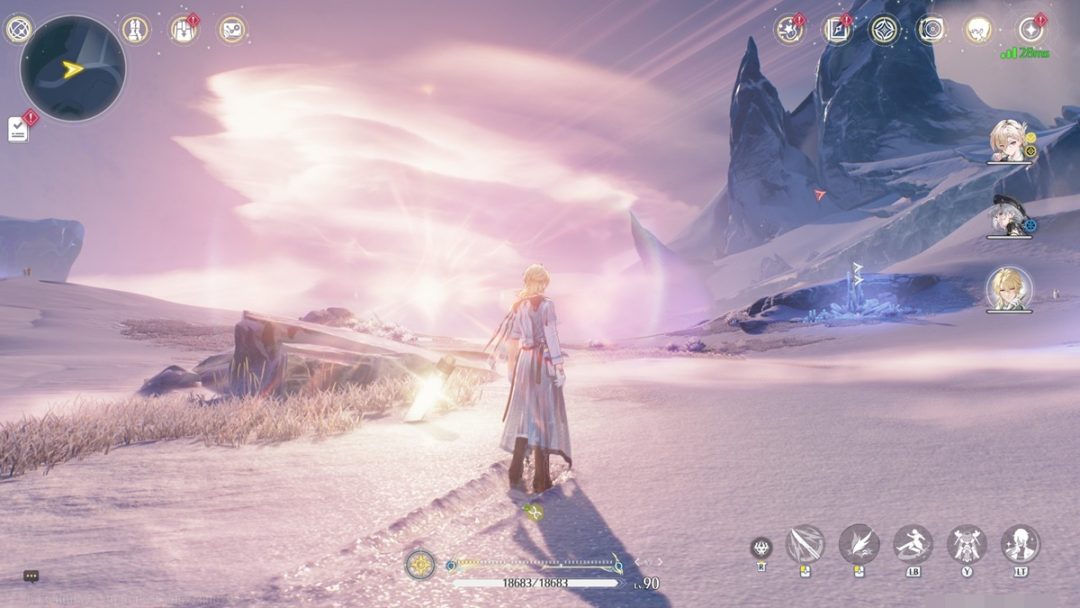
While these are features exclusive to the Ultra Quality mode, they deliver truly high-end graphics. I imagine the developers are consulting with companies like NVIDIA and doing extensive research as well. Even though the game should technically belong to the UE4 generation, there are areas where it’s implementing technology on par with UE5, especially when it comes to lighting.
—I see. As someone who casually plays Wuthering Waves, it was interesting to hear parts of the game’s presentation dissected like this.
Nakamura:
This is all just my speculation, of course (laughs), but I think Wuthering Waves has reached a point where you can feel the developers’ passion and hard work bleeding through in ways that technology alone can’t explain. The people making it are clearly creating what they genuinely want to create, and every single character feels incredibly rich no matter what aspect you look at. There’s an enormous amount of detail and visual effects packed into them.
That said, I’m sure KURO GAMES is actually doing things far beyond what I’ve guessed here. Someday, I’d love to compare answers with them and find out what’s really going on behind the scenes. (laughs)
—Thank you for your time!
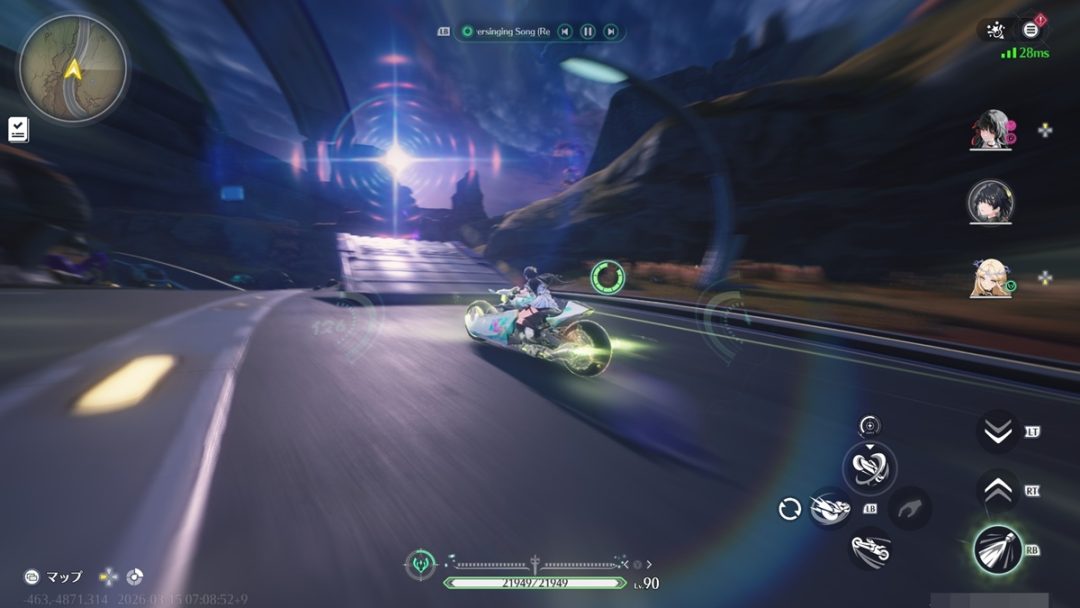
Wuthering Waves is available as a free-to-play title on iOS, Android, PS5, and PC (Windows/Steam/Epic Games Store/Mac App Store).
Indie-us Games is currently developing UNDEFEATED: Genesis in Unreal Engine.

Koutaro Sato
Articles: 66Related Posts