
“Making it technically work and making it actually enjoyable as a game are different things.” Japanese devs weigh in on why retrofitting live-service games with offline support is harder than gamers think
This comes amidst controversy surrounding the unofficial "offline version" of Square Enix's NieR Reincarnation.

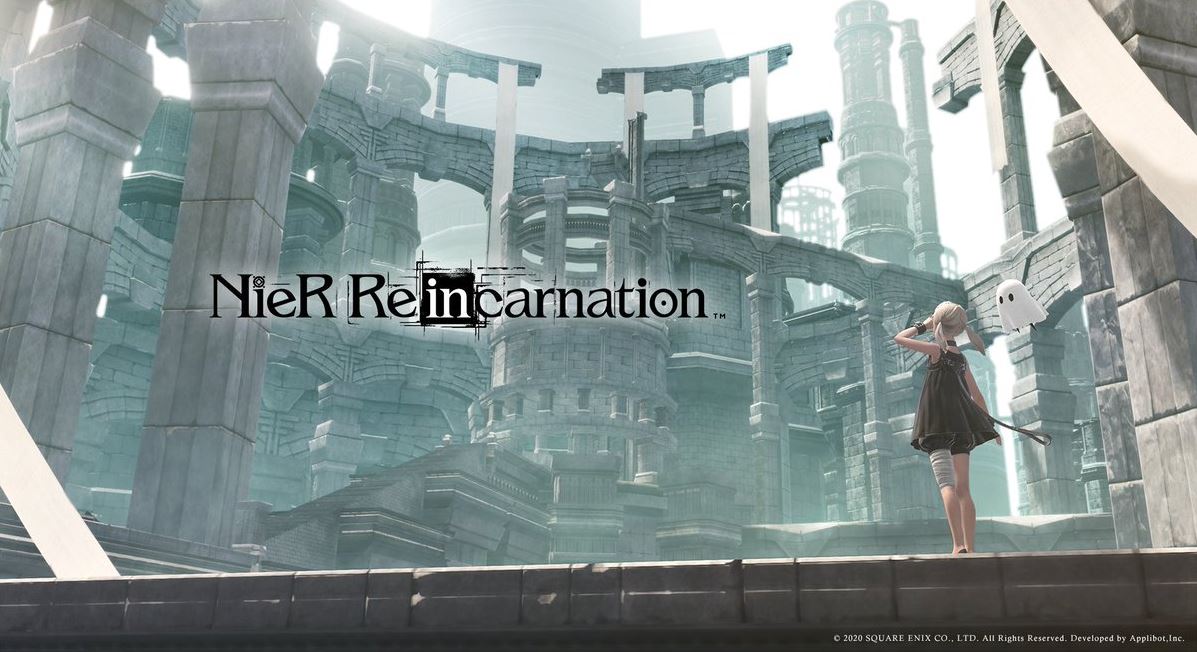
For the past week, a fan-made “offline version” of Square Enix’s NieR Reincarnation has had users embroiled in a massive argument about “game preservation VS infringement.” Announced by X user Altret on April 13, the unofficial “revival” project makes the live-service RPG partially playable for the first time since it ended services in April 2024, through the use of private servers. The catch is, however, that this has been done without consent from Square Enix.
Fans who were upset about there being no legal way to play NieR Reincarnation, given that its story plays an important role in the Nier/Drakengard narrative, welcomed the initiative. At the same time, there’s been just as many voices, particularly in Japan, condemning the project, considering it a violation of Square Enix’s copyrights and an act of disrespect towards the game’s original creators. While the ethical issues are a can of worms that likely won’t be seeing reconciliation from the two sides any time soon (especially without comment from Square Enix’s side so far), the discussion has yielded some practical insights into the problem of retrofitting online games for offline play itself.
Addressing the argument of “why don’t developers just release an offline version themselves if they don’t want unofficial ones cropping up,” a couple of Japanese developers have shared technical insights and personal experience concerning the matter.
Itchie, a Japanese programmer and producer who previously worked at game companies like Square and SNK, empathized with gamers’ wish to see online games properly preserved after they end services, but suggested that it’s often not a viable choice for developers in terms of the additional work and cost involved. Mechanisms that are essential for a game to function properly, such as progression tracking, inventory management, enemy behavior and reward calculations among many others, are supported by servers in an online environment. Relocating these mechanisms so that they work locally, he explains, leads to a plethora of new problems to solve, such as save file tampering, synchronization issues and data inconsistencies upon resuming the game.
Furthermore, games designed with multiplayer in mind have their difficulty, rewards pacing and events structured specifically for online play, so converting them into offline games can require reworking not only connectivity-related aspects, but introducing game pacing suited for solo play, enemy AI replacements, and reworking reward balance and save system design. While laymen tend to think of retrofitting online support as a kind of “modification,” Itchie says it’s actually much closer to a complete overhaul of the game’s foundations. While there are cases where creating an online mode is straightforward, that usually means the game was originally designed with that possibility in mind or was inherently compatible with an offline format.
“Making [an offline version] technically work and making it an enjoyable product are two different things,” Itchie says. “There is a strong risk that the game will end up playable but not entertaining, or that it will simply fall apart as a game.” It might be worth noting here that, from the perspective of an unofficial revival project scrapped together by fans, players are sure to be generous towards such inconsistencies, but that probably wouldn’t be the case for something distributed through official channels.
Itchie concludes by emphasizing that a lack of offline support is, in most cases, not due to the negligence of developers. Another Japanese programmer who goes by Kei on X shared their personal experience in response. “I actually went through this exact situation once before,” they say. “When we were about to shut down services, management told us to look into taking the game offline, so I calculated the man-hours required, and it turned out to be about the same cost as developing a brand-new game. When I reported this honestly, everyone was completely taken aback. It actually seemed like it would be harder to pull off than just building something from scratch.”
On the flip side, they add that while designing an online game with offline capability in mind from the start does offset this issue, it severely limits what the developers can do in their game across all fronts of game design. While this perspective doesn’t make the issue of customers losing access to what they paid for and games not being preserved go away, it’s certainly clear that developers don’t have an easy solution to the problem.

Amber V
Articles: 1621Related Posts


I do not think it matters either way so as long as it’s optional if people are allowed to host the server of a live service itself and it becomes a thing to allow that to happen when the service is shut down.
Also saying things are difficult without having such options built from the start is basically making excuses. It’s the whole reason why Stop Killing Games is helping enacting laws in the first place in the EU and US.
“it’s often not a viable choice for developers in terms of the additional work and cost involved”
So don’t make the online-only game in the first place. Simple as that. Every game like this should have to account for the eventual server shutdown as part of its planning, development, and budgeting. Sure, sure, easy for me to say, but all of these games completely disappearing and all of our save data being taken away or deleted is a huge problem that multiple groups are aiming to tackle now. Stop Killing Games didn’t spring up from a fringe belief.
So to be clear, in your mind, it is better for gamers if they never get the games they and millions of others like, and enjoy their time with it for the period in which it is available, than if the game is available for them to enjoy and interpret before it is closed down?
Game “preservation” (ironically since you seem content to kill live service games categorically) is indeed not a new drive. The industry itself, all things equal, is filled to the brim with people who want it. But the same people also want to create new experiences and put their stories out there, and dedicated servers solve a wide array of security, economy, performance and stability problems. So having laypeople insist repeatedly that they’ll just find the magic button if they think about it really hard earlier to make it all work isn’t helpful, and is the exact same kind of childish nihilism that made SKG lose in the EU. Nothing will get done if this is the sentiment that reigns supreme over this movement.
All that OP said was that every game should have a plan for offline operation after the eventual server closure. The fact that private servers exists for a pletora of games is already proof enough that any “online-only” game *can* have an offline mode. The fact that random users do it on their free-time without any profit involved also shows that preservation of those games is possible without a penny from the original companies,but the point is they not only don’t plan ahead, they also go after said fan projects as if it really harm anyone.
In the ideal future, all games would have a planned offline mode in mind since the start, only released when the server ends. But if this is something impossible for a particular studio, then at least leave alones the fans who are making the impossible happen. They aren’t using your IP in a bad way, they are showing how valuable said IP is, to the point of making this herculean task.
Lmfao at the seething devs making up inane drivel to cope about the fact that their skinnerbox gachaslop garbage falls apart once the game gets rid of the dopamine dripfeed of timegates and lootboxes. Don’t make a cancerous business model and don’t treat games as disposable transient slop if you don’t want people to fix your greed.
Don’t blame the developers, blame the PUBLISHER. Developers don’t make that choice.
These types of things are forced in by investors and the publisher itself in AAA studios.
But yes, the simple solution is just don’t force in singleplayer experiences.
And no – it’s not super complicated. I work as an indie, and in the past – I created a type of Interfaced FileSystem which worked both online and offline ( it behaved like a REST API, and simply emulated requests offline when writing and reading locally – requiring “default” values during read), and it worked.
Anyone who claims that “making a single player game offline only is not possible” is not only lying – but also pretend games 20-30 years ago didn’t exist.
I am fascinated by the way people react to *developers* describing why they don’t already architect their games around this one specific concern at the expense of all others. Look even just in these comments. The responses range from:
– it’s very simple, they could just do it and the developers themselves are wrong about their own effort estimations
– it’s not simple but they could totally do it if they thought about it ahead of time despite this very article being devs saying the opposite, that it is both a design time and EOL stage problem
– it’s not simple and they couldn’t do it and that’s good, online only games shouldn’t be made, regardless of how many millions of players enjoy them and regardless of what the devs want to make
– it’s very simple and the developers are just making shit up because it’s actually the big bad publishers making them do it, no matter how many developers are on record describing why they made online only games or how many indie developers describe why they did it or why even their single player games rely on middleware that creates a similar problem
This isn’t Mr. Monopoly EA/Ubislop man coming out and saying players don’t know what they want. These are the people with perhaps the most incentive to keep their art alive *as much consistent with their vision as possible* saying why it’s difficult for them to do and what compromises have to be made. So to have laypeople coming in and insisting they know better without any basis for it is laughable.