


Last week, Japanese media outlet Toyo Keizai posted an article about the anime industry’s recent “shift in focus” towards the international audience, which became a subject of debate across both the domestic and overseas fan communities. Penned by Yusuke Onuki, CEO of media company Bushiroad Move and executive producer of numerous anime (Remake Our Life, The Fruit of Evolution: Before I Knew It, My Life Had It Made), the column dives into the revenue structure of late-night isekai anime, analyzing its position as a “format for the global market.”
Specifically, Onuki writes that 90% of the revenue for late-night anime comes from outside of Japan. He explains that one cour of late-night anime (about 12-13 episodes) requires an average budget of 350 million yen, the majority of which is required before airing even begins. Considering that this technically counts as a pre-investment type of business, project approval is an extremely meticulous process, which is why late-night anime have always relied on a tight revenue model to make sure production companies can break even.
The revenue model for late-night anime used to be centered on domestic sales of physical packages, like DVDs and Blu-rays. However, Onuki argues that, as the revenue model shifted from physical media to streaming sites like Netflix, anime’s “reliance” on Western distribution platforms became more apparent. This means that the focus of production committees would naturally shift to the question of “what are the minimum guarantee Western distributors are willing to pay?”

Onuki explains that this is one of the reasons why we see so many isekai and “narou-kei” anime (anime based on light novels published on the Shosetsuka ni Narou website). “Isekai reincarnation stories satisfy the standards for ‘ease of understanding’ and ‘cheap thrills’ at a very high level, so they are an exceptionally great format for the global market,” he writes, noting that a large portion of the genre’s overseas success comes from the fact that understanding its narratives doesn’t require Japan-specific cultural knowledge.
Another reason for the isekai boom is simply that making already popular novel series into anime is the safest route for getting a project approved with production committees. It is much easier to convince investors that an anime is going to be a hit if the original work behind it already has a solid readership and fanbase.
On the other hand, this has led to market oversaturation, and Onuki believes that, as a result of this, the industry is looking for other genres that could be profitable overseas.
Though Onuki himself doesn’t mention this in the article, one recent example of this is Kadokawa’s decline in profitability in its domestic publishing business. The company, which has been involved in numerous major anime, revealed in this year’s mid-term management plan that “excessive reliance on isekai” was what held back their profitability.
The conclusion that “anime is no longer being made for Japanese audiences” made quite the stir among overseas X users. However, many Japanese users argued that it is not exactly the case. While it is true that works which are likely to sell well overseas are being adapted into anime with “higher priority,” this does not cancel out the fact that the same works also appeal to a Japanese audience, a user writes.
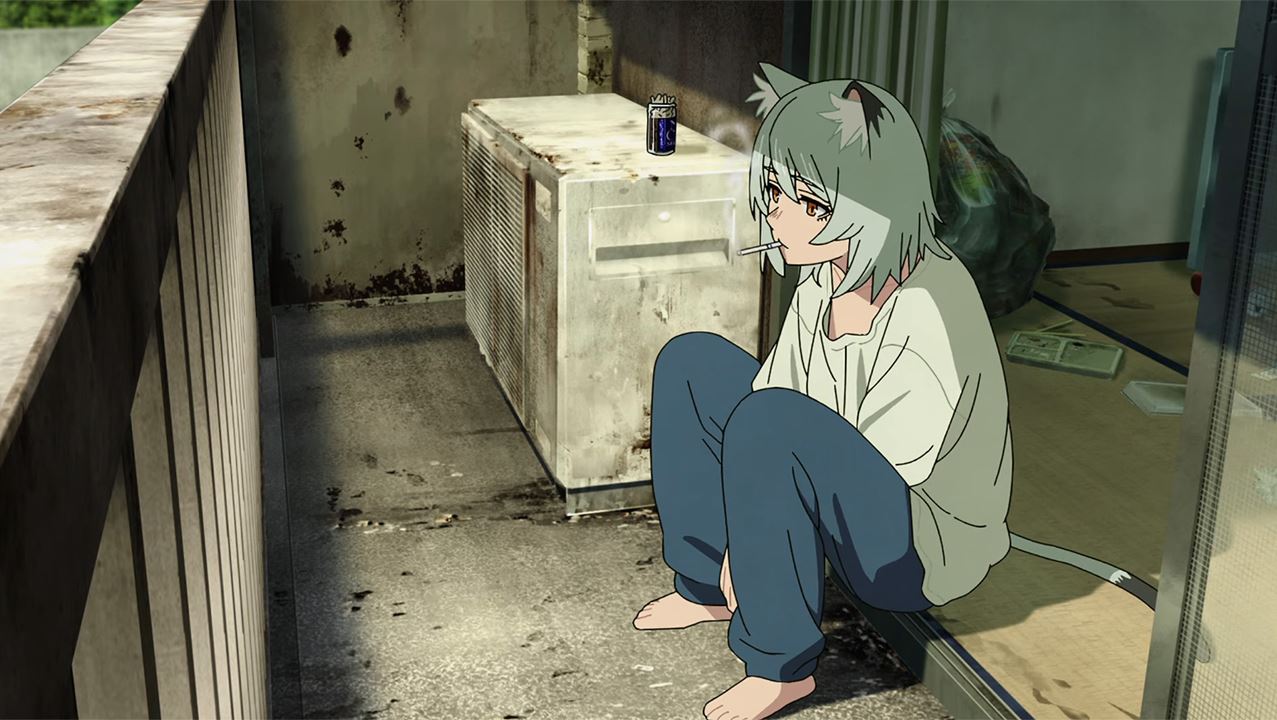
Other users list Chainsmoker Cat, which debuted as a manga and had little traction in the West before its anime adaptation, and Chiikawa the Movie: The Secret of the Mermaid Island, the most recent domestic box-office superhit – as some examples of high-profile anime made for its domestic audience. Similarly, just like it was mentioned in Onuki’s article, most of the isekai and narou-kei novels have been adapted into anime precisely because they were popular with the domestic audience. So, rather than being created “specifically to pander to the Western audience,” even if an anime has potential to make it big overseas, it most cases, it is an adaptation of an already established Japanese hit.
In this sense, even in Japan, many believe the recent discourse around the Toyo Keizai piece was stripped of much needed context and nuance. While investors going for safer and more widely palatable content in pursuit of commercial hits is arguably present in anime much like in other media, the notion of “made for the West rather than Japan” appears to misrepresent the issue.
Related articles: Japanese web novel platform behind the isekai and narou-kei boom officially tops 200 anime adaptations as inquiries for commercialization keep rolling in



Seems like a distinction without a difference; if a unique anime project gets shitcanned in favor of something with Western appeal, that means anime production is pandering to a Western audience. Doesn’t matter what the original author’s intent was, it’s getting adapted or not based on “can we sell this overseas?” That will have a chilling effect on the industry, and lead to samier, safer, and frankly shittier anime.
I suppose the broader question is, does it even matter? There will always be niche anime and locally produced works. If now 90% of funding is coming from outside the country for anime for other markets then what has really happened is you have 900% more anime than when it was just funded by the 10%. The 900% growth just doesn’t cater to the Japanese.