
Former Capcom developer says years of extreme crunch culture are part of why Japan’s game industry has so few female directors
Masakazu Sugimori, known for his work on Ace Attorney and Viewtiful Joe's music, recently talked about the lack of female directors in Japan's game industry.

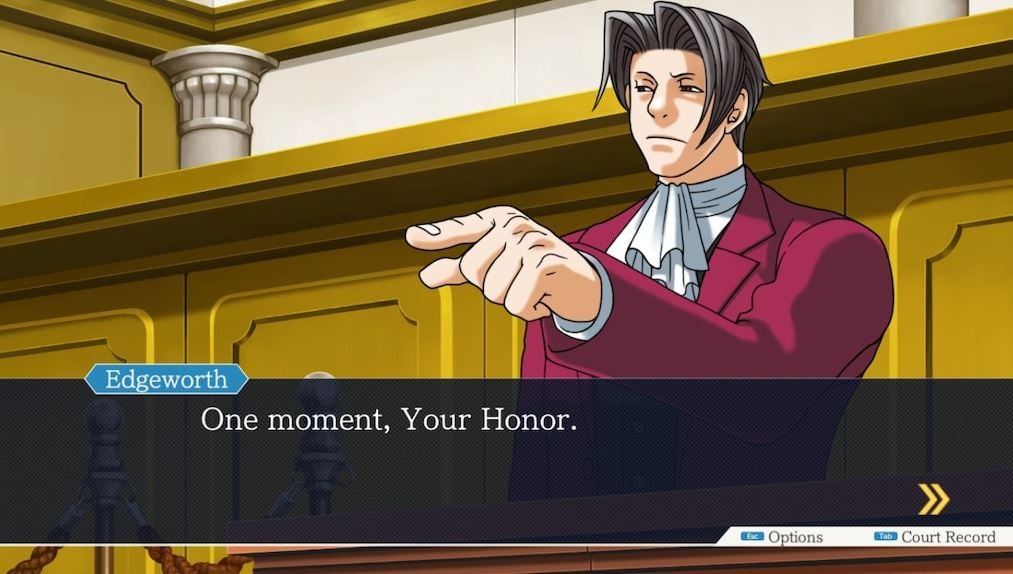
Masakazu Sugimori, a former Capcom developer best known for composing music for early Ace Attorney and Viewtiful Joe entries, recently took to X to talk about women in the Japanese game industry and why, based on his experience, prominent or directorial positions are currently predominantly occupied by men. Sugimori proposes that the grueling working conditions and crunch culture that used to be the norm in the domestic industry have played a big role in shaping things this way.
Up until around 20 years ago (before Japan saw major labor law reforms), Sugimori says that living at the office for a month straight, working for a week on almost no sleep, and barely even taking baths used to be common at game companies (though, apropos the last point, he mentions Capcom at least had showers in its offices). Sugimori considers this “insane” environment to be a big part of what created a gap between male and female developers.
Although Capcom had a “particularly strong presence of female creators for a long time,” Sugimori thinks very few women were able to physically endure such long continuous working hours, making them less likely to be promoted to director positions. On the other hand, male creators were more willing to “throw away their personal lives and appearance” to prioritize work, and were thus more likely to thrive at the workplace. Sugimori gives the example of Viewtiful Joe director Hideki Kamiya, whom he says would remain at the office until 5:30 in the morning every day fine-tuning the game’s balance.
“In other words, I don’t think it was gender discrimination in the sense of men and women being treated differently. Rather, in a brutally demanding workplace where people were making games like mad, it was inevitable that men were more likely to prevail,” he comments. At the same time, Sugimori notes that smaller development companies have had female producers and directors since around 2010, and Capcom also started seeing female producers since around that time. “I think that in another 10 years or so, we’ll start seeing more women among the top tier of game directors.”
Hideki Kamiya comments on how attitudes towards crunch have changed in the industry

Amber V
Articles: 1625Related Posts
“I don’t think it was gender discrimination” said a man.
You didn’t read almost anything else he said. Get your ignorant ass outta here.
Why aren’t there more men writing romance novels?
Terrible point, there’s many actually lmao
“I don’t think it was gender discrimination, it was actually:”
*proceeds to discriminate based on gender*
The only way this argument makes sense is if you cite lack of maternal leave. Implying that women couldn’t handle physical demands (like sitting in chairs) or weren’t willing to sacrifice makeup and fashion (elements of gender essential social hierarchies) while simultaneously claiming a lack of gender discrimination is so beyond stupid
Your assuming all the women are married or have children? Really? Women are not men, they value things on emotional level and their hygiene and looks are just part of what women are. Men are able to do harsher things than women physiological, this why men tend to have led the world in different capacities. Women can, just never to the same degree. If true in corporate world and military, it’s not discrimination, it means we are different.
I think, instead of physically being unable to handle it… Perhaps a small group of women didn’t want to be stuck in an office with a large group of men. The men, neglecting themselves, likely stressed, likely barely physically handling it, might decide to take their stress out on a woman. That, and it’s not like that many women used to get hired for this kind of thing. Imagine being the only woman during this kind of crunch time in an office full of men… I’d definitely pick the bear.