
Resident Evil Requiem, the latest mainline entry in Capcom’s survival horror series, has earned much praise for its evolved visuals and high graphical fidelity. It also stands out as the first title to support the upgraded version of the PS5 Pro’s upscaler, PlayStation Spectral Super Resolution (PSSR), or the so-called “PSSR2.”
To find out more about the graphical advancements made in Resident Evil Requiem and the upgraded PSSR, AUTOMATON recently spoke to Capcom and Sony Interactive Entertainment via email interview. The respondents are as listed below:
Masaru Ijuin – Senior Manager, Engine Development Support Section, R&D Foundational Technology Department, Capcom
Toshimasa Aoki – Senior Principal Product Manager, Product Planning Department, Sony Interactive Entertainment

Silky hair and evolving skin technology
—The “Strand” technology in Resident Evil Requiem noticeably enhances the quality of Grace and Leon’s hair, giving it that silky feeling. I’ve also heard that Diana’s hair in Pragmata saw a major quality upgrade in the midst of development. Did the teams exchange know-how across projects internally to achieve these improvements?
Early titles such as Pragmata used polygon-based approaches, but thin polygonal strands inevitably appeared disconnected, even with MSAA or TAA, resulting in less cohesive visuals.
In Resident Evil RE:4, improvements were made to hair quality. However, due to development constraints, the hair resolution was fixed in advance, meaning that improving performance often required sacrificing smoothness.
In Resident Evil Requiem and Pragmata, hair segmentation is now automatically determined based on its projected length on screen. This allows strands closer to the camera to appear smoother and more curved.
This automated approach improves performance by reducing computational cost while maintaining visual quality. Additional refinements, such as improvements to the hair reflection model, also enhance the richness of the overall appearance.
Moreover, the hair simulation system has been completely rewritten from the version used in Resident Evil RE:4, with a focus on making it more intuitive and controllable for artists.
This was achieved through close collaboration between the engine team and technical artists working on game titles.
These features are part of the engine and are expected to be adopted in other titles going forward.

—Apart from hair, Resident Evil Requiem also shows improvements in the rendering of skin texture (subsurface scattering) on humans and creatures, effectively portraying the contrast between Grace’s youthful complexion and Leon’s deeply etched wrinkles. Could you explain the technological and artistic advances behind this?
Rendering for characters as a whole – including skin, hair, eyes, and teeth – has been significantly improved.
We’ve enhanced subsurface scattering and introduced a Visibility Buffer to improve polygon density, achieving both higher frame rates and reduced memory usage.
In addition, we’ve implemented area-based texture streaming, as well as new simulation techniques for effects such as water surfaces.
—From Capcom’s perspective, what are the most impressive aspects of the PS5 Pro?
ML-based super resolution with the new PSSR contributes most significantly to image quality. In addition, improvements to base rendering performance and enhancements to ray tracing capabilities allow for richer visual expression at a lower cost than before. Furthermore, the introduction of a CPU boost mode makes it possible to maintain higher frame rates even in scenarios that would otherwise be CPU-bound.
—Thank you very much.
Resident Evil Requiem, the first game to adopt the upgraded version of PSSR
—Next, a question for Sony Interactive Entertainment (SIE)’s side. What kind of feedback did you get from developers and users following the release of the PS5 Pro and PSSR? I’d also like to know what approach you decided to take in updating PSSR based on that feedback.
PS5 achieved great success by introducing a range of new innovations, such as the ultra-high-speed SSD, ray tracing, DualSense wireless controller features, and 3D audio. At SIE, we are committed to continuously pursuing further innovation, and as part of that approach, we began planning the development of PS5 Pro even before the launch of PS5.
PS5 Pro delivers significant performance enhancements over PS5 across three key areas.
- First, it features a larger GPU, improving overall performance while also increasing the memory available for game processing.
- Second, ray tracing capabilities have been substantially advanced, enabling more rays to be processed at two to three times the speed of PS5.
- Third, it introduces AI-driven upscaling, powered by dedicated machine learning hardware and our proprietary AI library, PlayStation Spectral Super Resolution (PSSR). This enables a significant increase in rendering detail and effective resolution.
Since launch, we’ve received strong positive feedback from both game creators and players on the high-quality experience PS5 Pro delivers. At the same time, there has been clear interest in further refinement, particularly in areas such as image stability in dynamic scenes. In response, we began development of an enhanced version of PSSR, particularly with a focus on improving stability while preserving the creative intent of developers.
As mentioned earlier, at SIE we place great importance on continuously adopting new technologies and pursuing further innovation. In that context, continuing to evolve PSSR, even after the launch of PS5 Pro, was a natural progression for us.
—There’s been plenty of comparison videos coming out on platforms like YouTube demonstrating the differences between the PS5 and PS5 Pro, as well as the original and upgraded PSSR. Are these something you pay attention to?
We do pay attention to videos and reviews shared by both media and the community, and we find them highly encouraging. They provide valuable perspectives on how our technology is being experienced and discussed in real-world contexts.
—Could you explain how the upgraded PSSR became more efficient despite running on the same hardware resources? I find it remarkable that the visuals improved so much without changes to the hardware or frame rate.
A key factor behind PSSR’s improved image quality is the refinement of its internal processes, allowing us to achieve better results within the same computational budget.
Building on insights from the initial version, we redesigned the neural network model itself as part of Project Amethyst – which is a joint collaboration between SIE and AMD to push gaming technology forward. In addition, we reviewed how training data is generated, as well as its volume and training methods, to better handle cases that tend to be challenging in real gameplay scenes.
—How did Resident Evil Requiem come to be the very first game to adopt the upgraded PSSR?
Resident Evil Requiem was a highly anticipated title with strong expectations from players. From SIE’s perspective, we felt it was important for users to experience the benefits of the new PSSR from day one. Following discussions with Capcom, we received their support which allowed us to move up the release timing of the new PSSR slightly from our original schedule, and have it ready in time for the release of Resident Evil Requiem.
—From SIE’s perspective, which scene in Resident Evil Requiem stood out to you in terms of how it leveraged the PS5 Pro’s capabilities?
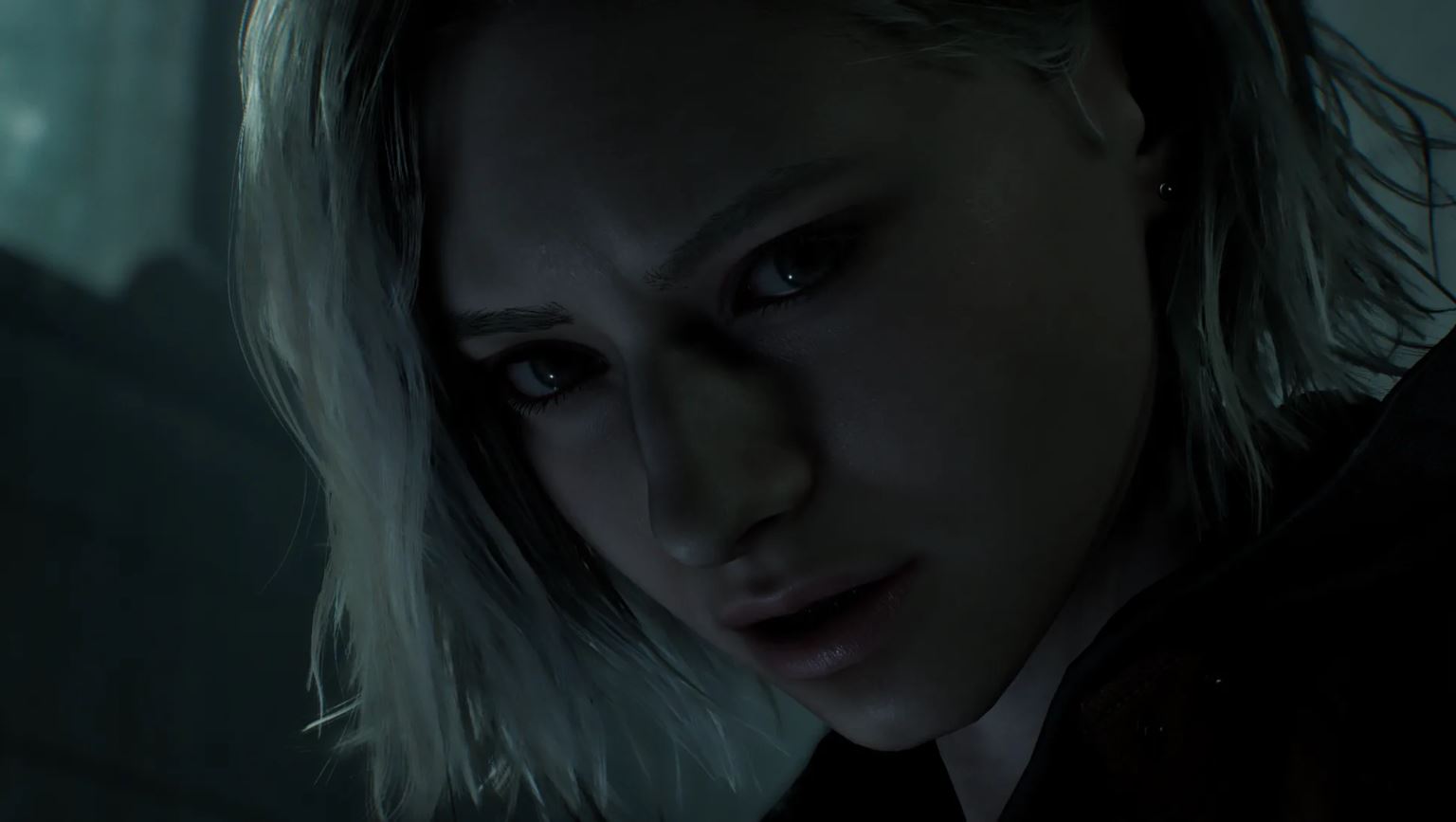
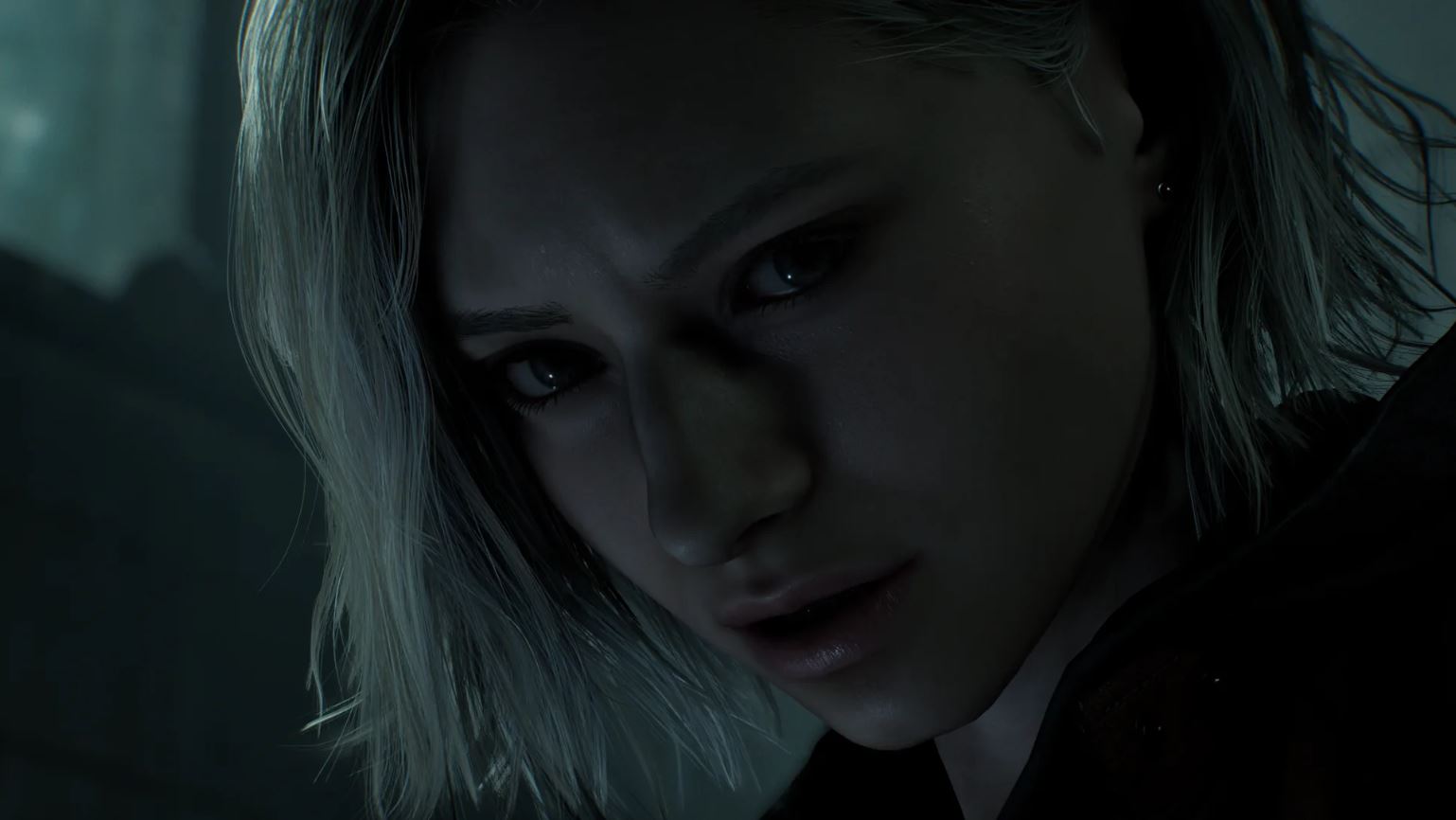
Personally, one of the most memorable moments in Resident Evil Requiem is the opening city scene. It is extremely dense in terms of information, with lighting, objects, and characters all richly populated, and we felt that the effects of the evolved PSSR were clearly demonstrated in this environment.
Additionally, the scene includes close-ups of characters, where fine details such as facial expressions and hair are rendered with remarkable precision.
The combination of these elements results in a stable, high-fidelity visual experience overall, making it one of the scenes that symbolizes a new-generation of visual expression.

—Thank you for your time.
Resident Evil Requiem is available for PC (Steam), PS5, Nintendo Switch 2, and Xbox Series X❘S. On PS5 Pro, the game supports PS5 Pro Enhanced and upgraded PSSR.