

Grasshopper Manufacture released its brand-new IP, ROMEO IS A DEAD MAN, on February 10 across PC (Steam/Windows), PS5, and Xbox Series X|S.
Following the story of protagonist Romeo Stargazer – who becomes the FBI Space-Time Special Agent “Dead Man” – the game is a third-person action adventure set in a universe where space-time has been fractured following a mysterious incident.
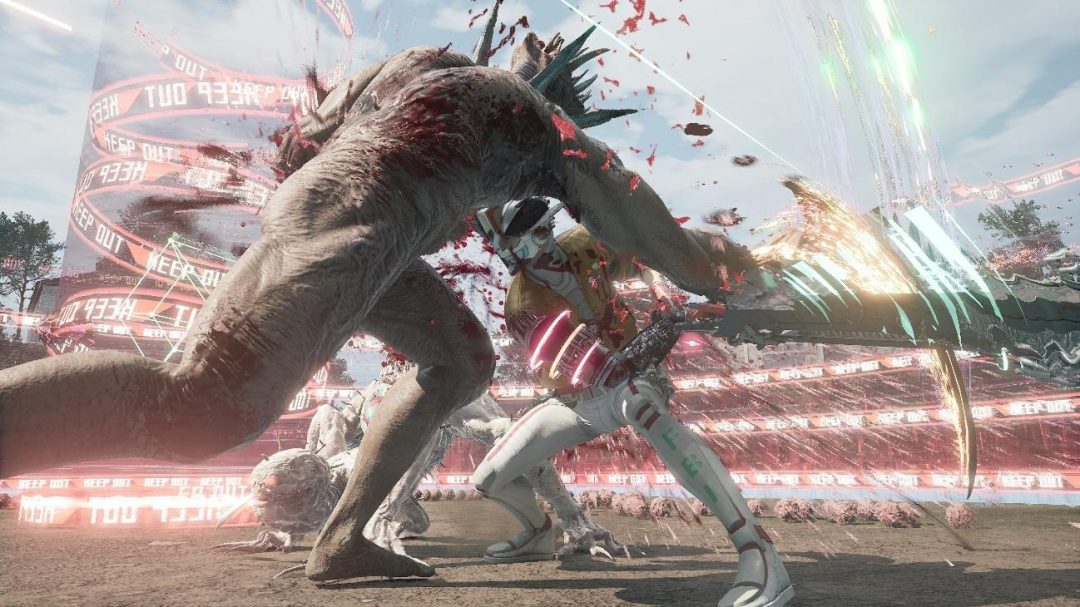
Brought back from the brink of death by sporting a “super rad” mask known as the Dead Gear, Romeo hunts down space-time’s most wanted fugitives across the fractured universe, all while facing the sudden disappearance of his girlfriend, Juliet. With its wild blend of themes, Romeo Is a Dead Man launched to high praise from players, boasting a “Very Positive” rating on Steam.
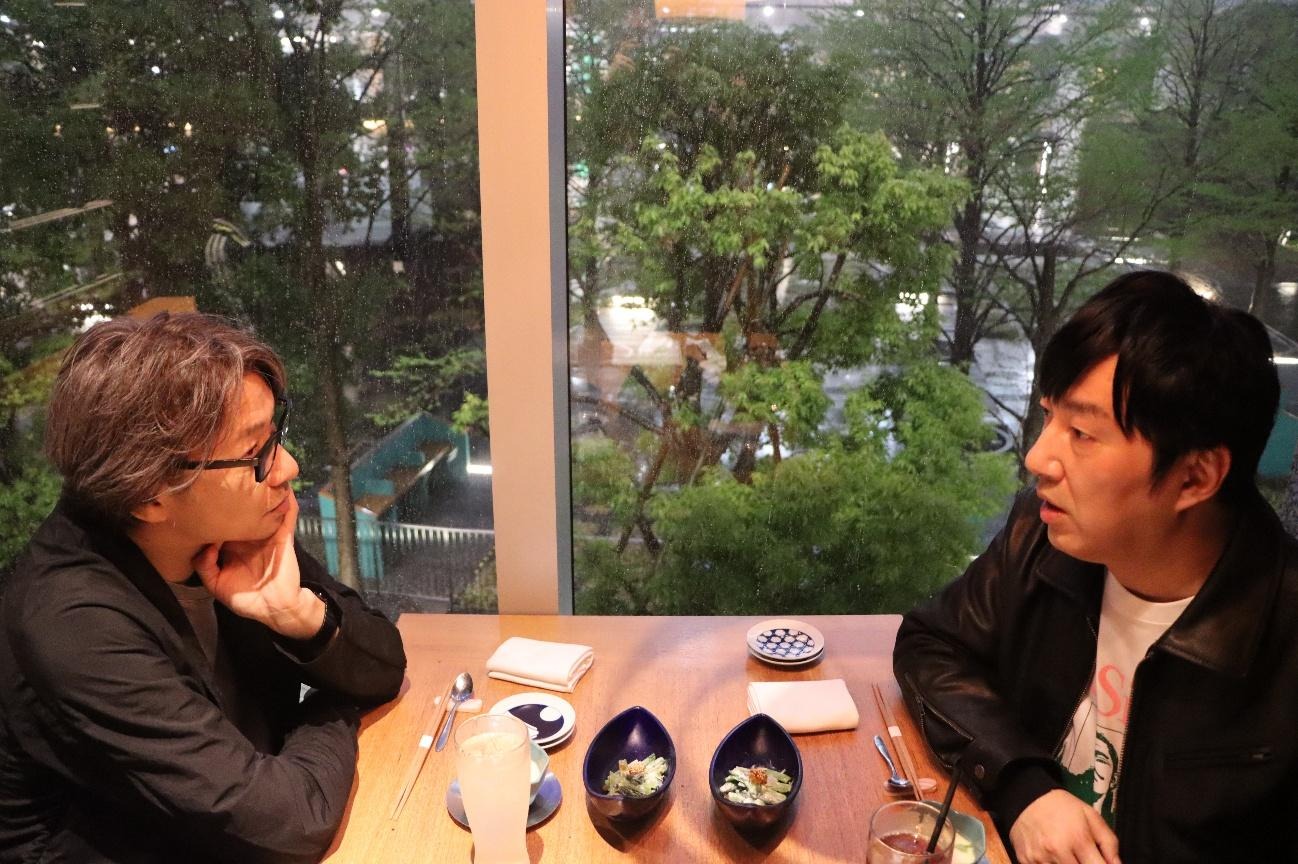
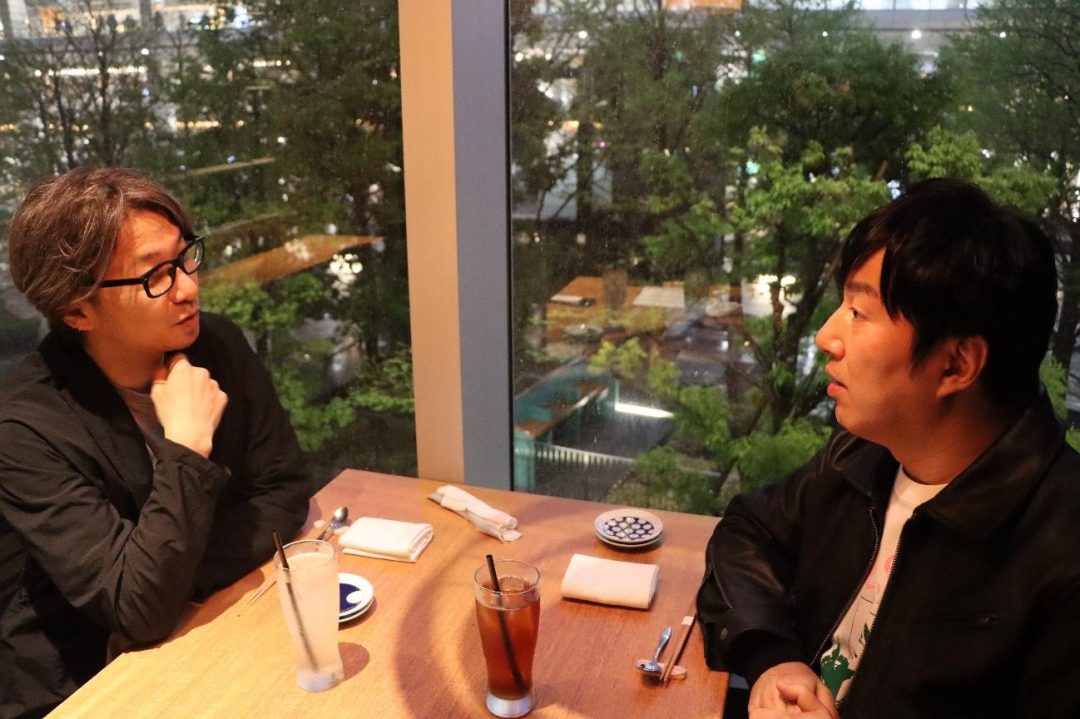
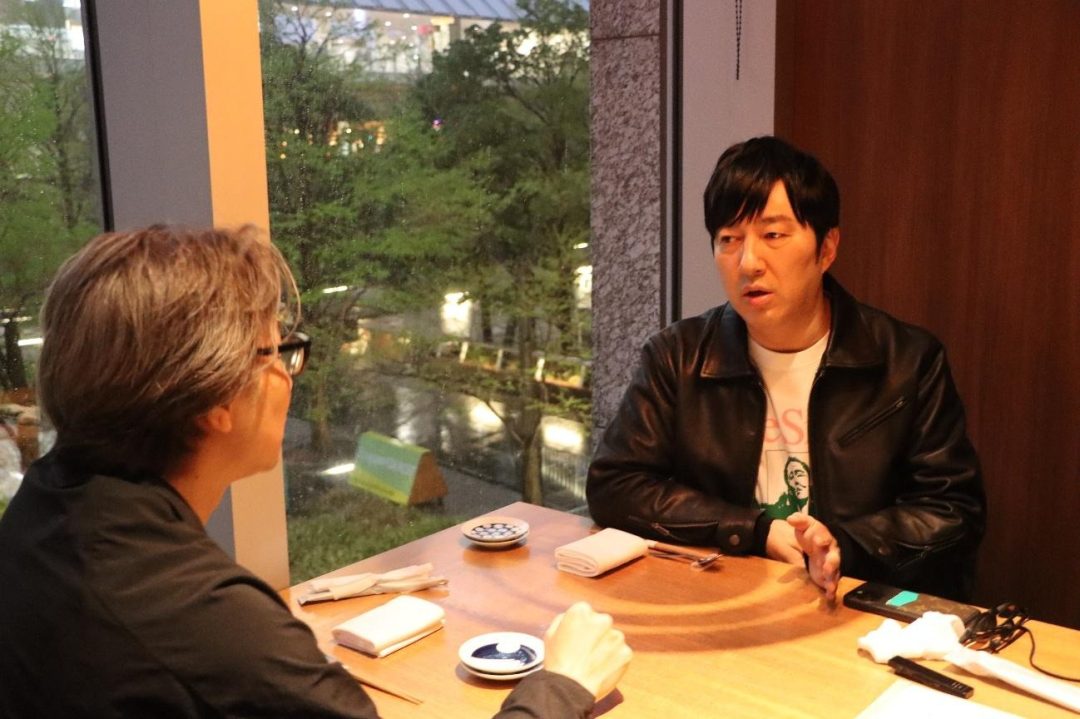
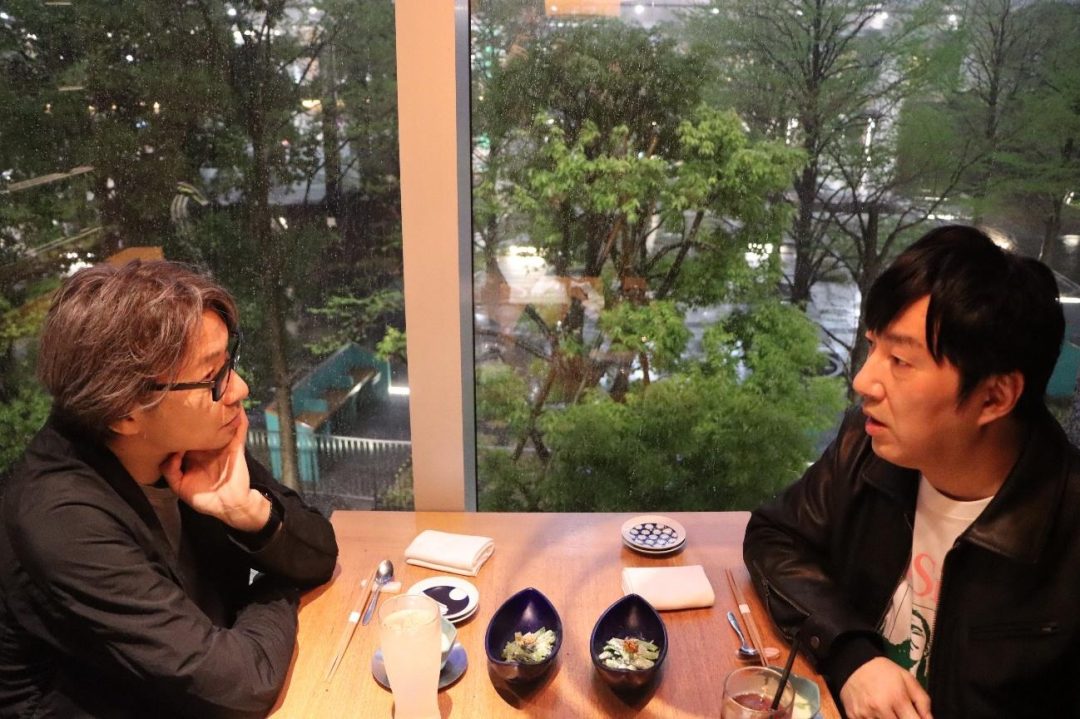
So, what kind of philosophy went into creating this game? AUTOMATON recently hosted a roundtable discussion between Grasshopper Manufacture CEO and game director Goichi Suda (Suda51), and his close friend and fellow game designer Fumito Ueda to find out. We got to hear some great stories, from Suda’s behind-the-scenes from Romeo Is a Dead Man’s development, to Ueda’s thoughts on his past work, as well as how both creators approach making games.
What follows is a condensed version of a hefty discussion that spanned over two hours at an izakaya. We recorded this on a rainy evening in late spring, so we hope you enjoy reading it with that atmosphere in mind.
Romeo is a Dead Man is full of “Suda-ness”
—Before we dive in, could both of you please introduce yourselves?
Fumito Ueda (hereafter Ueda):
I’m game designer Fumito Ueda. My main works include ICO, Shadow of the Colossus, and The Last Guardian.
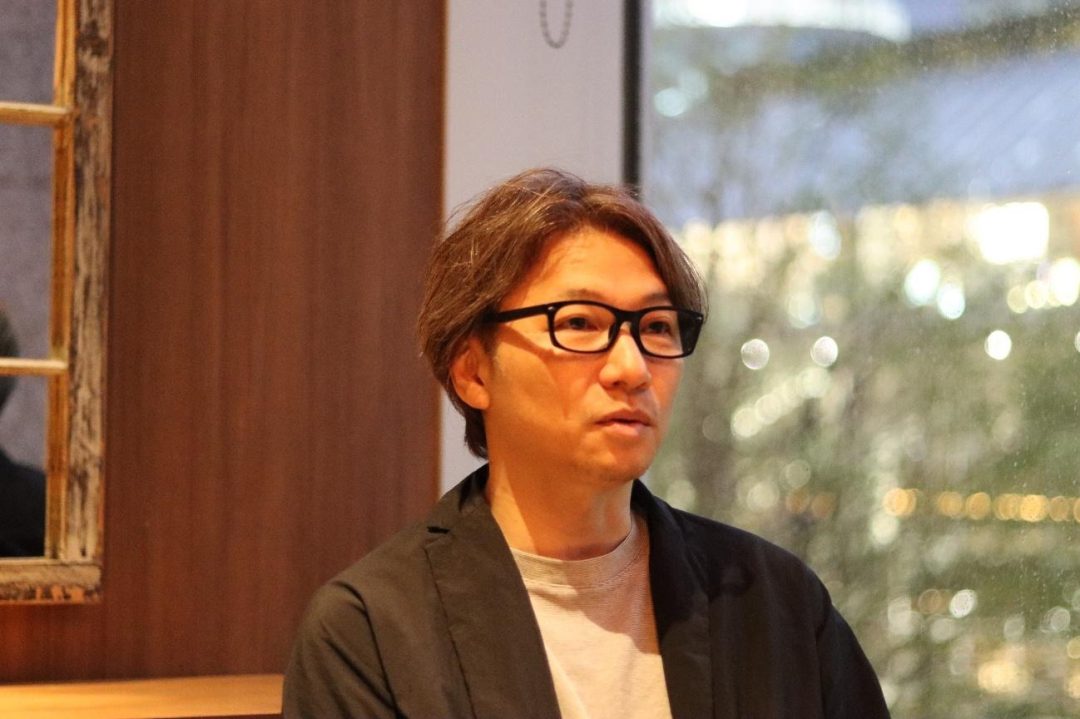
Goichi Suda (hereafter Suda):
I’m Goichi Suda from Grasshopper Manufacture. Since you offered to do an interview to celebrate the release of Romeo Is a Dead Man, I invited Ueda to join us as a guest. For Romeo Is a Dead Man, I worked as the producer, director, and writer, and I also handled quality assurance.
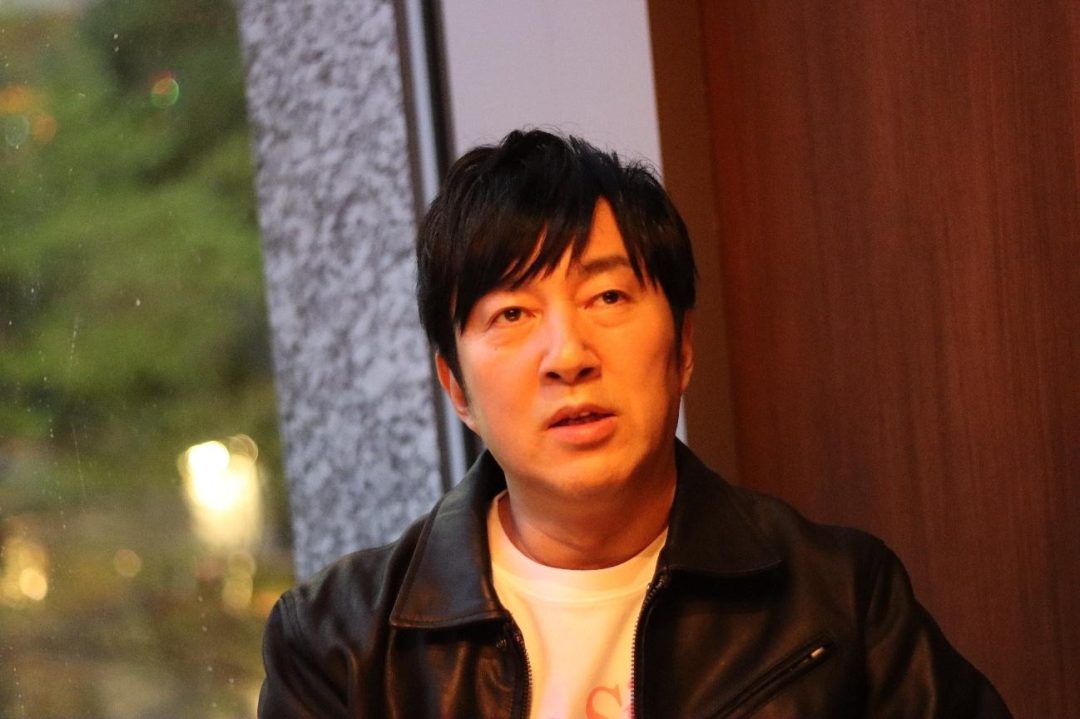
—Suda, you even did QA yourself?
Suda:
I did. I got pretty heavily involved in making adjustments right at the end of development. We do have a QA team, of course… but I might have put in just as much work as them, if not more! (laughs)
Everyone:
(laughs)
Suda:
I found a ton of bugs and really fine-tuned the visuals and animations.
—Does a game creator’s unique flair come through even during the QA process?
Ueda:
The fine details of a game – for example, the timing of transitions between scenes or mechanics – really come down to individual sensibilities. Whether it’s in the action or the cutscenes, adding or subtracting just a few frames can create a significant difference. In Suda’s case, it sounds like he expertly fine-tuned these intuitive aspects, focusing on what feels good from a gamer’s perspective.
Suda:
To use a film analogy, I put a lot of effort into what you’d call the final editing phase. I also tried to play the game with a fresh set of eyes every single time, tweaking things by considering where a first-time player might stumble. That’s something that gets harder for the dev staff and QA team to spot once they get used to the game.
So, I deliberately looked at the game through the most narrow-minded, petty lens possible and relentlessly pointed things out. I think those minor adjustments, like reducing enemy placements or making the map easier to navigate, really accumulated and paid off over time, like a series of body blows.
Ueda:
Did you spend more time on QA than on your previous titles?
Suda:
It was already in pretty good shape to begin with, but it seemed like we had time to bump up the quality even more, so I really poured time into it. I was still making fixes a week before the master build was due, though, so the production team was really mad at me. But I just kept going, figuring, “If it improves the quality, who cares?” I definitely feel like I gave it my all.
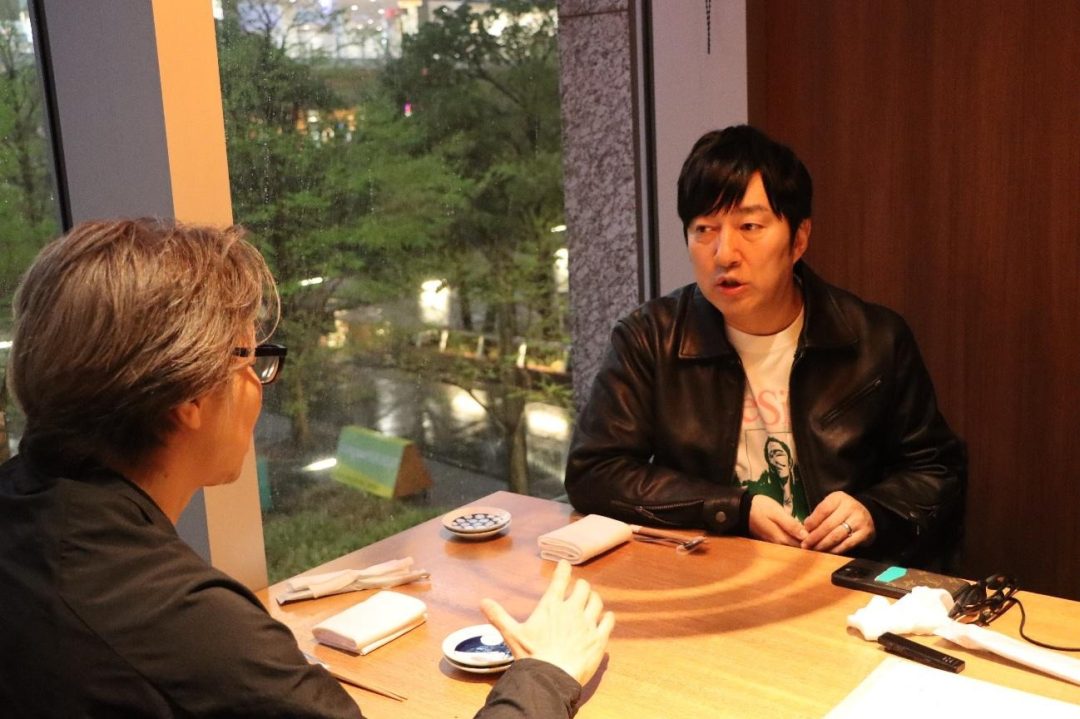
The ultimate target audience is yourself
—Ueda, how would you describe Romeo Is a Dead Man?
Ueda:
You can tell that Romeo Is a Dead Man isn’t a product of just going through the motions, yet in a way, it’s also a game that completely defies imagination.
Suda:
Even I couldn’t have imagined a Scha Dara Parr song playing in it.
Ueda:
Was that track written specifically for the game?
Suda:
It was, actually. It was kind of the result of a happy accident. When I was writing the script for a scene where the protagonist is driving, I wanted to include the song he was listening to in the stage directions. The track that popped into my head right then was “Summer Jam ’95” by Scha Dara Parr.
Ueda:
So you originally wanted to use “Summer Jam ’95”?
Suda:
Yeah. I wrote down “Summer Jam ’95” fully expecting it to be impossible. Later on, when we were breaking the script down into tasks, one of our staff members mentioned they knew Scha Dara Parr’s manager, so I asked them to reach out just in case. They actually replied, “Licensing makes ‘Summer Jam ’95’ difficult, but we’d be happy to write a new track for you.” I was really moved when they visited the studio and we met for the first time.
—You really have a knack for making things happen! Ueda, what were your impressions after playing Romeo Is a Dead Man?
Ueda:
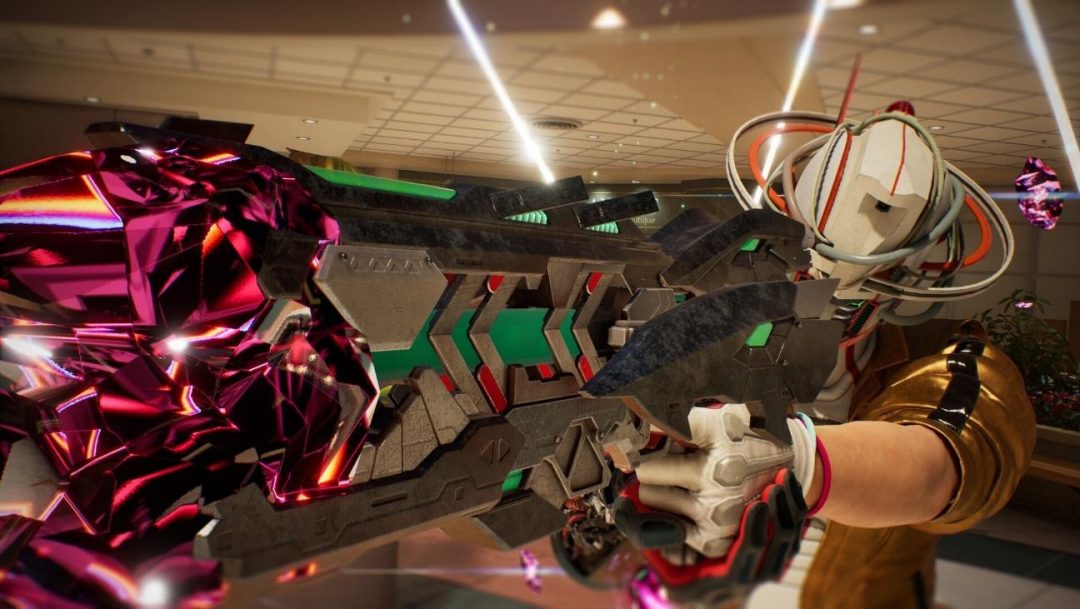
The vibe and atmosphere didn’t feel drastically different from his past titles, but the art direction was completely to my taste. The overall color palette, the live-action tokusatsu (special effects) style… I think the novelty and diversity of the visual expression is where the game evolved the most.
Suda:
That is exactly what we were conscious of this time around. There were a lot of twists and turns, but thankfully, things fell into place quite nicely. After we decided to change direction, we had to carefully examine our existing assets and find clever ways to cut things down just to scrape together the limited resources we had. Through all of that, I feel like we managed to find the right answer this time.
—There must have been a lot of compromises, yet I feel like it came together very well as a cohesive project.
Suda:
Thank you. We really gave it everything we had right up to the very end. The whole team worked incredibly hard, too. For instance, we took things we originally intended to do as 3D cutscenes and turned them into comic book panels or pixel art instead.
Ueda:
When it comes to the resources needed for game development, a massive chunk of the budget often goes into creating cutscene assets. And on top of that, if you ask whether players actually want them, the answer isn’t necessarily yes.
Suda:
Exactly. And the length of cutscenes can cause all sorts of other issues, too. I’m sure you’re the same way, Ueda, but if I start a game and have to wait five or ten minutes before I can even control my character and finally experience the game, I’m already over it.
Ueda:
It’s important to ask yourself, “What if I were the player?” We’re very similar in that regard, too. We think, “As a game designer, I’d do this, but as a player, I’d prefer this.”
Suda:
That’s right. We often look at the games we’ve made through a totally different lens and even a different personality.
Ueda:
It’s essential to do so. When making a game, you need to be able to imagine, “What would a person like this think?” I think game planners need a high degree of accuracy when running these “simulations.”
Suda:
If you’re too accepting from a developer’s standpoint, you stop being a reliable baseline for tuning the game. So, when I play from a player’s perspective, I intentionally try to be as petty as possible, like I mentioned earlier. I don’t just blindly accept everything as fun; I actively turn myself into a petty guy.
Ueda:
Yeah, I call that being mean towards the game. If you’re too soft on your own work, you’ll end up going “That works!” for everything. Though, obviously, there are times when you do need to be lenient.
Suda:
Every time, I’m reminded of how crucial it is to strike the right balance between those extremes.
—If so, isn’t it difficult for you to pin down a target player in an era where the gaming audience is so broad?
Ueda:
Ultimately, I am my own target audience. I create what I think is good based on my own sensibilities, and if that stops resonating with anyone, then it probably means it’s time for me to change what I’m doing. I feel that leaving that judgment in the hands of others wouldn’t be honest.
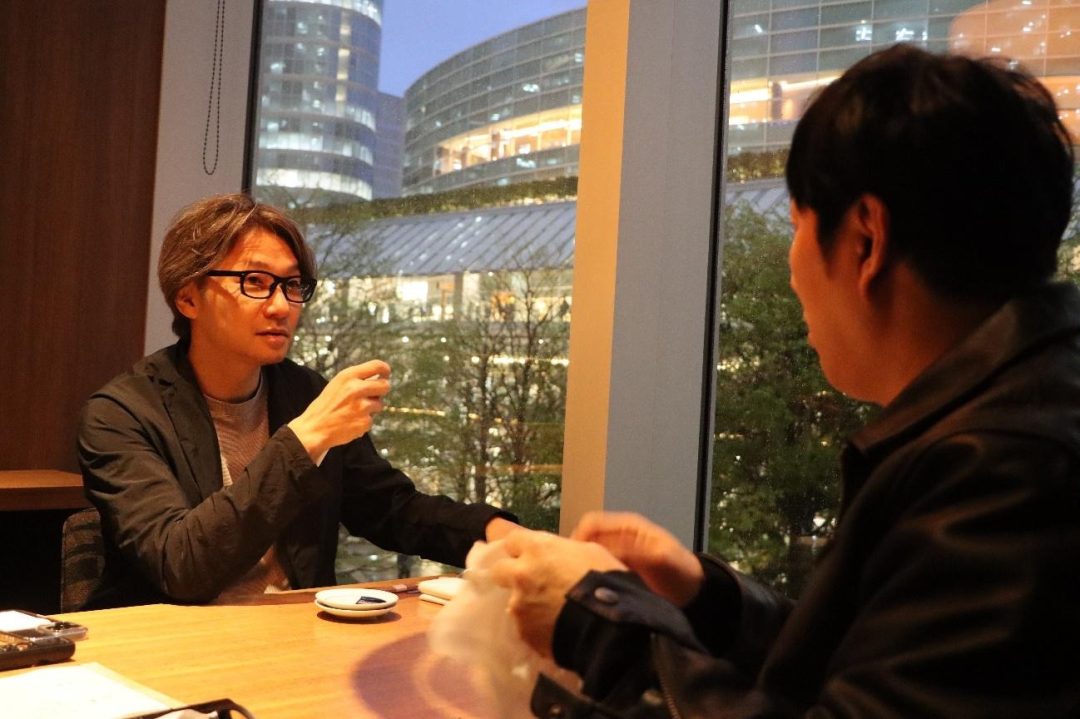
Suda:
I also rely on my own senses to make decisions, but I do ask the staff for their opinions to gain a broader perspective. For example, in Romeo is a Dead Man, the staff implemented something akin to the “Bonfires” in FromSoftware games. It’s a system where enemies reset every time you save. Personally, it felt out of place to me. But when I asked the planning team if it bothered them, they all said it made sense. I figured, “Well, if they like it, the players will too,” and ultimately accepted it. I suppose that’s another way of looking at things from the player’s perspective.
The differing cultural directions of Suda and Ueda’s work
—When I heard that the two of you were friends, I was actually surprised, given how different your styles are. How did you meet in the first place?
Suda:
We first met at a drinking get-together for creators.
Ueda:
That’s right. And shortly after that, we did a joint presentation overseas.
Suda:
Ever since that first encounter, we get together a few times a year and catch up over drinks.
—How do you feel about each other’s games?
Suda:
My games never shut up. They’re loud and they verbalize everything, so there’s a ton of text. But your games, Ueda, are totally textless – everything is expressed through the visuals, and I really admire that. I always look at them and think, “Wow, that’s incredible and beautiful.” The execution is so elegant, and your whole approach to making games is just cool.
Ueda:
…Is it, really? (laughs) Making a game without text is actually very tough.
Everyone:
(laughs)
Ueda:
Something that could easily be explained in a single word instead has to be conveyed through gestures, graphics, 3D models, lighting, spatial design, and the level design itself. While I’m making these games, I’m always thinking, “The cost-effectiveness of this is terrible…”
Suda:
I imagine it’s a design philosophy that inherently makes the development process much harder.
Ueda:
That being said, the game I’m working on right now actually has quite a bit of text in it.
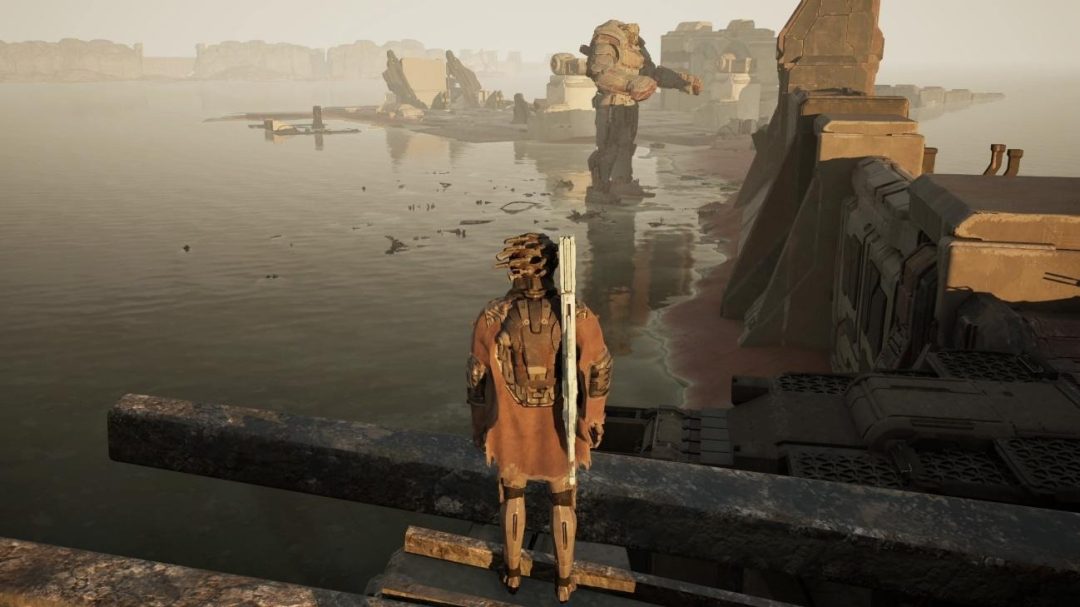
genDESIGN’s official website
Suda:
So you’ve broken free from that curse a bit?
Ueda:
Of course, there are certain types of expression that can only be achieved without text. However, trying to convey all information to the player solely through in-game presentation is incredibly costly. Guidance or explanations that would take just a single line of text have to be entirely replaced by level design and staging.
Suda:
That’s definitely true, especially when you’re trying to get a message across to a wide audience.
Ueda:
I don’t intend to change the direction of my current game drastically. But this time around, I am incorporating more information conveyed through words than I have in the past. That said, my fundamental philosophy hasn’t changed. I’d say it’s really just a natural evolution of what I’ve been doing all along.
—Ueda, what are your impressions of Suda’s games?
Ueda:
Even though the direction of our games is totally different, I think we’re aiming for similar things. Rather than falling back on standard tropes or conventions, we both have this urge to explore new forms of expression and possibilities. I think we’re alike in that sense.
Suda:
Maybe both your games and mine aim to broaden the audience of people who play video games. I’d say we definitely share that desire to expand the possibilities of what video games can be.
Ueda:
I think so. Rather than drawing ideas solely from within the realm of games, I want to pull in elements from music, film, and other visual media, even things like music videos and fashion, to deliver something people haven’t seen before. I’m always looking around while thinking to myself, “I don’t want to do predictable, cookie-cutter stuff. Aren’t there any newer ways to express this, or possibilities we haven’t tried?” You and I might be facing different directions, but we’re very alike in how we create through constant experimentation and searching.
Suda:
Because you create on the same wavelength as artists of various mediums all over the world, I think you’re able to make games that resonate far beyond the standard gaming demographic.
Ueda:
But isn’t that true for you as well? You also design your products hoping they’ll be recognized as a distinct part of culture, not just something to be covered in gaming magazines, but maybe even culture magazines.
Suda:
That might be so, but even if our goals are the same, your games end up getting featured in cool magazines like BRUTUS and SWITCH, while mine probably end up in BUBKA or Jitsuwa Knuckles.
Everyone:
(laughs)
Suda:
I do like that in its own right, but the cultural direction is just a bit different. Still, I’ve always hoped that my games would reach non-gamer audiences. That’s why I was genuinely happy when Romeo Is a Dead Man got featured in an article in The New York Times.
Shadow of the Colossus stays in Suda’s memory as a real adventure
—Do you have any games from one another that left a particularly strong impression on you?
Suda:
Shadow of the Colossus. It was the third or fourth enemy, the guy at the top of a slope you have to climb. There’s a part on the way up where you have to make Wander jump sideways, and I was terrible at it. But as time passes, parts like that are exactly what stick with you as memories of an adventure.
Ueda:
So even things the creators didn’t necessarily intend, including those “difficult” parts, or elements that are a bit unforgiving or clunky, are what actually end up being memorable.
Suda:
Exactly, that’s what makes it an adventure. It stays with you as a memory of a genuine adventure.
Ueda:
If I saw that today, I’d probably think I have to fix it. I’d look at the playtest results and immediately think, “If players are struggling here, we need to patch it right now.”
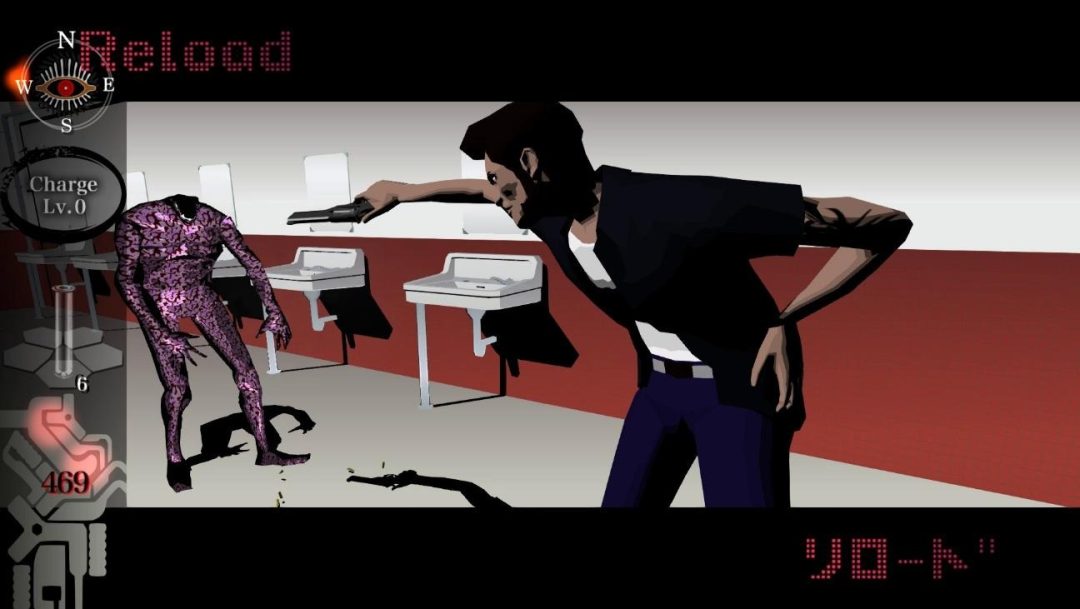
As for a game of yours that sticks in my memory… it’s killer7. Your games leave such a strong impression with their narratives, so it was a bit surprising, in a good way, that you really thought through the mechanics, too. I remember playing it and realizing, “Oh, Suda really loves this side of game design as well.”
Suda:
I’m really glad to hear that. It’s true, I do put a lot of thought into mechanics too.
Ueda:
killer7 uses on-rail movement, right? Back then, everyone making 3D games was obsessed with freedom of movement, so it was striking to see you completely cut that out and question if that level of freedom was truly necessary. I think doing so clearly communicated the resolve behind your choices right through the final product. It stripped away any redundant padding and increased the purity of the experience you wanted to deliver. Usually, people aren’t willing to make such a clean cut.
Suda:
Of course, I was told people don’t normally do that. But the whole look of that game was about creating the coolest visuals possible, so I wanted to prioritize the camera. Fixing the camera allowed us to nail those perfect shots. Even now, I think limiting freedom of movement in killer7 was the right call.
Ueda:
I think it’s not fully a matter of having low freedom, either. You can move forward and backward, and there are options for interaction, but you remove the annoyance of controlling the camera or dealing with unnecessary choices. I feel like that approach is still completely valid for making games today.
Suda:
I’m also particular about the number of buttons we use. Romeo Is a Dead Man actually uses quite a lot of buttons, but deep down, I always want to reduce that number as much as possible.
Ueda:
Right, that way, even complete beginners can jump in and enjoy it if it catches their eye.
Suda:
Exactly. If possible, I’d still love to take on the challenge of making a full-on game that only requires the left stick and two buttons.
Ueda:
The problem is, when you reduce the number of buttons, that also limits the choices of what the player can actually make. Plus, gamers today are much better at handling controllers than they used to be. So, something that felt fine back then might feel a bit lacking now. Players have already learned those mechanics and mastered that level of difficulty, which means we have no choice but to stack things and make it even harder. It’s a tricky balance.
Suda:
That steady rise in difficulty is a real dilemma for action games.
—Do you feel that players today are more skilled than they were in the past?
Ueda:
Definitely. Nowadays, using an analog stick is second nature to us, but when Super Mario 64 first came out, I couldn’t even run in a straight line to save my life.
At the time, I honestly thought, “Wouldn’t a D-pad be better for this?” But you gradually get used to it, and now playing with an analog stick is just a given. I think the same thing has happened with players’ overall skill levels.
That being said, people who don’t play games very often, or who are picking up a controller for the first time, will probably still find it a bit overwhelming.
How we perceive instinctive, and sometimes inevitable, portrayals of violence
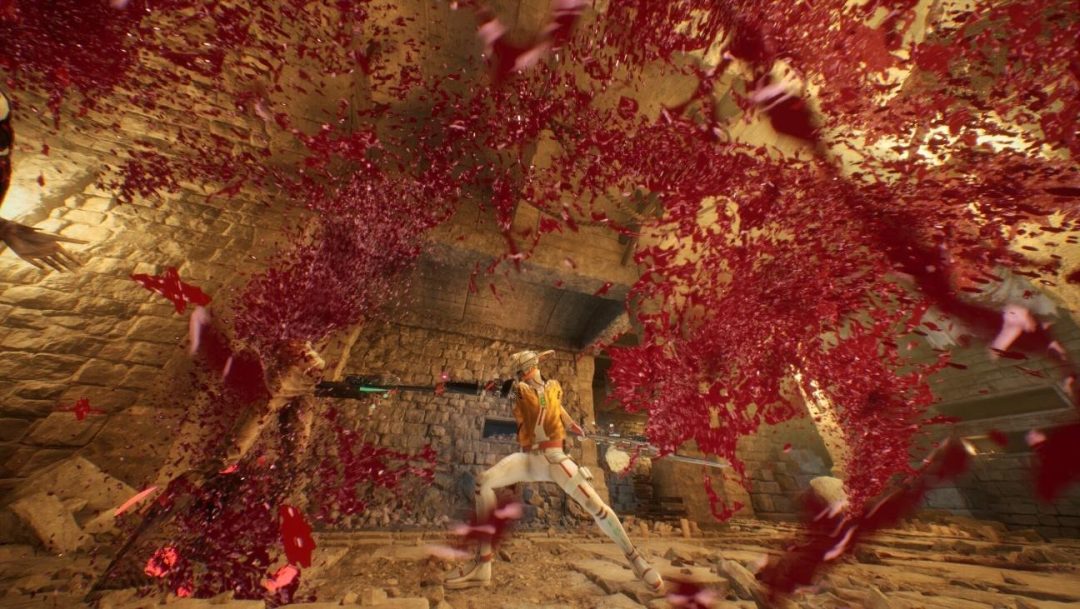
—Both of your games feature elements of striking or taking down enemies. What is your intention behind including depictions of violence? In your case, Ueda, it’s ruthlessly stabbing the Colossi in Shadow of the Colossus, while your games, Suda, are just absolutely drenched in violence.
Suda:
You know the term “Game Over,” right? That state where you lose to something and it’s all over. I wouldn’t call it a curse, but action games inherently have this concept of fighting and battling baked into them right from their inception. So, I just have this inherent feeling that combat has to be the foundation of what I make.
Since I design with that premise in mind, instead of removing the violence, I focus on how to portray the life and death of the characters, ensuring that the violence serves a meaningful purpose.
—If someone told you to strip your games of violence, could you do it?
Suda:
I’ve got a few concepts stored up in my head right now, but every single one of them involves fighting and violence…
—(laughs)
Ueda:
When it comes to triggering an interaction by pressing a button, if you’re following the basic principle of creating “exhilaration,” you’re naturally going to end up with more violent depictions, I think.
Suda:
Yeah, physical impact is just inherently satisfying.
Ueda:
I’m sure there are other ways to do it, but it’s just intuitive. For example, in a 2D side-scrolling action game, if you think about the best thing that could happen when you press a button, the first thing that usually comes to mind is some kind of vertical movement. And when you think about what you can do vertically, you naturally land on ideas like stomping on things or breaking blocks above you.
Of course, making that actually fun to play is a completely different story. But given the constraints of a side-scroller, when you try to create a prominent interaction from a single button press, I think heading in that direction is, in a way, a natural progression.
And when you transition to 3D, that turns into closing the distance to attack an enemy, or aiming and shooting. I’m sure there are other gold mines out there to tap into, but when you prioritize clarity and instinctive satisfaction, it makes sense that so many games naturally gravitate toward those mechanics.
Suda:
It’s probably the most natural thing in the history of human existence.
Ueda:
Well, that’s the beauty of fiction.
—On the other hand, Ueda, it feels like you manage to maintain a certain distance while still handling depictions of violence very well.
Ueda:
I suppose so. I’ve mentioned this in various interviews, but ICO has almost zero violence, and what little there is was heavily softened. While some people found that refreshing, it also came across as a bit lacking to hardcore gamers.
Even in ICO, there were action sequences where you swing a stick to drive away enemies, and we certainly could have leaned into more brutal depictions for that. Since my background is in animation, I’m actually pretty good at making those kinds of visuals. But that just wasn’t what I wanted to do with ICO at the time. There were many games like that in the market already, so to make it stand out, I deliberately avoided leaning into violence. I wanted to create a game where people could find value in something a little different from the thrill of action.
However, building from that experience, I decided I wanted to tackle my own way of expressing violence, and the result was Shadow of the Colossus.
—Following Shadow of the Colossus, did you experience a shift in how you approached violence when you moved on to The Last Guardian?
Ueda:
With Shadow of the Colossus, the violent elements tied in with the tragic nature of the story, and I was satisfied with how it turned out. After that, hardware shifted to the PS3, and I had to step back and rethink what I should aim for next.
Ultimately, with The Last Guardian, I wanted to create a game focused on the relationship and emotional connection between a human and a creature. In that sense, I suppose I circled back a bit to a direction closer to that of ICO.
Suda:
I also had a phase where my games changed genre with every single release. Because I was teaming up with a different publisher each time, every project felt like a do-or-die situation.
Ueda:
But I feel like Grasshopper Manufacture isn’t the kind of studio people look to for safe, predictable releases at a steady pace. I think it’s a studio that keeps people excited because they never know what you’ll come up with next. I’m sure publishers were expecting exactly that from you, too.
What it takes to be a game director
—Both of you have such distinct creative voices, but do you have any “disciples” who have inherited your approach to game development? Or, conversely, a mentor from whom you learned the ropes?
Ueda:
Do you have anyone you’d call a mentor, Suda? I was self-taught when it came to CG, and it’s not like anyone taught me game design, either. In that sense, I’ve never really had a specific mentor.
Suda:
I don’t really have one, either. I originally made my debut working on the Fire Pro Wrestling series back at Human Entertainment. In that regard, Masato Masuda, the creator of the series, could be considered a mentor, but he feels more like the franchise’s founding father and a highly respected industry veteran to me rather than a mentor.
That being said, even after establishing Grasshopper Manufacture, I continued to make games based purely on my own instincts, but when it came to making killer7, Shinji Mikami (CEO of UNBOUND) taught me everything there is to know about action game design. So, if I had to name a mentor, it would probably be Mikami.
—You and Mikami are quite close, right?
Suda:
Yeah. Ueda is too. The three of us grab dinner together sometime.
Ueda:
Yes, he’s always been very good to us.
—So for you, Suda, Mikami is both a friend and a mentor.
Suda:
Mikami taught me something like a “sense for frames.” Up until then, my internal sense of timing for adventure games and action games were completely different. Then I saw Mikami making adjustment after adjustment right in front of me, and everything just clicked perfectly into place. It blew me away.
Since some of our veteran staff worked on killer7 alongside Mikami, there’s a part of Grasshopper Manufacture where the know-how of Mikami and Capcom still lives and breathes. In your case, Ueda, couldn’t Kenji Eno be considered your mentor?
Ueda:
When I was at Warp, I was mostly a CG animator creating cutscenes, so I wasn’t deeply involved in game design or mechanics. I don’t actually have any memories of discussing those sorts of things directly with Eno. I got to where I am today just by observing and imitating the games Warp was making, along with the Western games I already loved playing.
Suda:
You’re a fan of Another World, right? When I played your games, I saw glimpses of it, that feeling of being thrown into a situation with no text, yet the environment itself tells you exactly what you need to do. Later on, when we met and you told me you were indeed a big fan of Another World, it made perfect sense.
Ueda:
Though, as time goes by, the specific things that draw me to that game have slowly changed. Still, the games that impact you when you’re young always remain special.
Another World has entirely unique mechanics, and the difficulty spikes and dips in ways you can’t predict at all. It’s just so avant-garde.
—It seems both of you largely learned the ropes on your own. Out of curiosity, what kind of director do you consider yourselves to be?
Ueda:
Suda, have you ever actually seen how another director directs?
Suda:
I did see Makoto Shibata’s direction up close when we worked on Fatal Frame: Mask of the Lunar Eclipse. As for what kind of director I am, I’m probably the last person who’d know, but I’m definitely not the type to silently lead by example. I talk a lot.
—Since we have one of your staff members here with us, why don’t we ask them?
Staff member:
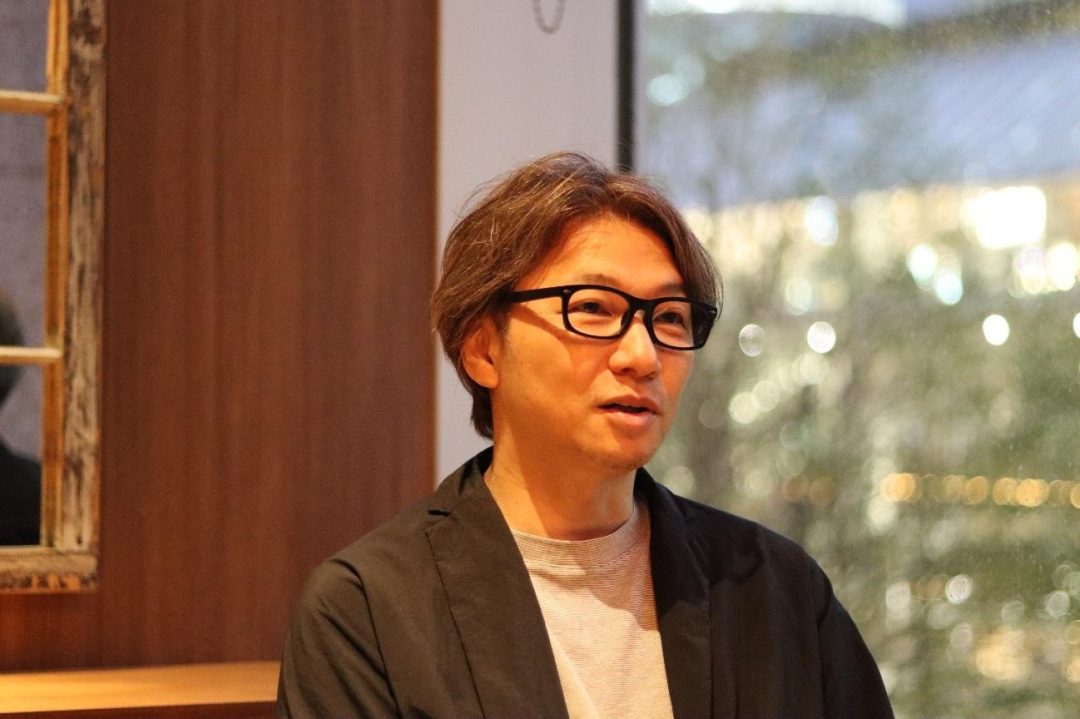
At various stages of game development, Suda is usually right there next to you. Whether it’s brainstorming ideas, right in the middle of production, or during the final adjustments. Everyone on the team does their absolute best, but Suda always comes in at just the right moments to sprinkle his “magic dust.” By the time it’s all done, you look at it and go, “Yep, this is a Grasshopper game.”
Suda:
That makes me sound so cool.
Everyone:
(laughs)
Staff member:
I wrote some of the text for Romeo Is a Dead Man outside of the main scenario, but no matter how hard I try, I just can’t write like Suda. I can’t mimic his vibe even if I try. That’s why I think it’s less about learning his style and more that he’s just completely one-of-a-kind. Another thing I noticed after joining the company is how he handles himself as a CEO. He has this incredibly broad awareness, keeping an eye on everything both inside and outside the studio, not to mention his negotiation skills.
Ueda:
I get the same impression. In contrast to his somewhat extreme creative style, Suda really conducts himself with the maturity of a seasoned business executive.
Everyone:
(laughs)
Ueda:
Even with things like mid-year and year-end gifts, or how you interact with superiors and clients. You’re very polite and attentive. Maybe it’s because you have a lot of experience in the working world, but there’s definitely a gap between that grounded side of you and your creative style. Where did you learn all that, Suda?
Suda:
My wife. She’s a police officer’s daughter, and according to her, “Sending mid-year and year-end gifts to your superiors is just common sense.” She told me I needed to make sure to do it, and I’ve been doing it ever since.
—Both of you have to manage the business side of things as CEOs in parallel with your creative work as game directors. Isn’t that exhausting?
Ueda:
In my case, fortunately, I don’t do business with that many different companies, so it might not be quite as tough for me.
—What about you, Suda? Is it tough?
Suda:
Hmm, I suppose it is.
Ueda:
What would you do if someone told you that you didn’t have to do one or the other? Like, if someone offered to handle the management side for you?
Suda:
When I really have to push hard on the business side, it eats up a lot of my mental bandwidth, so I might actually appreciate that.
However… the company is approaching its 30th anniversary soon, and when you run things for that long, there are always ups and downs. Now I’ve come to actually get a burst of energy when we’re in a pinch. A different kind of adrenaline kicks in during moments of adversity, which is fun in its own way. The second we hit a crisis, my brain starts racing with all sorts of ideas on how to overcome it. I guess that’s a trait you develop from being a CEO.
Ueda:
So there are benefits to firmly handling both roles, then.
Suda:
There are. You get to see completely different landscapes. For instance, if you were purely a creator, you’d never have the opportunity to go through the process of taking out a massive loan from a bank. Putting on a suit, going to the bank, stamping your seal, and finding yourself in a situation where you are shouldering this huge debt…
But that experience turns into energy. It’s precisely because I’m carrying that weight that the feeling that I have to protect my company and everyone’s livelihoods just keeps getting stronger. The sights I’ve seen and the experiences I’ve had from that position have truly become flesh and blood for me, and they definitely influence my creative work. I actively make sure they do.
Ueda:
By the way, you’ve worked on a lot of contract projects as well as original titles over the years. Which did you find to be better?
Suda:
Both, really. What builds up the staff’s experience the most are the contract projects based on existing IPs. They don’t have to agonize over the core mechanics and can just focus on how to best “cook” the ingredients provided, so they grow a lot in a short time. But if you do too much of it, the backlash is that you lose the ability to create original titles. They both have their benefits.
Ueda:
I see. Then, on the flip side, what is something you can only gain from working on an original project?
Suda:
Well, for example, with Romeo Is a Dead Man, we started out with a core team of about 20 people. Later on, that peaked at around 60. That means over half of the team were new people who were making a game with us for the very first time, and they came from totally different corporate cultures and backgrounds across the gaming industry.
Even when I explained what kind of game Romeo Is a Dead Man was during our briefings, they couldn’t picture the final form. They had to push forward with development while carrying that anxiety. But in the end, they got to have this bizarre experience of, “I made a game with this weird director, and when we finally put it out into the world, it surprisingly got really high praise.” I think having that strange experience is exactly the benefit.
—(laughs)
Ueda:
So it’s not just the finished product, but the experience of getting there itself that becomes a huge asset for the staff.
Suda:
Yeah, I like to think it does. The internal playtest reports that came back during development were just full of people tearing the game to shreds. But when they finally played the finished product, if they were able to feel how much it transformed, then I feel like I managed to prove my vision through the final results.
—So you also managed to fulfill your duties as a CEO, in the sense of nurturing the next generation and making the company grow.
Ueda:
Suda, what do you tell the younger generation today about what kind of person can become a director, or who is best suited for it? The demands of the role have definitely increased compared to the past. Do you think it’s about having a broad range of knowledge and technical skills, or some other quality entirely?
Suda:
The kind of person who can become a director today… I honestly can’t picture a universal archetype for it.
Ueda:
Is it someone who can do a wide variety of things, not just planning, but programming and other areas as well, or is it perhaps someone with a strong will? I feel like the expectations placed on directors have grown significantly compared to the old days. Since it’s a job that comes with a heavy burden of responsibility and pressure, I suppose passion and a sense of responsibility are what ultimately keep you going.
Suda:
I feel like what helps you break through that pressure is passion, combined with the person’s own x-factor. You worked in a different field before entering the game industry too, didn’t you, Ueda? I’d bet the experience you gained back then plays a huge role.
I had all sorts of jobs before entering the game industry, and those experiences have really paid off. Back when I worked at a bag store, I had to deal with battle-hardened buyers. It was a job where I had to win over these shrewd veteran buyers and convince them to make a purchase. You absolutely couldn’t pull the wool over their eyes, so I had to earn their trust through sheer passion.
Truth be told, that’s been the most useful skill for me since joining the game industry. If a total nobody like me suddenly gets made into a director and starts trying to make Fire Pro Wrestling, the staff obviously aren’t going to listen. But I gradually chipped away and earned their respect. Compared to dealing with those buyers, it was actually a walk in the park. I think a lot of what makes a good director comes down to those aspects that have nothing to do with actual game development.
Ueda:
So, you’re saying that the “x-factor” added to that passion might be something like a way with words, technical prowess, or even coding skills.
Suda:
Exactly. That’s why I think being a director is actually pretty close to a customer service job. It’s all about figuring out how to make the staff across every department, like programmers, designers, and sound engineers, feel good about the work they’re doing. If you can’t get people to think, “I want to work with this guy again,” you probably won’t survive as a director.
Ueda:
To begin with, I think the way people view careers nowadays is completely different from our time. Back in the day, a lot of people aimed to become directors because they wanted to make their own game someday, but today there are so many different ways to make your mark.
Suda:
You do still occasionally see young people aiming for it, but we’re in an era where if you want to make a game, you can just do it in the indie scene. At the indie scale, it’s much easier to become a director.
Ueda:
Back in our day, we didn’t have the indie game environment that exists now, so if you wanted to make a game you came up with, you had to either buy expensive development hardware or join a game company. So, if you wanted to bring your ideas to life, aiming for that kind of position within an organization was really your only option.
Suda:
That being said, there are a lot of people in development who absolutely hate the idea of moving into management. There are quite a few folks who don’t want to manage people, but as they get older, they automatically “graduate” from frontline development and end up taking on management roles out of necessity.
Creating “fresh flavors” you’ve never tasted before
—Your perspectives on what it means to be a director are fascinating. When you’re directing a project, is there anything you absolutely refuse to compromise on?
Suda:
For me, it’s rhythm. When pulling players into the world of my game, I’m highly conscious of how to build that rhythm, whether it’s making the internal tempo feel comfortable, or intentionally introducing some noise. If you compare it to music, I’m always thinking about the overall rhythm and flow of the entire “album.”
Ueda:
I tend to want this and that, so I don’t really have one specific, clear-cut thing. But if there’s one element I absolutely cannot leave out, it’s freshness. Even when I’m playing other games, if I play for a bit and immediately recognize the “taste” from somewhere, I struggle to find the motivation to keep going.
You know how when you look at the packaging of a bento box at a convenience store, you can somehow already imagine exactly what it’s going to taste like in your mouth? Because I’ve had it so many times, the second I see it sitting on the shelf, I often think, “I’ve had enough of this flavor.” I don’t want to create things like that. At the same time, I don’t believe that “as long as the flavor is unpredictable, it’s okay if it tastes terrible.” I want it to look appetizing, but also offer a fresh flavor you’ve never experienced before. I really want to maintain that approach.
Suda:
The bento box metaphor is really interesting.
—On the other hand, there is a trend for gamers who value their disposable time to seek out “games that are like [Game X].” I imagine this presents a dilemma for both of you. Is there ever a temptation to make the kind of “game like ___” that users are asking for?
Ueda:
I feel like unless it’s something where you can somewhat imagine the flavor, but it’s actually a taste you haven’t experienced yet, people won’t even pick it up.
—I see. Do you design your games with that user experience in mind?
Ueda:
I think it’s more related to key art and packaging. The same goes for mechanics though, my instinct is to choose a fresh idea even if it’s slightly less polished, rather than a highly polished but overused concept.
—Even so, familiar flavors still seem easier for users to latch onto.
Ueda:
Of course. If it’s a game completely unlike anything they’ve ever seen, they won’t be able to imagine how it tastes. So it’s necessary to make adjustments, like subtly hinting at existing genres.
Suda:
I completely agree that feeding players a familiar flavor, like through a minigame within a game, can be a lot of fun. But I have absolutely zero desire to “make a game like ___.” Going back to the culinary analogies, I’ve always wanted to eventually realize the style of El Bulli in video games.
El Bulli was a restaurant in Spain. It was a legendary place that created an entirely new menu every year. Completely new, every single year. Nowadays, people call it the “El Bulli style.” You uncover a dish and smoke comes out, or they use liquid nitrogen to freeze things right in front of you. The food was incredibly artistic, and the taste was top-tier. Plus, they were only open during the summer, so it was virtually impossible to get a reservation.
However, they suddenly closed down and disappeared. But afterward, the apprentices opened their own restaurants all over the world, passing down the El Bulli style. I want to become the originator of a style, just like El Bulli. I hope to be able to continue taking on challenges like theirs indefinitely.
—That really offers a glimpse into the creative spirit driving both of you.
Ueda:
I think game players are also looking for that sort of thing, to some extent. If you want established genres, you can look on Steam and find an endless supply, including countless highly polished titles. I just feel like there’s no need to go out of our way to aim for the exact same target.
That’s why my interests gravitate toward things that are a little unusual or feel fresh. However, there are also a lot of games out there that just rely on cheap novelty, so you can’t just say that everything new is necessarily good. Ultimately, I think it comes down to balance.
Take Shadow of the Colossus, for example. Games where you fight enemies have existed for a long time, but perhaps it was seen as fresh simply because we altered the method of how you fought them.
Suda:
But I really think your games are packed with so many of your original inventions, Ueda.
Ueda:
Thank you. We did have mechanics like the grabbing and holding on, but if you ask me whether that was highly polished, I don’t really think so. If I had made a second or third game based on the Shadow of the Colossus, it might have become something much more refined. But rather than continuously raising the level of polish, I just end up wanting to create and play things that are new. That being said, if I were to direct it all over again today, there are definitely parts I would reconsider. For instance, in all the games I’ve made, triangle was used for jumping, but I do wonder how having triangle as jump holds up in this day and age (laughs).
Everyone:
(laughs)
—I see, so there’s a high probability that the triangle button won’t be jump in your new game. Suda, what are your thoughts on Ueda’s upcoming project?
Suda:
I came here today fully believing that my mission was to extract as much news as humanly possible about your new game. So if you could just give us a tiny bit of information…
Ueda:
Um, right. …Please stay tuned for further updates.
Suda:
I thought you’d say that. I’m looking forward to it (laughs).
Romeo Is a Dead Man is available for PC (Steam/Microsoft Store), PS5 and Xbox Series X|S. The Steam version will be 20% off in conjunction with Steam Summer Sale until July 10. In its recently launched major update, the game got a much anticipated Photo Mode as well as Hotline Miami collaboration outfits. The same updates are also planned for PS5 and Xbox in due time.

This conversation between two geniuses is brilliant.
Buying a video game by Fumito Ueda, Suda51, or Yokotaro in digital format should be illegal (and I’m not looking at anyone in particular, Sony?).
Thank you for the article.
Three notes:
– The relationship shared between Ueda and Suda is shocking, seeing as they have opposite approaches to design.
– The fixed camera section about Killer7 makes me wish the game industry saw a God Hand 2.
– Suda’s experiences with post-traumatic growth are inspiring.
Thanks for the article, and for the continued high-quality of the work.
Finally got around to reading this, and I’m glad I did. Really interesting interview and a fantastic translation!