Godot is an open-source and completely free to use game engine for creating 2D and 3D games for PC, mobile, and the web. Establishing itself as an alternative to mainstream engines like Unity and Unreal Engine, Godot has been steadily attracting developers and gaining a growing market share.
That said, developers interested in using Godot are likely to have questions or concerns about the engine. To address them, we had a game developer who actively uses Godot conduct an all-you-can-ask email interview with members of the Godot ecosystem.
The interviewer was Spawi (Spark Wing Games), developer of the well-received slot-machine roguelike Slot & Dungeons on Steam. The questions were answered by staff members from W4 Games, one of the companies that supports the Godot Foundation.
It’s worth noting that while W4 Games is involved in the Godot ecosystem, the views expressed in this interview are those of W4 Games alone and do not necessarily represent the official position of the Godot Foundation. Even so, their responses were detailed and thoughtfully written, making this feel like a solid FAQ for developers interested in the current state and future of Godot.
W4Games and porting to consoles
—When porting a game from PC to consoles with W4 Consoles, which areas tend to become more challenging than initially expected?
W4 Games:
While this depends on the nature of the game and the console port, when porting a PC game to consoles, several challenging issues can arise.
One issue is related to performance and hardware. Consoles have fixed hardware and stricter memory budgets, so systems that scale on PC may need significant optimization or redesign.
A second issue is platform compliance. Each console has detailed certification requirements, and failing these can delay release more than technical issues.
A third issue is related to input and UX. Mouse/keyboard interactions may not translate cleanly to controllers, so certain areas may require redesign rather than simple mapping.
A fourth issue is that build and deployment pipelines can become more complex. Toolchains, SDKs, and platform-specific debugging differ from PC workflows, which can impact iteration.
A fifth issue is related to networking and services with respect to integrating platform-specific APIs.
—I’m considering applying for W4 Consoles myself and porting a game currently sold on Steam to the Nintendo Switch. For indie developers using W4 Consoles for console porting, what level of workload and development time should be expected? For instance, in the case of a 2D roguelike.
W4 Games:
The workload and timeline for porting a game to Nintendo Switch using W4 Consoles depends heavily on the game’s technical profile, optimization level, platform-specific features, and how “console-ready” the original PC build already is.
But for a typical indie title, for example, a 2D roguelike built in Godot, some general guidelines can be given. As a rule of thumb, if the game has been optimized for a handheld platform like Steam Deck, it’s in a good place to start working on a Nintendo Switch port.
In many cases, a relatively clean and optimized 2D game may be portable by a small team (or even a solo developer) in a timeframe ranging from several weeks to a few months.
W4 Consoles is designed specifically to reduce the traditional burden of Godot console porting by providing middleware-approved console exports and native platform integration rather than requiring developers to build their own console engine fork.
The process is similar to exporting to non-console platforms: configure the export template for the target platform, connect a devkit, and press the “Export” button, and you should have your game running on the target console.
After that, work may be required in areas such as performance optimization, memory management, resolution scaling, docked/handheld testing, and QA across different console scenarios.
For a 2D roguelike already released on Steam that supports game controllers, the process is usually much easier than for a large 3D or online multiplayer title. Genres with moderate rendering complexity and limited platform-specific dependencies tend to be good candidates for self-porting using middleware like W4 Consoles.
Smaller projects can often be handled internally, while larger or more performance-intensive games may still benefit from external porting specialists.
One of the main advantages of W4 Consoles compared to traditional porting approaches is that it allows developers to retain direct control over the process rather than relying entirely on an external porting house.
W4 Consoles significantly simplifies the deployment and porting workflow for Godot console exports while still allowing deeper console-specific customization where necessary.
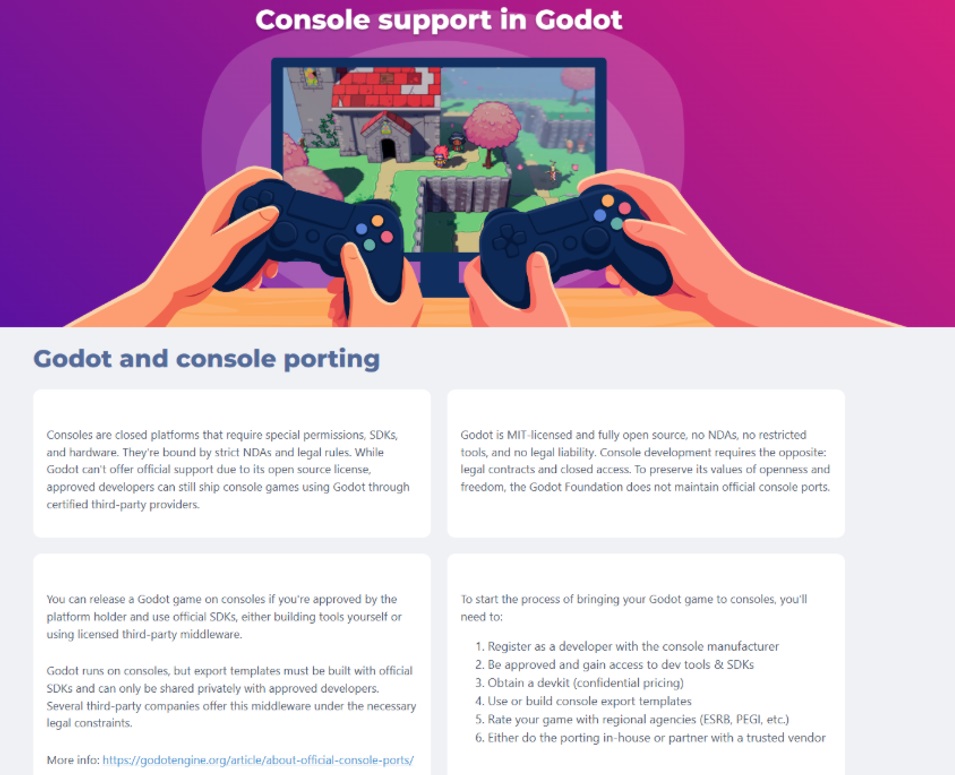
—Are there any Godot-specific hurdles or things to be cautious of when porting to consoles?
W4 Games:
Porting Godot Engine projects to consoles introduces a few Godot-specific hurdles beyond the usual console challenges.
One of the biggest is the lack of native, first-party console export in the open-source distribution. Unlike Unity or Unreal Engine, console support in Godot typically relies on third-party partners or custom platform ports, which adds cost, coordination, and sometimes limits direct control over the build pipeline. W4 Games is the main provider of approved middleware for Godot, but since Godot is open source, anyone is free to develop their own tools for console porting.
While Godot’s GDScript is supported perfectly on any platform as it’s a core part of Godot, third-party languages like C# or GDExtension libraries add some complexity to the porting process, which requires familiarity with build systems and SDKs.
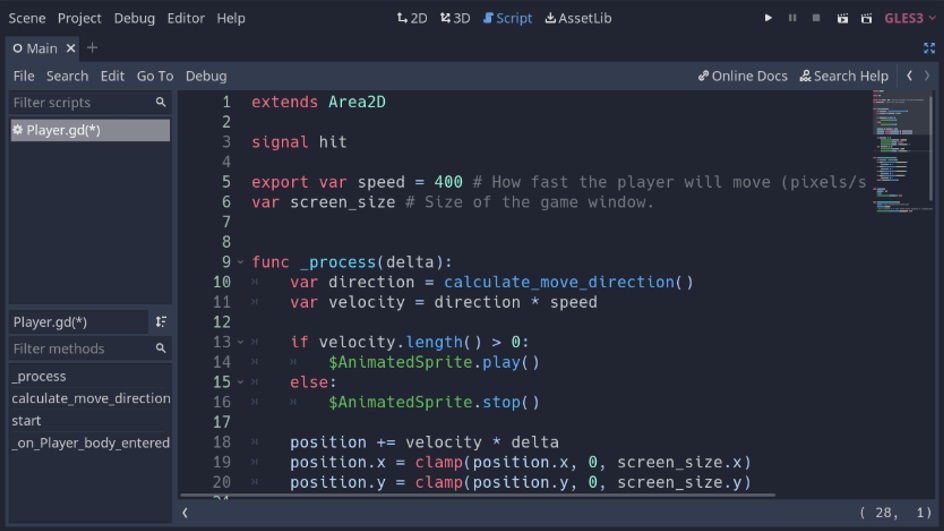
Another consideration is certification readiness. Compared to Unity and Unreal, some console-oriented tooling and workflows are still less mature or less integrated.
Finally, testing and debugging workflows are less mature. Tooling, profiling, and crash diagnostics on consoles may not be as streamlined as in more established engines.
—Regarding W4Games’ support system, what level of involvement and assistance can developers expect in practice (in terms of technical support, troubleshooting and the like)?
W4 Games:
W4 Games offers different levels of support based on the contracted plan. Standard support is limited to bug reporting and issue tracking, while premium support provides access to our online support portal for technical guidance, advisory services, and direct assistance using W4 Games products. We also offer tailor-made support packages for individual game developers’ needs, which can include dedicated engineering collaboration and co-development services.
—For developers creating commercial titles with Godot, are there any key points they should be aware of in advance?
W4 Games:
Developers considering commercial projects with Godot Engine should understand a few key points at the outset. While these are generally advantages, they do impact how developers approach development and scaling.
First, Godot’s open-source MIT license is a major benefit. There are no royalties, no revenue sharing, and full ownership of your code and game.
That said, this also means developers do not get the same level of built-in commercial support they might receive from engines like Unity or Unreal Engine if they pay Unity or Unreal Engine for support. Developers will need to rely more on documentation, community resources, or third-party providers if they need enterprise-level support.
Second, it is important to consider ecosystem maturity. Godot has improved rapidly, especially in 3D, but certain areas, such as console export pipelines, high-end graphics tooling, or large middleware integrations, may require extra effort or custom solutions.
Third, consider your team’s technical profile. Godot’s native language, GDScript, is very accessible and fast for iteration, but for large-scale or performance-critical systems, many use C# or offload some logic to C++. Planning this early helps avoid costly rewrites later.
Fourth, think about tooling and pipeline. Compared to more established engines, some workflows, such as asset pipelines, profiling tools, and debugging at scale, may be less mature. While this is not a development blocker, it does mean that developers should budget time for building internal tools or adapting their workflows.
Fifth, community strength vs. marketplace size. Godot has a large, highly active, and rapidly growing community, with some engagement metrics rivaling or surpassing those of Unity and Unreal. While the asset marketplace is smaller, developers are not limited to it alone. Many assets from other marketplaces can be adapted or converted to Godot, and the open-source ecosystem provides a wide range of community-maintained plugins and tools. As with any third-party dependency, developers should still evaluate external assets and plugins carefully for long-term reliability and maintenance.
Finally, and importantly, Godot is an excellent choice if your priorities include independence, flexibility, and long-term control. Many commercial teams choose it precisely because it avoids vendor lock-in and gives them full transparency over the engine and its source code.
Godot is absolutely viable for commercial development, but developers should understand where they will likely need to be more self-reliant and plan for it early in the development process.
Godot’s strengths and future direction
—One thing I personally really like about Godot is how lightweight it is and how quickly you can complete iteration cycles. Can we expect this speed and weightlessness to be maintained going forward?
W4 Games:
One of Godot’s defining strengths has always been its lightweight nature and fast iteration workflow, and we believe those qualities are a major reason why so many developers enjoy working with the engine.
While no engine remains completely unchanged as it grows, we believe fast development cycles, responsiveness, and accessibility are deeply tied to Godot’s identity. As the ecosystem continues to expand, we expect these qualities to remain an important priority for both contributors and companies supporting the engine.
One of the advantages of Godot’s architecture is its modular and open nature, which helps support a broad range of development styles without forcing unnecessary complexity onto every project. That flexibility is especially valuable for indie developers and smaller teams that prioritize rapid iteration and efficient workflows.
—How do you balance concerns about the engine growing heavier as new features are added?
W4 Games:
This is a very reasonable concern, and it is something that naturally comes with the evolution of any successful engine. As more developers adopt an engine and request additional functionality, there is always a balance to maintain between expanding capabilities and preserving simplicity and performance.
Our view is that growth should not simply mean adding more features for the sake of feature count. The challenge is to evolve the engine in a way that continues supporting developer productivity, usability, and efficient workflows.
We also believe the Godot community is very aware of this balance. Topics such as editor responsiveness, workflow quality, performance, modularity, and avoiding unnecessary complexity are regularly discussed by the community.
Ultimately, maintaining a lightweight and approachable development experience is one of the characteristics that makes Godot distinctive, so we expect that consideration to remain an important part of the engine’s ongoing evolution.
—Compared to other game engines like Unity or UE, what are your future differentiation strategies and strengths?
W4 Games:
Godot’s key advantages are focus, openness, and control.
First, open-source at the core. Full access to the engine lets developers inspect, modify, and extend every layer, which is critical for teams that need flexibility, long-term stability, or custom workflows.
Second, Godot is lightweight and efficient by design. Faster iteration times, smaller builds, and lower hardware requirements make it attractive for indies, emerging markets, and increasingly for larger studios seeking efficiency.
Third, developer ownership and transparency. No royalties, permissive licensing, and a governance model that reduces platform risk compared to closed ecosystems.
Fourth, modularity and extensibility. A growing ecosystem of tools and the ability to integrate custom pipelines without fighting the engine.
Fifth, community-driven innovation. A global contributor base accelerates feature development and ensures priorities reflect real developer needs.
Looking ahead, the Godot project intends to keep its focus on being the best generalist tool for developers to publish games to PC, mobile, web and consoles. Usability and stability are some of the guiding principles of the development, ensuring that Godot developers can rely on the engine for their current and future games. The current priorities defined by the Godot team can be found on the Godot website.
—On the other hand, how do you perceive Godot’s current weaknesses or challenges?
W4 Games:
While Godot has many strengths, it also has weaknesses, especially when compared to engines like Unity and Unreal Engine.
First, high-end 3D and rendering maturity is still catching up. While improving rapidly, certain issues, such as rendering pipeline customization, reliability of advanced lighting effects, graphics driver compatibility, and performance instability can arise in projects.
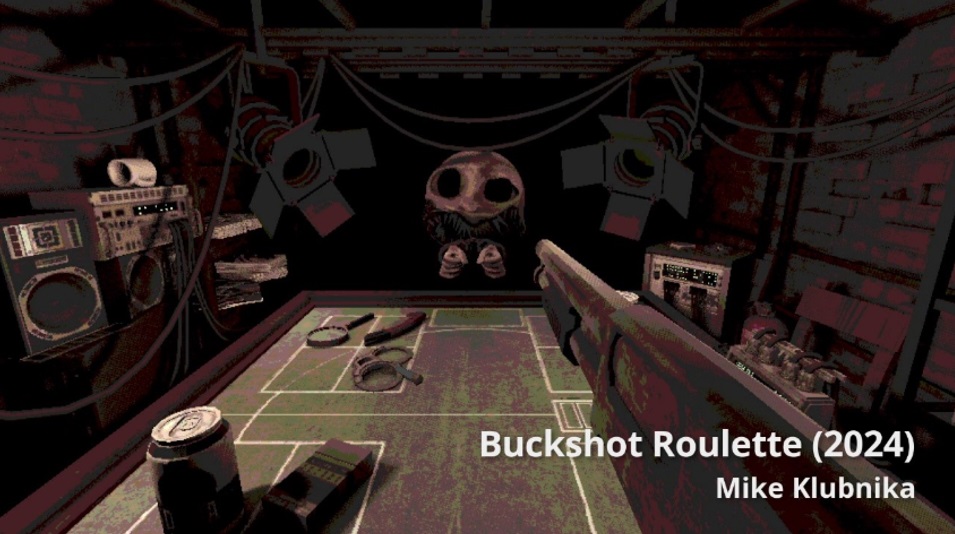
Second, there is room for improvement regarding tooling depth and ecosystem. Compared to Unity/Unreal, Godot has a smaller asset marketplace, fewer mature third-party tools, and less automation in areas such as asset pipelines and large-scale production workflows. This can become a factor particularly in more complex projects.
Third, console and enterprise support are structured differently compared to engines backed directly by a single commercial vendor. In the Godot ecosystem, these services are typically provided by specialized companies and partners rather than by the core open-source project itself. Companies such as W4 Games help fill that gap by offering commercial support, console platform integrations, enterprise services, and custom development assistance, often with direct involvement from senior engine contributors and maintainers. This model can provide strong flexibility and value for studios, but it also means customers may coordinate with third-party commercial partners in addition to the upstream open-source project, particularly for changes or approvals that ultimately depend on the broader Godot project governance process.
Finally, open-source governance challenges: while a strength, it also creates some challenges, including limited maintainer bandwidth and even a recent surge of low-quality AI-generated contributions, increasing maintainer workload and review overhead.
While Godot is powerful and evolving quickly, it is still maturing in high-end production, ecosystem depth, and operational scalability
Godot’s sustainability and support
—To what extent can developers feel confident about long-term support and stability of the engine?
W4 Games:
While no technology ecosystem can offer absolute guarantees about the future, we believe developers can take meaningful confidence from both the structure of the Godot ecosystem and the momentum it has built over time.
One of the key strengths of Godot is that it is an open-source engine with a large global contributor community. Unlike proprietary engines that depend entirely on the direction of a single company, Godot benefits from contributions across independent developers, studios, educators, infrastructure providers, and supporting organizations. That creates a broader foundation for long-term continuity and evolution.
We also believe the ecosystem has already demonstrated significant long-term commitment through more than a decade of sustained development, continuous engine improvements, expanding platform support, and increasing adoption across both indie and professional projects.
Companies such as W4 Games are also helping strengthen the professional ecosystem around the engine by contributing tooling, console support, infrastructure, and commercial services that can help developers ship and maintain products more effectively.
Ultimately, confidence is built through consistent execution over time. As more commercial games are successfully launched with Godot, and as the ecosystem around the engine continues to mature, we believe developers will continue gaining confidence in Godot as a viable long-term development platform.
AI and game development
—How do you view the compatibility between AI coding tools (such as ChatGPT) and Godot?
W4 Games:
Compatibility between AI coding tools like ChatGPT and Godot Engine is generally strong and in some ways, a natural fit.
Godot’s clean architecture and scripting approach (GDScript) make it relatively easy for AI tools to generate, explain, and debug code. The engine’s documentation and source code are open and consistent, which improves output quality compared to more opaque or fragmented ecosystems. The engine also stores its settings and resources in plain text files during development which makes them easily accessible to AI coding tools.
A key advantage is accessibility: developers can use AI to rapidly prototype mechanics, generate boilerplate, or troubleshoot issues without needing deep prior engine expertise. This aligns well with Godot’s goal of lowering barriers to entry.
However, limitations exist. AI tools are often stronger with mainstream languages and engines, so edge cases in GDScript, newer features, or less-documented subsystems can produce weaker or outdated suggestions. Also, because Godot evolves quickly, version mismatches can lead to incorrect code.
Another challenge is integration depth. Unlike more mature ecosystems, there are fewer native plugins or workflows that embed AI directly into the editor.
Overall, while compatibility is high and improving, particularly for scripting, learning, and prototyping, it is still maturing for advanced, production-scale workflows.
—I also develop using Godot, and I’ve come to sometimes rely on AI for things like interpreting error messages. Are there recommended ways or best practices for developers to effectively use AI?
W4 Games:
Neither W4 Games nor the Godot Foundation have prepared formal guidance regarding the use of AI tools in connection with developing video games with Godot.
AI tools, like many other software development tools, may present both advantages and disadvantages depending on the particular use case, and these considerations should be evaluated carefully on a case-by-case basis by developers and studios.
In practice, outputs generated by AI systems should be reviewed critically, particularly in connection with engine-specific functionality, API compatibility, performance implications, and code quality.
Because Godot evolves quickly across versions, developers should independently verify AI-related technical suggestions against official documentation and their own testing processes.
AI tools are best viewed as optional assistive technologies rather than authoritative sources, and their usefulness depends heavily on the experience of the developer, the quality of the prompts provided, and the specific development context.
—Given that Godot is open-source, are you concerned about maintenance challenges due to an increase in AI-generated pull requests? I know maintainers have expressed this sentiment previously.
W4 Games:
Like many open source projects, Godot indeed has to contend with a surge of low-quality, AI-generated pull requests which put pressure on maintainers. Those contributions range from pure spam from bots “farming” contributions to enhance their GitHub profile, to well-intentioned but often technically incorrect AI-assisted contributions which waste maintainers’ time.
Contribution guidelines require that AI-assisted contributions should be disclosed, but most new contributors omit to do it, and maintainers have to constantly guess whether they’re talking to a human or an AI agent, which is draining.
Godot is first and foremost a community project, and values the human interactions and the build-up of expertise so that new contributors can turn into long-time maintainers. Maintainers are happy to invest time in helping new contributors make good pull requests that can be merged upstream, but this incentive falls flat if they are remotely operating an AI agent that cannot learn.
So for the most part, AI-assisted contributors are not desired by the Godot maintainers, who see them as a net negative at this time.
The Godot community and ecosystem
—Since Godot is a community-driven engine, do you see any challenges related to resource shortages (such as information or talent)?
W4 Games:
As Godot is an open-source engine, it relies heavily on contributions which are voluntary in nature. So far, contributions have been very strong and this has been responsible for the rapid growth of the engine. However, contributions have been growing at a slower rate than our community. This is partly due to the increase in complexity of the codebase as the engine matures, but also reflects that it is difficult to scale up a team made up mostly of volunteers to the size required by a big project like Godot.
But indeed, while Godot doesn’t lack in code or documentation contributions, it is bottlenecked when it comes to qualified reviews from maintainers. The work of maintainers is demanding as they are responsible for the quality and long-term maintainability of the engine, as well as its fitness for purpose. Most of them are also voluntary, and not all engine areas are well covered by experts who can review pull requests.
The Godot Foundation’s goal to solve this bottleneck is to be able to hire at least one maintainer to cover each area of the engine (rendering, scripting, audio, physics, platforms, editor, etc.). For this, it needs more donations and company sponsorships to be able to hire more full-time contributors.
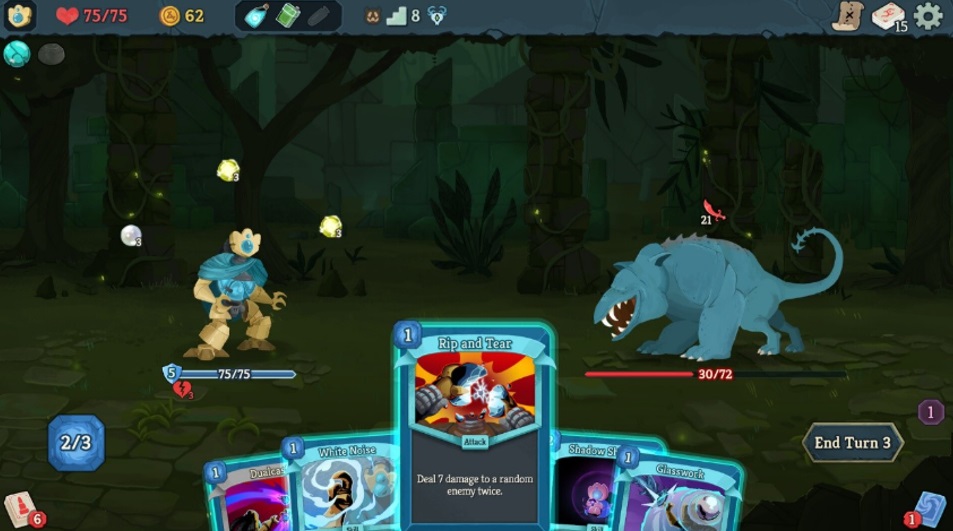
—Slay the Spire 2 became a major hit and set a new record for peak concurrent players on Steam among Godot-based games. It also features multiplayer, which I think demonstrates the engine’s potential.
In a news article, the following comment was mentioned:
“For a project like this, Godot was better than Unity in almost every way. The only regret would be the smaller user base compared to Unity. There are fewer community resources, and when something goes wrong, there are fewer people to rely on.”
In light of this feedback and the success of Slay the Spire 2, are there any plans or initiatives to address the issue of limited community resources?
W4 Games:
We also view the success of Slay the Spire 2 as a strong validation of Godot’s growing capabilities, particularly for commercially successful and technically ambitious projects.
The comment regarding the smaller user base and more limited community resources compared to larger proprietary engines is understandable and reflects one of the challenges that naturally comes with a younger ecosystem. At the same time, it is worth noting that by some measures, particularly across social media and community engagement channels, the Godot community is already comparable to or larger than those surrounding Unity or Unreal.
The more noticeable gap today is less about community size itself and more about ecosystem maturity, monetization, and the accumulation of commercial resources built over time, such as tutorials, marketplace assets, middleware integrations, and enterprise tooling. These are areas where older engines have had significant advantages from decades of commercial investment and ecosystem development.
At the same time, the Godot ecosystem has been growing rapidly in recent years, both in terms of developer adoption and the breadth of available resources, tooling, and commercial support.
Because Godot is an open-source engine, the continued expansion of community resources depends on contributions from developers, companies, educators, middleware providers, and the broader ecosystem. We are already seeing meaningful growth in areas such as tutorials, plugins, third-party tooling, professional support services, and enterprise-oriented solutions.
From our perspective, one of the most important developments is the increasing participation of commercial studios and infrastructure providers helping strengthen the ecosystem around the engine. As more successful games are released with Godot, we expect the network effects around knowledge-sharing, documentation, middleware, console support, multiplayer tooling, and developer experience to continue accelerating.
Ultimately, successes like Slay the Spire 2 help attract more developers, contributors, and industry attention to the ecosystem, which in turn helps address exactly the type of resource gap highlighted in the comment.
—Thank you for your time!
That concludes this interview. Many thanks to Spawi for their great questions. For those interested, you can check out their deck-building roguelite Slot & Dungeons on Steam.