
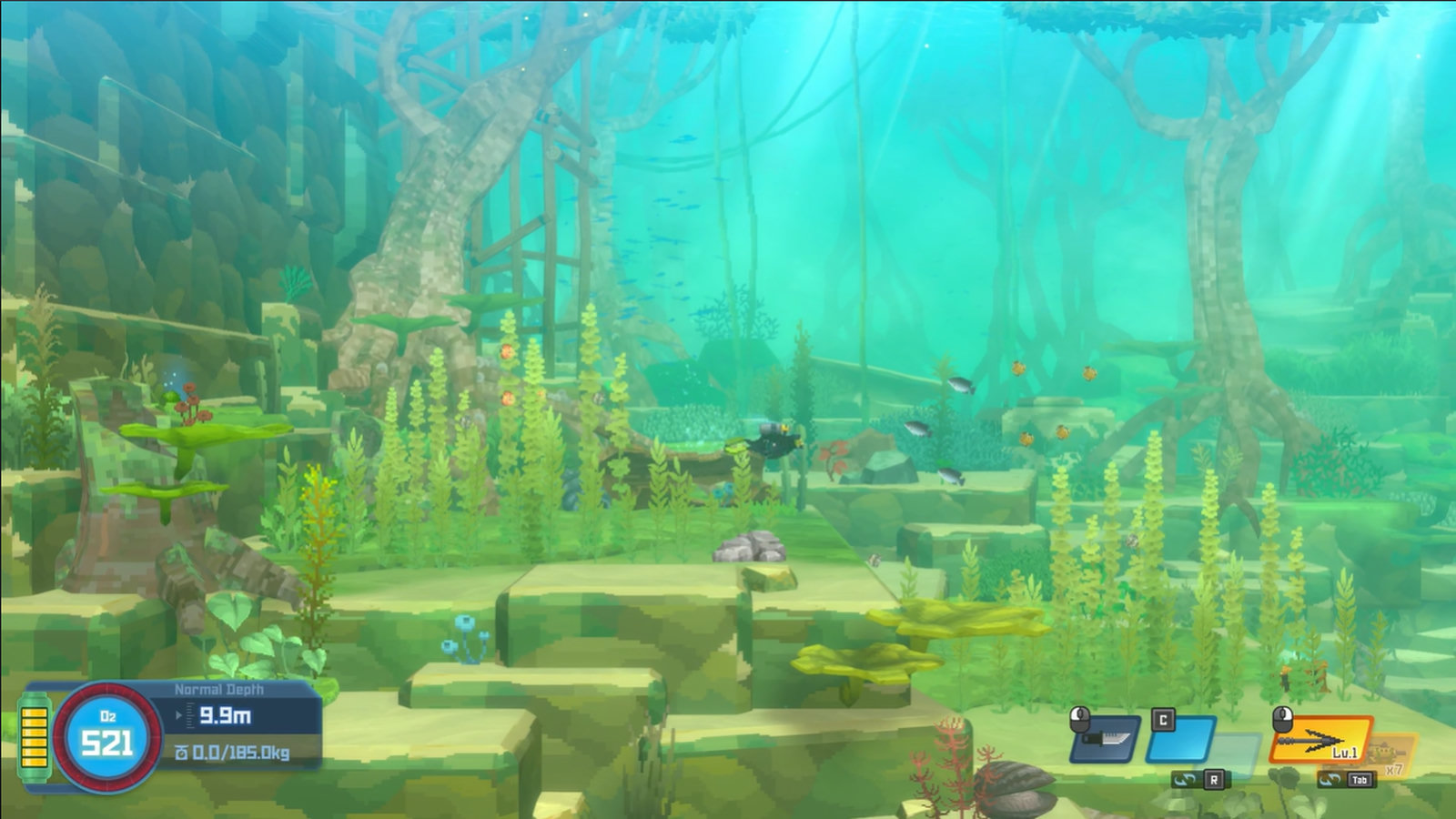
In Dave the Diver’s latest In the Jungle DLC expansion, the setting shifts to the jungle. Dave’s new base of operations is a village called Utara, from which he ventures into unexplored waters. This time, players dive into freshwater rather than the ocean, encountering an ecosystem never before seen in the series and embarking on a brand-new adventure. The DLC launched on June 18 at $9.99.
AUTOMATON recently interviewed Jaeho Hwang, CEO of MINTROCKET and director of the Dave the Diver project. In this installment, we focus on the new DLC’s content and development philosophy, as well as the studio’s future plans for the series. Be sure to also check out part one of this interview, which explores the behind-the-scenes of the original game’s development and Hwang’s thoughts on what defines an indie game.
Transforming the base game’s more “passive” aspects
—In the Jungle is a major expansion with over ten hours of new content and gameplay. It’s already been about three years since the release of the base game. What led to the decision to develop this DLC?
Hwang:
Once I felt the game was a success, I thought we should make at least one major DLC for it, especially a story expansion. There were still parts of the narrative I wanted to build upon, and characters I wanted to explore further, so I felt we had to do something.
The community had also been asking for an opportunity to catch freshwater fish for quite a while too, so we decided to make rivers the theme. Before we knew it, that gradually evolved into a jungle setting, and we actually settled on the jungle concept quite a while ago.
However, subsequent collaboration DLCs ended up delaying In The Jungle’s development considerably. We always intended to make it, but since collaborations are the most effective if released while the game is still in the spotlight, we prioritized collab content whenever an interesting opportunity came up. Before we knew it, nearly three years had passed.
When it comes to making additional content, the safest approach would have been to simply expand the base game, but I thought it would be more interesting to try something new, so we’ve introduced plenty of fresh mechanics. For example, the game unfolds in real time, and venturing into the forest leads to some rather unusual gameplay. There are mechanics here that are quite different from the original Dave the Diver, but we’ve approached development with the same mindset we had when making the base game – let’s try something new, and let’s make something other developers normally wouldn’t attempt.
—It feels like there’s a stronger emphasis on interactions with the people of Utara Village in the DLC, like how deepening your relationships with villagers increases the number of customers visiting Bancho Grill. Are there any major differences between the game design concepts of the base game and the expansion?
Hwang:
The base game is fairly passive. Dave and Bancho simply wait at the restaurant while nameless customers come in, eat, and leave. It’s fun in its own way, but you don’t really get to interact with those customers much, and I always felt that was a bit of a shame.
Similarly, Dave rarely took the initiative to invite people to the restaurant himself. So, for this DLC, our motto was to completely reverse these aspects of the game system.
Now, unless Dave takes action, almost nobody comes to the restaurant. There are a handful of default customers just to keep things running, but everyone else has to be brought in through Dave’s efforts. He talks to villagers, helps them with their requests, builds up their affinity, and only then do they start visiting Bancho Grill.
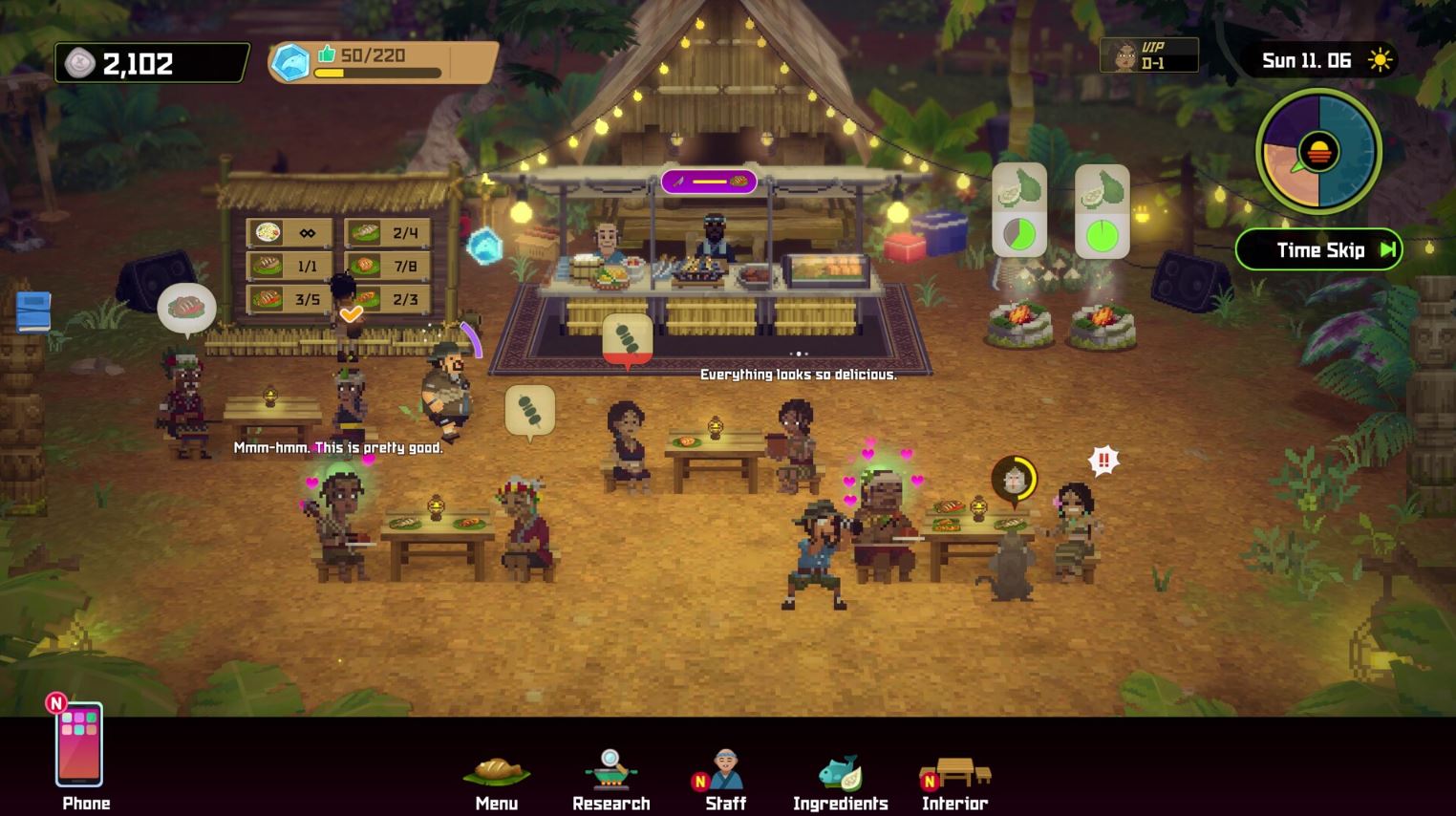
We spent a lot of time testing how that progression should be paced, and I think we’ve found a good balance. We also introduced some unexpected events to add variety. Our goal was basically for villagers’ affection to naturally increase over time without requiring the player to run around too much, thus preventing the experience from dragging.
At the same time, I knew players would eventually get tired if they only ever saw the same villagers every day. So, borrowing from the structure of the base game, we added plenty of surprise visitors from outside who just show up like, “Wow, I want to eat something!” These scenes actually include a lot of collaborations with other games too, so don’t miss them. (laughs)
Out internal feedback sessions are so brutal we call them “sparring”
—You seem to be quite conscious of pacing in your games. How do you judge whether the tempo is right? Do you compare against benchmark games, or do you have your own criteria during playtesting?
Hwang:
Once you’ve played your own game enough, you lose the ability to evaluate it with a fresh perspective. I’ve tested it so much that I’m basically numb to it.
When I feel something’s off about the pacing, I write down the issue and discuss it with my team. A mission might be fun the first time, but on the second playthrough it starts to feel repetitive, and if that keeps happening, it stops being enjoyable. I don’t think that’s because it’s inherently boring, but due to issues in pacing.
I love Dragon Quest, for example. At its core, it’s fundamentally a game about numbers, but the pacing is so good that it keeps playing all the way through. That’s why I think pacing is incredibly important. It’s also one of the easiest things for developers to lose sight of.
That’s why we conduct internal tests and ask everyone to review the game, or rather, to tear it apart. Everyone leaves really brutal comments (laughs). Like, “I’d never buy a game that released in this state.” Then we invite those people in and interview them. Thankfully, everyone has strong nerves, so when I ask them, “Why did you hate it that much?” they lay things out very honestly.
For example, in this DLC, events only trigger when you meet villagers. We assumed players would naturally move around the map clockwise, but if they go the other way, they might not meet anyone at all. Or, on the contrary, they can run into too many villagers at once and receive five or six missions in a single day, making the experience exhausting.
I realized that when I was playing in my own style and at my own pace, there were parts of the game I wasn’t seeing at all. Players approach the game in all sorts of ways, right? We tested this internally, checking various scenarios, and then passed the test to external testers, where we checked the scenarios once more.
—So, it’s fair to say your internal reviews are quite strict?
Hwang:
Very strict. We call it sparring, in fact. Everyone comes at you with full force (laughs).
—Do you also give that kind of harsh feedback yourself?
Hwang:
Back when I was just a game director, I was probably pretty harsh too. But now I’m the CEO… (laughs), so I’m one of the gentler ones. But staff members who are on the same level are much more ruthless with each other.
—It sounds like you’ve started taking on more of a fatherly role, like the person who brings everyone together.
Hwang:
Exactly! (laughs)
Drawing inspiration from movies and producing a live-action trailer with the creators of Sharknado
—The ancient ruins featured in the DLC gave off a very Indiana Jones-like vibe. Combined with the recently released live-action trailer produced by The Asylum (the studio behind Sharknado), Dave the Diver seems like a game that naturally lends itself to film. What made you pursue that direction?
Hwang:
I’ve always loved B-movie creature films. I’ve been watching them for years, including The Asylum’s productions. They’re a little ridiculous, but somehow you can’t stop watching.
We’ve already shown players plenty of gameplay footage over the years, so making yet another standard gameplay trailer didn’t seem so interesting. We wanted to try something different, and decided to go with live action, so I thought “Why not contact The Asylum?” Our staff reached out, but we didn’t hear back for over a month. The release date was getting closer, and we were almost ready to give up when they finally replied, saying they wanted to do it. We explained Dave the Diver to them and showed them the script, and they became very interested.
The trailer, including the casting, has received a lot of praise from fans, with people especially impressed with how much the live-action Dave and Cobra look like their in-game counterparts. I personally participated in the casting process, reviewing costumes and styling alongside our art director and providing feedback. Thanks to all our efforts, I think we ended up with something that truly feels like Dave the Diver.
Partway through production, The Asylum even suggested increasing the budget and turning it into a short film. That’s how we ended up shooting the ten-minute live-action short that was recently released. I hope everyone checks it out.
—Since the game works so well alongside film, were there any other movies that inspired you?
Hwang:
When we first started planning the jungle expansion, we asked everyone on the team what came to mind when they thought of jungles, and built the concept from there. Naturally, someone brought up the movie Anaconda, and we actually drew quite a bit of inspiration from it.
We also watched National Geographic documentaries about monster fish in the Amazon and jungle survival, which served as inspiration as well.
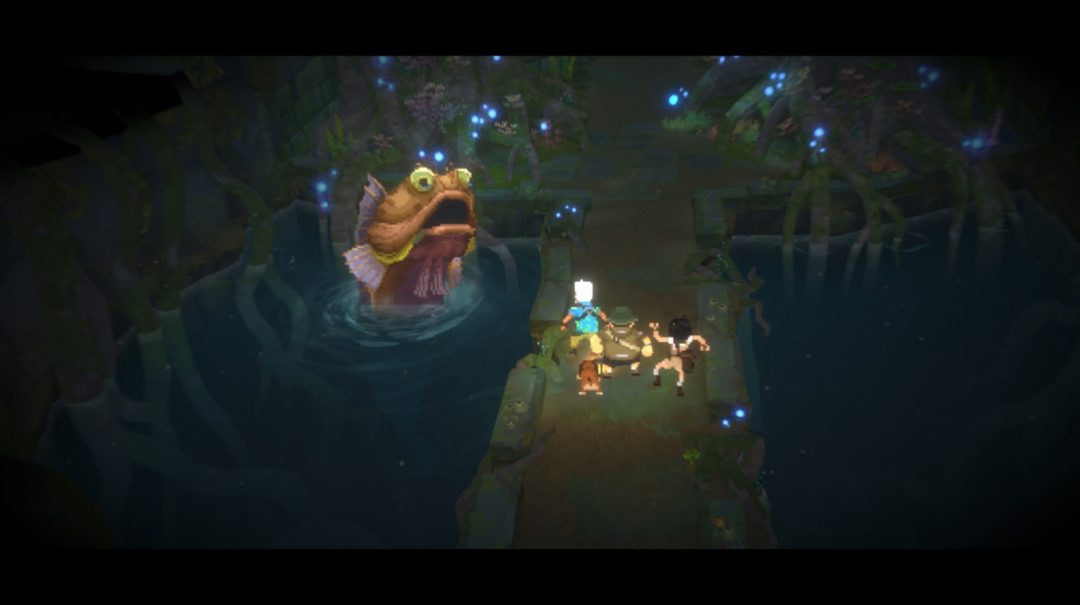
Conveying the vast beauty and sense of mystery of the ocean is challenging in its own right, but depicting the jungle was difficult in a different way. The challenge was in capturing that wild, untamed atmosphere, especially in pixel art.
That’s why we relied heavily on films and documentaries as references while figuring out how best to approach it, and I think we’ve managed to create a pretty convincing atmosphere.
—While we’re on the topic, what’s your favorite movie?
Hwang:
People might be surprised to hear this, but I’m actually a big horror fan. I especially love slasher films, the kind with serial killers. I also love Godzilla. I just really like creatures. There’s something fascinating about watching people overcome hopeless situations involving giant monsters.
I also enjoy movies where you have absolutely no idea where the story is going. One recent example is The Substance, starring Demi Moore. I thought that was fantastic. I also really enjoyed the Japanese film Hell’s Garden, starring Mei Nagano, which is available on Netflix.
…My tastes might be a bit unconventional (laughs). I watch pretty much everything except romantic comedies.
The weird ideas usually come from me
—Both this DLC and previous ones have experimented with all kinds of gameplay styles, from rhythm games to fighting-game-inspired action sequences. I believe the abundance of minigames is one of Dave the Diver’s main appeals, but where do these playful ideas come from? Are they something the whole team comes up with together?
Hwang:
That’s primarily my area, actually. Whenever we decide to try something weird, the idea usually comes from me. I grew up in the Famicom and PC Engine era, and I feel that period was full of games that were fun in an instinctive, intuitive way. Of course, there are plenty of great games today as well, but back then it felt like developers were competing more directly on the fun factor of gameplay itself.
I’ve always wanted to bring that kind of fun into our games. The problem is that if you just keep throwing things in, you end up with a random collection of minigames, so pacing becomes crucial.
One thing smaller-scale games often excel at is repetition and replayability – the core loop involves doing the same things over and over. Hades, for example, mitigates some of that roguelike repetition by gradually unlocking story content.
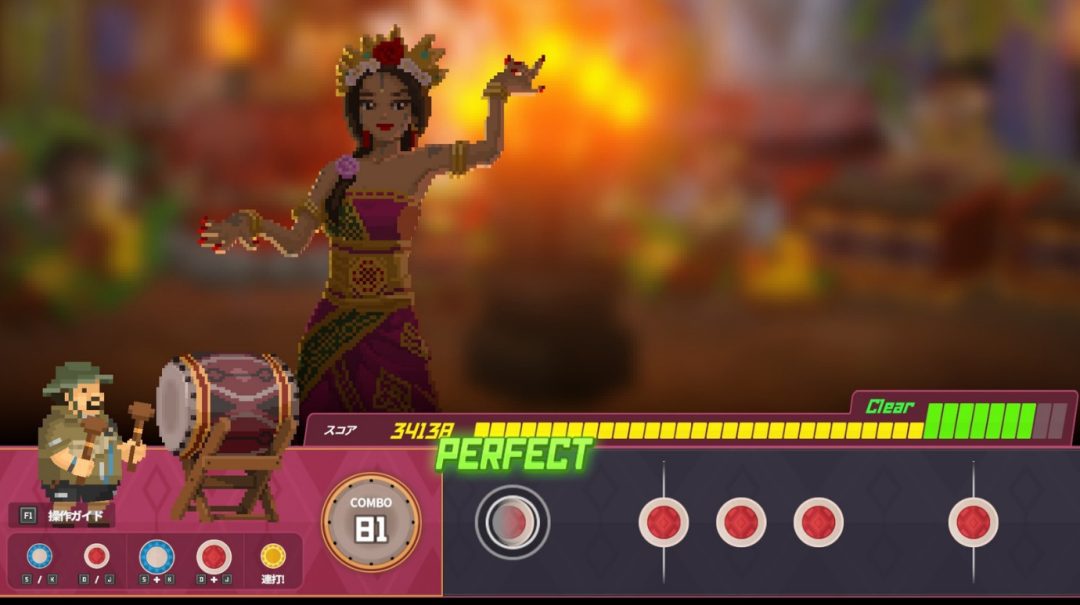
With Dave the Diver, minigames serve as a way to refresh the player between the core loop of diving and managing the restaurant. That said, if you use them carelessly, the game can start to feel haphazard, so we’re very careful about how we introduce them. This includes things like determining whether a minigame should only appear once, how much time should pass before another one appears, and things like that. We’re surprisingly cautious about it.
—So pacing is important to you even when it comes to minigames. On another topic, the mobile version of Dave the Diver was recently announced for a worldwide launch this August. Are there any new elements or improvements for existing fans as well as new players?
Hwang:
Fundamentally, the mobile version is designed to be the same game as the console and PC versions. In Korea, I often meet people who’ve heard of Dave the Diver but only play console or mobile games and never touch PC games. So, the mobile version is really a project aimed at expanding our audience.
The content is basically the same, there’s nothing brand-new. However, we’ve added shortcuts to the Sea People Village because certain aspects of navigation can become more cumbersome on mobile devices. We’ve also made some quality-of-life adjustments, such as increasing text size in some areas.
—So, it’s fair to say the Dave the Diver world is continuing to expand.
Hwang:
Personally, I’m not someone who spends much time looking far into the future, so I don’t really think that far ahead. To be honest, any future plans will depend on how players respond to the In the Jungle DLC. That said, it’s a project we’re very passionate about, so I’d still like to do one or two more collaboration DLCs. …Though at some point, I think players are bound to start saying, “Okay, that’s enough already.” (laughs)
—(laughs) Is there anything you’re considering for the future?
Hwang:
One thing is that we didn’t really cover the ocean at Blue Hole much in the main game. Even the Like a Dragon collaboration focused mainly on land-based content and missions with Ichiban. The new jungle expansion takes place somewhere completely different as well, so I’d like to revisit Blue Hole and do something centered on the ocean again someday. Of course, that depends on player feedback.
Another request we hear often is for additional game modes like multiplayer, time attack modes, boss rush modes, and so on. Those kinds of features take a significant amount of development time, though. Part of me thinks it might be a good idea to open things up and let players handle some of that themselves through mods.
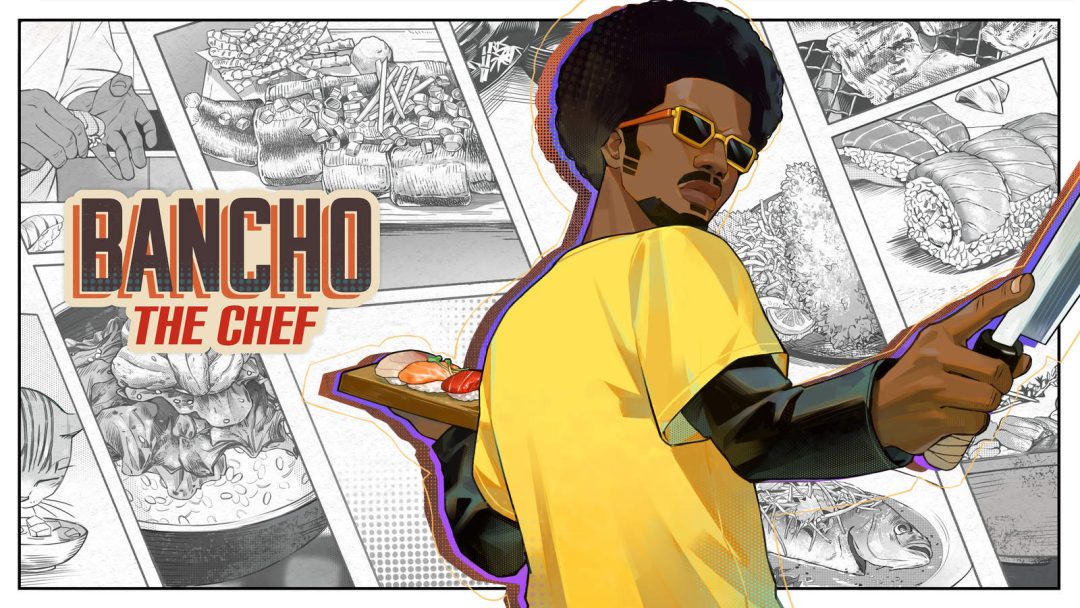
—Those all sound like fun ideas. Speaking of future announcements, your new game Bancho the Chef appears to offer a more in-depth cooking experience. The trailer shows fishing scenes as well, but will players gather ingredients like in Dave the Diver?
Hwang:
Yes. During the daytime, players will be able to fish, gather ingredients in the mountains and fields, and prep ingredients at the restaurant.
I’m not much of a cook myself, but people who do cook often tell me that ingredient preparation makes up most of the work. So, we want players to spend time gathering supplies or helping townspeople in exchange for ingredients. For example, if you help out the lady who runs the vegetable shop, she might start stocking new vegetables, which then unlocks new recipes.
The idea is that you spend your daytime doing all sorts of things, and the people you help become customers later on. If you serve them dishes they particularly enjoy, you earn extra rewards. The basic cycle is similar to Dave the Diver: you spend the day preparing for the restaurant’s evening service.
The main difference is that instead of diving, you’re gathering ingredients in other ways. Rather than serving customers in the dining hall at night, you’re directly cooking the food yourself. It may look like a completely different game, but from my perspective it’s really just a matter of replacing the ocean with land and the dining floor with the kitchen. That’s the kind of difference we were aiming for between the games.
—I’m not very good at cooking myself, but I love cooking games, so I’m really looking forward to it.
Hwang:
Me too. Cooking games are incredibly fun, but they’re often fairly casual experiences, Cooking Mama being a good example. I thought it might be interesting to take that concept further and build something with more of an RPG- or adventure-game-like structure around it. That’s the direction we’re going for.
In The Jungle was envisioned as Dave the Diver 1.5, but ended up being “version 1.7”
—Finally, do you have a message for players who finished the base game but are still undecided about whether to buy the In the Jungle DLC?
Hwang:
Personally, I’m actually not someone who buys DLC often.
—(laughs)
Hwang:
Seriously. Once I finish a game, I usually feel like the experience is complete. If a DLC turns out to be disappointing, it can even damage my positive memories of the original game. If I think of a game as a film completed by its creators, then once I’ve seen the movie, I personally like to leave those memories exactly as they are.
That’s why we challenged ourselves to create something fundamentally different with this DLC, rather than a straightforward expansion of the base game. In that sense, we treated it almost like a new game. We designed it so that fans of the original could enjoy it as a separate experience.
Even players who didn’t play the base game may find this DLC easier to get into. I honestly think it feels quite different. We’ve taken the world, characters, unique fishing, and management systems of Dave the Diver and used them as the foundation for what feels like a new title. I don’t think it’s an exaggeration to view it as a new game from the Dave the Diver team, rather than just an expansion DLC.
—Does that mean I can put “almost a new game” in the headline?
Hwang:
You can, but… I’d appreciate it if you didn’t raise people’s expectations too much (laughs).
—(laughs) Understood. Let’s say you approached it with the mindset of making a new game.
Hwang:
That’s right. Originally, I thought of it as Dave the Diver 1.5, but now I’d say it’s more like version 1.7 or 1.8.
—Then I’ll put “Dave the Diver 1.7″ in the headline.
Hwang:
That’s fine by me. (laughs) But seriously, we’ve packed in so much content. If you rush through it, you can finish it in around seven hours, but a typical playthrough will take about ten hours. Some of our testers became so absorbed in it that they ended up spending more time with the DLC than they did with the base game.
That’s how much effort we put into it. I genuinely believe we delivered more than what the price point would normally demand. We did our best.
—Thank you very much.
Dave the Diver’s In the Jungle DLC is out now for PC (Steam/Epic Games Store), PS4/PS5, Nintendo Switch, Nintendo Switch 2, and Xbox Series X|S.
[Interviewer, writer, editor: Misako Murayama]
[Interviewer, editor: Ayuo Kawase]