
Dragon’s Dogma 2: Dark Arisen adds 25+ hours of content after nearly two years in development. We talk to the devs about how the expansion came to be
Interview with Dragon’s Dogma 2: Dark Arisen director Kento Kinoshita and producer Naoto Oyama.

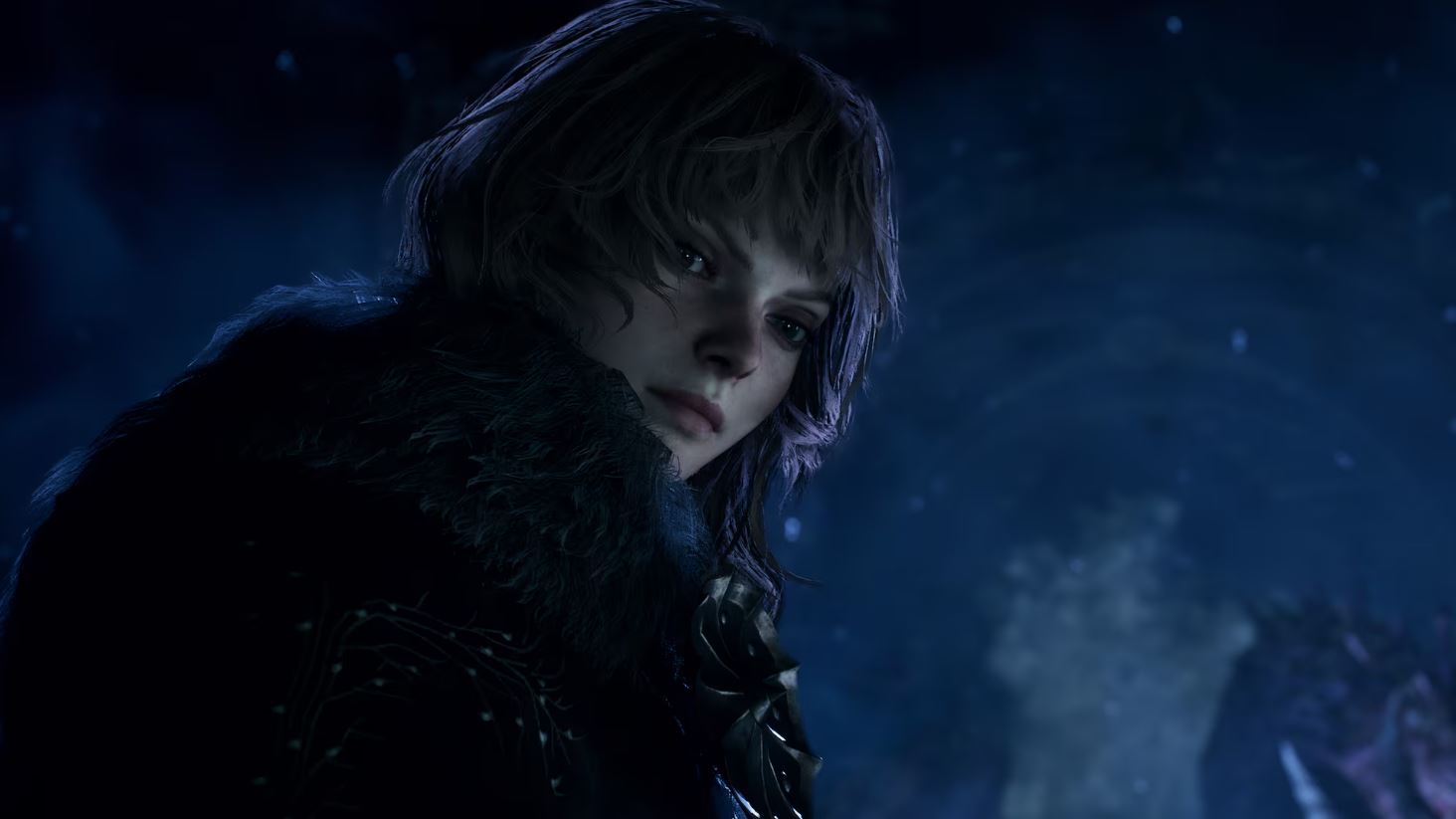
Capcom recently announced Dragon’s Dogma 2: Dark Arisen (hereafter DD2DA), a major paid expansion for the 2024 open-world RPG. Scheduled to launch on October 9, the DLC comes with a new snowy region and storyline among other playable content and customization. A Nintendo Switch 2 version combining Dragon’s Dogma 2’s base game and the expansion is also planned to release, marking the title’s debut on Nintendo’s new console.
AUTOMATON recently had the opportunity to interview the development team behind DD2DA, who told us about the core concepts behind the new expansion and what players should look forward to.
—Please introduce yourselves.
Kento Kinoshita (hereafter, Kinoshita):
I’m Dragon’s Dogma 2: Dark Arisen’s director, Kento Kinoshita.
Naoto Oyama (hereafter, Oyama):
I’m producer Naoto Oyama. Thank you for having us.


—We saw a trailer for the game during Capcom Spotlight on June 26, but could you tell us what led to the development of DD2DA and what its core concepts are?
Oyama: For roughly six months after Dragon’s Dogma 2 launched, we implemented various improvements and new features to the game through subsequent updates. After that, we received feedback from players saying things like, “I want to spend more time in this world,” and “I want to keep playing this game.” Wanting to respond to those requests, we decided to launch this project.
As Director Kinoshita mentioned in today’s Capcom Spotlight presentation, the project’s concept is to deliver new adventures in Dragon’s Dogma 2, filled with things players have yet to see while offering higher playability and accessibility.
—That means the project has been in development for quite a long time now?
Oyama:
Yes, we’ve been working on it for just under two years.
Kinoshita:
After Dragon’s Dogma 2 launched, we received all sorts of feedback from players, and we felt that addressing those concerns needed to come first. So, for the first six months after release, we continued making improvements, using players’ voices as both motivation and a means to reflect, while also thinking about what should come next for the game. As a result, our efforts were primarily focused on title updates during that period.
—Could you tell us about DD2DA’s overall scope? Roughly how long will it take to complete in a single playthrough? Will there be any replayable end game content?
Oyama:
The new story takes place in a new region called Norgan. We expect players to spend around 15 to 20 hours completing that scenario. In addition, twelve unique dungeons will be added to the base game. Each dungeon is designed to take roughly 30 minutes to an hour to clear. With twelve of them in total, we believe players will be able to enjoy more than 25 hours of additional content with this expansion.
The base game itself offers around 30 to 40 hours of gameplay, so players who purchase both titles for the first time will get a substantial experience.
—During the Capcom Spotlight, you emphasized a “replayable hack-and-slash gameplay loop.” Does that apply to both the new story and the dungeon challenges?
Oyama:
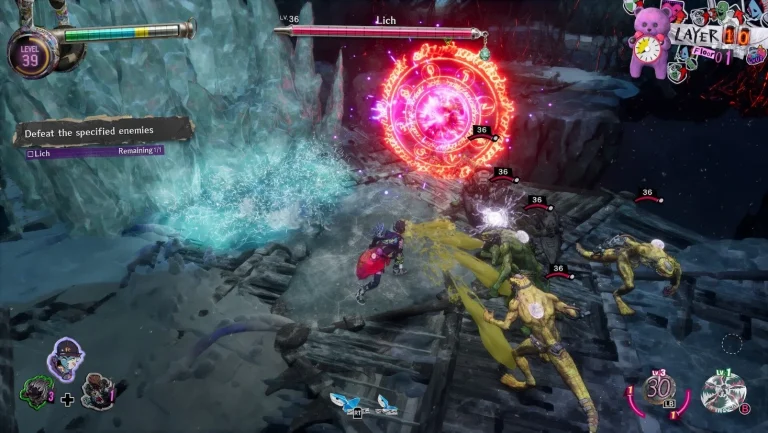
The hack-and-slash-like elements are exclusive to the new area, Norgan. There, players can collect and appraise items known as Relics, which yield stronger weapons, armor, and skills. The core gameplay loop consists of using those rewards to progress through new story content.
—You’ve mentioned higher accessibility too. The base game’s updates so far have already introduced some substantial quality-of-life changes, but can you tell us about the new improvements and what kind of feedback influenced them?
Kinoshita:
We gradually realized that certain choices we made – which were intended to enhance the game’s sense of a “realistic adventure” – ended up being perceived as inconveniences by players.
As a result, the post-launch updates focused on giving players more options so they could enjoy the game for longer. With DD2DA, we’re planning things so that players can enjoy both those “expanded ways of playing” and the new content together.
—You’ve already rolled out improvements related to traversal, while August’s update is set to make adjustments to action mechanics. What issues are you addressing there?
Kinoshita:
The most significant piece of feedback we received was that there weren’t enough custom skill slots, so we plan to expand them. We also found that being surrounded and repeatedly attacked by smaller enemies could leave players trapped and left with no way to move until their health was completely depleted, causing frustration. These were the two areas we determined needed major improvements.
—The original Dragon’s Dogma’s expansion was likewise titled Dragon’s Dogma: Dark Arisen. Why did you choose to reuse that title? Did you consider any other options?
Oyama:
We didn’t actually start development with the title “Dark Arisen” already decided. We first discussed what sort of content we wanted to create based on player feedback. Only after the project had taken shape did we decide to adopt that name officially.
There are three main reasons we chose Dark Arisen. The first is its affinity with the story. Although we weren’t consciously designing the game around that title, we ended up realizing that the narrative we wanted to tell aligned extremely well with the phrase “Dark Arisen.”
The second reason is the hack-and-slash elements we mentioned earlier. The gameplay loop resembles that of the original Dark Arisen in that players fight enemies, collect powerful appraised items, strengthen themselves, and progress.
When we considered how best to communicate both the new story and action, we felt that “Dark Arisen” was the most familiar choice. We believed players would find it easier to embrace and remember.
—So you also kept longtime fans of the original Dragon’s Dogma in mind?
Kinoshita:
The circumstances were similar back when the first Dark Arisen was created. Players who enjoyed the original Dragon’s Dogma told us they wanted to spend more time in its world and continue enjoying its combat.
Looking back on this new project, we felt the same level of enthusiasm from players once again, which made us think we should create content that would allow them to enjoy the game even more, particularly through combat. As Oyama said, taking the story’s themes into account as well, we felt that using the Dark Arisen subtitle again would evoke nostalgia among players familiar with the first game and make it easier to remember.
—Kinoshita, you’ve also worked on Dragon’s Dogma Online. Did your experience from there influence the expansion in any way?
Kinoshita:
I think Dragon’s Dogma 2 fundamentally differs from the online version as a gaming experience, and I deliberately kept those two separate in my mind.
With Dragon’s Dogma Online, our focus was on creating a world where all Arisen could gather and enjoy themselves together. This time, however, the core experience is adventuring alongside your Pawns.
Because DD2DA was designed as an extension of Dragon’s Dogma 2, my thinking centered on what that experience should become, so I wasn’t especially conscious of the online version during development.
—I’d like to talk about the game’s difficulty. In the previous Dark Arisen, much of the expansion content was quite challenging unless players had already finished the base game. How difficult are the story and dungeons this time around, and what level or degree of progression is recommended?
Kinoshita:
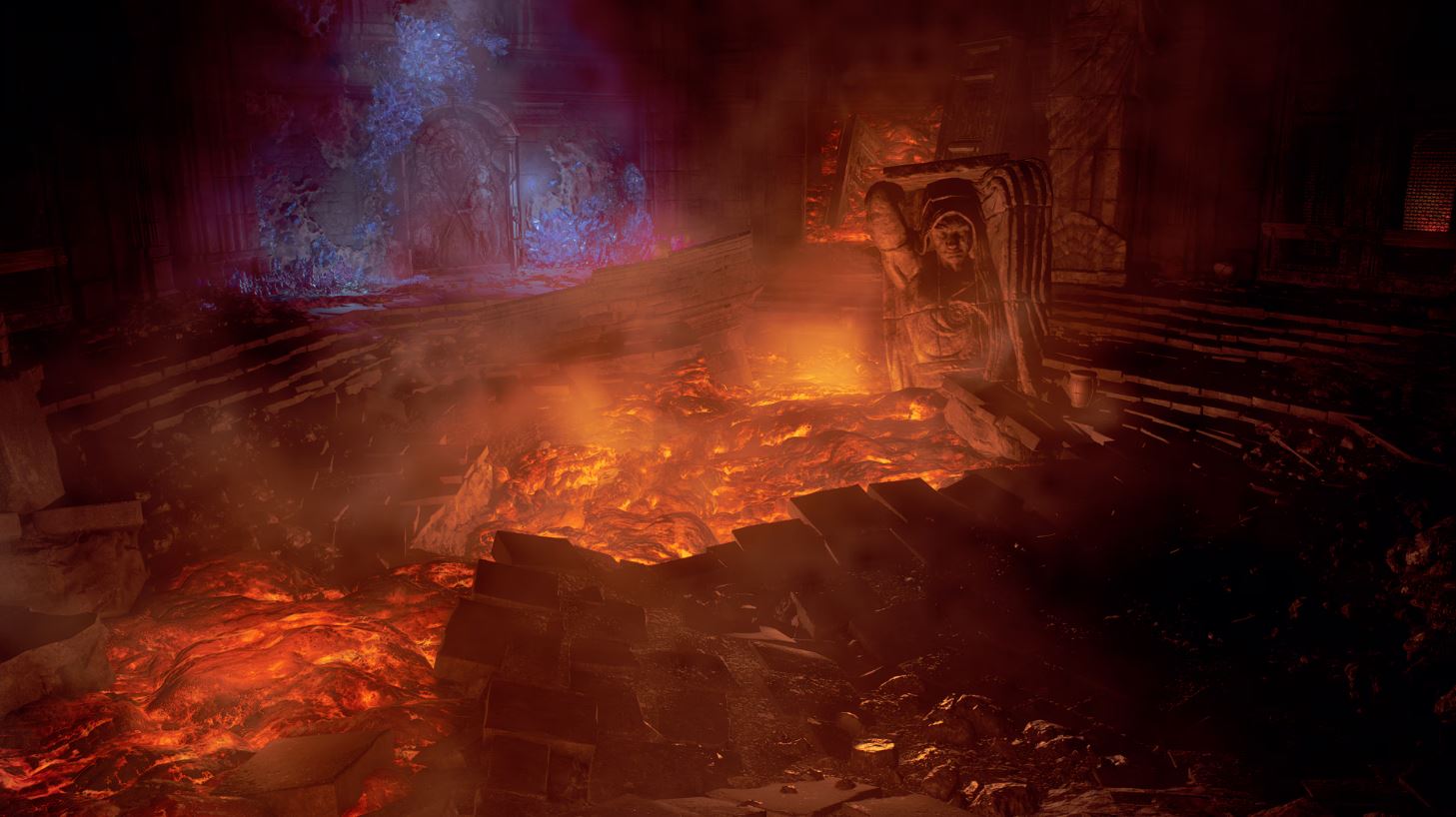
The recommended level for entering the new region, Norgan, is 40. The dungeon content added to the base game is designed to be accessible from level 20. Hearing that, players who are just starting Dragon’s Dogma 2 might feel overwhelmed by the prospect of having to reach level 40. However, by the time they arrive at the first capital city after starting the game, they should already be around level 8 to 10. Completing a few quests there will quickly bring them to level 20, making them strong enough to tackle the opening sections of the twelve new dungeons, known as the Lost Rites.
Those dungeons also allow players to level up quickly and obtain weapons and armor that are stronger than usual. So, for players eager to experience the new content as quickly as possible, one option is to reach level 20 and use the twelve dungeons as a means of character progression.
On the other hand, players who have already spent a great deal of time with Dragon’s Dogma 2’s main story may be well beyond level 40 already. Those players will be able to enter Norgan and begin its adventure immediately.
Even in such cases, the gameplay loop revolves around gathering randomized weapons and armor called Relics, so we’ve designed it to provide a satisfying challenge.
Oyama:
On that note, Norgan itself becomes accessible fairly early in the story. Players will be able to accept the quest as soon as they arrive at Vernworth, meaning they can attempt it surprisingly early if they wish.
As for the Lost Rites, only the early portions are intended for players around level 20. The later sections offer much tougher challenges aimed at higher-level characters. At the same time, players can use the experience bonuses and other benefits from the twelve dungeons to make progressing through the main game easier as well.
—I imagine there are players who have already maxed out their characters. Is there any system that scales enemy strength based on the player’s level?
Kinoshita:
We haven’t implemented a system where enemy strength scales in proportion to the player’s level. Features like that tend to be somewhat polarizing among players. That said, we are currently considering adding a “Hard Mode” for veteran adventurers who want a more intense challenge. We’ve been aware since Dragon’s Dogma 2’s launch that players have been asking for something along those lines, so we’re carefully considering how best to approach the matter within the context of Dark Arisen.
—The original Dark Arisen was set in the more confined dungeon area of Bitterblack Isle. Should we think of this game’s new region, Norgan, as an expanded version of that concept? What advantages did making it an open field bring?
Kinoshita:
I think that with the original Dark Arisen, we succeeded in creating a specific kind of hack-and-slash dungeon crawling. However, simply offering more of the same thing again wouldn’t have provided players with anything new or surprising. This time, we wanted to pull off a design where players could enjoy hack-and-slash gameplay withing the open field, gradually expanding the explorable area as they progress through the story.
One advantage of switching to an open field is the sheer size of the map. Because the area is much larger, we’re able to offer side quests in addition to the main story quests.
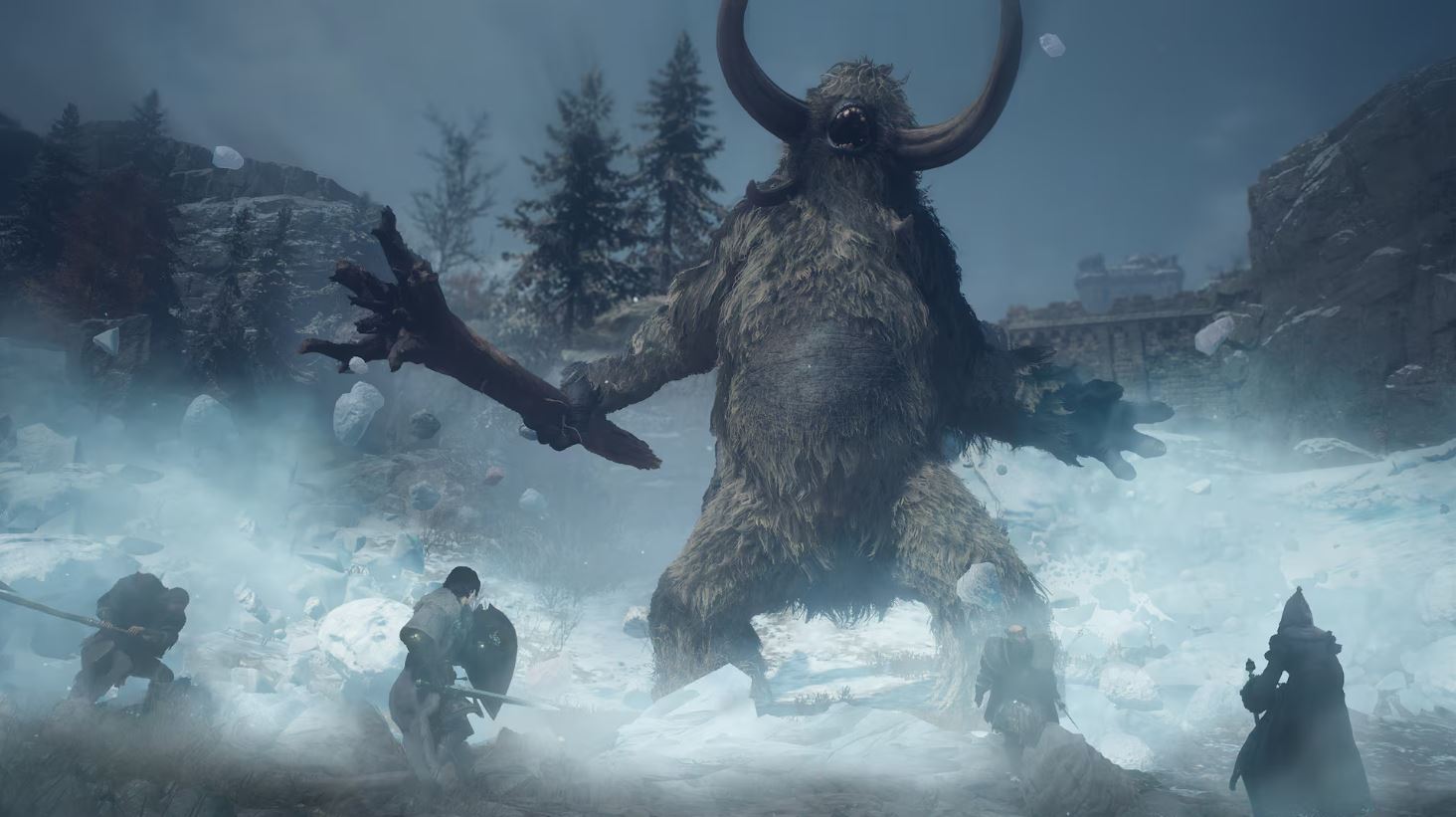
—Could you tell us anything about Norgan’s setting or the monsters that inhabit it?
Kinoshita:
The base game takes place on the continent where regions like Vernworth and Battahl are located, but the premise here is that, far to the north, there exists a little-known territory that once flourished. Long ago, it appears to have enjoyed active trade and travel, much like Vermund. However, the harsh conditions of the far north, along with some other calamity whose details have since been lost, ultimately led to its downfall. When strange phenomena begin occurring in this supposedly lost land, the Arisen sets out to uncover the mysteries surrounding it.
—If it’s a fallen land, does that mean there aren’t even any settlements left?
Kinoshita:
At least within the game world, that’s how the region is perceived.
—We saw snow-covered areas in the trailer, does the snow depth vary depending on the specific spot?
Kinoshita:
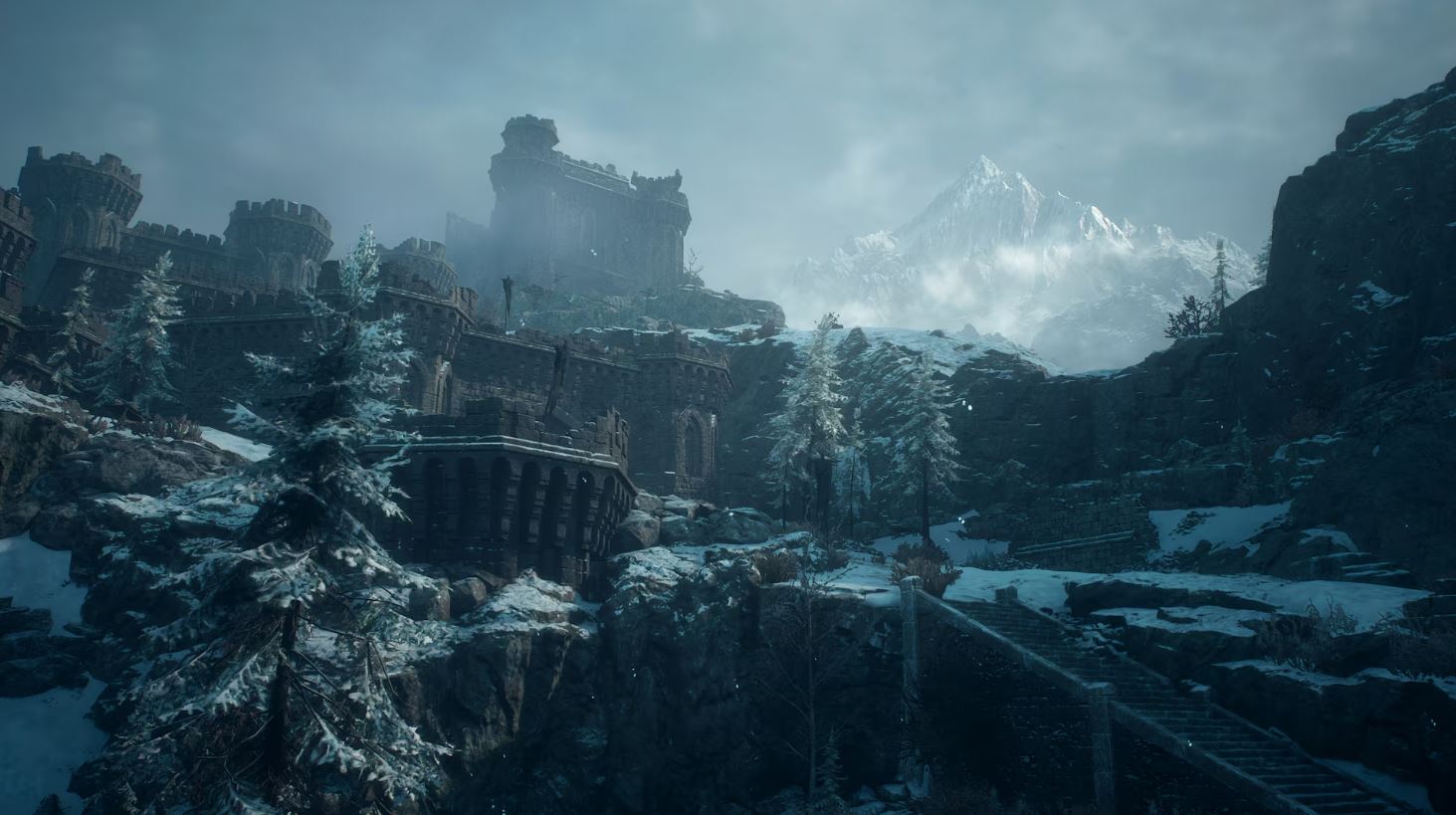
The areas at the foot of the mountains aren’t entirely buried in snow, but as you venture deeper into the region, everything becomes enveloped in snow, and there are places where blizzards never cease, creating a sense of variety and progression. As players continue onward, they’ll also begin to encounter increasingly unmistakable signs that something is wrong.
—One of the appeals of the Dragon’s Dogma series has always been vast landscapes. Will Norgan also feature scenic views, or is it such a dangerous place that players won’t have time to admire the scenery?
Kinoshita:
(Laughs) There are definitely scenic spots. The region and its story progression are designed around gradually ascending from the foothills into higher elevations, so when players turn around after reaching a high point, I expect they’ll discover spectacular views.
Oyama:
We’ve also designed the game so that points of interest are embedded into the landscapes. For example, you might notice something intriguing in the distant scenery and decide to head toward it, only to discover that doing so advances the story. I think players who take the time to really observe their surroundings will feel a stronger sense of immersion and a real feeling of “going on an adventure.”
—You’ve also announced expanded character customization options, and the pre-order bonus description mentioning “dress-up” caught my eye. Are you perhaps considering a feature similar to Dragon’s Dogma Online, where players could change their appearance while retaining their equipment stats?
Oyama:…Yes (laughs). Players will be able to experience something along those lines once they reach Norgan.
—Will there be any unlock requirements?
Kinoshita:
We can’t share the details just yet, but there will be gameplay elements tied to unlocking it.
—Hack-and-slash mechanics are returning from the original Dark Arisen, but quite a lot of time has passed since then. Did you and the team draw inspiration from modern trends in the genre or from systems in other Capcom games during development?
Kinoshita:
There are games like Diablo that I continue to play almost as a lifelong hobby. That said, our focus was primarily on how to innovate upon the original Dark Arisen, so there wasn’t any particular game that directly inspired us.
—In terms of direction, does the hack-and-slash gameplay lean more toward offering players many different ways to play, or toward boosting stats?
Kinoshita:
Our emphasis is on combinations. Equipment comes with randomly assigned custom skills and abilities, and we want players to enjoy replaying content in search of the combinations that suit them best. Expanding that range of playstyles has been a major focus for us.
—How did the decision to release a Nintendo Switch 2 version come about?
Oyama:
Actually, the decision to release a Switch 2 version came later on. We initially began the project with the goal of delivering new content to players on existing platforms. During that time, however, we were evaluating the Switch 2 environment for other in-house projects.
For instance, recent titles like Resident Evil Requiem and Pragmata demonstrated a high level of compatibility between RE Engine and the Switch 2. That led us to think that DD2 might be portable as well, and we decided to take on the challenge. The porting process ended up progressing more smoothly than we had expected, which convinced us that we could release it alongside the expansion.
—Were there any particular difficulties you encountered from that late decision?
Oyama:
The team has worked incredibly hard. Performance optimization, in particular, was one of the areas where players had voiced concerns the most when Dragon’s Dogma 2 first launched, so that was the first thing we tackled.
Alongside work on the Switch 2 version, we went back and revisited countless smaller optimizations and improvements, step by step.
—The Switch 2 supports both handheld and TV play. Do you have any recommendations? And are there plans to use features like the Joy-Con’s mouse mode?
Oyama:
I think players should enjoy the game in whichever style they prefer. We don’t currently have plans for features specifically built around the Joy-Con’s unique functions.
—After DD2DA launches, do you plan to continue gathering feedback and introducing major features beyond bug fixes?
Oyama:
At the moment, no. Our goal is to deliver a polished product that players can fully enjoy from day one.
—Will feedback you receive before launch still influence development?
Oyama:
We recently released a hotfix, for example. Those kinds of updates address unforeseen bugs and issues that arise from the many interacting systems of an open-world game, and we plan to continue rolling out updates like that in the future.
—So the expansion has fundamentally been built on the feedback you’ve received so far?
Oyama:
That’s right. That’s also why development has taken as much time as it has.
—Was there any particular player sentiment that ultimately convinced the team to greenlight the project?
Oyama:
We received tens of thousands of comments from players, so there wasn’t any single piece of feedback that did it for us. We carefully read every response, and among them, the most common sentiment was simply that players wanted more.
At some point, we realized that simple title updates wouldn’t be enough, and that we wanted to deliver substantial new content, such as new stories, action, and monsters. That led us to reorganize the development team and launch this new project.
Kinoshita:
More than any individual comment, we strongly felt the palpable collective passion behind messages like, “Don’t let it end here, we believe in you, Capcom!” (laughs). That made us feel like we really had to do this properly.
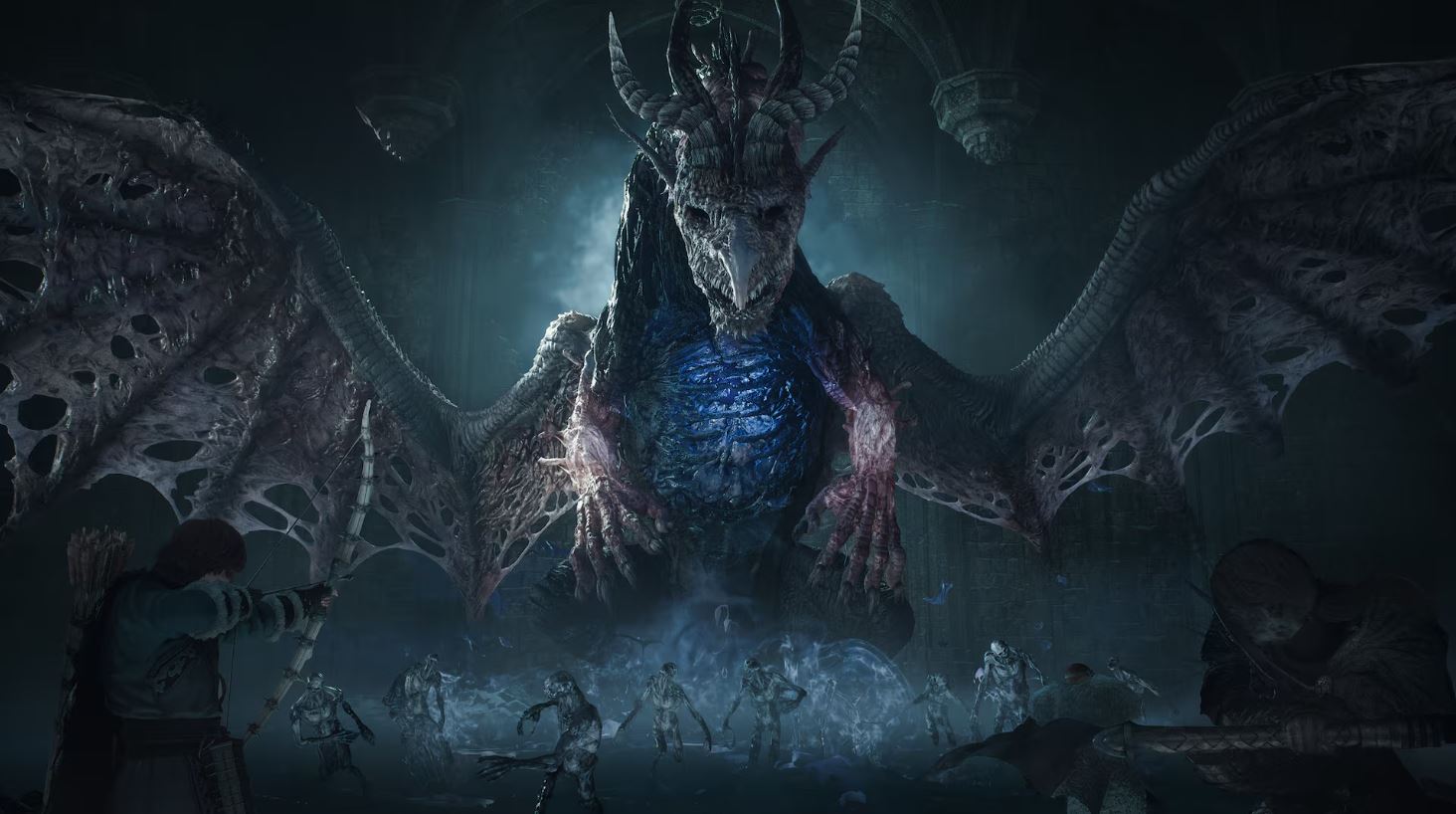
—The trailer also introduced the “Fallen Dragon.” What does its presence mean for the Arisen?
Oyama:
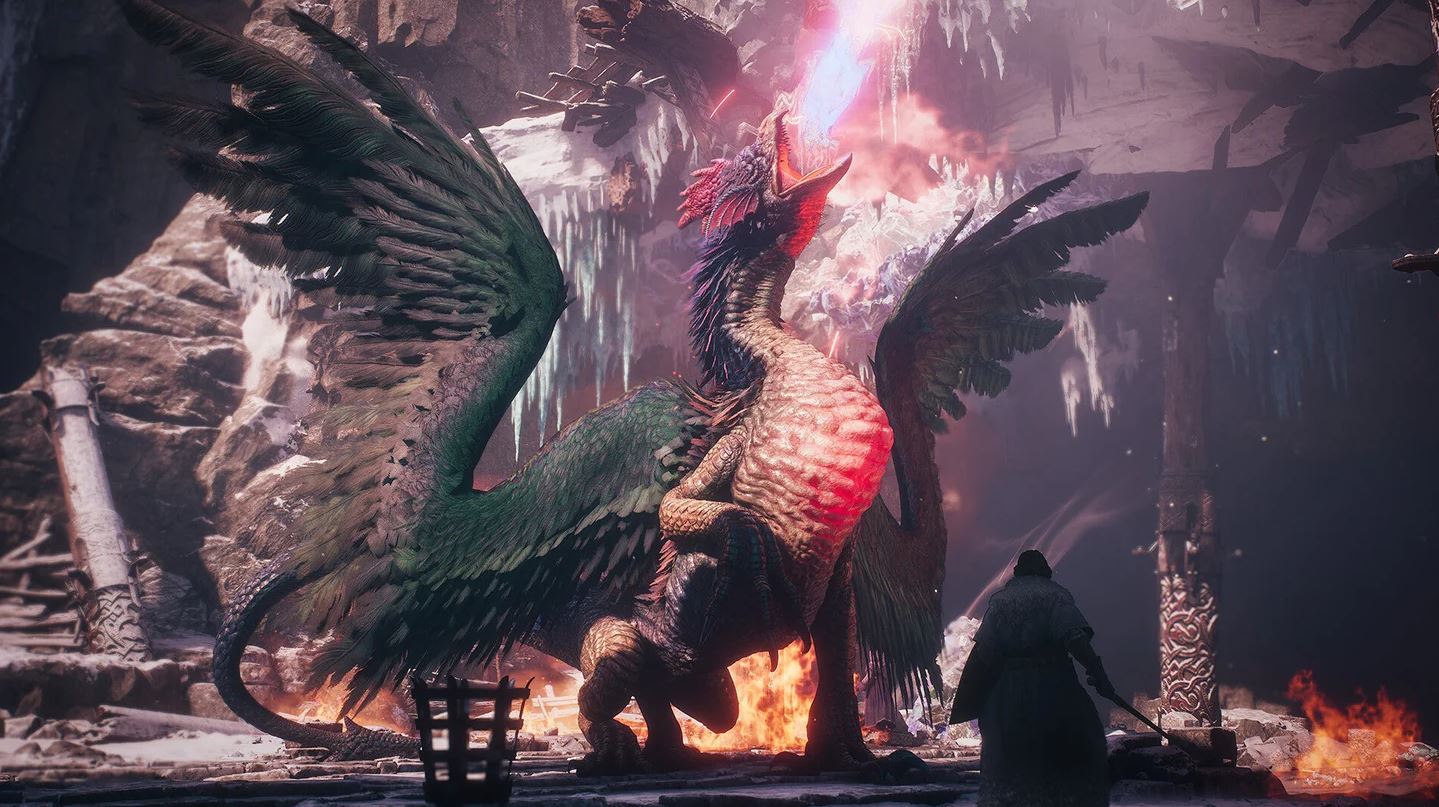
That’s still a secret (laughs). We’ve seen players having fun speculating about it, so for now, we hope everyone looks forward to experiencing the full story. The same goes for the two new characters shown alongside it; we hope players will learn more through future announcements and playing the game itself.
—There were a couple moments in Dragon’s Dogma 2 that made go, “Oh!” as a longtime fan of the series. Should we expect similar callbacks in the expansion?
Kinoshita:
I’d love to answer that, but I think everyone’s “Oh!” moment is probably different, so I’ll refrain from saying more (laughs).
—Would you say it would be worth playing the first game beforehand?
Kinoshita:
No, I wouldn’t go that far (laughs). That takes both time and money, after all.
Oyama:
Our basic premise is that this is a game that newcomers can enjoy even as their first entry in the series.
—Are there any ideas that you couldn’t realize in the original Dark Arisen but were finally able to achieve this time?
Kinoshita:
As I mentioned earlier, we always wanted to create expansion content set in the open field, and this project finally allowed us to realize that idea.
Oyama:
I think the biggest difference is that players can now enjoy hack-and-slash gameplay within the open field rather than a dungeon.
Kinoshita:
It’s not exactly that I had regrets about the original Dark Arisen, but thanks to the technological foundation built for Dragon’s Dogma 2, we were able to portray natural elements like snow and wind in much greater detail in the new expansion. Even if you create a northern, snow-covered region, it’s meaningless if the environment itself doesn’t affect gameplay in a significant wayt. I’m very happy that we were able to address that so thoroughly.
—Thank you very much.
Dragon’s Dogma 2: Dark Arisen is scheduled to release on October 9 for PC (Steam) Nintendo Switch 2, PS5 and Xbox Series X❘S.

AUTOMATON WEST
Articles: 210Related Posts
I saw the announcement for DD2DA and immediately went to play through DDDA for the first time. My experience with DD2 wasn’t superb.
Knowing they had almost certainly improved on things I didn’t like and which caused me to stop playing, I wanted to have a good foundation for my opinion going into the new expansion and updated content.
It’s safe to say that regardless of how this plays out, we got another team willing to reevaluate on their product and make changes to improve it. The future looks bright for the Dragons Dogma franchise imo.
You know you should give dragons dogma online a shot , there is a independent server still up and running and being updated , it has tons of variety and i mean tons , for a whole week i was barely done on the first map not to mention i didnt complete loads of dungeons and secrets on it , i dont remember all too well but i wanna say there is like 3 maps