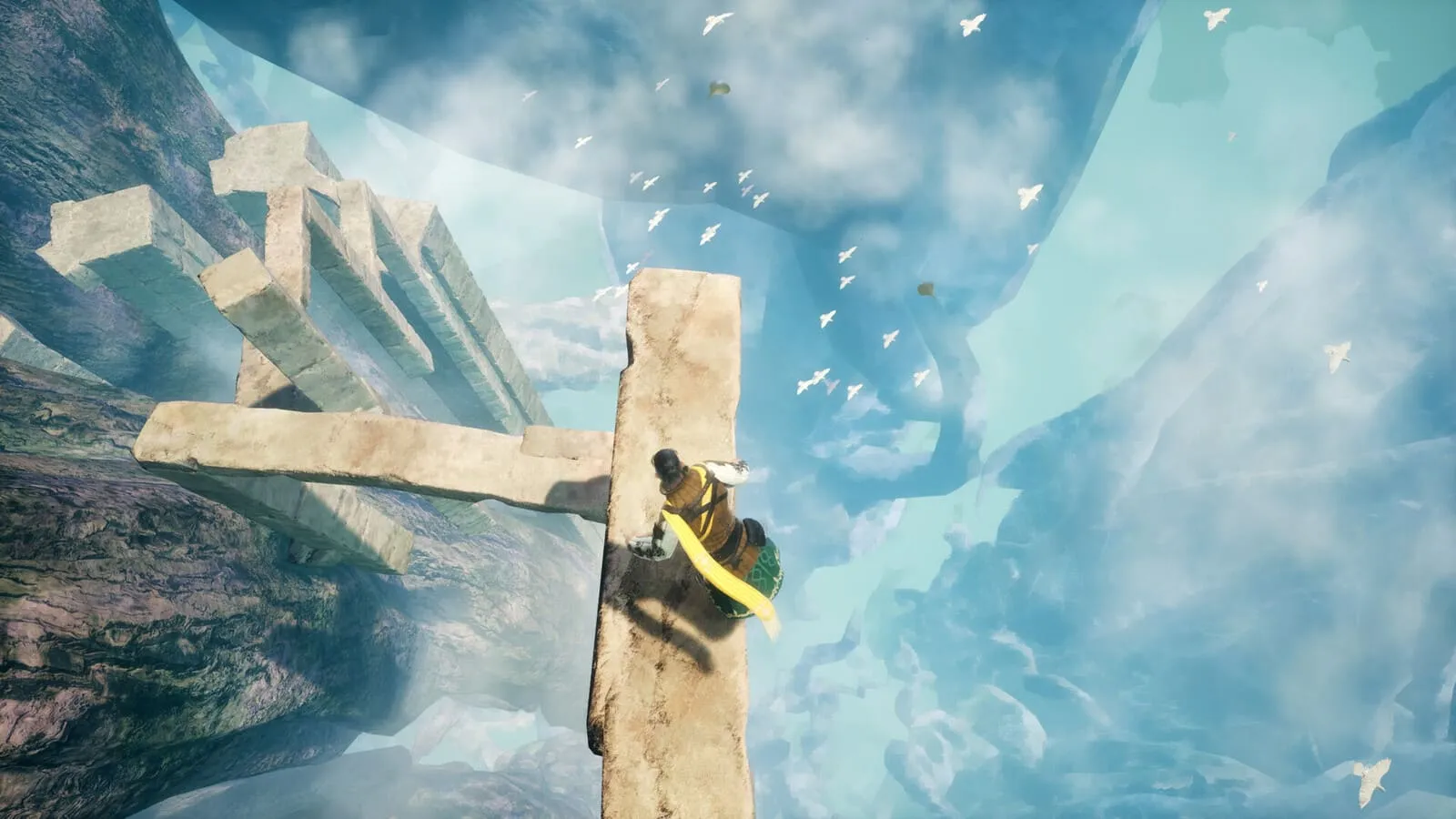
Cygames’ new development brand CygamesEdge will release its debut game, the 3D action-adventure platformer Where the Seeds Fall, on November 5. The title follows a soldier as he navigates crumbling ruins to reach the world’s surface, all while escorting a supposedly ominous child who bears the likeness of his deceased daughter. Where the Seeds Fall is slated to launch for PC (Steam), PS5, and Nintendo Switch 2, with a demo now available.
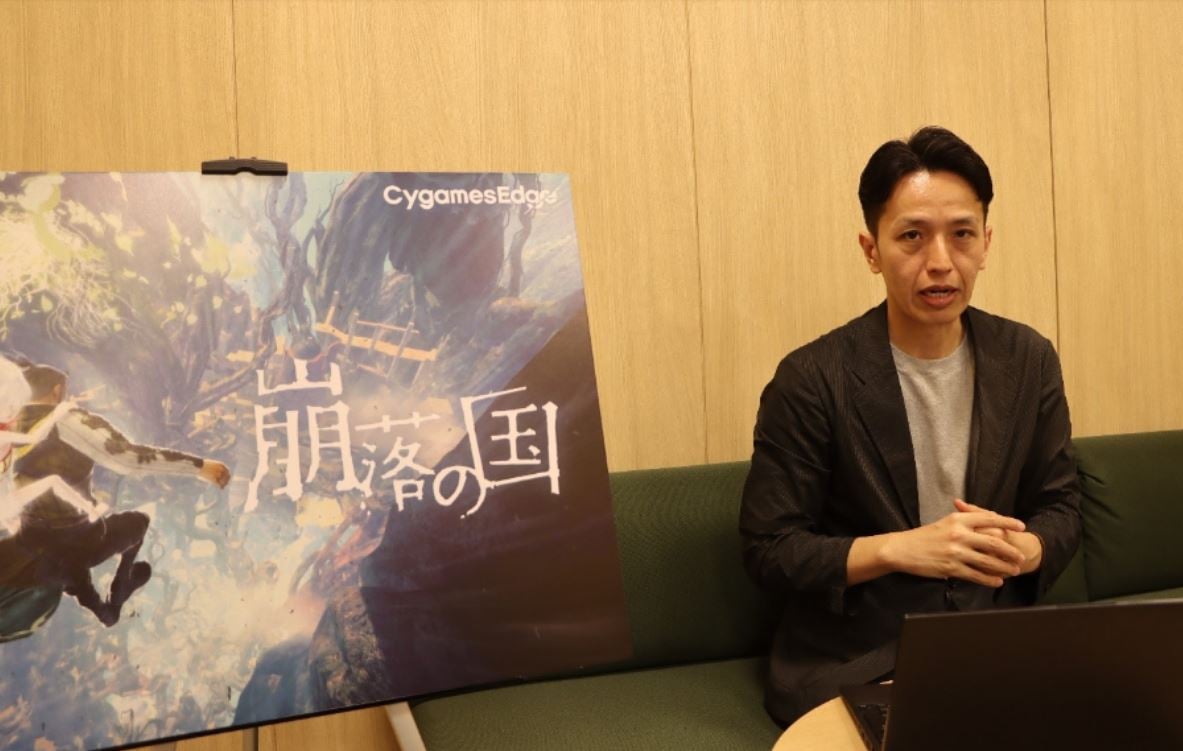
On October 3, AUTOMATON attended OSAKA INDIE GAMES SUMMIT 2026, where we interviewed Shuichiro Hamada, brand producer at CygamesEdge. In this installment, we talk about the new title and how development is progressing.
—Could you introduce Where the Seeds Fall? How did the project come about?
Hamada:
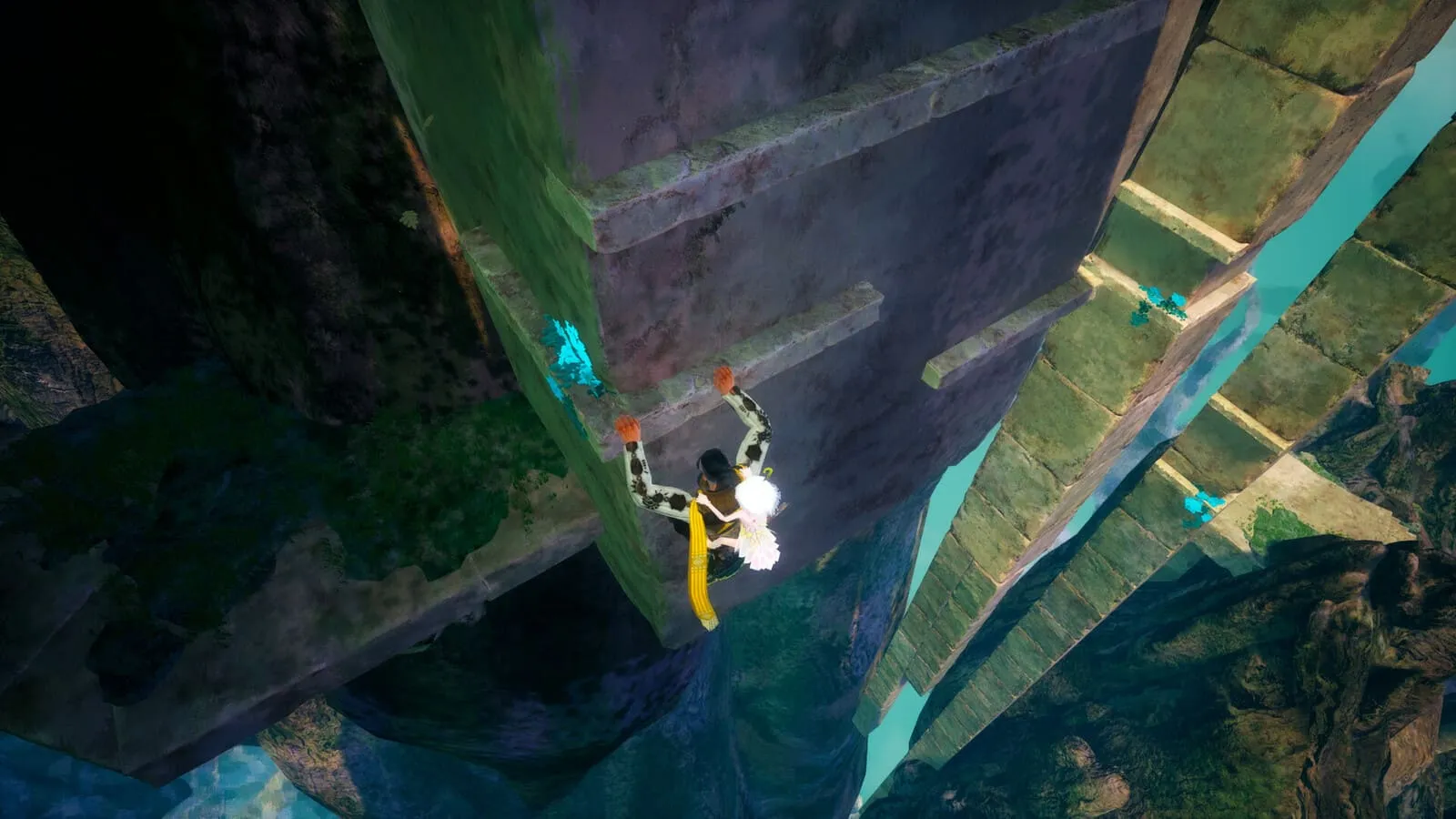
Where the Seeds Fall actually originates from one of the standout entries in an internal game development competition held at Cygames. The original prototype was made by a single person, and it already had the core mechanic of descending through stages in place. The original creator specializes in level design, and the levels he’d created were outstanding.
—So it was already well regarded within the company.
Hamada:
Yes. Even the name “Where the Seeds Fall,” (original Japanese: Horaku no Kuni, “Land of Collapse”) had been decided from the beginning, and the action gameplay was already close to what it is today. Later, when the launch of CygamesEdge was decided, senior management suggested that some of the entries from the internal competition were good enough to develop into commercial titles, and asked us to consider some of them for release. I went through the standout entries myself, and this was the one I selected.
The original creator is still involved in the project as creative director and level designer. Apparently, he had been nurturing the concept for around ten years, so when I approached him about turning it into a commercial game, he was ecstatic. He sent me around three folders packed with information about the world, story, and ideas he had developed. From there, we started figuring out how to package his vision and all that material into a finished product within our allotted budget and development schedule.
—Could you tell us about the size of the development team and how you came to partner with developer ZEREO?
Hamada:
The development team consists of around ten people, roughly half from CygamesEdge and half from ZEREO, so I’d say it’s closer to a co-development arrangement. As this is CygamesEdge’s debut title, it was important that we get it right, so I wanted to work with a team whose abilities I personally felt we could confidently rely on. That’s why I reached out to ZEREO, and they readily agreed.
I feel that development has been progressing in a very positive atmosphere. Sometimes, a hierarchical relationship can form between the publisher’s producer and the development company, which can make it difficult to get clear answers to questions. But when I discuss things with the team at ZEREO, they clearly express their own opinions, even when they disagree with me and go, “That’s not quite right” (laughs). I feel that this kind of constructive friction has had a positive impact on our partnership.
—Did you study existing platformer games on the market during development?
Hamada:
We did make sure to play and examine games belonging to similar genres. In games where you climb, for example, we studied how the experience is built around the satisfaction of reaching higher ground and making progress, contrasted with the fear of losing all the time and resources you’ve invested if you fall.
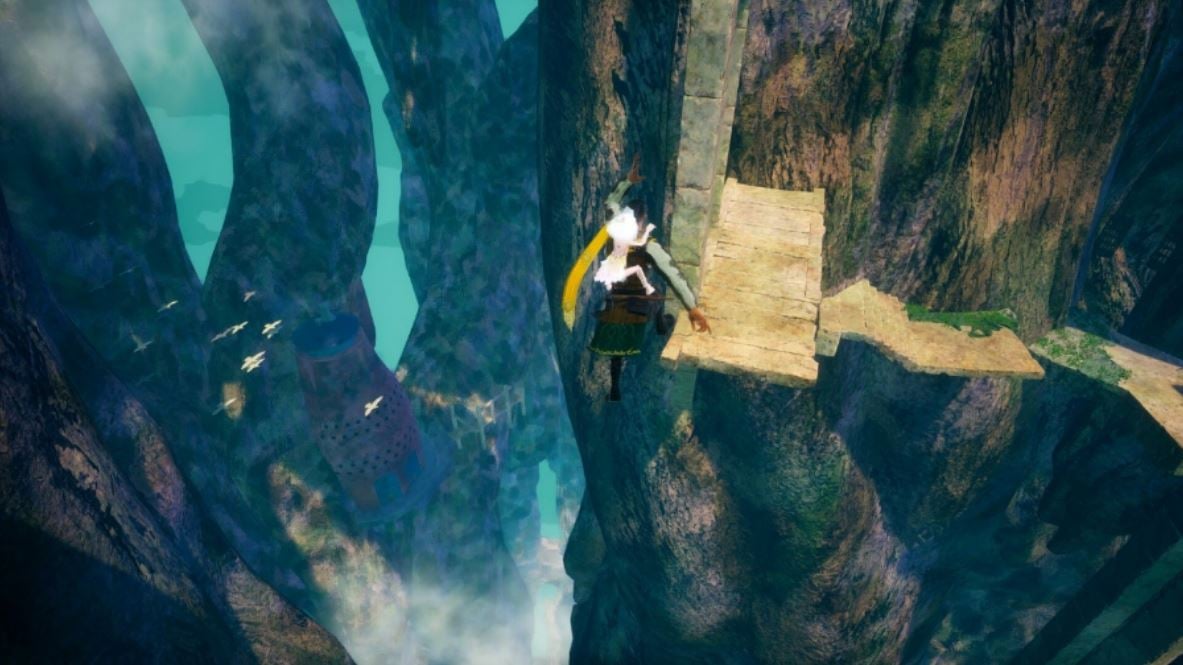
Where the Seeds Fall reverses that formula by having players descend rather than climb. Some members of the team had raised the concern that, based on the logic behind what makes climbing games fun, the fear should actually decrease the further you descend. We had quite a few discussions about this, but ultimately decided to focus on the act of descending through the environment. The next step was to determine the core element we wanted to emphasize the most, and we settled on “the fear of descending from great heights.”
I think people naturally become accustomed to fear as they play, so we experimented with ways to maximize that initial feeling of fear, keeping this in mind. Eventually, we completed an alpha version, but it didn’t inspire fear at all. We discussed why that was, and realized that the action felt too smooth and responsive.
ZEREO specializes in action games, and both the director and lead programmer also have backgrounds in designing action gameplay. As a result, the controls were extremely tight, and “braking” was very precise. You could stop easily no matter how narrow your footing was, which meant there was no real sense of danger.
Therefore, we spent several weeks readjusting various parameters governing the character’s movement, eventually arriving at something that felt a little more like controlling a real human body. In other words, we deliberately made the movement less stable, with braking that wasn’t quite as effective and a tendency to slip a little. When we tested this version, we found that the game had become genuinely frightening, with moments that made you instinctively yelp as you play, even though we hadn’t changed the level design at all.
We also made deliberate choices regarding the art style. Both the backgrounds and characters have a painterly, brushstroke-like look to them. In recent games featuring characters with realistic proportions, it’s common to make the characters look sharp while applying some depth-of-field blur to the environment. However, in this game, a shallow depth of field didn’t necessarily work in our favor. It blurred the abyss below, making it harder to see and thus reducing the sense of fear. We do use depth of field in important scenes, such as cutscenes, but I think we’ve managed to maximize the fear and tension associated with the possibility of falling.
—Were there any other games that served as benchmarks for this project? The “Flower Dive” mechanic, in which you throw a flower bud where you want to land, reminded me of the Eagle Dive.
Hamada:
With Flower Dive, (the mechanic that lets you land unharmed from a great height by falling onto a flower), we really did start out with a motion that was basically Eagle Dive (laughs). But at some point, we decided to modify it. While the game focuses on platforming action while descending, we also wanted something that would function like a weapon. After discussing it with ZEREO, we came up with the Flower Dive mechanic, which involves throwing a flower bud.
Personally, I think it turned out really well. There are places where flowers don’t grow, but in general, players can choose where they want to land and use that to move around. It broadens the range of options available to them. At the same time, the wind can make the flower buds surprisingly difficult to control. I think the mechanic works very well in introducing more variety to the game’s pacing.
—In speedrunning and other similar challenges, players often use mechanics like that to discover major shortcuts. Flower Dive seems like it could be useful in this sense.
Hamada:
I actually wanted to include some genuinely sequence-breaking shortcuts, but in the end, we did set some limits on how far players can go. That said, there are still plenty of opportunities to cut significant distances off your descent, and I’m excited to see whether players will discover routes even we don’t know about (laughs). The main game takes around three hours to complete, and a time attack mode becomes available after you finish it.
—About the three-hour playtime, do you anticipate experienced gamers could clear the game even faster?
Hamada:
Yes. The fastest time within the development team is around one hour and ten minutes (counting only playtime, excluding cutscenes), set by one of our programmers in charge of action mechanics. So far, no one has managed to break the one-hour mark, but I’m hoping someone will set an even faster time after release.
—Why did you decide to explicitly announce that the game can be completed in three hours?
Hamada:
There are so many games and other forms of entertainment out there these days, and everyone has a limited amount of free time. We wanted to make something short but satisfying that people would choose to spend that time on.
We announced the three-hour completion time because we don’t want players to finish the game and feel that it fell short of their expectations. I believe there’s demand for games that can be completed in a short time, so I thought it would be better to be upfront about that from the start.
—The price is just 1,100 yen too, so it feels reasonable. Finally, what kind of experience do you hope players will take away from the game?
Hamada:
First and foremost, I want players to experience the tension that comes from the act of descending. As I just mentioned earlier, we deliberately designed the game around a three-hour playtime. I’ve personally found it increasingly difficult to see longer games through to the end, but with this game, you can experience the whole thing by setting aside roughly half a day over the weekend.
Those three hours aren’t simply stretched-out content, either. We’ve packed the experience with enough substance to make the most of that limited runtime, while keeping the price at an accessible 1,100 yen. I hope players will appreciate all of these aspects together.
—Thank you for your time.
Where the Seeds Fall is scheduled for release on November 5 for PC (Steam), Nintendo Switch 2, and PS5.