Navinosuke: The Yo-kai Buster is a faithful rebuild of Metal Slug developer’s long-lost game. We ask the director what it took to bring back the obscure creature collector from over 20 years ago
AUTOMATON West interview with Navinosuke: The Yo-kai Buster director and programmer Shinano Ishiguro (Seki Ryota).

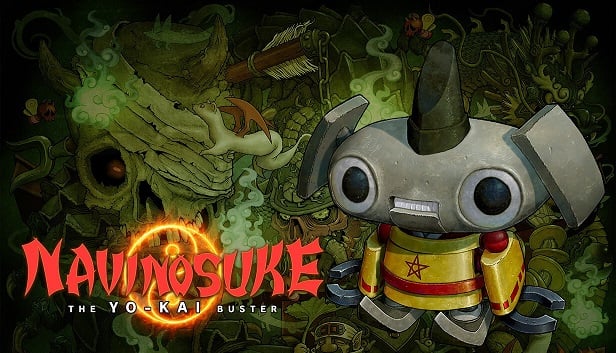
Japanese publisher Happinet recently announced that the 2D monster-taming RPG Navinosuke: The Yo-kai Buster will launch in 2027 for the Nintendo Switch and PC (Steam).
Developed by Kohachi Studio, an indie game studio formed by former members of Nazca’s Metal Slug team, the game follows the story of the mechanical onmyoji (exorcist) Navinosuke, as he goes on a quest to resolve many supernatural incidents across Japan. Along the way, Navinosuke gets to encounter more than 200 unique yokai, who he will have to fight in turn-based battles and persuade to join his team.
Navinosuke: The Yo-kai Buster was originally developed in the 2000s for the Game Boy Advance. What made the project so “ahead of its time” was the fact that it was designed to run with a GPS unit that could connect to the console, making it an early example of a geolocation-based RPG akin to Pokémon GO. Unfortunately, the GPS unit idea ended up getting scrapped midway through development, and the title was later shelved due to “undisclosed circumstances.”
Almost 20 years later, Kohachi Studio, headed by CEO Ryota Seki (known online as Shinano Ishiguro), decided to bring Navinosuke: The Yo-kai Buster back to life.
Recently, AUTOMATON West had the opportunity to conduct an e-mail interview with Seki and ask him about how the Navinosuke revival project came about, what the difficulties of bringing the title to the modern audience were, and the future plans of Kohachi studio.
—Could you please introduce yourself and tell us about your role in the game’s development?
Seki:
Hello. My name is Ryota Seki, also known online as Shinano Ishiguro. I’m the CEO and director of KOHACHI STUDIO. I’m serving as both the director and programmer for the Navinosuke: The Yo-kai Buster revival project, and I was also the one who planned it and brought it to life.
—Navinosuke was a project started over 20 years ago. What was the motivation behind bringing it back after all this time?
Seki:
Back when we were still working at SNK (then known as SNK Playmore), some of our senior colleagues from the Metal Slug team told us that, immediately after finishing development on Metal Slug 3, the entire team had moved to another company for a few years to develop an RPG, but due to various circumstances, the game was never released. What they showed us was the pitch for Navinosuke.
It was an incredibly compelling pitch, and it only made us want to try out the game ourselves. Unfortunately, our senior colleagues no longer had a playable build, so we never got the chance.
Even after leaving SNK, that desire stayed with me. I spent the next 20 years looking for an opportunity to somehow bring Navinosuke back to life.
Over time, many of my senior colleagues also left SNK, and I really dreaded the idea that there would no longer be any opportunities for people to play their games. So, I founded KOHACHI STUDIO with the goal of developing Black Finger JET, a spiritual successor to Metal Slug. Fortunately, I was able to reunite the core members of the Metal Slug team.
I felt that the time had finally come to revive Navinosuke as well.
Desperate to see the legendary game for myself, I consulted with various industry insiders. It took me a long time to find a way to contact the company where our senior colleagues had originally developed Navinosuke. Thanks to an enormous amount of effort, we finally succeeded in bringing Navinosuke back to life in the present era.
—How did the publishing deal with Happinet come about?
Seki:
We had the opportunity to introduce Navinosuke to Happinet at BitSummit 2025, and their feedback was positive. As we continued our discussions, they came to understand the appeal of the game and our development philosophy, which ultimately led to our publishing agreement.
We’re delighted to have found a partner in Happinet who will help us bring the revived, modern Navinosuke to players around the world after so many years.
—How much has the game changed since the last build that was shelved in the early 2000s? What parts did you particularly pay attention to when adapting the existing build for the modern audience?
Seki:
Unfortunately, none of the original ROM builds from that era survived. We had to rely on the memories of the original developers, incomplete design documents, countless pieces of pixel art, and a large collection of screenshots.
Even so, looking at the surviving pixel art made it surprisingly easy to understand the original developers’ intentions, so we were able to reconstruct the game without too much hesitation.
We initially rebuilt the game according to its original specifications. However, after playing it ourselves, we realized it would end up feeling too frustrating to modern players in that state. We are currently identifying those issues and making improvements through daily feedback sessions with our debuggers.
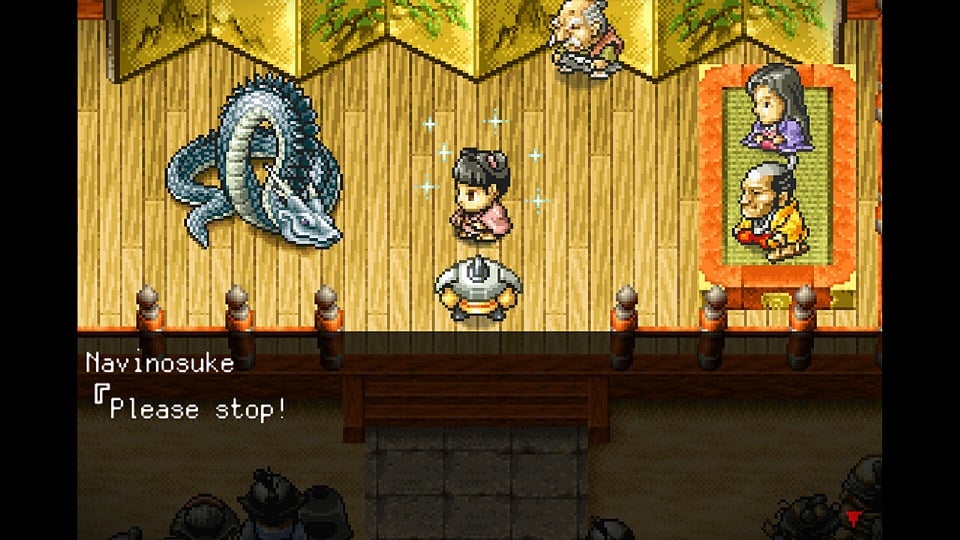
One area we are particularly focused on is making the battles more spectacular than the original; and we’re doing this by incorporating striking new illustrations by our lead designer akio into the battle effects.
—On the other hand, what parts of the game did you think you absolutely had to preserve from the original build?
Seki:
We absolutely had to preserve most parts of the game, including the worldview, the unique banter between characters, and all of the pixel art.
The original developers are now revisiting the game as a whole, and we’re prioritizing changes to any areas they feel could be improved. After all, if the very people who created the game believe something needs fixing, then it certainly has to be fixed!

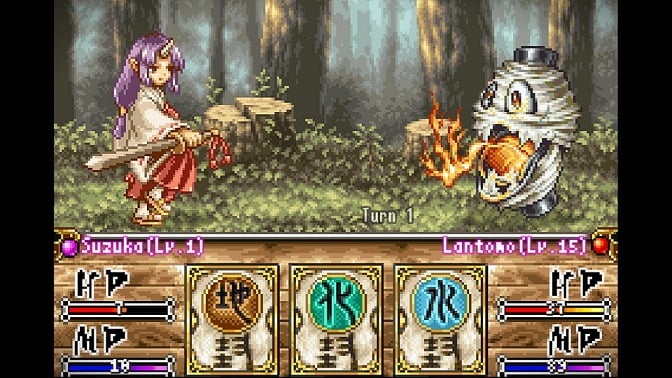
— The game is a classic turn-based RPG, but could you tell us more about how combat works?
Seki:
Combat is built around a classic turn-based command system, but it also features a somewhat unusual mechanic that lets you equip up to three support yokai, each of which can activate their abilities at any given point during battle.
For example, if you spot an incoming powerful attack from the enemy in the dialogue box, you can have a support yokai immediately activate an ability that increases your defense. So in that sense, it’s pretty much like a real-time battle.
— How much have the combat gameplay and difficulty changed since the 2000s version of the game?
Seki:
I’ve heard that the original version had a relatively forgiving difficulty level. However, since none of the original design documents regarding the numerical settings survived, we had to rebuild this aspect from scratch. I believe we’ve managed to achieve a well-balanced level of difficulty as a result.
We’ve retained the core systems while making adjustments to give support abilities a more prominent role in battles.
Recently, a person unaffiliated with our company who played the original Game Boy Advance version had the opportunity to try out the new Switch version. They told us that the battles had evolved and become more enjoyable compared to the GBA version, which was reassuring to hear.
— What was the most difficult part of reviving such an old game for today’s audience?
Seki:
If you think back to RPGs from 20 years ago, you’ll probably get the idea: the games back then rarely included guidance for players. Getting lost was a natural part of the experience.
Considering current trends, we’ve been very careful to add guidance wherever necessary to prevent players from getting stuck for frustratingly unclear reasons.
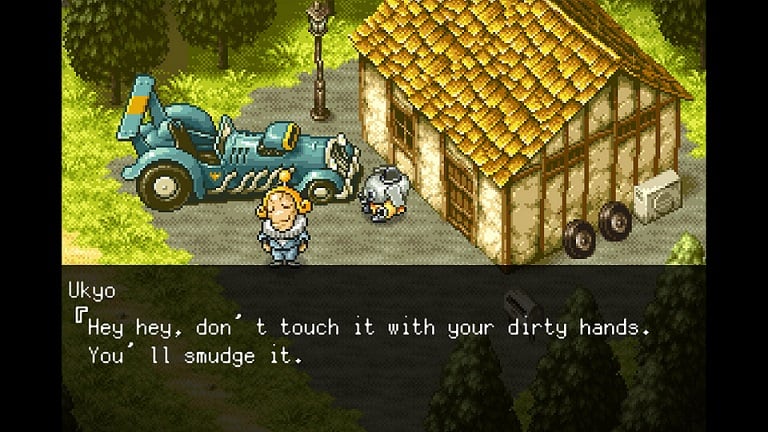
Initially, we considered using arrows and markers to guide players. However, akio felt that approach would be uninteresting, so we decided to introduce several new characters specifically to serve as guides.
Of course, adding more characters also means adding more dialogue, which has made implementation quite challenging. Even so, I feel that this has allowed us to create a much more polished experience, so I’m glad we went with it.
— Navinosuke is a game heavily based on traditional Japanese culture. What kind of reactions are you expecting from overseas players and those not familiar with Japanese culture?
Seki:
This applies not only to overseas players; there are also many people in Japan who know very little about yokai. For this reason, we’ve designed the game so that players can enjoy it even without any prior knowledge of yokai, approaching it much like any other fantasy adventure.
We’d be delighted if playing Navinosuke sparked players’ curiosity about yokai and the culture surrounding them.
If players find themselves wanting to learn more about yokai as they play, we’ve also prepared an in-game yokai encyclopedia. Reading through it will help them deepen their understanding of the legends of Japanese yokai.
— Navinosuke boasts a legendary development team, but how did everyone react to finally being able to release the game that was kept under wraps for so long?
Seki:
While I’m sure that the original developers are happy, they also seem to be quite anxious about whether the content they made for an audience in 2003 will still resonate with players today.
I played Navinosuke for the first time during this revival project, and I felt that the game was filled with timeless fun. I believe it has the potential to become a game that players will continue to love for many years to come, without ever growing outdated.

— What do you think is the significance of an almost “lost-media” project finally seeing the light of day?
Seki:
I strongly believe there is significance in preserving the art assets created by the original Metal Slug team, who have made a legendary mark on the history video games through the distinctive art form known as pixel graphics.
I’m confident that, through Navinosuke, players will be able to experience what could be called one-of-a-kind, or perhaps “the ultimate” pixel art that remains just as captivating today as it was when it was first created.
— How does Navinosuke compete against modern JRPGS, and what do you think makes it stand out among its peers?
Seki:
Ultimately, I believe Navinosuke’s greatest strength lies in its distinctive world and characters.
In previous games by the Metal Slug team, the characters didn’t speak, but for Navinosuke, the team has prepared an enormous amount of dialogue.
As their junior colleague, playing the game kind of felt like I was having a direct conversation with the original developers. That’s because so much of the dialogue sounds exactly like the way they speak in real life!
It’s a cute, eccentric, surreal, but also cool and nostalgic worldview coming straight from the minds of the Metal Slug team, that could only have been made by them, and I really want players everywhere to experience it.

— Could you tell us what stage development is currently in? Do you have plans to release any demos prior to the official release?
Seki:
We’ve completed approximately 90% of the content from the original version. However, we saw this revival as a great opportunity to expand the game with additional scenarios and a range of improvements tailored to modern players. We’re currently busy creating the assets needed to bring these additions to life.
We are planning to release a demo, so please keep an eye on Happinet’s official X account (@happinet_game) and our studio’s official X accounts (@KOHACHI_yurie and @RyoSK1942) for the latest updates.
— What are Kohachi Studio’s plans going forward?
Seki:
Our immediate priority is to complete Navinosuke and Black Finger JET, which is being developed alongside it. Akio, the creator of Metal Slug and R-Type, still has many pitches for new games, so we hope to move onto developing some of those once both of the projects are successfully completed.
Even at the proposal stage, these concepts are already incredibly compelling, so we’re determined to see them through to development and, ultimately, bring them to players.
— Could you leave a message for our readers?
Seki:
Yokai Buster: Navinosuke features a vibrant cast of yokai. Of course, we hope you’ll enjoy recruiting them, building your own team, and setting off on adventures together, but we also invite you to discover the unique style of our development team through the story, characters, pixel animations, music, and so much more. We hope you’ll pay close attention to these details and enjoy everything the game has to offer!
— Thank you for your time!
Navinosuke: The Yo-kai Buster is scheduled to launch in 2027 for the Nintendo Switch and PC (Steam).

AUTOMATON WEST
Articles: 214Related Posts