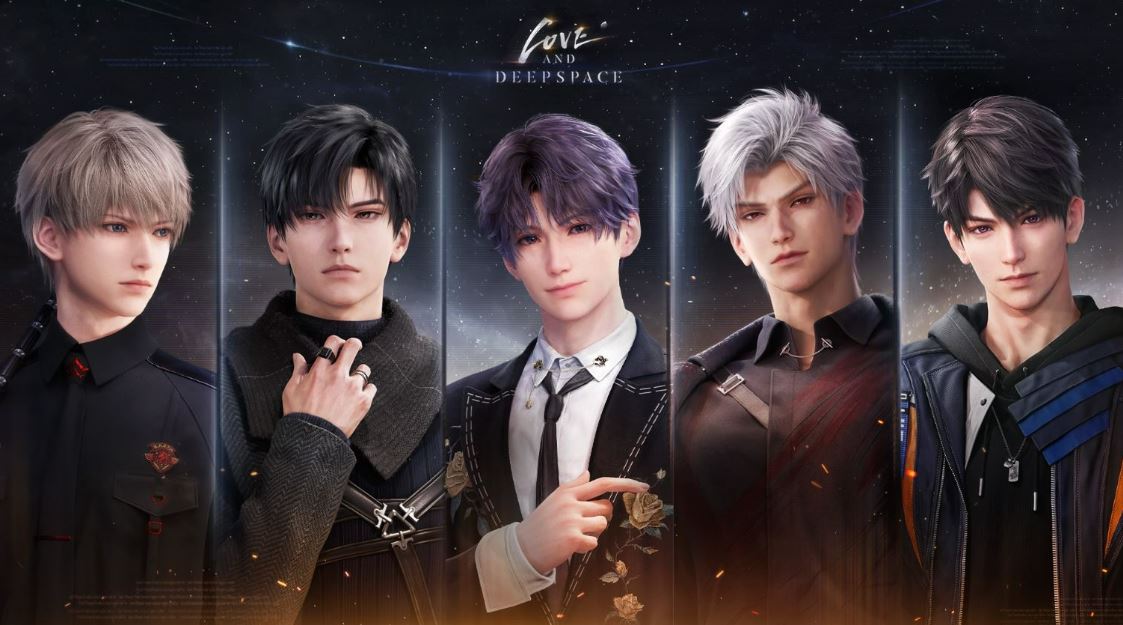
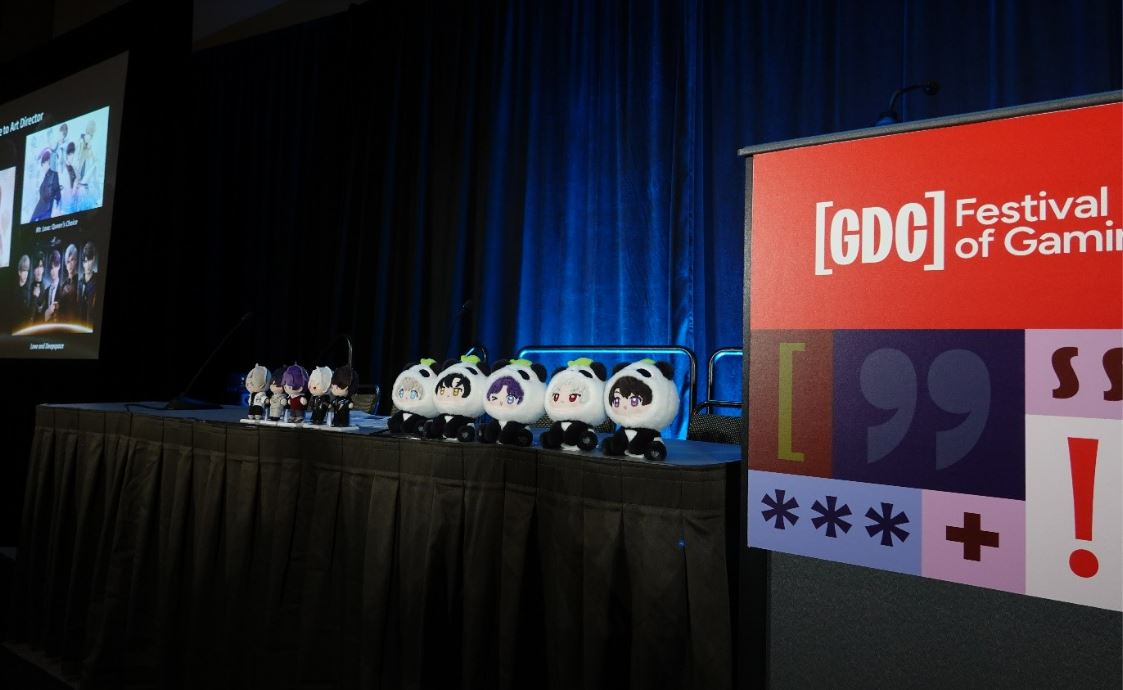
At this year’s Game Developers Conference (GDC) Infold Games held a series of talks about its flagship titles, including hit sci-fi romance sim Love and Deepspace. Since its launch in 2024, the free-to-play title has seen massive global success, approaching $1 billion in lifetime revenue as of early 2026, with players singing praises to its high-quality 3D graphics and indulging storytelling. During GDC, the game’s producer Lizi, who has been involved in the project for six years, talked at length about how Love and Deespace’s mechanics – including unconventional choices like a real-time combat system and a period tracker – were designed in pursuit of the ultimate, swoon-worthy romance.
In this article, we bring you the full lecture by Lizi, courtesy of Infold Games.
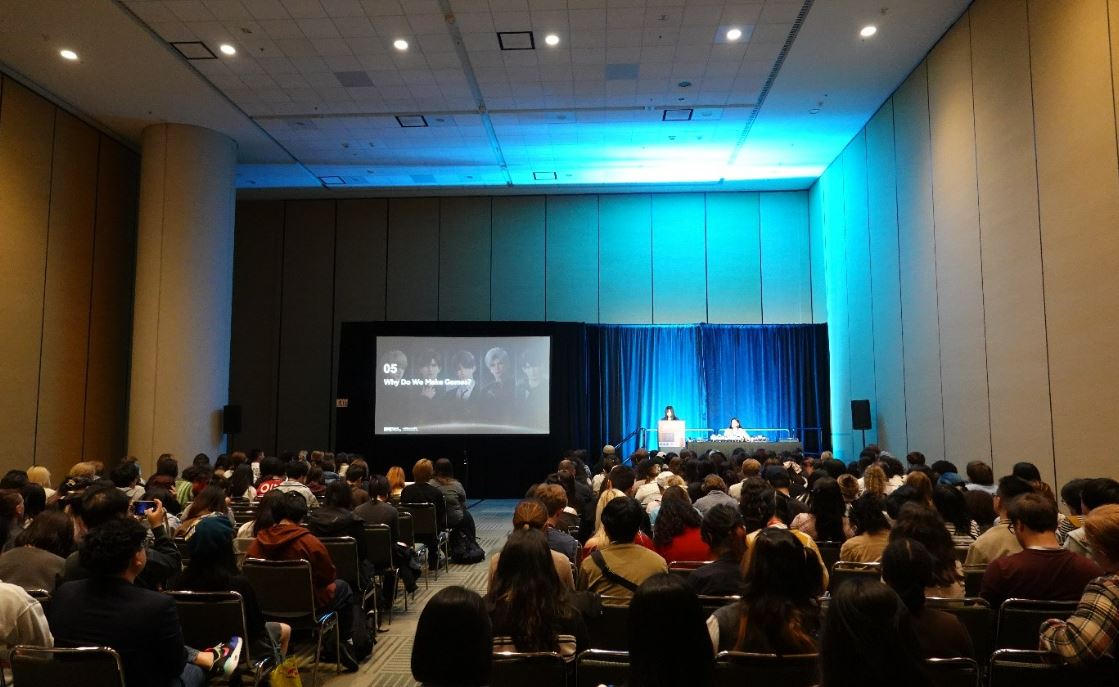
At one point, the team’s only wish was for everyone to be alive
As of today, Love and Deepspace has been successfully launched for two years, boasts over 80 million global users, and has allowed more people to discover the joy of romance games. I am deeply honored to have the opportunity to share the development story of Love and Deepspace.
As a veteran romance game player and a 13-year veteran of the game industry, creating a romance game loved by many was my dream when I entered the field. We are fortunate to have the chance for Love and Deepspace to be seen by more people, although the development journey has certainly been full of twists and turns.
I wonder if any developers here have experienced this: falling into confusion during a long period of game development, not being favored by the outside world, or even facing a moment when the game’s fate hung in the balance.
In fact, at the company’s annual meeting wish-making session the year before the game launched, the only wish of the Deepspace production team was simply for “everyone to be alive”. I believe that in such difficult circumstances, all of you have your own guiding “faith” to overcome obstacles. For me and my team, what sustained us was our passion for Otome games and our relentless pursuit of “romance.” Therefore, today I want to focus on the theme of “romance” to share our development considerations for Love and Deepspace as a romance game, especially some seemingly unconventional design trade-offs made during the process. I hope this can offer some inspiration to other development teams.
Before that, I would like to briefly introduce Otome games. An Otome game is a sub-branch of romance games, with romance being its core experience. In an Otome game, the player acts as the heroine, embarking on her own adventures while meeting one or more charming male characters and developing romantic stories with them. Players build deep emotional connections with the characters, forming a game genre and player community full of “love”. Previously, Otome games were considered a relatively niche genre, with limited development investment and resource specifications, primarily focusing on story and exquisite illustrations, and having smaller game scopes and development teams.
In China, Papergames’ 2017 release of Love and Producer (English title: Mr Love: Queen’s Choice) successfully brought Otome games to the general public for the first time, pioneering the Chinese Otome game market. Therefore, when preparing to create Love and Deepspace, our primary consideration was: how to encourage more players who have never heard of Otome games to try it, and how to give Otome games a richer, more unexpected, and fresh experience.
So, what kind of game is Love and Deepspace? It is a romance mobile game centered on 3D real-time interaction, set in a near-future worldview. In the game, you can interact with the male leads face-to-face in a direct way, experiencing both lighthearted, healing daily interactions and heart-fluttering, intimate moments. You can exercise, study, and check in on various small daily routines together.
At the same time, you can also pick up a greatsword or dual pistols and, as a dashing Deepspace Hunter, fight alongside the male leads to confront enemies from Deepspace and embark on thrilling adventures. We constantly strive to create more “romantic” scenarios in the game to appeal to more players interested in romance games.
During this process, we made many “unexpected” attempts. These seemingly unconventional elements, on the contrary, brought a brand-new experience to the game. Next, I will introduce the design philosophy of romance in Love and Deepspace from two perspectives: combat and daily life.
A design choice otome lovers didn’t take kindly to at first
First, I want to share the idea that “Combat is Romance.” Love and Deepspace features a complete and authentic real-time combat system. As the heroine, the player can use super powers alongside a chosen male lead to fight against alien monster drifters. This experience is very novel. Initially, almost everyone’s first reaction was, “Isn’t this a romance game? Why do we have to fight monsters too!” But after experiencing it firsthand, they realize that the combination of romance and combat is very reasonable and logically self-consistent.
This design stems from our special understanding of “romance”: fighting side-by-side is also an ultimate form of romance. Facing difficulties together strengthens the emotional bond, and the trust and feelings built in times of crisis are more unforgettable.
Furthermore, we want the relationship between lovers to be one of equal support. In combat, players can experience the joy of growing together with the male lead and jointly defeating enemies. This positive emotional value makes players love themselves and the male lead more. This contrast is deeply memorable.
Therefore, we designed a two-person combat system centered around “fighting side-by-side,” allowing players to both exert their own strength in battle and have a reliable partner by their side, reducing the sense of isolation and gaining the moving feeling of being supported. Thus, we decided to create a “different” combat system.
But imagination is beautiful, and reality is harsh; we initially met with failure. When the game was unveiled in 2020, many Otome players strongly opposed this mode of interaction and combat. However, after the game officially launched in 2024, player acceptance significantly increased, and they truly grasped the positive experience of fighting side-by-side.
Achieving console-tier graphics on mobile and letting players actually warm up to the male leads
During this period, we made a series of adjustments, specifically divided into three steps:
First, solving the problem of “not being handsome enough.” As a romantic partner, first-impression attractiveness is crucial. Our review found that previously, constrained by mobile phone performance, we mistakenly thought we could only create characters to mobile game specifications. In reality, we had to create characters on mobile that rivaled console quality. So, we changed our strategy, first ignoring performance limitations and meticulously refining the characters according to the highest specifications, increasing the polygon count of a single protagonist model to 100,000–200,000 faces and the number of bones to over 500 (specifications commonly used only in console games), thereby comprehensively enhancing character precision and detail.
Second, redefining the relationship and gradually unfolding intimate interactions, emphasizing logical self-consistency. After ruling out the “not handsome enough” issue, the core reason players felt uncomfortable with the interactions was that they were “too sudden”—they hadn’t even gotten to know the male lead yet, but were already performing synchronized combat moves or dancing while fighting, which was incomprehensible.
So, we adjusted the experience sequence. In the early stages, the two-person combat performances were more “serious and formal,” focusing on the cool coordination of a “power couple” dynamic; through narrative development and emotional warming, players gradually get to know the male lead and form bonds. In later stages, more intimate forms of combat are reasonably unlocked based on the male lead’s background and identity, helping players understand “why this is done”.
Finally, optimizing the combat experience itself. Since the romance experience is the core, and portrait mode offers a more “face-to-face” sense of immersion, we initially chose portrait mode as the game’s foundation, and combat also used portrait mode. However, this conflicted with the wide field of view and comfortable operation required for combat. After multiple attempts, we made the bold decision: change the combat view to landscape mode mid-game, with an automatic switch between portrait and landscape upon entering combat. Although this frequent switching was risky, it was achieved by leveraging mobile phone characteristics. We controlled the frequency of switching and ensured system coherence, ultimately leading to acceptance by most players, and even becoming a game feature.

In addition, we strengthened the interactive feeling of “fighting side-by-side”: the combat mechanics emphasize the cooperation between the player and the male lead, designing emotional details such as the male lead blocking damage or “getting angry” and increasing attack power after being hit, and adding a massive amount of combat interaction dialogue, all paired with high-quality visuals, special effects, and music, ultimately achieving the goal of “Combat is Romance”.
Borrowing from lifestyle apps to create cozy, slice-of-life romance
Next, the second idea I want to share is “Life is Romance; we can find creativity in the everyday.” In Love and Deepspace, we designed a large number of detail-rich, slice-of-life systems covering clothing, food, housing, and transportation, allowing players to feel a genuine life companionship.
Our design philosophy is: people in love always want to spend warm daily moments together and share the little things, and this love also makes them cherish life more. Therefore, we didn’t limit ourselves to conventional gameplay. We started with daily life to expand the ways players spend time with the characters, enhancing the romantic immersion and interactivity. We also developed features common in lifestyle apps, such as diaries, schedule reminders, and period tracking, to further increase the male lead’s sense of participation in the player’s life.
In the Outing gameplay module, our core focus is to simulate real-life couple dates, such as claw machine games, board games, taking photo booth pictures, and taking couple photos. In the design, we focused on the “personalized differences in experience with different male leads”—different personalities lead to different dating experiences, ensuring that repeated play doesn’t become boring. We customized rich personalized behaviors for each male lead. Through massive content and behavior tree mechanisms, players can feel the character’s personality in their daily interactions.
Take the claw machine as an example: Xavier is casual and cheerful, occasionally spacing out; Zayne, due to his profession, is steady and accurate, not acting rashly, and silently protective; Rafayel is active and eager, fond of taking the initiative; Sylus surprisingly enjoys this type of entertainment and has high participation; and Caleb is skilled and likes to tease the player.
These details are crucial for character and emotional development. Furthermore, we designed the Heart-to-Heart and Companionship system, aimed at eliminating the player’s feeling of loneliness—the main interface’s Heart-to-Heart function allows players to share their mood, receive emotional feedback, and even introduce the male lead to family and friends. When Companionship mode is active, the male lead will silently stay by their side, bringing warmth even if it’s just a quick glance during a work break. We also utilized AR technology to break the dimensional barrier and explored the feasibility of VR technology, allowing players to feel the presence of their loved one in the real world.
In the 2nd Anniversary version last December, we updated the significant Home System, giving players their own exclusive home where they can invite the male leads over to experience rich dating and life interactions.
The Home design focuses on the sense of daily life, incorporating details such as the male leads’ mood changes and holiday fireworks. Many players have expressed that they felt “a happy life” here.
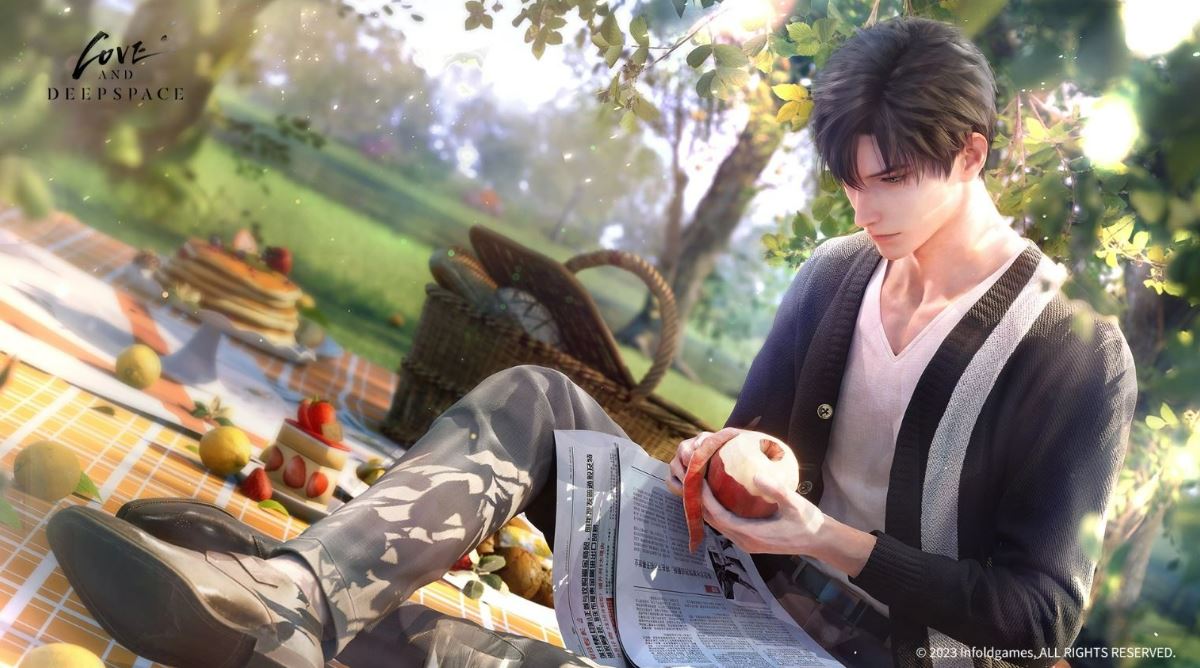
By creating romantic combat, we, as developers, also went through a battle full of failures and challenges. During game development, failure is not scary; just try again.
Finally, if you want to experience romance and long for love, you must come and play Love and Deepspace—it is a very special game. If you want to create romance, we welcome you to join INFOLD GAMES, and let us together make games that make the world a happier place.
Love and Deepspace is available for iOS and Android as a free-to-play title.