Schrödinger’s Call creators overcame a slump by playing The House in Fata Morgana. “It’s an incredible game that gives you a taste of both kindness and despair”
AUTOMATON interview with creators of Schrödinger's Call on how playing The House in Fata Morgana influenced the game's development.

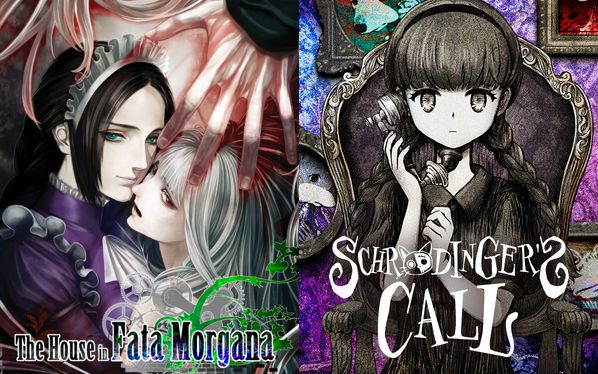
Publisher Shueisha Games and developer Acrobatic Chirimenjako released their mystery visual novel Schrödinger’s Call on May 28 for Steam and Nintendo Switch. To commemorate the release, AUTOMATON brought together the developers behind Schrödinger’s Call and Keika Hanada, the author of The House in Fata Morgana, for a special joint interview.
Apparently, the creators of Schrödinger’s Call are fans of The House in Fata Morgana, and with both games being dystopian mystery-driven visual novels, there are many bits and pieces that tie the two titles together. We ask the developers about their encounter with The House in Fata Morgana, and how the classic visual novel came to influence the way mystery is presented in Schrödinger’s Call.
Achabox, the game’s director and art lead, says that during the initial stage of creating Schrödinger’s Call, the development team was struggling with how to create a “life-changing” story and establish its worldview. That is when the title’s assistant producer Fukuda, who is a big fan of The House in Fata Morgana, recommended the NOVECT title to the team, suggesting it could be a good source of inspiration.
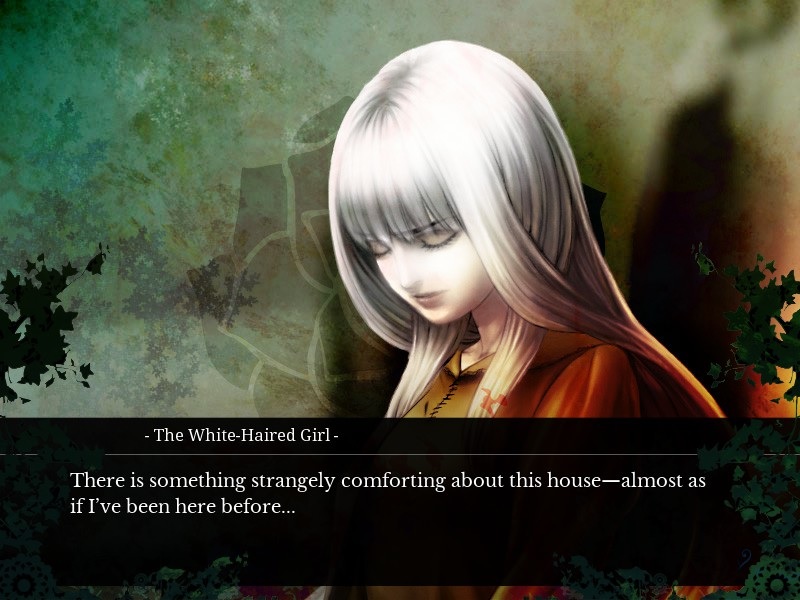
“I was a bit ignorant, and I had never heard of The House in Fata Morgana up until that point, so when I actually played it, I was like, Why is this game so amazing?,” says ame, Schrödinger’s Call’s engineer and sub-scenario writer. “Looking back, I think the way the game makes it clear what the player should be focusing on is where you can see the influence of The House in Fata Morgana on Schrödinger’s Call. The House in Fata Morgana is full of foreshadowing, hidden information, and plot twists. But despite all that, it never makes the player feel like they have no idea what’s actually happening. That’s what’s so amazing about it.”
As ame explains, throughout the first half of The House in Fata Morgana, players are clueless about the truth behind the mansion or the protagonist, but that isn’t something that takes away from the fun of the story. Then, gradually, the focus shifts, and little scenes that are intertwined with the main portion of the narrative subtly guide the player’s attention in the right direction. In short, despite having so many riddles and mysteries, it doesn’t make the player feel lost in any way. “Those who’ve ever made a game know what I’m talking about, but normally, pulling that off is impossible (laughs). If you task the players with so many riddles, you’ll end up with something that’s completely incomprehensible to them.”
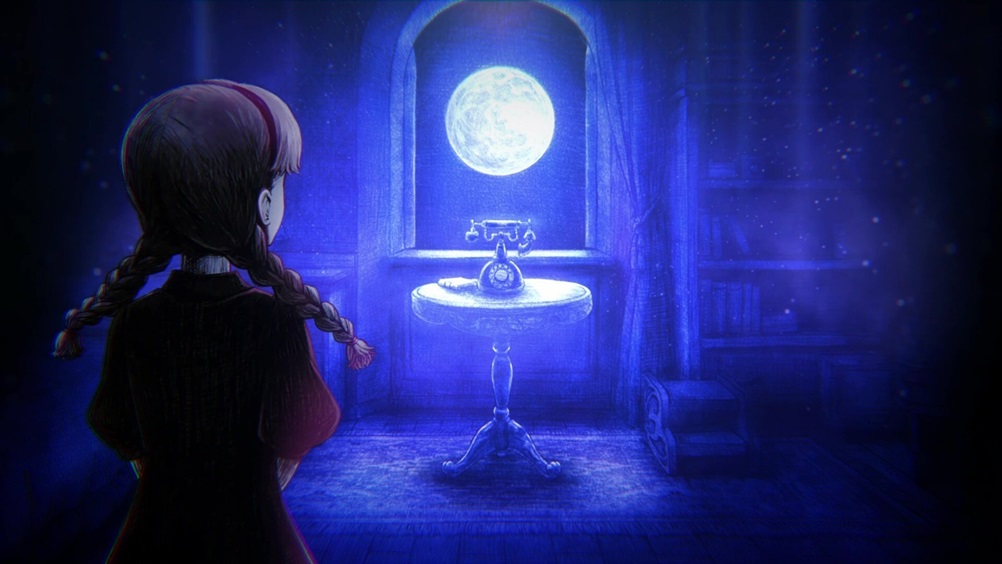
He goes on to say, “I think I was able to make use of a lot of things I learned from The House in Fata Morgana when it comes to creating a scenario in which a complex situation gets gradually revealed. I was so absorbed in my work that it’s only now that I realize I was influenced by it.”
“The House in Fata Morgana is an incredible game that gives you a taste of both despair and kindness. In a positive sense, the game has repeatedly betrayed my expectations (laughs). It was so painful, it made me want to give up on reading it multiple times. But even still, I ended up absorbed in its world, and found myself wishing for the happiness of the characters. It’s a wonderful game that shows how both the beautiful and the ugly parts of humans can coexist, which, by the time it ends, makes you want to look for something to forgive in every character, saying ‘Well, they did some bad things, but they had their own reasons for it.’ I really want everyone to experience the pain of The House in Fata Morgana, and the love that lies beneath it,” Achabox says.
Schrödinger’s Call is currently out for PC (Steam) and Nintendo Switch. The House in Fata Morgana is available for PC (Steam), Nintendo Switch and PS4.
Related articles:

AUTOMATON WEST
Articles: 208Related Posts