Releasing for Steam and Switch last month, Schrödinger’s Call is a poignant visual novel game developed by Japanese indie studio Acrobatic Chirimenjako and published by Shueisha Games. Through Mary, the last human left alive after the world’s end, the game puts players in the role of humanity’s last confidant, helping immortal souls find salvation by sharing their life stories and regrets.
With a “Very Positive” rating on Steam at the time of writing, Schrödinger’s Call has garnered praise among players and fellow developers alike. One such developer is Keika Hanada, the author of acclaimed NOVECT visual novel The House in Fata Morgana. AUTOMATON recently brought together the creators of Schrödinger’s Call and The House in Fata Morgana to hear more about what they have to say about each other’s work.
In this article, we focus on the strengths of Schrödinger’s Call, as analyzed by visual novel veteran Hanada. Seeing that the team at Acrobatic Chirimenjako actually received influence from The House in Fata Morgana, we hope you’ll check out our article on their perspective too.

I knew this game would sell as soon as I saw it
Hanada first found out about Schrödinger’s Call before its official launch, when the project won the Grand Prize at Shueisha’s game contest GAME BBQ Vol.1. “At the time, I thought the visuals looked amazing, and I’d been wanting to actually play the game ever since. I finally got the chance when I visited the Taipei Game Show in January 2025 on my own, and my first impression was that it was an incredible experience. I remember honestly thinking, This is gonna sell!” (laughs).
Aside from the beauty of its graphics, Hanada emphasizes the direction and sound design in Schrödinger’s Call as particularly noteworthy.
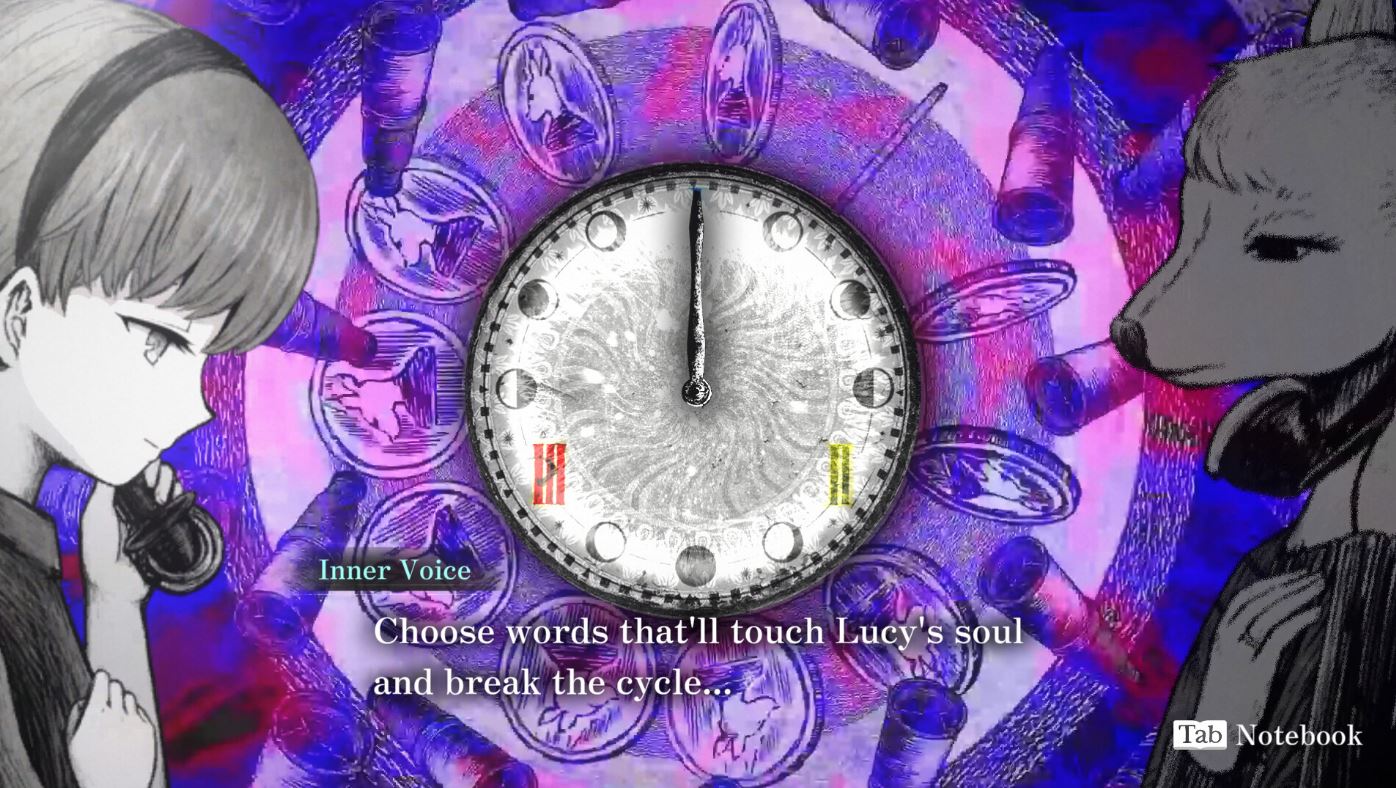
“There really aren’t many visual novel games that dedicate this level of attention to presentation. I’ve also played Urban Myth Dissolution Center, and I thought that game was exceptionally well-crafted too, but Schrödinger’s Call moves in a different dimension altogether. Every aspect of it comes together like a comprehensive work of art, unified into something that strikes you emotionally. As I played, I kept wondering, Just how much of this was planned? Ever since my first interaction with the game, I’ve continued to be amazed.”
The reason why nothing feels “added afterward” in Schrödinger’s Call
When it comes to sound, Hanada thinks Schrödinger’s Call achieves a level of cohesion no other title in the genre does, and as explained by Acrobatic Chirimenjako’s co-director Irimajiri, this was achieved thanks to the project’s small dev team, where every process is handled in parallel. “Broadly speaking, we built it all around a kind of scripting language, something fairly close to programming. We cram text, effects, and sound together into it all at once (…) it’s somewhat similar to Ren’Py or TyranoScript, but we’ve customized it specifically for Schrödinger’s Call. We have what you might call a “Schrödinger’s Script.” We write it line by line. I’d throw together a piece of music in about fifteen minutes and insert it, write some dialogue, quickly create rough visuals in ten minutes, and add those too… On my PC, the video software, music tools, editor, and Unity are all running simultaneously.”
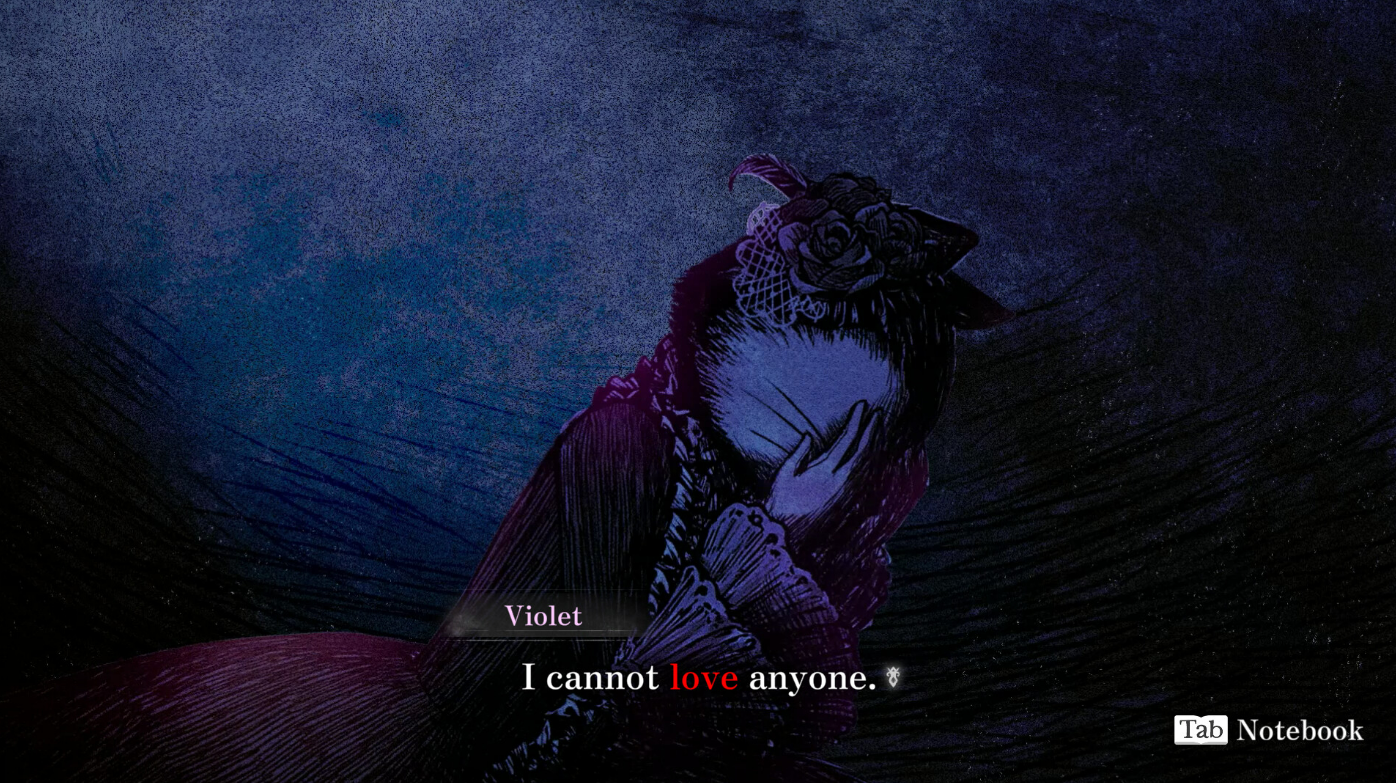
According to Makotoi Hayashi, the title’s producer at Shueisha Games, Schrödinger’s Call was essentially made by three people over the course of four years. One member would handle direction, and another would write scenarios based on the game’s concept, then personally create music and visuals designed to move the player’s emotions and immediately test them in the scene. “They’ve repeated that process an extraordinary number of times. I think that’s why the game’s presentation is so detailed down to every single second. Rather than dividing responsibilities, the three of them create one thing together,” he comments.
NOVECT’s Hanada thinks a game like Schrödinger’s Call, where nothing feels like it was simply “added afterward,” could not have come into existence without a close-knit development style like this. In closing, they say, “I truly believe Schrödinger’s Call is a one-of-a-kind game in terms of presentation. I don’t think there’s anyone whose heart wouldn’t be affected by it. If someone is feeling down or empty in their daily lives, I think it may even have a kind of therapeutic effect by shaking them up emotionally. As I played, I found myself feeling that it was absolutely worth experiencing, and that it would be a shame to miss out on this game. So, to anyone reading this article, I sincerely think you should buy it and experience it for yourself.”
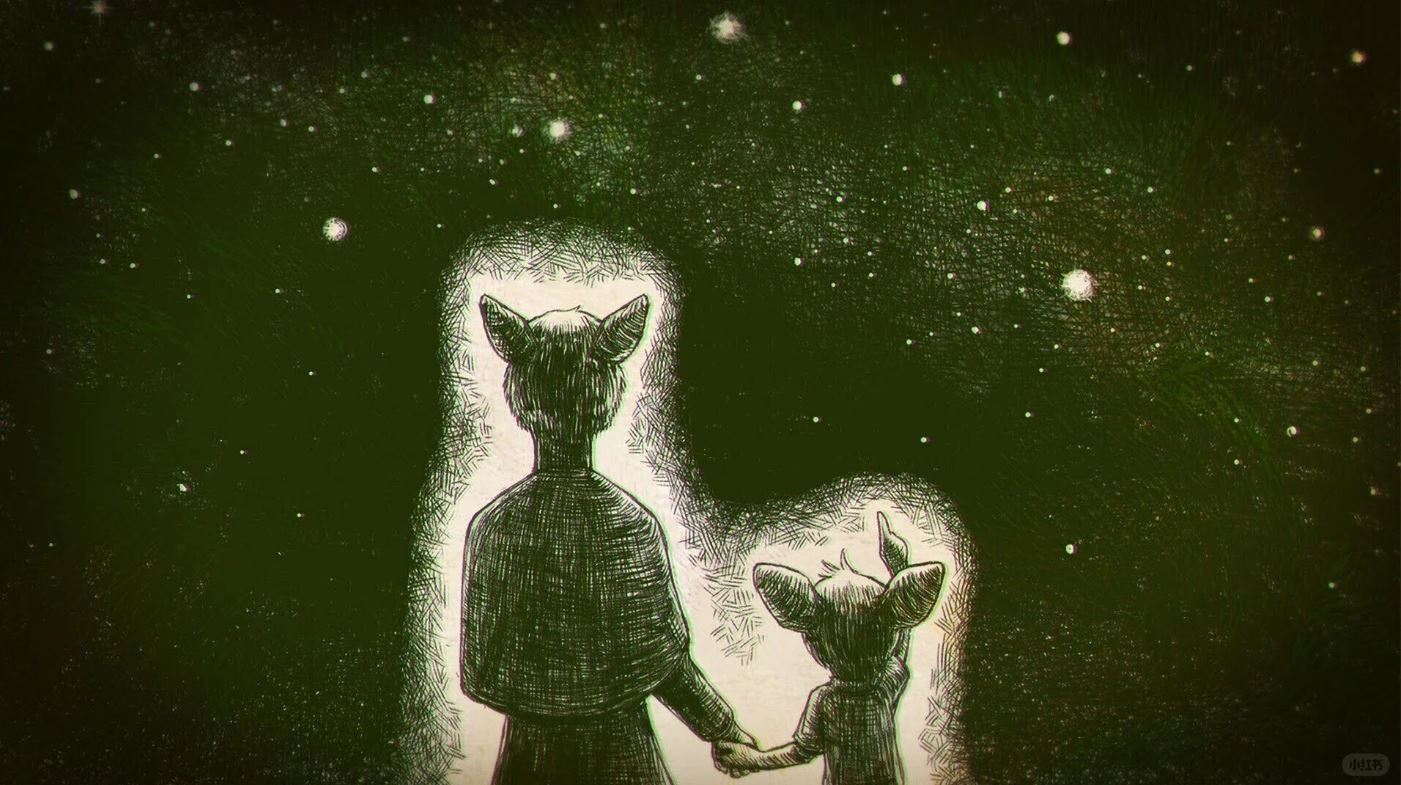
Schrödinger’s Call is out now for PC (Steam) and Nintendo Switch. The House in Fata Morgana is available for PC (Steam), Nintendo Switch, and PS4.
©Novectacle ©Acrobatic Chirimenjako / SHUEISHA, SHUEISHA GAMES