

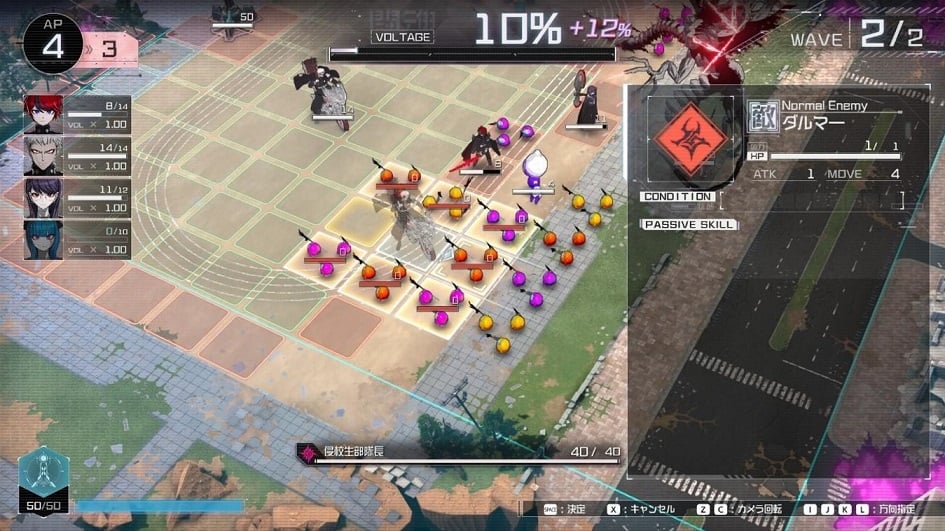
The strategy or tactical RPG is a genre of video games played from a top-down view in which players move characters across a board to defeat enemies. While characters are treated kind of like board game pieces, the genre also incorporates RPG-typical elements like character growth. But although it boasts many popular titles like Fire Emblem and Final Fantasy Tactics, the genre itself sees relatively few new releases.
Why are SRPGs so difficult to produce? To find out, we talked to Too Kyo Games developer Akihiro Togawa, who worked on the SRPG sections of The Hundred Line: Last Defense Academy, and is a big fan of the genre himself.
—Could you please introduce yourself?
Akihiro Togawa (hereafter Togawa):
My name is Akihiro Togawa, and I work at Too Kyo Games. In the game industry, I’ve primarily been working as a planner (game designer). Back when I was working for Atlus, as part of the Persona team, I was the lead event planner on Persona Q2: New Cinema Labyrinth and the lead mypalace planner for Persona 5 Royal. Then, I served as the scenario director for the next series title, Persona 5 Tactica, so I’ve actually been doing a lot of different stuff.
Most recently, at Too Kyo Games, I served as the co-director and combat director for The Hundred Line: Last Defense Academy (hereinafter referred to as The Hundred Line), which launched on April 24, 2025. My job was to work together with the development company Media.Vision on the SRPG portion of the game.
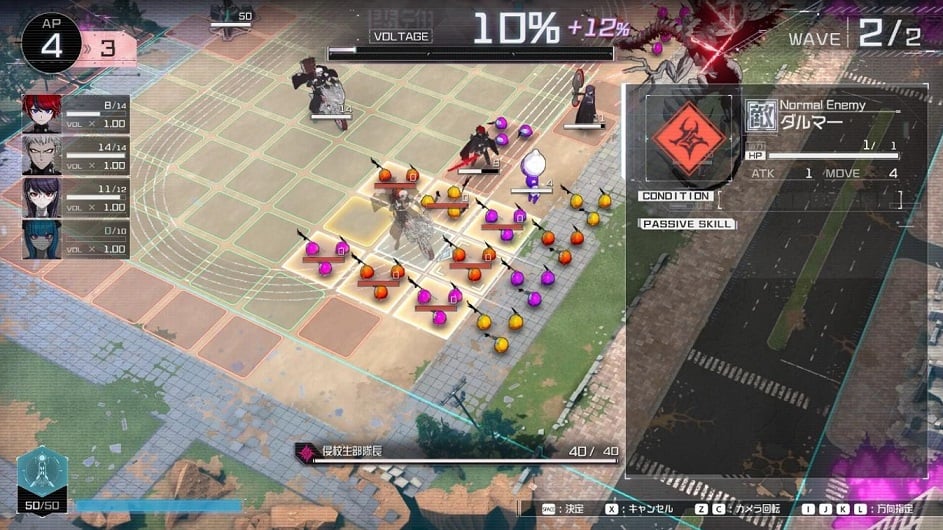
—Looking at your career history, I get the impression that SRPGs are your forte, considering that you have titles like Persona 5 Tactica and The Hundred Line in your portfolio.
Togawa:
Persona 5 Tactica was the first time I worked on an SRPG. I’ve been playing SRPGs for quite a long time now, but when it came to actually having to make one, I did a lot of research by playing a considerable number of SPRGs and tactical simulation games. Of course, I played Fire Emblem and Tactics Ogre, but I also got my hands on many indie titles such as XCOM, Into the Breach and Troubleshooter: Abandoned Children. I also worked on the SRPG segments on The Hundred Line.
There’s a “growing market,” but it’s “difficult to get projects approved.” The reality of SRPGs
—Do you like SRPGs?
Togawa:
I do, and I’d like to see more of them released.
—I love them too. But despite their popularity, the number of SRPGs being released is quite small. Many argue that this is because SRPGs are challenging to make from a commercial standpoint.
Togawa:
My opinion is that, in the end, SRPGs are often perceived as a niche genre. Actually, I’ve heard that devs who don’t usually play SRPGs tend to react like “Are we really making this?” whenever a SRPG project is greenlit. I suspect that opinions like these from people who had never played SRPGs, don’t think they’re entertaining, or find them too complicated come up quite often in the industry.
However, according to data from overseas sites like Global Market Statistics, as of 2024, the SRPG market is projected to be worth approximately $1.2 billion USD. This includes both console and live-service games. What’s more, the estimated market size in 2026 is expected to reach about $1.3 billion. So, although it’s often perceived as small, the SRPG market is surprisingly large and continues to grow in certain areas.
Specifically, this is also reflected in sales figures. For example, Fire Emblem: Three Houses sold 3.4 million copies, and Final Fantasy Tactics: The Ivalice Chronicles sold over a million units. However, I don’t think there are many people or companies who would immediately agree if asked, “Want to make an SRPG?”
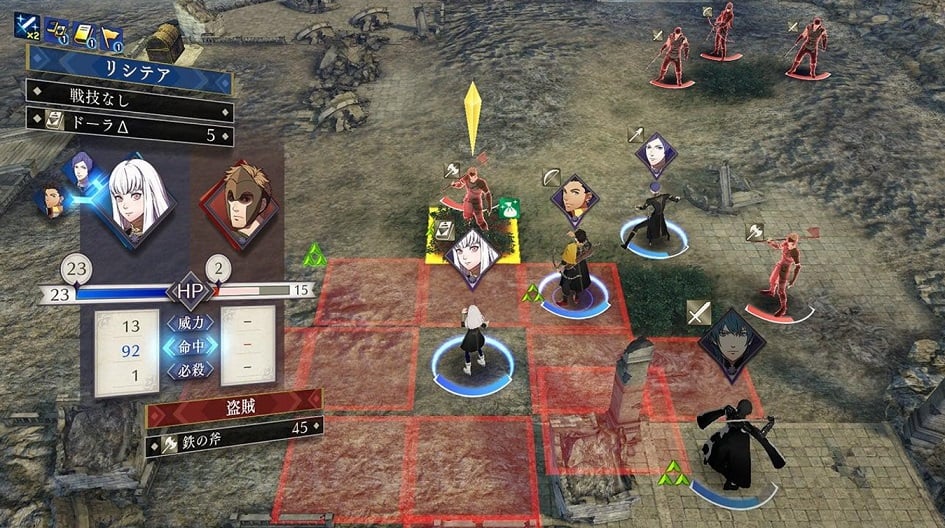
—What do you think is the reason companies are so hesitant when it comes to greenlighting SRPGs?
Togawa:
What bothers me the most is the fact that SRPGs aren’t reaching a broader audience. Even the best-selling games I’ve mentioned seem to be targeting people who are already long-time fans of the series. And while it’s a given that popular titles do make an effort to reach a wider audience, I still feel like the genre’s reach is limited. When I thought about why this is the case – and I think many others feel this way too – I realized there is a common perception that SRPGs have a steep learning curve.
—Could you elaborate?
Togawa:
When you say “SRPG”, the first thing that comes to mind is the grid, and before getting started with anything, you’ll first have to learn the rules. There are multiple units, and each of them is positioned on a terrain that has various effects. They all have their own combat skills, range of attack, and HP. In other words, before you even get to the interesting bits of an SRPG, you have to learn a lot of rules. That’s what I meant by saying that the learning curve of SRPGs is steep.
Another thing is the pacing. In SRPGs, it’s pretty common for one battle to last over 30 minutes. In an era where everyone is competing for the very limited disposable time people have, making battles take so long feels like a rather heavy investment.
So, in addition to the learning curve and pacing issues, I also often hear people say that “It looks difficult in the first place.” Perhaps they are considered difficult because of the fact that many games in the genre so far have been made for quite a niche audience. They’re the so-called “traditional” SRPGs. As a result, they probably are fun if you actually give them a try, but because of the established preconception that they’re “too difficult,” nobody ever takes that first step.
If you try to make traditional SRPGs more accessible by adding an easy mode that’s “too easy,” players would be able to clear the game just by placing a unit close to an enemy and hitting the A button to attack. While I do think that would be fine in a game where the focus is on having fun with the characters, it doesn’t really convey the core thrill of SRPGs, so striking that balance is a bit tricky.
The root cause of why SRPGs aren’t reaching a wider audience is that there are not enough casual, accessible titles that you can jump straight into and enjoy as they are.
—Even during internal planning meetings, I assume there’s a vague perception that “SRPGs are a niche genre with no broad appeal.”
Togawa:
I think that’s also true. As a matter of fact, reactions from those around us and upper management are inevitably different when we propose making an action game versus when we propose making an SRPG. With an SRPG, we often get reactions like “Are you really going for that niche?” I really want to overturn that mindset, and I think it’s doable.
—Is it because there isn’t a game that could serve as a clear, easy-to-follow benchmark that the genre is viewed as “niche”?
Togawa:
It’s a little difficult to give an example that’s easy to understand. I was in middle school when the Fire Emblem trilogy for the Game Boy Advance launched. It left such a huge impact on me, and it helped erase my prejudices about the genre. If I hadn’t played those games, I think might have not even considered getting into SRPGs in the first place.
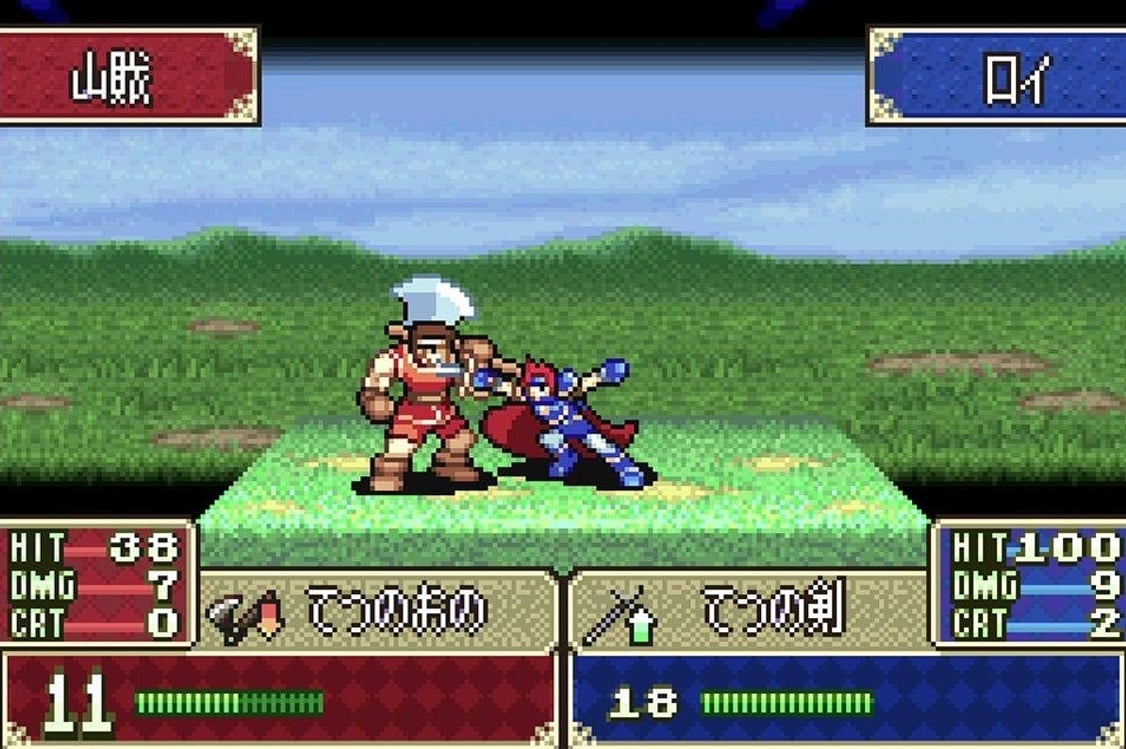
In that sense, the reason why such a wide user base has fewer opportunities to experience SRPGs is perhaps the fact that there are now fewer “monumental titles” that players immediately think of when the genre is mentioned. As a result, I feel we’ve entered a vicious cycle. The SRPG genre has lost popularity among gamers, making it harder for new games to get greenlit, which then leads to fewer SRPG releases.
Any industry will die out without being able to maintain a younger customer base. When it comes to the video game industry, I think the shooter genre used to be a bit more of a genre catered to hardcore gamers until games like Splatoon, Fortnite, and Apex Legends came out. Specifically, I don’t think shooters were popular among children. But as soon as a single game for kids came out, the genre immediately exploded in popularity. Then, those in upper management started thinking “Maybe this could actually work?” So, now it’s much easier to convince them to greenlight the project by showing them Splatoon as an example.
However, I feel like the SRPG genre doesn’t have many titles like that. Even our generation’s Game Boy Advance Fire Emblem Trilogy felt like the kind of game played by hardcore gamers. So, when it comes to passing the SRPG genre on to the next generation of children, if somebody asks me, “Has there ever been an SRPG that exploded in popularity among the general public,” I can’t really think of an answer, which is also a part of the problem in my opinion.
—Now that you mention it, the number of shogi players in Japan has also significantly dropped compared to the past, so I see a parallel there.
Togawa:
I think there’s too much content out there that triggers a dopamine rush more easily than just moving pieces on a board. For example, if you compare an SRPG to a shooter, and ask which takes less time until it gets entertaining, the shooter always wins no matter how you look at it. After all, pressing a button to instantly take out a character in front of you instantly satisfies that sense of “fun.” What makes Splatoon amazing is the fact that even if you don’t take down your opponents, you can influence the game’s outcome simply by painting the field, and it feels fun. I really think that’s impressive. However, when you think about what it takes to make shogi reach a level of fun that’s similar to Splatoon’s, that’s where it gets difficult.
—If you think about it from the perspective of the steep learning curve you mentioned earlier, it does take a long time before the game starts to feel fun.
Togawa:
That’s right. You’re only able to appreciate the fun of moving the pieces when you realize stuff like “With the Bishop threatening this area, as soon as I place the Rook here, the opponent’s King will have nowhere to go.” That’s when it starts feeling rewarding. But during the time it takes to reach that point, it’s completely different.
—Do you think it’s possible to create a game that retains the SRPG-like game design and is also able to trigger a dopamine rush over a short time?
Togawa:
While it would probably be quite challenging, I do think it’s possible.
If I were to give it a shot, I think I’d probably make it something like a free-to-play action game…I think the most important thing would be to make it into something easy to understand but flashy. And if you’re just playing casually, the gameplay should feel satisfying even if you’re just pressing random buttons. Action games have that great tactile feedback, and there are so many fun titles in the genre where just pressing the buttons feels satisfying.
Games like Zenless Zone Zero feel really good to play, and even the more recent ones like NTE made me go “It feels so satisfying to just press a button and unleash a special attack.” However, if you take that approach too far in SRPGs, the experience can end up feeling completely hollow. If you can win simply by spamming the A button, where is the satisfaction of properly timing it? I think striking that balance is really tricky.
—One interesting thing about SRPGs is how meticulously they are balanced, and you only get a feel for that toward the end of the game.
Togawa:
You’re right. And it’s undoubtedly fun if you actually try it. But the difficult thing about the SRPG genre is the fact that people often don’t even get around to trying it.
How to make SRPGs “feel good” to play?
—Are there “core principles” you always follow when you’re making an SRPG?
Togawa:
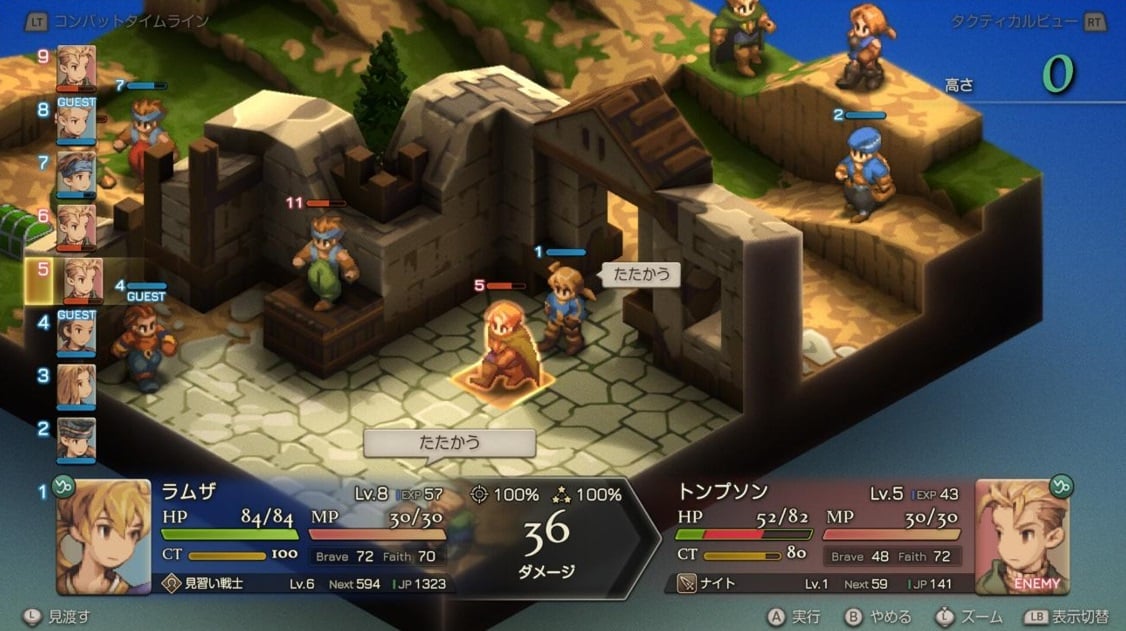
For a game to be considered an SRPG, the characters can’t just be pieces on a board, they need to be actual characters. SRPGs are a great format for establishing characters and stories. For example, Fire Emblem, Final Fantasy Tactics, or even Tactics Ogre feature a wide cast of characters.
—That’s right.
Togawa:
However, if you tried doing the same thing in a typical RPG, all of the characters would start feeling a bit shallow and forgettable. The more characters there are, the more you’d just think, “Oh yeah, I guess there was a character like that.” But strangely, when it comes to SRPGs, even if there is a wide cast of characters, you’ll remember each one individually, and it’s much easier for them to leave a lasting impression on you. I think that’s because you’re moving your characters each turn, so you spend quite a long time interacting with them.
When a character defeats an enemy commander, you might find yourself thinking, “That’s a great character” or “The range on that skill is amazing.” Compared to a standard RPG, I think it’s much easier to empathize with the characters, which is why it would be such a waste to treat them as merely game pieces. For example, if the “pieces” were just normal battle tanks or missile launchers, it would feel much more “tactical,” very much like the pieces in shogi.
So, the inherent strength of SRPGs lies in the fact that the game system itself becomes the story. You feel joy and excitement the moment your character strikes down an enemy solider. And because the characters are fighting side by side in close proximity, they end up becoming friends. You naturally connect that with a dramatic narrative, imagining how they’re maybe helping each other out as they fight together. I think that’s one thing that makes SRPGs so interesting.
—As you’ve mentioned, there’s still plenty of room to explore the SPRG genre. What issues do you think need to be addressed, and in what kind of format, for the genre to become more popular?
Togawa:
It’s all about getting that dopamine hit. I think that is the right approach when it comes to game design, and I believe it’s a valid strategy to try shortening the time it takes for the game to start feeling fun.
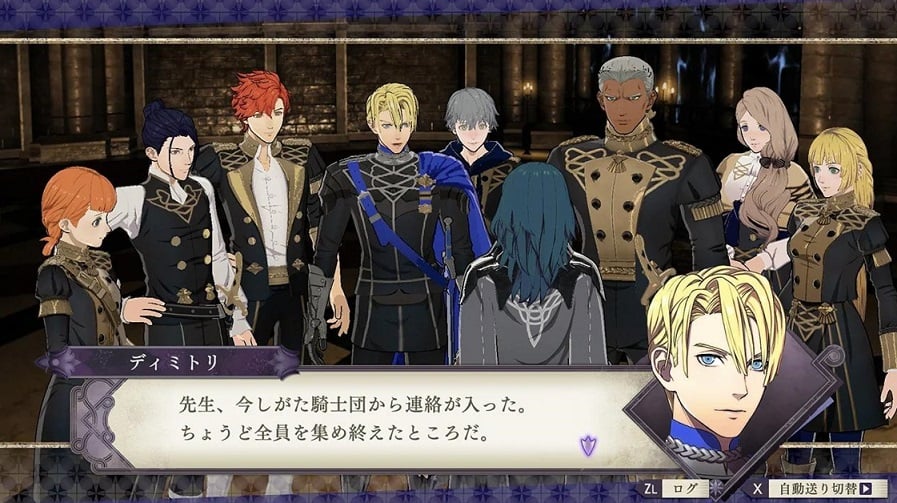
That’s one possible approach. On the other hand, let’s look at the example of Fire Emblem: Three Houses. In terms of systems, the game is quite traditional, but it incorporates elements such as great characters, a school setting, as well as story- and romance-driven systems. Thanks to the addition of these modern elements, I think it managed to attract a large number of casual players and new fans. So, I think what gamers who haven’t played many SRPGs enjoy the most are actually the characters and the story. So, taking those elements and combining them into a single package seems like a rather effective strategy in my opinion.
Are SRPGs actually more budget-friendly
Togawa:
Recently, the industry has been facing the serious issue of skyrocketing development costs. This doesn’t affect just AAA titles; even projects on a relatively modest scale are facing budget-related issues. However, I think SRPGs are a genre where you can compete even on a smaller budget.
—SRPGs don’t cost that much to develop?
Togawa:
Of course, everything depends on the content and scale of the project, but compared to typical large-scale RPGS, they’re much cheaper.
When you think of an RPG, what comes to mind is numerous NPCs, many towns, and then dungeons, transportation means, and maps that connect everything together, etc. In other words, there’s a mountain of assets that are necessary for the game. On the other hand, SPRGs allow you to cut down on those assets if you want to. Additionally, since most SRPGs are stage-based, they also pair really well with visual novel-styled games.
If you look at titles like Tactics Ogre and Final Fantasy Tactics, you’ll realize that they progress through dialogue boxes on the battle map and simple cutscenes set on top-down backgrounds. So, if you think about it like that, all you need for an SRPG to be an SRPG is to have a battle map and a visual-novel style section.
—Since you’ve put it like that, I’m also starting to think that SRPGs are really much more budget-friendly compared to other genres.
Togawa:
So, if it’s too difficult to make plot developments only using battle maps due to the scenery always staying the same, combining it with a visual novel format might be a good idea. There’s a background, an illustration, character sprites and a text box. Simply inserting the visual novel format between the battles is enough to make it feel like a complete game.
With development costs soaring, I think the strength of SRPGs lies in the fact that they can be made on a limited budget. They aren’t AAA titles, but they allow you to tell a story, develop your characters’ personalities through combat, and create dramatic narratives. A great thing about SRPGs is how compatible they are with those kinds of stories.
—While it is an adult-only series, Rance also comes to mind.
Togawa:
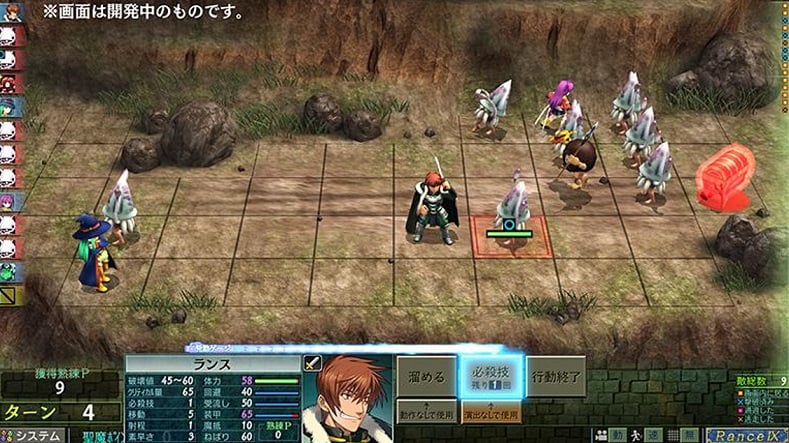
Rance IX is a perfect example of that. It has battle maps and 3D graphics, but the rest of the game progresses through 2D cutscenes. But if you asked me if I had any complaints about it, I’d say – not at all. It was really fun.
— How would you advise someone to pitch their SRPG proposal so it gets approved?
Togawa:
Just write “low-budget” on the first page.
Everyone:
(Laughs)
Togawa:
It’s cheap to make, and there are no dungeons, no free-roaming fields, it can be done just with battles and cutscenes. But since you can still write a solid story, it also allows you to showcase the characters.
— I see, it seems like it could work even with a small market share. It also has potential to become an IP.
Togawa:
You can start on a small scale, gain experience along the way, and eventually turn it into something big.
SRPGs are an untapped gold mine
— How do you think SRPGs should evolve going forward? Maybe adding elements of RTS games could be interesting?
Togawa:
Adding real-time events makes the game much more difficult. I’d say SRPGs have a unique kind of depth precisely because they are strategic games not played in real-time. Though I do believe that there should be room to take on new kinds of challenges within the fundamental frameworks of SRPGs.
I think that has been thoroughly explored with genres like action and (turn-based) RPGs. Clair Obscur: Expedition 33 is, for example, a turn-based RPG that brought something fresh to the genre by adding parrying into its battle system. Persona has the 1 More system, Shin Megami Tensei has Press Turn Battles, and Final Fantasy has Active Time Battles, to name a few other examples. It feels like the action and turn-based RPG genres have already struck gold in that sense, while SRPGs, surprisingly, haven’t been explored that much.
— There aren’t many games in that format after all.
Togawa:
That’s right. In fact, it could be pretty interesting to add a parry mechanic to an SRPG. Speaking of action elements in SRPGS, the Utawarerumono series features a system which allows you to chain together many attacks in a combo if you press the button at just the right moment. I think SRPGs are an untapped gold mine in that sense, and exploring them deeper is one possibility for the genre.
Also, as I mentioned earlier, there are cases where you want to focus on the narrative. If a narrative-centered project doesn’t get greenlit, it’s always possible to add SRPG elements to the mix; I think there are still many different ways you could go about this.
— So, you’re saying that, just as the recent trend has been to combine roguelike elements with other genres, one could also combine SRPG elements with different genres?
Togawa:
Exactly. Just like how soulslike and Slay the Spire-like games emerged. So, for example, Fire Emblem-like titles would start coming out, exploring all the different possibilities, and turning more to the casual gamer audience rather than staying in the hardcore gamer niche…I think that kind of future would be amazing.
I really hope that the industry explores the many untapped possibilities of the genre. As for myself, I want to go beyond The Hundred Line and create something that could bring that kind of approach to casual players as well.
The Hundred Line: Last Defense Academy is available for PC (Steam) and Nintendo Switch.
[Interviewer: Jun Inaniwa]
[Writer, editor: Koutaro Sato]
[Interviewer, editor: Ayuo Kawase]
ⒸAniplex, TooKyo Games

It may not have hit the AAA market, but independent devs and studios are popping up like crazy and pumping out SRPGs. A lot of them come from the FE Hacking scene, and get funding via kickstarter. They might not have the reach to hit bigger news outlets, but as a primarily SRPG YouTuber I get reached out to by a number of them on the regular. Dark Deity has two games out and is already working on its 3rd, and on top of that there are a ton of early-access or in-development titles, like Unfated, Strategem Lost, or Together in Battle. The genre is undergoing a quiet renaissance behind the scenes between major FE or FFT releases, and the only thing keeping these games unknown is the lack of reach. It’s a niche fandom, for sure, but it’s one that’s DEEPLY passionate about its genre.