It’s been a little over a year since Aniplex released The Hundred Line: Last Defense Academy for PC (Steam) and Nintendo Switch. The game was developed by Too Kyo Games and Media.Vision as an ambitious collaboration between directors Kazutaka Kodaka, creator of the Danganronpa series, and Kotaro Uchikoshi, known for the Zero Escape series.
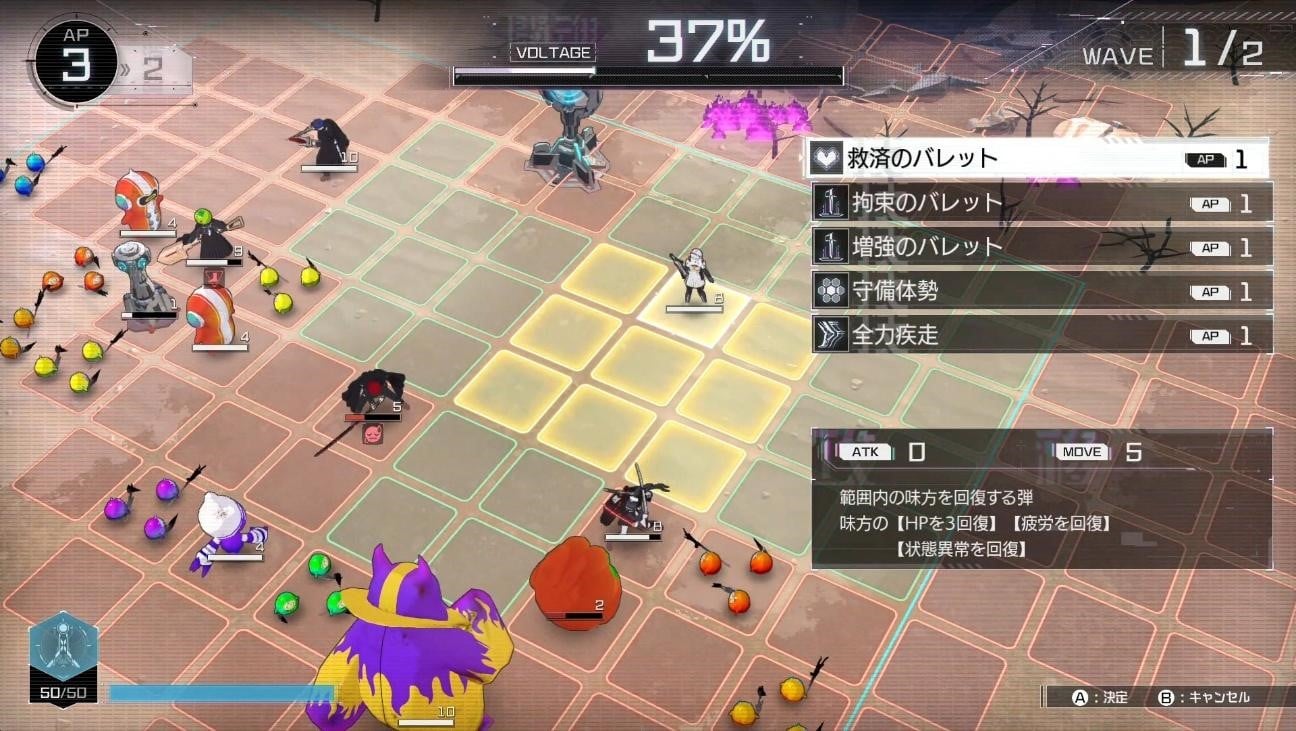
A visual novel + strategy JRPG, The Hundred Line has since attracted much attention for its distinctive world and character writing, as well as its massive scale at 100 routes. But another core component of the game is its SRPG gameplay sections, where the Special Defense Unit engages in deadly battles against Invaders. Even when outnumbered, each member of the Special Defense Unit can unleash powerful skills to wipe out groups of enemies. When things get dire, players can also use Last Resorts, sacrificing characters’ lives in exchange for super-powered attacks capable of turning the tides. These mechanics create a dynamic that’s somewhat unusual for an SRPG.
We recently interviewed Akihiro Togawa of Too Kyo Games, who worked on The Hundred Line’s battle sections. Togawa talked to us about how he became involved in designing the game’s tactical gameplay and how the battle system evolved into its current form.
The most important thing in a game is that “moment of satisfaction”
—I understand you worked together with Media.Vision on the SRPG sections of The Hundred Line. How exactly were you involved?
Akihiro Togawa (hereafter Togawa):
For this project, I wasn’t involved from the initial planning stages; I joined partway through development. By that point, it had already been decided that the game would be an SRPG, and there was already a basic prototype that allowed players to move units across the field and have them perform actions. My job was to figure out how to make that fun.
—What did you focus on most when developing the gameplay?
Togawa:
First and foremost, it was making players experience a hit of dopamine. I think the most important thing in a game is offering moments of satisfaction, and I believe that should be the highest priority in game design.
I think every game has moments like that. Persona’s All-Out Attacks feel great, as do backstabs and parries in the Souls series. And if I were to go even further back, I think you’d agree that getting a Star in Mario feels absolutely amazing.
Regardless of the genre, fun games always have moments that feel good. I think that what creates those moments is the dynamic of first subjecting the player to stress through obstacles such as enemies and stages, building up that frustration, and then providing a moment where that tension is released all at once. That’s the dopamine rush, the “moment of satisfaction.” For me, creating those moments is the heart of game design, and that was the first thing I worked on when I joined The Hundred Line’s development.
—So you set out to design mechanics that would give players a dopamine rush.
Togawa:
That’s right. However, simply creating dopamine-inducing moments isn’t enough; you have to make sure they happen within the game’s rules and constraints.
With The Hundred Line, there were two major constraints. The first was that it was a game directed by Kodaka and Uchikoshi. It was a game where people would be coming primarily in pursuit of the story created by Kazutaka Kodaka and Kotaro Uchikoshi. That meant the gameplay side had the responsibility of creating mechanics that would maximize the narrative experience.
—So the battles had to add to an already compelling story.
Togawa:
Yes. Even if the gameplay itself were fun, if it felt disconnected from the story, the experience would be ruined. That’s why we needed to build mechanics that incorporate the atmosphere and thematic intent of the narrative into the gameplay.
The second constraint was also a consequence of The Hundred Line being a Kodaka and Uchikoshi game: it had to be enjoyable even for casual players. We were aware that the majority of the game’s audience would likely be visual novel players who don’t often play SRPGs, so we had to create something accessible for them. I think those two factors were crucial.
“Protect with your life” turned into gameplay
Togawa:
So, how could we satisfy those two requirements? We started by working backward from the story and its themes and asking ourselves what we could incorporate to make it fun.
As I read through The Hundred Line’s script, I kept coming across words with a bleak feel to them, like despair, immortality, madness and war (laughs). And among them, the word that really clicked with me was “死守” (shishu, “to protect with one’s life”).
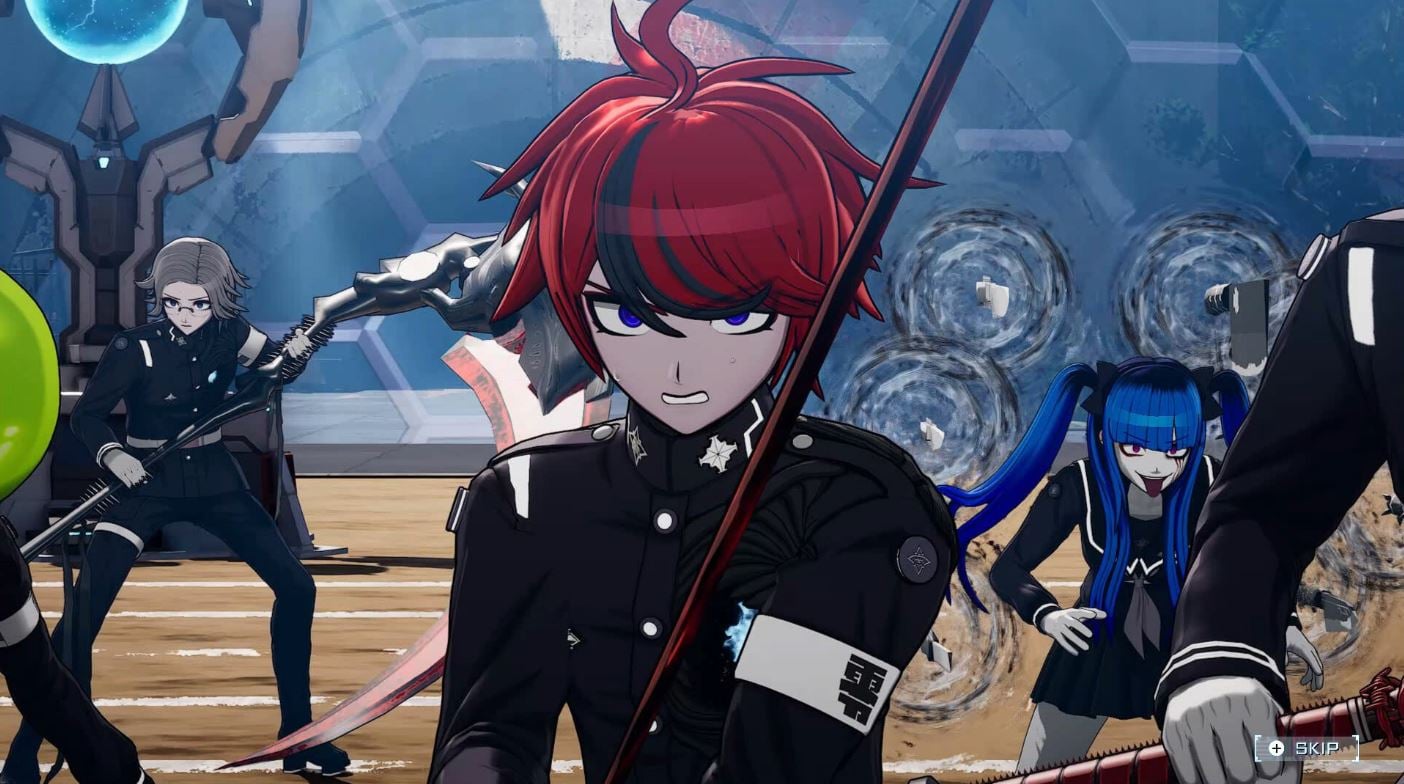
Essentially, The Hundred Line is a game about protecting the Last Defense Academy at all costs. If you look up “死守” in a dictionary, it means “to defend something with the resolve to die.” However, The Hundred Line has this setting where the characters fight with the resolve to die, but even if they actually die, they’re just resurrected in the infirmary. So rather than fighting with the resolve to die, they’re forced to keep defending the academy even after death. I thought that was the true thrill of the game.
Once I realized that this is a game where even if a character dies, they’re still forcibly made to protect the school, I suddenly thought, “This is the exact opposite of Fire Emblem.”
—In Fire Emblem, at least when playing in Classic Mode, characters who die in battle don’t come back.
Togawa:
Exactly. In Fire Emblem, characters are lost for the rest of the game when they die, so the objective is to do your best to keep your characters alive.
When I thought about how The Hundred Line is, conversely, a game where you have to keep protecting the academy even at the cost of characters dying, I immediately came up with the idea of a battle system that was the opposite of Fire Emblem, essentially treating characters’ lives as disposable tools. Thinking that making characters disposable would allow us to maximize the impact of the story, I proposed the concept to the team.
I think it ended up being a system that was extremely well suited to a game by Kodaka and Uchikoshi.
Once we finalized this as our concept, we adopted two systems to further heighten the impact of the story, “Last Resort” and “Voltage.”
The Last Resort system allows a character to sacrifice their life to unleash a powerful special attack when they’re near death. And because characters dying carries no real downside in this game, their deaths also cause the player’s Voltage gauge to fill up significantly. You can then use Voltage to power up other characters on the field or unleash special attacks.
In other words, the more you throw your characters away, the stronger you become. You send a character charging into the front lines. They take out a bunch of enemies, but because they’re exposed on the front line, they become a target for attacks and lose HP. Once their HP gets low, you use Last Resort to sacrifice them and wipe out more enemies. Then the remaining allies gain Voltage, making your other characters even stronger. The more characters you sacrifice, the stronger you become. That’s how we ended up with a game where you essentially throw your characters’ lives away. Players have said this, too, but the moment you activate Last Resort feels really good.
—I definitely felt that.
Togawa:
Thank you (laughs). There’s something incredibly satisfying about throwing a character away at exactly the right moment and taking out the enemy. The key was combining that almost taboo sense of satisfaction with the themes of the game’s story.
—There’s really no risk to throwing away characters in The Hundred line, is there.
Togawa:
Yes, zero risk. If anything, you actually gain an advantage by letting characters die. Sacrificing them is basically necessary to progress the game smoothly and feel that “satisfaction.”
I imagine there are many players who don’t want to let their characters die. But as they keep playing battles, the feeling of, “Actually, it’s easier if I let this character die” catches up with them. I was really happy watching people play the game on streams and seeing that happen. Everyone was sacrificing their characters and turning them into tools, and I was delighted to see that (laughs).
—In game design, those kinds of extremely powerful mechanics often come with some sort of disadvantage. If not a direct penalty, there might be a hidden parameter that worsens when you treat your characters’ lives carelessly. Did you ever consider implementing anything like that?
Togawa:
We did briefly consider it during development. At one point, we thought about having a kind of Karma value that increased the more characters you killed, which would then cause the story to branch.
However, we eventually decided that wasn’t right. One of the core themes of The Hundred Line was its emphasis on players making choices. We wanted the story to change significantly depending on the choices the player made. If killing characters caused the story to branch, though, it would become less about your choices and more about your skill at the game.
For less experienced gamers, there could also be situations where they accidentally let characters die and inadvertently trigger a story branch, simply because the game is designed so that you become stronger the more characters die.
That would have gone against the concept. Precisely because we wanted this to be a game where the player’s own choices were what mattered, we designed the combat so that it wouldn’t affect the story.
Small numbers make The Hundred Line’s battle system easy to follow
—The SRPG sections of The Hundred Line have virtually no stat inflation. Battles use very small numbers all the way to the end. I found that this made each individual stat meaningful and kept the game fun throughout. What was the thinking behind this direction?
Togawa:
While Last Resort and Voltage were a way to create “satisfying moments,” I also felt we needed some kind of design choice that would help the game appeal to casual players.
The first thing I did was think back to my own experiences playing SRPGs and identify the moments when I start to feel like, “Ugh, this is a chore.” I figured those moments would point directly to the elements that make a game unpleasant to play.
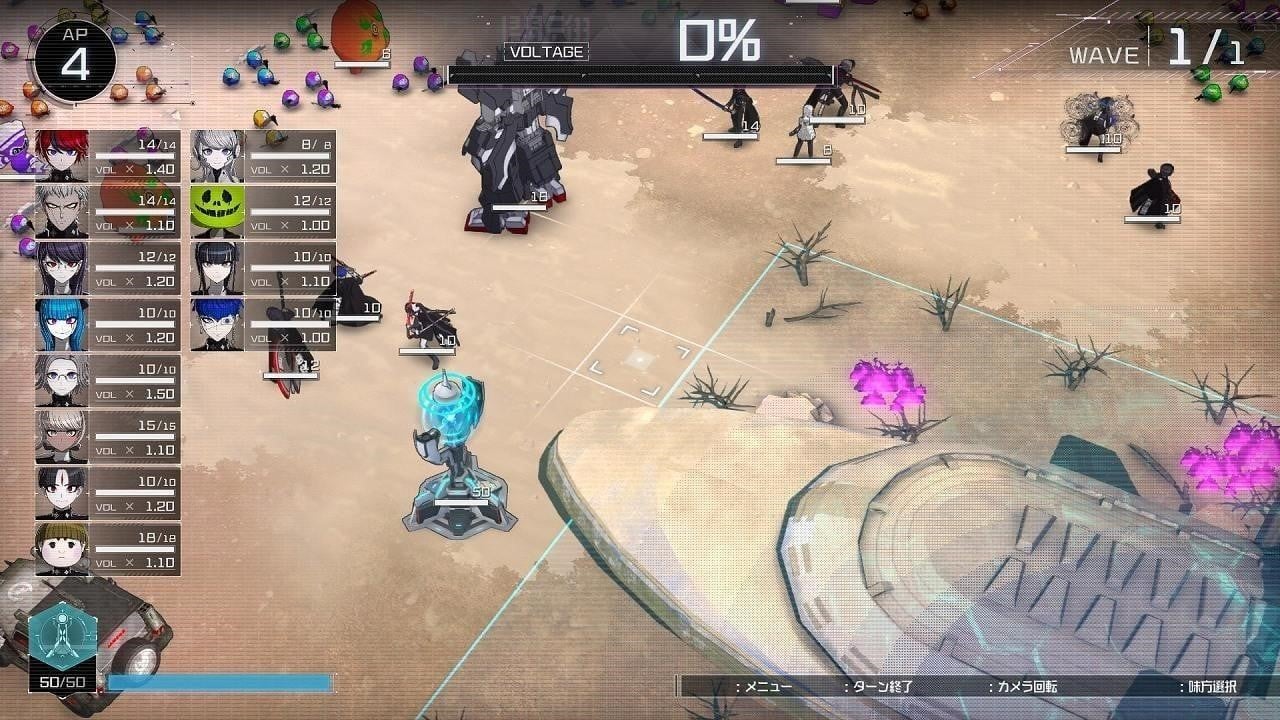
When I thought about it, there were two major things. The first was when nothing was happening on the battlefield and it became boring. I believe games are fundamentally built around the game reacting to the player’s actions, with the enjoyment coming from those reactions. So, when nothing much happens, it gets boring, and when you’re bored, you start wanting to quit.
The second was the moment when you’re not sure what you’re supposed to do next.
The mental effort involved in making decisions gets higher as the number of things you can do increases. Compared with ordinary RPGs, SRPGs are particularly prone to this because there’s simply more to do.
In a typical RPG, you usually have a party of around three or four characters. In an SRPG, you have a lot more characters to begin with. Who should act first? Where should I move them? Where is it safe to move them? Where would give me an advantage?
There are a lot of things to think about, so I wanted to eliminate those moments when the amount of mental effort required becomes too high. Those were the two things we established as our starting point.
To address the first issue – the boredom of nothing happening on the battlefield – I wanted to make sure the battlefield was constantly moving. A common pattern in SRPGs is to first check the enemies’ attack ranges, position all your characters just outside those ranges, end your turn, and then watch what the enemies do. I thought that kind of play was exactly the sort of thing that could make an SRPG tedious, so I wanted to get rid of it.
I then asked myself how I could get the battlefield to move more dynamically, and I thought, “What if characters on both sides simply died all the time?”
—That certainly makes things more exciting.
Togawa:
Exactly. That’s also one of the dopamine-inducing elements, so we got rid of mechanics that made certain locations on the battlefield advantageous. You can put your characters anywhere. And if you can put them anywhere, then the best thing to do is naturally to move them in a way that lets you defeat as many enemies as possible. We wanted to encourage that, so we gave all the basic enemies in The Hundred Line just 1 HP.
That means basically any character can kill them in a single hit, allowing you to mow down huge waves of basic enemies. Whenever someone attacks, enemies just start dropping. We also made a point of keeping the allies’ HP low. That gives the battles a constant sense of tension. In short, by lowering the HP for both sides while increasing the enemy count, we ensured that there would be a lot of casualties on both sides.
That helped reduce situations where the battlefield would become completely stagnant.
And the simpler we made the calculations, the fewer things players had to think about. Enemy attack power is also kept relatively fixed, so you don’t have to worry about things like hit rates or percentage-based defense boosts. We thoroughly reduced the number of things players have to compare and calculate while looking at the battlefield.
—I understand that you kept the numbers low to make enemies easier to defeat and the system easier to understand. But did you ever consider going in the opposite direction and making the numbers larger, like turning 1 into 10?
Togawa:
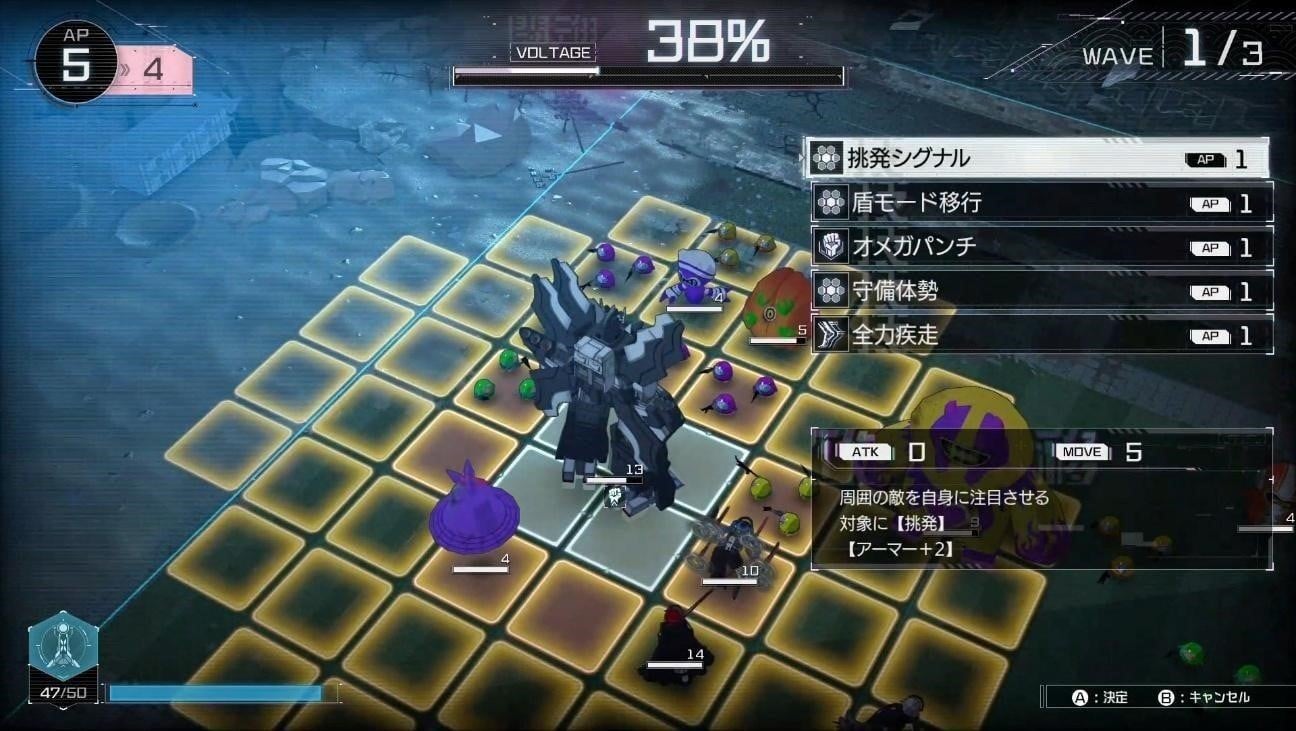
Disgaea had already gone down that road, so I thought of going the opposite way. The goal was to make it easier to understand. Also, another reason I lowered the stats was that having everyone at 1 HP is clear and straightforward, isn’t it?
—It’s certainly straightforward.
Togawa:
Media.Vision helped us a lot in this respect as well. We consulted with them and they helped us put this kind of system together. That allowed me to focus primarily on Last Resort and the mechanics that were most satisfying, which was a big help.
Another thing about The Hundred Line is that it uses an AP (Action Point) system, allowing you to move characters as many times as you have AP. To solve the problem of players not knowing what they should be doing, we introduced enemies that are essentially elites.
In addition to the small fry enemies that you can casually mow down, we created slightly tougher elite enemies, which yield additional AP when defeated.
With extra AP, you get to take another action. So when you’re wondering, “What should I do next?”, you can simply focus on defeating the elite enemies, because doing so lets you perform more actions.
By giving the player one extremely clear objective within the game, we were able to reduce those moments when the amount of mental effort required becomes too high. If you don’t know what to do, defeat an elite. And while you’re defeating elites, you’ll naturally end up taking out a bunch of the small fry around them as well. That reduces the number of enemies on the battlefield, and eventually you get to defeating the boss. I think that’s probably the clearest example of how we made the system accessible.
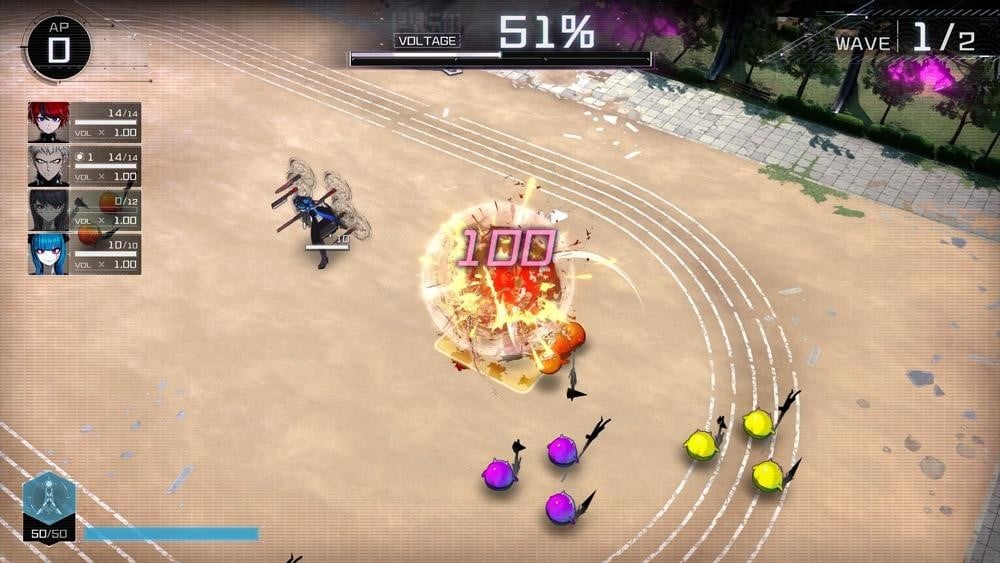
—Characters can unlock multiple skills relatively early on in The Hundred Line. Was this also intended to create satisfying moments?
Togawa:
The reason for that was that, as part of the overall game design, we needed skills to be unlocked quickly. After you finish your first playthrough of The Hundred Line, the story begins branching dramatically from the second playthrough onward. During development, Kodaka and I talked about how it would be impossible to have players go through a proper SRPG experience from the second playthrough onward.
The reason is that from the second playthrough onward, the game takes on a much stronger visual-novel/text-adventure format. You can jump to practically any point in the story. You can freely return to any branch and any date, so if you wanted to, during your second playthrough you could simply repeat the same battle over and over and farm experience infinitely.
That means players can reach different battles at different levels of progression depending on which route they take and how they play. There would be no way for us to determine what level each battle should be balanced around.
For that reason, we decided it would be difficult to properly design the SRPG from the second playthrough onward, so we’d make the first playthrough a polished, self-contained SRPG experience.
That’s why we wanted to unlock all gameplay elements during the first playthrough, with various mechanics being introduced at a good pace so that players would have a fresh experience all the way to the end.
Also, we wanted casual players to enjoy it. I thought they might get bored if they kept using the same skills over and over.
—You’d lose on excitement that way.
Togawa:
Yes. There’s a little bit of fun in the moment when you unlock a new skill and get to try it out. I wanted to keep providing these “little bits of fun” at as fast a pace as possible.
The idea was to let players enjoy the SRPG throughout their first playthrough, and then, from the second playthrough onward, transition into the 100-route branching visual-novel game.
I want everyone to talk about SRPGs
—Were there any other aspects that you paid particular attention to while creating The Hundred Line’s SRPG gameplay?
Togawa:
It pretty much comes down to everything I’ve talked about so far.
We focused on creating satisfying moments, making it easy for both enemies and allies to die so that the battlefield would constantly be changing, keeping the stats fixed at very small numbers to reduce the mental burden on the player, and making the objective clear by telling players, essentially, “Just defeat the elites.”
Those four points were the things we paid the most attention to when creating The Hundred Line.
Beyond that, I just kept playing the battles over and over like crazy, tweaking them right up to the limit. Eventually Media.Vision would tell me, “If you change things any further… Togawa, you do realize what’s gonna happen, right?” (laughs). Playtesting is important.
—Thank you. I’m a big fan of SRPGs myself and have played quite a few, but I really enjoyed HUNDRED LINE’s SRPG sections.
Togawa:
Thank you.
—By the way, are you working on another SRPG now?
Togawa:
That’s a secret. But I would like to continue taking on challenges like this in the future.
—I personally enjoyed the game a lot, so I’m looking forward to your next project.
Togawa:
Hearing that is what makes me happiest. I want to keep pushing for ideas I believe in, without backing down, and make good games. Thank you.
I also want people to talk about their own philosophies about what SPRGs should be like.
Players tend to focus on characters and story, but I hope we can create more opportunities for game designers and level designers to step into the spotlight and say things like, “This is what I think.” I’d like to be the first in a series of people doing that.
—Thank you for your time.
The Hundred Line: Last Defense Academy is available for PC (Steam) and Nintendo Switch.
[Interviewer: Jun Inaniwa]
[Writer, editor: Koutaro Sato]
[Interviewer, editor: Ayuo Kawase]
ⒸAniplex, TooKyo Games