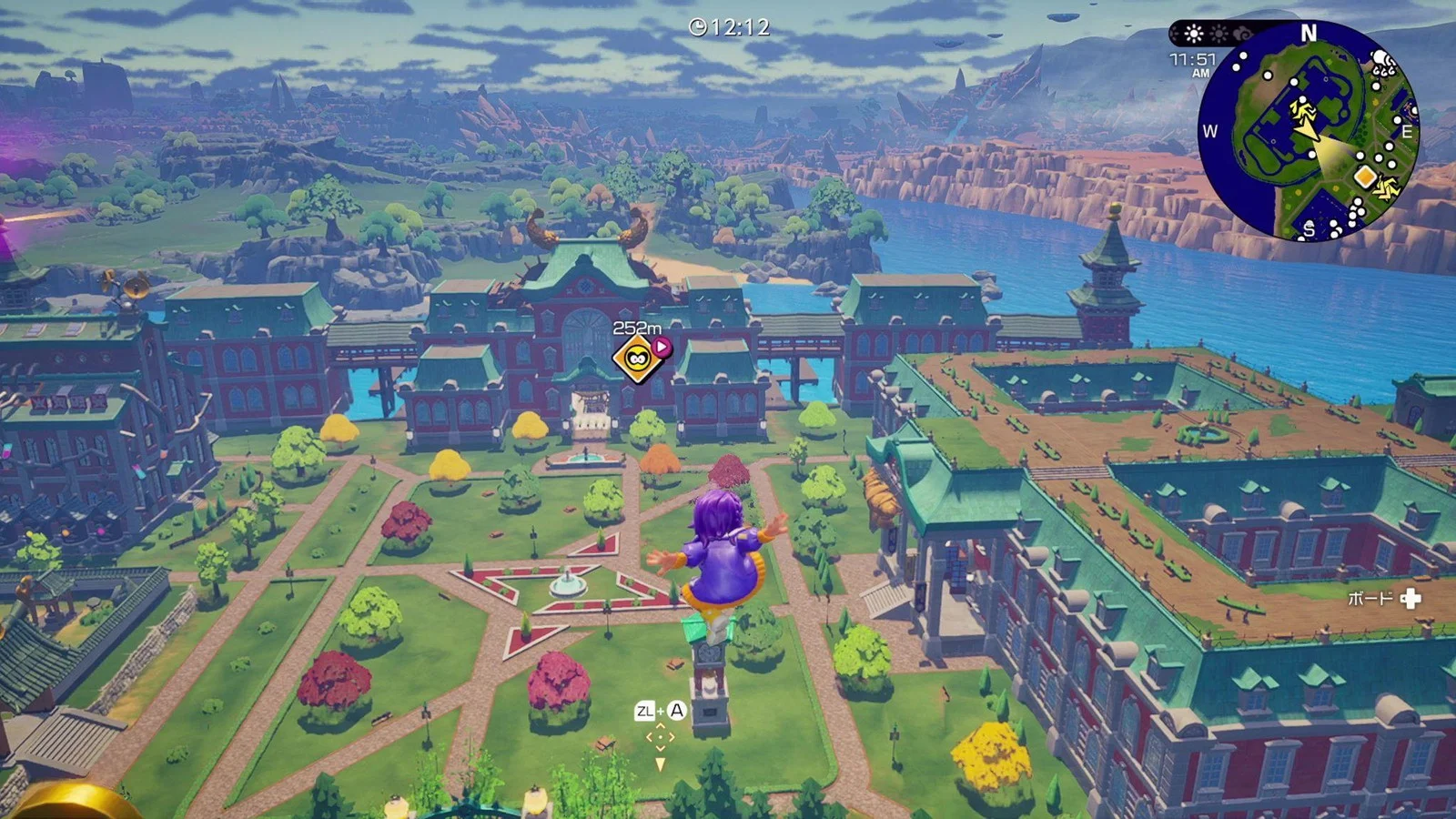
Ninjala is a free-to-play multiplayer 3D action game that has been enjoying success on the Nintendo Switch since 2020. Its sequel, Ninjala 2: The Uncharted Planet, is scheduled to launch for the Nintendo Switch 2 in Spring 2027. Unlike its predecessor, the new title will be a one-time purchase, premium game with both physical and digital versions planned.
The sequel also goes through a major game design overhaul. While the original was a PvP-centric competitive game, the sequel is an action game set in a vast open world, where players battle enemies and explore the environment PvE-style. The game is designed around enjoying the game solo, cooperating with friends to progress the story, and taking on powerful foes.
Completely reworking the conventions established in Ninjala is a pretty bold decision by the developers. Moreover, the market for open-world action games has become increasingly competitive in recent years, with numerous titles released by both Japanese and overseas developers. So what sets Ninjala 2 apart from other open-world games, and what should players expect from it? AUTOMATON recently talked to director Motoki Kaneda to find out.
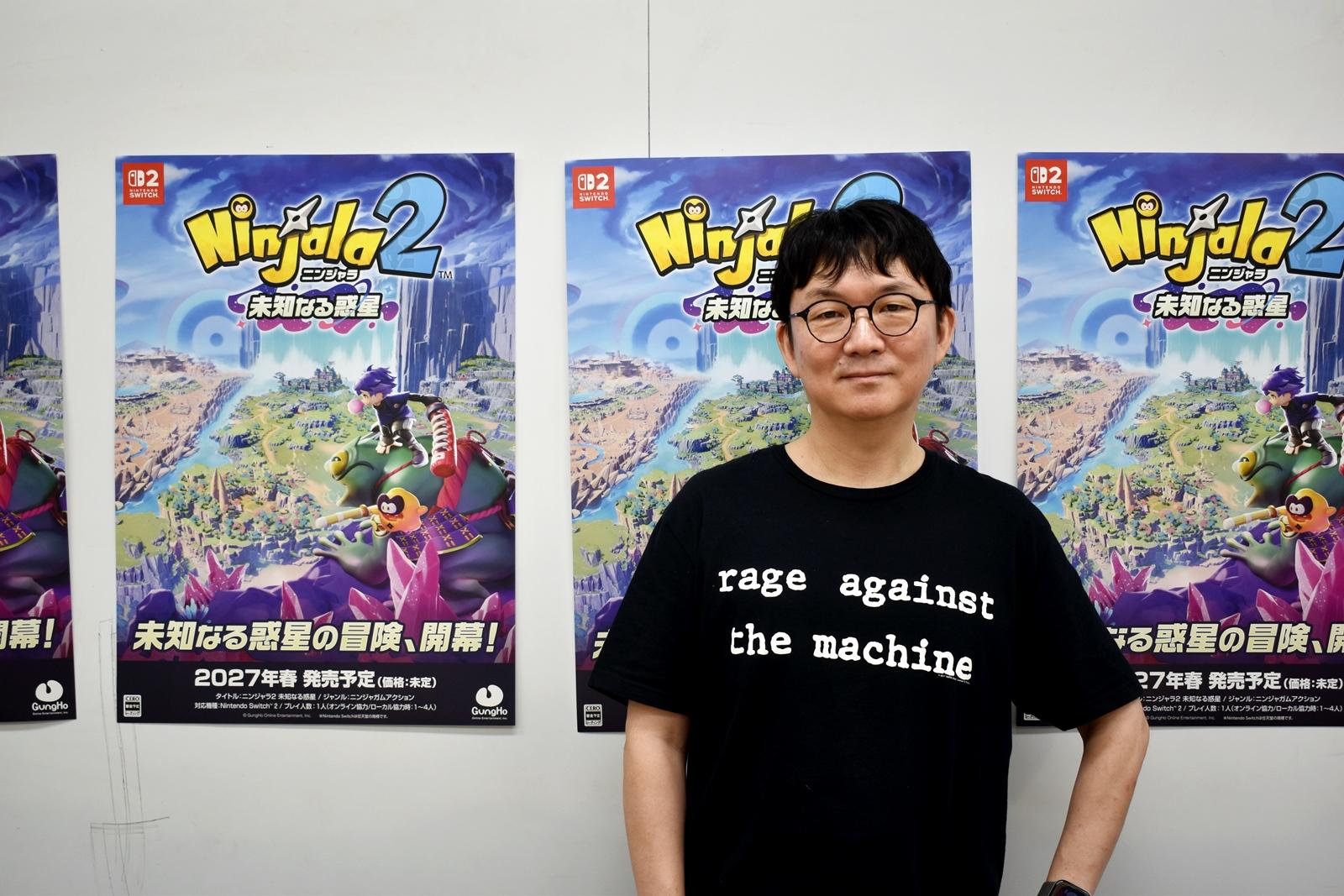
Preserving the “soul” of the Ninjala IP
—There are an enormous number of open-world action games being released these days both domestically and globally. With so many open-world games out there, what would you say is the unique draw of Ninjala 2?
Motoki Kaneda:
It’s the fact that it’s a “ninja” game. As you said, the open-world genre itself has become fairly mature. As we thought about what kind of game we should deliver as the new “Ninjala,” there were naturally a lot of things we considered. But even though the genre is changing so dramatically this time, one core theme that we haven’t changed at all is that it’s a ninja game.
It’s also based on sports chambara, and then there are the various mechanics related to Ninja-Gum. Ninjas, sports chambara, and Gum are essentially the soul of the Ninjala IP, so naturally we kept those elements and made them part of this game’s identity.
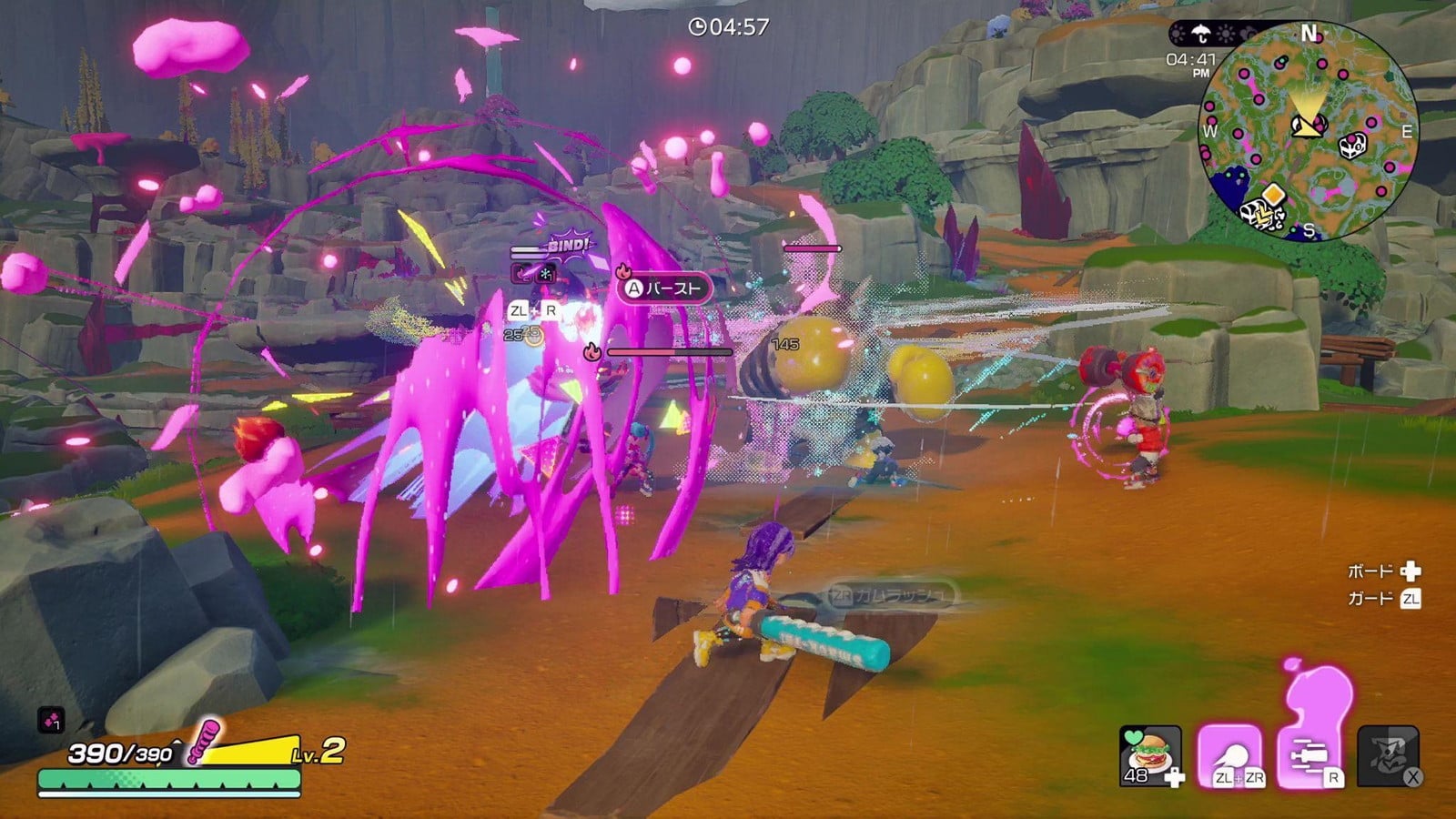
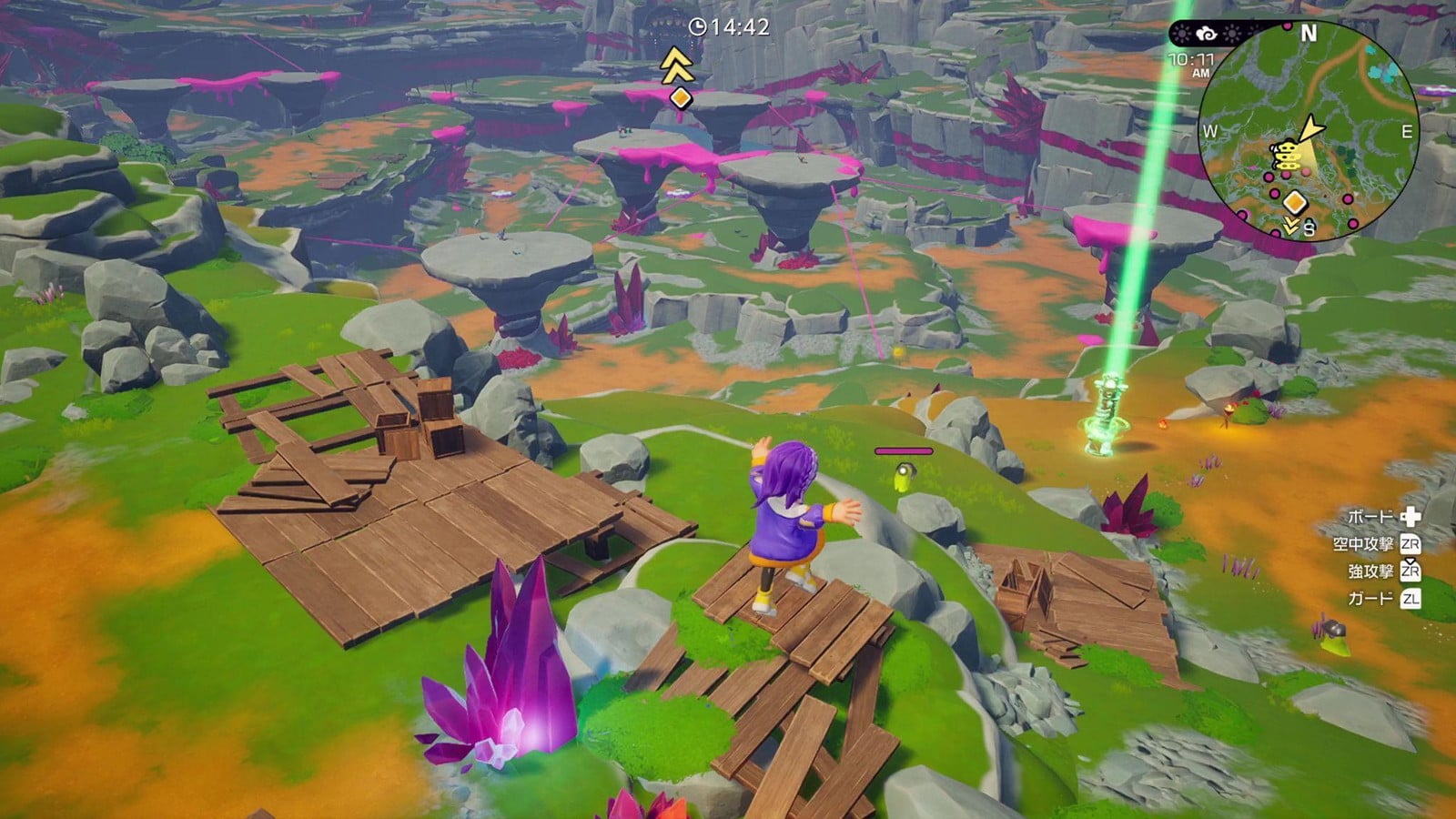
Another defining characteristic of the original Ninjala was its “mobility.” Since the characters are ninjas, they can run up walls and move around three-dimensionally. We wanted to retain the various actions and sense of speed that come from that mobility for the sequel as well. Seeing what would happen by bringing that into an open-world setting was also a key factor in determining Ninjala 2’s genre.
—After playing the demo myself, I got the impression that you put a great deal of care into ensuring movement felt comfortable and highly mobile.
Kaneda:
To be honest, when development first started, we were worried about whether it would be okay to bring the previous game’s mobility over as-is. But if we “killed” that part of the game, it would end up being no different from existing open-world games. If walking were slow and it took a really long time to reach your destination, you’d lose that sense of being a ninja.
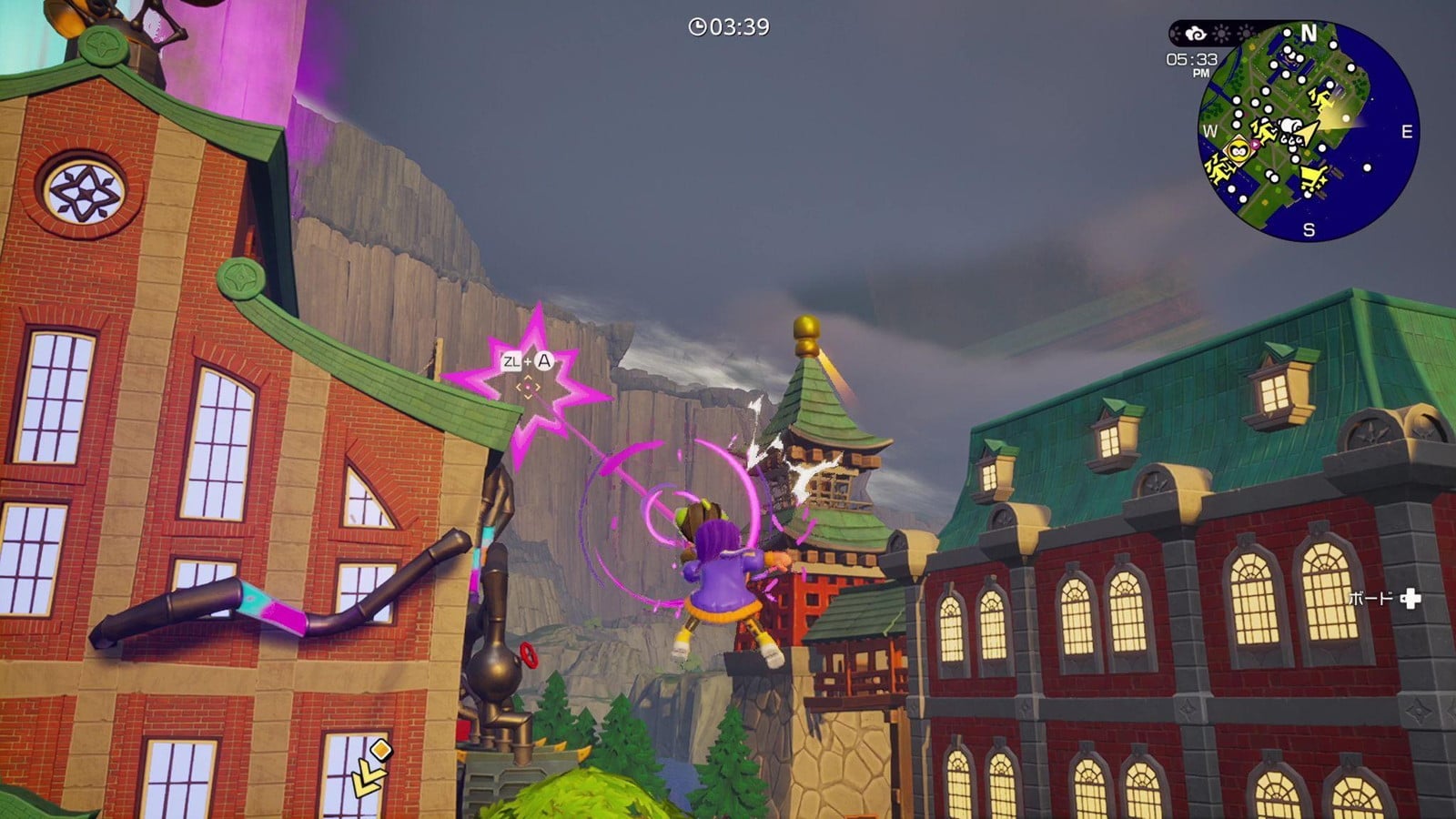
So we decided to just go for it and bring over the high mobility and comfort from the original, approaching the game as our own take on the open-world genre. As a result, I believe we’ve created a game where players can enjoy a level of mobility – and the comfort and exhilaration that comes with it – that you don’t often see in existing open-world games.
—In the demo, you could freely run up walls and cliffs as long as you had enough stamina. Will that level of mobility be available by default from the beginning of the full game as well?
Kaneda:
Yes, while the demo has some specific adjustments to it, you’ll be able to do things close to that from the very beginning of the game. From there, the items you craft will make movement even more comfortable. Because of that, I think the game comes off to a very fast start. We’ve also designed it so that when you first take control of the character, simply trying to move around lets you experience how good the movements feel right from the bat.
—In the initial Nintendo Direct reveal, there was an action where a character appeared to travel through the air on a skateboard. Is that something that becomes available later on? I didn’t see it in the demo.
Kaneda:
Yes, that action involves laying down your own rails called “Gum Rails,” then riding along them on a skateboard. There are also many other items you can craft this time around. For example, you can make a jump pad appear on the spot and use it to launch yourself higher and higher.
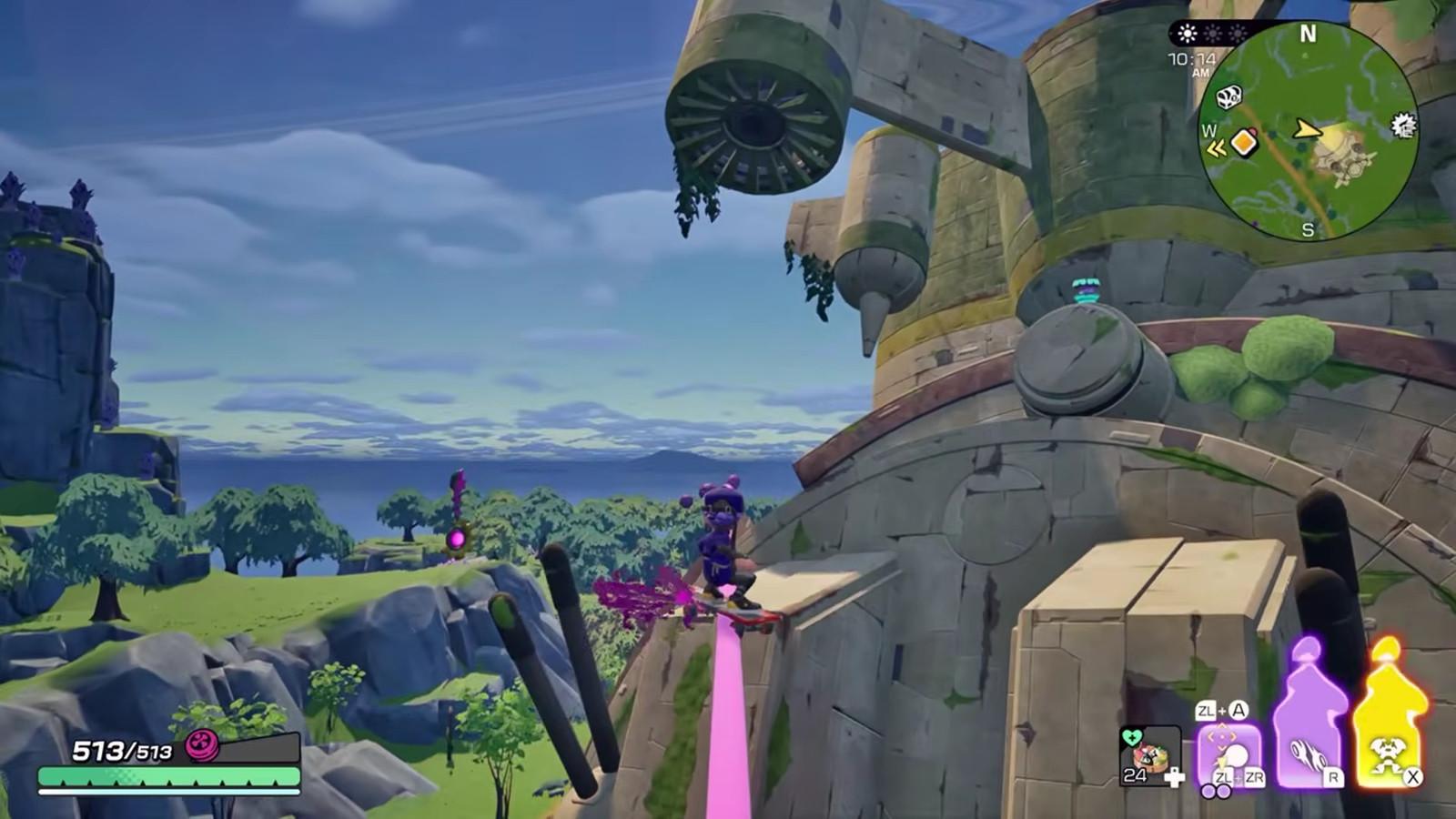
We can’t reveal exactly how many such actions there are in the full game at this point, but it’s designed to let you experiment with various combinations of actions and items. The jump pads and other items are also simple and easy to use, so if you experiment with them, you may find yourself reaching some pretty outrageous places. There are also gimmicks on the map itself, such as bumpers and giant mushrooms that let you jump high, and combining those can allow you to pull off some spectacular moves.
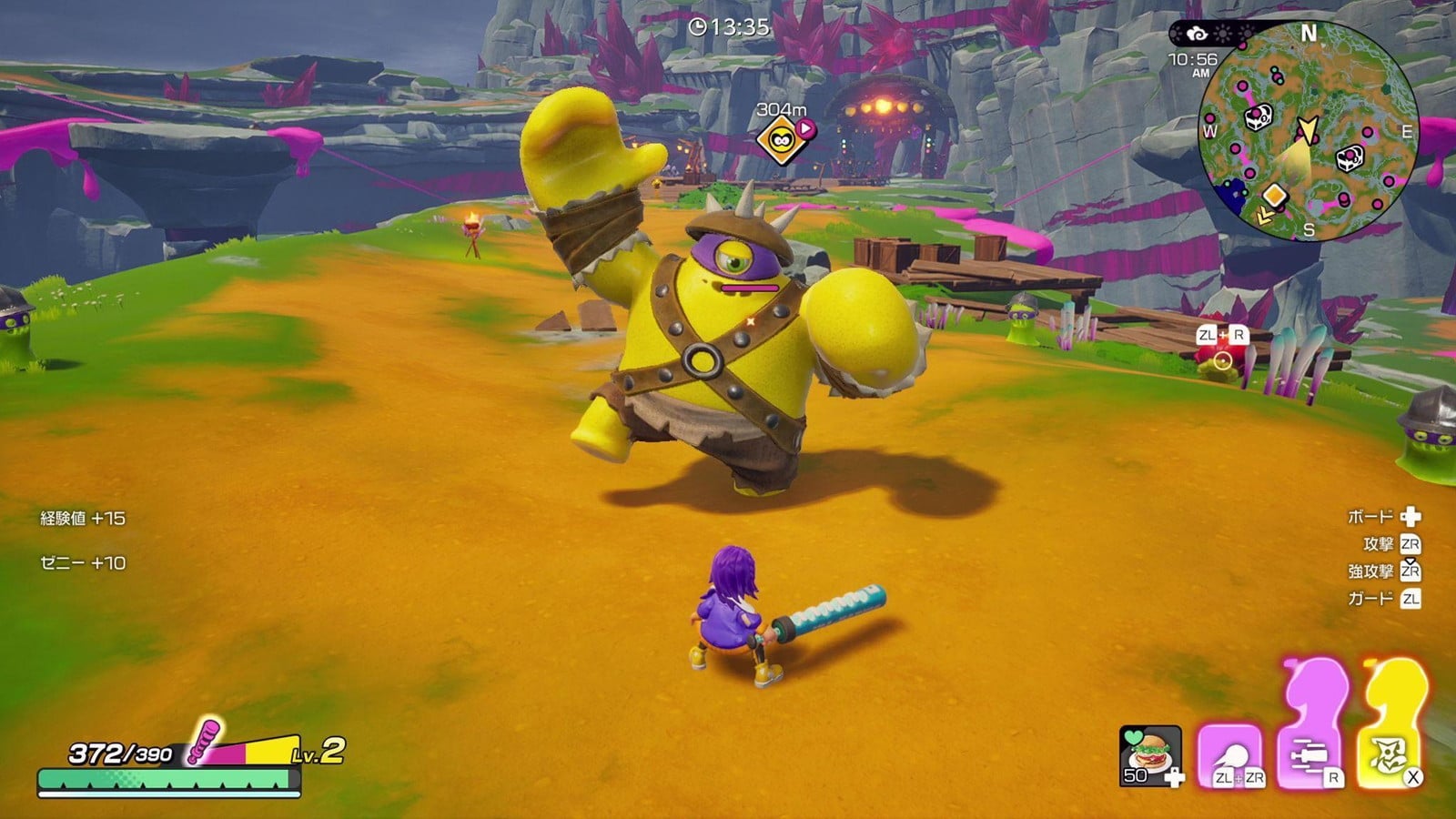
—As for the battles, while the focus is on melee, I was impressed by how much you can do, with parrying, dodging, throws, and even the option to restrain enemies with Gum.
Kaneda:
That’s “Gum Bind.” After successfully performing a certain number of Gum Shots or parries, the enemy becomes covered in gum. You can then grab them and throw them, or send them flying with a powerful Gum Rush.
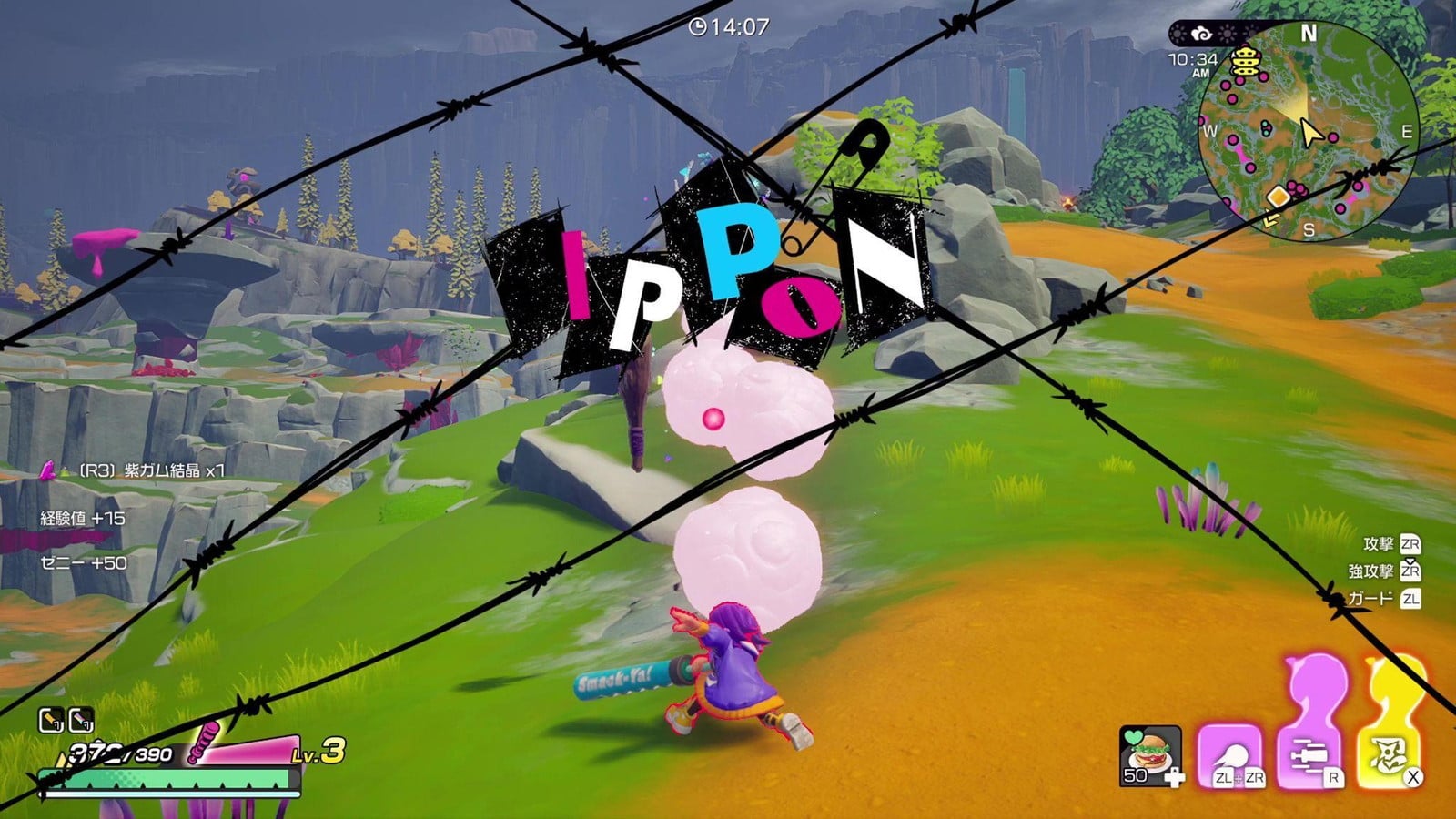
—I wasn’t able to confirm this in the portion of the game I played, but you can also summon a robot as a sort of special move, right?
Kaneda:
You can still use Gum Ninjutsu techniques, such as the Ninja Tornado from the previous game, as well as techniques that fire rockets. We’ve also prepared a technique to summon a robot as a kind of upgraded version of those abilities.
—Does that mean players can create their own custom sets of techniques?
Kaneda:
Yes, you can set up and use whichever weapons and Ninjutsu you like according to your own playstyle. The demo is limited to a specific set of ninjutsu, but I hope players will experiment and develop their own combat styles.
—With so many techniques available and such high freedom of mobility, is it possible that, depending on how you play, you could reach areas intended for much later in progression right from the beginning? Or even rush straight to the final boss…? (laughs)
Kaneda:
Since it’s an open-world game, there is naturally a path where you follow the main quests and story, but there are basically no restrictions along the lines of “You can’t go over there” or “You can’t go this way.” We’ve tried to leave the order in which players tackle things and how they play as much as possible up to them.
—Is the main story itself basically structured as one, linear storyline?
Kaneda:
Yeah, basically, there’s a story with a flow that takes you from the beginning to the end, with side quests placed around it. There are quite a lot of side quests. You can choose to just progress through the main story, or you can tackle every quest you come across. You could even end up doing so many of them that the main story barely progresses at all (laughs). But I think that kind of freedom is one of the good things about an open-world game, so overall, we’ve designed it to let players play however they want.
—Within the portion available in the demo, the quests connected to the main story seemed to focus primarily on combat. According to information released so far, Ninjala 2 will also have dungeons. Will these feature puzzles or other activities besides combat?
Kaneda:
Since the original was a competitive action game, combat is still the main focus of gameplay. Whether it’s making your character stronger or taking on powerful enemies, our approach to the quests is that we primarily want players to keep enjoying the battles. That said, there are also elements outside of combat in the side quests, such as time trials and quests where you help NPCs. As for puzzles, we’re actually leaning towards not incorporating them so much.
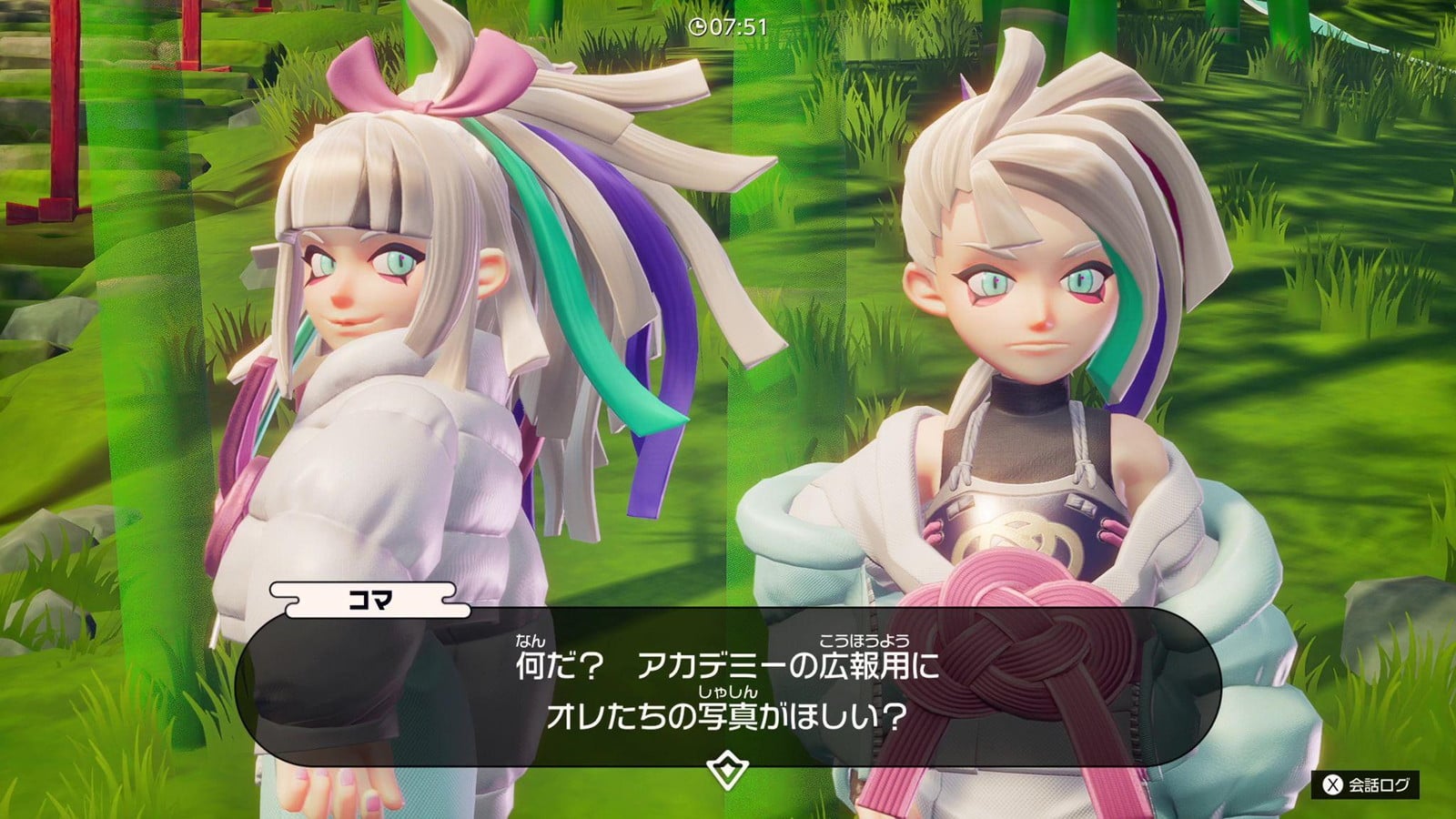
—Meaning combat is everything, with the core of the game being about continually taking on powerful enemies.
Kaneda:
That’s right. Our team has always been a team that makes action games, so we place a lot of importance on the feel of the action. Also, the original Ninjala was primarily PvP, whereas this is PvE, so I think what everyone is expecting is boss battles. That’s something we definitely want to deliver on. So even in battles against small-fry enemies, we’re designing the game with a focus on making the action as enjoyable as possible for players.
—As for co-op play, I understand the main story can be played by up to four players. Will others basically be able to join you at any point?
Kaneda:
In principle, whether it’s the main story or side quests, co-op play is designed to be available at almost any point. We’ve also included what you might call a rescue feature, where other players can join you while you’re playing alone.
—How much content are you planning for the main story?
Motoki Kaneda:
We can’t say exactly how large it will be at this point, but we are preparing a substantial amount of content. We don’t intend to let players come away feeling like the experience was lacking in volume. However, the overall playtime could vary quite a bit depending on how you play; for example, whether you focus solely on the main story or complete all the side quests.
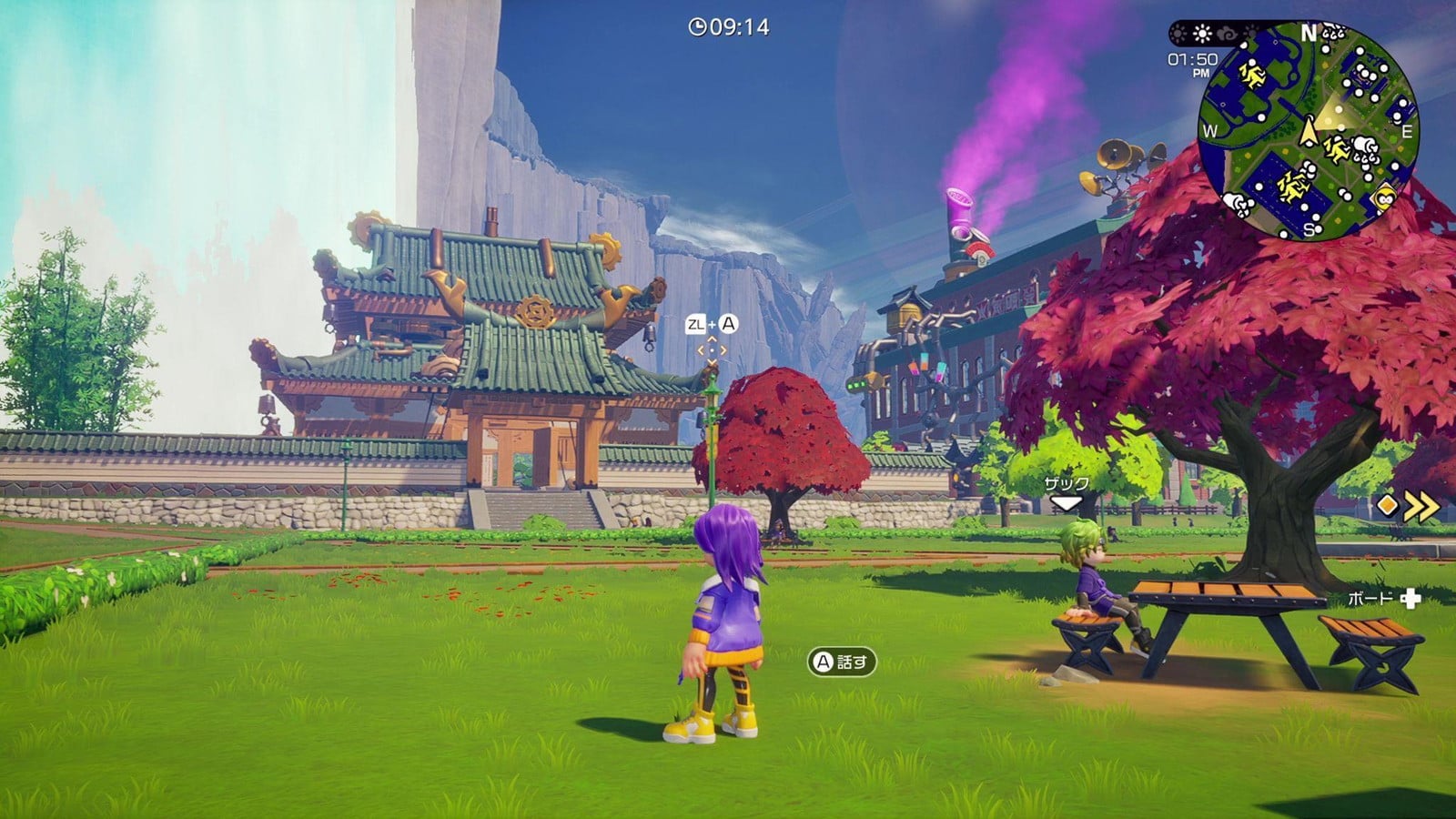
As for the scale of the map, since it’s an open-world game, we’ve prepared a fairly large area. In addition to having a lot of verticality, the game features multiple biomes, such as grasslands, forests, and wastelands, each with their own unique characteristics. I’m afraid it’s difficult to talk about exactly what those characteristics are at this stage (laughs), so I hope you’ll look forward to future updates.
—From what I played, it seems Ninjala 2 also has a leveling system. Are there restrictions along the lines of “You can’t enter this area until you reach level XX?
Kaneda:
No, there aren’t. There is a mechanic whereby your character becomes stronger as you play, although I wouldn’t go so far as to call it an RPG-style leveling system. However, since this is an action game, we also want players to be able to clear things based on their own skill level. So while you can progress by strengthening your character, we’ve also made it possible to take on challenges through your own abilities, depending on your preferred playstyle.
Why turn to an open-world game design?
—When did development of Ninjala 2 begin?
Kaneda:
About two or three years ago, around 2023 or 2024. Until then, we were fully focused on the previous Ninjala’s live operations, so it really was only in the last few years.
—The original Ninjala focuses on online competitive play, while the sequel makes a complete shift to an open-world action-adventure game. Why did you decide to take the game in such a different direction?
Kaneda:
There were two major reasons. First, the original Ninjala launched in 2020 and has reached 12 million downloads, so I think we’ve had a great many people playing it. We want to continue expanding and nurturing the Ninjala IP going forward. However, the original Ninjala is a game for the previous-gen Nintendo Switch, so the lifespan of the hardware will inevitably become an issue when it comes to continuing to operate the game.
When we discussed within the development team what we should do if we were to make a sequel, we started talking about how we wanted to expand the appeal of the characters and world even further. Since the original Ninjala, we’ve also pursued a media-mix strategy, including a TV anime and manga. Although the game itself is centered around serious competitive battles, we’ve also put a lot of detail into its world, characters, and storytelling. When we considered what kind of genre would be best for highlighting those aspects, we arrived at the idea of an open-world action game. That was the first reason.
—And the second reason?
Kaneda:
We received a lot of feedback from players saying both, “I want to fight alongside my friends” and “I want to take my time playing on my own.”
Since the original Ninjala launched in 2020, we’ve actively released major updates, such as adding more competitive stages and weapons. Along the way, though, we also introduced new battle rules, as well as modes where players could play tag or soccer.
Ninjala has been particularly popular among elementary school-age players in Japan, and there has been a lot of interaction between them, so we tried various things based on the feedback we received, like introducing the Visual Lobby.
At one point, we conducted a survey about how users were playing the game, and we received a lot of requests for co-op play. We had also released paid Story Pack DLCs which added a singleplayer story mode to the original game, and even there, we received a lot of feedback from players saying they wanted to take their time exploring the world of Ninjala on their own.
When we combined that feedback with our desire to expand the Ninjala IP, we decided to take on the challenge of making an action game that is fundamentally PvE and designed for solo play, while also offering co-op multiplayer. That was the primary catalyst.
—Since this is an open-world action game, I imagine it will also attract attention from gamers who haven’t played the original but are interested in the genre itself. Is it designed so that newcomers can get into the game without any problems?
Kaneda:
The original wasn’t a game that was built around its story in the first place, so there’s absolutely no problem with starting from this game. You’ll be able to learn about the characters and world as you progress through the story.
—As for the story, I understand it will be split into two parts…?
Kaneda:
Yes, though it’s not simply that we took what was originally one game and split it into two. One of the reasons it became a two-part story is that, as we developed enough content to give the installment substantial volume, it ended up amounting to the equivalent of two games.
Also, we’re developing Ninjala 2 as a Nintendo Switch 2 exclusive title, and I think there will probably be quite a few users experiencing the open-world genre for the first time. We want this to be an entry point for those players, an accessible game they can pick up for the first time and use to learn about characteristics of the open-world genre.
So, considering the overall volume of the game, we decided to split it into two parts. That way, players can first purchase the first half, and if they’re satisfied with it, they can then purchase the second half.
—Since it’s a two-part story, I’m curious about how the first part will end. Will it have one of those “To be continued in the next game” cliffhangers?
Kaneda:
We’re aiming to make the first part satisfying to play even on its own. In other words, it won’t end at an incredibly frustrating point or anything like that, so please rest assured! (laughs)
—Unlike the original, which was free-to-play, Ninjala 2 comes as a premium physical and digital title. Why did you decide to change business models?
Kaneda:
With the original, the core experience was built around PvP multiplayer, so the monetization system was built around attracting as wide a playerbase as possible. However, once we decided to make the sequel a console-based open-world game, we didn’t consider repeating this kind of business model at all.
Also, the original game had a particularly large number of elementary school-age players. From a parent’s perspective, there’s a sense of reassurance in knowing that once you purchase the game, you have access to the whole experience. Considering both the ability for children to purchase and enjoy the game with peace of mind and the compatibility between that audience and the genre, we decided to make this a one-time-purchase package rather than a free-to-play title.
—Thank you very much.
Ninjala 2: The Uncharted Planet is scheduled to launch as a Nintendo Switch 2 exclusive in Spring 2027, with both digital and physical editions planned.