FromSoftware’s The Duskbloods isn’t the “PvPvE” you’re probably imagining. Miyazaki talks game design, emphasis on “role-playing,” and offering enjoyment beyond pure skill
Joint media interview with The Duskbloods director Hidetaka Miyazaki.

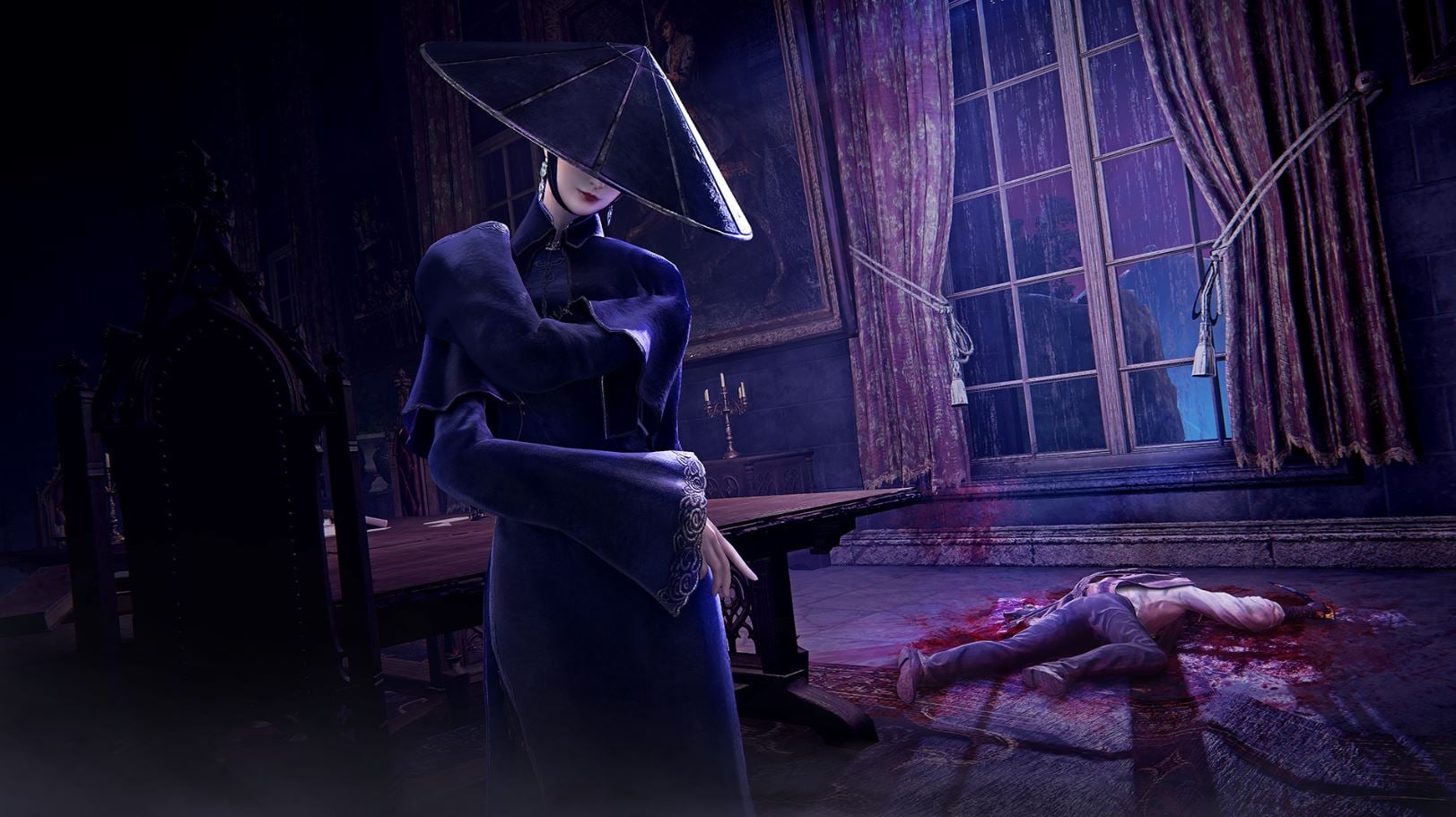
From Software’s latest title, The Duskbloods, is coming to the Nintendo Switch 2 in 2026. Ahead of the game’s upcoming network test, AUTOMATON had the opportunity to attend a joint media interview with Hidetaka Miyazaki, president and CEO of FromSoftware and director of The Duskbloods.
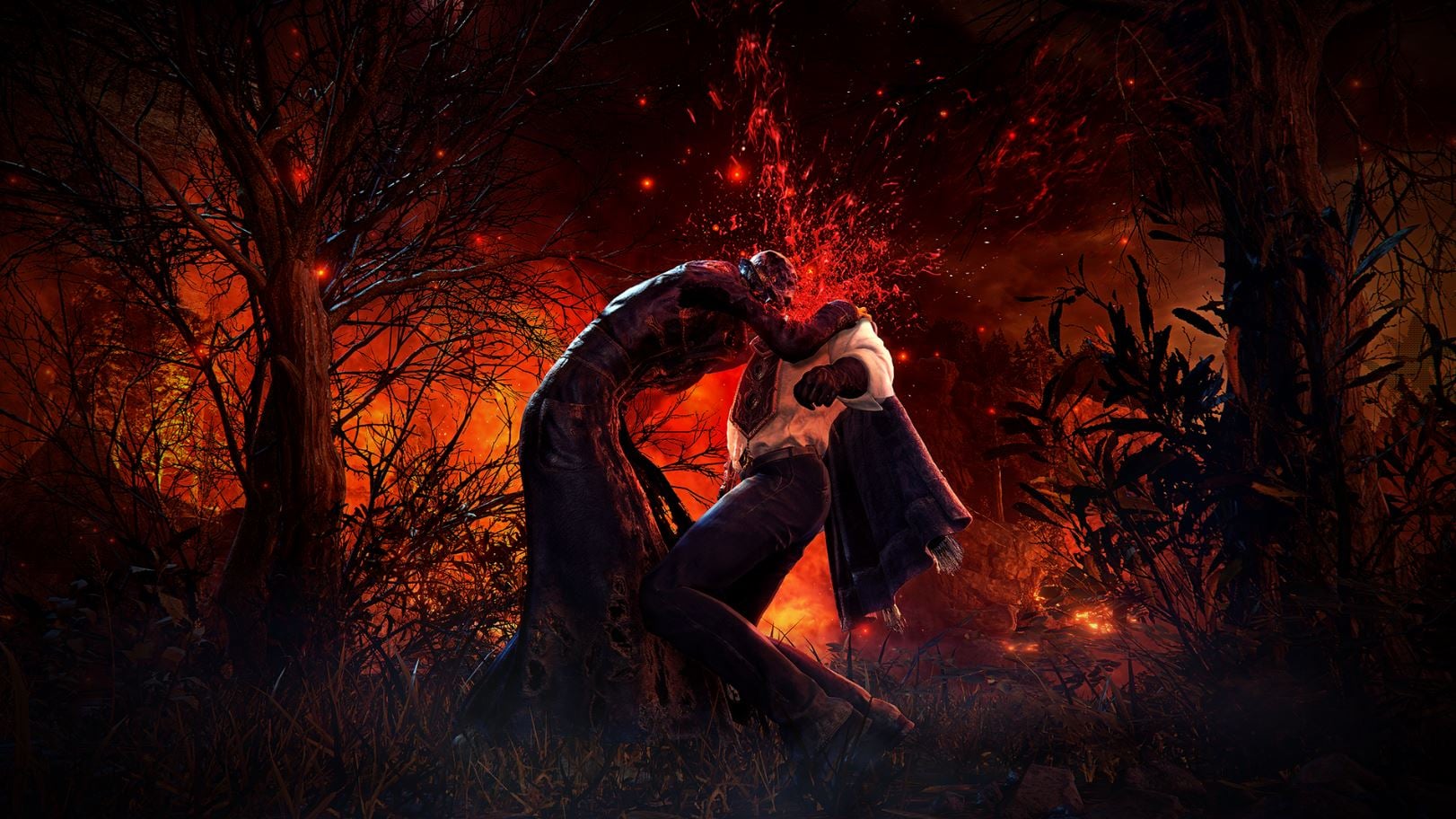
The Duskbloods is a PvPvE action game for up to eight players. Players take on the role of the Bloodsworn – a race that has gained superhuman powers through special blood – and throw themselves into a fierce battle over the “First Blood.”
Each playable character possesses a name and unique identity, and players can select and customize characters at the hub before stepping into online matches. During each match, players compete across four phases while earning “Virtues,” (unofficial translation) which serve as victory points, through a variety of means. Players who have accumulated too few points at the end of each phase are eliminated. Finally, to decide the winner, the last three remaining players either engage in a PvP duel or team up for PvE combat against a powerful foe.
Below follow Miyazaki’s insights on The Duskbloods’s gameplay, how the design was conceptualized, and his own preferences in game and character design. Note that this article includes some unofficial translations of in-game terminology and names, which will be marked as such the first time they appear in the text.
What kind of game is The Duskbloods?
—Could you tell us why you chose the PvPvE format for this title and what kind of experience you were aiming for?
Miyazaki:
Well, first of all, describing it as “PvPvE” in our initial announcement may not have been entirely accurate.
I used the term simply to describe the fact that the game contains both PvP and PvE. But these days, when people hear “PvPvE,” I think they tend to picture something more specific, such as an extraction shooter. If you play the network test build, I think you’ll understand that this is a different kind of game from those. That said, there’s no doubt that this is an online game.
As for why we made it, the answer is the same as with our previous titles. It’s because we thought it looked fun.
The timing overlapped with Elden Ring Nightreign, so I’m often asked about that, but the fact that the two projects happened at the same time was simply a coincidence (laughs). It’s not like our strategy has changed and we’re now going to primarily focus on making online games.
In fact, this project actually began before Elden Ring Nightreign. As I mentioned in a previous interview, everything started after we were given an opportunity to present the initial concept for the game to Nintendo, and they took an interest in it. At the time, though, I was simply talking about things that I personally thought would be interesting. I didn’t have any kind of company-wide strategy in mind.
However, if I dig a little deeper, I feel that there was a certain accumulation of ideas within me from my experience making Demon’s Souls and Dark Souls. The Covenants in Dark Souls are a good example. I personally like those kinds of online systems, and over the years I’ve come up with various ideas, but many of them were difficult to incorporate when the base was a primarily single-player game. I suppose I wanted to make use of that accumulation of ideas and ways of thinking somewhere.
—In the explanation prior to the media playtest, we heard that “you can enjoy the game even if you aren’t highly skilled/don’t win.” What kind of approach and methods did you use to achieve this?
Miyazaki:
I think there are three major points to this.
The first is the “Virtue” system.
Virtues are essentially victory points, and with the exception of the final battle, the outcome of a match is determined by how many Virtues you have. PvP and PvE are merely means of obtaining Virtues. This makes it possible to aim for victory not only through pure action-game skills, but also through positioning and strategy. In other words, the Virtue system reduces the emphasis placed on pure action skill.
The second is role-playing and the enjoyment derived from it.
While the game is certainly fun even if you play purely to win, we also place importance on aspects such as playing a character and enjoying the spontaneous drama that arises during battle. Events and the “role” system (unofficial translation) in particular bring this aspect out strongly. I think there can be a certain amount of drama in the Passive Role that gets assigned to you unexpectedly. There are also situations where, if you happen to establish a role through a particular combination, a special line of dialogue will play, and you’ll obtain a fragment of a new story.
The third point, which you won’t be able to experience in the network test version, is story progression and character builds.
The game’s hub has a second floor where several NPCs reside, and talking to them advances the story. You can also obtain items through online play and use them to customize your Bloodsworn, while fragmented storytelling is also conveyed through item descriptions and other means.
These elements don’t necessarily require you to win in online matches, so you can initially set aside the goal of winning and simply enjoy progressing the story and developing your characters.
—Could you tell us more about the specifications planned for the full release which aren’t included in the network test build?
Miyazaki:
We expect to have well over ten base character types available. Each character has their own unique weapon, and you can customize their Bloodsworn skills alongside another type of special skill.
You’ll also be able to give characters distinctive appearances through things such as masks and tattoos. There are also the role-playing elements – roles – as well as customization options that increase the likelihood of certain events occurring. In other words, character customization encompasses not only abilities and appearance, but also things such as the character’s fate and destiny. And these customization elements, or the act of collecting them, also serve a role in the game’s fragmented storytelling.
Miyazaki’s “personal preferences” are more than present
—The game has a Gothic atmosphere that evokes the world of Bloodborne. Why did you decide on this type of setting?
Miyazaki:
The motif for the Bloodsworn, who are the player-controlled characters in this game, is essentially vampires. So, as the most straightforward world setting for a vampire story, we chose a “Gothic Victorian” aesthetic for the first map. However, that isn’t all there is to the game’s world. There is only one map in the network test build, but the full release will include two additional maps, each with different world settings.
In this game, the Bloodsworn are summoned to the twilight of various times and places, where they fight over bloodgiving. The common thread between these battlefields is that they are all “dusk,” in other words, times when humanity is facing destruction, decline, or its setting sun. In that sense, I think the world has quite a broad scope.
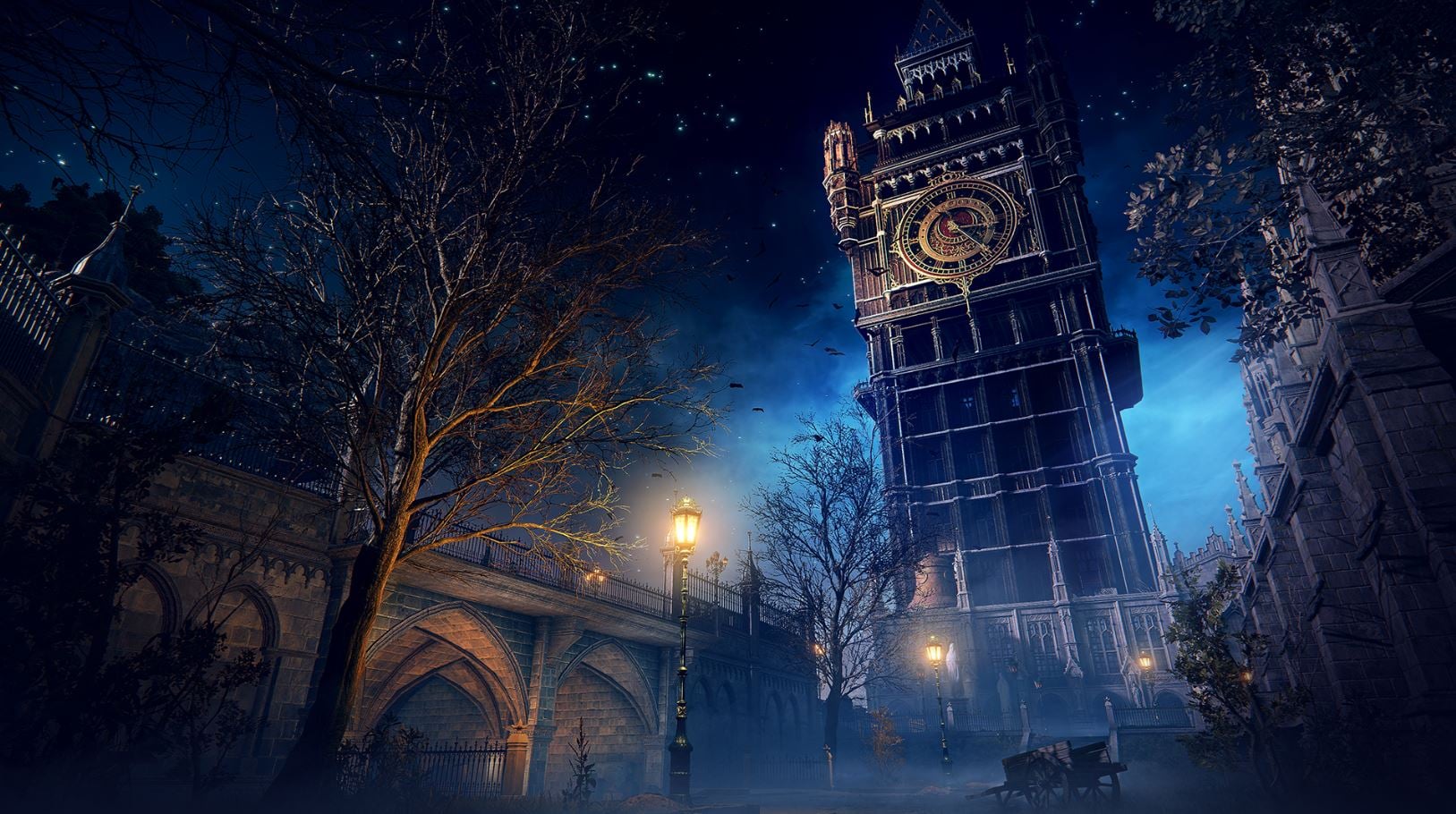
—The game’s visual motifs include elements such as the moon and blood, but one of the most striking was the wheel. I wondered whether it might be connected to the history of the Bloodsworn. What was the actual intention behind choosing it?
Miyazaki:
The wheel is a motif intended to express the fact that the summoning that takes place during the dusk battles transcends space and time, connecting into what I mentioned earlier about battlefields representing the twilight of various eras and locations.
—There is a plethora of myths, legends, and fiction about vampires, covering a range of different ideas. What does your version of vampires look like?
Miyazaki:
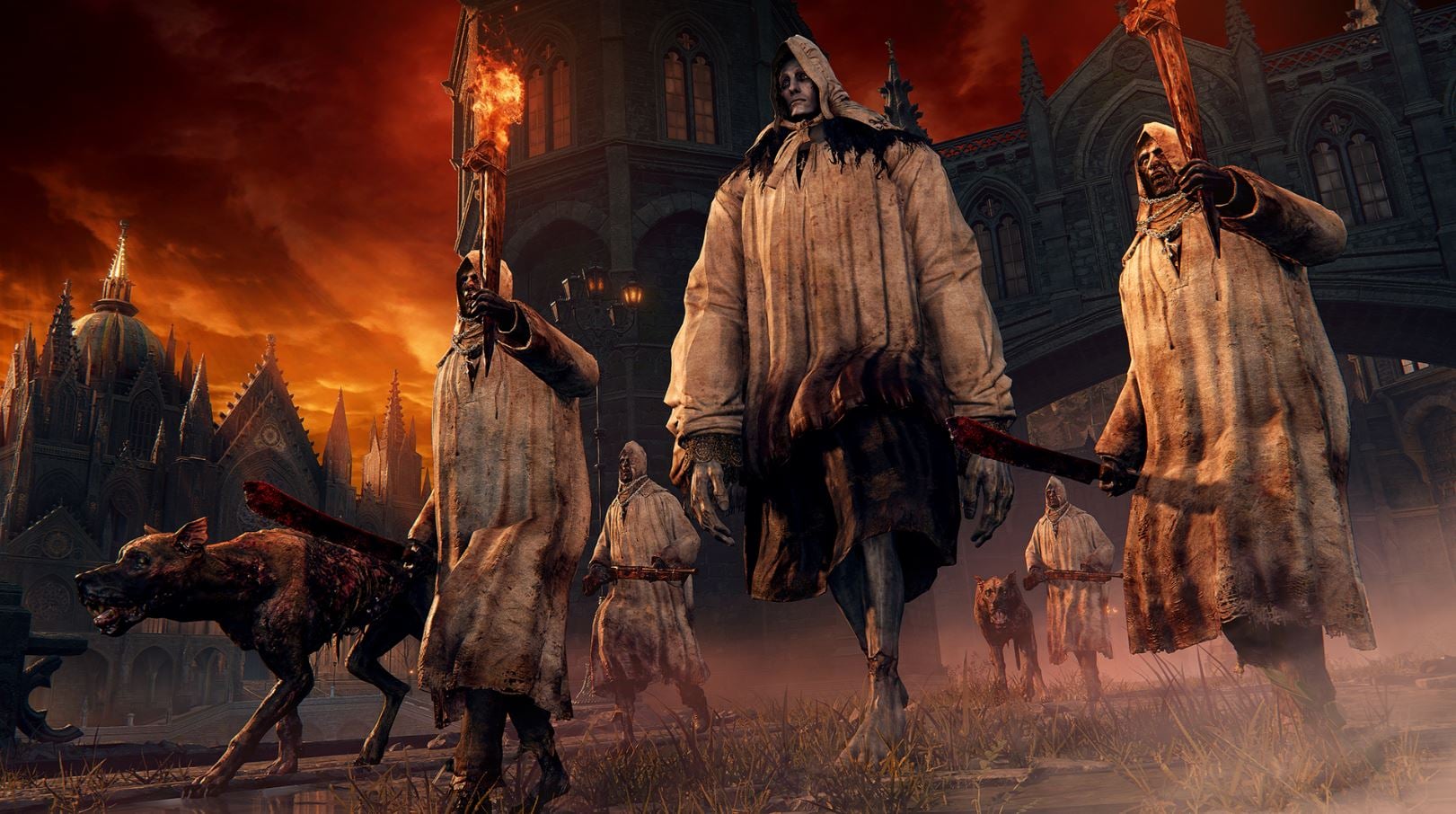
Well… In this game, we deliberately refer to the playable characters not as vampires, but as the Bloodsworn.
That’s because we envision them as a race with intelligence, philosophy, culture, and history, rather than simply monsters. I suppose that could be considered one of their defining characteristics.
Also, in a sense, this is one of my personal quirks. I tend to take a rather expansionist approach when it comes to interpretation. It’s like, “If we say they’re the Bloodsworn, then they’re the Bloodsworn.” So while we do value the traditional imagery, we also give ourselves a fairly broad range when it comes to character design.
I think Zork (unofficial translation) in the network test version is the most obvious example of that. (laughs)
—Speaking of character design, I feel that everything from Demon’s Souls through The Duskbloods has that distinctive FromSoftware quality. For example, mysterious characters with their eyes hidden, or figures you can tell right away aren’t human. Are these designed according to the game’s world, or are they based on your personal preferences?
Miyazaki:
Well, I can’t really deny that my preferences play a part. (laughs)
That said, I think this game actually has a relatively large number of characters whose faces are visible. During the process of designing the characters and creating their models, we’ve tried to carefully express things such as their backgrounds and personalities. In terms of our previous games, I suppose it’s somewhat closer to Sekiro or Déraciné.
That being said, I do find myself wanting to hide their faces. I suppose I just like things that are concealed (laughs).
It was the same with titles like Elden Ring. We’d put a lot of effort into creating detailed facial models, only to cover the character’s entire face with something like a full-face helmet.
—Would you say you have a particular taste for characters who have their eyes covered, or possess a dignified demeanor?
Miyazaki:
Yes, I suppose I do like them (laughs).
I’m drawn to mysterious figures, or perhaps those who seem far removed from my own reality, the kind of figures one might look up to.
However, I try not to think too deeply about why that is. It would be painful if something unpleasant came out of it (laughs). I suppose I just have to accept it at this point.
So, yes, a boy of the kind you’re describing will also appear in this game. I sincerely apologize (laughs).
—(laughs)
The Duskbloods’s combat and game field
—It was striking that all characters were equipped with both melee and ranged weapons. What is the intent behind this design?
Miyazaki:
Basically, we first established the foundation for the action mechanics, and then adjusted the weapon types to fit it.
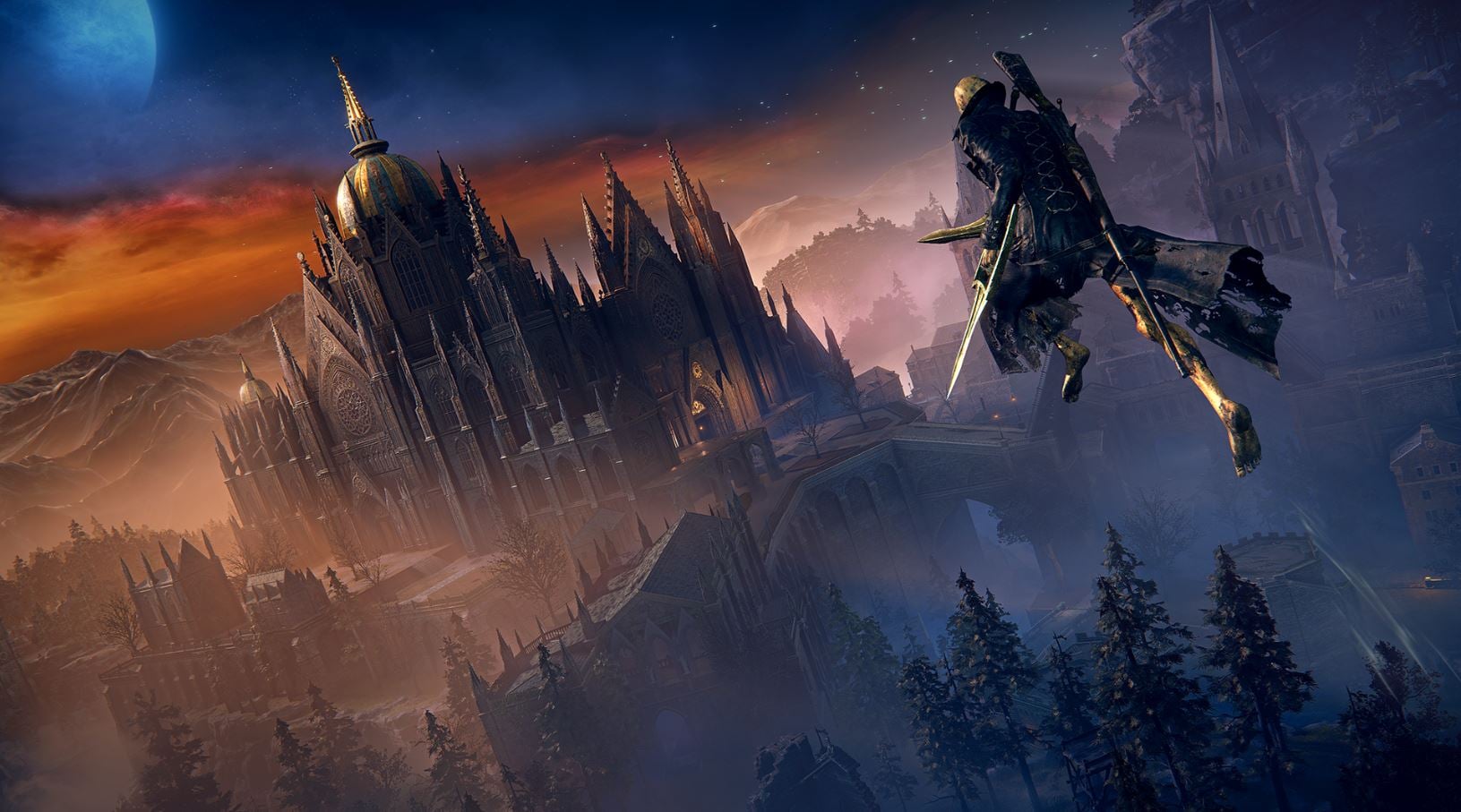
In this game, the playable characters are Bloodsworn who possess superhuman abilities, can jump very high, and can even dash through the air. Simply put, the action in this game is dynamic, and we felt that to fight effectively, players would need ranged weapons as standard equipment in addition to melee weapons.
—In the playtest, there were features like warping, and we were able to explore a wider variety of locations than expected. Will the actual maps be around this size as well?
Miyazaki:
Basically yes. When considering game balance, there is generally an appropriate map size, and we’ve adjusted each map so that it falls within that range.
—I’d like to ask about how you’ve tailored the map design to the action. During the playtest, the game felt quite different from both Elden Ring and Elden Ring Nightreign in this regard. How did you approach adjusting the field to match the PvPvE format and dynamic action?
Miyazaki:
The player-controlled characters in this game have a high degree of mobility, particularly when it comes to jumping and airborne controls, so we’ve designed the maps with the idea of creating three-dimensional spaces where it’s fun to zip around.
I personally like maps that are built vertically, so that was an enjoyable process for me. Also, compared with our previous games, we haven’t established as strong a sense of direction or guided routing on the maps in this game. That’s a result of designing the game around repeated play and freedom in how players approach each match.
Multiplayer is the core of what The Duskbloods has to offer
—Is there a singleplayer story for each character?
Miyazaki:
The singleplayer mode is intended to be fairly minimal. We wanted to ensure that even when online play isn’t available, such as during server maintenance, players wouldn’t be left with nothing to do.
Specifically, it will include things such as character customization, practice sessions, and simulated eight-player battles.
—I imagine ranks will be one of the things that motivates players. Will there be systems such as ranked matches in place?
Miyazaki:
Yes. We’re still figuring out the details of how they’ll be operated, but we will have ranked matches, leaderboards, and a seasonal system. Winning battles and raising your rank are, naturally, another part of the fun this game offers.
—Regarding the Virtue system, I noticed during the playtest that the way the “best ways to earn victory points” were displayed felt very much like a board game. Did you draw any inspiration from your love of board games?
Miyazaki:
Yes, I think the Virtue system was partly inspired by board games. One of the ways to obtain Virtues in this game is through something called “Acclaim” (unofficial translation). But during development, we actually nicknamed this mechanic “Longest Road” amongst ourselves (laughs).
Personally, I think this Virtue system has greatly broadened the range of possibilities in the game. It expands the options for pursuing victory and the range of tactical approaches, as well as how players consider events and their Bloodsworn’s special abilities.
Note: “Longest Road” is a special card in the board game Catan awarded to the player who is the first to build a continuous road of five or more segments.
—But in the end, it inevitably comes down to a duel?
Miyazaki:
Yes. We did experiment with versions without a final battle, but they just didn’t feel satisfying enough, so we settled on the current format.
However, there is also a pattern in which the final battle is not PvP, but PvE against a boss enemy, although it’s not available in the network test build. Your character build will also allow you to choose to aim for that kind of final battle.
We also want players to feel a strong sense of accomplishment from being one of the final three players who make it to the last battle. To be honest, I feel that the presentation in the network test build is still somewhat lacking in this respect.
—Since the announcement, we’ve heard some voices saying they don’t really like PvP. Is the game designed so that players who only want to play PvE can still enjoy it?
Miyazaki:
It isn’t possible to play the game exclusively as PvE, but as I mentioned earlier, the game is designed to offer a range of ways to play beyond just “PvP based purely on action skill,” as well as different ways to have fun. I’m not a player with particularly high action-game skills myself, but I think even someone like me can enjoy this game. (laughs)
As for story progression, we also have multiple endings, so in that sense, I think there are ways to enjoy the game that are similar to a singleplayer experience. That said, story progression is still designed around online play. The fragmented storytelling in this game was designed with online play, particularly the dramatic situations that arise from it, in mind, and we want players to enjoy that aspect.
Of course, winning online matches isn’t necessarily a prerequisite for progressing the story. Ideally, players would first enjoy the story, gradually become better at winning along the way, and eventually start wanting to win as well.
—Since the game is being developed for Nintendo Switch 2, I imagine there will be many players who haven’t previously played a FromSoftware title. How are you approaching the content when it comes to appealing to new users?
Miyazaki:
This is a little embarrassing to admit, but I don’t really think about that very much myself. (laughs) I’ve never been particularly good at making games with a specific target audience in mind and designing specifically around that. I prioritize creating something that I personally find fun and want to make.
That being said, this game relies more heavily on systems and rules compared to our previous games, and it also contains many new mechanics, so we’re putting more emphasis on properly communicating those things to users. In that regard, I’m extremely grateful for the extensive support we’ve received from Nintendo.
They point out things that we simply assume are obvious and remind us that they are not. This is an area that we’ve always struggled with a bit, so their help has been invaluable.
—Are there any ways to play that take advantage of the Switch 2’s unique features?
Miyazaki:
We’ll probably have some smaller features like that, but I can’t talk about them here yet, sorry.
—You mentioned earlier that the overlapping development timing with Elden Ring Nightreign was a coincidence, but I did think there were some similarities, like the map screen controls and the gameplay being divided into phases. Did you share technology or utilize the know-how from Elden Ring?
Miyazaki:
Yes, since both titles are being developed within the same company and share the common trait of being online games, we certainly share technology, insights, and feedback.
—Has your directing style changed since Elden Ring? Is there anything you consciously do differently when working on a multiplayer game versus a single-player one?
Miyazaki:
Fundamentally, it hasn’t changed. However, because this is a game in which systems and rules carry a lot of weight, I think we’re placing greater emphasis on playtesting and adjusting the game based on feedback than we did with previous titles.
Of course, we also conducted playtests for our previous games, but with this one, we’re more inclined to use the results to adjust the overall rules and the like. It’s a fresh experience for me, and it’s one of the enjoyable aspects of making this game.
—You mentioned there were quite a few twists and turns in designing the rules. Could you tell us which parts you struggled with the most?
Miyazaki:
There were several points that we prioritized during balancing, and one of them was the “weight of PvP.” By PvP here, I mean direct combat between player characters, while weight refers to the importance of winning those encounters and the proportion of total playtime they occupy.
This is something we’re continuing to focus on in the network test as well, and based on the feedback we receive, we intend to make further adjustments for the full game.
—Are there any online games you’ve been playing a lot recently, or any titles that have inspired you lately?
Miyazaki:
When it comes to games, I play a lot of titles as part of my work. For research, you could say, or to keep up with trends. Among those, the one I’ve been playing for fun would probably be Culdcept, though I only picked it up very recently.
And this may be somewhat off-topic, but lately I’ve also been playing mahjong. A little while ago, I played a real-life game for the first time in a while and lost, which was frustrating, so I’ve been practicing to get back in shape (laughs).
What players should expect post-network test and post-launch
—With multiplayer games, there’s a tendency for the playerbase to become divided over time based on differences in skill level. How are you planning to address that?
Miyazaki:
I think there are two answers to that.
The first is what I’ve discussed already – the game is designed to offer many different ways to have fun. That means beginners can enjoy themselves while gradually becoming more experienced players.
For example, to reiterate what I said earlier, the ideal progression would be to first enjoy the story, gradually become capable of winning in the process, and eventually start wanting to win even more.
The second point is something we’re considering for future updates – mechanics that would allow skilled players to actually benefit beginners. For example, an experienced player could become a special Bloodsworn ally, act as a special powerful enemy, or bring about a rare event.
We’d like experienced players to become people who are appreciated and respected. This is still only at the conceptual stage, though. Right now, we’re focusing all our efforts on completing the full game, and there are still many things undecided regarding the content and timing of future updates.
—After launch, do you expect to make frequent, small balance adjustments, or will adjustments be made in larger batches around things like seasonal resets?
Miyazaki:
We intend to frequently update the game. Whether it’s adjusting balance or expanding the content, I think the design leaves us plenty of room to do so. There’s also a lot that remains unknown to us about how users will actually play and enjoy the game once it’s live.
In that sense, we’re also placing a lot of importance on the results of this network test. Based on the feedback from the test, we’d like to make as many adjustments as possible.
—I get the impression that the “Fleeting Love” role (unofficial translation) might also reflect some of your personal preferences.
Miyazaki:
Do you think so? Well, it is certainly one of my favorite roles.
Whether it’s alliances that last only until just before the final battle or joint efforts that are extremely short-lived, the fleeting nature of these relationships may be one of the defining characteristics of this game
But the role system itself is very fun to create. Right now, because the system itself is still new, we’re keeping things relatively simple. But the full release will include some more complicated ones, and once players become accustomed to the system and are able to digest more complex rules to a certain extent, I think there will be even more things we can do with it. I think it’s quite an expandable system.
—Thank you very much.
The Duskbloods is scheduled to launch in 2026 exclusively for the Nintendo Switch 2.

AUTOMATON WEST
Articles: 208Related Posts