Does turning Sonic into movies and anime benefit gamers? Producer Takashi Iizuka talks about how the transmedia strategy feeds back into game development resources
Interview with Sonic the Hedgehog series producer Takashi Iizuka.

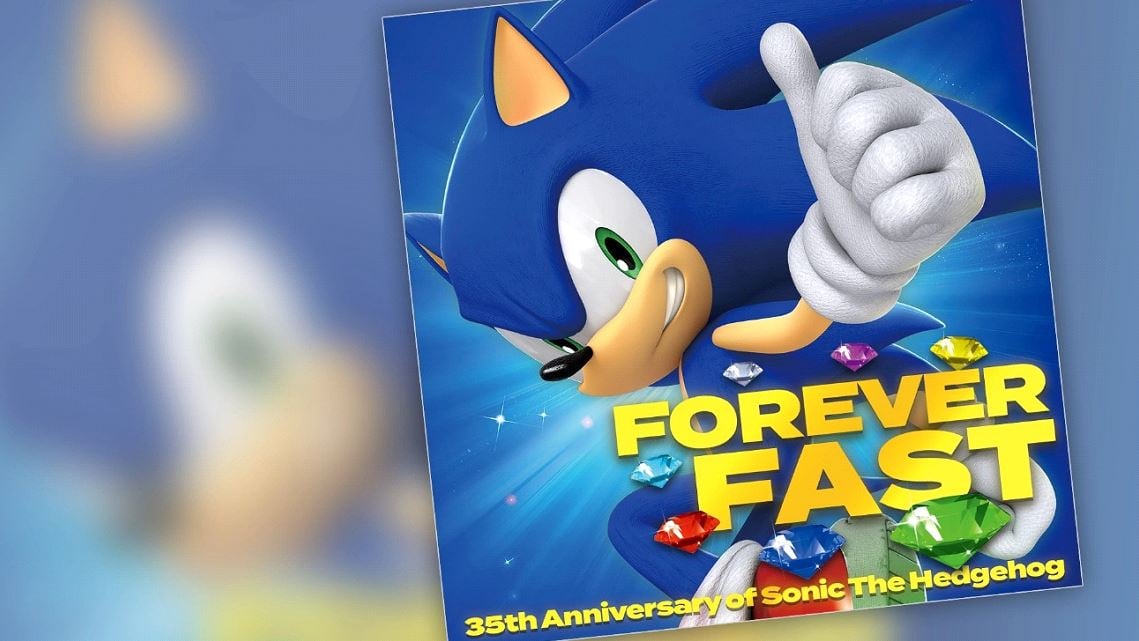
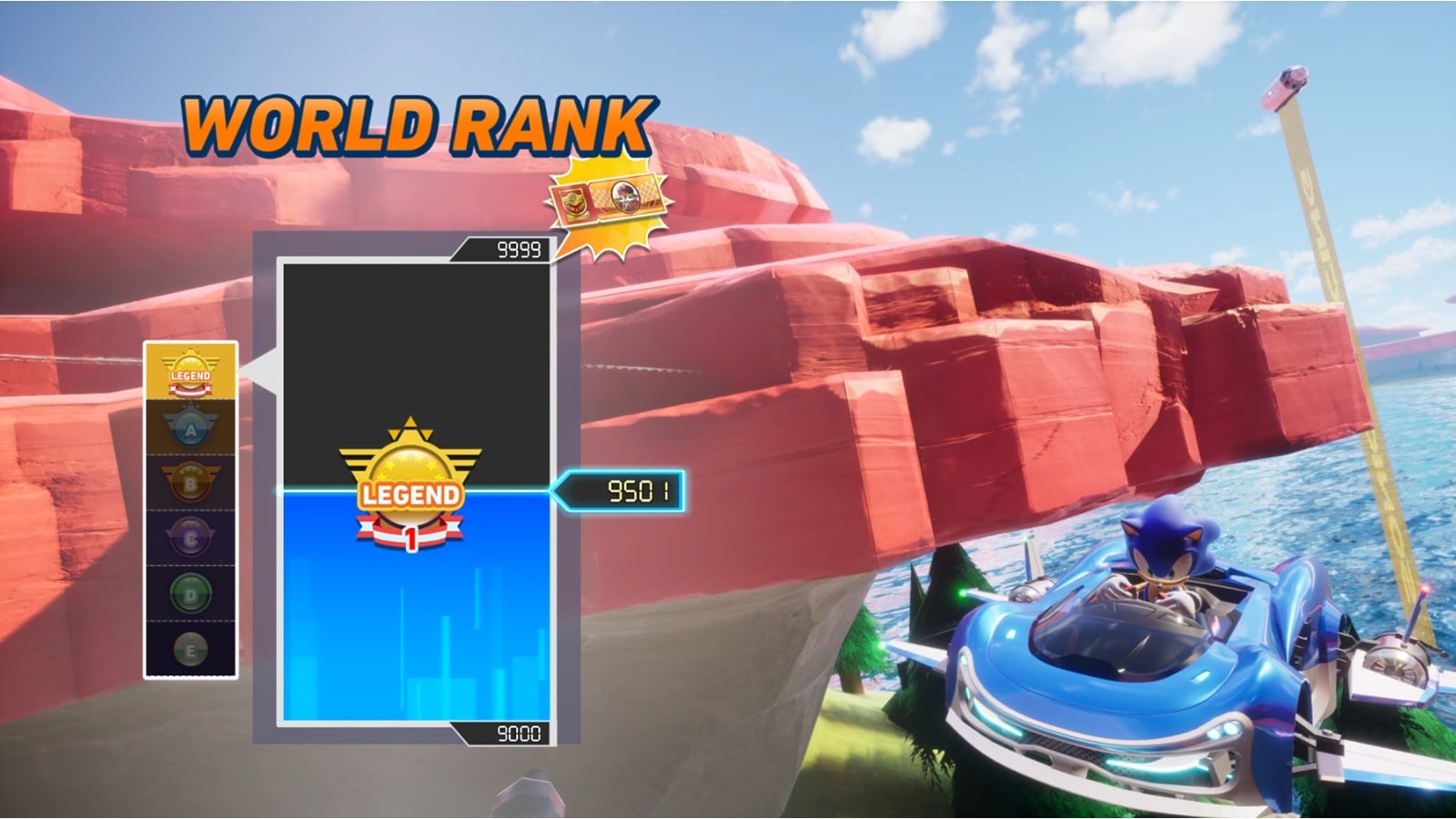
The Sonic the Hedgehog series celebrates its 35th anniversary this year. At the recently held Tokyo Game Show 2026, SEGA exhibited several Sonic-related attractions, including playable demos for Sonic Racing: CrossWorlds and SONIC PICO PARK, as well as a live performance commemorating the 35-year milestone.
The Sonic series is one of SEGA’s flagship franchises, with the first game, Sonic the Hedgehog, launching for the Mega Drive back in 1991. Since then, the series has expanded in a variety of genres, and as of January 2026, it surpassed 1.77 billion units in cumulative sales. As SEGA’s iconic mascot character, Sonic now appears not only in games, but across a wide range of media, including anime and movies.
At Tokyo Game Show 2026, we spoke with Takashi Iizuka, general producer of the Sonic series. We discussed his recent work, the impact of Sonic’s multimedia expansion on the IP as a whole, and the circumstances behind Sonic Racing: CrossWorlds’s Season Pass model, among other topics.
Sonic’s reach continues to expand around the world
―As the producer of the Sonic series, you’ve virtually become the face of the franchise. After being involved with the series for so long, what does your role look like now when it comes to the creative side of things?
Takashi Iizuka (hereafter, Iizuka):
I am, of course, involved in various things, but my main profession is still making games, so my primary focus remains on developing new Sonic games. I’m overseeing Sonic Racing: CrossWorlds, as well as SONIC PICO PARK. I’m also working on some new titles that I can’t talk about yet, so games are still my main focus. That said, it’s true that the proportion of my working time spent on actual game development has decreased… (laughs)
With the films and the recently announced kids’ anime series to be distributed via Netflix, the number of products related to the Sonic series has been increasing. I’m keeping an eye on all of those as well. In that sense, my workload outside of game development has increased.
―Are you happy about having more work outside of game development, or does it make you feel a little sad?
Iizuka:
Having more work outside of games means that the Sonic series has grown stronger as a brand, and that we have more opportunities to work with other people, so in that sense, it’s a good thing. But if I go through an entire day without doing any game development work at all, I do get a little depressed (laughs).
―When you supervise Sonic’s multimedia projects, what sorts of things do you tend to point out?
Iizuka:
When it comes to movie adaptations, for example, they’re produced by Paramount Pictures, so it’s not a project where SEGA bears 100% of the responsibility. With projects like those, I try not to interfere with things like whether the story is good or bad. I mainly provide advice to preserve Sonic’s character. For example, saying that Sonic wouldn’t behave in a certain way, or that the character designs should be a certain way.
―Somewhat similar to licensing management?
Iizuka:
Yes, something like that. However, there’s a difference in that there isn’t a predefined format. While the licensing department has guidelines based on which they give instructions, the work I do doesn’t have any guidelines. When you’re making a new movie or anime, there’s no existing work to use as a reference, so that’s my place to step in.

―So you’re like a living guideline for the IP. You’ve watched the Sonic series’ history unfold over its 35 years. How do you perceive the different “eras” the series has gone through?
Iizuka:
Speaking specifically about the Sonic games, the period from the birth of Sonic the Hedgehog in 1991 to around 1997 was the “classic” era of the Sonic series.
Then, Sonic Adventure came out in 1998, marking the “second generation” era, in which Sonic began evolving into a new form that spoke and moved in 3D.
If I were to define one more major period, I’d say it was around the time the movies came out. The first movie was released in 2020, and thanks to its success around the world, the Sonic franchise grew dramatically. We now have plans for up to a fourth movie, so in that sense, I feel that a new generation began in 2020, when the Sonic brand started to expand.
―I feel like the Sonic series has settled into a fairly consistent pace of releasing one game a year.
Iizuka:
Over the past 35 years, the Sonic series has released something new every year in one form or another. And by “something new,” I don’t just mean the mainline series. We’ve continued releasing new titles in some form, whether mobile games or downloadable titles.
However, development cycles have become longer in recent years. In the past, we could develop games in around two years, so releasing something every year wasn’t particularly difficult. But now, we have titles that take three or even five years to develop, so the intervals have become longer. That has made it more difficult to manage our lineup.
―Even so, you’ve continued to release games rather consistently. And when you release during the holiday season, expectations from users must be particularly high.
Iizuka:
By having multiple titles in development simultaneously, we’ve been able to deliver games properly, both in terms of quality and release timing.
―Is that something you’ve only become able to do recently?
Iizuka:
Yes, that’s certainly something we couldn’t have done under the old structure. A major factor is that the Sonic brand has grown stronger, which has allowed us to invest more money into it.
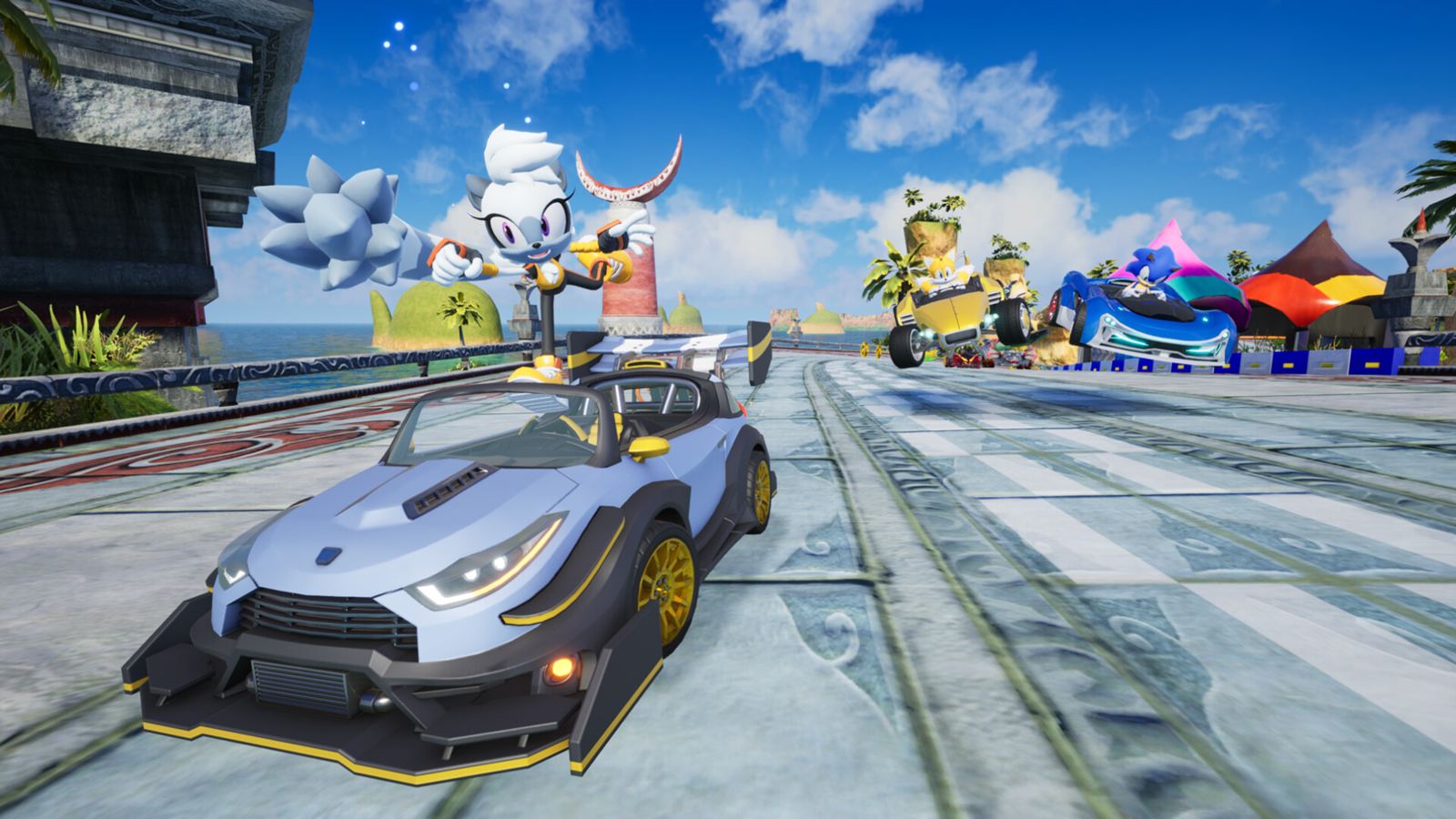
―Even with that background, releasing a major title every year must be difficult.
Iizuka:
It really is difficult (laughs). Since development periods have gotten longer, it’s obviously impossible to achieve that with a single development line, and it would still be difficult even with two lines. So, to make annual releases possible, we secure multiple development lines and work on the games simultaneously.
―And on top of that, you also have to preserve the identity and quality of the Sonic series.
Iizuka:
I’m currently in a position where I oversee all the titles as general producer. Each project has its own director and producer, with a structure in place for bringing it to completion. I oversee all of them as a whole, which allows us to maintain consistency in terms of the characters and overall balance.
In the past, when the Sonic series had a different organizational structure, each project evolved independently. One title might evolve in a certain way, while another title wouldn’t inherit that evolution and would go off in a completely different direction.
Now, however, by managing game production as a whole, if one title develops a new move, for example, we can carry that move over into another title. Being able to maintain an overall balance even in terms of game design is a major benefit.
―To dig a bit deeper into the topic of quality, Sonic games used to see fairly inconsistent reviews scores, whereas recent releases seem to have become more consistent. What do you think is the reason for that?
Iizuka:
The biggest factor is the resources we can allocate to them. When the Sonic brand was struggling, we simply had less money to invest in each title, so we had to make do with what we had. Now, however, expectations for the Sonic series have risen, and we have more resources to put into it. Being able to make games with greater care as a result of that is a major factor.
―Would you say those parts of past games that made you think “I wish this had been a little better” were directly related to a lack of resources?
Iizuka:
I think the lack of resources was a very significant factor. Now that our development teams have grown considerably, if, for example, one title looks like it might not make its deadline, staff from elsewhere can come in to support the project, allowing us to maintain both quality and stay on schedule. We now have that kind of support structure within the team.
―Compared to the past, do you feel there’s more breathing room in development now?
Iizuka:
Thanks to that support system, we’re now in a position where we can properly deliver high-quality games to users. However, that also means the pressure has increased.
―At this point, selling a million copies is almost a given for the Sonic series.
Iizuka:
We can’t afford to let our Metacritic scores drop, either, so there’s also more pressure to make games that can achieve high scores, as well as the dilemma of what to prioritize (laughs). I think game development is tough because it involves both kinds of struggles.
Making movies and anime doesn’t delay the games
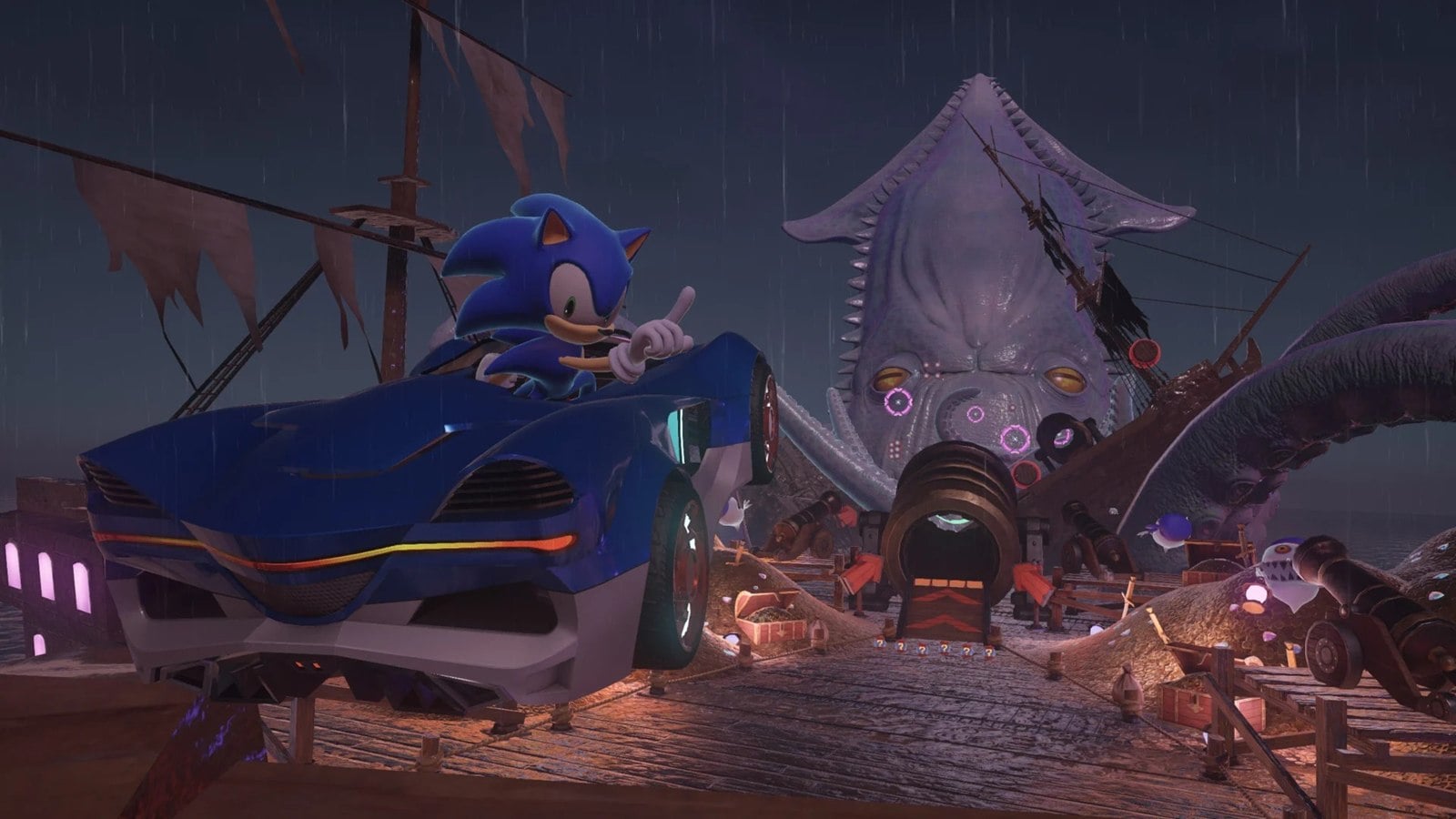
―The Sonic series has been very active when it comes to multimedia or transmedia expansion. From a gamer’s perspective, some might think, “Multimedia is nice, but I’d rather you just make more games.” Does the expansion into other media have a positive effect on game development?
Iizuka:
Of course it does. Take the movies, for example. Thanks to the movies, awareness of the Sonic series has grown, and more people around the world have become interested in Sonic as a character and in the games. That has contributed to game sales as well. Strong game sales mean we have more resources available when making the next title, which allows us to deliver something of even higher quality. That creates a positive cycle. In that sense, multimedia and transmedia expansion are majorly beneficial for the games.
Also, we don’t use the game developers’ resources for transmedia projects, so you don’t have to worry about a new game being delayed because we’re making movies or anime (laughs).
―Among Sonic’s various transmedia projects, have there been any that became popular beyond your expectations?
Iizuka:
The movies really were a bigger hit than we expected.
―Did things become dramatically different for the IP after the movies were released?
Iizuka:
Yes, it’s completely different. Anime has also made a big difference. In particular, the rise of Netflix has been significant. In the past, even if we decided to make an anime as part of our transmedia strategy, we had to approach television broadcasters and other outlets that would air it, and we couldn’t move forward without their approval. With Netflix, on the other hand, once we decide to work together on something, we can distribute it worldwide. That’s has been a major advantage when it comes to expanding the brand.
―I hear that negotiating licensing agreements for separate regions can be really difficult.
Iizuka:
It really is a struggle when it comes to television anime. You have to approach each market individually, so you find yourself thinking, “It finally aired in France,” or “It’s finally out in Canada.” With Sonic Boom, for example, we partnered with Cartoon Network to produce the first season, but the second season ended up being broadcast less widely. As a result, even though we made it, it wasn’t particularly well known among the general public. That’s why being able to partner with Netflix from the outset of a project is such a big deal for us.
We wanted people to keep playing Sonic Racing: CrossWorlds for a long time
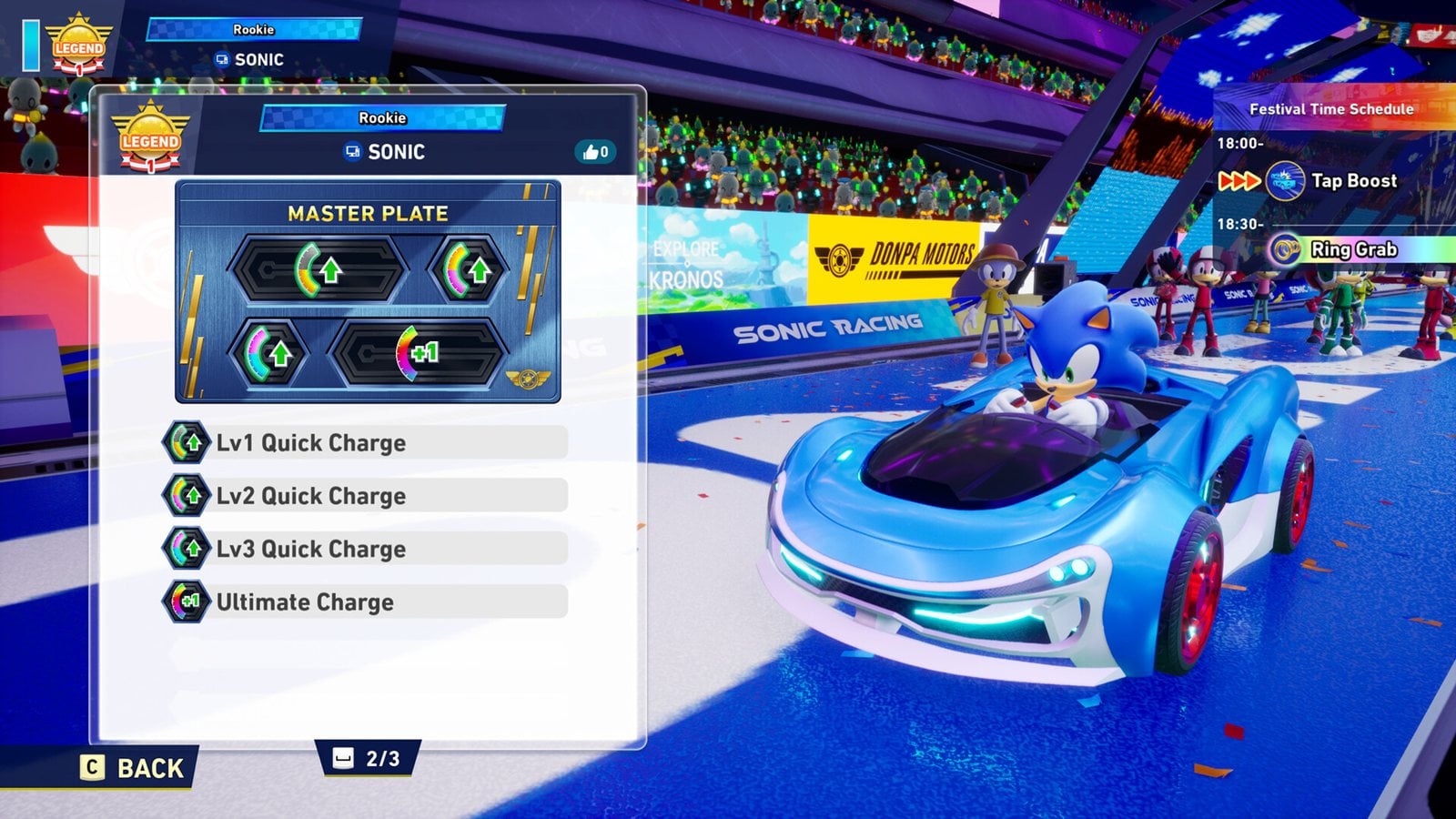
―Sonic Racing: CrossWorlds feels like a game that leans toward the live-service model. Was that the plan from the beginning?
Iizuka:
From the beginning, we strongly wanted to make it this way. The Sonic series has a lot of standalone games, but while they tend to generate a lot of excitement immediately after release, after a few months, everyone finishes them and stops playing. However, Sonic Racing: CrossWorlds is an online title, and we wanted people to keep playing it for a long time. To keep players engaged long-term, though, you inevitably need to add new content frequently, or they’ll get bored.
So, how do you keep adding content frequently? Development budgets aren’t unlimited, so you need to recoup those costs. From there, the idea of charging for additional content through a Season Pass came about. The current business model essentially grew out of what we initially wanted to achieve.
―From your position as a business producer, are you interested in GaaS (games as a service)?
Iizuka:
GaaS is the mainstream model for mobile titles and the like, but it’s not that I specifically wanted to make a GaaS game. Our primary goal was simply to make Sonic Racing: CrossWorlds a game that people would continue playing for a long time.
―Having released Sonic Racing: CrossWorlds as a game that’s closer to a live-service title, is there anything you’ve learned from the experience?
Iizuka:
Sonic Racing: CrossWorlds started from the question of how we could make people keep playing for a long time, so it was different from the framework of a conventional GaaS title from its inception. Meaning, we started out without thinking all that much about how we would make money from it. In the end, the fact that we could only secure additional development funding through the Season Pass model is something we also see as a lesson learned.
―As a player, I do appreciate being able to play for a long time at this price.
Iizuka:
We made the plan from the perspective of the fans, and ended up putting profits second… Going forward, I’d like us to find the right balance.
―(Laughs) Thank you. I imagine you have various titles in the works. What’s your future vision when it comes to the kind of Sonic games you’d like to make and expand the franchise with?
Iizuka:
Personally, up until now, we’ve been very focused on making Sonic action games in a fairly uncompromising way. But the fanbase has changed, in a sense. More people have become fans through the movies and anime, for example. In other words, people now have different points of contact with Sonic and different things they like about the character.
Given that environment, I think we may need to expand beyond those more hardcore action games and create Sonic titles with a broader appeal, so that new fans can also find games they can easily get into.
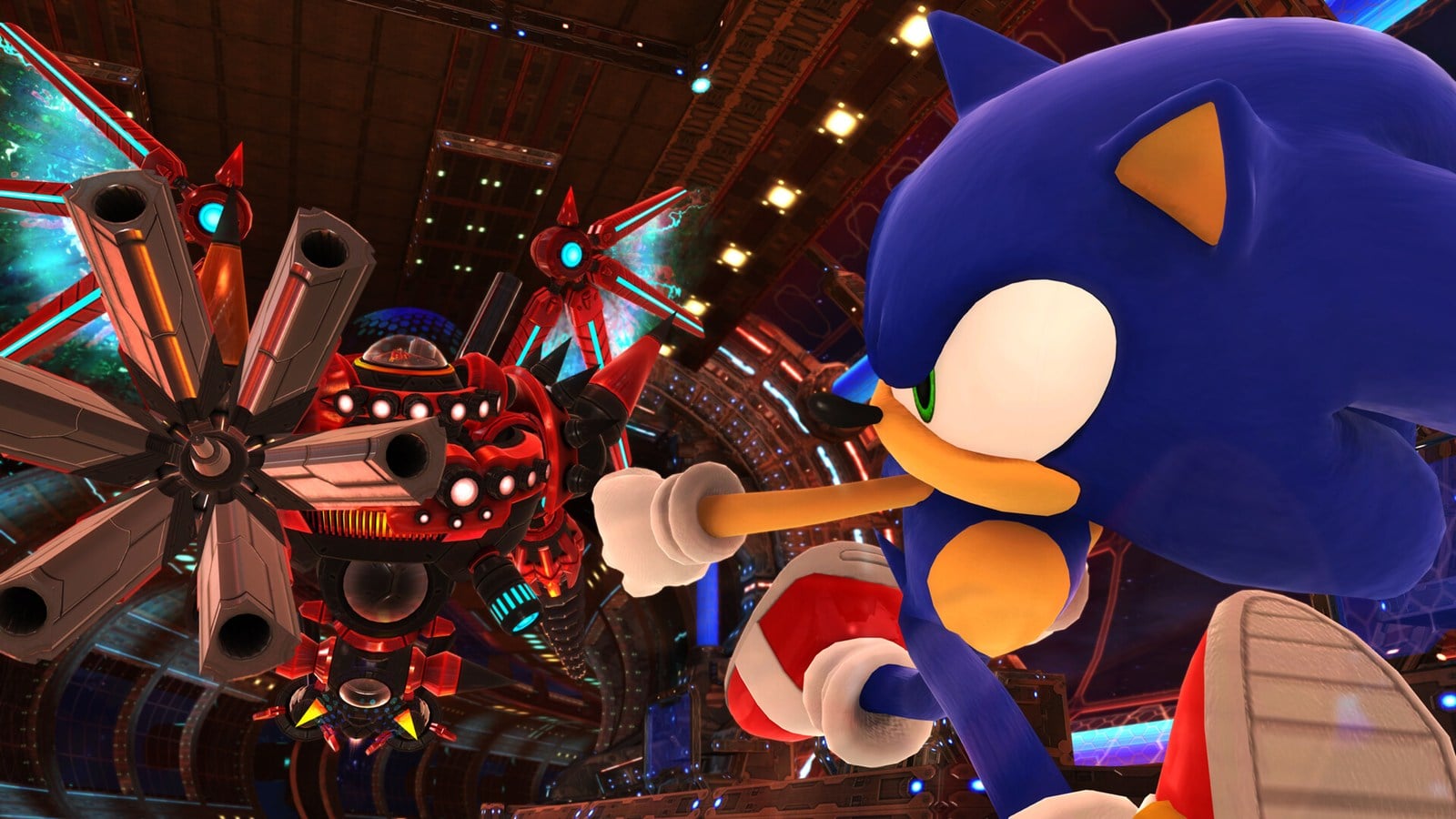
―I feel like the Sonic series hasn’t been particularly active when it comes to remasters and remakes. What are your thoughts on that?
Iizuka:
Yes, that’s true.
―Back in the Wii era, there were some pretty adventurous takes on the series, such as Sonic and the Black Knight, where Sonic went on an adventure wielding a sword. It seems like there are many games like that which could be interesting to revisit through a remaster or more substantial remake.
Iizuka:
We hear all sorts of requests from the fan community for remakes and remasters, such as people asking us to port Sonic Unleashed. But our resources are limited… Rather than using those limited resources to make remakes and remasters, we have a stronger desire to provide fans with new games and deliver new surprises.
With remakes and remasters, you’re essentially providing the same experience again. But these days, remaking an old game requires about as many resources as creating a new title. You have to remake all the graphics, and you can’t simply release the gameplay as it was back then because many things are deemed rough by modern standards.
―I understand. Even changing the screen from 4:3 to 16:9 isn’t as simple as many might believe.
Iizuka:
Exactly (laughs). So for now, I have a stronger desire to focus on new titles. That said, we do hear players’ concerns about certain games being unplayable, so I’d like to ask you to please wait a little longer.
―Thank you very much.

AUTOMATON WEST
Articles: 208Related Posts