Denshattack! director talks about Japanese influences, “incredible” support from Nintendo, and how the studio benefitted from GamePass
Interview with Denshattack! director David Jaumandreu about the game's development process and Japanese influences.
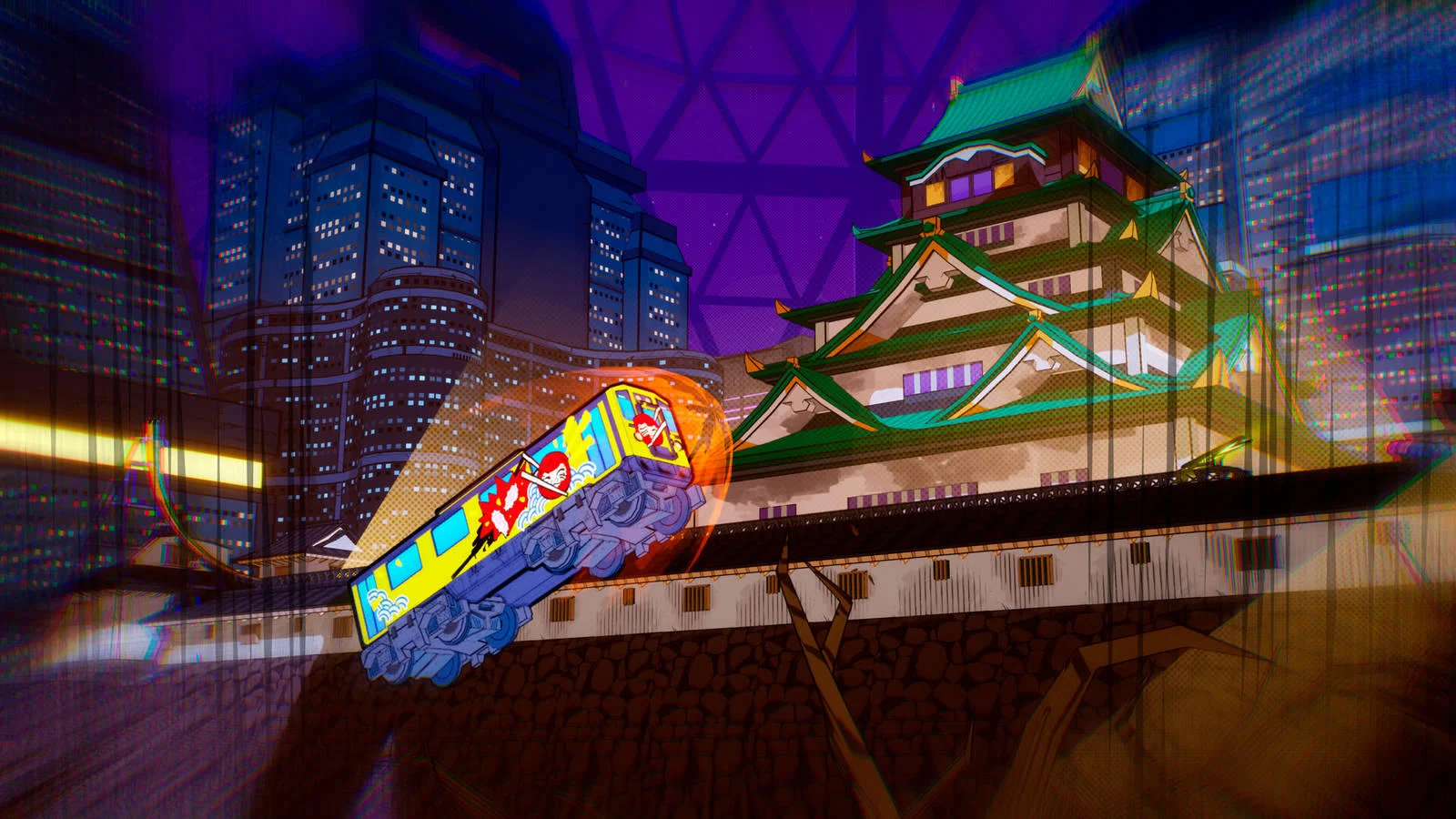
The hit “Tony Hawk but you’re a train” game Denshattack! released in July this year for PC, Switch 2, and Xbox, immediately garnering attention for its wacky premise yet skilled execution. Developed by Spain-based indie studio Undercoders and published by Fireshine Games, the game is set in a dystopian Japan-inspired world and wears its Japanese influences on its sleeve.
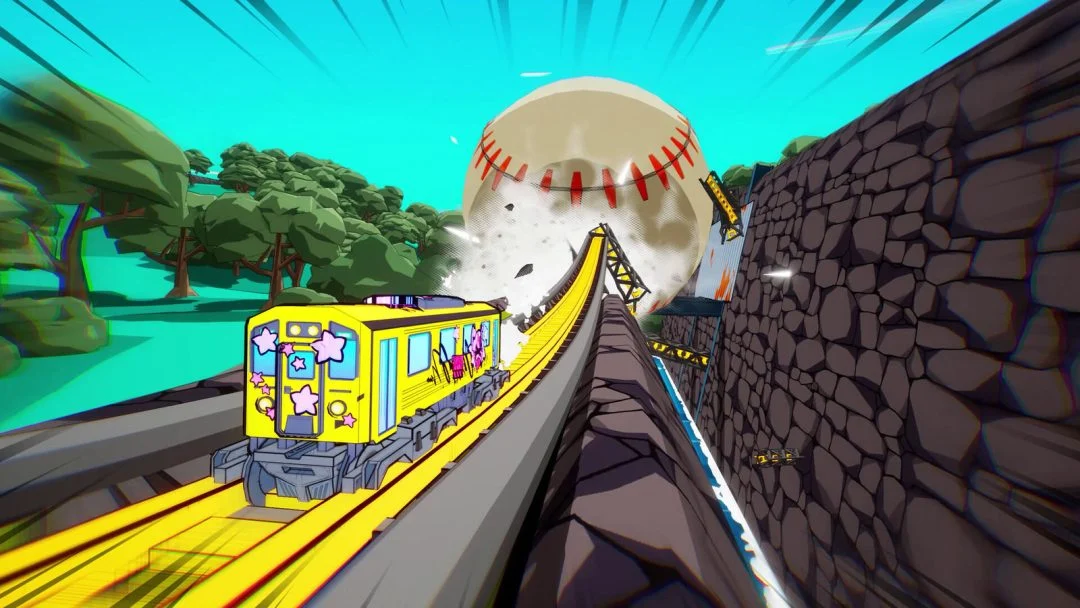
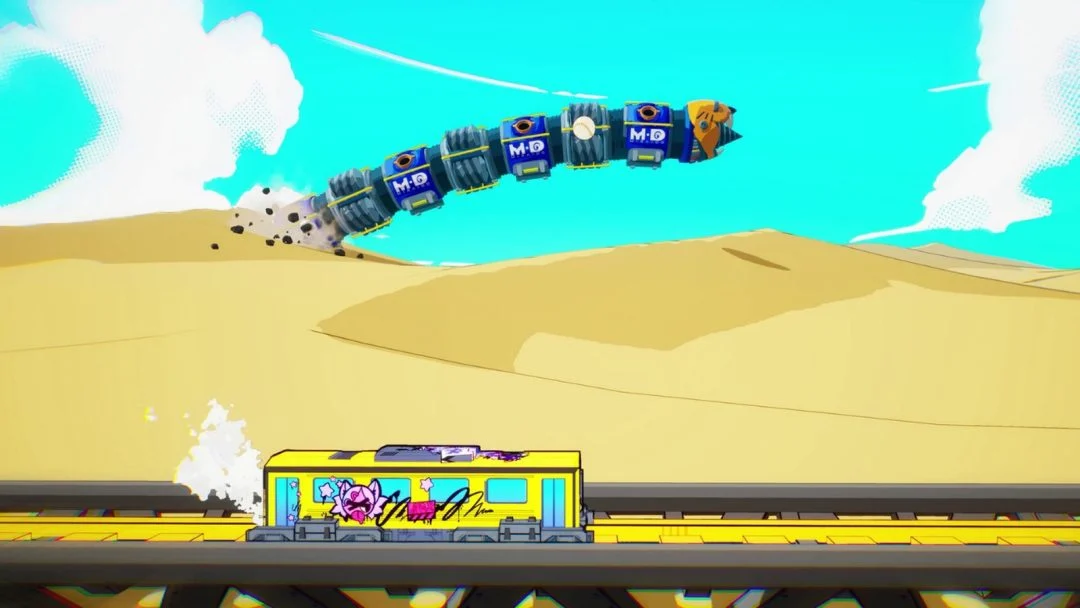
In Denshattack!, you race through stages modeled after various Japanese locations – ranging from the suburbs of Kyushu to Osaka, Tokyo, and the snow-covered landscapes of Hokkaido. On your custom, gravity-defying train, you execute skateboard-style tricks like ollies, kickflips, and grinds to triumph in battles against rivals and ultimately defeat the evil megacorp Miraido.
AUTOMATON recently had the opportunity to interview David Jaumandreu, game director at Undercoders. He talked to us at length about Denshattack!’s reception, Japanese influences, and the development process, as well as the support his studio received from third parties like Microsoft and Nintendo.
—Congratulations on Denshattack!’s release. You recently announced that the game has sold over 150,000 units and reached over 300,000 players. Does your studio see this as a big success?
Jaumandreu:
Yes, definitely. We’re really happy, especially since it’s only been roughly a month and a half since the release. It’s definitely very good news for us. We’re still a small indie studio, and we’ve been working on this game for almost three years, maybe a little more. For us, it’s not just that the numbers are good, but the reception too. I think we’re still holding a 98% positive rating on Steam, which is great.
We still can’t believe it, and we think it’s a very good start. We’ve already released two updates. One consisted of patches, while the other added new content for Platinum Medals. The response has given us the energy and motivation to keep supporting the game and giving players what they’re constantly asking for through the Steam forums and social media.
—How do you feel about the reception so far?
Jaumandreu:
It’s been really exciting for us. We’ve been very happy with the reception. The concept is a little unique, so we didn’t know if people would like it. We enjoyed it and thought it was a little silly, so we weren’t sure how others would respond.
When we presented the game at Gamescom last year, we saw that people’s reactions were really positive. When they played the demo, they wanted more. But the first impression of a demo can be different from that of a full game, so some people wondered, “Oh, maybe it’s just a gimmick game,” or “It’s a little gimmicky,” or “Maybe it’s just a crazy premise, but there’s no game behind it.”
So we were a little nervous and wanted to see if people would enjoy the full game. When the reviews came out and people started enjoying it, with positive user reviews appearing on Steam, we were really happy to see that people understood the game and enjoyed it from beginning to end, experiencing the story, progression, and everything else. It’s been really rewarding for the team.
Japanese influences that date back to our childhoods
—How did you get into game development?
Jaumandreu:
Undercoders is a very small indie studio, but it has had a long trajectory. The studio was founded in 2006. Back then, game development in Spain was almost non-existent, although it has changed a lot since then. Spain isn’t like Japan or the United States, where the development industry has a long history. We have some history dating back to the ’80s, but the studios were very, very small, so it was difficult to get into the industry.
Some university friends and I knew that we wanted to make games, and since there were no opportunities, we basically opened our own indie studio. We started by making cell phone games, then smartphone games, and eventually console games.
We’ve continued improving our products little by little, and that’s more or less how we got into game development. It was our passion, and since we didn’t have opportunities here, we created our own.
—How big is your studio and development team specifically?
Jaumandreu:
We’re a very, very small studio. Internally, our team is composed of 11 people. That’s our core studio, working in our office. But we also work with a lot of external collaborators. Since we’re small, there are areas where we bring in outside help, such as sound design and UI consultancy. Of course, there are also all the musicians, of whom I think we have more than 12, meaning more musicians than developers (laughs). We also worked with a small indie studio in Madrid on some 2D animation. To sum things up, we have a lot of collaborators, but the core team is 11 people.
—Can you tell us about the influence Japanese games and anime have had on Denshattack!? What were your biggest Japanese influences when making the game?
Jaumandreu:
I think the whole game is influenced by Japan. In terms of the game’s theme, of course, it’s based on Japanese railways because we’ve always really enjoyed them. We’ve been lucky enough to travel around Japan.
I think the first time was in 1998, and since then, we’ve been able to return and backpack from one place to another using the Japan Rail Pass. We grew very fond of the country’s railways.
At first, we discovered the Shinkansen, which was very impressive in the ’90s because we didn’t have high-speed trains in Spain. It felt like the future. But then we became more interested in the small local lines, with their beautiful scenery, local culture, cuisine, and people, and we started learning a little Japanese.
We originally went there because we loved manga and video games. Then we kept coming back because of the people, culture, and landscapes, and we grew very fond of the country.
So Denshattack!’s theme is based on all our trips from the south to the north, traveling on local lines, and visiting everything along the way. On the aesthetic side, of course, it’s very influenced by anime and manga.
We live in a part of northeastern Spain called Catalonia. Anime was very popular in the region in the late ’80s and early ’90s. Through France, we got a lot of anime such as Dragon Ball, Kinnikuman, Dr. Slump, and Macross. That’s what we watched on TV as kids, so it’s actually part of the culture here. Pretty much everyone who grew up in the ’80s and ’90s in this region grew up watching these kinds of cartoons.
It’s always felt very natural for us to incorporate shonen-like themes, colors, and imagery, and there’s a lot of that in Denshattack! As an adult, those are the influences I remember, while the younger members of the team enjoy more modern anime such as Naruto, One Piece, Air Gear, and Initial D, of course.There are a lot of these influences in the game’s aesthetics. It’s a mixture of classic and present-day Japanese culture, anime, manga, and pop culture.
Incorporating all facets of Japanese culture
—At what point in development did you decide on the Japanese theme?
Jaumandreu:
The Japanese theme was decided from the very beginning. It was actually a Japanese “Plarail” toy train that inspired the concept of the game. I had those trains when I was a kid, and I really grew fond of them. Whenever I thought about trains, that was the kind of Japanese train I pictured. When I came up with the idea, I also used to skateboard, so it felt natural to take a train toy and flip it like that.
I thought, “Oh, this could be a game.” The initial pitch was already tied to a Japanese train from the very beginning. So I started developing the concept around questions like, “How would this work? How would you flip a train in a game? How would the controls work? What would the scoring and physics be?” But the concept always revolved around a Japanese train.
When the time came to say, “This concept is cool. It looks fun. Let’s build a story and characters around it!,” it was already based on a Japanese train. So, naturally, it made sense for the game to take place there.
—Given the Japanese setting, how did you collect references for the game? Did you take any special measures to make sure things like the writing or the location names were accurate?
Jaumandreu:
First of all, most of the material we used came from our previous trips, and we’ve actually visited most of the places that appear in the game. We took photographs and gathered references, including some very old pictures as well as more modern ones.
Once we had proposed the levels, names, and everything else, we brought in Japanese consultants to tell us whether everything was appropriate, whether anything sounded strange, whether we had written anything incorrectly, or whether we were touching on any sensitive subjects.
There are, for example, a lot of suburban groups like Bosozoku, Kogal, Rockabilly, and others. We wanted to make sure that their portrayals, while fictional and exaggerated because the game has an anime-like style, were still respectful.
We took a lot of things into account, such as shrines. For example, you can’t break Torii gates in the game because that would be disrespectful. You can’t break things that are sacred.
We had a couple of people reviewing everything and playing the game, telling us things like, “This sign looks a little strange,” or, “This is written incorrectly; please rewrite this.” So even though we did a lot of research ourselves, it helped to have native Japanese speakers review everything and tell us what works and what could be improved.
—Do you travel to Japan often?
Jaumandreu:
I think I’ve been visiting Japan almost every year since 1998. I had the chance to work as a university intern for three months in Tokyo, near the Jinbocho area. I was studying computer science and working for AIWA.
I also made a lot of friends there. I would come back and stay with my friends or colleagues, and I kept making more friends who gave me more reasons to return, so I’ve been traveling there almost once a year since then.
I’m particularly fond of Shikoku. It’s one of the islands I like the most. I really like castles, and Shikoku has some very nice ones, like Uwajima, Matsuyama, Marugame, and Kochi. Traveling around by local train also offers beautiful scenery and amazing food. Kochi in particular has great food.
—What were the main Japanese video game influences on Denshattack!?
Jaumandreu:
Of course, Jet Set Radio was a huge influence because it combined the extreme sports aspects that other games did very well – like Tony Hawk or SSX – with a very unique aesthetic of cel-shaded graphics and a strong theme. It was about self-expression, being a rebel, and giving a lot of importance to music. That was an era that resonated strongly with us, so it’s a very big reference.
We also tried to capture the spirit of arcade games. In that sense, Sega was kind of the king of the arcade. Games like Daytona USA influenced us with their sense of speed, while Crazy Taxi brought the craziness, good vibes, and clear skies. OutRun 2 is also a major reference for the game.
The Densha de Go! series was highly influential as well. The first time I went to Japan in 1998, I got to play the arcade cabinet with its dedicated controls, and that was a big shock for us.
It might seem unrelated, but rhythm games were also an influence, including the Beatmania series, Dance Dance Revolution, and others. At its core, Denshattack! is also a game where, when designing the levels, we take rhythm into account: how you move your fingers, how you move with the music, and how the music pushes you forward.
I’m also a big fan of Japanese fighting games. So those are more or less the main Japanese influences on the game.
—I’d like to talk about the art style too. What influenced the game’s visuals?
Jaumandreu:
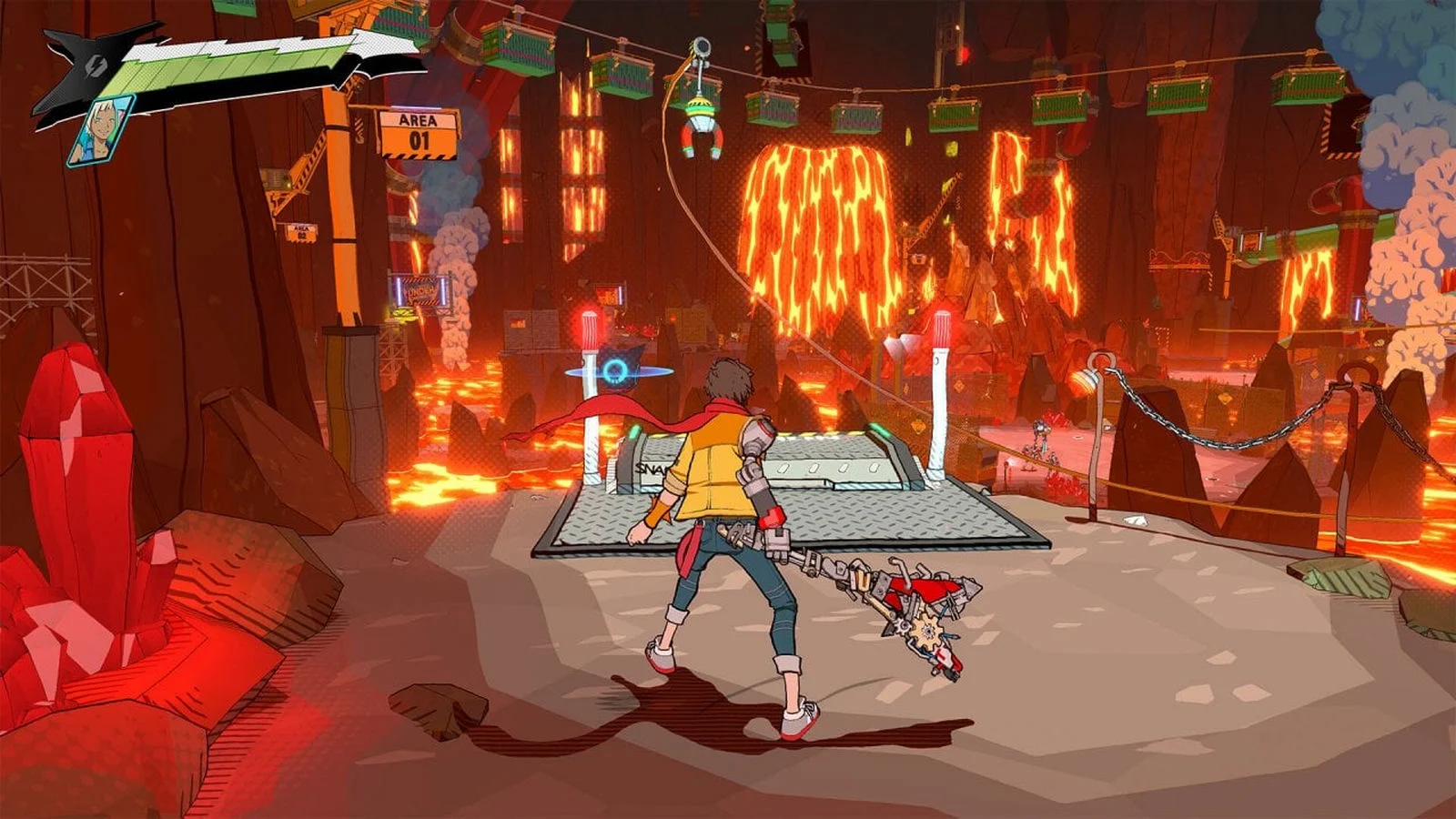
It’s a mixture of different influences. For starters, there’s a lot of the anime I mentioned earlier. The illustrators are also very fond of Studio Trigger and its anime style, particularly the lines and expressiveness of the characters. The Persona series was another major influence, especially for the UI. It wasn’t just the characters, we found the interface itself very energetic.
In terms of 3D, we all mentioned Jet Set Radio. There’s also a racing game I really loved back in the day called Auto Modellista by Capcom, which helped shape the art style. Hi-Fi Rush also did a great job.
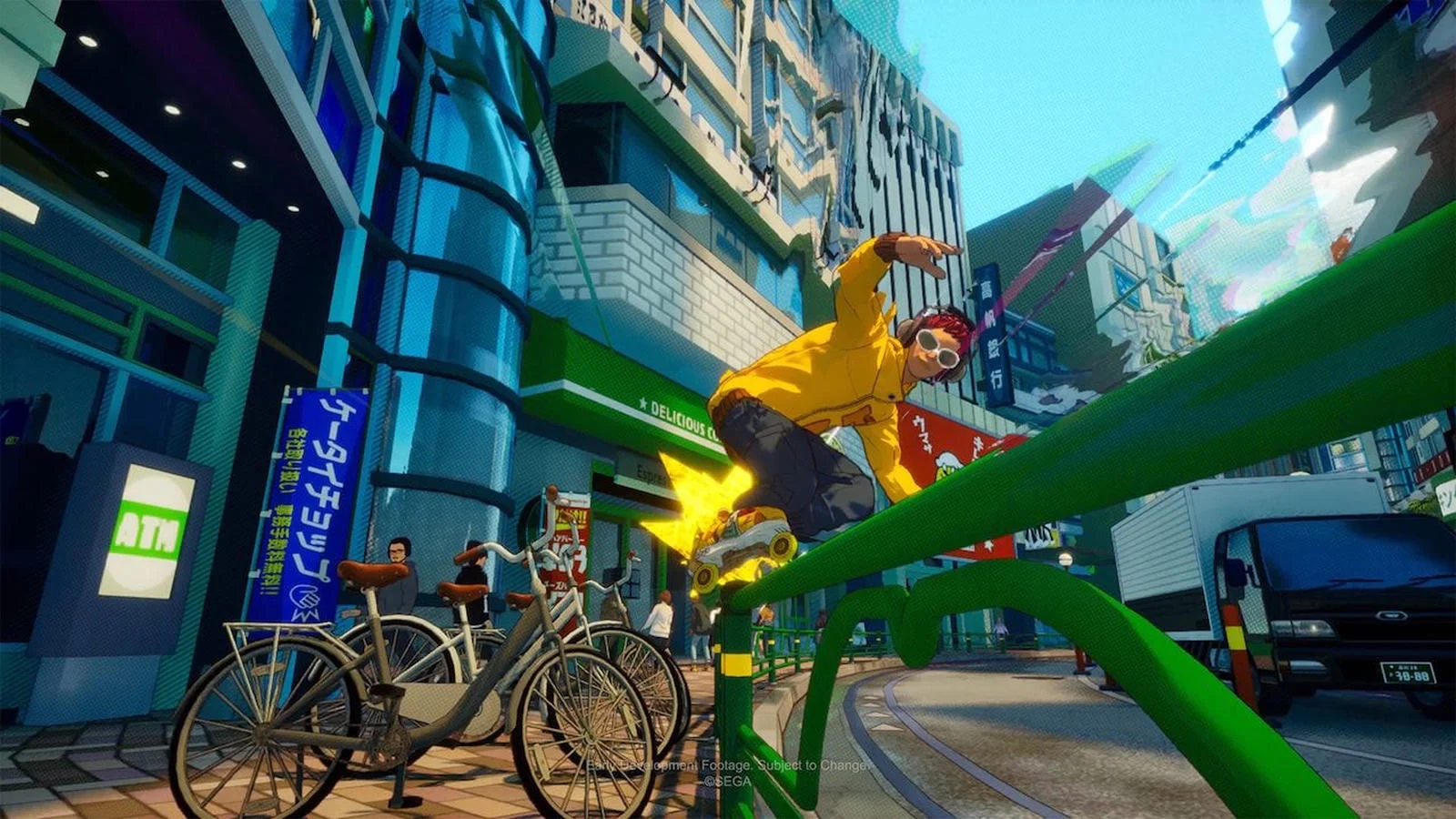
The Arc System Works fighting games, such as Dragon Ball FighterZ, also do a great job of translating an anime style into a 3D world, even if they’re much more elaborate. That was one of the references we drew from when figuring out how to create 3D anime. It’s really a kind of combination of everything.
—The manga-style of the artwork really stands out. Who was the artist?
Jaumandreu:
It’s the work of several artists. The character designer was Violeta Moldes, an illustrator from Spain. There’s also Ernest Sala, another Spanish illustrator, who did all the character expressions, key art, and covers. And there’s a third person, Silvia, who handled all of the graphic design, including the graffiti and menus.
It’s a combination of several people. Of course, the 3D team has three other people as well. The art team is the biggest department we have within the studio. Of the total 11 people, five or six are artists, while the others are programmers, designers, and so on.
Getting to where we are today with support from all sides
—Denshattack! released on all platforms – Switch, Xbox, PlayStation, and PC. In terms of development, was it difficult to do a multi-platform release as an indie studio?
Jaumandreu:
Yeah, it’s always a little challenging, especially toward the end of development, because you have to make sure the game runs smoothly. Denshattack! is a game about speed and reflexes, so performance is much more important than it might be in, say, an RPG or another slower-paced game. For us, it was really important, so the final stage involved a lot of optimization, particularly for platforms such as Switch 2 and Steam Deck, where you need to account for portable play and energy-saving modes.
There are a lot of combinations you need to take into account. It’s not just about optimizing the game, but also making sure it displays well on a smaller screen and at a lower resolution. There’s also a lot of UX work involved in making sure the text is large enough.
We spent a lot of time playing on smaller portable screens to make sure that, even though the game moves at high speed, players can see everything clearly and the colors are bright enough. It’s really time-consuming and takes up a lot of time toward the end of development.
At the same time, it’s really rewarding when people play it on Steam Deck or Switch 2 and say, “Oh, it looks very good on the smaller screen, and I can play very comfortably.” The game has an arcade spirit and a lot of levels, but the levels themselves aren’t very long. People like being able to play for a while and then take a break. So yeah, it’s really rewarding. It’s mainly just a time-consuming process.
—The game was released on Game Pass as well. How has that been for you and what was the process like?
Jaumandreu:
It’s been good. From the very beginning, we presented the game to Microsoft, and they liked it. We continued discussions for a long time until we were invited to be part of Game Pass.
Of course, for a small team like ours, that’s a very good opportunity because it puts the game in front of a lot of people. A lot of people get to play it, and if they like it, they can recommend it to others.
So for us, it’s been a very positive experience. A lot of people have played the game thanks to Game Pass, so we’re glad we did it.
—Does a Game Pass deal also put less pressure on the team in terms of not having to worry as much about breaking even?
Jaumandreu: Yeah, it gives you a little bit of air, so to speak, because there’s some amount that’s guaranteed even before you hit the market. It lowers the risk you’re taking compared with not having a deal, so of course that’s always a good thing.
But I wouldn’t say it takes away the pressure. You still need to deliver a very good game, and I don’t think Microsoft would release something that doesn’t meet its standards, even if you’ve already signed a deal, so you still have that pressure.
You also still need to sell a certain number of copies to recoup the development costs, etc. But it does take away some of the financial stress because when you launch, you know you’re getting at least a certain amount of money.
—I noticed Denshattack! was part of the Nintendo Indie World booth at BitSummit too. How has it been like working with Nintendo?
Jaumandreu:
It’s been absolutely great. We were also invited to participate in a Nintendo Indie World Showcase earlier this year, and that was a huge, huge boost in visibility for us, probably one of the biggest we’ve had.
We were also able to get access to Switch 2 development kits and start development on them. All of our previous games have been released on Switch 1 – Conga Master, Mail Mole, and Koa the Five Pirates of Mara – so it’s a platform that we appreciate a lot, both as players and as developers. Getting our hands on Switch 2 early was really good.
Nintendo has been incredibly supportive. I think they liked the game and saw that it was a good fit for Switch 2. We’ve also put a lot of effort, as we mentioned earlier, into ensuring that the game runs very smoothly on Switch 2, and I think they liked it.
Having the visibility of the Nintendo Indie World Showcase, as well as having the game at their booth at BitSummit, was absolutely great. Having a company as big as Nintendo support your game really makes a difference.
We’re not rushing to expand
—Could you tell us about your future plans as a studio?
Jaumandreu:
The current state of the video game market as a whole is pretty crazy right now. There’s a lot happening, with lots of studios closing, and it’s not the best market.
So our main goal right now is to keep the team and stabilize it. For Denshattack!, we had to expand the team. Before Denshattack!, we were smaller, there were about six of us. Now we’re almost double that size.
We really don’t want to expand too much. We want to take it one step at a time: support Denshattack!, stabilize the team, and then think about what’s next without growing too much. We want to take things slowly.
—I take it you want to stay independent?
Jaumandreu: Yes, definitely. We’re comfortable with where we are. Of course, we’ve learned a lot from making Denshattack! and we’ve grown the team, so we want to continue learning and creating better products.
But it’s not like we now want to develop three games at the same time. There’s a lot of risk in the market, so our priority is to stabilize things and keep growing steadily. Slow but steady.
—Finally, is there anything you’d like to mention to our readers?
Jaumandreu:
I’m looking forward to the Tokyo Game Show this year. I really hope more people learn about the game, share their opinions, and let us know whether they liked what they saw. I’d also love to hear if there are any places they feel we’re missing that they’d like to see represented in the future.
—Thanks so much, David, for this interview and congratulations again on your game.
Denshattack! Is available for PC (Steam/Microsoft Store), Nintendo Switch 2, PS5 and Xbox Series X|S. The game is also playable via Game Pass.

Genki
Articles: 4Related Posts