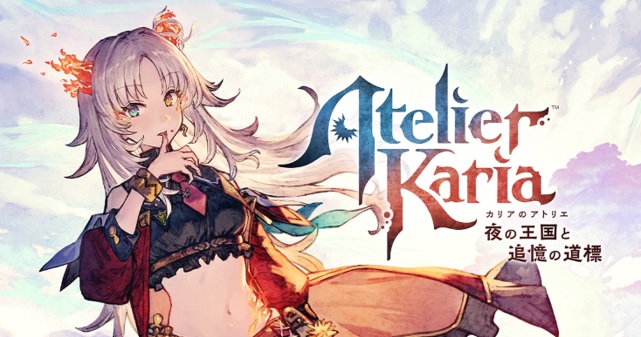
Last month, Koei Tecmo’s Gust studio announced Atelier Karia: The Night Kingdom & the Guide of Memories, a brand-new mainline installment in the long-running Atelier series, positioned as the sequel to Atelier Yumia: The Alchemist of Memories & the Envisioned Land. The title is set to release in early 2027 for PC (Steam), PlayStation 5, XBOX Series X|S, and Nintendo Switch 2.
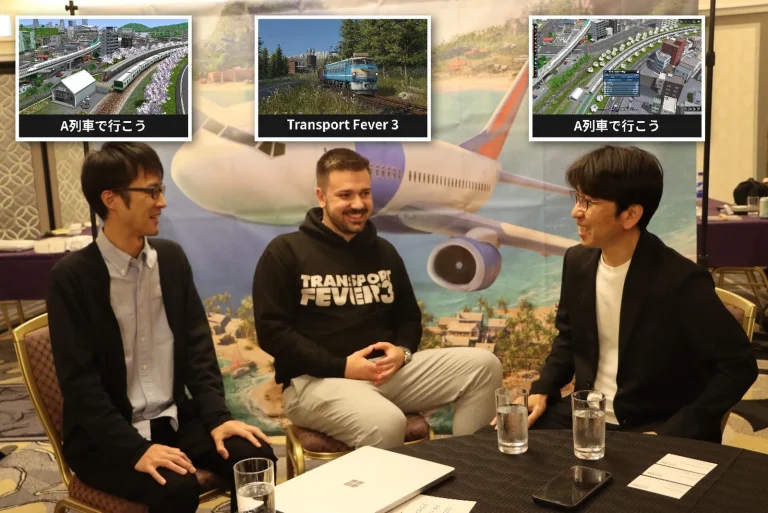
Recently, AUTOMATON had the chance to sit down with Atelier Karia’s producer Junzo Hosoi and director Taiki Fukui, who let us have a peek at the development process behind the upcoming title. In this interview, we talked about the many games that helped inspire the development of Atelier Karia, the difficulties of making a full-priced console game in an era dominated by free-to-play live service titles, and the new challenges Gust is embarking on as it enters what the devs call a “huge transitional period.”
This is the second part of a two-part interview. For more about the specific features of Atelier Karia and its position within the franchise, make sure to check out the first part of this interview.
–Let’s start with a bit of an unusual question. Does Gust ever use other video game titles as references for development?
Fukui:
Of course, we draw a lot of inspiration from other companies’ titles. In particular, we play and research a lot of games which involve gathering, managing and crafting resources like Valheim and Subnautica. We try out the newly released games, analyze them within the team to see if there are any good design points or ideas we can draw inspiration from, and are constantly thinking about how to incorporate these ideas into an Atelier-like experience.
– So, you mainly draw inspiration from things like their crafting systems?
Fukui:
When you reach new Biomes in Valheim and Subnautica, not only does the scenery change, but there are also more items you can gather, and the range of actions you can take broadens, expanding the gameplay. Since we weren’t able to realize this aspect of the series to its full potential in Atelier Yumia, in Karia, we made it so that the player is able to do things they previously couldn’t once their enter a new region, and we thought these kinds of crafting-focused games could be a good point of reference for that.
Hosoi:
While I was influenced by Valheim, recently I’ve been impressed by Tides of Tomorrow, as well as Capcom’s titles. Playing Pragmata made me realize how amazing Capcom is at making characters. I think their creativity is wonderful both in terms of approach and storytelling.
– There’s this general atmosphere in Japan where rivaling companies usually avoid openly discussing how they use each other services and products as inspiration. Have you always been conducting these video game case studies, even if you didn’t openly speak about them?
Hosoi:
I’ve always loved overseas games and have often used them for inspiration. I feel like there are many large-scale live-service games which incorporate Western game design while also showcasing their own unique strengths when it comes to character presentation or service operations. There’s a lot to learn from those kinds of examples.
Our company’s titles also share some similarities with them, so we believe we need to become even more competitive when it comes to our ideas and the value of the game experience. We closely follow not just Japanese titles, but also overseas and indie ones, but what’s important for us is how we’re able to express our own unique identity based on that. However, I also feel that, going forward, things are going to get more difficult if we just end up relying on our own uniqueness.
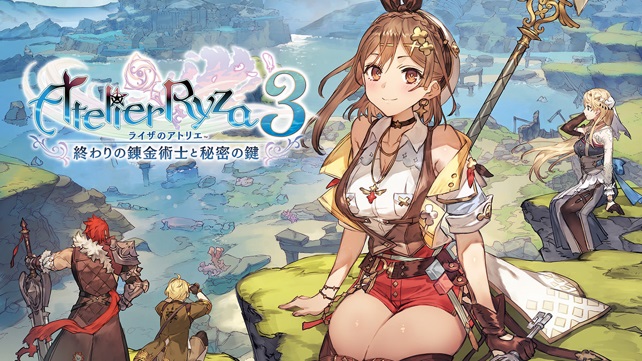
By making the Ryza series a trilogy which follows the same protagonist, we were able to deeply convey the charm of all of the characters. On the other hand, as the series progressed, I realized that a crucial challenge for us would be how to provide players with a new and surprising gaming experience. So, I felt once again that we must compete based on the strength of the mechanics and actual gameplay experience, instead of relying on the art and visuals like we have in the past.
– Meaning, you still feel like Ryza was lacking in some aspects, despite its popularity?
Hosoi:
I believe Atelier Ryza was a game that managed to reach a wide audience thanks to the appeal of its characters. So, in addition to our appealing characters, we want to become a video game brand that is also highly regarded in terms of quality of the gameplay experience itself.
Based on that past experience, we tried taking on many different challenges with Atelier Yumia. However, when it comes to how we’ve built the actual gameplay experience, I think we still had a lot of room to polish it further. With that in mind, having appealing characters and visuals is very much a given, and we must aim to create a product and a brand that will earn the reputation of “Gust’s works offer an amazing gameplay experience.”
While continuing to place importance on visual appeal as we always have, I believe there’s also a need for us to strengthen the gameplay experience itself even further.
– So, what you’re saying is that you can’t win based on visuals alone. Do you mean that in terms of the current market?
Hosoi:
That’s right. Back when we were working on Atelier Ryza, large-scale live-service games like Genshin Impact hadn’t yet had this big of an impact on the industry. However, nowadays, major live service-titles are releasing attractive characters pretty much every month.
Because they have established this cycle of rolling out new, attractive characters on a monthly basis, they can afford to take risks to a certain degree and create edgier and more niche characters. People’s tastes aren’t as homogenous as they used to be, and as preferences are so diverse now, and character types are also becoming more subcategorized.
When we were developing Atelier Ryza, one of the reasons we decided to have the same protagonist throughout all three parts of the series was because changing the protagonist would increase the cognitive load for the audience. What I’m trying to say is, for example, Harry Potter is a series of seven books, and as it progresses, the cognitive load associated with already established characters naturally decreases.
That’s the general idea behind wanting to make a trilogy following the same protagonist. However, I do think there are both good and bad sides to that approach.
When it comes to the more recent large-scale live-service games, they offer a wonderful gameplay experience, and their development and marketing scale is huge, so I feel like they also have a very strong ability to reach a wider audience through their characters. And in the era we’re currently living in, creating attractive characters is an absolute given. So, on top of that, we have to elevate the gameplay experience even further. At the same time, since we’re making a full-price game, we also need to aim to create a gameplay experience that live-service mobile games wouldn’t be able to replicate.
–In other words, you’re aiming for a gaming experience that’s only possible in a full-priced title?
Hosoi:
When we develop a full-price title for consoles, we have to keep in mind that there are many design choices and fluctuations in player experiences that happen precisely because it’s a full-price title. For example, with live-service games, it’s much more difficult to manage in-game assets than on console. On the other hand, as we often see in overseas games, full-price console games allow you to design a much more dynamic experience, the kind that significantly twists the player’s situation as the story progresses. I think that we also have to take on that same challenge of creating a dynamic, evolving experience.
–The Atelier series’ history was built upon visuals, so it’s interesting that you’re not trying to take “the easy way out” by relying solely on looks.
Hosoi:
Actually, the truth is…we do want to rely on the visuals.
Fukui:
Yeah, we do! (Laughs)
Everyone:
(Laughs)
Hosoi:
Of course, we want to keep cherishing the series’ visual appeal as well. However, in addition to that, we want to create a title that will also be highly regarded for the gameplay experience itself.
– So, while trying to strengthen its development capabilities and keeping an eye on competition, Gust is currently exploring how to deliver the most unique experience possible.
Hosoi:
That’s right. Though, what we’re trying to do now is in no way something entirely new.
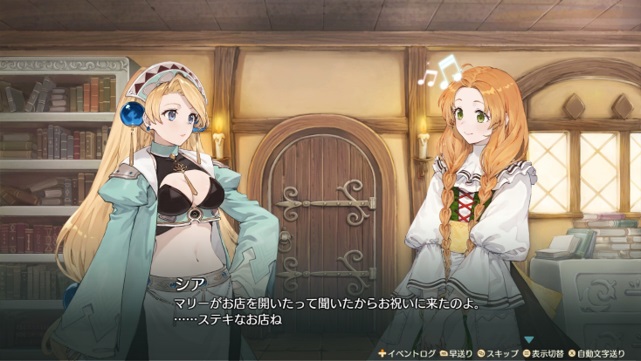
The Atelier series has previously had a multi-ending system featured in some of its entries. Atelier Marie: The Alchemist of Salburg is a prime example of that. The current Atelier series exists as it is now thanks to the developers who have worked on and continuously refined it over many years. And I think we, too, are witnessing a big period of change. This means we won’t be able to secure the Atelier series’ future if we don’t thoroughly adapt it for modern times.
– Have you already shared this with the rest of the team?
Fukui:
We are currently still in the process of communicating this gradually from the top-down. Also, when it comes to development itself, we’ve changed our structure from a typical top-down approach, with each team leader taking responsibility for finalizing specifications and the details of implementation for their respective parts. Me and Hosoi look for ideas from the team leaders, and then they submit proposals like “How about doing it this way?” That’s the kind of process we’re trying to encourage.
– How effective has this change to the development structure been?
Fukui:
I think the team itself started taking the initiative and being more proactive. The team members also contribute with ideas, not just the team leaders, so we’ve been able to sift the best options from many different opinions, which I believe has helped us enhance the gameplay experience of Atelier Karia.
– When it comes to large-scale development, isn’t it generally difficult to have team members work proactively and go beyond their own specialized sections? How do you handle this at the studio?
Fukui:
We are currently in the final stages of development, which is a very hectic period for us. However, each of the team members is approaching their work optimistically, creating a general atmosphere of “We’re going to complete this project!”
I’ve told them that they should keep speaking openly about what they want to do. Of course, we’ll adopt all the good suggestions, but even for ideas which would be a bit difficult to implement, we try to discuss them with the team leaders, flesh them out and put them into the game.
– Could this change in team structure also be interpreted as the result of lessons learned from the shortcomings of your previous titles?
Fukui:
Our team was much smaller before Atelier Ryza, so everyone had a general understanding of areas beyond their own specific responsibilities. However, with a bigger scale of development, the labor division is much clearer, and work efficiency improves together with it, but this also usually means that people are going to be less familiar with the parts they aren’t directly involved with.
By creating an opportunity for team leaders to come together, for example, letting the person responsible for combat and the person responsible for the meal system exchange ideas, it becomes much easier to come up with mechanics that extend beyond a specific area of expertise – something like “Since the meal system has this kind of feature, we should implement this kind of element into the combat system.” I feel like this kind of approach has allowed us to broaden the gameplay experience.
– Now I get what you were saying earlier about the differences between live-service and console games, and I think it’s interesting you mentioned that “with live-service games it’s more difficult to manage assets, while full-price games allow for designing a much more dynamic experience.” Are there any other approaches to this?
Hosoi:
I think what’s usually expected from an RPG is for the story to unfold dynamically. For example, having the narrative shift based on players choosing from several options provided to them, or having the characters undergo irreversible changes. In games like The Elder Scrolls V: Skyrim and Baldur’s Gate 3, the narrative undergoes dynamic changes, with each player getting a substantially different experience – both in content and value.
We’ve come to realize that we need to aim for that same level of dynamic change for Gust’s future console titles.
– Specifically, what kind of gameplay experiences have you incorporated into Atelier Karia?
Hosoi:
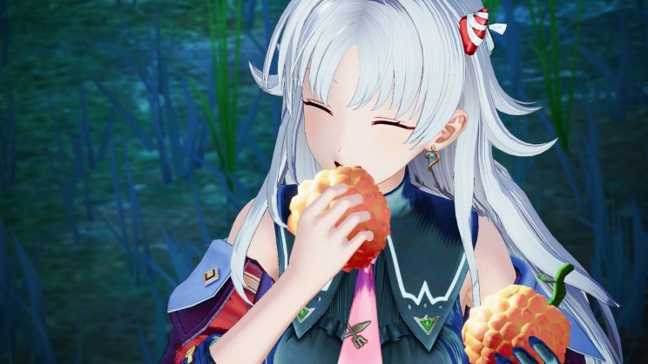
For example… While it’s still in the development stage, we’ve currently testing out a mechanic where eating affects your appearance and body type. Having your status change after eating the meals you’ve made is a common thing in video games, so I think the players will find it refreshing to see that reflected in their physical appearance as well.
Additionally, the building system in Atelier Yumia was a fairly standalone feature, but this time around, players will get the chance to use it even when combating massive enemies. I believe that introducing these kinds of elements will help us deliver a much more varied gameplay experience.
There’s still a lot of things I’m not allowed to reveal yet, but we’ve included character-specific endings, and the story also features some branching. This is a different approach from what we did with Atelier Yumia.
–One final question! What phase is Gust currently in, and what are the challenges you have been facing as a studio?
Hosoi:
Having kept the Atelier series going for so long, I feel like we’re at a turning point right now. During this transitional period, we’ve been exploring what a new kind of Atelier experience could look like, and I think that vision has, bit by bit, been shaping up into something great. However, there are still areas that need improvement, and we still have things we’re struggling with. That’s why we launched a new social media account for the Gust brand alongside the Atelier Karia announcement. We want to use it to build a community together with our users and plan various initiatives going forward. On that occasion, we’re also thinking about asking for their feedback on the game.
Changing the structure of the development team, I was once again reminded how important it is to face things at a personal level. We have the team leaders share their ideas and make decisions, and then let them clash over opposing viewpoints and see where they stand on it. If we don’t address their opinions immediately, and then later say “Actually, that wouldn’t have worked anyways,” which makes the underlying issues even more difficult to resolve. But discussing everything on the spot helps the conversation flow much more freely.
We hope that players will join the community and become a part of the Atelier series as well by sharing their thoughts and opinions about it!
– Sorry if this comes off as mean, but are you trying to say that Gust creating a community and gathering feedback isn’t just “performative”?
Hosoi:
We really do intend to listen!
Gust’s culture is rooted in sincerely engaging in feedback and impressions from our players. That’s even something I was told back when I first joined the company.
– So, user feedback is super important to you.
Hosoi:
Analyzing various players’ feedback on Atelier Yumia, I thought it was amazingly accurate. There were also many points I personally agreed with. Once again, it reminded me that Gust’s games aren’t something that we can create on our own. We can’t let ourselves only listen to the flattering opinions – we also have to listen to things that are painful, but true. But of course, we can’t focus only on the negative feedback either. We want to be sincerely open to both the positive and the negative opinions, and leverage them to improve our development. We’re looking forward to all kinds of feedback!
– Thank you for your time!
Atelier Karia: The Night Kingdom & the Guide of Memories is set to release in early 2027 for PC (Steam), PlayStation 5, XBOX Series X|S, and Nintendo Switch 2.