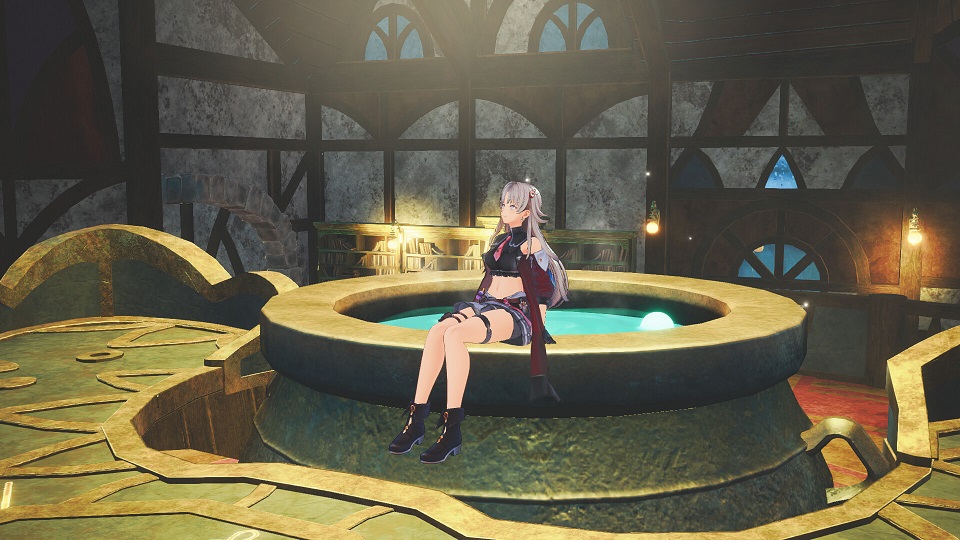
During the Japanese version of June 9’s Nintendo Direct, Koei Tecmo’s Gust studio announced the brand-new RPG Atelier Karia: The Night Kingdom & the Guide of Memories, set to release early 2027.
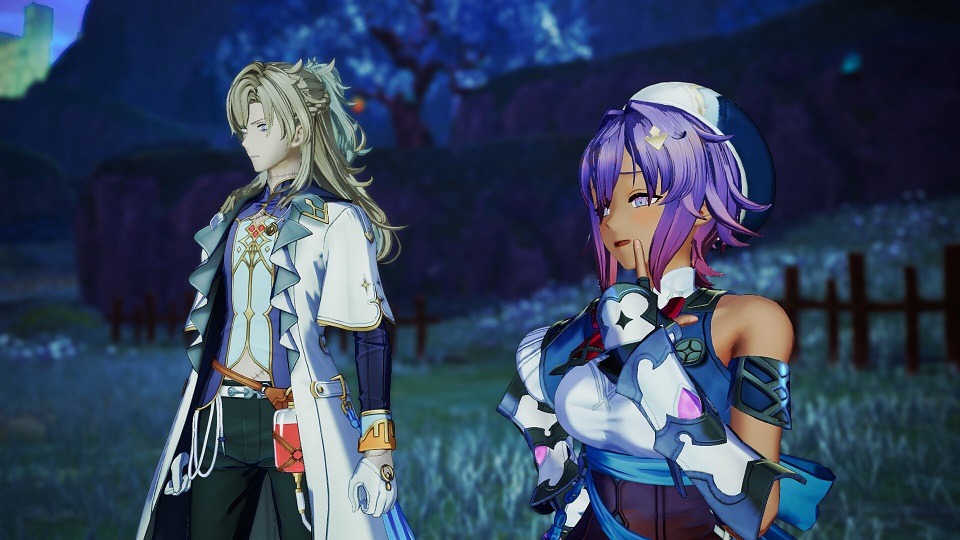
Atelier Karia is the latest mainline entry in the Atelier series, set two years after the events of Atelier Yumia: The Alchemist of Memories & the Envisioned Land. The game follows the story of Karia, an adventurer who has lost her memories and can’t recall anything but her own name. With the land’s mana slowly dwindling away, the continent of Aladiss is faced with a crisis called the Mana Withering. This is when Karia will have her fated encounter with the arts of “alchemy,” and set the new story in motion. While Atelier Karia is positioned as a sequel to Atelier Yumia, it can be played as a standalone title too.
Recently, AUTOMATON had the opportunity to interview Atelier Karia’s producer Junzo Hosoi and director Taiki Fukui, who told us more about the new game and the development process behind it. According to the developers, the new installment addresses many of the performance and gameplay shortcomings of Atelier Yumia, while also building upon it and expanding the Atelier series.
– Could you please introduce yourselves?
Junzo Hosoi (hereafter, Hosoi):
My name is Junzo Hosoi, and I’m the producer of Atelier Karia: The Night Kingdom & the Guide of Memories. As the producer of the Atelier series, I’ve also previously worked on titles like Atelier Lydie & Suelle ~The Alchemists and the Mysterious Paintings~ and Atelier Yumia: The Alchemist of Memories & the Envisioned Land.
Taiki Fukui (hereafter, Fukui):
I’m Taiki Fukui, the director of Atelier Karia: The Night Kingdom & the Guide of Memories. I’ve mainly handled the combat element of the series as the lead planner starting with Atelier Ryza 3: Alchemist of the End & the Secret Key, until Atelier Yumia. This time, however, I’m in charge of designing the core Synthesis mechanics.
– What kind of game is your new title, Atelier Karia: The Night Kingdom & the Guide of Memories.
Fukui:
In Atelier Karia, we centered the game loop around items. Up until now, items created through Synthesis were mainly used for combat. This time, however, items will be helpful not just for combat, but also for exploration, as well as the new “Meals” system. So, synthesized items will have a bigger impact on various in-game elements than ever, shaping the whole adventure before you.

– Yeah, up until now, synthesized items were basically used for combat or deliveries. Could you tell us about the other specific roles will items have?
Fukui:
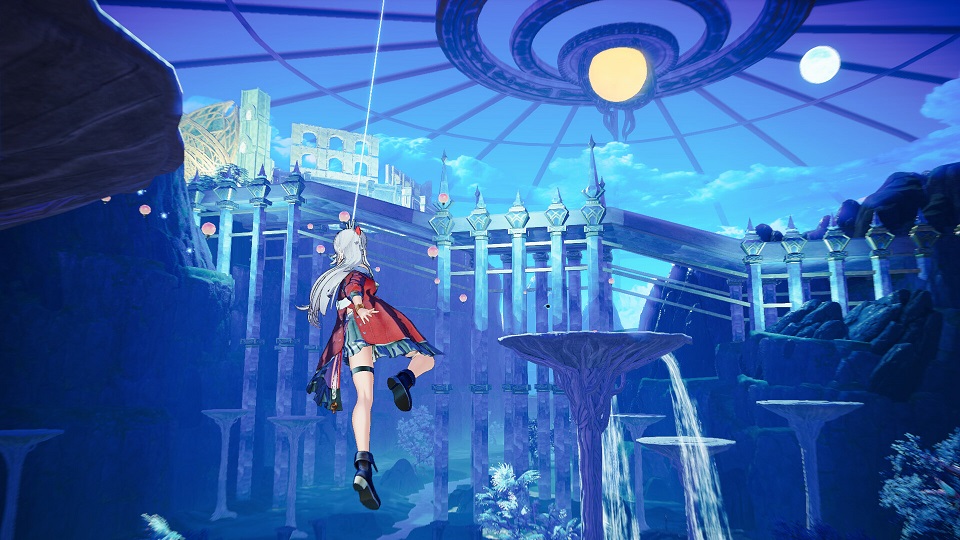
A major difference from previous Atelier games is the use of items during exploration. In the previous installment, Atelier Yumia, the protagonist Yumia used her gun to perform various gimmicks, like flipping switches, but in Atelier Karia, you will be able to throw the Flamme or the Lehrune. This will allow you to play around by triggering elemental reactions, like, for example, using Flamme to light candles, or throwing it into vines blocking your path to burn your way through them.
– How did you come up with the idea to expand the uses of synthesized items?
Hosoi:
We developed Atelier Yumia with the goal of creating an RPG that would be positively received in the global market, and I believe we succeeded to a certain degree. However, Synthesis is a core game mechanic of the Atelier series, and the fact that we gave players the impression that Yumia’s Synthesis system lacked sufficient depth is something we had to reflect upon.
Originally, Synthesis was supposed to be the foundation of the game, with RPG elements built on top of it. However, the RPG elements ended up being too dominant, making it look like they’re overshadowing the importance of Synthesis. I felt like we had room to create a more cohesive experience, where players could enjoy both the RPG gameplay and Atelier’s flagship Synthesis system.
Based on what we’ve learned from that, we primarily focused on elevating the RPG experience to center on Synthesis more than ever before. We aimed for a gaming experience where Synthesis is the starting point for everything. A major point we wanted to improve on from Atelier Yumia was the fact that, while gathered materials could be used for building and Synthesis, and also served to make field exploration more rewarding, they didn’t actually have any direct impact on Synthesis itself.
– Having multiple uses for a single item makes it more valuable, but this also means it could be a pretty frustrating experience if you don’t have an item on you when you actually need it. Have you done anything to prevent these kinds of stressful situations from potentially happening?
Fukui:
In Atelier Karia, we’ve completely removed the “basket” system. In previous Atelier series entries, there were both a basket and a container, and only items kept in the basket could be used during field exploration. However, this time around, we made it so that everything can be handled entirely through the container, eliminating the need to return to the Atelier each time.
– I see, so the inventory you have on hand and the inventory in your base will be merged. That’s quite surprising! I’m happy to hear that this will make it more convenient, though I am a bit sad there will be one less thing to manage.
Hosoi:
That’s right. I do think that the common survival game mechanic where your success largely depends on whether you have a certain item in your inventory is great. However, we determined that it didn’t fit with what we wanted to achieve in this title. We did consider whether removing the basket system would be a good choice in the context of the series, but after much deliberation, we decided to prioritize a smoother gameplay experience.
– By the way, you mentioned that the strengths of the RPG genre and the Atelier series didn’t blend well, and ended up feeling a bit disconnected. Specifically, what happened with Atelier Yumia, the previous installment in the series?
Hosoi:
I think the initial gameplay in Atelier Yumia was relatively good. I feel we were able to offer a new take on the Atelier gameplay experience, distinguishing it from previous titles in the series. However, I think there was room to design it in a way that would allow players to experience new discoveries and play styles as they progressed. Even when it comes to expanding the Synthesis gameplay, we concluded that we could have integrated it more deeply with various other gameplay elements and developed it further towards the latter part of the game.
Fukui:
When it comes to the world itself, moving to a new region does change the visual landscape quite a bit, offering a sense of freshness – but looking back, I realize we should have designed the game so that progressing the story would unlock new elements and expand what players are able to do within it.
Hosoi:
As a result of prioritizing ease of play, we ended up focusing the gameplay too much on simply improving the quality of synthesized items, leaving us with a game design which didn’t allow players to enjoy a wider range of trial-and-error-style gameplay.
– What was the development of Yumia like behind the scenes? It seems like you were quite busy with so many updates and announcements since the demo’s launch.
Hosoi:
Thanks to the players’ feedback and opinions after launch, we managed to identify the problems we needed to address in order to encourage them to stick around playing for longer. We already received tons of feedback when the demo went live, and made adjustments accordingly. However, some improvements related to the overall gameplay experience took a long time to address, which was another area we felt needed improvement going forward.
While players enjoyed the story, we realized we needed to design the game so that right through the very end of it, players could experience the satisfying feeling of the gameplay itself, and the difference in the various playstyles it offered.
– How is Atelier Karia positioned within the series?
Hosoi:
In the original Atelier series, we had duologies and trilogies that share the same world, with a different protagonist appearing in each installment. And with Atelier Ryza, it was the first time we created three games which feature the same protagonist. Atelier Karia follows the former format – there’s going to be a new protagonist, and a new story revolving around her.
– I assume this means it’s similar to previous titles like the Dusk Trilogy or the Mysterious Trilogy?
Hosoi:
Yes. While it’s connected to Atelier Yumia, it’s made so that it can be enjoyed even by those who haven’t played the previous title.
Even when it comes to the lore, there are certain connections. You’ll be visiting the same region, but since the environment has changed due to “mana withering,” the things to do there will be different. So, while the game is set in the same world as Atelier Yumia, it’s not a direct sequel to the story.
– Could you tell us about any new elements in the game, or the issues you’ve improved on since the previous title?
Fukui:
With Atelier Yumia, our goal was to make the exploration feel more rewarding, and I think we succeeded to a certain degree. So, to maintain that in Atelier Karia, we decided to introduce the new mechanic of “eating.” For instance, if you gather edible materials and eat them, you’ll be able to temporarily change your appearance and abilities. Furthermore, you can use those materials to Synthesize new items – and eating those lets you acquire new abilities.
Combat-wise, recently we’ve been prioritizing gameplay that’s highly action-driven, but this time around we’ve also included a system that allows players to choose their preferred playstyle. So, for those who enjoy action, we’ve set up parrying and other mechanics that make the action even more fun. On the other hand, for those who prefer turn-based combat, we’ve prepared a hybrid system which lets you freeze time and carefully select commands from the menu.
– Atelier Yumia had some technical and performance issues, but how did you address those when developing Atelier Karia? The fact that the new game was optimized with the Switch 2 in mind seems like a great move when it comes to resolving bottlenecks, so I’m also curious about how that came along.
Fukui:
We’ve incorporated the know-how and technical expertise we’ve gained from making several in-house titles for the Switch 2, and this includes Atelier Yumia.
Of course, there are still some areas where we are struggling with fine-tuning, but since there’s still time until launch, we’ll continue refining the game and performing optimizations so that the players can fully enjoy it on each of the available platforms.
– We’ve mostly discussed things that needed improvement compared to the previous game, but what are some of the strengths you’ve fostered through Atelier Yumia that you plan to build upon moving forward?
Fukui:
Regarding real-time events, I think we’ve managed to achieve a level of expression that wasn’t possible before, so we’ve further refined them and have been actively incorporating them into the game. What’s more, since Atelier Karia features a vast explorable world with even bigger variations in landscaping, we’ve been able to incorporate huge mechanics that involve both vertical and horizontal movements.
– Lastly, how is the title coming along, and how do you feel about it so far?
Fukui:
We’re currently in the final stages of development. Moving forward, if we continue fine-tuning the balance properly, I’m confident that Atelier Karia will shape up to be a truly entertaining game. We’ll be working hard on development to make sure that the game is in the best possible condition before it reaches the players.
In particular, the Synthesis system has been completely revamped so that effects of produced items vary depending on the material used. This means players can have fun experimenting with different combinations, because even the same item can yield different effects based on its purpose and how the materials are combined.
Hosoi:
Thank you for supporting the Gust brand for all these years. Developing Atelier Karia, we’ve made sure to listen to our players’ feedback, and we intend to push the evolution of the Atelier series even further so that we can deliver an even more mesmerizing gameplay experience. Please look forward to future updates on the game.
– I can’t wait for it! Thank you for your time!
Atelier Karia: The Night Kingdom & the Guide of Memories is set to release in early 2027 for PC (Steam), PlayStation 5, Xbox Series X|S, and Nintendo Switch 2.