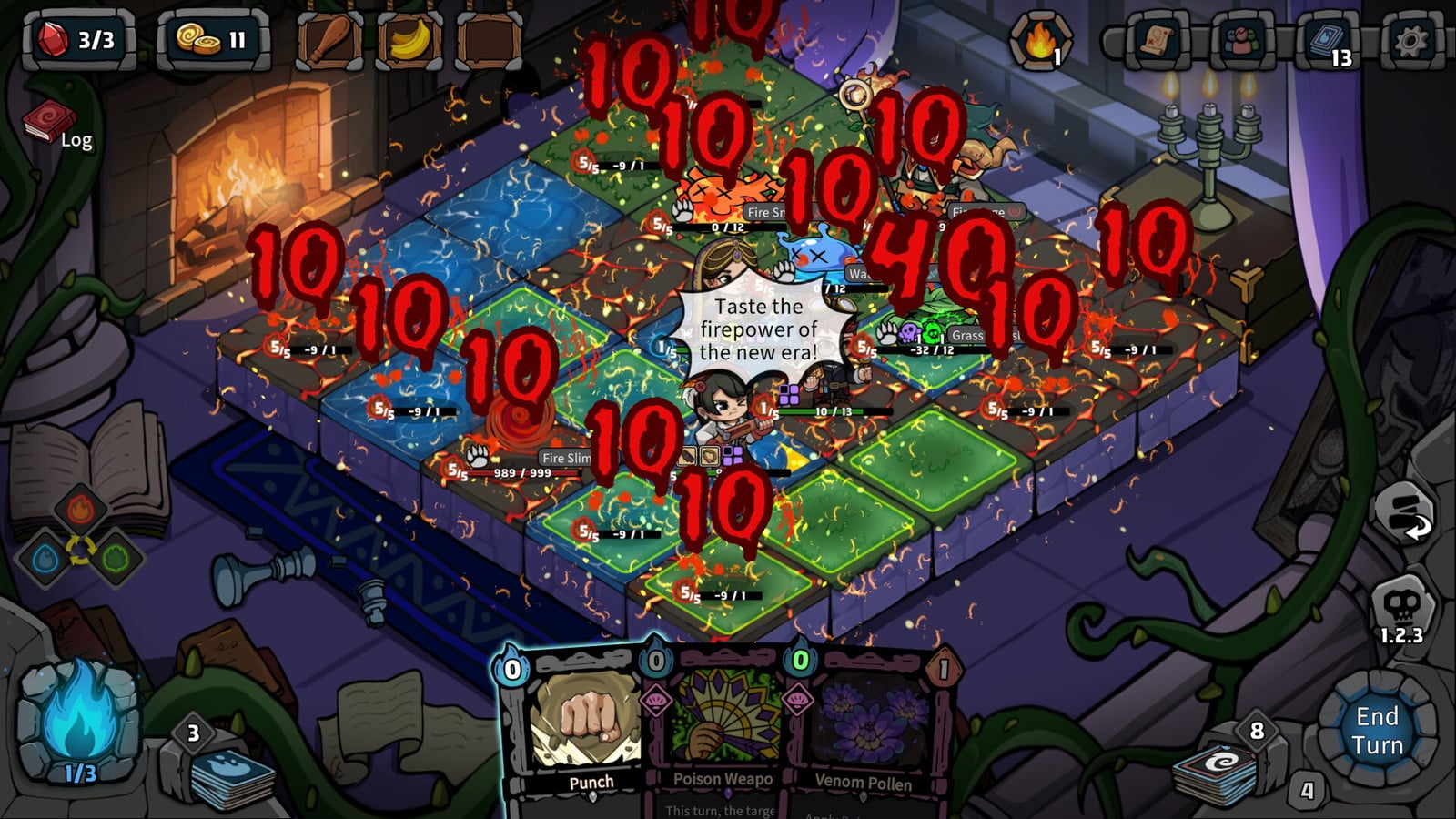
HarrisonWorld released Re:Night for PC (Steam) on August 4. Developed by Seahorse Games, this new title is a deckbuilding, turn-based strategy roguelike where players move characters across a board to defeat enemies.
Looking at the in-game screenshots, Re:Night immediately brings the SRPG genre to mind. With that in mind, we figured we should call in a SRPG expert. We asked Akihiro Togawa, who loves SRPGs and has developed them at Tookyo Games, to play the game for us. What we discovered was that, rather than being a typical SRPG, the title is actually a deck-building game with a highly unique flavor and a strong emphasis on synergy. Below is the article penned directly by Togawa.
I’m Akihiro Togawa, and I currently work at Tookyo Games. I have previously worked at several companies where I developed SRPG titles among other things. Personally, I am a huge fan of SRPGs, and I have played many of the prominent titles in the genre. I absolutely love deck-building games as well. With that background, I was invited by the editorial team to try playing Re:Night. Although this is a sponsored article, I genuinely enjoyed the game itself, so I decided to write about my experience here.
Slay the Spire meets Into the Breach… or so you’d think, but it’s an elemental deck-builder
Re:Night is a “strategy game that fuses tactical simulation with roguelike card deck-building.” To put it simply using existing games, it’s like a cross between Slay the Spire and Into the Breach. While it is indeed a SRPG where you move three units on a map in turn-based combat, it is also a deck-building roguelike where all actions are executed by selecting cards.
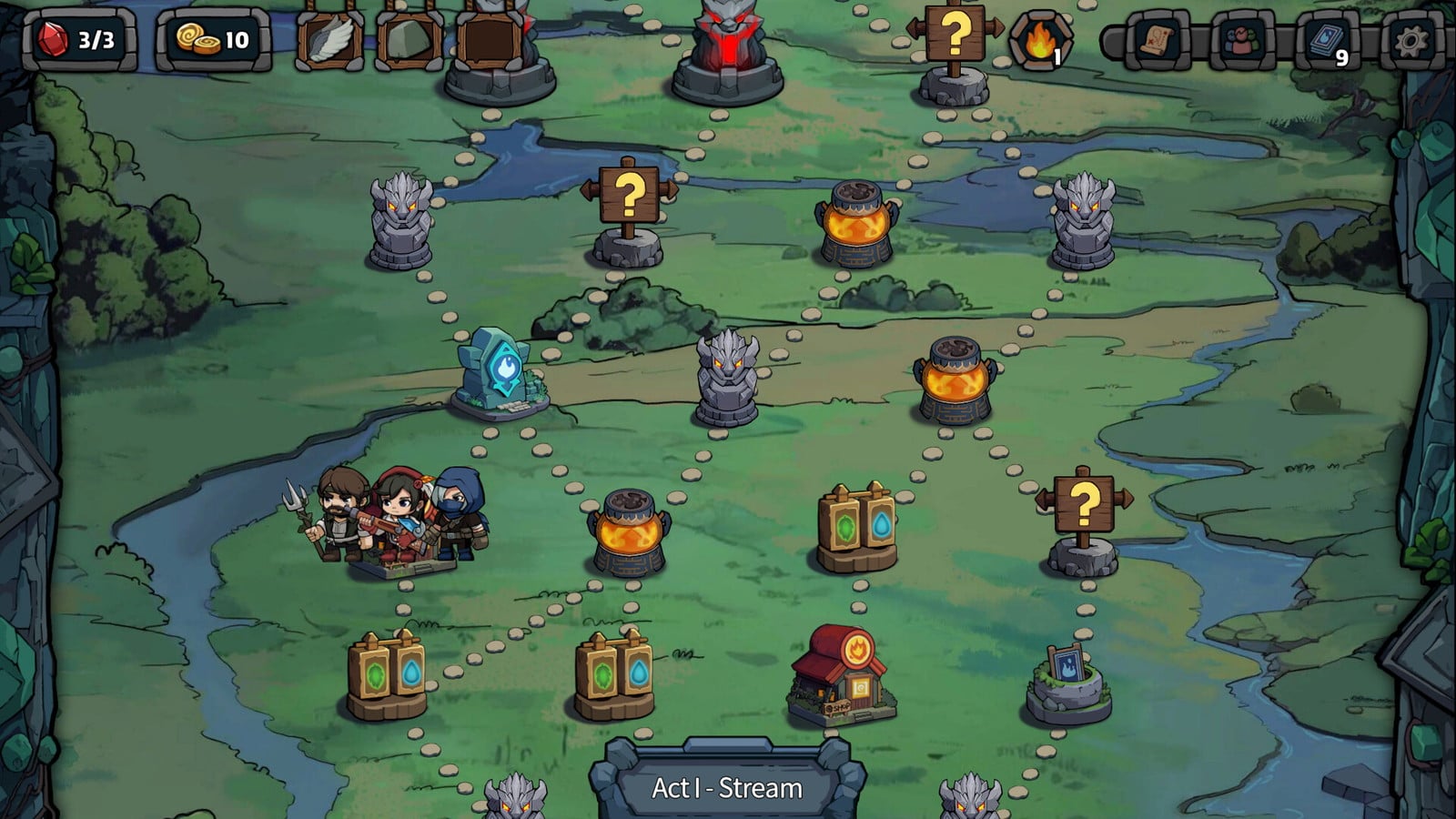
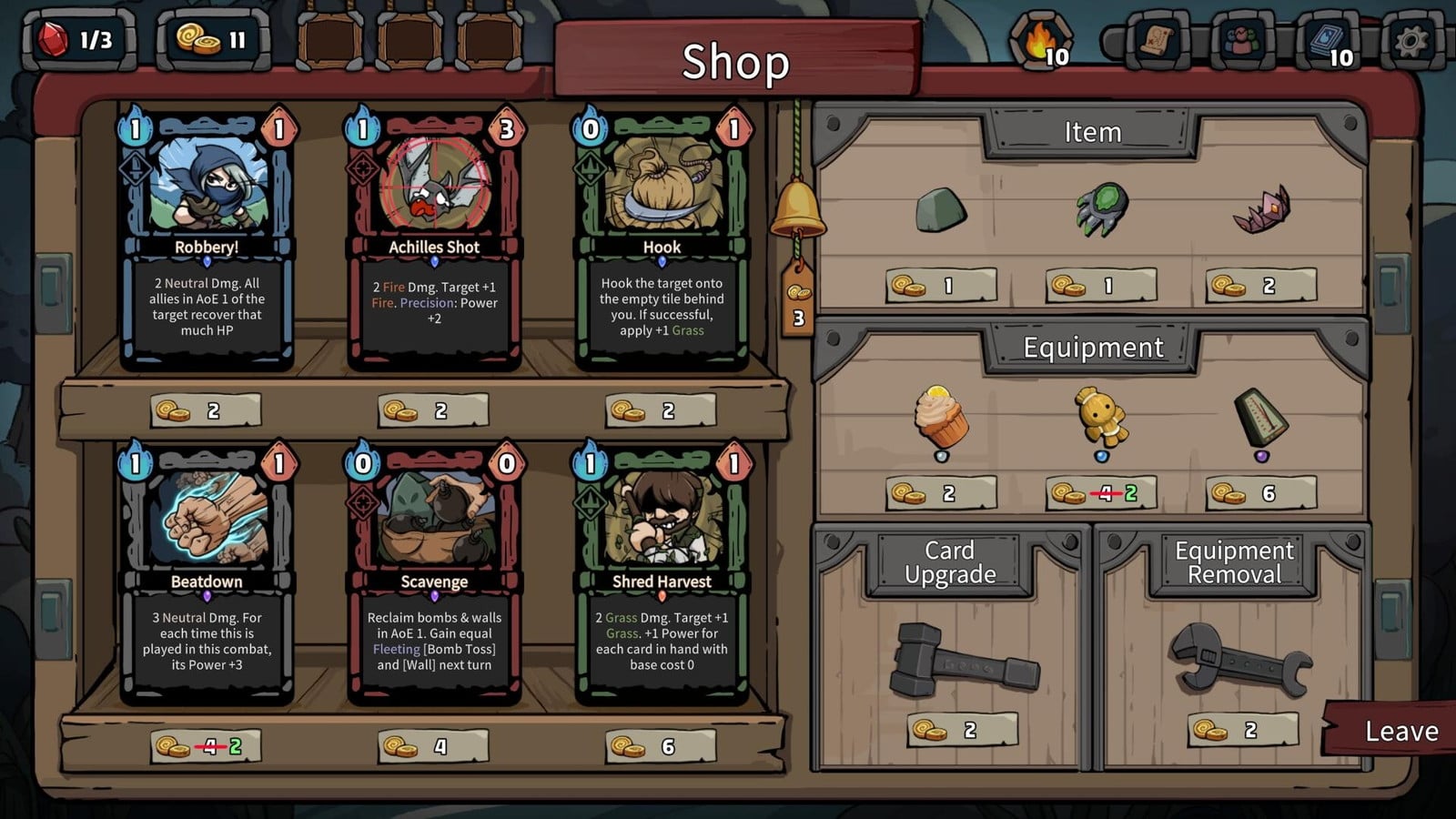
Its basic gameplay loop is quite similar to other deck-building games. Winning a battle rewards you with money, items, and cards, after which a map is presented to you. You then decide your next move: will you jump straight into another battle, alter or upgrade your cards, or challenge a formidable foe known as an “Elite”? The game’s structure requires you to progress while constantly asking yourself which route will maximize your deck’s potential.
Games that combine two genres often end up being overly complex, but the tutorial in this game is incredibly thorough! The UI and keybinds are highly intuitive, so much so that even if you skip all the explanations and just play by feel, you can still execute the moves you want. The design is truly excellent, and I doubt anyone would ever get confused by the controls. (Fellow game developers will understand that assigning keybinds is often a surprisingly agonizing struggle… so the fact that they nailed this aspect really shows how meticulously crafted the game is!)
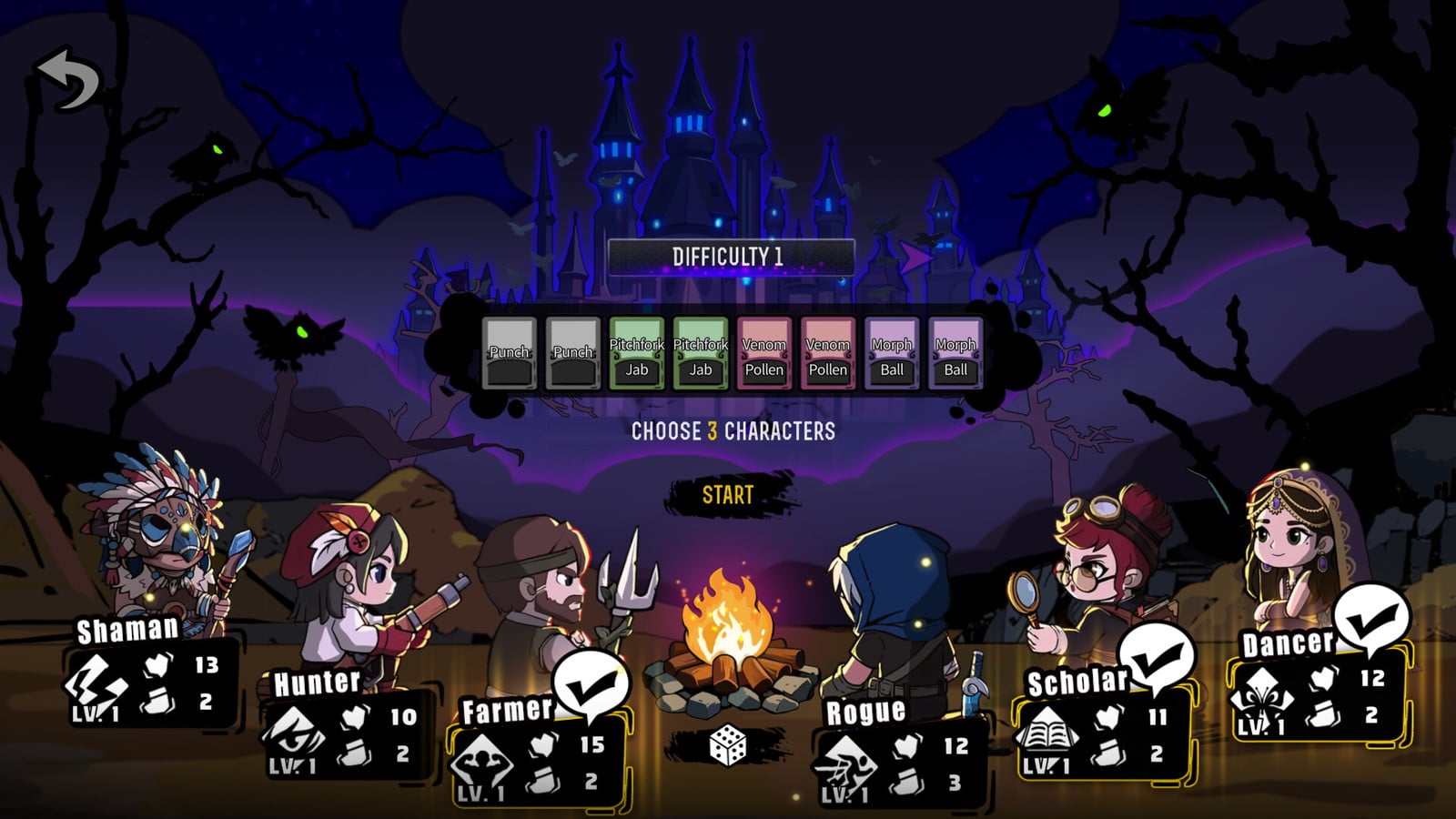
So, where does the challenge in this game actually come from? The answer lies in the fact that you control three characters. Slay the Spire is a game where you manage a single deck for a single character, so you only need to focus on perfecting one synergy. In this title, however, the core mechanics of the deck vary for each character. You have to build and develop three separate decks simultaneously while keeping track of each character’s core concepts and synergies. Deciding which character to upgrade first is quite an agonizing choice…! But as I will explain later, this very dilemma is directly tied to what makes the game so much fun.
Another fundamental element to keep in mind is the elemental system: Grass, Fire, and Water. I suppose the easiest way to explain this is to say it’s just like the starter Pokémon. The type matchups work the exact same way: Water is super effective against Fire, Grass against Water, and Fire against Grass, forming a perfectly balanced rock-paper-scissors triangle.
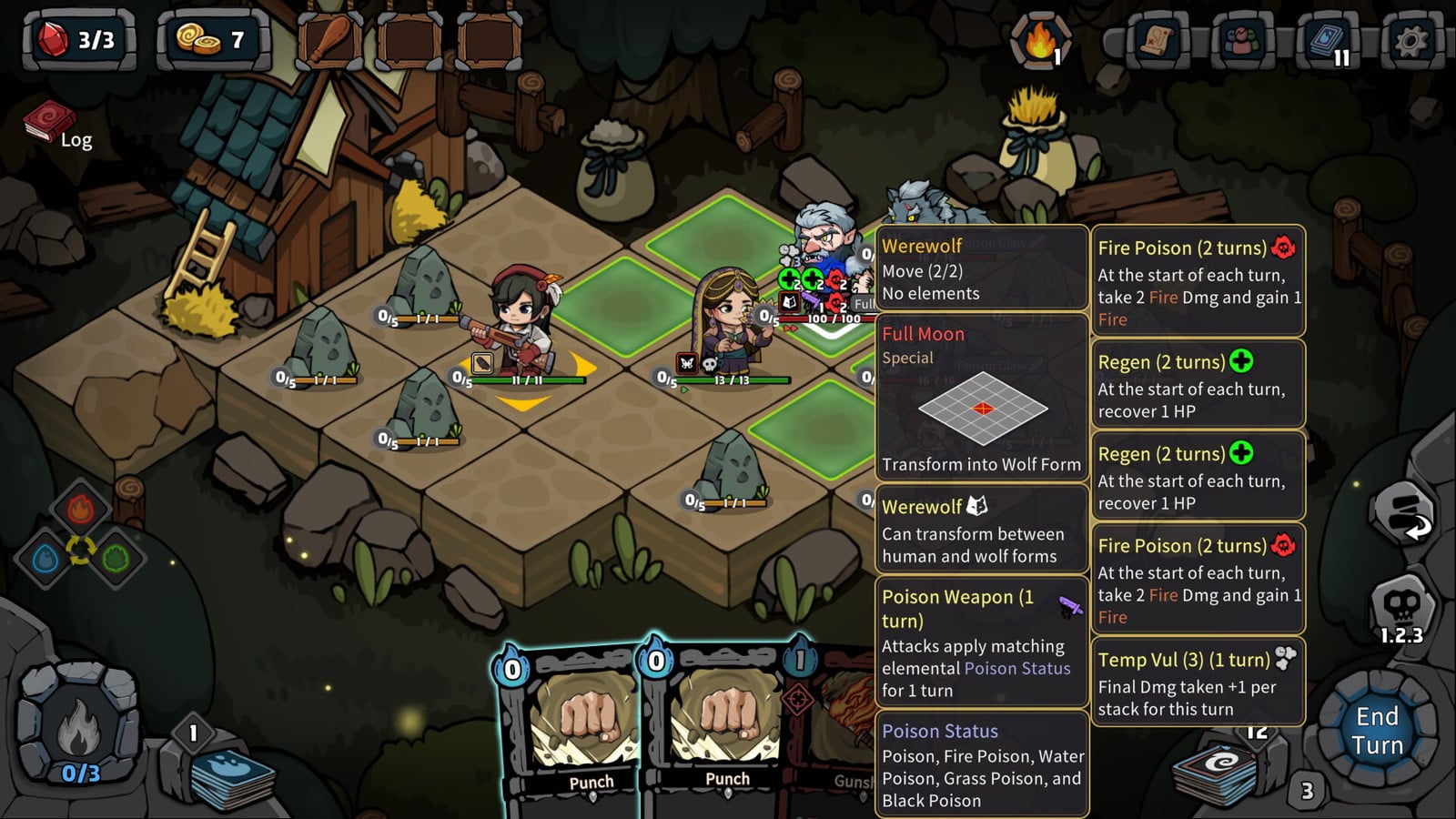
But here is where it gets interesting: if you attack with a Water ability, for example, the enemy becomes afflicted with the Water element. Hitting them with a Grass attack while they are in this state deals double damage and then inflicts them with the Grass element instead. Naturally, if you follow that up with a Fire attack, you deal double damage again and inflict the Fire element! By cycling through attacks of different elements, you can chain these super-effective strikes together. This was the moment I first thought, “Wow, this game feels so satisfying!”
However, this is also where the game gets tricky: elements are strictly tied to specific characters. Just as there are three elements, the characters themselves are clearly divided into a Fire specialist, a Water specialist, and a Grass specialist. There is no such thing as a character dual-wielding two elements like Fire and Water. And since the core system is still a deck-building roguelike, you are constantly faced with tough decisions. Which character’s element should you develop? Do you distribute cards evenly among all three? Or do you pour all your resources into a single character to hyper-focus their synergies?
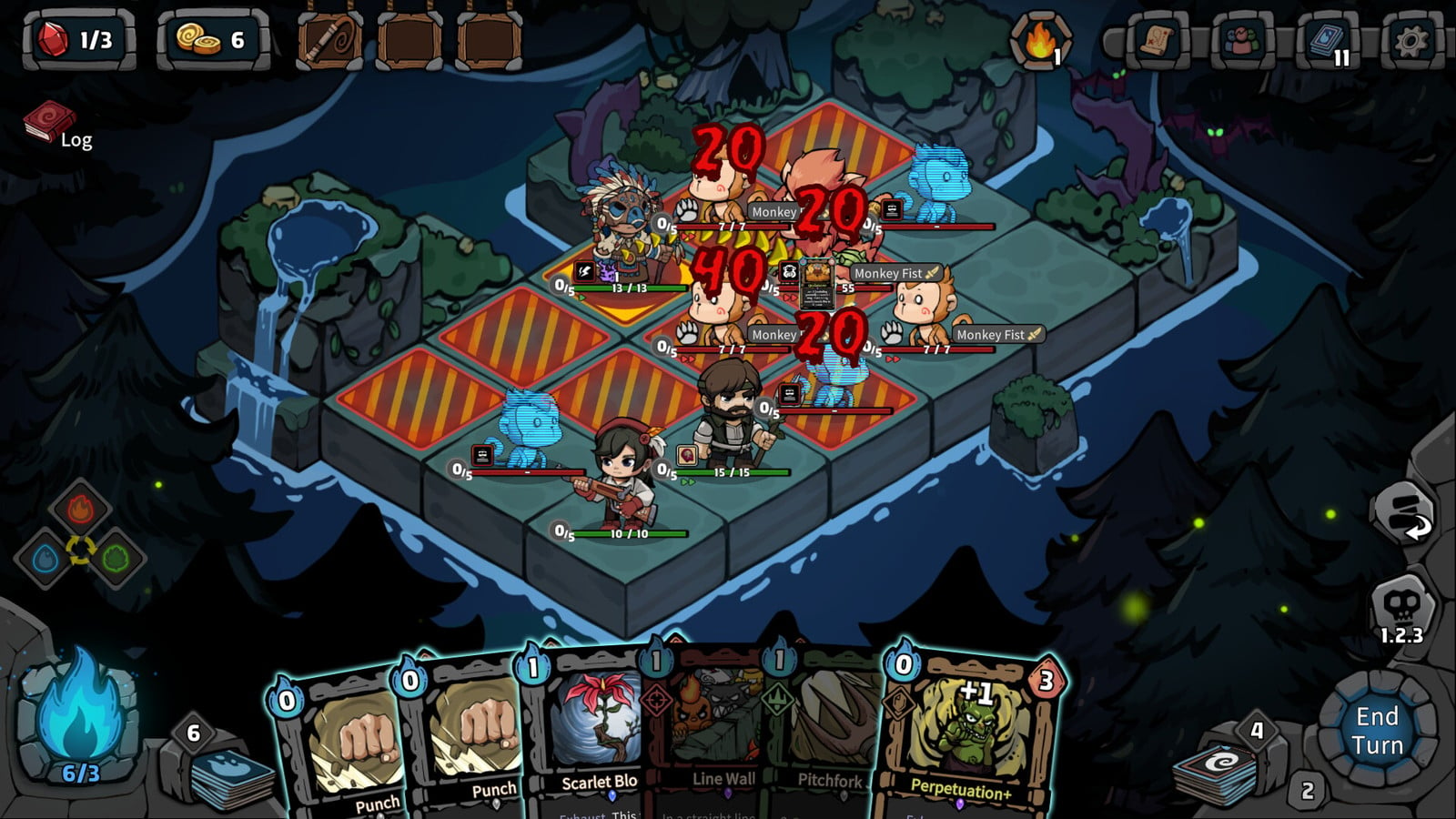
Furthermore, elemental afflictions scale from stages 1 to 5, and if you stack an affliction to stage 5, your damage can skyrocket to a maximum of 6 times the normal amount. For instance, hitting a Water-afflicted enemy with a Grass attack normally deals double damage, but you can intentionally hold off and stack more Water afflictions first, setting up a high-powered Grass card to aim for that massive 6x damage strike. Smashing an enemy with this maximum multiplier feels absolutely incredible! Do you chip away little by little, or bide your time for one devastating blow? Compared to the “stack strength and smash” mechanics in other games, reaching this massive damage takes more steps, requiring genuine strategy in the sequence of your moves during battle. And precisely because it requires strategy, pulling it off gives you a dopamine rush! I strongly felt this was a SRPG-like charm that other deck-building games lack.
Even after four playthroughs, you won’t repeat the same build
What surprised me the most was the staggering variety of cards and synergies in Re:Night. I have played through the game four times so far, and I haven’t ended up with the same build once. Whether during my first three runs with the starting trio of Fire, Water, and Grass, or when using a new character unlocked in subsequent playthroughs (who specializes in poison attacks rather than elemental afflictions), the progression and builds were completely different every time. I think it’s a rewarding game that will take a very long time to get tired of.
Of course, this rewarding nature goes hand-in-hand with the game being quite demanding. Because the core system is a SRPG, runs inherently take time, and I find myself agonizing over my card picks every time. An endless stream of new cards appears, and because the elemental system is so deeply intertwined, it is hard to intuitively grasp a card’s true strength at first glance. This complexity could arguably detract from its casual appeal.
However, pushing past that initial heavy investment leads to those incredible moments where you realize, “Wait, that card I blindly picked is actually completely broken!” There is no denying the sheer excitement that brings. For me, it was a card that applies the Water element directly to the ground tiles themselves. Since it didn’t deal direct damage to enemies, I thought it was weak at first. But before I knew it, it had become a staple in my deck to the point where it seemed I couldn’t beat the boss without it. Accumulating these kinds of discoveries is the true essence of a roguelike, and it is what makes replaying this game so fun!
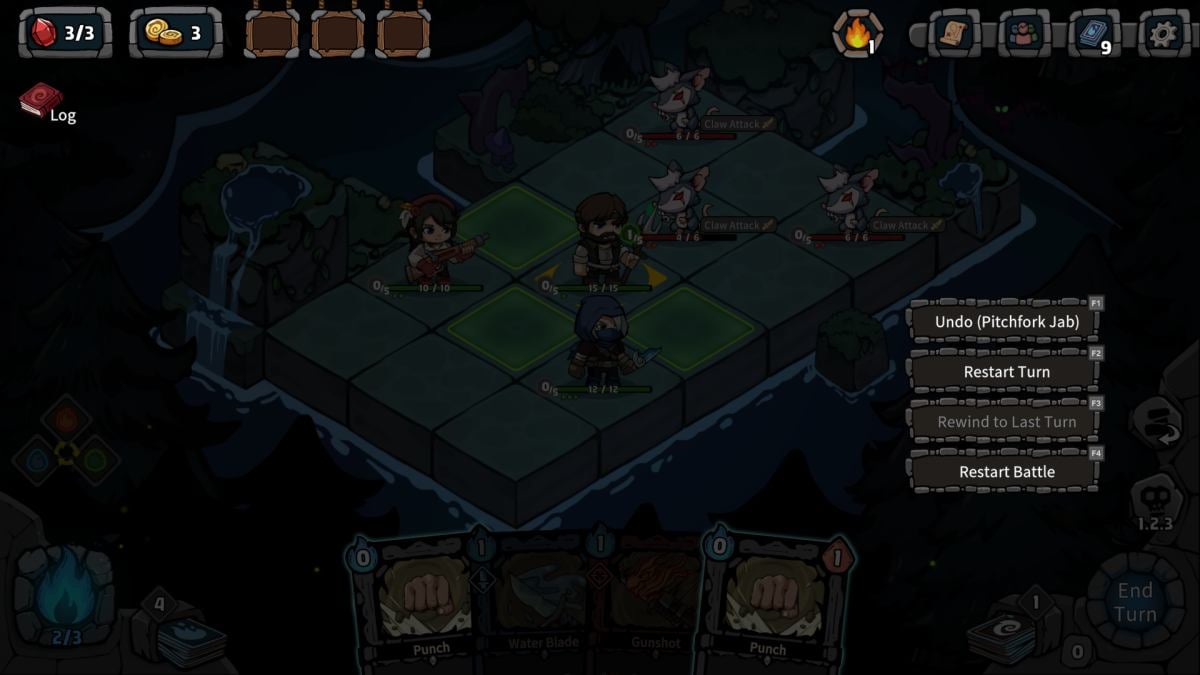
The game is clearly designed with an awareness of this learning curve. During card selection, the game provides a “recommended” icon to guide you, allowing beginners to simply pick those cards and learn how they work through trial and error in battle. On top of that, the game has a robust rewind feature. It allows you to rewind up to four different points: “undo current action,” “start of this turn,” “start of previous turn,” and “start of this battle.” This feature is absolutely fantastic! The moment you realize the optimal way to use a card, you can restart the battle from the beginning, ensuring you can always draw out the maximum potential of your deck. Because you have this safety net, you can approach battles more casually. If the game forced you to live with your mistakes and poor choices, a single misstep would feel overwhelmingly punishing. Thanks to these thoughtful quality-of-life features, you can comfortably enjoy a highly difficult game without the stress.
To be honest, this is a rather demanding game that requires a lot of mental energy. There is a lot to learn, and regarding the difficulty, my entire first playthrough was spent thinking, “I’m probably going to lose this run,” before I managed to clear it by the skin of my teeth. I am someone who has sunk over 1,000 hours into Slay the Spire and played a large amount of SRPGs, yet Re:Night still gave me a run for my money. Because of this, average players might struggle quite a bit until they get the hang of it. However, that is exactly why I believe this is a game that will hook anyone who has thoroughly played either deck-building roguelikes or SRPGs.
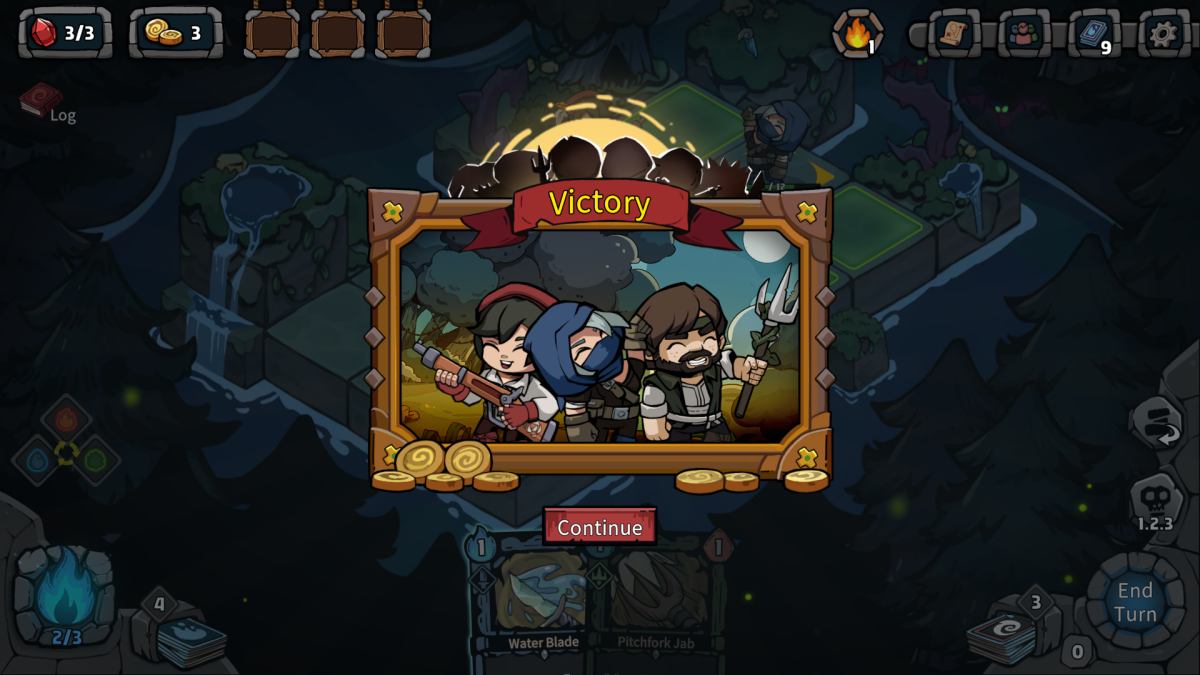
A single playthrough takes about 1.5 to 2 hours. While I think that mastering the mechanics could bring that down to around an hour, the variety of strategic approaches is so vast that even after clearing the game four times, my completion times haven’t shortened by much. Also, while the game does feature SRPG elements, the narrative is only briefly touched upon during the introduction. Beyond that, the storytelling is kept very casual, largely limited to a separate, puzzle-like mode where you can unlock mini-episodes for each character.
Overall, I would highly recommend this game to any gamer! No, seriously, it’s so fun. However, I must warn you: it is an absolute time thief. The moment you think, “I’ll just play a little bit on my break,” several hours will vanish into thin air. Once you overcome that initial learning curve of grasping the deck-specific synergies and the three-element system, an expanse of endless replayability awaits you. If the combination of Slay the Spire and Into the Breach piques your interest, pick this game up, but consider yourself warned!
Re:Night is out now for PC (Steam). Until August 18, the game will be available at a 10% launch discount.