

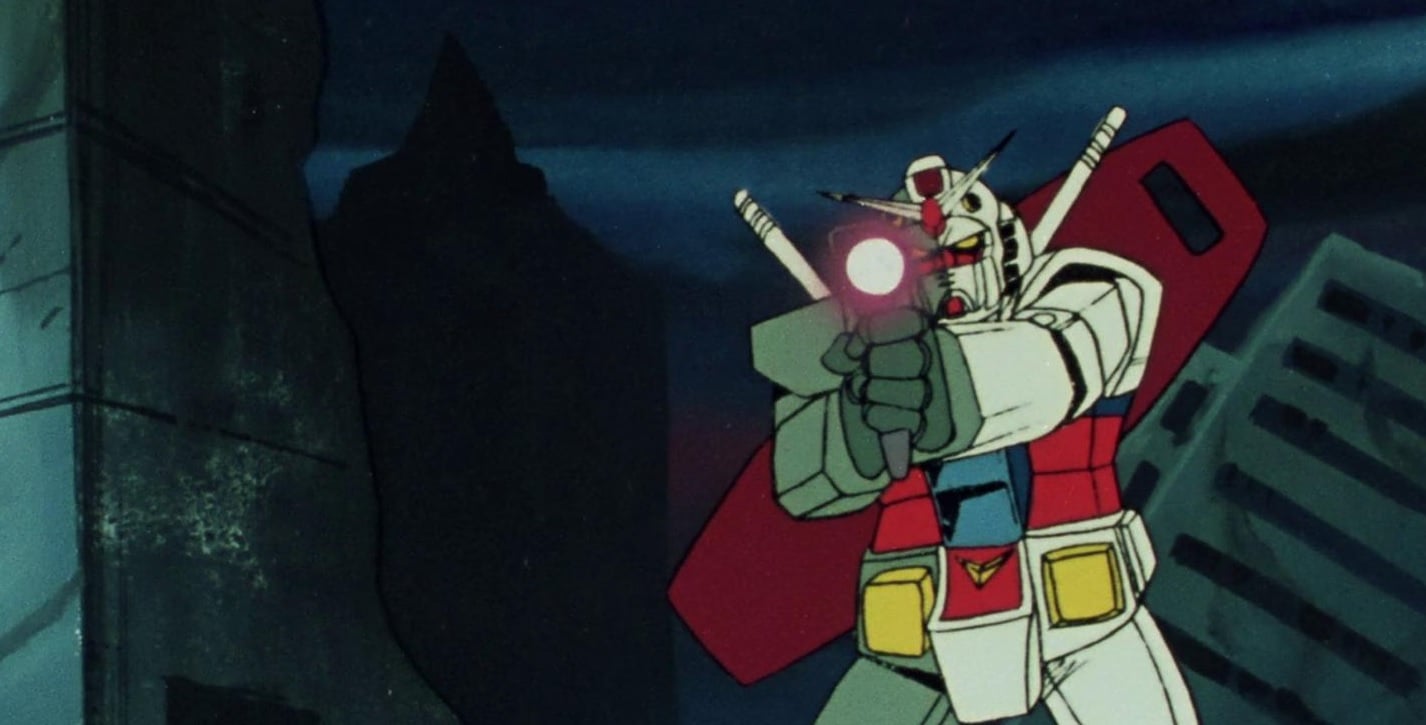
This April, Mobile Suit Gundam series creator Yoshiyuki Tomino received the Order of the Rising Sun (Gold Rays with Neck Ribbon), a prestigious award granted by the Japanese government. In a recent interview commemorating the award, Tomino spoke about his commitment to anime direction, and shared his thoughts on some of the recent trends in the art of film (Kyodo News).
Emphasizing the importance of a director’s role in an anime or a film production, Tomino says that “In the digital age, there are people who just shoot panoramic images without an actual story and just call them ‘movies.’ What I want to say is – that’s not directing.”
The Gundam director suggests that one problem with modern day filmmaking may be the lack of a “sense of wonder.”
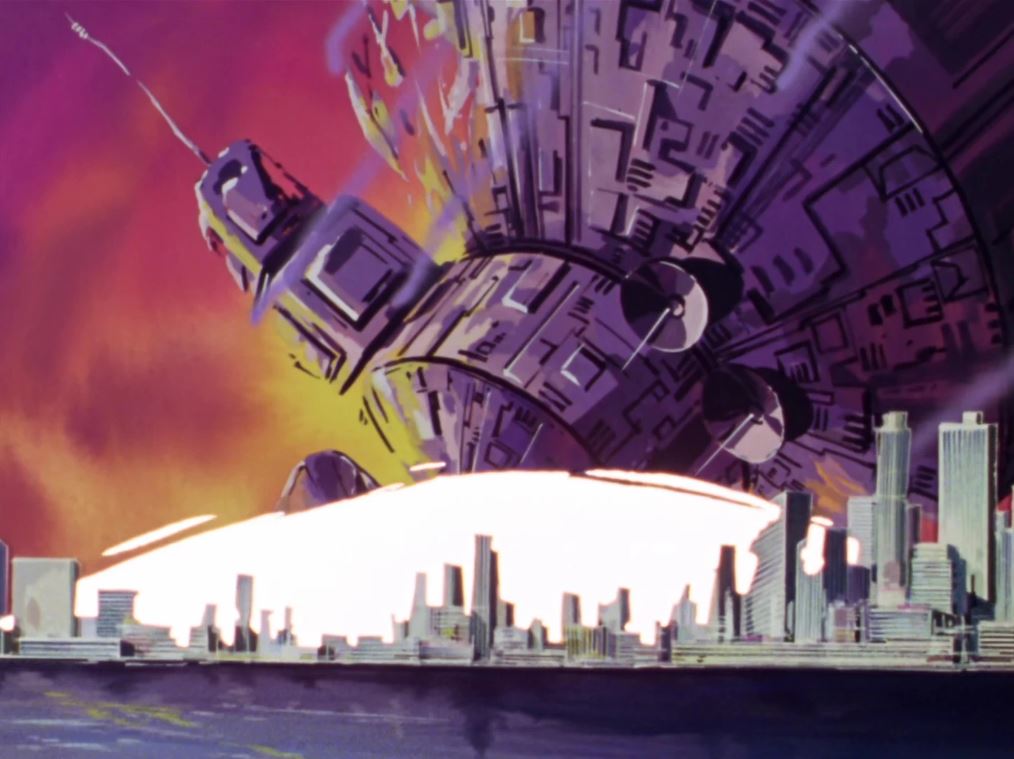
Back in the day, the pursuit of said “sense of wonder” was a major work philosophy among many aspiring film directors and students, he says. For example, after 5 or 6 regular shots, there’d be a shot which encourages the viewer to follow the characters with their eyes. Then, a shot featuring vast background scenery would appear. “The audience gets immersed in the story by searching for the characters within the huge background. That process of searching is where ‘the sense of wonder’ comes from,” Tomino explains.
“But now that digital technologies are so widespread, do films still have the sense of wonder?,” he asks.
Now that technology has evolved to the point that you can create literally anything with it, that leaves little room for the audience to actually be surprised. “CG is quite a convenient tool that lets you copy or move objects freely. However, there are so many anime and films that desperately try to show off the CG simply because they went to the trouble of making it. We’ve forgotten the principles of direction and storytelling that give films their sense of wonder.”
“There’s something that’s been bothering me recently. Images have become too high resolution, so when there’s a close up shot so detailed you can even see the pores on the skin, it makes me think – is it really okay for them to be visible? There are characters whose pores we don’t want to see. Directors have become too reliant on the cameras, which results in films that look like they were made the easy way,” Tomino adds.
When asked about his opinion on generative AI, Tomino said that, while the technology is becoming increasingly convenient, many lack the ability to judge whether it actually suits a drama or not. “I feel like the ‘eye of the director’ really isn’t being exercised these days. In the case of close-ups, you can get such convenient and great shots that the actor only needs to be a little good to carry the scene.”
“There are even films that forget to follow the narrative. What I’m trying to say is, we need to make an effort to depict the process of the dramatic play itself.”
As for Tomino himself, the director is currently working on a brand-new project of his own. Though he’s remained quite secretive about it, he says that if allowed to produce it, he’s confident it will be a masterpiece.
Related articles:
Tomino is a legend for his work on Gundam and a few other things but he really just comes across old man yelling at clouds nowdays.
I also think one things that’s changed is anime is a relatively new genre when he was young, whereas now it’s a much more mature genre since so many stuff has been done. Gundam is a good example, it birthed the real robot subgenre in anime but a real robot work while still can do well and be good.
So of course it’s harder to get that sense of wonder. The great directors still find a way to do it anyways, I mean Miyazaki and Shinkai still do it. Yes there are a lot of repetitive tired works too but that was the case even in his day, the difference is those works are mostly forgotten whereas new ones are still encountered.
Animation standards have improved a lot too and not just because of technology but actual standards of what level of animation is acceptible has changed. This has downsides however including shows being much shorter than in the past despite the number of different shows produced being record highs.
Which isn’t to say there aren’t downsides to the current industry, but it’s not all doom and gloom either.
I would say to not deny him due to his age, even in age and the accumulation of knowledge through failure and success is a thing called Wisdom and I would say people like him have things more right than wrong. It’s not that “Anime is not good these days” or “it’s all a failure” but his viewpoint that Directors might be focusing too heavily on details than focusing on other aspects like his example of “Wonder”. I mean if images or animation look beautiful and only look at beauty but do not focus on other aspects to create a sense of the world or convey feelings, then is it really worth putting in the resources for it? I think that is what he is saying. It’s not all bad, but it is definitely something I think he is critical about because Anime is about contrast even with similarities.
No Tomino is correct and we have serval anime that prove this point in every way sure anime and animation back in the day was not as advanced as it is now but they were able to invoke that wonder he was talking about new advancement in technology hasn’t in any way made people do better with that technology
I do think Tomino is correct, Technology while vastly improved, images, drawings, and everything else is remarkable looking. But without the sense of being able to elicit feelings from such works, then it’s just beautiful images with details and nothing that can convey a sense of wonder, scope, and being able to create a worldview, it becomes sterile, generic and boring in of itself. Nobody is saying to make current works like the past, but I think quality alone can not create great works either. It needs the artists sensibility within those works.
I somewhat agree with him there
I get what he’s saying, and yeah maybe too many are relying on CGI/AI to create beautiful landscapes and shie them off while it’s not really contributing to the story. But that’s all his opinion and he comes froma much older generation.DBZ used to do sweeping shots of the landscape and there typically was no dialog accompanying it. Except in the English dubbed. They never served a purpose that I could tell. So his argument doesn’t really hold up IMO.
The first thing that came to mind when thinking of what examples Tomino might be talking about was Netflix’s Requiem of Vengeance. That one was largely panned for good reason and I think he did not feel good that the Gundam name was attached to this work. Come to think of it, a number of the recent anime, including Gundam, makes use of CGI with largely forgettable results which may explain the reason for his statement.
How bizarre to blame his age when he’s been in the field possibly longer than you’ve been alive. A field cam either be mature or become stagnant, which majority of anime is and many creators talk about. The reliance on technology can be seen in Gundam with it’s reliance on CG. They aren’t great directed shots, just following the action. Gundam Thunderbolt had more of the classic feel as it didn’t use clearly computer generated machines.
The quality and knowledge of the directors matter as well, knowing more than just anime or style. Many older creators had other interests they pulled from precisely because the field was new and created stories from that where now, most only know how to base stories and characters in tropes, archetypes.
I think he’s completely correct. Even in films I keep seeing a noticeable lack of visual storytelling. A lot of newer directors just don’t use it at all, focusing on hype or beautiful shot that have no narrative weight. Leaving the whole thing weaker and forgettable. Anime definitely also has this problem.
In other words, Mr. Tomino is saying newer animes suck and I agree. I don’t even watch the new stuff out but everyone else seems to like it. They don’t make em like YuYu Hakusho or Gundam anymore.
He’s absolutely right. And for people to disregard his statements cause of age shows the problems with our society. We used to value wisdom like his and now the young just shit on it because of new age arrogance. I suggest veering away from narrow minded assumptions and taking what he’s saying like grains of gold, cause it just might improve our future projects. Not to mention ferment a more mature understanding of taste. We have a lot to learn from old Anime and their creators. Not least of which is, as he says in this interview, the fundamentals of storytelling and filmmaking. Two things that have been lost in the last decade or so to a MAJOR degree.
There are two things that he almost touches on but that I think would communicate his point a little more specifically: one is that the great cinema epics balance intimacy with grand vistas. They punctuate tight, emotional closeups and well-crafted character moments with breathtaking wide shots. The other thing is how they depict scale, juxtaposing characters from a distance inside of those vistas to show just how earth-shakingly grand this world really is. And something I would add is that in live action cinema, directors have come to rely too much on shallow depth of field, when all of the great directors in history used deep focus to do “in-camera editing”, where in one uncut shot, with the use of blocking and dramatic direction, you can draw the viewer’s eye around the screen and tell a story with very few cuts. This is the hardest way to make films because you can’t hide behind flashy editing, everything must be carefully planned out, timed and orchestrated.