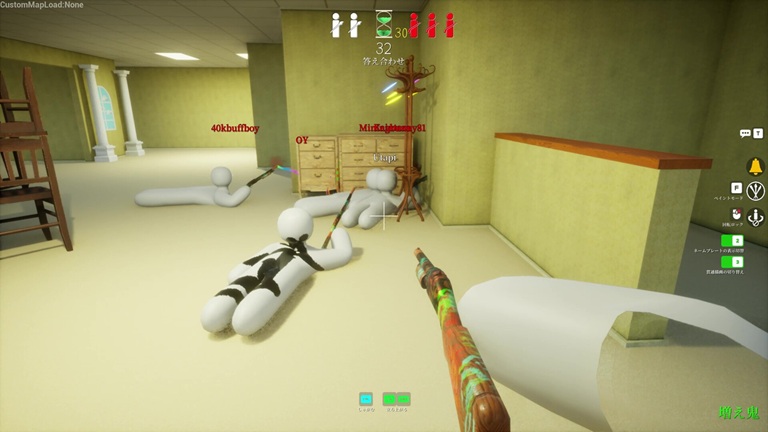
Viral hide-and-seek multiplayer game Meccha Chameleon continues to set new records, and on June 26, it rocketed past its milestone of 10 million copies sold on Steam. The game’s success came as a surprise even to the codevelopers, Lemorion and Haganeiro as, according to them, it only took a few months to cobble together, with zero spending on ads or servers.
In an X post shortly after the game’s release, co-developer Haganeiro revealed that Meccha Chameleon “only took 2 months.” Counting the time it took to make the components that were reused from the studio’s previous projects, the total dev time would only clock in at about 4~5 months.
In an interview with GameWith, the cocreators discussed how they managed to make a game on such short notice, and their development philosophy of starting small and then building upon it afterward.
Lemorion explained the secret to the short production period and frequent updates is in development flow. First, they create the whole game with bare minimum systems and graphics, just enough to be playable, adding on various elements until they end up with a product they find satisfactory. “We found that creating the entire thing first allows us to hit the finish line more efficiently, and the reassurance that ‘at worst, we can still release this as is’ to be a great motivator”, he says.
As Haganeiro explained in an X post, they started to code the game’s systems while Lemorion began modelling the maps and assets only one day after they created the concept for the game. “Basically, we were developing by testing as we go, adjusting the game on the fly to make it into a proper game,” they say.
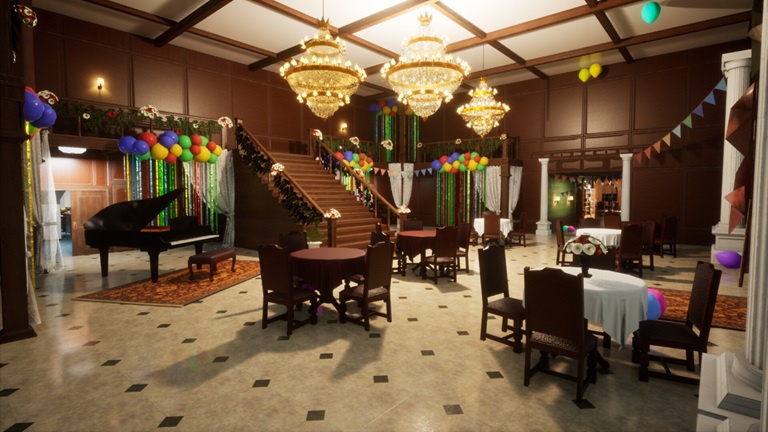
Asset reuse was also mentioned as a way to cut costs, as Lemorion also revealed that back-end systems were lifted straight from the studio’s previous works, such as Penguin Hotel and LINK Penguins. When asked conversely what part of the game he put the most time and effort into over the course of development, he explained how the Hide-and-Seek Mansion map took the cake. The entire process of modeling and designing the locale took an entire month out of the game’s two-months dev time. Lemorion added that the last-minute playtests mentioned the lack of variety in playable maps, resulting in the co-developers cranking out three brand-new maps only two weeks away from the game’s release.
Much like other multiplayer games that require an online connection, Meccha Chameleon utilizes Epic Online Services (EOS) for matchmaking purposes, allowing the studio to host the game without spending a single dime.
The developer concluded that they plan to implement more updates to Meccha Chameleon for the foreseeable future. They also plan on going back to their previous penguin-themed installments, hinting that Penguin Hotel Chapter 3 is in the works.
Meccha Chameleon is available for Windows (Steam).