Do you make the tree fade or show the character’s silhouette? Game developers discuss best way to depict foreground objects
Game developers on X discuss one of the often overlooked challenges of game design: how to depict characters behind foreground objects.
“Your player just walked behind a tree. What do you do?” Recently, a post asking this very question has been making rounds on X, with both gamers and developers chiming in to discuss subtle game design details that tend to go unnoticed.
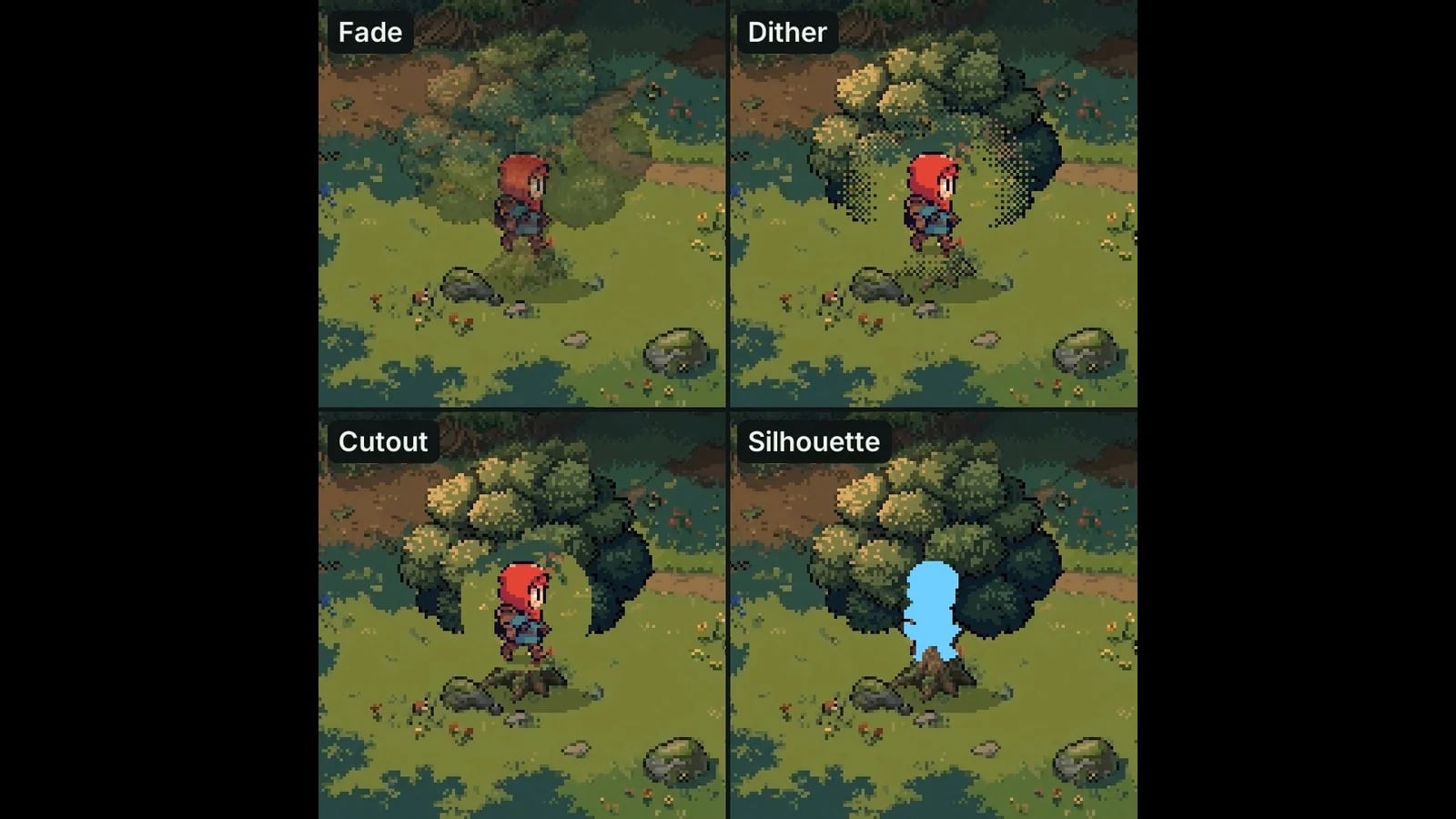
Published on November 12 by X user Kimo, the post asks what the best way is to depict a character when they are walking behind a tree. The different options they present include “Fade”, which makes the whole foreground object (tree) become semi-transparent, “Dither,” which applies a transparent checkerboard-like pattern around the character, “Cutout,” which cuts out a hard hole around the character, and “Silhouette,” which places the character’s opaque silhouette on top of the object. The post has garnered over 2.3k replies in the past few days, as people discuss which of the four options they like the best.
While the comment sections featured a variety of opinions, overall, it seems that a large portion of users – from gamers to developers – prefer the “Fade” option, as it feels the most natural and intuitive. Furthermore, some of them argued that it’s fair to the players for the foreground object to become transparent, in case an enemy is using it to ambush, or there’s a treasure chest hidden behind it. The reason why the “Fade” approach is so popular is likely because it makes it easier to keep track of the controller character. To give an example, the slow-life farming simulator Stardew Valley is one game which adopts this method.

Apparently, the costs of implementing each of the techniques also vary. 3D Hito, a technical and CG artist based in Japan, commented that even in 3D game development, rendering characters when they pass behind objects is often a challenge. According to them, the “Silhouette” method seems to be the most effective one in terms of implementation costs and rendering, however, they often end up settling for “Fade” or “Dither” themselves, likely due to the aforementioned intuitiveness.
That being said, there were also opinions that it ultimately depends on the situation. In case of nighttime scenes and dark, hard-to-see environments typical of horror games, some suggest that using “Cutout” to make a clear outline, or “Silhouette” to emphasize the character, improves visibility. There were also suggestions that in games with stealth mechanics, displaying the character as a silhouette is more fitting for the genre, compared making the objects see-through.
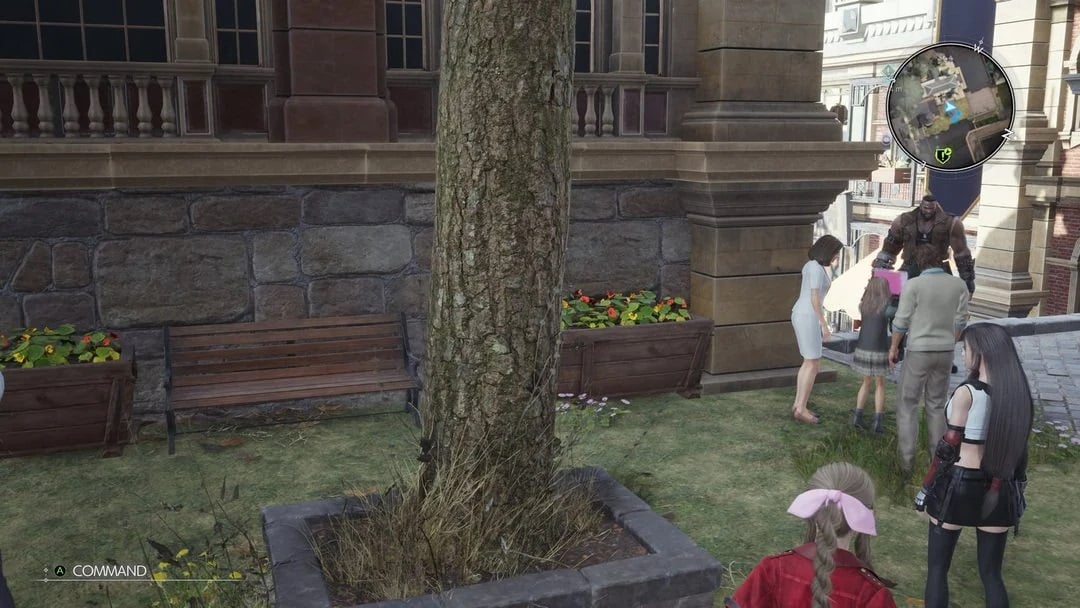
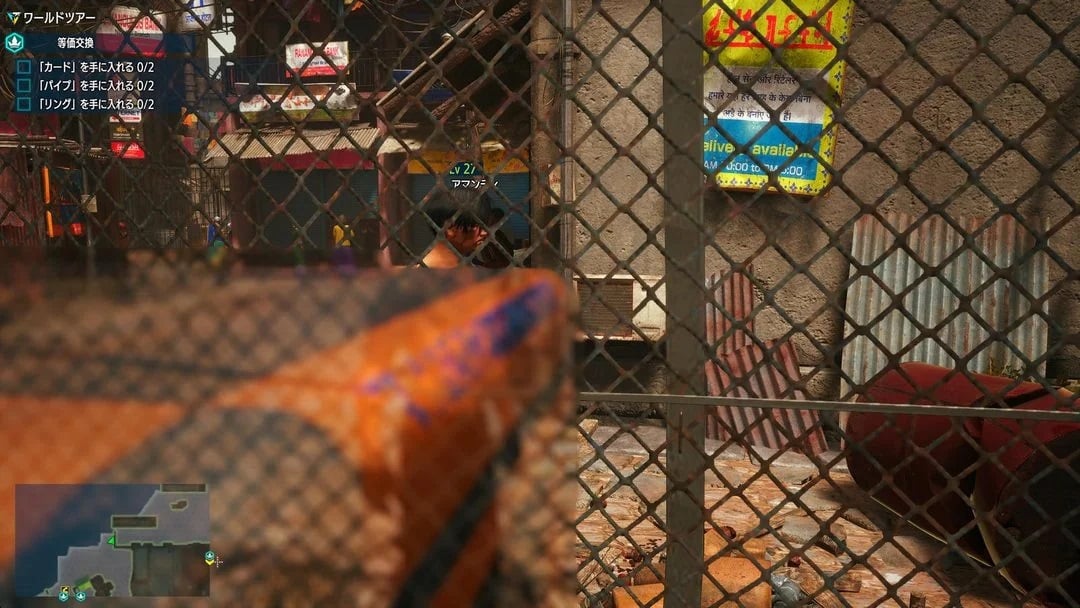
Interestingly, some even posed the question of whether it’s even necessary to show the character standing behind a tree in the first place. If you think about it, not being able to see a character when they stand behind the tree could be the most intuitive design choice. That could be one valid approach provided that it doesn’t hinder gameplay. However, the appropriate approach ultimately depends on the game’s art style, and whether it is expressed in 2D or 3D graphics.
For example, in Final Fantasy VII Rebirth, which I’ve recently been playing, objects weren’t transparent at all. The Street Fighter 6 World Tour mode uses the “Fade” technique, while Final Fantasy Resonance opts for a subtle grey “Silhouette” effect. Even among hit titles, approaches to handling foreground objects vary from case to case.
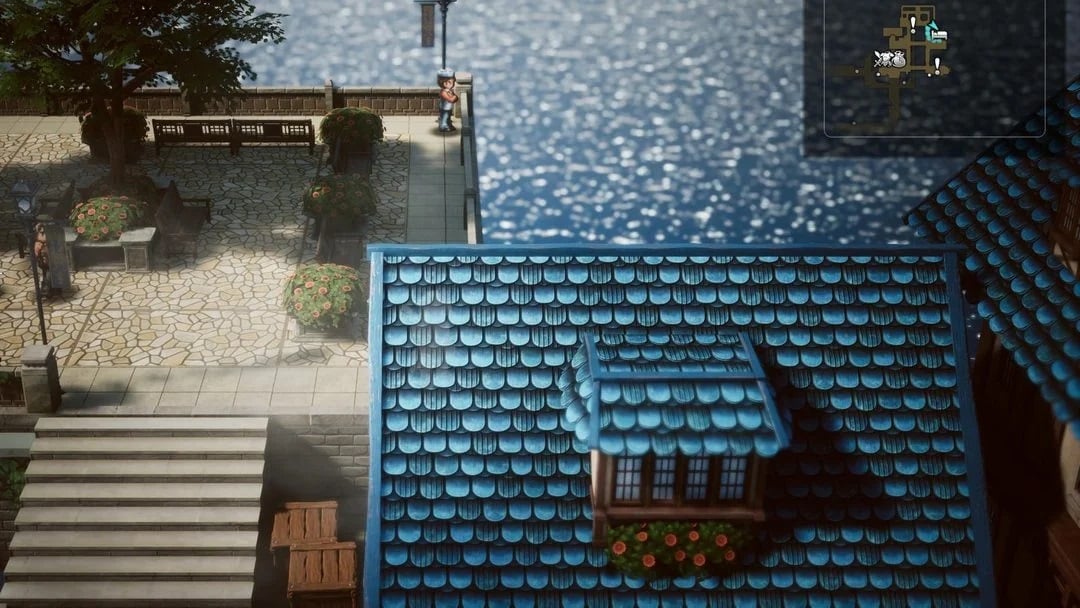
While these kinds of design choices tend to be overlooked, as they don’t make crucial impact on gameplay per se, spotting and appreciating all the little touches that developers have put into a game can be a unique way to enjoy it.

Genki Hashimoto
Articles: 5Related Posts