


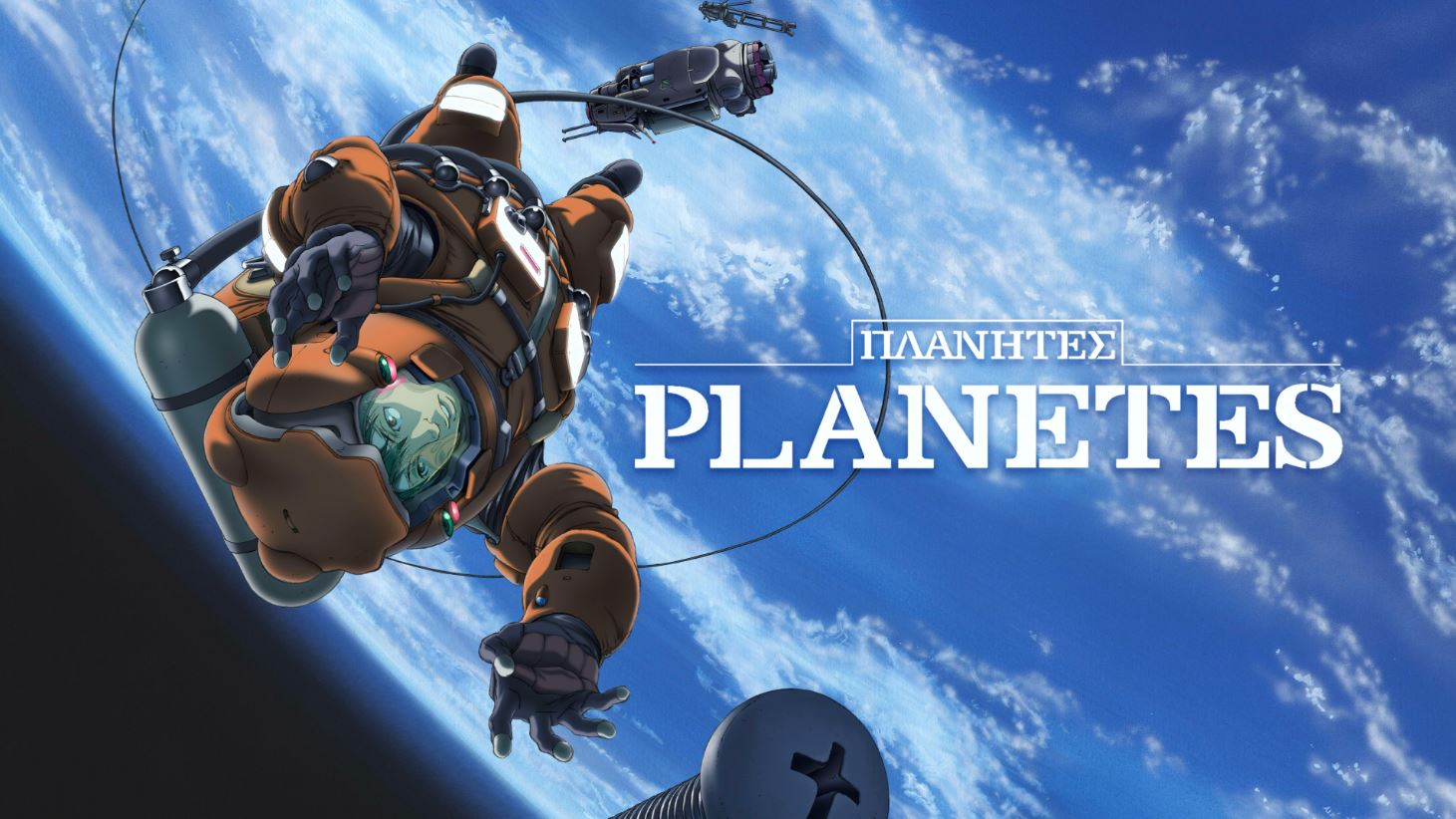
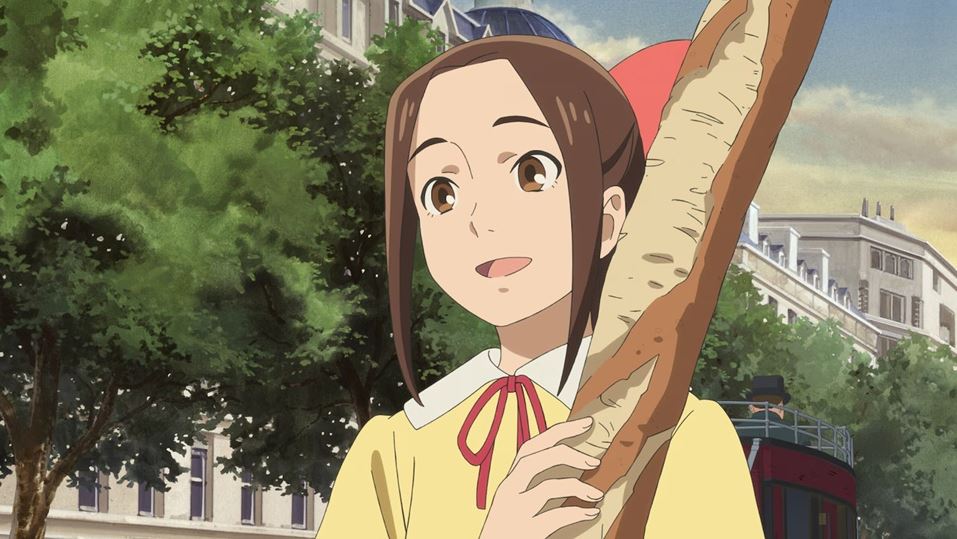
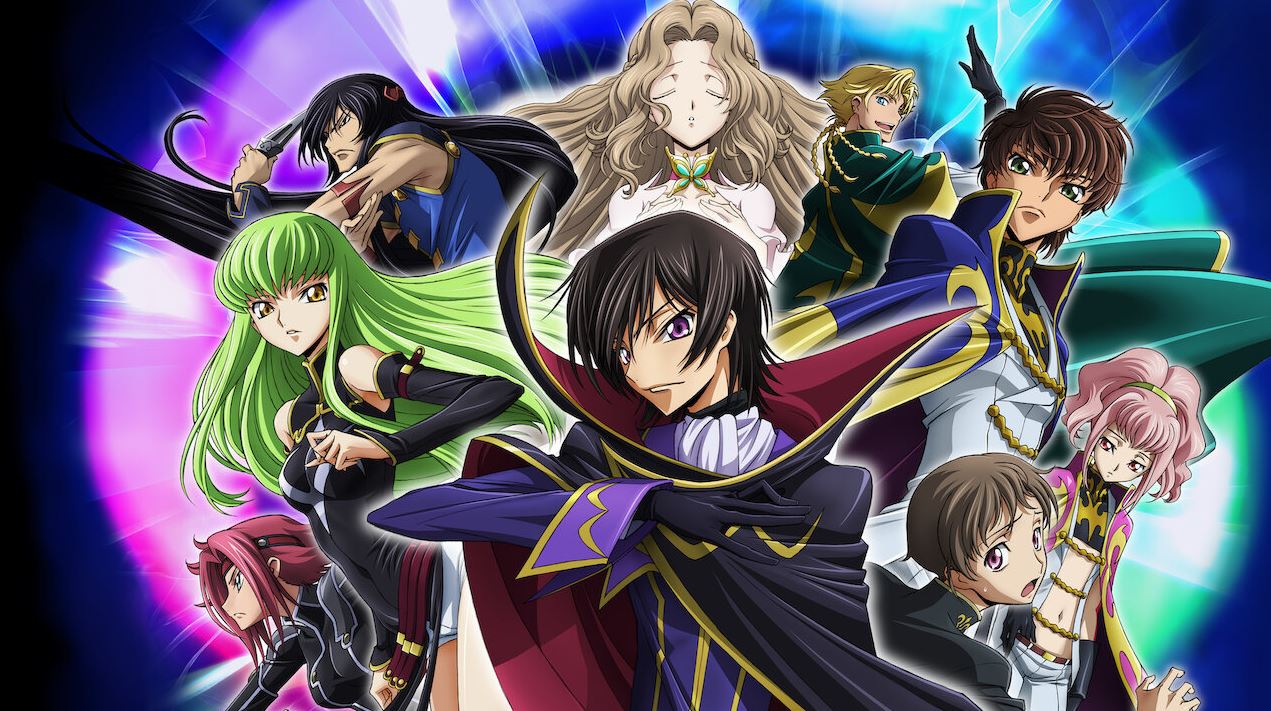
Japanese anime director Goro Taniguchi – known for directing the Code Geass: Lelouch of the Rebellion series, Planetes, One Piece Film: Red, and Paris ni Saku Étoile – recently shared his thoughts on the evolution of anime and where he believes the medium is headed over the next decade.
Speaking at a university lecture reported by Bunshun Online, Taniguchi traced anime’s origins from the 1960s to the present day, breaking its history down into eight stages. Of note, he discussed how recent shifts in Japanese society have transformed anime in terms of creative expression and how its produced.
According to Taniguchi, anime first became a true “industry” during the era of Astro Boy in the 1960s. Since then, it has passed through several phases of evolution, eventually arriving at what he describes as the seventh (current) stage of anime history.
Looking back on the rise of the internet and anonymous online communities such as 2channel (the Japanese equivalent of 4chan), Taniguchi noted that “unprecedented levels of malice” started flowing into production environments during this stage, placing increasing pressure on creators. However, he argues that one of the industry’s greatest current challenges is the emergence of what sociologist Toshio Okada has called a “white society” in Japan.
Note that this term does not carry any racial implications, but rather refers to a highly transparent and “sanitized” society shaped by the proliferation of smartphones and social media. The theory proposes that, with Japanese society becoming more peaceful and interconnected, behaviors seen as aggressive, disruptive, or unconventional become increasingly discouraged, while (surface-level) social harmony and cleanliness are prioritized.
“I see this ‘white society’ as a phenomenon where all Japanese people are, in a way, becoming more like Kyoto residents,” Taniguchi explained, referencing a well-known Japanese stereotype about Kyoto people being extremely roundabout in communicating negative sentiments, prioritizing decorum. “Let’s not do anything unusual, let’s read the room, avoid open confrontation, and show respect to the people sharing the same space.” Interestingly, the director points out that many protagonists in recent ‘narou-kei‘ (isekai-style) stories fit this pattern. Coincidentally big publishers like Kadokawa have acknowledged they’ve been relying too much on this genre as of late.
Taniguchi believes this “sanitization” of Japanese society has affected not only anime’s themes and characters, but also the structure of production. The proliferation of one-cour anime series (12 to 13 episodes) helped mature the industry’s production committee system, but at the same time, it weakened the traditional model of apprentice animators learning from their masters, paralyzing the process of nurturing new talent. He also argued that the growing influence of original authors (i.e., the manga or light novel authors behind anime adaptations) and rights holders over anime has complicated the role of anime directors, making it increasingly difficult for productions to establish any clear creative direction.
According to Taniguchi, producers increasingly favor staff members who are easy to manage and who can reproduce source material at an acceptable level without introducing strong creative ideas of their own. As a result, the more ambitious creators gradually find themselves receiving less work, and eventually even leave the industry, he says.
Taniguchi characterizes the current period of anime evolution as an era of “prioritizing profits at the expense of creative vision.”
Looking ahead, he described the eighth stage of the medium’s evolution as the next decade of anime. While Japanese animation has now successfully spread across the globe, with overseas audiences and creators increasingly appreciating the classics of Japanese animation, Taniguchi believes that at the same time, this could cause Japan to lose its competitive edge. He compares it to the massive outflow of Japanese woodblock prints and other artwork to Europe during the mid-19th and 20th centuries.
He warns that if the domestic anime market continues to focus on short-term profits and rapidly consumable content aimed at casual fans, Japan could struggle to compete against the speed of production seen in China and South Korea.
Despite these concerns though, Taniguchi ended on an optimistic note, believing that anime’s future remains secure because of humanity’s inherent need for stories. “As long as people remain people, they will always need stories. Stories broaden our understanding of people and the world, they allow us to experience emotions and choices vicariously, find meaning in events, enjoy excitement and suspense, ease loneliness, connect with others, and pass on experiences and wisdom from the past. Anime is capable of covering all of these things.”

I’m glad that someone in the industry has actually acknowledged the flaws in the standardized model of one cour anime. While it’s not a bad model and is beneficial to some series, it’s also not free of flaw and can hinder some series even. Ultimately it’s just an issue of putting all of our eggs into one basket and thinking there won’t be any repercussions for doing so because it’s the trend 🤔
And it’s more concerning if only Taniguchi who raised this kind of issue. Anime industry has too much focused on making fluid animation and a bunch of impactful sakuga, until they forget how to write the story and pace it properly without being feel rushed. Not to mention how to pour a wild and creative idea without any limitation from others
For part of it I see where he’s going, but the other part I can’t help but disagree. A lot of animes were ruined by the overly strong visions of their directors. When you’re making an adaptation, you want to respect the source material, the belief that as a director your ideas are superior and you should be able to change the story is precisely what led to the current situation. For directors who want to be involved in the writing of a series, there is way more original anime nowadays than before, and they can go there. I haven’t seen a single time where changing the content of the source material has been a good idea. The most successful instance I can remember recently was Kumo Desu Ga (the spider isekai), where the events were reordered to have a parallel between Kumoko and the classmates, but even that ran into issues at the meeting point between the two, and it’s going to be a real mess explaining things to the viewers after the fact instead of just following the timeline from the start.
Adaptation just isn’t made for taking crrative liberties in writing, it is a fact that as a director you have a lower understanding of the story than the original author. It has nothing to do with individual creativity or skill.
I think you should read the actual article bcs for one it’s the industries story direction in general and second the man talking is famous for anime first series, a lot of those exsist. The direction of the industry effects manga and LNs the same way.
You are talking about something basically unrelated to the point here.
I disagree. It’s not always the case and depends on how good the director is. The Ghost in the Shell animated movie would have never been the cultural phenomenon it is if it was a faithful adaptation.
Also there are less original anime now than before. As the article says investors are looking for the safe bet so adapting Manga that already proved successful is the norm. New original anime with no source material is a risk.
“The Ghost in the Shell animated movie would have never been the cultural phenomenon it is if it was a faithful adaptation.”
And there was JoJo Bizarre’s Adventure 1993 OVA that messed up so badly it was widely forgotten for a long time, until new JoJo TV series ,which was faithfully adapted, came up in 2012 and became massively popular worldwide ever since.
Also, as much as people loved Mamoru Oshii’s Ghost in the Shell film, fans still demand a faithful adaptation and the upcoming new anime in summer would deliver that. So, great director and catering to community feedback are what matter the most
He’s right about that. What made anime appealing in the first place is that the medium was solely focused on its national audience of Japan. It was a window to how they see entertainment, humor and their culture. Removing that element to make it more sanitized in the belief it would draw more people in globally, it loses that appeal and inevitably end up being something not many people would be interested in overtime, including Japanese viewers.
Any entertainment medium that gets as popular will always bring attention to people believing if they could compromise its core elements more people would take interested, and for short term, it does increase viewership, but its structure isn’t something that will last for the long term of it.
Its like how Japanese Companies like Capcom, Square Enix, SEGA, Nintendo, and many more are forced to integrate this poisonous internal quotas known as DEI, believing it will bring positivity to the structure of game design, but will negatively push longtime fans and consumers away from buying any of their products.
Companies shouldn’t focus on ESG scoring, Critics/Journalist scores from international gaming networks, or aiming for an award for bring change to social issues, because at the end of the day, those won’t be profit or sale numbers to your products, just look at how the western market of entertainment is doing these past years of decline.
We need people like Taniguichi to remind what made their entertainment “entertaining” to begin with.
That’s not what this article is about at all lmfao you dumb nazi
Lmao, he saw the title and started foaming at the mouth thinking Taniguchi was talking about the “eEeEvillll DEI” and didn’t even bother to read the actual article.
Seethe you utter fascist nazi libtard lmao seethe and cope you fascist scum
Did… Did you even read the article?
All of these word salads for what??? You need to improve your reading comprehensive first before making these long-ass novels. Sadly, nobody will pay you for this irrelevant response
Wow, all these people turned rabid 😂😂 you’re not wrong! Changing the core of any entertainment medium for the sole purpose of easing EVERYBODY’S sensitivities, instead of focusing on the creative idea that brought it to life in the first place, is a sure fire way to slowly kill it. Even if it wasn’t focused on that in the article, doesn’t make it false! 🤣 Just make your original idea and whoever likes it loves it and whoever doesn’t won’t, simple! That’s how so many shows, games, and anime became so big in the first place~
But one thing that is mentioned that is a big problem over here too is all these industries focusing on profit rather than creativity. That’s never a smart choice when it comes to entertainment.
I enjoyed the article. It’s helpful for my own writing style. I have npticed that lately main protagonist aren’t encouraging me to follow them for the journey
Anime has always invoked feelings in myself conveyed through the experiences of the characters that I would never had known otherwise. Thank you for your hard work. Keep it coming so that I may feel.
Sounds like he’s mad he can’t keep sexualising children. Boo hoo.
So basically you’re mad because you want to sexualize children and you are projecting? Yikes, seethe
I think anime studios nowadays can learn from 80s and 90s OVAs. Studios could go wild back then bcs they were free from TV regulation/censorship. And the business itself, it was also more secured bcs they gained a lot of shares from their works by selling the VHS directly to the consumers. While today is no longer VHS era, studio can adapt it by partnering with VOD platform such as Netflix. MAPPA, WIT Studio, Bones, etc. have followed this way. They can made more original anime and adaptation of niche stuff while their funding are guaranteed (Ik they wont get full control like used to be, but at least they can realize their shows without one cour standard as they do in TV series
Anime died when covid brought in normies and when every show started getting NA release. Saturated the market with god awful garbage shows literally no one wants.
I agree the industry is up focused on short term profits which results in the anime catalog getting filled with absolute trash, or decent animes get rushed then cancelled after one season. But I don’t quite get what he means by Japanese media is more “sanitized”, if anything I would think anime is much less sanitized than it would’ve been in the 90s for example. Now that American influence has fully penetrated their culture I feel like their society is less sanitized then ever, but I’ve never lived there so idk.
This dude whines about studios caring more about profit over creative vision yet in this very article lists him working on one of the many One Piece Films….. I don’t think he has much room to talk
Recently i started (re)watching “Full Metal Panic” and i was thinking, man, you wouldn’t be able to get this kind of anime this days.
I mean having some army freak kid, vested with full weaponry turning his school in “ops” field and having other students at gunpoint? It rightfully triggers many moral nerves.
On the other hand, there’s also “Korosensei”. There are some similar themes but in a much different setting. It’s a 10yo anime but i don’t think they would have much trouble producing the same story this days.
Yes, i get nausea when i see the amount of isekai every new season.
Yes, i wish we could get back some of the darker, more perplexed stories of the 2000s.
But that has nothing to do with being in accordance with real social problems.
In total, i think it’s only a natural thing to progress.
Let’s not freak out about it.
ps: great now i also have to rewatch Planetes
This is true look.at western entertainment it is so horrendous media for everyone is media for noone so sick of the political correct, woke agenda its ruining everything.
I cannot speak for the industry within Japan itself, as this article has done, but if Japan is genuinely concerned about losing the animation race to China and Korea, they’d do well to take note that they make an effort to leave out many of the problematic tropes found in Japanese anime that the international community complains about. Many anime fans are tired of seeing incest and sexualized children, so they turn to Donghua or Manhwa. Of course, Japanese animators take offense to this being mentioned, and some have even made a point to say that anime is/should only be made for Japanese people and culture, which is entirely their prerogative but a poor business choice if they wish to thrive in an international business.
It’s a dead giveaway that all you look for in anime is incest and sexualized children, hence your whining, but don’t worry, you’ll be cured
Yet, catering to international fans will create another backlash like Taniguchi and ppl are complaining about. Japanese animation will always be criticized, no matter what direction they go to. If they have to leave out every single “problematic” thing, that’d set even more censorship than it has already been and it’d eventually lose more audiences instead of increasing it. And not all international fans are real fans, many of them are just larpers, so their opinions shouldn’t be taken seriously. Japanese animations have just to make good story without relying on single formula.