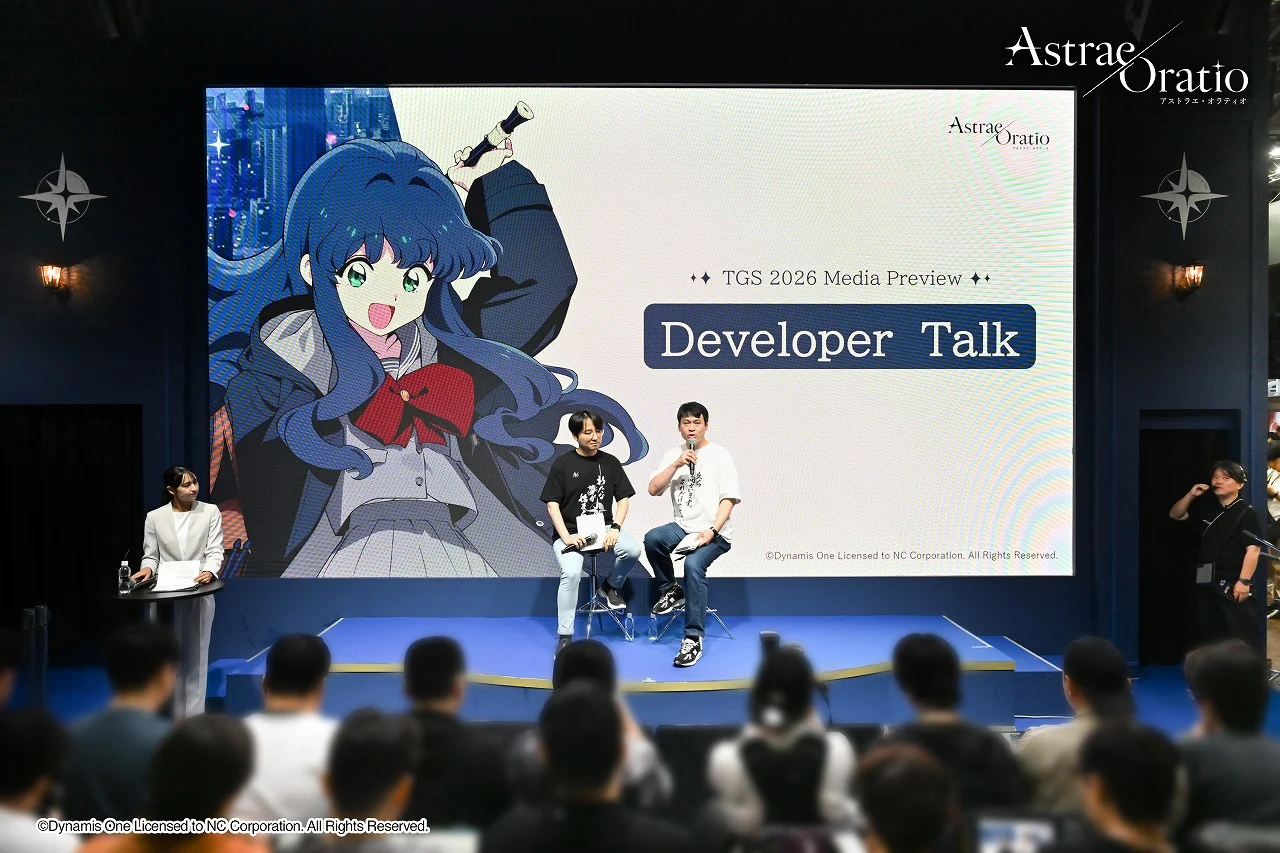
During Tokyo Game Show 2026, Dynamis One and NC (formerly NCSoft) held a media session dedicated to Astrae Oratio – a highly-anticipated anime-style RPG set in a fictional Japan. The developers shared details about the game’s concept, went in-depth about how the battle system will work, and answered questions about the project.
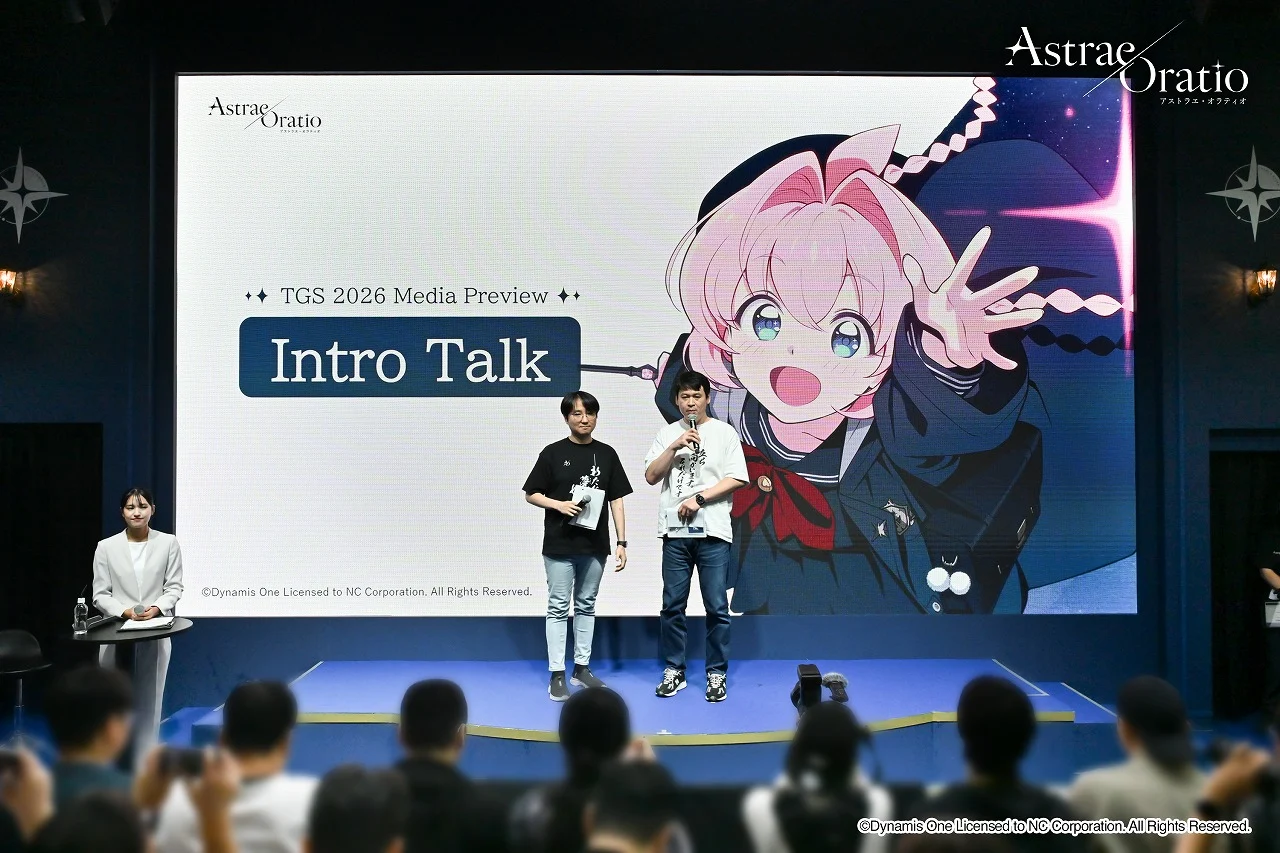
What is Astrae Oratio and why is it called a “shindenki” (neo-urban fantasy) game?
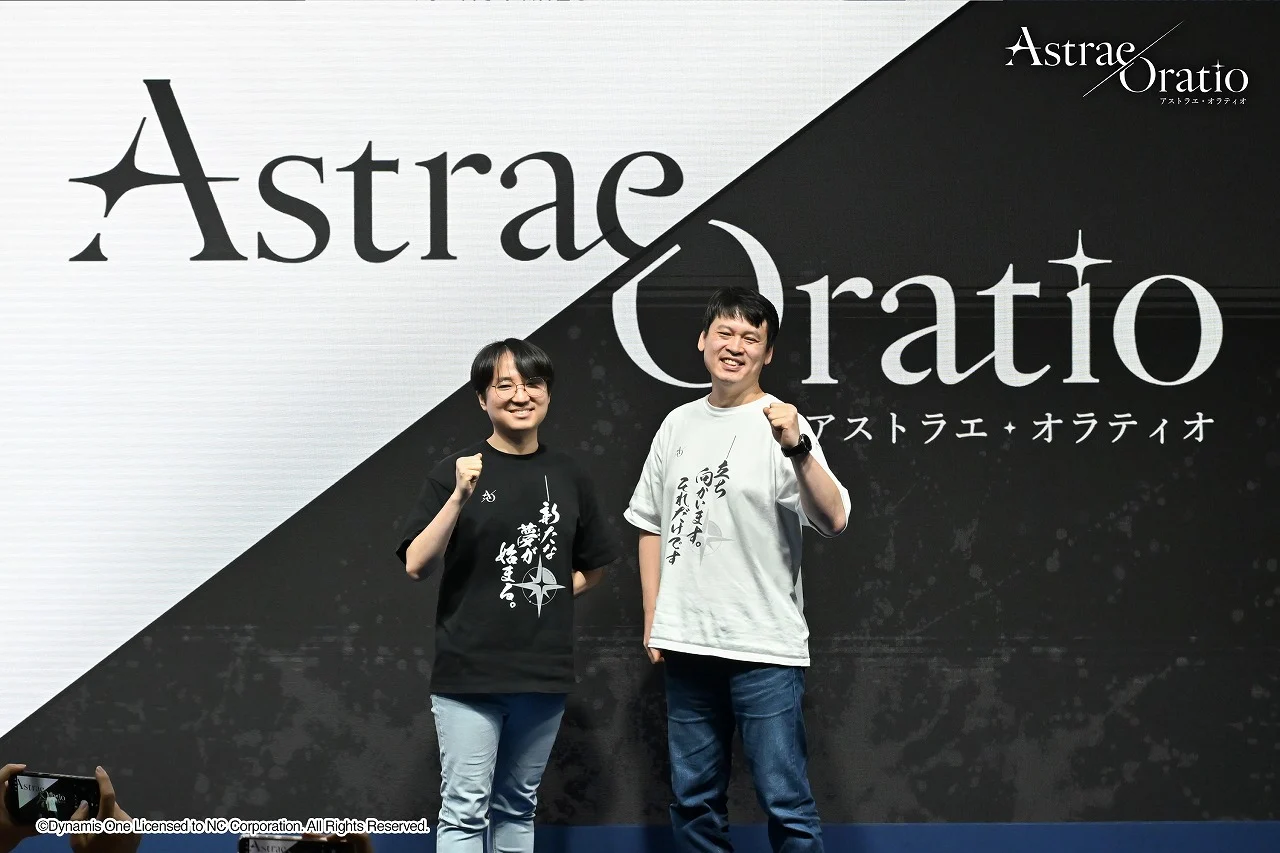
Director Jong-gyu Lim and art director In Kim took the stage to explain the concepts behind Astrae Oratio. Story-wise, the devs describe the game as a “shindenki” (or “new denki”) work, with “denki” referring to fantasy narratives in which supernatural beings and phenomena bleed into the everyday lives of ordinary humans. With Astrae Oratio, the developers strive to evolve the genre in a way unique to the game medium.
Astrae Oratio is set in a fictional Tokyo, incorporating motifs inspired by Heisei-era retro aesthetics into its visuals and character designs. It also revolves around the central theme of “magic meets bureaucracy,” with players taking on the role of a government official in charge of overseeing the magicians of Tokyo.
The session then moved on to a viewing of the game’s new prologue trailer. Although Astrae Oratio comes from a South Korean studio, it features full Japanese voice acting by default. Also, unlike many titles in the genre, the protagonist, who serves as the player’s self-insert, is depicted visually in-game. The trailer also revealed the game’s enemies, the members of what’s known as the “Other Cabinet.”
A command-based combat system that draws inspiration from fighting games
Combat unfolds in a command-based format. Although you form a party of three, battles are duel-based, which means you face enemies one-on-one. In battles involving multiple enemies, you deal with them one at a time in succession. The reason for having three party members despite the one-on-one format is related to how attacks work.
Simply put, the combat in this game is like rock-paper-scissors where you wait to see what your opponent is about to throw before making your own move. Since enemies alternate between three types of actions, players must watch for tells to determine what move is coming and execute a counter. If you successfully land a counter, the turn immediately shifts to the player, allowing you to unleash consecutive attacks.
The first type is an attack preceded by a blue tell. Players counter this with a normal attack. The second is preceded by a yellow tell, which can be countered by tapping the guard button at the right moment. The third is preceded by a red tell. This attack cannot be evaded, so players must switch to a character with enough remaining HP to take the hit.
When it comes to standard “small-fry” enemies, the attacks they’re about to use are displayed beforehand on a timeline at the top of the screen. With stronger enemies, however, this information is hidden, meaning players must keep an eye on tells to determine what attack is coming. In this sense, the combat combines real-time inputs with strategic resource management, including managing the HP of party members.
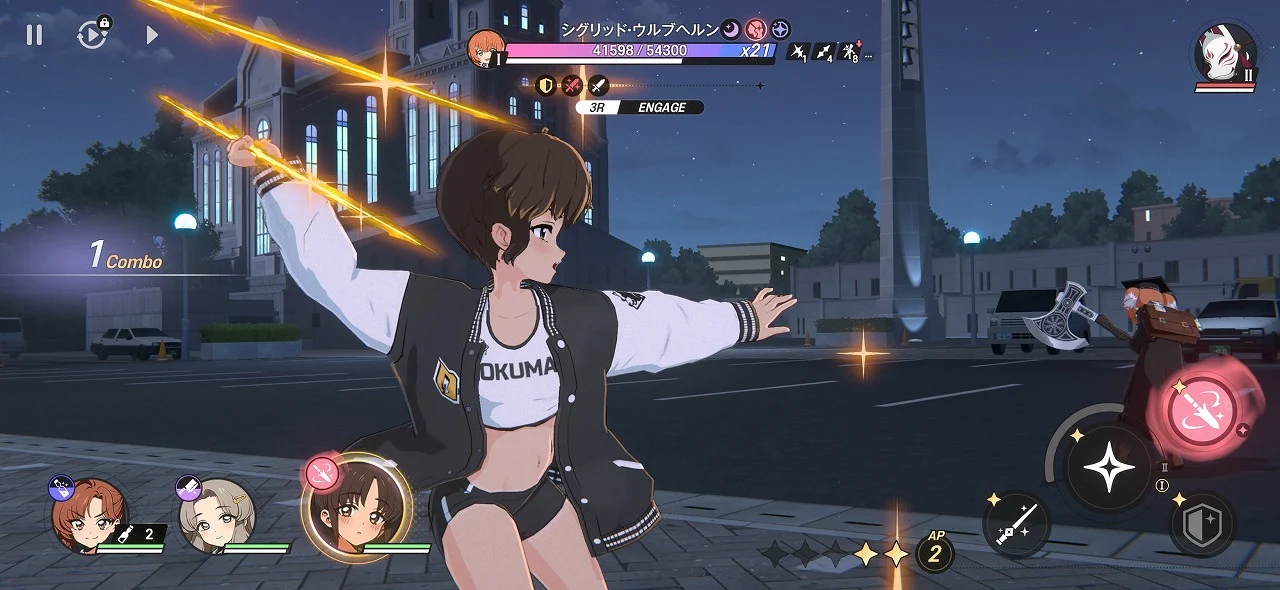
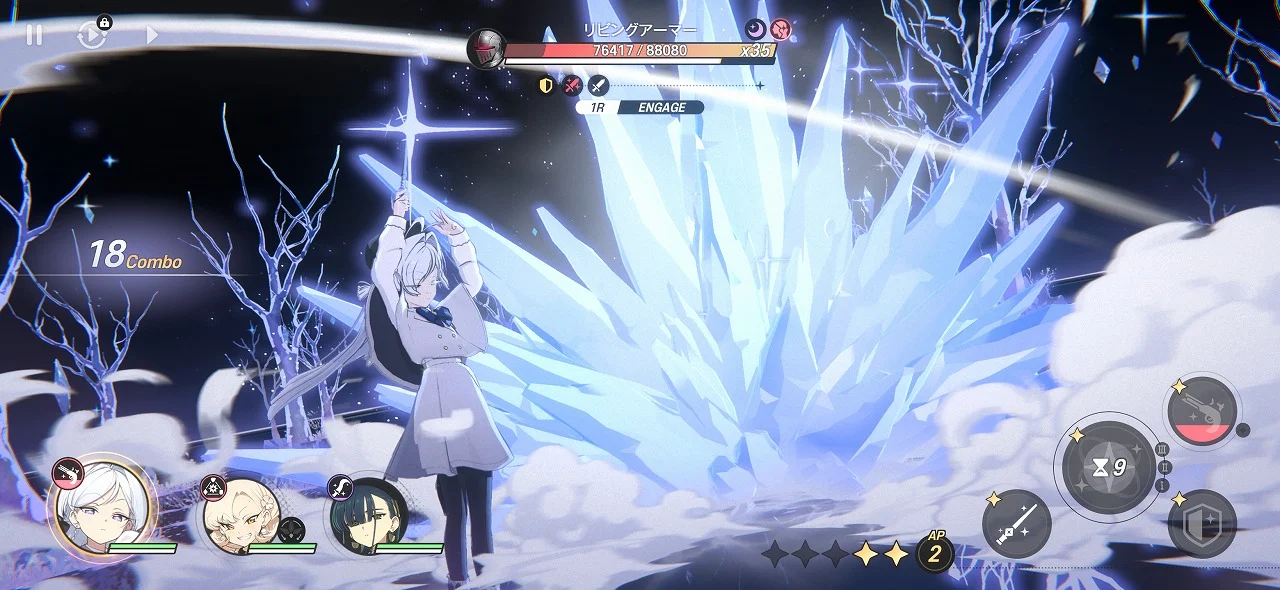
In addition to counters, players have access to actions such as Combat Skills and Ultimate Skills. Combat Skills are actions activated by spending AP. They can be activated consecutively within a single turn, and become more powerful the more times they are used. Naturally, the amount of AP consumed varies by character, and consumption increases with each consecutive use, so you’ll want to make sure you don’t run out just when you need them most. AP itself is restored through normal attacks.
Ultimate Skills, meanwhile, are powerful signature moves. They can be chained together with Combat Skills. In the playable demo, we primarily got to see Ultimate Skills that focused on dealing damage, but players will apparently be able to create combos such as using an Ultimate Skill that boosts a character’s abilities after successfully countering an enemy, followed by rapid-fire Combat Skills.
According to the director, Astrae Oratio’s combat draws from “fighting game mechanics” featured in titles such as Street Fighter. Despite being a command-based battle system, the influence can be seen in its real-time actions and resource management, as well as a dedicated gauge that, when depleted, prevents an enemy from acting for a certain period of time. As for “Declaration of Dominion,” another core mechanic of the game, the director only said that it provides an advantage to the side activating it. Other details remain under wraps until the CBT.
Following the presentation, Lim and Kim took questions from Japanese and Korean media. The following is a transcript of the session in interview format:
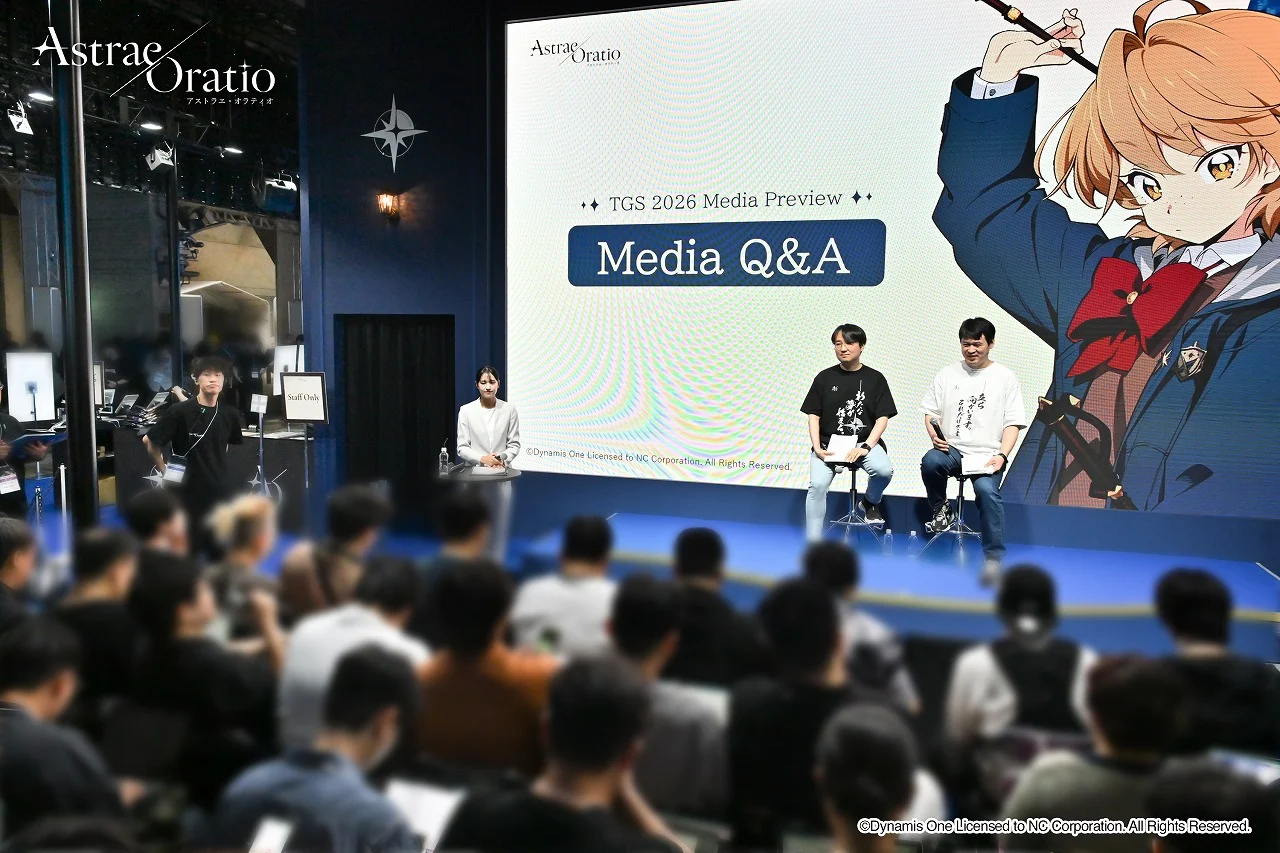
—Approximately how many playable characters are you planning to have at launch? Also, how many factions will the characters belong to?
Lim:
We’re anticipating around 34 characters at launch. We’re currently envisioning around 10 factions, but we expect that number to increase further in the future.
—Most of the information revealed about the game so far has focused on the characters and visuals. Why did you decide to reveal the game system for the first time now?
Lim:
While we certainly want players to enjoy the characters in this title, our hope is that they will enjoy the story and the game world even more. We also felt that revealing the combat system after releasing the visual content would be a more effective way to convey the game’s appeal.
—How much content will be available in the upcoming CBT?
Lim:
There will be enough content to experience around three to five days’ worth of story and combat in terms of in-game time.
—The appearance of the protagonist/player character revealed at TGS was particularly interesting. Why did you decide to reveal it at this time?
Kim:
We decided to reveal the player character’s appearance because we felt it was significant not just for showcasing the IP or the game itself, but for conveying the game’s worldview; specifically, by showing what kind of player inhabits this world.
—Could you tell us more about your schedule going forward, including the CBT?
Lim:
Please look forward to future announcements.
—What inspired you when creating the game’s unique worldbuilding and “shindenki” theme?
Lim:
For the combat, we took inspiration from fighting games such as the Street Fighter series, as well as the Persona series. As for the worldbuilding, we didn’t draw from any particular games. Instead, we incorporated elements from a variety of sources.
Kim:
Visually, we also took inspiration from 2000s light novels, while building around themes such as shindenki and magic.
—As a Korean development studio, why did you choose Tokyo (Japan) as the setting? Also, why did you go for “bureaucracy” as a central element?
Lim:
When we decided on the theme of “shindenki,” we felt that Japan simply had to be our setting, so we chose it. As for “bureaucracy,” I hope you’ll look forward to the CBT to find out.
—Could you tell us about the game’s 3D models? Also, are there any specific aspects of the game you’d like to showcase to Japanese and Korean audiences?
Kim:
Please wait for future announcements regarding what kinds of 3D models will appear.
I believe that the 1990s- and 2000s-style settings we enjoyed in the games of our youths and are pursuing in this title can be appreciated not only in Korea and Japan, but also in Europe and other countries. We are keeping this in mind as we consider our target markets.
—You’ve mentioned that the game is being developed for smartphones. Are there plans to bring it to PC in the future?
Lim:
We have been developing the game as a mobile title so far. In the long term, we would like to expand to other platforms such as PC, but for now, we are prioritizing development for smartphones.
—It looks like each character has a wand. Do the wands have some kind of identity unique to each character?
Kim:
One of the themes of this game is “magicians,” and the wands are an element that reinforces that theme visually. We incorporated genre elements from works such as the Harry Potter series and magical girl anime series from the 1990s. We then added our own unique elements, including Declaration of Dominion.
—Could you tell us about your plans for the game’s service rollout? In recent years, it seems that many Korean game companies have launched their games in Japan first before expanding to Korea. Will this game follow a similar approach? Also, there are various other titles on display at this year’s TGS. Have you had a chance to look around the show?
Lim:
As I explained earlier, we plan to use this announcement as a starting point for our rollout and then expand globally from there. As for looking around the show, we very much want to see various things, but due to scheduling constraints, we haven’t been able to do so yet.
—There are currently three major characters who have been prominently featured. Can we expect new characters to be added in the future?
Kim:
I think that’s an important part of the game’s appeal and the genre it belongs to, so please look forward to what we have planned for the future.
—For the developers: if you had to pick one character, which would be your personal favorite?
Lim:
Personally, my favorite is Moa Hanamori.
Kim:
I’m involved in the art side of things as well, so my favorite is Erin Tanaka, the first character I created as art director.
—You have emphasized that this is a mobile title. What devices and specs are you planning to support?
Lim:
We are developing the game so that it can support devices released within roughly the past five to six years.
—The game seems to belong to a genre with a vast world inspired by the 1990s and 2000s, and I imagine many fans have traditionally enjoyed such worlds on larger screens. Why did you choose to fit that experience onto a smartphone screen?
Lim:
With the “shindenki” concept we are aiming for, we don’t want to simply reproduce past works from the same genre. We want to offer a new form of “denki” as a genre that we have created ourselves, and we have built that world specifically as something that can be enjoyed on smartphones.
—AI is being widely used in game development these days. Did you use AI anywhere during the development of this game?
Kim:
We did not use AI for the art.
—Finally, could you give a message to players looking forward to the game?
Lim:
We’re very happy that we were able to introduce the game to everyone for the first time through Tokyo Game Show. I hope that through this demo, you can get even a small sense of what its world and characters are like, as well as how its story and combat unfold.
During the upcoming CBT, we would like everyone to see for themselves what experiencing the world and everyday cycle of the game is like, and to experience the entire package – including the story and combat – comfortably on a smartphone. We hope you will watch Astrae Oratio grow, much like an ongoing serialized work. Thank you very much.
Kim:
As I mentioned earlier, this is a title that we plan to develop over a long period of time. I believe one of the strengths of a live-service game is the anticipation for the next story developments and the ability to share excitement whenever new content is released.
Starting with the information being unveiled for the first time at TGS 2026, the upcoming CBT will allow you to experience the game in greater depth. Everyone on the development team will do our best to create a title that will be loved for a long time. Please look forward to it.