Super Real Mahjong Venus Returns is a faithful reproduction of the original series that “crosses the line” in a way young Japanese men from the 80s could only dream of. We talk to the producer
In-depth interview with Stripjong - Super Real Mahjong Venus Returns producer and infiniteloop chairman Kentaro Matsui.

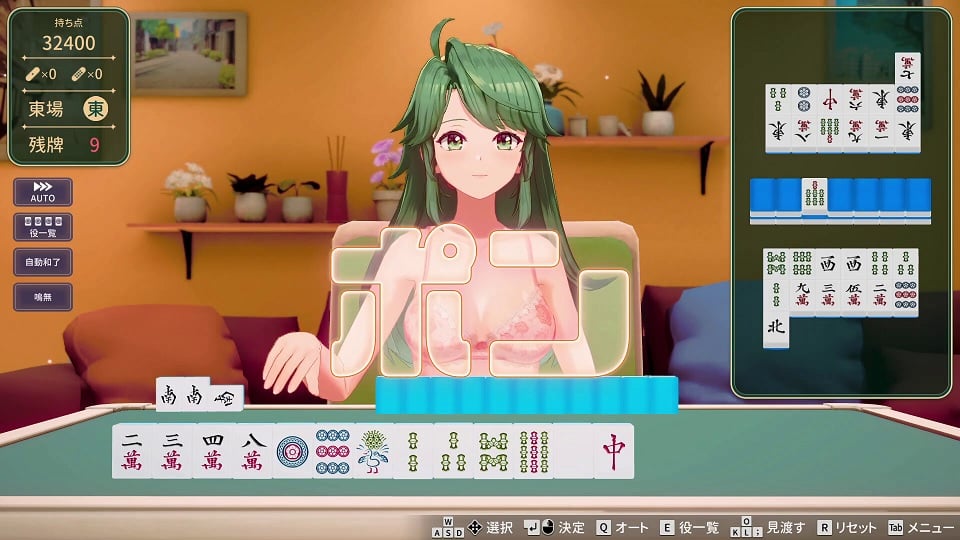
Japanese developer ILLUMINATION and infiniteloop released Stripjong – Super Real Mahjong Venus Returns, a brand-new mainline entry in Japan’s classic strip mahjong series, on August 27.
Following a highly successful crowdfunding campaign which reached over 1,690% of its original goal, the game was met with much enthusiasm upon release, earning a “Mostly Positive” rating and charting on Steam’s domestic Top Seller rankings.
Starting out in the 80s as an arcade title, the series later expanded to consoles and PC. Its last entry as a full-fledged strip mahjong game was Super Real Mahjong P7 in 1997, but while the numbered series continued with the smartphone title Super Real Mahjong P8 in 2018, that release was an “idol mahjong” game with no undressing content. Super Real Mahjong Venus Returns marks the return of the series’ strip mahjong line after nearly three decades. Not only is it the series’ first 3D VR supported installment, but it’s also the first game that has been localized and available globally on launch.
Recently, AUTOMATON West had the opportunity to conduct an email interview with Stripjong – Super Real Mahjong Venus Returns producer Kentaro Matsui to learn more about the series’ long history and how the new title came to be.
The return of a nationwide boom that once left young Japanese men penniless
-First and foremost, congratulations on the release of Stripjong – Super Real Mahjong Venus Returns! Could you please introduce yourself and tell us what your role in the game’s development was?
Kentaro Matsui (hereafter, Matsui):
I’m Kentaro Matsui, Representative Director and Chairman of infiniteloop, and the producer of this title. My role covered launching the project, negotiating with the rights holder, setting the direction of the overall experience, and absorbing every “…but why?” look from both inside and outside the company.
I should add that during this game’s development, our company was also running Desktop Mate, a desktop mascot app that became enormously popular on Steam from around January 2025, and I was overseeing that work in parallel. By day, I was putting girls onto people’s desktops, and by night, I was taking their clothes off. When you put it like that, it sounds like a terrible two years, and it was definitely an extremely busy period for me.
-Could you tell us about the circumstances which led to the game being developed?How did the Stripjong – Super Real Mahjong Venus Returns project come to be, and why did you decide to bring it back in 2026?
Matsui:
Let me start with what Japan was like back then. From the late 1980s into the 1990s, this country was, for better or worse, an extremely permissive place, and the idea of keeping adult content confined to adult-only spaces barely existed.
Japan is sometimes jokingly called “the land of HENTAI,” and back in the day, strip mahjong genuinely was a nationwide boom. And not just in arcades. The cabinets were in shopping centers, in bowling alleys, on ferries – absolutely everywhere. It seems unbelievable now, but at the time nobody thought twice about it.
There was no chance an impressionable teenager like me would escape that influence. I was completely, hopelessly devoted to those girls. I’d clutch what little pocket money I had, challenge them, and lose again and again. I was left penniless.
Even after I grew up and started running a company, the mark those games had left on me never faded. I was convinced there had to be people all over Japan carrying the same mark – people who wanted to see those girls one more time. So, I brought them back. That’s the whole reason.
-The game started out with a crowdfunding campaign which reached over 1,690% of its original goal. Do you think the end product managed to live up to such high expectations?
Matsui:
We had collected 33,804,795 yen from 1,129 backers, which was 1,690% of our 2-million-yen goal. Rather than feeling joy, my first reaction to that number was, “Well, there’s no escaping now.”
To answer directly: yes, I believe we lived up to it. We worked hard.
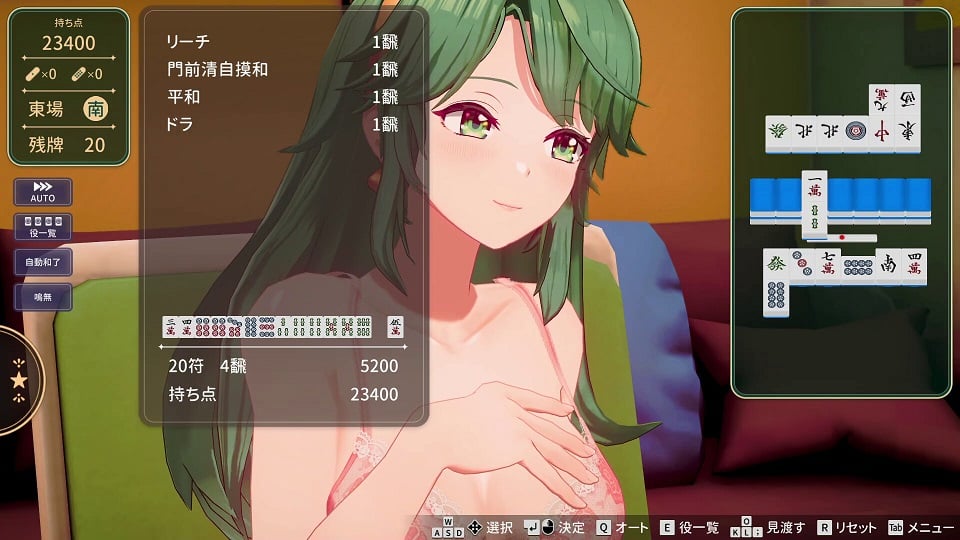
We delivered everything we promised. In the original arcade games, the moment a girl reached her last piece of clothing, someone’s parent would walk in, or the next customer would show up, and the scene would cut away. Going beyond that line was this project’s central mission, and we managed to achieve it. On top of that, the funding let us add full voice acting and the Grand Finale, the game’s final ending. Neither would exist without the campaign.
We carried through a job that even other designers in the industry told us they would never want to take on themselves. I think we can look our backers in the eye with our heads held high. Honestly, I’m mostly just glad we managed to pull it off.
-Venus Returns topped the domestic Steam sales ranking charts at launch. Why do you think the game was received so positively? What is it that made so many players eager for Stripjong to come back despite the large number of sexy games now available?
Matsui:
I don’t think this is to our credit at all. It’s the power of Super Real Mahjong itself.
Among the many different strip mahjong games, this series was legendary, and the reason is clear. At a time when static pixel art was the norm, Super Real Mahjong was the one series where the characters moved beautifully and smoothly, almost like in a TV anime. In today’s terms, it felt like an artifact from the future. The fact that it existed in arcades at all was crazy in itself.
And because, as I mentioned, it was such a permissive era, the series was ported to home consoles many times over. Japanese boys of that generation encountered it both in the arcade and at home. That’s why it’s still engraved in everyone’s memory even after 30 years. There are a huge number of people who simply cannot hear that title without reacting to it.
Because that’s the kind of game it is, the moment it’s announced, people can’t help posting their old memories on social media. We actually spent almost nothing on advertising, and we were still fortunate enough to get an enormous amount of attention. It felt less like we did something clever and more like 30 years of accumulated memories erupted all at once.
One more thing. While sexy games are hardly uncommon these days, I don’t think Super Real Mahjong was embraced simply because it’s sexy. It never competed on raw explicitness. What people responded to, I suspect, was the act of undressing itself, and the room for imagination left just before and just after it.
At the risk of overstating it, this may connect to a Japanese sensibility for leaving room for the imagination – for appreciating things that aren’t shown or said. I’ll probably get in trouble if I start mentioning things like Zen and wabi-sabi (laughs), but we really do have a sense of beauty where showing everything isn’t the point.
A faithful reproduction of the beautiful but super challenging arcade originals
-What did you pay attention to the most when it comes to preserving the charm and atmosphere of the original arcade series from the 80s and 90s?
Matsui:
The goal was to keep the gameplay exactly as it was, while rebuilding the visuals from scratch.
We added a few extras, but what you actually do in this game is play mahjong and get the girls to undress. That’s it. That part is straight from the arcade originals. We never went down the road of adding extra mechanics to make it feel “modern.”
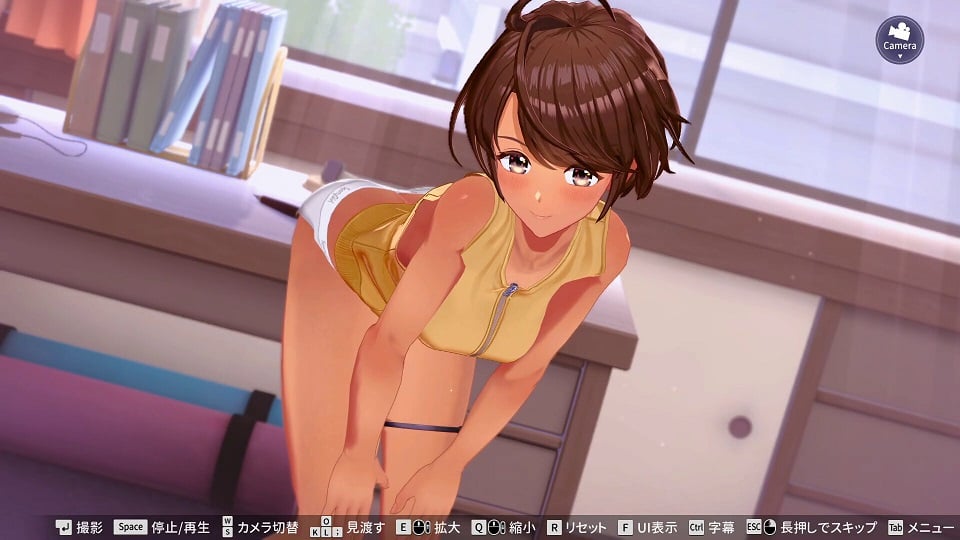
What we rebuilt is the visuals. We modernized the character designs, moved to full 3D, and pushed the visual impact until it became something that holds up by today’s standards. That’s a big change.
However, we kept the situations and the dialogue as close to the originals as we possibly could. They look new, and yet they’re the same girls you remember. I think that’s the most important.
And their skill level stayed exactly as it was. The top difficulty setting is called “Super Real,” and it’s every bit as unreasonable as the originals. We did discuss going easier, of course, but if you remove that, it stops being Super Real Mahjong. As a result, we came up with a remake that stands as a modern game while still providing a satisfying experience for veteran fans as well.
-On the other hand, what new things do you think Venus Returns bring to the table?
Matsui:
The biggest thing is the Point-blank Strip Mahjong System, which is simply impossible to achieve without 3D. The person undressing is sitting directly across the table from you. You can stand up, lean in, and watch from whatever angle and distance you like. Compared to classic strip mahjong, where you watch a video play out on the far side of a screen, it’s a completely different experience.
Originally, we conceived this as a VR-only feature. But realistically, a great many people don’t own a headset, so we built it out properly for Desktop Mode as well. We describe it as “100% without VR, 120% with it.”
The other one is the last piece of clothing. In the arcades, Japanese regulations at the time did not allow that final garment to come off. The scene always cut away right before. But a properly age-restricted adult title today can do it. For players from that era, this is a dream that took 30 years to come true. I was one of those players.
-How did you come up with the idea of making the game into a VR-supported title?
Matsui:
There are two reasons.
The first is plainly that our company had been making VR titles before this project even started. VR was simply the tool we already had at our disposal.
The second is the real one. As a teenager, I had this fantasy that those girls might actually leap out of the screen. Back then, Weekly Shonen Jump was running Masakazu Katsura’s manga Video Girl Ai, which depicts the story of a boy who plays a rented video tape, and a girl comes out of it and ends up living with him. For a teenager with no luck whatsoever with women, it was the ultimate fantasy, and I’m certain several million other Japanese boys had the exact same thought.
Fast forward 30 years. One day I realized that VR, which is a technology honestly getting a little old to still call “cutting edge,” could actually do it. My dream and my capabilities had lined up.
I was convinced that if we put something out under the title Super Real Mahjong VR, there would absolutely be people who responded to that dream. And a project built around a shared dream turned out to be an extremely good fit for crowdfunding.
-Have you ever played some of the classic arcade Super Real Mahjong titles yourself? What is your overall impression of the series?
Matsui:
I’m squarely in that generation. Of course I played them.
This was before the internet. It’s probably difficult for young people to picture it now, but access to anything sexual was genuinely limited, and every young person back then was starving for it. That’s a big part of why strip mahjong boomed the way it did. It’s not a wholesome reason, but it’s the truth.
As for my impression of the series, I’d say there are two legends attached to it.
One is the visual shock: as I said earlier, it was unbelievably beautiful compared to the standards of the time.
The other is how skilled those girls were as mahjong players. People still talk about it. Arcade games are built to extract coins from players quickly, so a degree of brutality is expected, but this series was abnormal. It was beyond all reason.
For example, it was not unusual to get hit by a Tenhou, a “Heavenly Hand.” That’s when the dealer’s opening tiles already form a winning hand, so you lose without taking a single action. Its probability in real-world mahjong is said to be roughly one in 330,000. And it happened regularly. In terms of the speed at which a 100-yen coin could vanish, I believe it was world class.
So, my impression of the series comes down to two things: overwhelmingly beautiful, and unreasonably strong. And this time, we reproduced both of them faithfully.
-Were there any other works you drew inspiration from when creating Venus Returns?
Matsui:
On the mahjong side, we referenced Mahjong Soul quite a lot. When it comes to controls and pacing, or pure playability, I think it’s among the best mahjong games currently available. Since we were releasing in the modern era, I wanted to make the act of actually playing mahjong as stress-free as possible.
We also looked at Bunny Garden. It’s a very popular sexy game in Japan, and it helped us understand what modern players find comfortable and appealing.
For the undressing scenes, though, we wanted references and there were almost none. Practically nobody out there has attempted to undress a character properly in 3D. So that part was entirely based on trial and error.
And what that trial and error led us to was claymation – stop-motion animation. The way we built our undressing animations ended up being essentially the same as moving a puppet one frame at a time and photographing it. We went looking for a reference game, and what we ended up referencing was a 20th-century filmmaking technique.
-How did you decide on the four main heroines that appear in the game, and what details did you pay attention to when creating their modern designs?
Matsui:
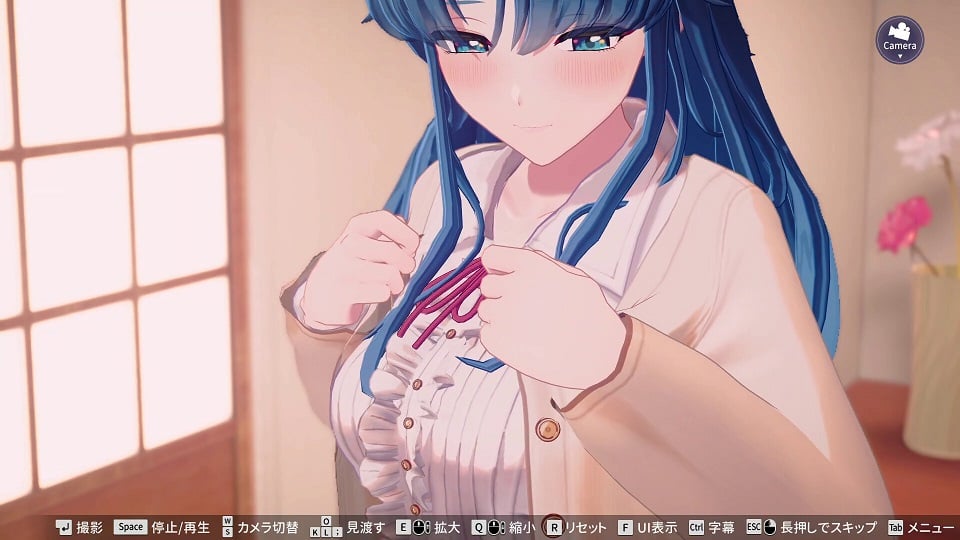
When it comes to selection, since every entry in the series has its own fans, putting everyone in was simply not possible. After a great deal of agonizing, we settled on three particularly popular heroines from PV (Super Real Mahjong PV, the series’ fifth installment) – Mizuki Tohno, Akira Hayasaka and Aya Fujiwara – and Showko, the very first heroine of the series, as the more mature, big-sister figure who drives the story. We figured fans would accept “well, if it’s PV, fair enough.”
Personally, I badly wanted the Serizawa sisters from PIII, and I’m still not over it. Include only one and you infuriate the other’s fans; include both and the workload rises so much that someone else has to be cut. An absolute dilemma.
In terms of designs, Ryo Tanaka, the original character designer, is still active, so asking him was a real option. But we prioritized the phrase “pass it on to the next generation” and commissioned Merry Haruhina for entirely new designs. Mizuki changed the most. Her original hairstyle was reportedly modeled on a popular idol of the time, but that reference means nothing to a young player today. So we went for a bold, modern reinterpretation. That debate inside the company was ferocious.
Also, the one concrete piece of technical advice we received from Mighty Craft, the rights holder, was: “Give them taller, more elongated proportions.” Their reasoning was that if the body proportions were too compact, the result would feel less striking once everything came off. It was an extremely practical note, and we followed it without argument.
An intricate development process that made industry peers think “I would never want to do that”
-Recently, the game has been going viral on X for its beautiful undressing animations. I’ve even read in one of your previous interviews that the development team practiced stripping themselves as reference for the undressing animations. What was the process behind making the animations actually like?
Matsui:
I’d love to know how far that story has spread. It’s true.
First, we write a plot for each undressing scene, then draw storyboards, exactly as the original team did. Then the real work begins, because the animation is essentially all keyed by hand. A designer moves the clothing’s 3D model, frame by frame, manually. It really is pretty much like the claymation method I mentioned.
We did try automating it with physics simulation first, but it was a total failure. The cloth moved in a physically correct way, but had absolutely no allure. We learned a profound lesson: accuracy and sensuality are two unrelated properties. In the end, we accepted that humans would have to do all of it.
Then VR adds its own weight. In a normal game, if something becomes awkward, you can cut away or swap models between scenes. In VR, the player can look from any angle at any time, so none of those tricks are available. The same model has to undress convincingly no matter where you’re standing. When I described this to a designer at another studio, he said, “I would never do that.” I’ve chosen to take it as a compliment.
And then, yes, the part you’ve read about. The undressing motions themselves use motion capture, but the deeper problem was that nobody actually knew the correct rhythm and order in which a person takes off clothes. So, the directors gathered and undressed themselves as reference. “That zipper is coming down too fast.” “She’d pause once before slipping her shoulder out.” These were serious, sober discussions. For compliance reasons, the Super Real Mahjong Venus Returns team works in a walled-off section of our office – and that was the moment those walls truly earned their keep.
-Do you have any animations – personal favorites, the most memorable ones, or the ones that were most difficult to create – that you want the players to specifically pay attention to?
Matsui:
Let me name three.
First, Showko. Her arcade-era undressing scenes were 2D cel animation, and because hers was one of the earliest titles in the series, there were a number of moments that were most likely left out. This time we’ve filled those gaps using imagination and modern technology. Completing something that was meant to exist 30 years ago is, personally, the most moving part of this project for me.
Second, the scene where Akira Hayasaka takes out her hair clips and her whole impression changes in an instant. Fans of the original will know which one I’m talking about. Making it work in 3D and from all 360 degrees was apparently brutally difficult, according to our designers. The effort shows.
Third, and less specific: the pause right before the last piece of clothing. As I said, that stretch of time exists purely to make you wait, and it’s tuned frame by frame. I understand the urge to skip ahead, but please don’t. Those few seconds are the most expensive part of the game.
-Were there any issues or difficulties you encountered during development. How did you overcome them?
Matsui:
The biggest technical hurdle was the VR constraint I described. There are no camera cuts, and no model swaps. Unfortunately, there was no magical solution to it, so we overcame it with the extremely down-to-earth method of having humans make every frame by hand. It was a grinding process for the people doing the work and the people reviewing it. I owe our designers a great deal.
On the financial side, that’s precisely why we ran a crowdfunding campaign in the first place. Making a 3D game is hard enough on its own, but adding the ability to “properly undress the characters” causes the workload to snowball – every additional character requires modeling, outfits, motion, facial performance, and voice recording. I was fully aware this was a project nobody else wanted to touch. That’s exactly why I wanted to make it together with the fans.
The campaign was a huge success and raised a great deal of money – and despite that, it covered only part of the development cost. That is how expensive undressing a 3D model turns out to be. Finding the rest of the money was a serious struggle of its own.
There were also internal challenges. Before the campaign, the general view inside the company was “the Chairman is up to something weird again.” People knew something was going on behind those walls and left it at that. The moment the funding succeeded, the mood flipped to “apparently this is an amazing project,” and suddenly people wanted to come look inside the walls. We were also given more staff. I learned that’s just how the world works.
-I think many overseas players may not be familiar with mahjong itself, so do you have any advice for them on how to get into the game?
Matsui:
Honestly, for a new player who never touched the originals and has no attachment to them, this game’s difficulty may feel harsh. I’ve seen forum posts asking whether the game is cheating. I completely understand the feeling. But Super Real Mahjong has always been that kind of game (laughs).
That said, we did include an Auto Mode. Putting a mode that automates mahjong into a game about playing mahjong is, if you think about it calmly, a strange thing to do. But we wanted overseas players and mahjong beginners to be able to enjoy it, so we did it. If you patiently let Auto Mode run, you will eventually see every undressing scene. You can rest easy on that point.
For those who want to play it themselves, one practical tip: just go for Tanyao (All Simples). This is mahjong, but it also isn’t – it’s a similar but fundamentally different game. No matter how low-scoring your hand is, winning removes one piece of clothing. The score is irrelevant. So if you have a pair of yakuhai tiles, call Pon when you can; otherwise, aim relentlessly for Tanyao. That’s the fastest route. It will do nothing whatsoever for your mahjong skills, but it will help you achieve your objective.
One more thing, and this one is an apology. We’ve received requests from overseas players who can’t read the kanji on the mahjong tiles and would like numbers added. That was a genuine oversight on our part, and I’m sorry. We’re planning to address that in an upcoming update, so stay tuned.
“Crossing the line was this project’s central mission”
-Recently, there have been quite a few cases of suggestive games having a hard time getting on Steam or other platforms without making some compromises. Do you think you were able to go all out on the sexy expressions in a way that matches the worldview of the Super Real Mahjong series?
Matsui:
The short answer is yes, we did.
As I mentioned earlier, in the arcade originals the scene always cut away the moment a girl reached her last piece of clothing, because of the arcade industry’s guidelines at the time. Crossing that line was this project’s central mission, and we did it. On that front, I believe we did the right thing within the series’ worldview.
There are also lines we did not cross. This game is made in compliance with Japanese law, and the character models do not include explicit genital detail. That isn’t a case of “compromise made under pressure,” we designed the game under that premise from day one. I realize these standards are specific to Japan and can be difficult for overseas players to interpret, so I’d encourage people to check what is and isn’t included before buying. That’s an area where our own communication fell short, and we’re improving the store page descriptions.
We also include a streaming mode with the famous “mysterious light” for live streamers. You can adjust how thick the light is, or swap it for a black bar or a mahjong tile. You can make it comfortably thick, or extremely thin. How thin it displays is entirely on the streamer, their own courage, and their platform’s terms of service. We accept no responsibility.
In Japan, a huge number of players are already streaming the game. We’re hoping to see that spread overseas as well.
-Super Real Mahjong Venus Returns doesn’t let you “just watch,” you can also interact with the girls, and change the camera angles however you please. What was most important to you when designing features that offer players freedom and immersion into the game?
Matsui:
What we prioritized most was reconciling two things: letting the player move freely, and delivering a carefully staged set piece. Normally, a fully free camera destroys any staged direction. But a fixed camera would just make this the same as every strip mahjong game before it. Balancing those two took more time than anything else.
The result is that you can walk around the table, crouch, lean in, and yes, walk around behind the girls. Implementing that sparked a debate internally, and we argued about it for a very long time.
The implementation I’m personally fondest of is the “mysterious light” in streaming mode. It actually tracks the relevant body areas in real time, and only inserts the light when it’s genuinely needed, based on the camera angle and viewpoint. If a table or chair is blocking the view, no light appears. While she’s covering her chest with her hands, no light appears, but the instant her hands move away, there it is.
Which is to say, our engineers invested substantial development hours into a system that rigorously determines whether something is visible or not visible. I consider this the correct use of VR technology.
-What does the future of the Super Real Mahjong series look like? Considering that the game has been so well received, do you maybe have plans for any additional DLC?
Matsui:
Let me start by saying I can’t promise anything yet. We very much want to do DLC with additional characters.
Honestly, though, the cost of adding one character is enormous: modeling, outfits, motion, facial expressions, voice recording, and then that frame-by-frame hand-keyed undressing animations. Saying “we will definitely do it” here would not be a responsible statement. Our position is: if sales are strong, we’d like to do it. Fortunately, our costs have been coming down as the team accumulates know-how.
What I can commit to in the near term is performance improvements for VR Mode. Right now, the VR graphics setting is capped at Medium, and once tuning is complete we plan to release an update featuring higher graphics settings. For our VR players, that’s something I’d like to deliver soon.
Anything beyond that is still undecided. But given how well the game has been received, we do intend to keep exploring what we can do with the series, and we’ll work hard to bring you good news.
-Lastly, could you give a message to our readers?
Matsui:
Super Real Mahjong is a series with almost no history of overseas releases. So, it genuinely astonished us to see how many Wishlist additions came from outside Japan before launch, and to get this much response from players abroad once the game was out.
The thing I most want people to take away from this project is that a strange and wonderful culture called strip mahjong really did exist in Japan. You play mahjong against a girl, and when you win, she takes something off. That’s all it was, and an astonishing number of people were obsessed with something as simple as that. In 1980s Japan, these cabinets sat in shopping centers and all over town. It was strange and a bit ridiculous, but there was real passion behind it. It was a game culture unique to this country. And it went almost completely extinct.
If this game leads people to discover that such a thing existed here, I’d be genuinely delighted. There’s a collection feature in the game full of archive material from the era, so simply by playing, you’ll gradually become an expert on a distinctly odd corner of Japanese game history.
Even if you don’t know much about mahjong, there’s Auto Mode. And in case you don’t have a headset, you can play Desktop Mode. You can also lower the difficulty (though they’ll still be strong). I hope you’ll experience for yourself what Japanese players were so obsessed with 30 years ago. Thank you very much.
-Thank you for your time!
Super Real Mahjong Venus Returns is available via PC (Steam). The VR mode can be purchased as separate DLC.

AUTOMATON WEST
Articles: 210Related Posts