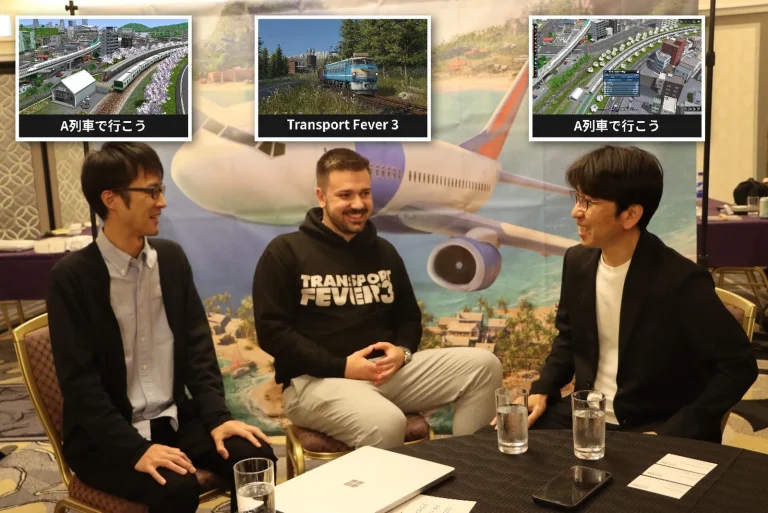
Final Fantasy VII Rebirth, the second installment in Square Enix’s FFVII remake trilogy, came to Nintendo Switch 2, Xbox Series X|S, and Microsoft Store on Windows on June 3. While the Switch 2 represents a big leap in hardware capability compared to its predecessor, optimization remains a concern when it comes to massive tiles like FFVII Rebirth. To learn more about how the game was ported to the Switch 2, AUTOMATON recently sat down with Square Enix’s Naoki Hamaguchi – director of the FFVII Remake trilogy – who talked to us at length about the technical challenges and solutions involved.
—I assume FFVII Rebirth’s assets were created with PS5-, gaming PC-, and Xbox Series-level hardware in mind. What kind of optimization work was required to make it run on Nintendo Switch 2?
Naoki Hamaguchi (hereafter Hamaguchi):
Since FFVII Rebirth was developed with a future PC release in mind from the start, we had already designed it with a certain degree of scalability when it comes to processing load. However, the Nintendo Switch 2, especially in handheld mode, operates under stricter power consumption constraints, which further limits the resources available, so we couldn’t simply port the game over as-is.
Compared to FFVII Remake, FFVII Rebirth saw a dramatic increase in the number of meshes, materials, and background streaming data visible on-screen due to its open-world design. As a result, we needed to perform comprehensive optimization that encompassed not only GPU, but also CPU usage and memory bandwidth. Therefore, our approach wasn’t “What can we cut?” but rather, “What should we redesign in order to preserve what has to stay?”
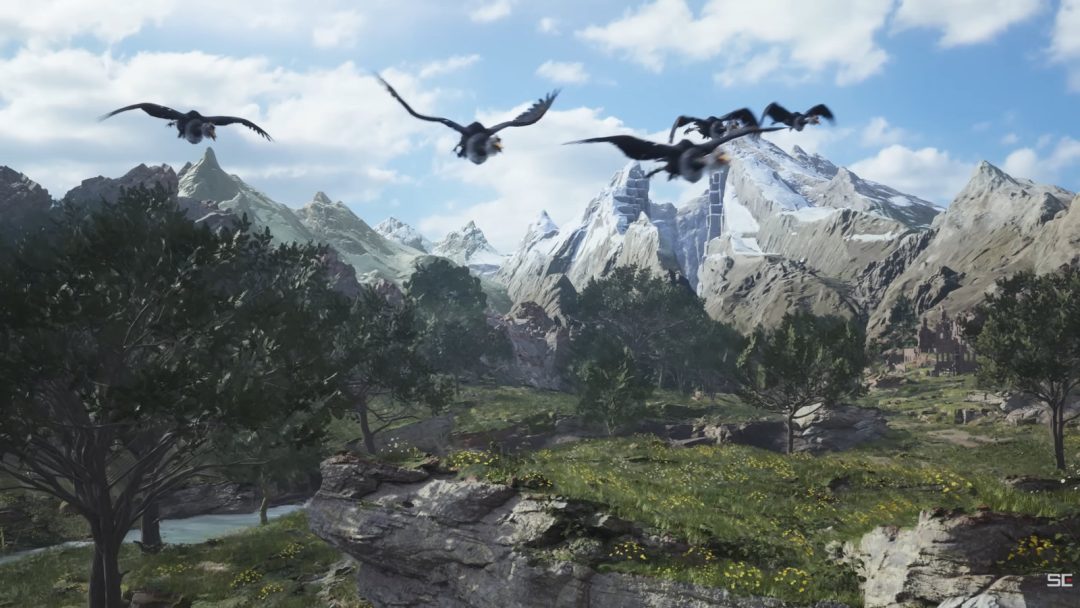
For environmental models, we redesigned the LOD (Level of Detail) system specifically for Nintendo Switch 2. Rather than simply reducing polygon counts, we re-evaluated information density at different viewing distances and even revisited material composition. We also built Switch 2-specific versions of levels using those dedicated assets so each scene could be configured optimally.
The same goes for lighting. We adjusted shadow draw distances and the number of spotlights while searching for a balance that would preserve not only performance, but also the atmosphere and sense of immersion characteristic of FFVII Rebirth.
Frankly speaking, there are no shortcuts in this kind of work. People sometimes call it a “miracle port,” but in reality, it’s the result of a painstaking process of measuring load, identifying bottlenecks, and eliminating them one by one. Ultimately, I believe this accumulation of effort is what allowed us to successfully bring the FFVII Rebirth experience to Switch 2.
—The FFVII remake series has attracted attention for continuing to use Unreal Engine 4 (related article). Given the massive scale of FFVII Rebirth, I imagine that, rather than just tailoring in-game assets, you needed to customize Unreal Engine itself as well. Could you tell us more about that?
Hamaguchi:
Yes, at the scale of FFVII Rebirth, simply using Unreal Engine 4 as-is wouldn’t have been feasible. In particular, the transition to an open-world design significantly increased rendering and streaming demands compared to FFVII Remake. Because of that, we don’t rely entirely on Unreal Engine’s standard systems when it comes to rendering and lighting. Instead, we’ve continuously customized them to suit our needs.
More specifically, we’ve rebuilt portions of the lighting system, optimized shaders, and improved rendering data efficiency to suit the characteristics of each platform. In addition, because FFVII Rebirth features an enormous world map, we’ve developed and now utilize a proprietary large-scale geometry system called Massive Environment. While it shares some similarities with Unreal Engine 5’s Nanite conceptually, it’s something we’ve developed to specifically meet the needs of the FFVII remake series.
Since we handle a vast amount of environmental data spanning distant scenery to close-up views, this also led us to revisit our streaming methods and caching strategies for the Nintendo Switch 2 version. For this port, rather than simply lowering the rendering quality, we needed to redesign where to allocate our limited resources. Therefore, instead of optimizing rendering, lighting, and streaming individually, we adjusted things while viewing the entire system as an integrated whole.
People often ask us why we’re still using Unreal Engine 4, but for us, what’s important isn’t the engine version, but whether it can deliver the game experience we’re aiming for. We’re also continuing to use Unreal Engine 4 for the final installment of the remake trilogy currently in development, and considering the technical assets and expertise we’ve accumulated over more than a decade, I think that was a very rational decision. I would say we aren’t simply “using” Unreal Engine 4; we’ve continuously expanded and evolved it to meet the needs of the FFVII remake project. That accumulated work also played a role in developing FFVII Rebirth’s Nintendo Switch 2 version.
—Nintendo Switch 2 has both less RAM and slower memory than the PS5 and Xbox Series X|S (12GB as opposed to 16GB), and there’s a significant gap in CPU performance too. How did you address hardware limitations that can’t simply be resolved by lowering asset quality?
Hamaguchi:
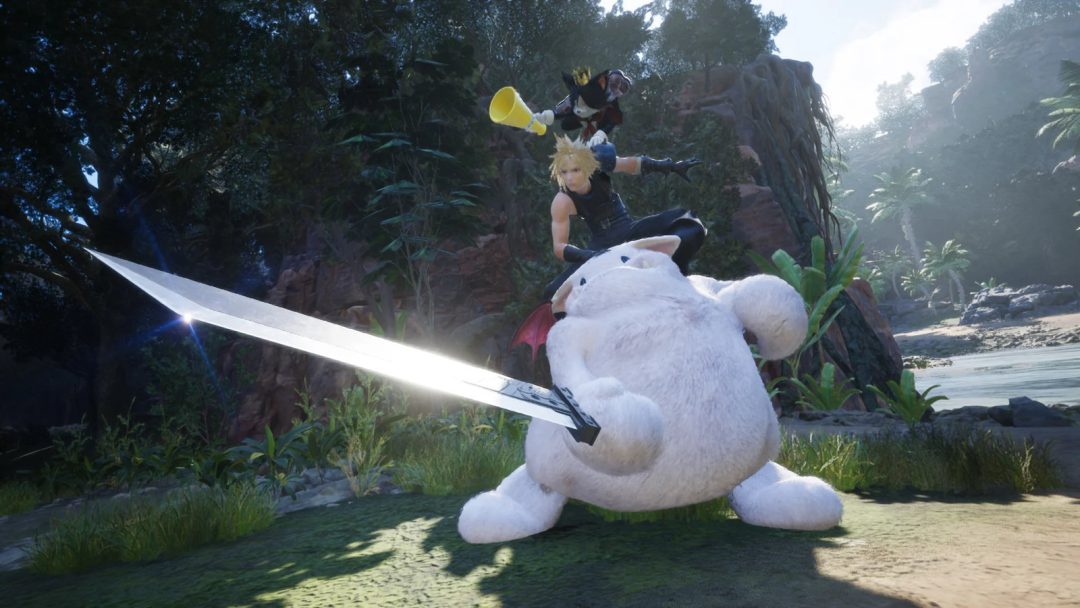
This might surprise you, but compared to the GPU, the CPU and memory constraints didn’t feel significantly more limiting to me in practice. That’s because the primary limitation in Nintendo Switch 2’s handheld mode is the GPU. Of course, there are differences in CPU performance and memory capacity, but many console games are originally designed around a 60fps target when it comes to CPU load. If you’re targeting 30fps, then there’s plenty of room to work with in theory.
That’s purely theoretical, however, and during actual development, many other issues arise. FFVII Rebirth constantly runs numerous systems simultaneously, including NPC behavior, background streaming, animation updates, and gameplay logic, so simply lowering texture or model quality isn’t enough. On the memory side, we reduced the memory footprint of environmental models and mesh data, and we also revisited streaming methods and caching strategies across the entire open world to ensure that available memory was used more efficiently.
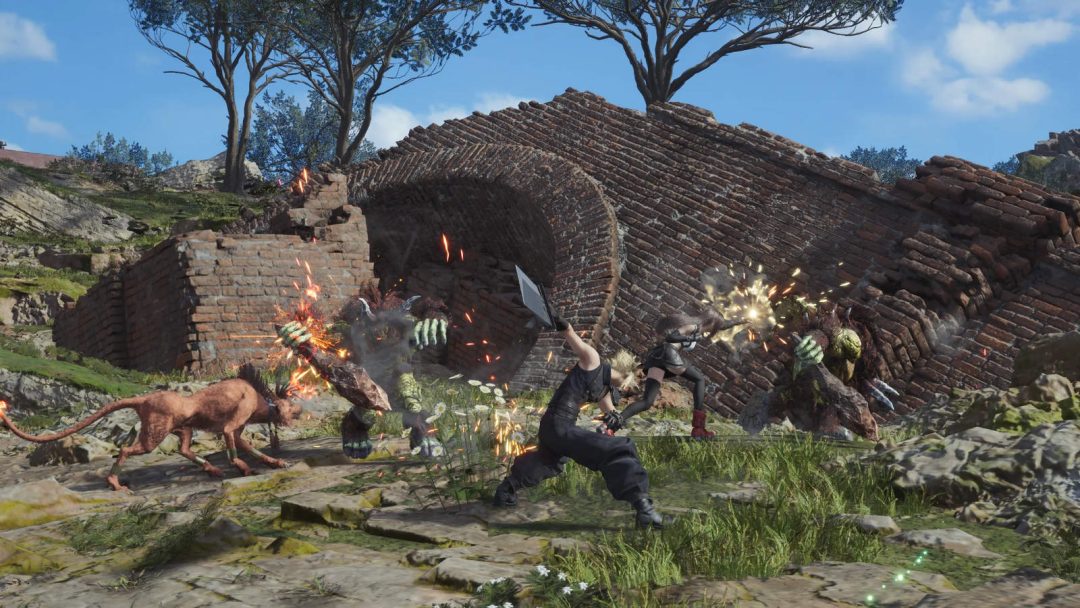
When it comes to CPU load, we focused on NPC and animation optimization. For example, we controlled animation update frequency based on distance from the player and managed how many characters could be updated simultaneously, thus reducing load in areas players are unlikely to notice.
Additionally, at the engine level, we strengthened SIMD support and introduced compiler optimizations, including two-pass PGO (Profile-guided optimization). Individually, these changes may seem modest, but their cumulative effect is rather significant.
In open-world environments, momentary spikes in load are generally a bigger concern than average load. We repeatedly measured and recreated situations where such load spikes occurred, then eliminated each bottleneck one by one.
To summarize, rather than merely adjusting asset quality, we made FFVII Rebirth feasible on the Switch 2 through comprehensive optimization of the entire system, including CPU usage, memory management, streaming, and animation processing.
—The sheer volume of assets in the game’s urban areas is especially impressive. Could you tell us what specific optimizations were carried out there?
Hamaguchi:
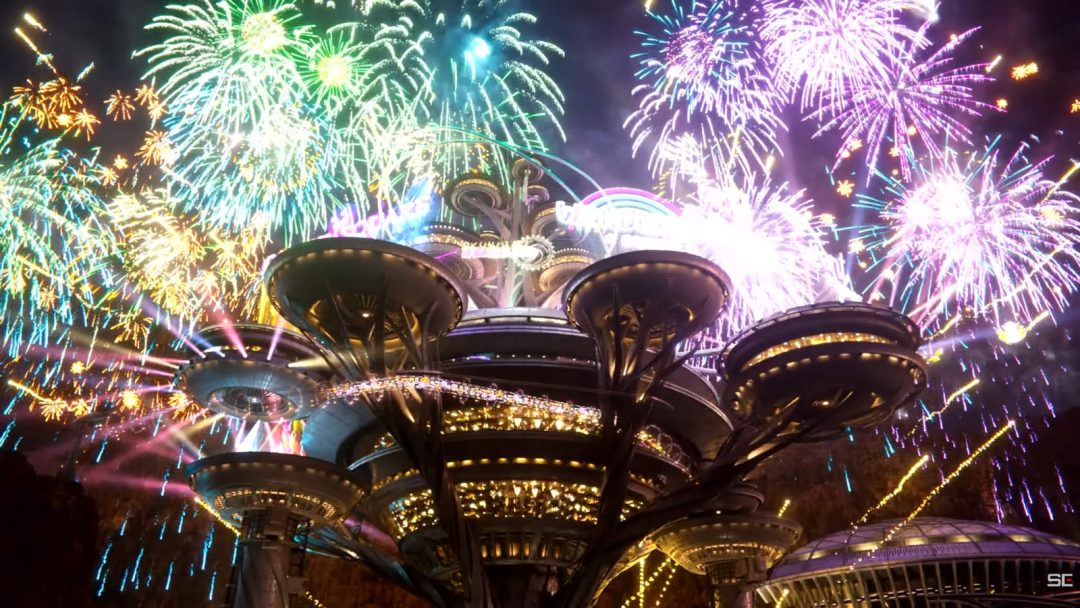
Cities were among the highest-load areas in FFVII Rebirth. Since environmental models, NPCs, and lighting are densely packed together, urban areas require a different optimization approach than the world map.
First, when it comes to environmental assets, we redesigned the LOD structure specifically for the Switch 2. We also adjusted shadow draw distances and the number of spotlights to optimize overall rendering load. Additionally, we revisited NPC counts and placement of small objects on an area-by-area basis, reducing system load while maintaining the sense of density players are supposed to experience.
I’d also like to note that our goal was not simply to reduce load. The bustle and atmosphere of the cities are core parts of the FFVII Rebirth experience, so we started from first determining what absolutely needed to remain, and only then proceeded with optimization. As a result, I believe we’ve managed to achieve a balance that works on the Nintendo Switch 2 without significantly compromising the sense of density and immersion unique to FFVII Rebirth’s urban areas.
—Nintendo Switch 2’s inclusion of NVIDIA’s DLSS upscaling technology (which uses AI calculations to make lower-resolution images appear higher-resolution) has drawn a lot of attention, but what specific DLSS settings were used in FFVII Rebirth?
Hamaguchi:
We do utilize DLSS in the Nintendo Switch 2 version of FFVII Rebirth. The game is designed with Dynamic Resolution scaling in mind rather than a fixed resolution, meaning the internal rendering resolution changes in real time depending on load. In handheld mode, the internal resolution ranges from 1344×756 to 672×380, while in TV mode, it ranges from 1920×1080 down to 960×540, with DLSS used to enhance the final image quality.
This follows the same general approach we adopted for the Nintendo Switch 2 version of FFVII Remake. However, we don’t view DLSS simply as a technology for increasing resolution. In an open-world title like FFVII Rebirth, many different factors – like draw distance, lighting and streaming – affect performance simultaneously, which makes deciding how to allocate limited GPU resources crucial. DLSS is one of the tools we use to achieve this, by flexibly controlling the internal resolution, thus balancing frame rate stability with immersive gameplay.
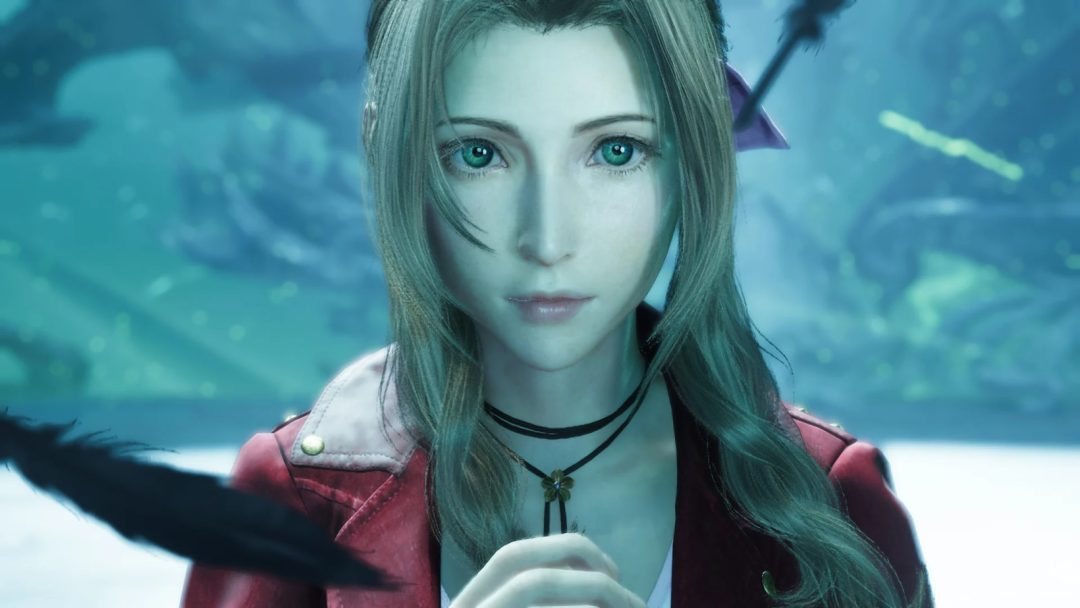
Another topic that came up with the Nintendo Switch 2 version of FFVII Remake was the interaction between DLSS and fine forms such as hair (related article), and we continued refining that aspect for Rebirth as well. We’ve optimized the visuals to look as natural as possible by, for example, applying subtle blur wherever necessary depending on the density and flow of the hair. Our goal wasn’t to make players aware of DLSS itself; we prioritized making sure the same world feels natural whether you’re playing in handheld or docked mode.
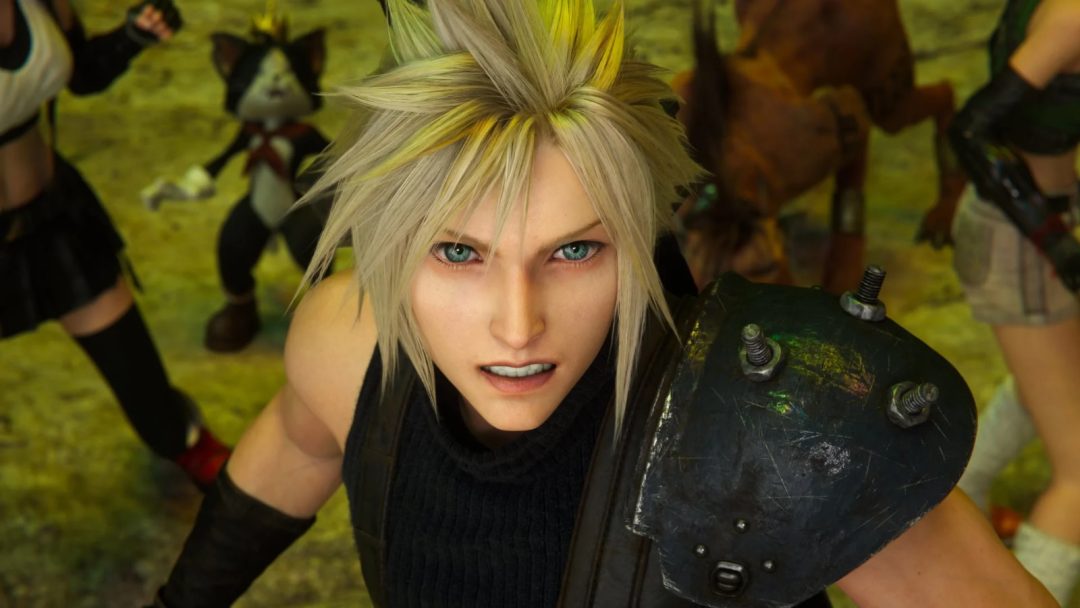
—What scenes in the Nintendo Switch 2 version of FFVII Rebirth would you say particularly demonstrate how you’ve leveraged the hardware’s capabilities?
Hamaguchi:
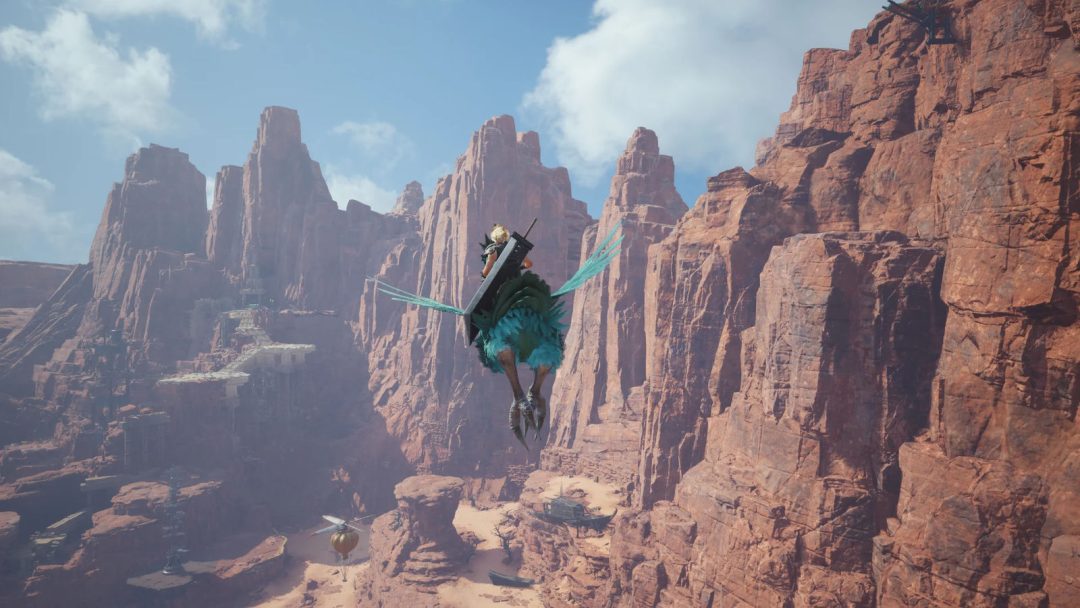
Personally, I think traversing the map at high speed on a Chocobo is one of the clearest examples. Since FFVII Rebirth is an open-world game, the amount of environmental data being processed within a single frame is enormous. Mountains in the distance, nearby vegetation, terrain, and lighting are all being streamed and rendered continuously, making these scenes technically very demanding.
So, when the player is moving at high speed, the amount of data that needs to be loaded increases dramatically. To handle that, we combined background LOD switching, streaming controls, Dynamic Resolution scaling, and DLSS, all with the goal of preventing players from noticing any loading or heaviness.
Another good example would be urban areas such as Kalm and Junon. These areas present a different kind of challenge from the world map because they house large numbers of NPCs, environmental objects, and lighting elements simultaneously.
In fact, there were instances where we had to make trade-offs to manage load – like adjusting small environmental props – which led to people noticing missing food on tables and the like. However, our priority was to ensure the player’s experience is consistent, not to recreate the exact same number of objects.
In scenes where reproducing everything one-to-one isn’t feasible, we focus on determining what should be preserved. As a result, we chose to prioritize maintaining the liveliness of the cities, their unique atmosphere, and the player’s sense of immersion in the world.
Throughout development of the Nintendo Switch 2 version, what we were most conscious of wasn’t showcasing differences in hardware specifications, but ensuring all players could experience the same journey. Whether in handheld mode or TV mode, we didn’t want anyone to feel like they were playing a different game. I believe our cumulative efforts of optimization aimed at achieving this goal are evident in scenes like these.
—Thank you very much.
Final Fantasy VII Rebirth is available for PC (Steam/Epic Games Store/Microsoft Store), Nintendo Switch 2, and Xbox Series X❘S.
[Interviewer: Nobuaki Shibuya]
[Editor: Aki Nogishi]