Fate/EXTRA Record showcase and publisher Q&A: Aniplex explains modern JRPG overhaul and new systems, addresses concerns about development handover
Details about Fate/EXTRA Record revealed by Aniplex during the Tokyo Game Show 2026 media session and publisher Q&A.

During Tokyo Game Show 2026, Aniplex held a media showcase event for Fate/EXTRA Record, which is scheduled to launch on January 28, 2027. At the beginning of the session, Aniplex staff also provided an explanation of the past changes in the game’s development and publishing structure, addressing concerns from fans. While Aniplex is currently handling the title, they clarified that the transfer did not come with any major changes to the status of development of the project itself.
Originally, Fate/EXTRA Record was being developed under a structure in which members of TYPE-MOON studio BB handled the project’s planning, while another company was responsible for the actual development. As development progressed to a certain point, the team went through a process of trial and error that included revising the development structure, eventually leading to Meteorise taking over development. Aniplex explained that this did not result in any major changes to the development direction that had already been established up to that point, and that development has continued while fully maintaining the project’s original concepts.
With this history out of the way, the team moved on to showcasing details about Fate/EXTRA Record, including its revamped battle system, updated Arena exploration, and brand-new interactions with Servants. Later in this article, we will also cover the Q&A session held during the media presentation.
Note that in-game footage shown is from a work in progress and may differ from the final product.
A full remake of Fate/EXTRA as a modern JRPG
Fate/EXTRA Record is a full remake of Fate/EXTRA, originally released for the PSP in 2010. While retaining the appeal of the original game, which was the first RPG in the Fate series, the remake comes with overhauled graphics and a rebuilt game system “befitting of a modern JRPG.”
In the story, the protagonist’s peaceful school life suddenly falls apart, and they find themselves drawn into a battle over the Holy Grail. Having lost their memory and with no idea who they are, the protagonist forms a contract with a Servant and subsequently becomes involved in the Moon Holy Grail War.
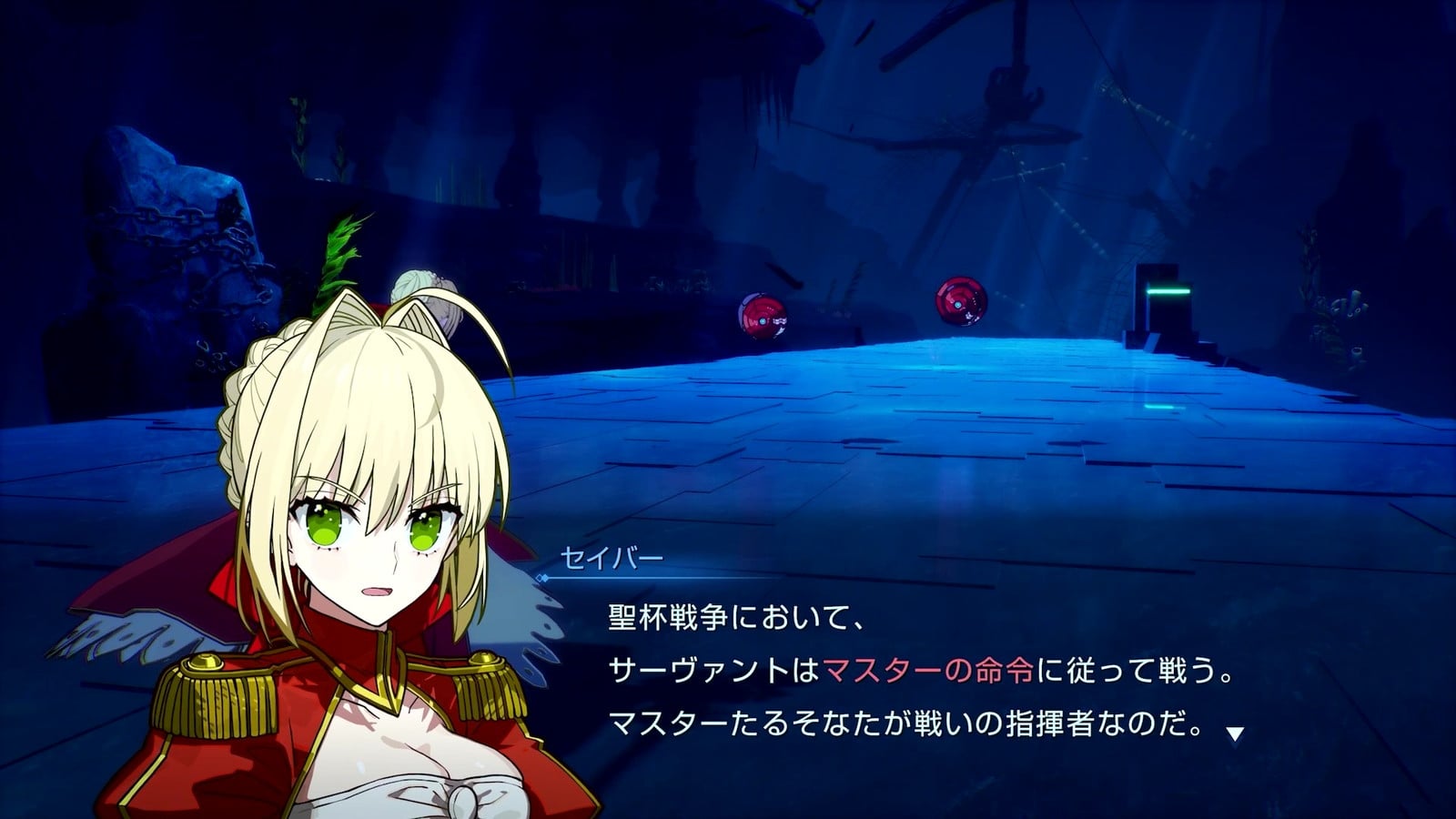
While the Masters battle each other by summoning heroes and great figures from the past as Servants in the quest for the Holy Grail, another major theme of the game is the protagonist’s pursuit of the mysteries surrounding their own existence. The protagonist can choose one of three Servants as their partner – Saber, Archer, or Caster – with each choice coming with a different combat style.
Arco Wada’s characters beautifully recreated in 3D
One of the major graphical improvements highlighted for the full remake is its character presentation. The characters have been recreated as 3D models based on illustrations by Fate/EXTRA’s original character designer Arco Wada. During dialogue scenes, the game also uses Spine animation based on newly drawn key artwork, allowing for detailed depictions of facial expressions and movements.

Dialogue is fully voiced, and depending on the scene, the game switches between a character sprite + text box layout, and a visual novel-style layout where text displays across the entire screen. Since the Fate series has long used visual-novel-style storytelling, the developers explained that Fate/EXTRA Record combines multiple styles of presentation to enhance immersion in the story.
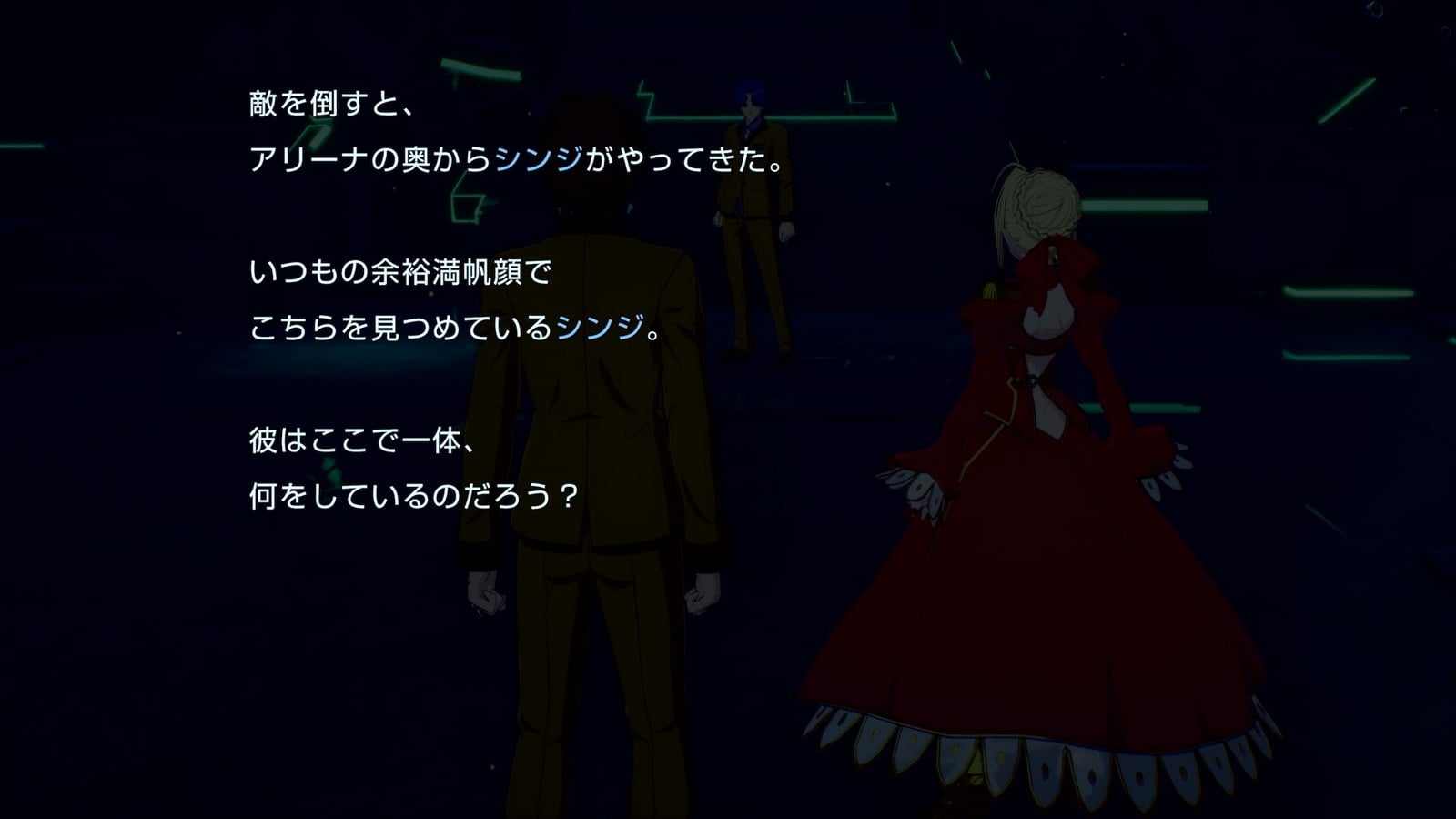
Players will also encounter choices during dialogue, with the Servants’ reactions changing depending on what you select. Rather than simply reading through the story, the developers see using choices to portray the relationship between the protagonist and their Servant as another important element of the game.
Conquer the Arena in seven days while gathering intel on your opponent
Next up is exploration. The protagonist explores the Arena, a dungeon existing within a digital world, while preparing for the decisive battle against an opposing Servant. Each round lasts seven in-game days, during which players explore the Arena, search for Cipher Keys, develop their characters, and gather information about their opponents.
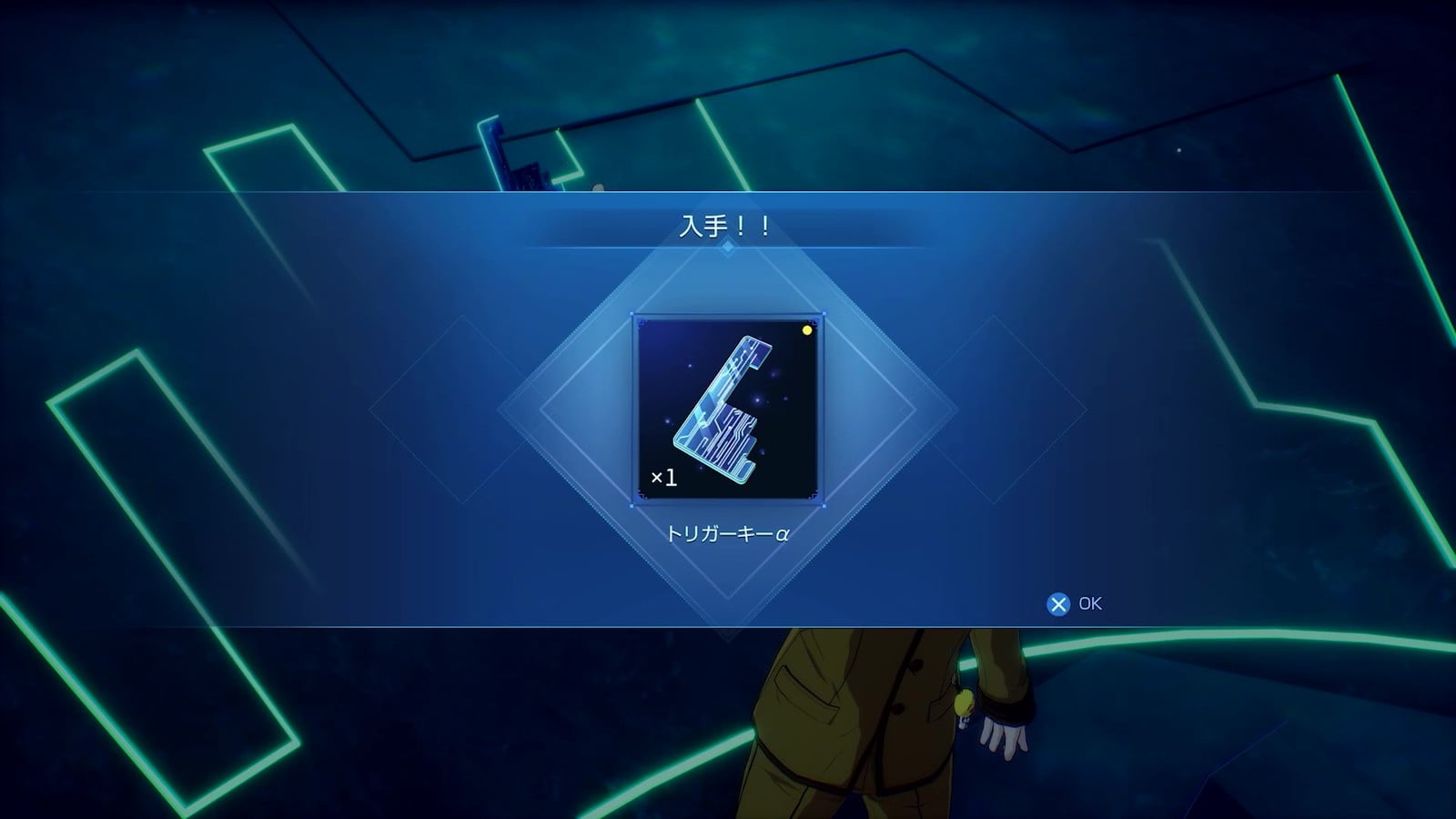
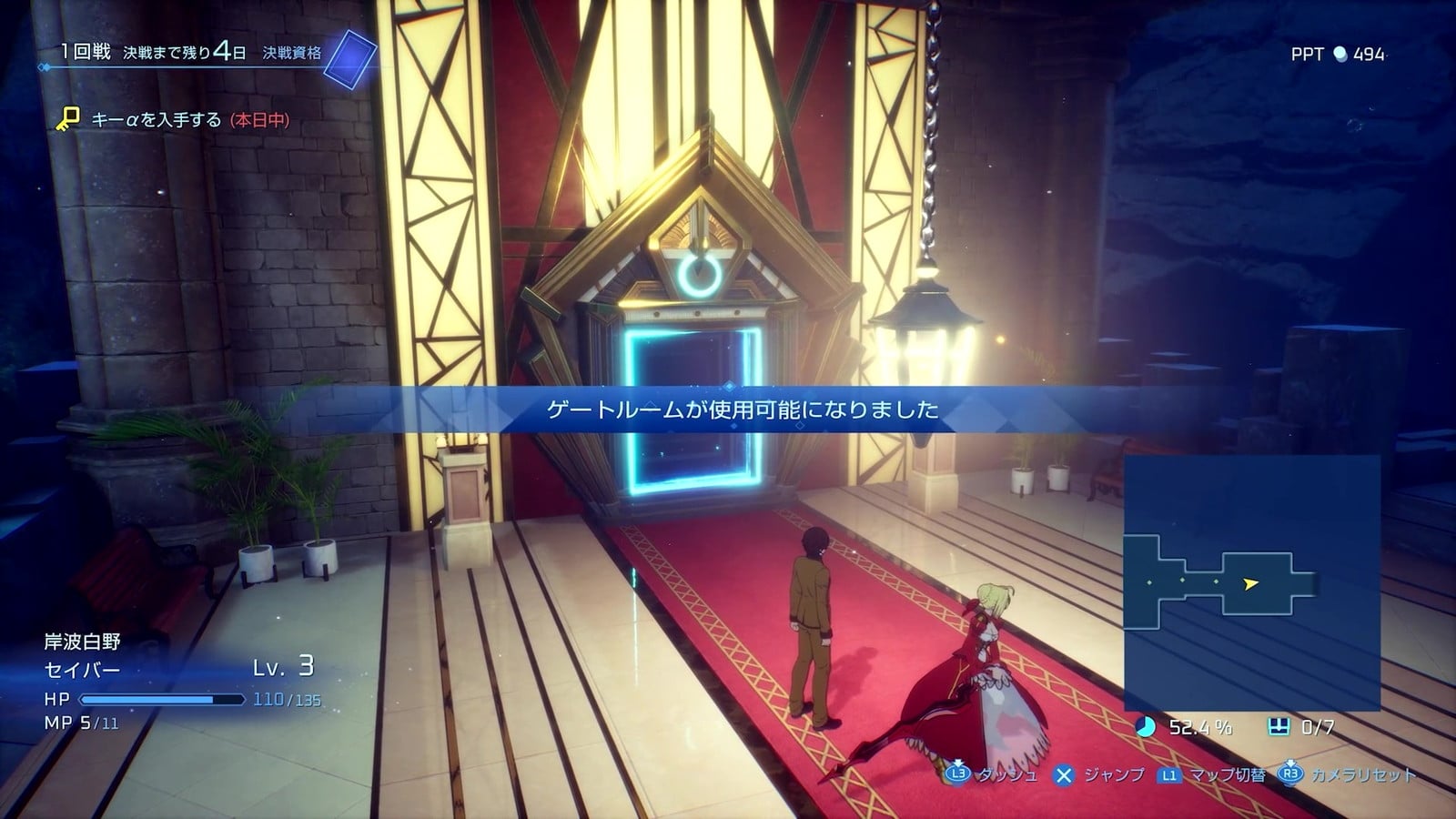
Fate/EXTRA Record’s redesigned and expanded Arena is divided into multiple floors. During the session, the developers showed the player progressing through Floor 1, encountering enemies, treasure chests, and various Arena gimmicks. A powerful boss known as a Gatekeeper awaits at the end of each floor, and defeating one rewards the player with a new Command (card). Collecting new Commands through repeated battles and using them to build your deck is a core part of game progression.
Treasure chests contain items useful for exploring the Arena, as well as records that can be played in “My Room” to listen to music. The Arena also contains facilities that allow players to return to their base. For example, if a Servant loses HP during exploration and the player becomes worried about continuing, they can choose to return to base. However, doing so advances in-game time by one day, so it should be used wisely given the limited seven-day period available for exploration.
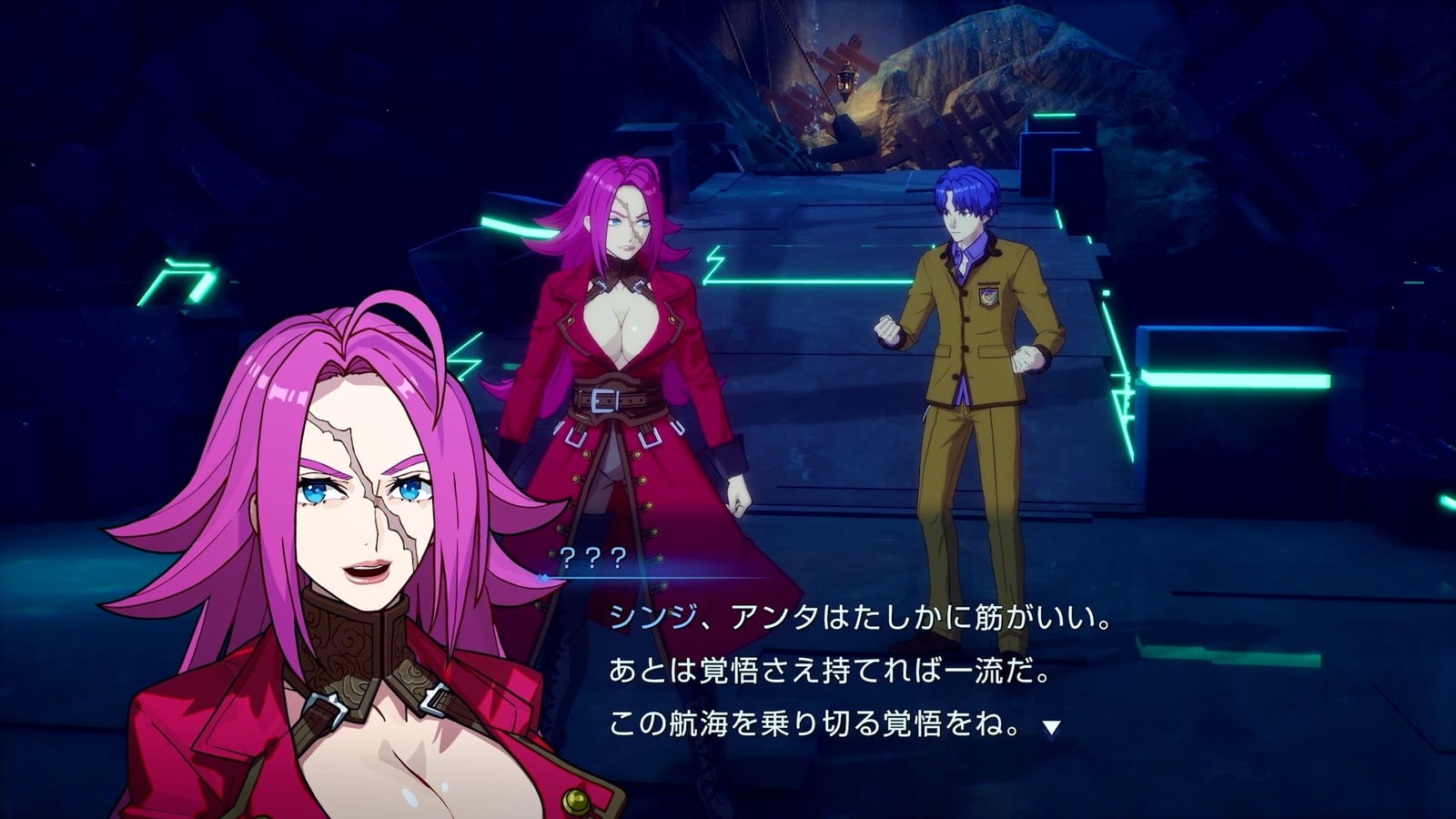
Players can also encounter the opposing Master or Servant while exploring the Arena, rather than simply fighting regular enemies. During the session, a scene featuring Shinji Matou, the first-round opponent, and his Servant was shown. While Servants are much more powerful than ordinary enemies, it’s worth mentioning that Arena encounters have a rule whereby the battle ends after three turns.
During these Servant encounters, players are assigned missions, such as dealing a certain amount of damage within three turns. In other words, rather than defeating the opponent, the objective is to fulfill specific conditions within the limited number of turns. For example, objectives may include dealing 50 damage by a certain turn or surviving the encounter. The demonstration showed the player using Guard to withstand the opponent’s attacks while trying to rack up damage.

The opposing Servant’s true name is also crucial information for determining their fighting style and weaknesses. Players must piece together clues obtained in the Arena, including the attacks they use in battle and the contents of their dialogue, to uncover the Servant’s identity. Through these mechanics, The Fate-like element of gathering intel on your opponent in order to win the Holy Grail War is incorporated into both exploration and the battle system.
The new deck-building battle system requires strategic decision-making
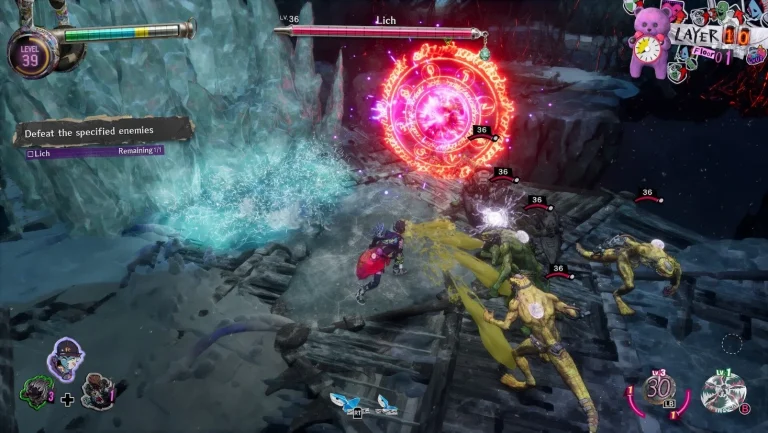
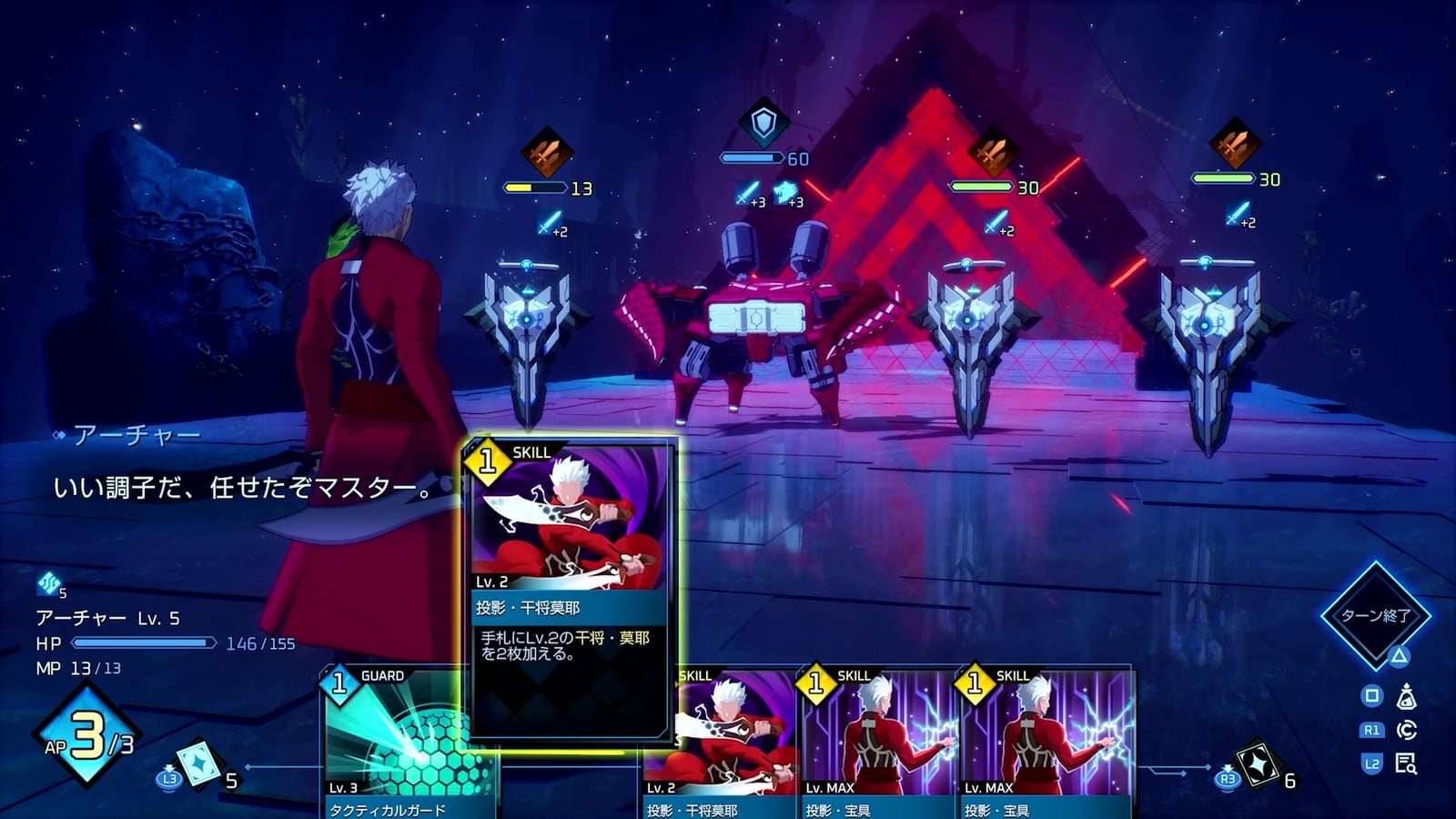
Fate/EXTRA Record’s battle system has been completely revamped from the original’s so-called “rock-paper-scissors” system into a deck-building, turn-based command battle system. Each turn, you select actions from the Commands dealt to you and act within the AP limit displayed on the left side of the screen. Each Command has a set AP cost, meaning you need to wisely allocate limited action points between attacks, defense, skills, and support.
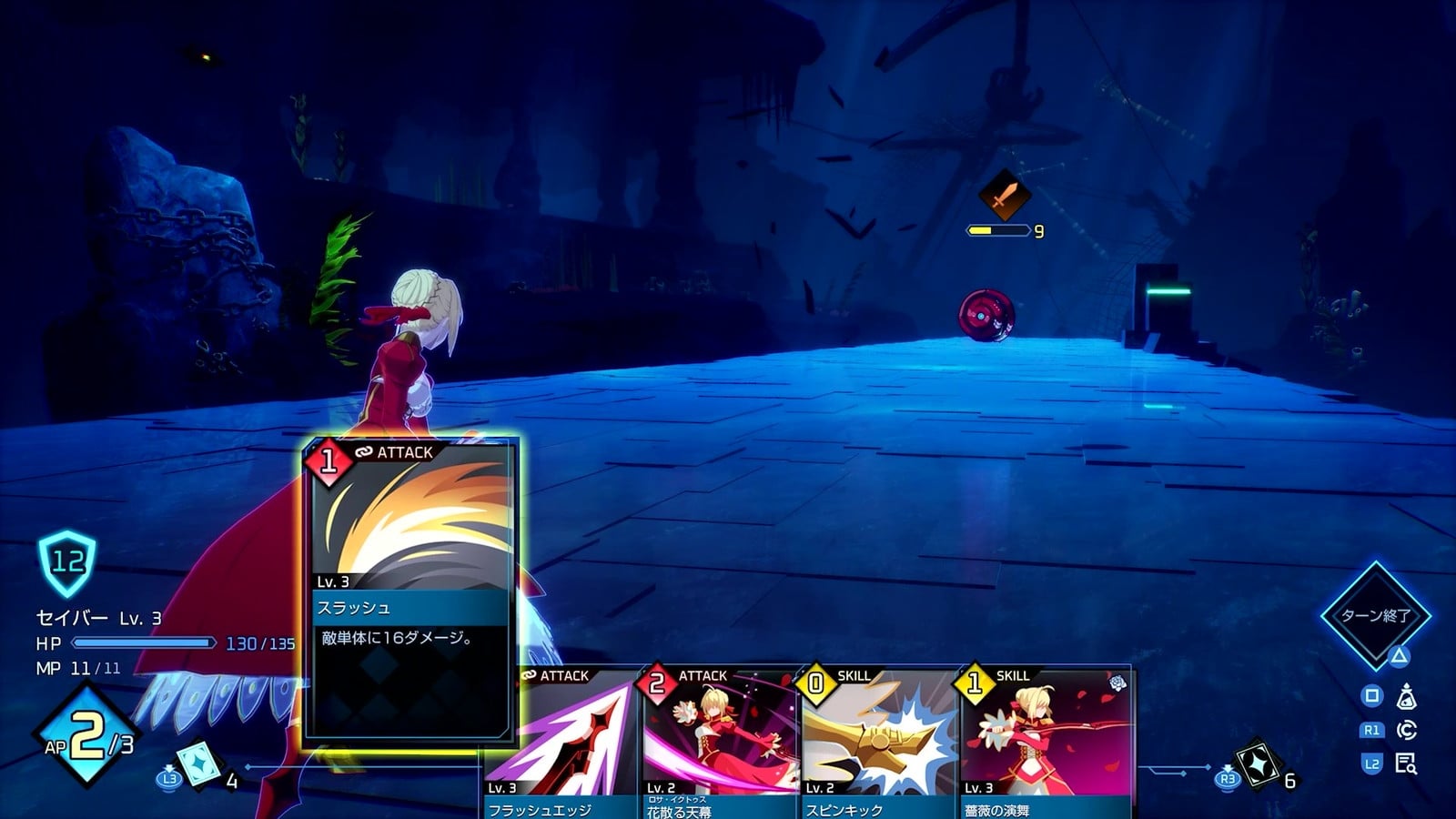
The basic Command types are Attack, Guard, and Skill, with different effects depending on the card. You can deal damage with Attacks, choose Guard after observing an opponent’s telegraphed attack, or use Skills to strengthen your next attack. The idea is to construct a course of action based on the cards dealt to you.
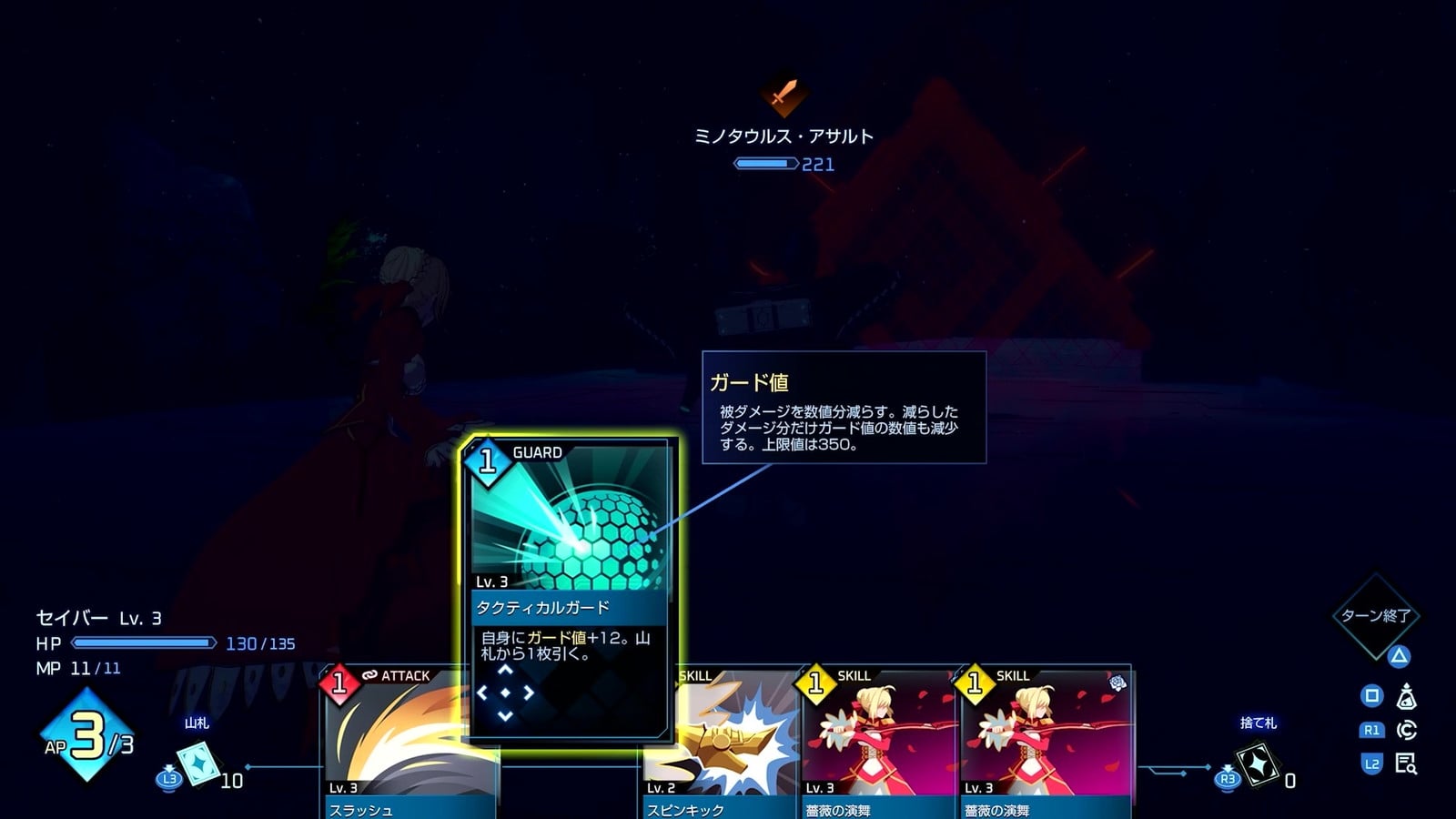
Guard has a set number of points representing the amount of damage it can mitigate, allowing players to prevent damage to their HP as long as the incoming damage is within that amount. During the showcase, the player was attacked with Guard points to spare, allowing them to end the turn without losing HP. However, if an attack exceeds available Guard points, the excess damage is dealt to HP, meaning it’s important to anticipate enemy attacks and secure enough Guard to withstand them.
Notably, by using three Commands bearing a Chain mark in succession, you can activate an “Extra Attack.” Extra Attacks are powerful attacks that do not consume AP, so creating chains is another key factor to consider when planning moves.
The Master also has support abilities available. During the demonstration, the player activated a Code Cast to strengthen their Guard and replace the cards in their hand. There are also items that restore HP and items that restore MP, the latter of which is required to use Code Casts (support skills). Players will therefore need to combine Commands with items and Code Casts to overcome different situations over the course of battles.
The Arena also comes with gimmicks not limited to battles
Exploring the Arena is not limited to fighting enemies, as players will also encounter field gimmicks that they can use to advance. The session showed examples like the player dodging interference from an enemy Master throwing bombs, as well as gimmicks where the player manipulates a boat-shaped object or chains to clear a path.
Interactive “Servant Time” events can also occur while exploring the Arena. These events allow you to learn about your Servant and deepen your relationship through conversation, showing sides of the Servants that aren’t visible through battles or the main story. They also increase the Servant’s stats, so they’re beneficial gameplay-wise too.

Aniplex Q&A: Further developments for Fate/EXTRA are “undecided at present”
—Fate/EXTRA Record introduces several elements that were not present in the original, including a revamped deck-building command battle system and Servant Time, which allows players to interact with their Servants. For the full remake, could you tell us what aspects the team felt particularly needed to be changed in order to rebuild it as a modern JRPG, and conversely, what they prioritized carrying over from the original?
We wanted people who played the original game at the time to feel that this is truly a remake of Fate/EXTRA, so we adhered to the original scenario, and we have not changed iconic dialogue lines and such.
At the same time, we understand from the development team that their goal was to provide JRPG fans with a more entertaining and substantial gameplay experience. This is reflected in elements such as the deck-building battle system and the various gameplay mechanics within the Arena. Overall, the game systems have been rebuilt from the ground up.
—Is it correct to understand that developer Meteorise had been communicating with studio BB from the beginning of the project and has been responsible for development throughout?
During development, we went through a process of trial and error, including revising the development structure, and were looking for a partner company to collaborate with. That process eventually led to Meteorise taking on development.
—We were able to see Fate/EXTRA’s distinctive progression involving exploration, gathering information, and learning about your opponents’ identities and fighting styles. How have these elements been improved in Fate/EXTRA Record compared to the original?
The basic experience of gathering information through conversations with enemy factions and NPCs, observing opponents’ fighting styles, and examining documents has been carried over from the original. At the same time, we have made adjustments to make the information-gathering phase itself more intuitive.
—During the session, you explained Saber and Archer’s abilities. What kind of abilities does Caster have? If possible, could you tell us more about her?
Caster’s distinctive feature is her time-bomb-like Spell Commands. By combining cards effectively, players can deal extremely large amounts of damage with a delay. She also has a wide range of options for inflicting disadvantageous status effects on opponents, so I think she has a fairly tricky playstyle.
—Could you also explain Saber and Archer’s abilities again?
Saber is designed to let players enjoy dramatically increasing her firepower by accumulating and combining Rose Commands. With Archer, players can tinker with various strategies, such as steadily building up damage by chaining attacks, or aiming for a one-hit kill using Hunter’s Marks and Projection Noble Phantasms.
—In the demo version, items could not be used while exploring the field. Will this work the same way in the full version?
The demo version was configured so that players could not open the menu, but in the full version, you will be able to use items and switch your Mystic Code (Code Cast) while making your way through the Arena.
—In deck-building games, it seems fairly standard to be able to see how much damage an enemy will deal. Why have you chosen not to display this in this game?
We understand from the development team that displaying predicted damage and turning the game into one where players have to calculate precise numbers would inevitably raise the barrier to entry, which is why they have chosen not to display it in this game.
—The battle system has undergone major changes. What was the goal behind this? Could you tell us how the team arrived at the current card-battle format?
The developers place importance on the fact that this is an RPG. For the remake, the first priority was to give the game greater depth as a gameplay experience. They considered several strategically focused battle systems that would be suitable for a modern game, and ultimately chose a deck-building system.
—To what extent can customizing your deck change the range of battle styles available to each Servant? For example, would it be possible to create a “physical-attack-focused Caster” or a “Saber with as many moves as Archer”?
Generally speaking, each Servant has their own unique cards and deck, so you will be developing your strategy within the pool of cards available to each Servant. The developers also said that giving players too much freedom would make the game difficult in its own way, so they put considerable effort into finding the right balance.
—Since the release of the PSP version of Fate/EXTRA, the world of Fate has expanded considerably. Fate/EXTRA Record is now being released as the latest entry in that evolution. Are there any elements brought over from other Fate works, or homages, beyond those that have already been revealed?
Unfortunately, we can’t comment on anything beyond what has already been revealed right now. That said, among the things that have already been made public, for example, is that Lewis Kuonji has taken over the roles that the Aozaki sisters originally played.
—Depending on the response to this game, is there a possibility that further developments for Fate/EXTRA could emerge?
Now that Aniplex has taken on the project, we would like to consider possibilities such as that as well. However, nothing has been decided at present.
Fate/EXTRA Record is scheduled to launch on January 28, 2027, for PC (Steam), PS5, PS4, Nintendo Switch, and Nintendo Switch 2.
ⒸTYPE-MOON All Rights Reserved.

Yuuki Inoue
Articles: 9Related Posts