Lost Museum is an art-inspired visual novel featuring object head characters and a scenario by veteran writer Rika Suzuki. We talk to the producer about how the title came to be
AUTOMATON West interview with Lost Museum -Echoes of the Chromageists- producer Honoka Ohara.

Japanese publisher Happinet announced their upcoming visual novel Lost Museum -Echoes of the Chromageists- (hereafter, Lost Museum) on September 3.
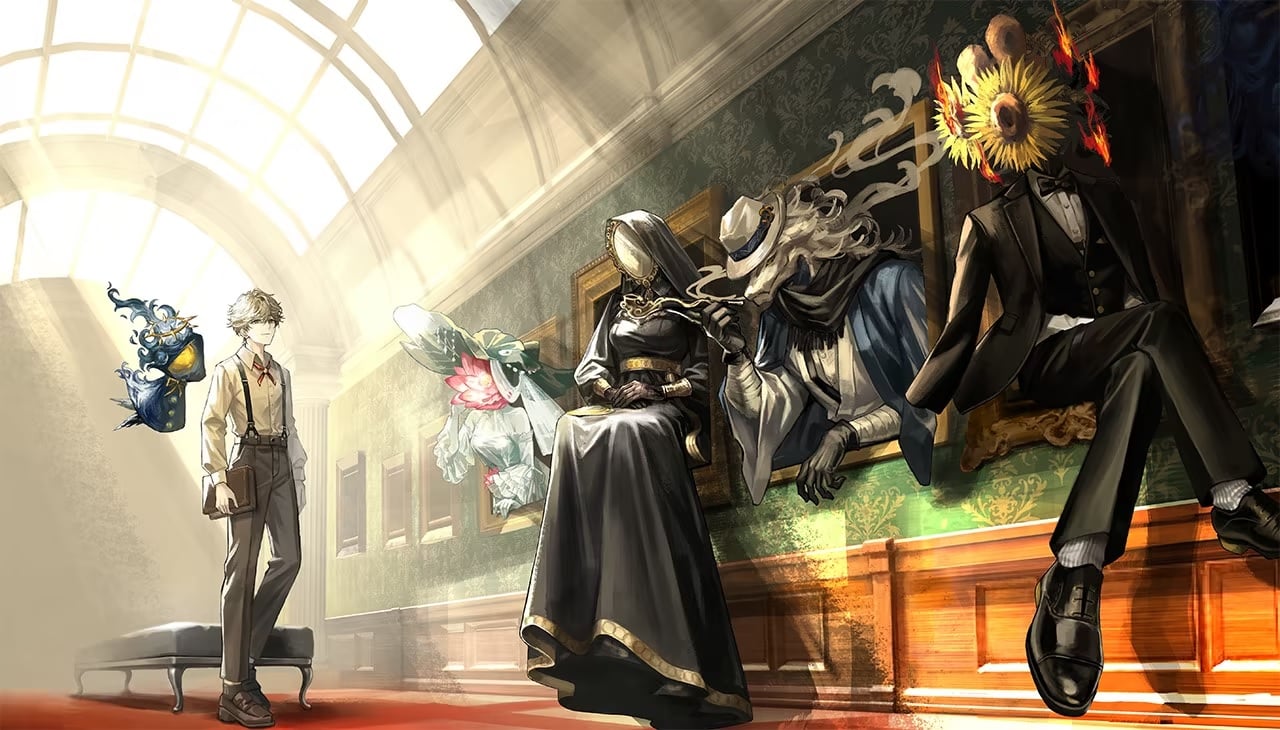
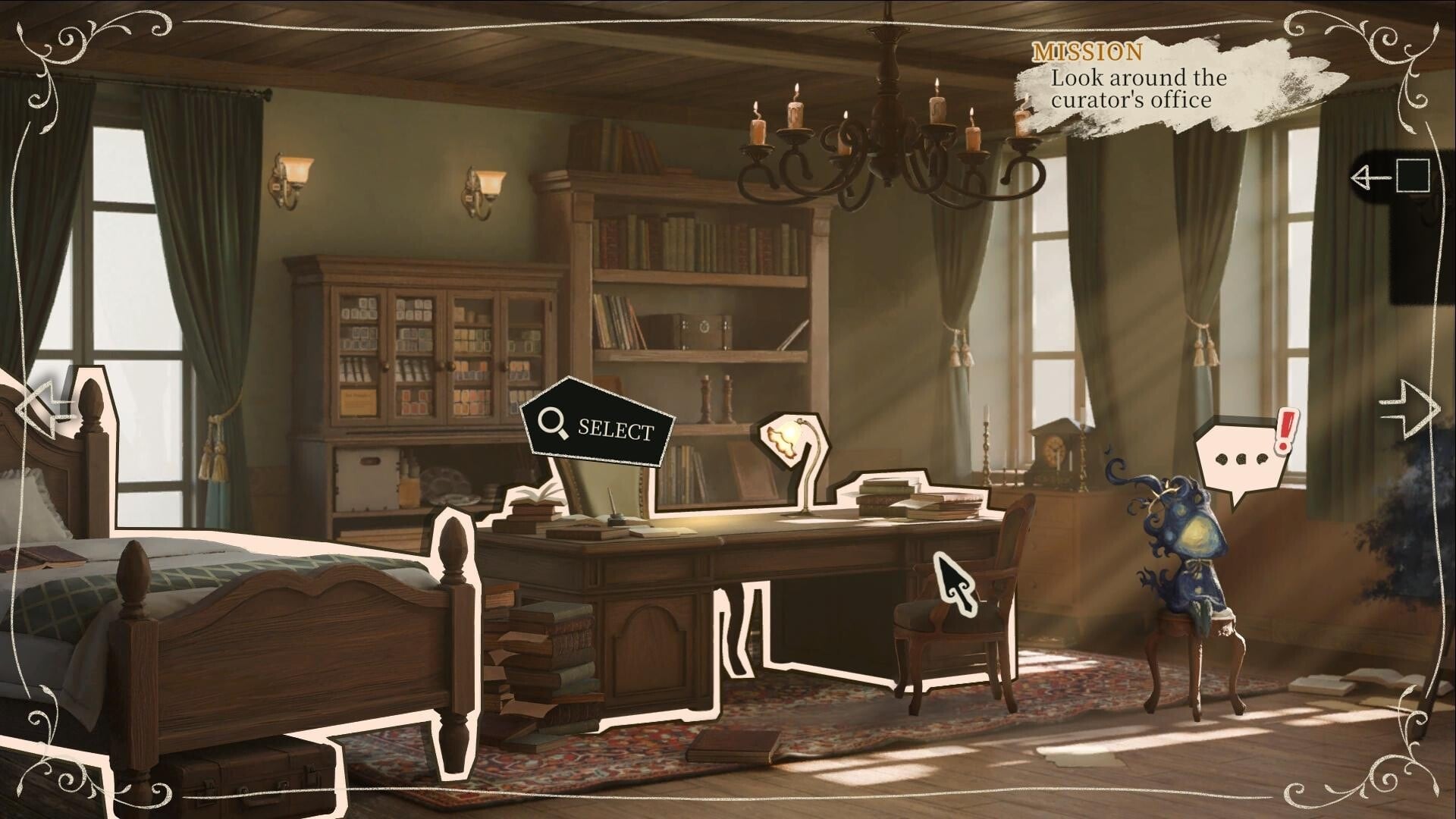
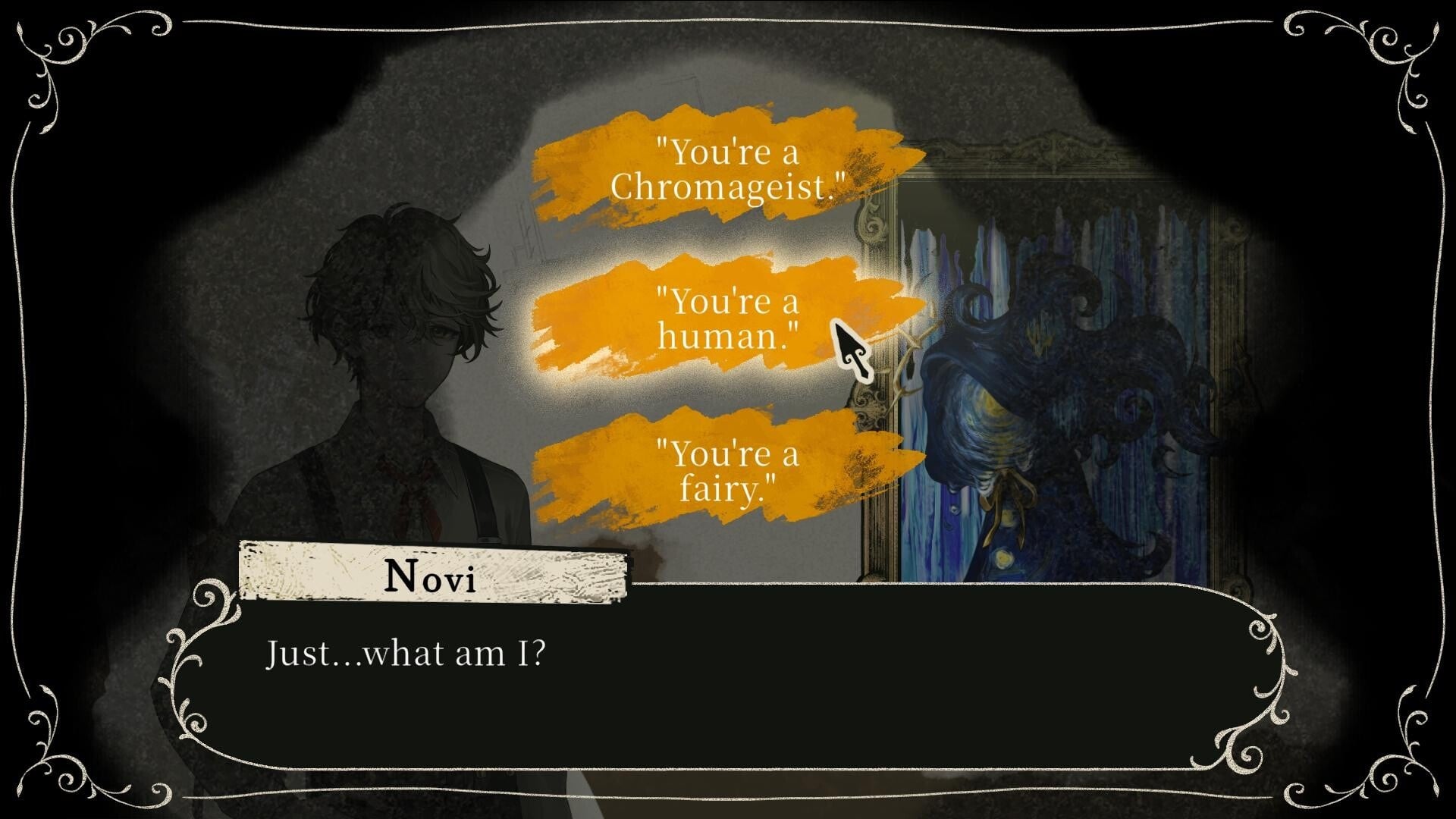
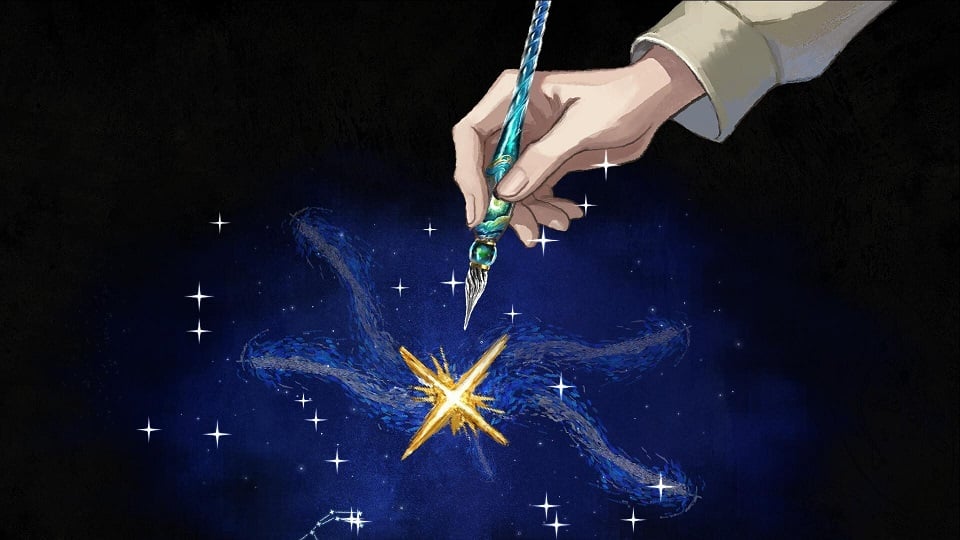
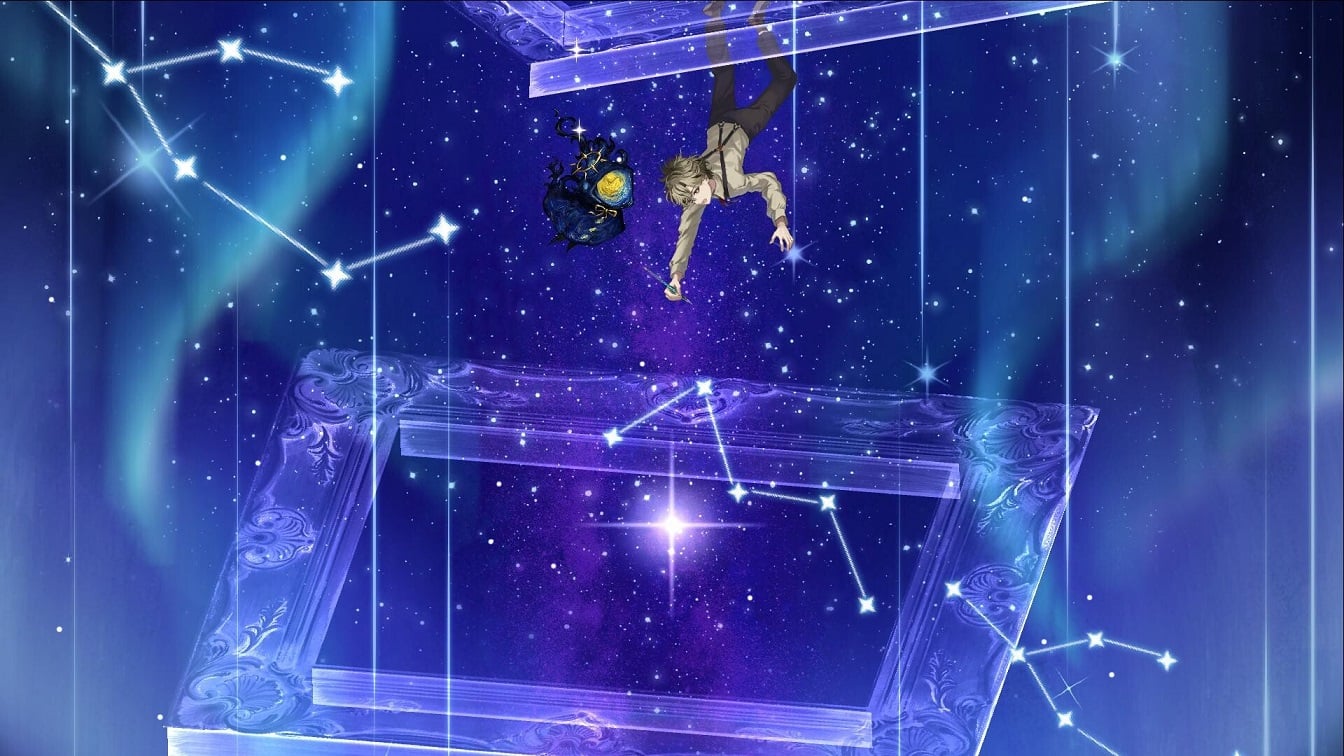
Lost Museum is a point-and-click adventure telling the tale of Chromageists, beings with strange heads that embody the emotions and memories that were woven into paintings. Vince, a boy searching for his missing older brother, stumbles into an otherworldly realm known as the Lost Museum, where these Chromagesits reside. There, he acquires a “magic pen,” whose mysterious powers he uses to uncover the emotions within the paintings and unravel the mysteries behind the Chromageists’ lost memories.
During Tokyo Game Show 2026, where Lost Museum also showcased its first playable demo, AUTOMATON had the opportunity to sit down with the title’s producer Honoka Ohara. We asked her about how the game’s concept came to be, the “object head” character designs, and what it was like working with visual novel veteran Rika Suzuki.
—Could you please introduce yourself?
Honoka Ohara (hereafter, Ohara):
My name is Ohara, and I work at Happinet’s Game Publishing department. I am the producer of Lost Museum.
—What kind of game is Lost Museum? What are the unique features that set it apart from other visual novels?
Ohara:
It’s a visual novel adventure game centered around paintings and characters known as Chromageists, which fall into the object head character design trope. Through interactions with the protagonist Vince, the Chromageists recover their memories, which is how the story unfolds.
While it features point-and-click exploration elements typical of adventure games, I think a unique part of the game is the “connecting stars” action, where the player has to solve a one-line drawing puzzle in order to recover the Chromageists’ memories. Also, I think games centered on paintings are pretty rare, so that’s another unique point.
—Could you tell us more about the gameplay?
Ohara:
Gameplay is divided into several parts. First, there’s the visual novel part, which serves as the foundation of the game, primarily focusing on dialogue. In between them, there’s an exploration part where you gather information using point-and-click mechanics. There is also a “Chromageist Appraisal” part where you use the gathered information to extract new details about the Chromageists.
As you repeat exploration and Chromageist Appraisal, you’ll gradually accumulate knowledge about the Chromageists, their feelings, and the memories they lost. Chromageists are beings originally displayed as paintings, so they are influenced by the feelings the artist tried to convey while painting them, and the memories of those who viewed them. Based on this, the cycle ends in the final Restoration part, where you reconstruct the memories once witnessed by the Kaigami.
—Why did you decide to set the game in an art museum?
Ohara:
I first moved to Tokyo a few years ago, and at that point, I still hadn’t been to many art museums. But since there were so many of them in the vicinity of my neighborhood in Tokyo, I had the opportunities to visit various different ones, and I ended up getting hooked. That’s when I realized that surprisingly few people around me actually visited art museums. I thought it was such a shame to have so many art museums in the area but not visit them.
Around that time, there was an open call for new game pitches within our company, so I thought, “If I made a game based on art museums, art lovers could be the main target, but it could also inspire people who are into games but haven’t been to an art museum to actually go.” That’s how everything started.
—What do art museums mean to you?
Ohara:
At first, I also didn’t have much knowledge about paintings. I’d only go because they were showing famous paintings, like works by Monet or Van Gogh, and I just wanted a peek. But then I found out that there are also explanations for the works in the museums, and especially at art exhibitions. Reading the various descriptions, I was able to understand how the artist felt when painting the piece, which I thought was fascinating.
For example, there’s a painting by Van Gogh called Almond Blossom, and at first, I thought it was just a pretty picture. But after reading the description, I found out that Van Gogh painted it to celebrate the birth of his brother Theo’s son. When I looked at the painting again, I could really feel how happy Van Gogh must have been at that moment. Being able to experience things like these is what makes art museums so captivating, so I hope I’ll be able to showcase even a little bit of that charm through Lost Museum and that everyone will enjoy it.
—Playing the demo, I got the feeling that the game draws some inspiration from Van Gogh’s life. I mean, the protagonist is named Vince…
Ohara:
That’s right. Though I don’t want to go into too much detail because that would end up being a spoiler. Our intention wasn’t exactly to make Van Gogh the central focus, but I personally like his art, and I get the impression that he has many fans among Japanese people.Just recently, the Grand Van Gogh exhibition was held, and the lines to enter were extremely long. If Lost Museum were to turn into a series in the future, I thought it would be fitting for the first installment to feature Van Gogh’s Sunflowers and the Starry Night. I also chose Van Gogh because he is an artist whose life is full of interesting anecdotes, so I thought it would be easy to weave them into the game’s scenario.
—Many of the characters in the game are based on real-life paintings, but how thoroughly are you researching those paintings?
Ohara:
That’s why I’m really nervous about not getting called out by art lovers (laughs). To be honest, the game is still in development, and we’re currently having Rika Suzuki write the scenario. However, as we’re moving forward with the script, I’ve been checking every single detail to make sure everything is okay, and I’m also constantly buying books on the topic and visiting art museums. We’re developing the game with clearly defined sources to ensure there are no errors.
—What was important to you when it came to designing the characters?
Ohara:
We commissioned Wit One and the designers from our development team to handle the character designs. But with so many visual novels being released in recent years, I was afraid the game would get lost in the crowd if we simply made it themed around paintings. That’s why, first and foremost, I wanted it to have a kind of visual impact that other games don’t have.
Also, since we’re estimating that women will be our main target audience, I wanted to create the kind of visuals that would really strike a chord with them, or should I say, tap into their particular “fetishes” (laughs). For example, we paid close attention when designing Sunny’s belt, or Nephia’s mermaid skirt.
—By the way, you’ve introduced five Chromageists so far, but will there be more?
Ohara:
We’ve been considering it, but due to the story’s setting, there aren’t many Chromageists in the museum that appears in the game, so they won’t be appearing in larger numbers…
Chromageists are like tsukumogami (inanimate objects that come alive and acquire a spirit) who dwell within paintings, and I hope that the game will make the players feel like there are actual Chromageists residing in every painting displayed in real-life art museums.
—I think the Chromageist designs that have sunflowers or water lilies for heads fall into the somewhat niche category of “object heads,” which is popular among online art communities. Why did you decide to turn Chromageists into object heads?
Ohara:
I already knew about the “object head” genre, and I thought it was fascinating. However, I got the impression there aren’t many games that feature such characters. And among the games in which object heads do appear, they often turn out to be human, or they serve as side characters instead of being the main focus.
Since object heads already have such a strong visual impact, I thought, “there’s no need for them to turn back into humans.” From a user perspective, I thought it would be great to have a game where object heads are the main focus, and where you can interact and become friends with them. That’s when I realized I could blend object heads with the painting theme, which led to the designs being finalized.
—Since Chromageists are basically anthropomorphized paintings, I get the impression that the fan community will have a blast making their own OCs for the game too.
Ohara:
When we first unveiled the visuals, I was immediately convinced that quite a few people really enjoyed them, so even from a development standpoint, we’ll be focusing on fostering a fan community before the game releases. Currently, our promotional efforts are also moving in that direction.
—Could you tell us how Rika Suzuki, the game’s main writer, came to be involved in the project?
Ohara:
Happinet also works in the distribution business, so it has connections with various manufacturers. Having previously worked in sales on another project that Suzuki-sensei was involved in, I was aware that she had a large fan base. So, back when we decided to make Lost Museum, Masaru Saito – the title’s producer and my superior – reached out to Suzuki -sensei because he had a prior professional connection with her. I’m personally not someone with a creative background, so we turned to Suzuki-sensei, who is highly experienced in creating visual novels.
—Did you give her any specific instructions on how you wanted the scenario to be written?
Ohara:
She is still writing the scenario, so we’re in the midst of a lot of back-and-forth communication. Suzuki-sensei has been proposing a lot of different plot ideas, but since the lore is mostly being handled by us, we’ve been maintaining close communication to make sure there are no inconsistencies between the two.
Since Happinet is in charge of character concepts and designs for the most part, we’ve been making sure to clearly communicate the direction and vision for the characters we’re aiming for, so that their appeal comes across to the players. For example, we’ve made a lot of requests like, “Sunny should be more energetic,” or “This character feels too much like an ordinary human, make them act more otherworldly.”
—Does the game feature multiple endings?
Ohara:
Since women are our main target audience, and I don’t think that all art lovers are necessarily gamers, we’ve been making conscious effort to ensure that anyone can complete the game. We’ve designed it so that players can read through the end of the story as smoothly as possible, along a linear path.
—How long can we expect the full game to be?
Ohara:
We’re aiming for a volume of content similar to that of recent indie games, so we’re estimating that the playtime will be around 10 hours.
—Did you use any other visual novels as inspiration or reference when developing Lost Museum?
Ohara:
As for recent games, I’d have to say Urban Myth Dissolution Center. As a matter of fact, our company handled the distribution for that title. I’ve always loved indie games, and I keep an eye on a variety of titles, but Urban Myth Dissolution Center particularly stood out to me. I was sure that it would become a hit, but it ended up being embraced among a much wider audience of casual gamers than I had anticipated.
When I looked into interviews and other various sources to find out why it became such a widespread hit, I learned that the developers paid close attention to ensure casual players could complete the game. This, along with their social media promotion strategy, were things I drew a lot of inspiration from.
—The first ever demo for Lost Museum was unveiled during this year’s Tokyo Game Show. What kind of feedback did you receive from people who actually got to try it out?
Ohara:
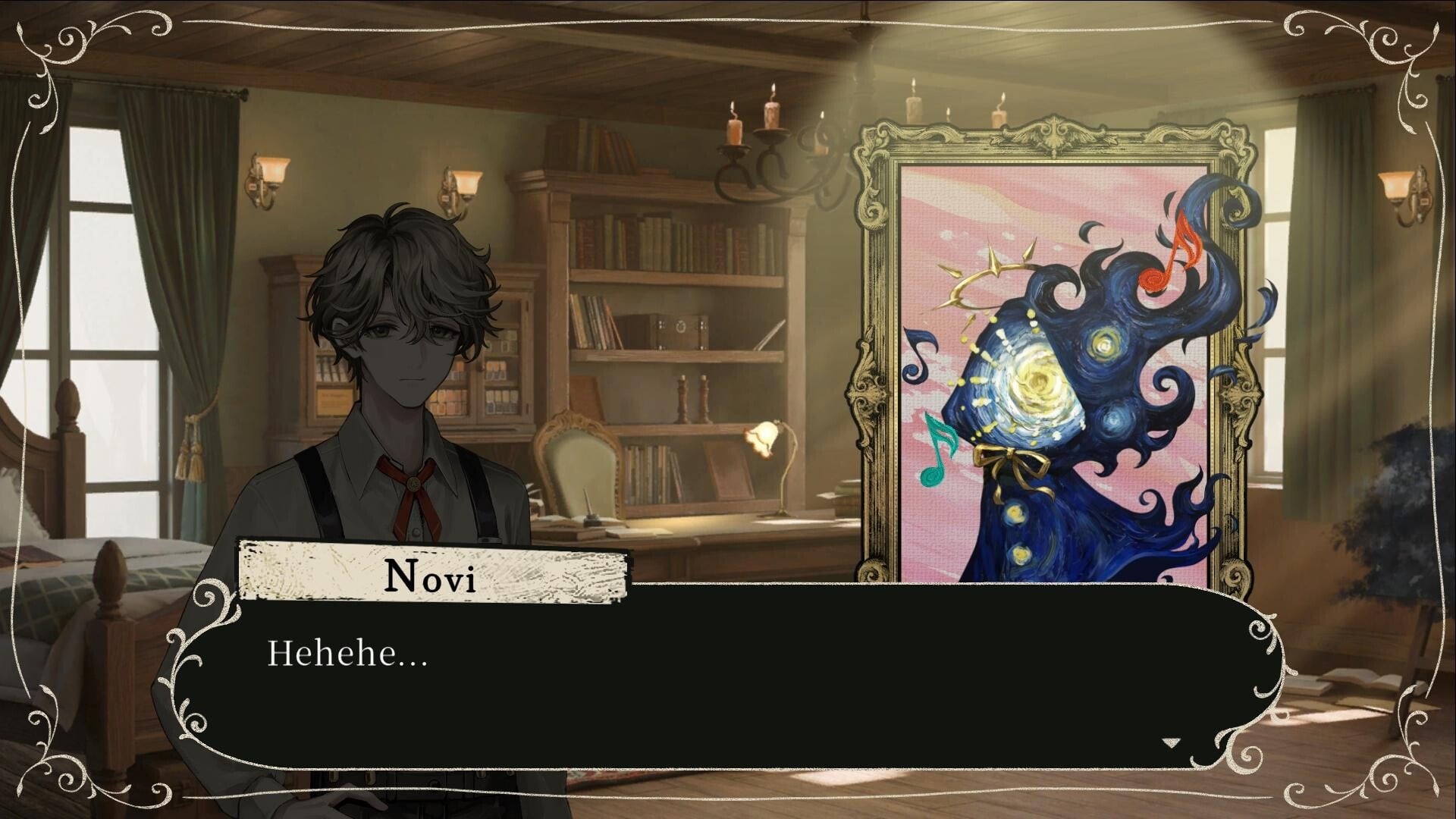
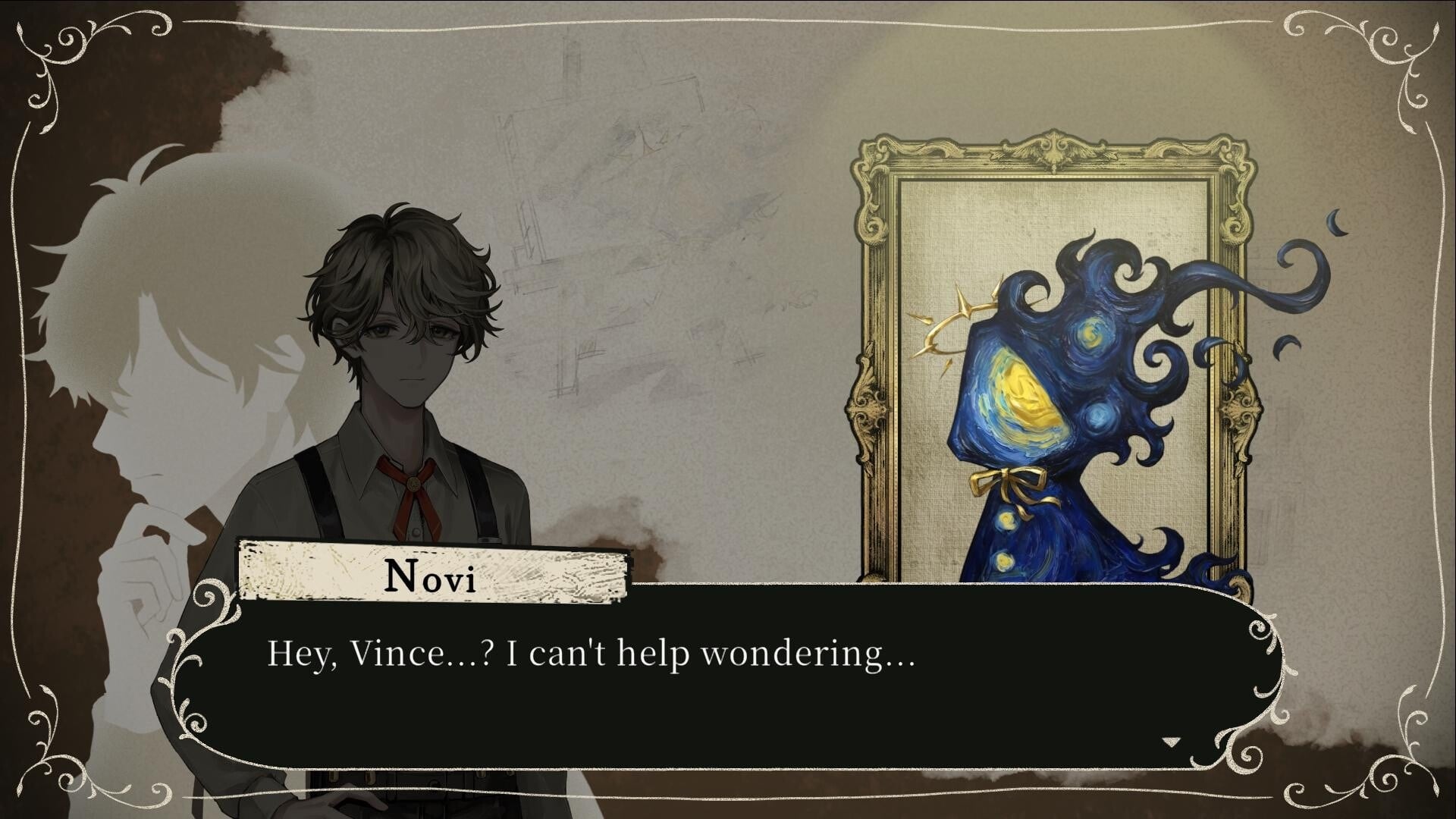
I still haven’t had the chance to speak to many people, but I’ve received feedback saying the worldview is wonderful, and that the characters are extremely cute. Although Novi is the only Chromageist appearing in the demo, players have also noticed their surprisingly wide range of expressions. In the initial stages of development, we were deliberating on how to create expressions for characters that don’t have faces, so I was super happy to hear that our efforts got across.
—What kind of people do you envision as your target audience?
Ohara:
Firstly, I’d love it if art enthusiast gave it a try. Also, I especially want people who don’t usually go to art museums but recognize the paintings (featured in this title) to play it. I hope that they first fall in love with the Chromageists, then become interested in the real-life paintings that inspired them, and that this eventually leads them to visit an art museum.
—Lastly, please share a message for our readers!
Ohara:
When we first unveiled the game in September, I honestly didn’t expect such a huge response. Thank you so much for following us on social media, checking the updates we share, and even coming to see us at Tokyo Game Show 2026. I’d be thrilled if you fell in love with the Chromageists, became interested in paintings, and even visited an art museum. Please stay tuned for future updates!
—Thank you for your time.
Lost Museum -Echoes of the Chromageists- is scheduled to launch in Q2 of 2027 for PC (Steam) and Nintendo Switch 2.

AUTOMATON WEST
Articles: 214Related Posts