

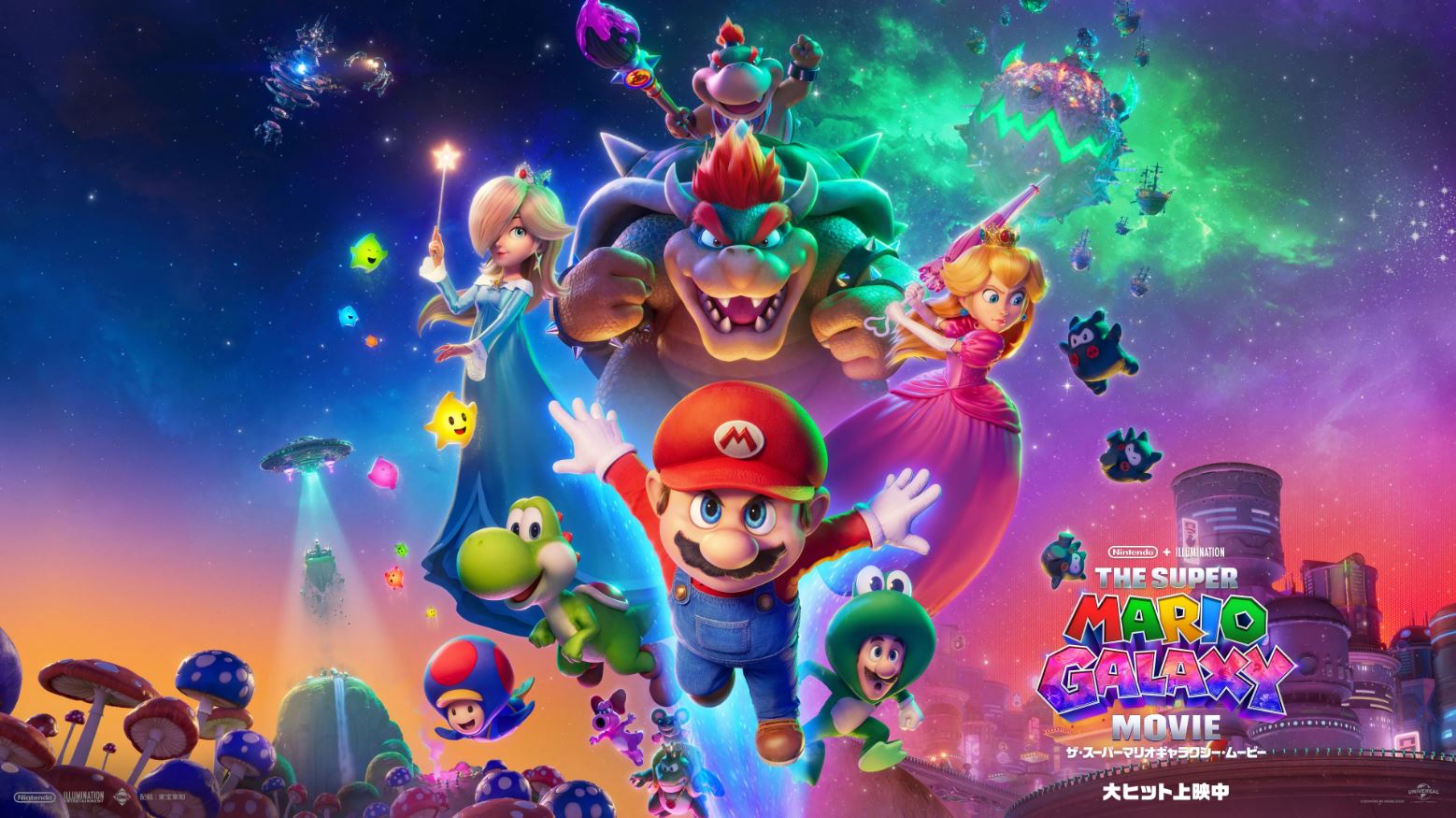
Following its US release at the start of April, The Super Mario Galaxy Movie finally started screening in theaters across Japan as of April 24, and it seems the domestic version comes with substantial differences when it comes to dialogue. Talking to Crank In, Nintendo’s Shigeru Miyamoto explained how the second installment following 2023’s The Super Mario Bros. Movie differs when it comes to Japanese localization and why his team decided to change its approach to the film’s script.
“Since this is a project made both in Japan and the US, we didn’t want the Japanese version to be just a localization of the English version, we wanted to properly write and craft it in Japanese,” Miyamoto says. While the first Mario movie was produced simultaneously in English and Japanese, the know-how gained from the process allowed Nintendo and Illumination to take a different route this time. As a result, The Super Mario Galaxy Movie was first produced in English and then entirely “rebuilt” in Japanese.
“Makoto Ueda from the theater group Europe Kikaku, who handled the Japanese script, is someone I’ve known for a long time. I want Mario and company to speak with the kind of natural dialogue you’d hear in one of their stage productions, but localization tends to alter the rhythm of conversations. Jokes differ between Japan and overseas, so we wanted to make the dialogue feel as natural as possible,” Miyamoto explains.
While the first Mario movie likewise included some adlibbing in its Japanese version, the actors were generally bound by the rule that they shouldn’t change the source material. But for the new film, Miyamoto says, the production team instructed the actors to “use the visuals as a base to create something entertaining in Japanese,” encouraging them to adlib to their hearts’ content. “Since we recorded the scenes with improvisation allowed and then refined them afterward, there’s a lot of care packed into the final product,” Miyamoto says.
The Super Mario Galaxy Movie is currently showing in theaters across the US and Japan. Digital streaming dates and platforms are TBA.



Interesting. I feel like most adaptations should do this but it varies on the trust the creators have for the Translator.
No thanks.
Faithful localizations is the way to go for most cases.
Greatly depends on the story and the medium. Some things shouldn’t be “localized” but simply translated, as localization frequently removes key context that completely changes the story.
But I’m also someone that thinks we should more liberally use subtitles in things, and that’s where it would work best. With translated subtitles that aren’t meant to make the story sound as if it is culturally relevant to the language you’re reading in, but enlightens you to what they’re actually saying.
I need to watch the Japanese version of this movie and the original. Probably a lot less girl boss Peach stuff, plus the added bonus of not having to hear Brie Larson.
Another moron scared of “girl bosses” kys please.
I concur!
I personally love girl bosses, but not when its PRINCESS PEACH, it completly contradicts her canon personality in the games.
Thats funny, i didn’t know the scripts were written in japanese since Illumination is french
That makes no sense. The HQ of a company doesn’t dictate what language a script is gonna be in, in any way.
Did you think they just read a French Script, translate it in their own heads, and then speak in Japanese?