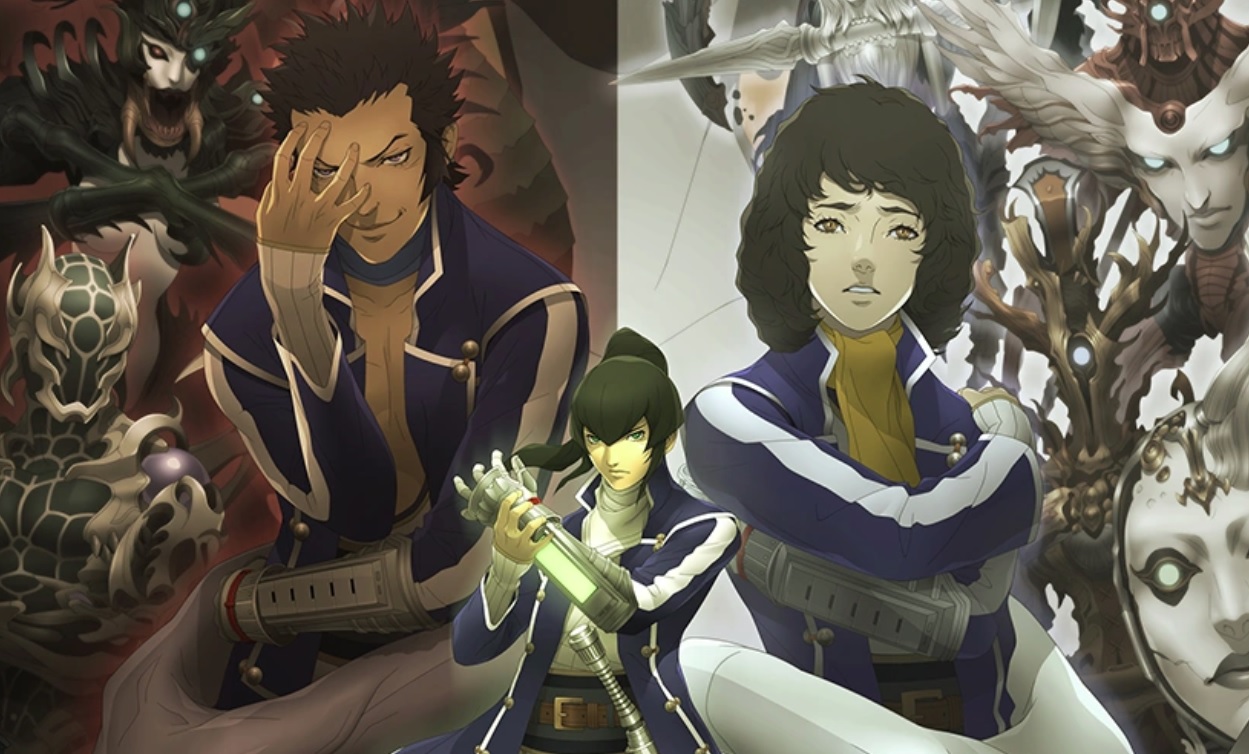
If you’ve been lurking on X these days, you probably know that Kazuma Kaneko, best known as the artist behind the Megami Tensei franchise and the early Persona series entries, has been using the platform to answer many of his fans’ questions and share some interesting trivia regarding his past (and future) projects.
Most recently, Kaneko addressed a long-standing rumor about the “Masakado curse” brought upon Atlus, which supposedly caused the bankruptcy of Index, Atlus’ parent company. According to what has over the years become an urban legend among Japanese Megami Tensei fans, the bankruptcy happened after Shin Megami Tensei IV’s developers allegedly decided to skip their tradition of visiting and paying respects to the tomb of Masakado, one of Japan’s most revered vengeful deities. To make matters worse, the character of Masakado played a major role in the narrative of SMT IV, which, according to many, further infuriated his spirit.
In his X post, Kaneko denies that Masakado ever brought any “calamity” upon Atlus, explaining that most of the story is misinformation exaggerated by the media. However, it is true that Megami Tensei’s developers were wary of the deities and demons they depicted in their games, to the point that they kept a tradition of undergoing exorcism when developing each of their titles. Though Masakado isn’t mentioned anywhere specifically, there are interviews which confirm instances of the developers going against that tradition.
In an interview with Dengeki Online, director Kazuyuki Yamai said that he deliberately decided to skip the exorcism tradition and take the risk of “getting cursed” when developing SMT IV: “This is just my personal policy as someone obsessed with the occult, but I think it’s fine to have a little bit of [the curse], considering the game is so closely intertwined with demons. It would be a bit rude, or should I say, insincere if we were making a game like this while also exorcising all the demons. Well, that’s my own personal opinion though. My stance is that it would be just right if I ended up getting a bit cursed and suffered for it.”

Only a few months after the publication of this interview and the launch of Shin Megami Tensei IV, Index officially filed for bankruptcy. Considering that Atlus has already “experienced” a few curses and supernatural occurrences (online users mention previous though minor instances of the Masakado curse, as well as the Miyaguji-sama curse), it was probably only natural for fans and occult lovers to “connect the dots” and attribute the bankruptcy to SMT IV’s “skipping of tradition.” As for how Masakado fits that equation, it was probably a mix of the fact that he appeared as a character important to the narrative, and the many legends of real-life curses with major consequences which earned him the title of a Great Onryo (vengeful spirit) in the first place.
Historically, Megami Tensei’s Masakado is based on Taira no Masakado, a real-life samurai who lived during Japan’s Heian period (8th to 12th century). Coming from Eastern Japan, he led rebellions against the imperial court in Kyoto, but was later slain in battle and beheaded. His decapitated head was carried to Edo (today’s Tokyo), and is now buried near Otemachi Station in Chiyoda City. Over the ages, Taira no Masakado became revered as a demigod, and has been considered one of the Three Great Onryo of Japan. He is enshrined across multiple Shinto shrines in Japan.
According to legend, Masakado’s vengeful spirit has been haunting Tokyo for centuries and causing misfortune to whoever attempts to defile his resting place or fails to pay respect. Most famously, he is said to have cursed Japan’s Ministry of Finance for building a temporary office on the grounds of his tomb after the devastating Great Kanto Earthquake in 1923. Many of the construction workers involved with the project, ministry officials, and even minister Hayami Seiji, passed away under mysterious circumstances after the building was erected. The temporary office was later demolished, but 17 years later, the Ministry of Finance offices were burnt in a fire caused by a lightning strike, which is also believed to be dueto the curse.
With all this in mind, it is completely understandable why someone would believe that Masakado’s spirit was haunting Atlus around the time of Index’s bankruptcy announcement, though Kaneko himself does not seem impressed with how far the rumors have spread.
Related: Megami Tensei artist Kazuma Kaneko says there are no plans to use gen AI in his next project