

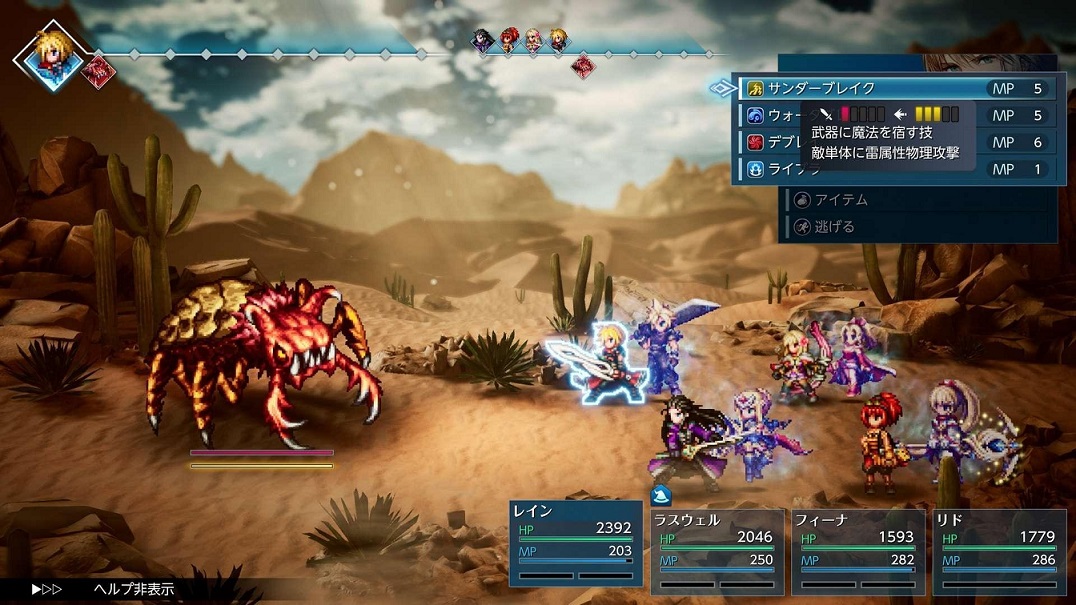
Square Enix just unveiled their brand-new title Final Fantasy Resonance, a reimagined, full-priced version of Final Fantasy Brave Exvius (hereafter, FFBE), a mobile RPG originally released in 2015. While it brings the now discontinued mobile title to consoles, it also introduces many new elements – the biggest one being the HD-2D graphics style, which blends pixel-art sprites with 3D rendered backgrounds.
Recently, AUTOMATON had the opportunity to interview the development team behind Square Enix’s upcoming title. We talked to producer Keisuke Nakashima, director Hiroto Furuya, combat director Takashi Shiraga, and art director Masahiro Saito, who told us more about the development process behind the new title, and how it fits into the Final Fantasy franchise as the first ever HD-2D title.
The first ever HD-2D title in the history of Final Fantasy
–What aspects of the HD-2D style does Final Fantasy Resonance inherit?
Keisuke Nakashima (hereafter, Nakashima):
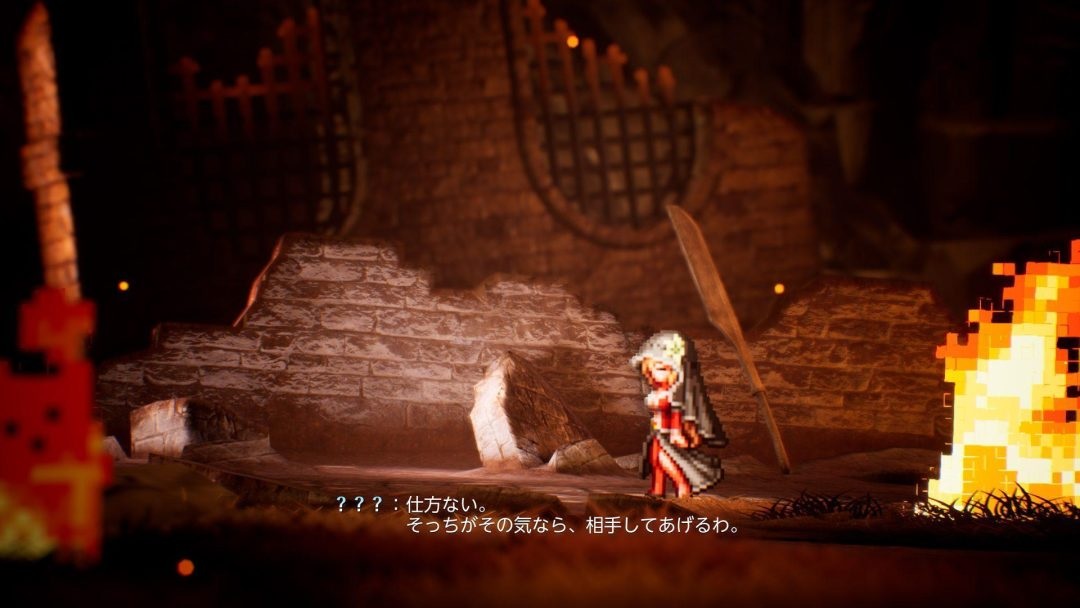
What’s most important to me when it comes to HD-2D graphics is the beauty of each individual frame when they’re cut out and viewed as separate illustrations. This is not easy to achieve, but it’s a kind of standard we must uphold if we’re aiming to be the champions of HD-2D. If you just randomly place the pixel art, it can end up looking out of place against the background. So, we’ve been trying out various different methods to ensure it seamlessly blends with the environment. There are times when only fixing the placement of the assets is enough, but in some cases, we even have to adjust the pixel art itself.
The overall optimal balance varies from location to location, and this depends on factors like the number of assets placed, or if there are any objects in the foreground. So, I think the unique feel of HD-2D graphics truly starts taking shape as we’re developing the game and adding these kinds of adjustments. And in Final Fantasy Resonance, we made sure to fine-tune every individual detail. Though, I’m certain all of this fine-tuning was a real challenge for our art director Masahiro Saito.
Masahiro Saito (hereafter, Saito):
That’s right. In my department, we have a lot of staff members who were involved in the development of the Octopath Traveler series and the HD-2D Dragon Quest Remakes. While gathering insights on the difficulties they faced on each of their respective titles, we polished the HD-2D visual style of Final Fantasy Resonance.
–While HD-2D graphics have been used for series like Dragon Quest and Octopath Traveler, I don’t believe there has ever been a Final Fantasy title that was promoted as a HD-2D game. Were there any details you were particular about when creating the first HD-2D-styled Final Fantasy?
Nakashima:
Just like how everyone was amazed when 1997’s Final Fantasy VII released as the series’ first fully 3D title, I want to surprise everyone with how Final Fantasy Resonance makes use of the latest pixel-art technologies. In order to achieve that, during the initial concept phase, we spent about 1 to 2 years meticulously conducting research.
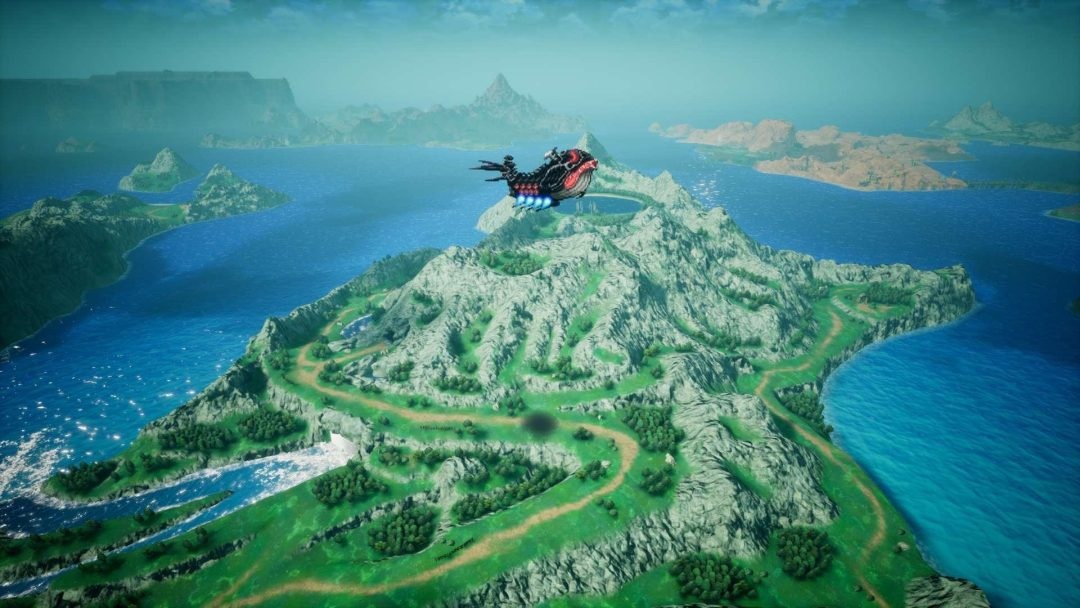
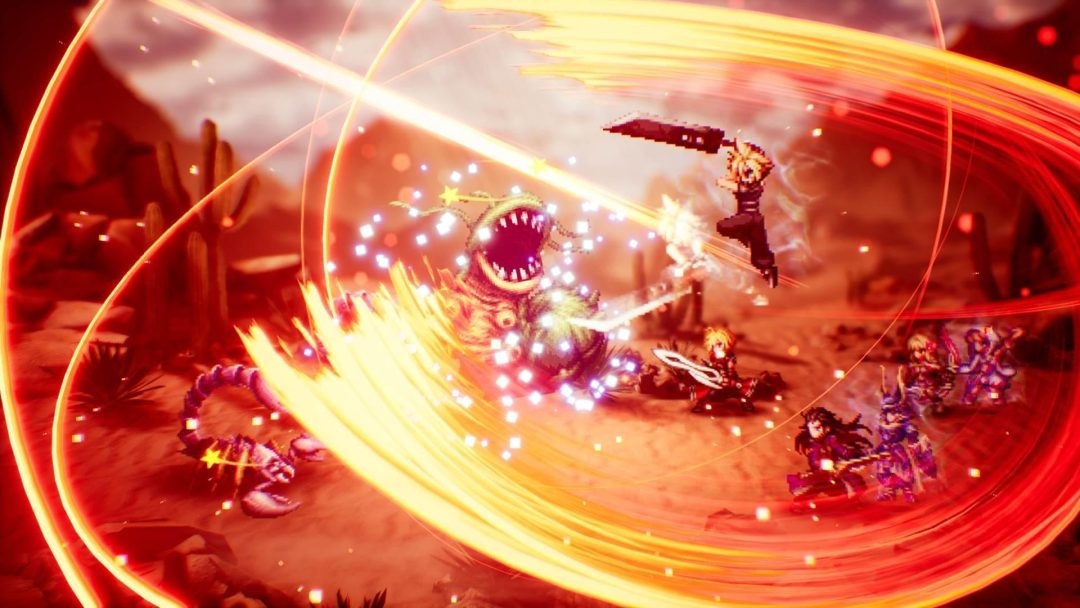
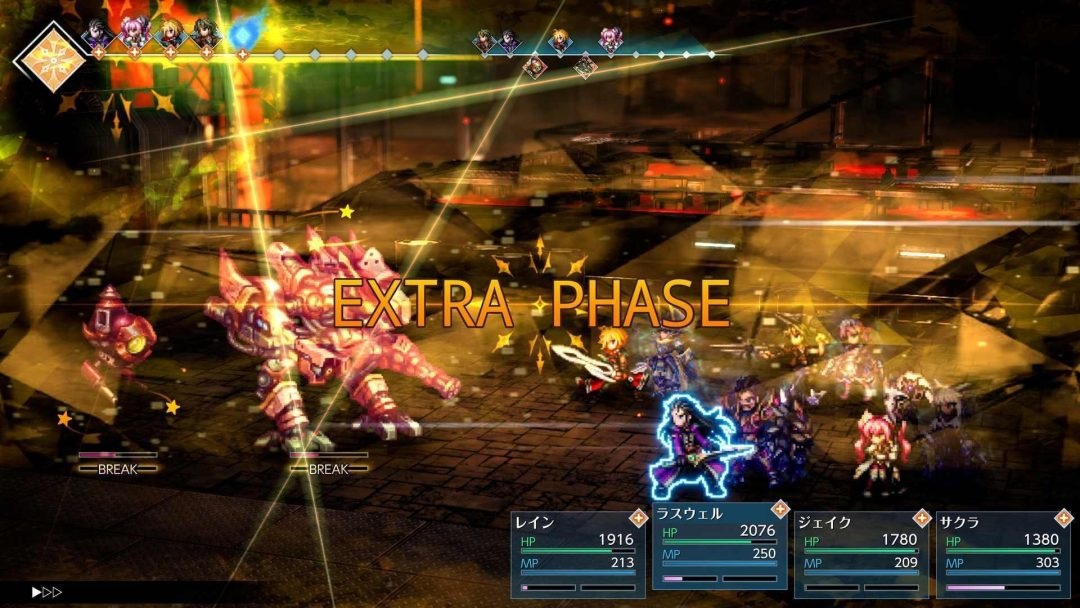
For the HD-2D graphic style of Final Fantasy Resonance, we paid particular attention to the visual presentation of event cutscenes. Previous HD-2D titles haven’t really explored the technique of using camerawork to depict movements of large in-game elements such as summon monsters or airships. However, we felt that this was necessary for the Final Fantasy series. The cinematic effects for event cutscenes and special attack animations unleashed during combat is where we had to get the most creative. Specifically, we focused the most on camera movements in those scenes.
Hiroto Furuya (hereafter, Furuya):
The camera moves a lot during event scenes, and all the staff members really did a great job. It’d even say their work was truly artisanal. When it comes to the scale of the story and visuals, we’re taking on challenge after challenge without making any compromises, while also pursuing the essence of Final Fantasy.
– As you’ve just mentioned, you spent the first 1~2 years of the early production phase just conducting research, but when did development of the title actually begin? Also, could you tell us why you decided to work on this game in the first place?
Nakashima:
I submitted the first proposal for Final Fantasy Resonance at the end of 2020 – almost six years before the game’s scheduled release date. However, the actual core development period was much shorter.
There are a couple of reasons why I decided to create Final Fantasy Resonance. I’ve previously worked on FFBE as an assistant producer, and I wanted to show all the things that make the game so great to an even wider audience. FFBE is packed with entertaining features from each of the numbered entries in the main Final Fantasy series. Airships and Chocobos appear, and there’s secret treasure chests lying in the hidden parts of dungeons – it’s filled with stuff that scream “Final Fantasy.” I thought it would be a shame for such a wonderful game to become unplayable via mobile, and that’s one of the reasons I decided to create Final Fantasy Resonance for consoles.
Another reason was that I personally felt that it was high time to create a Final Fantasy title with pixel graphics and classic turn-based combat. Recent Final Fantasy games are made in 3D, and the combat systems often feature action elements. One could even say that recent Final Fantasy titles require players to have a certain level of reflexes. They have been developed with recent video game trends in mind, and of course, they are all amazing games.
However, I personally wanted to be able to play a new Final Fantasy game which starts by having to sit down and think deeply about how you’re going to build your party. I knew that there also must be other people that are craving a classic Final Fantasy experience, which is why I decided to develop Final Fantasy Resonance.
We’ve been developing the game in hopes players will tell us, “This is the Final Fantasy we’ve been waiting for.” Including its scenario, FFBE is packed with elements that make it worthy of calling it “The Final Fantasy” – and our adaptation of that for consoles is Final Fantasy Resonance.
A story fit for a brand-new but “classic” Final Fantasy title
– So, as I’ve understood it, Final Fantasy Resonance is a console remake of the mobile game FFBE?
Nakashima:
That is generally correct. The main story of Final Fantasy Resonance is based on the story of the 1st Season of FFBE. Additionally, the protagonist and other main characters will keep their backstories from the previous game.
On the other hand, while using FFBE as a base, we completely rewrote the scenario to make it work as a console RPG. We’ve revised all of the dialogues, and in some cases, we’ve even made the bold decision to attempt to rearrange the plot order. Furthermore, all of the side-quests and side-content feature completely new scenarios. The reason why we decided to revise it like this was because we wanted to provide players with the experience they would expect of a console RPG.
– FFBE ended services in 2025, so it was still live when Final Fantasy Resonance entered development in 2020. Why did you decide to start developing a console title based on the mobile game back then?
Nakashima:
Back when we initially released FFBE, we got a lot of feedback from users saying that they want to play the game as a console title. Of course, we were confident about expanding FFBE as a mobile app. However, there were a lot of people who told us that they wouldn’t play the game simply because it wasn’t available on console. I was so frustrated about it. Or maybe I should say, I felt like it was such a shame that they wouldn’t give it a try. It’s such a fun game, but they didn’t even want to have a go at it just because it was a mobile app.
The development concept itself hasn’t changed – we want to show the world a new pixel-art-styled Final Fantasy while also keeping the best elements of FFBE that would also work well on consoles. Final Fantasy Resonance is based on that personal drive.
–You’ve said that you adjusted the story of FFBE to fit the demands of a console RPG experience, but what was your main focus during that process?
Nakashima:
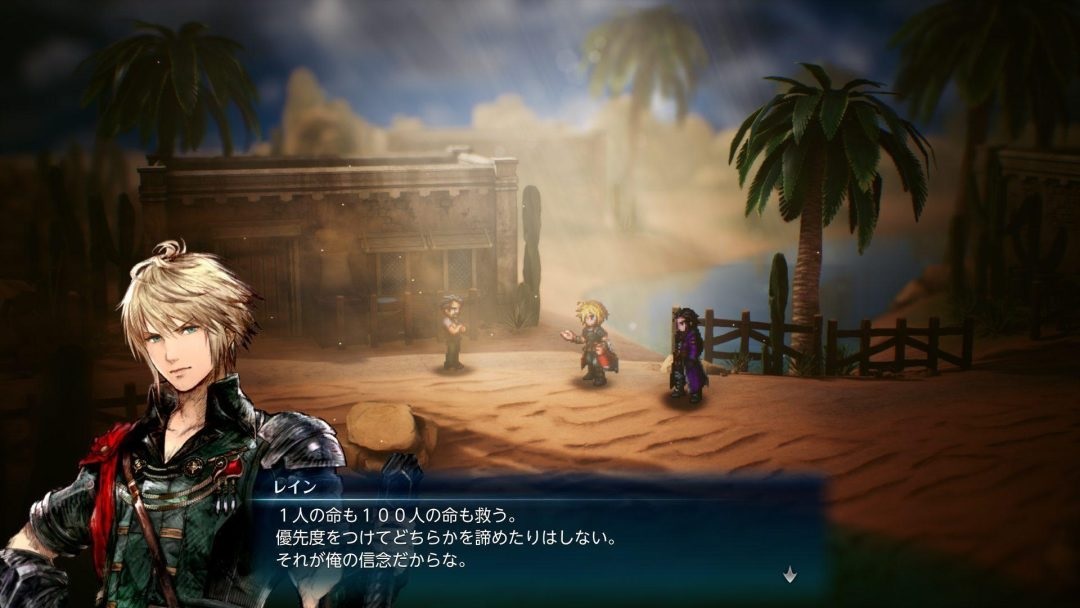
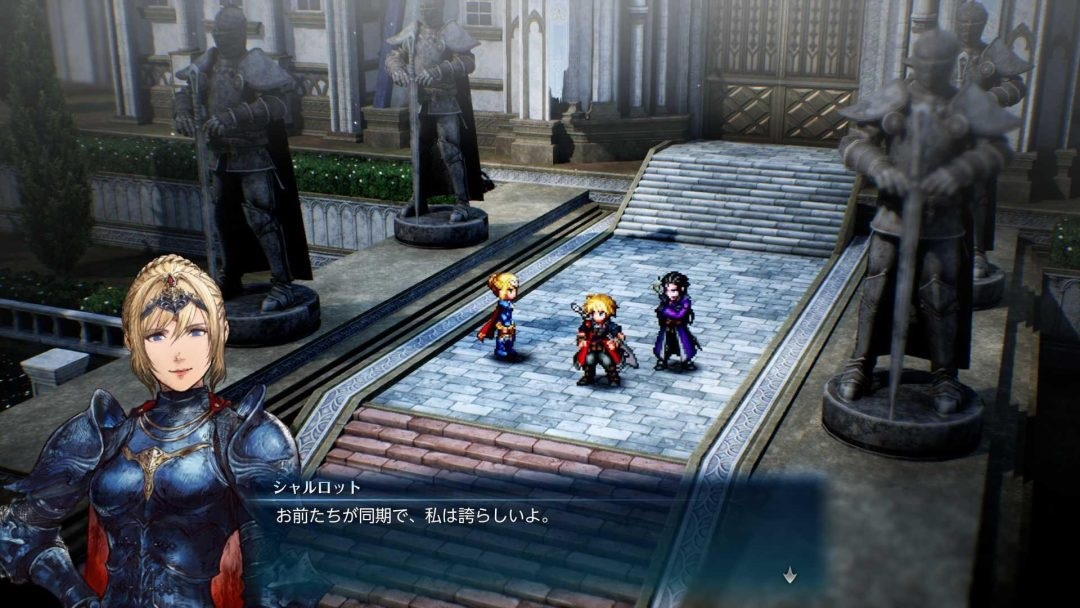
While adjusting the scenario for the console version, I think we focused the most attention on making the characters even more relatable. Doing so enhances the player’s sense of immersion in the game. When it comes to mobile games like FFBE, prioritizing a fast-paced story is inevitable. However, if you just carried over the same kind of pacing to a console title, players would find it awkward, as if important parts of it were being omitted. Not exploring the character backstories properly could be one such example.
Furuya:
I just want to mention this so there’s no misunderstanding, but the story of Final Fantasy Resonance is made to be enjoyable even to those who are familiar with the story of FFBE. Upon deciding to rework the story, we had Yukinori Kitajima, the original writer of FFBE, rewrite the script specifically for Final Fantasy Resonance. Through this process, we’ve carefully woven its narrative so it doesn’t stray from the original storyline.
As we were rebuilding the game, we made sure to specify the overarching objectives of the main story, and the scenario was polished until they were clearly defined. So, while we made numerous adjustments so that users can experience the poignant drama originally present in FFBE, Final Fantasy Resonance will allow them to follow the main story in a more sophisticated way. As producer Nakashima mentioned, in order to deepen the level of immersion for the players, we rebuilt the scenario ensuring that the motivation behind the characters’ actions are linked together with the gameplay.
–What aspects did you pay attention to when it comes to enhancing player immersion?
Furuya:
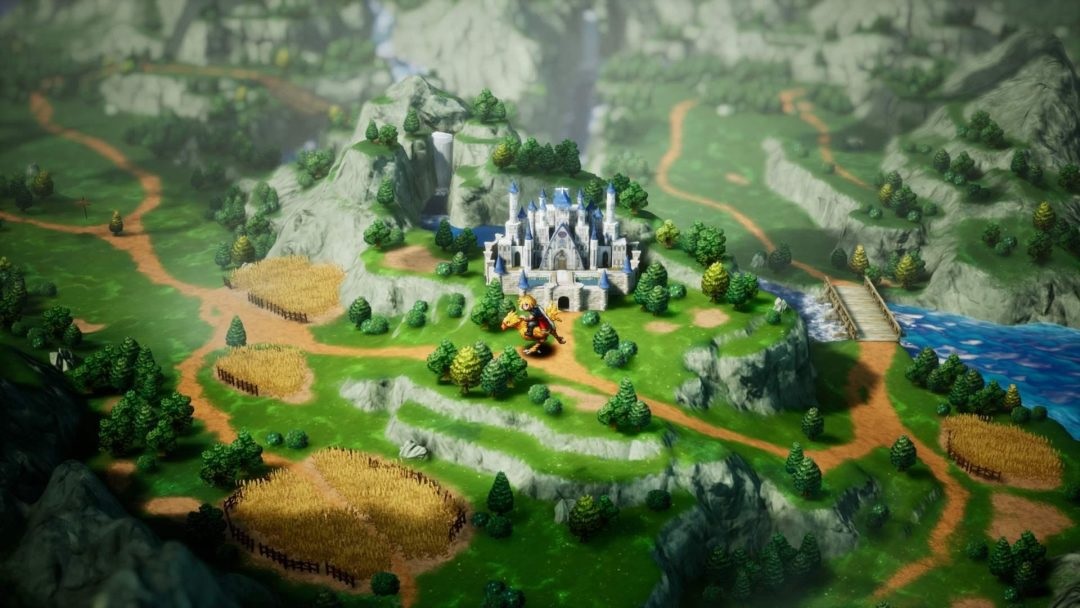
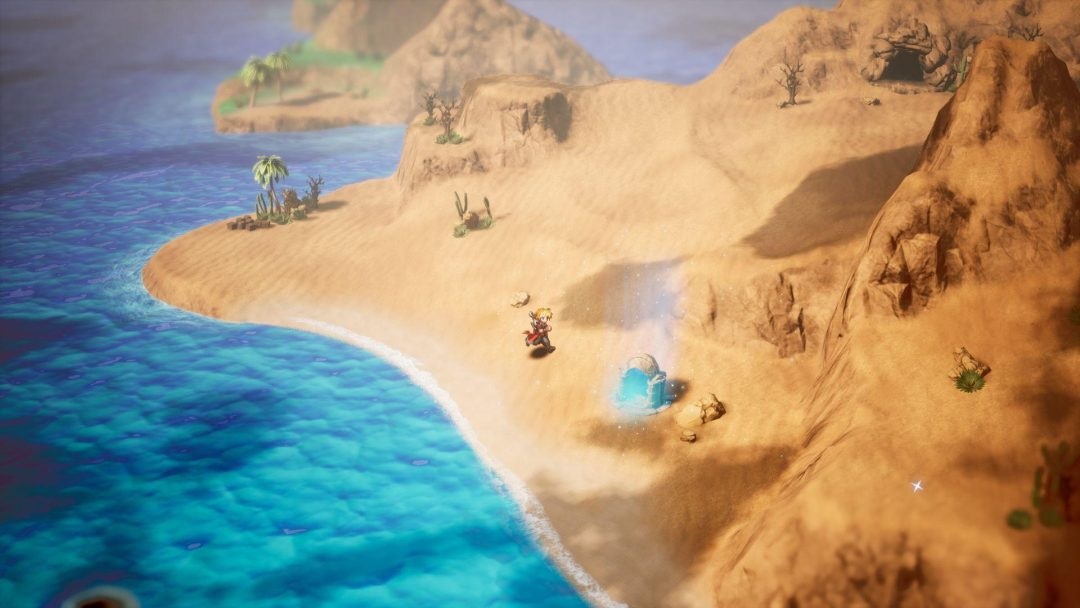
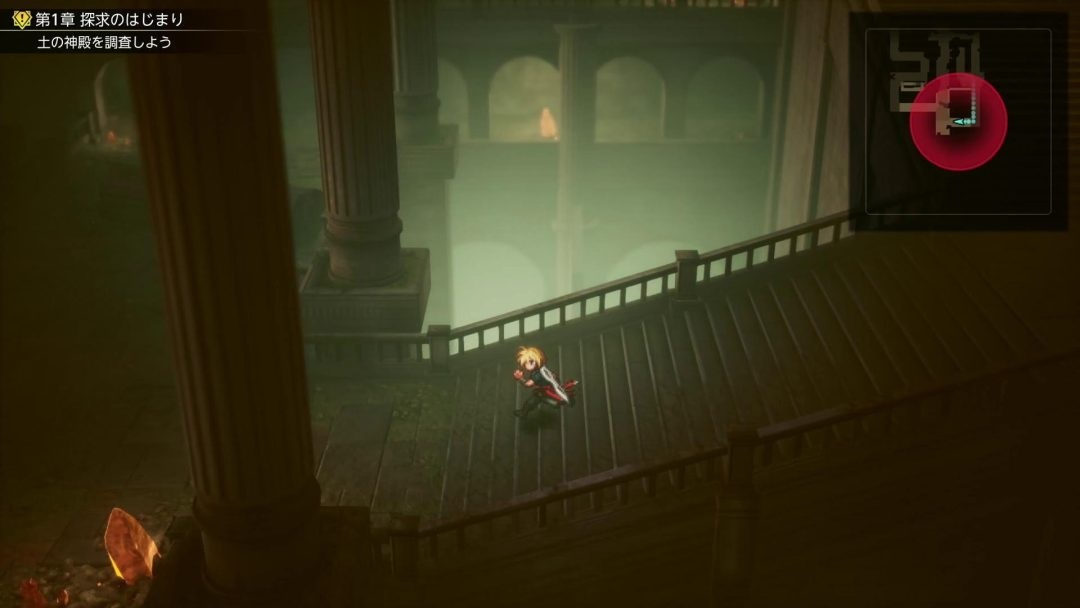
When we decided to make Final Fantasy Resonance into an RPG for consoles, including a world map was essential. Even though we had to overcome many technical obstacles during development, it was absolutely necessary to have it in the game.
Of course, this meant that the story had to be on the scale of rescuing the whole planet – and I think having a map lets you get immersed in that feeling of “going on an adventure to save the world.” Also, a map makes it much easier for players to visualize the scale of the world inside of their heads. While maps are an element that ended up disappearing as the Final Fantasy franchise evolved, we deliberately decided to bring them back for this title. We’ve also made some adjustments so that adventuring on the renewed world map makes sense in the context of the scenario.
Taking your time with team building is a direct path to victory
–You’ve mentioned that the game takes on all the best elements of the Final Fantasy series, but could you tell us about the specific features of the combat system?
Nakashima:
Pre-battle team compositions were crucial in FFBE, and that remains a key feature of Final Fantasy Resonance as well. While we’re keeping some of the details regarding the team composition system – like swapping abilities – under wraps for now, strategically building your team will be essential, just like in FFBE. So, there will be changes to the system itself, but the fun of the trial-and-error process of assembling your party remains the same.
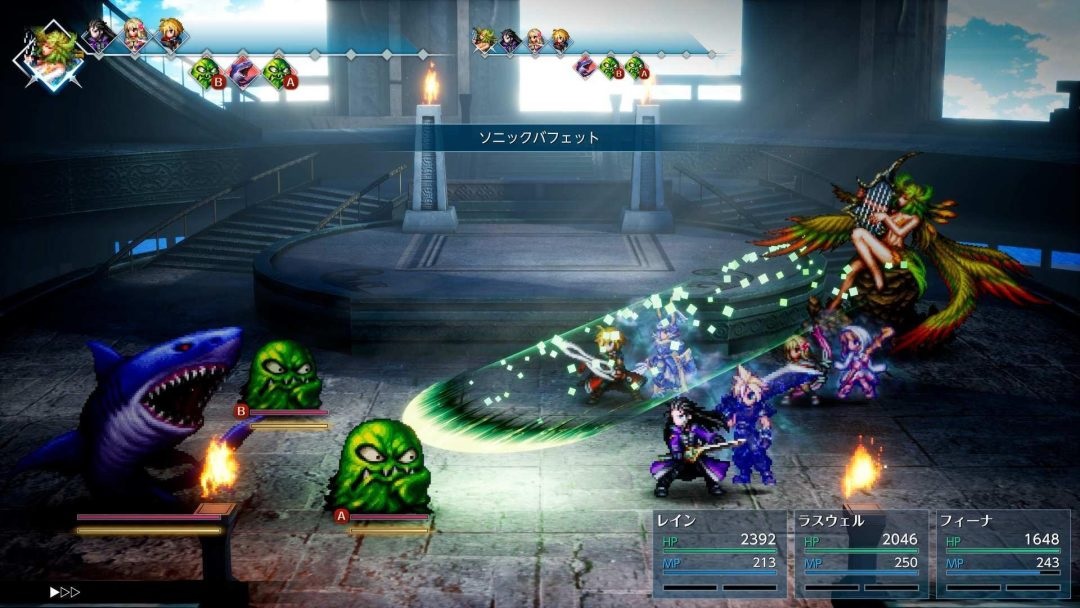
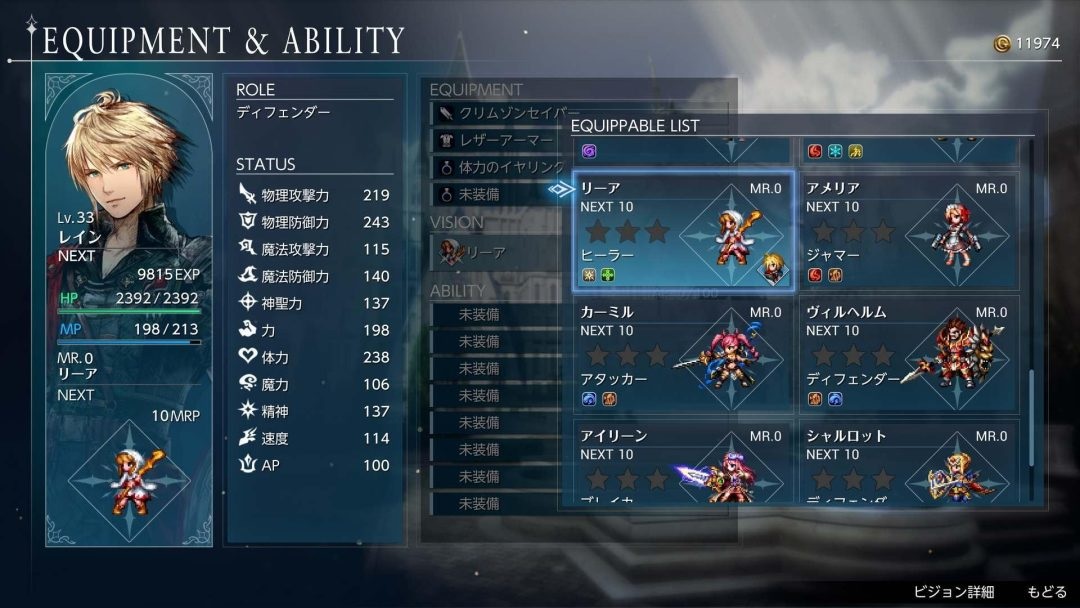
I also believe that the inclusion of the protagonists and other major characters from the mainline series is something fans will really enjoy. Each of the characters has their own “Vision,” which is kind of like a job system. So for example, if you assign Cloud’s Vision to any other character, that character will be able to use Cross-Slash. The fun part of combat in Final Fantasy Resonance is that players can build a team of their favorite characters and pair them with abilities that best suit the situation.
–How did you highlight each of the characters’ roles in battle?
Nakashima:
So, Visions are the so-called “Job System” in the game, and there are 26 characters appearing. Of course, every player has their own favorite character in the series, so we put a lot of thought into making a combat system where there are no specific characters that are weaker or more difficult to use, and everyone has a purpose on the battlefield. As a result, all of the characters get their own place to shine in combat.
–I get the impression that each entry in the Final Fantasy series has a completely different vibe, and with Final Fantasy Resonance bringing together characters from various games in the franchise, how did you manage to make everything feel cohesive?
Nakashima:
System-wise, we designed all of the character abilities from ground up. While keeping iconic moves like Cloud’s Cross-Slash as-is, we reimagined the attributes assigned to the characters and the ability types from scratch. Of course, we made sure to retain each of the character’s personality and quirks, but it might have been the fact that we completely rebuilt their features in the context of Final Fantasy Resonance’s combat system that has made the game feel harmonious and cohesive.
This goes for the sprite animations and ability effects as well, but the development team created exactly what they had in mind for Final Fantasy Resonance. After perfecting the game to the finest details, we showed it to the creators who worked on some of the previous mainline titles in the series. Since we got their approval, I’m sure fans will also embrace all the characters the development team has crafted for this title.
–With Final Fantasy Resonance being a turn-based RPG, what are some of the things you paid attention to in order to ensure a smooth gaming experience?
Nakashima:
To make the gameplay smoother, we added a speed-up feature to the battles (1.5x speed and 2.0x speed). As you progress through the game, you’ll get to encounter Cactuars in certain areas. They’re pretty much the equivalent of Liquid metal slimes in the Dragon Quest Series (laughs). There are also areas that function as XP farms.
It might be a bit difficult to grasp at first, but eventually you’ll learn how to build the optimal team for grinding mobs. As you progress through the game, you’ll also unlock AOE attacks, which make the gameplay much less stressful. The concept the development team envisioned when creating the battle system was “quick and simple for the mobs, slow and steady for the bosses.” Therefore, we’ve pursued a balance that allows you to take down mobs fairly quickly, and we’ve prepared skills and abilities to match that kind of playstyle.
– Why did you decide to opt for random encounters instead of symbol (non-random) encounters?
Nakashima:
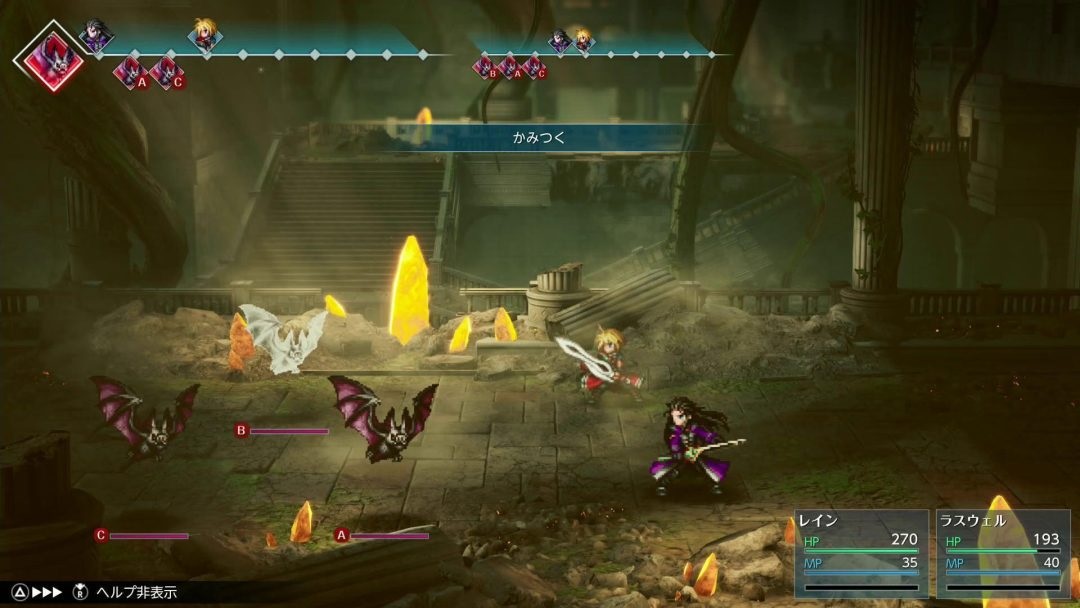
Symbol encounters allow players to engage in battle whenever they want. In that sense, symbol encounters are there to accommodate the players’ freedom of playstyle. On the other hand, they could also end up resulting in less battles that are truly memorable. This is my personal experience playing some of the recent RPGs that feature symbol encounters. I do think that random encounters can feel like a hassle at times, but they also allow you to make memories, like remembering the time you struggled against a really tough enemy or felt the joy of getting lucky with battle rewards. I think those are the kind of moments that actually stick with you. So, with that “memorability” being one of the big advantages of the random encounter system, we decided to adopt it for Final Fantasy Resonance.
To let players fully enjoy the best parts of random encounters, we’ve removed all of the elements that could cause frustration. For example, we’ve made sure that encounter rates for enemies are lower in dungeons that feature a lot of puzzles. This is because we concluded that having fewer mob battles while solving puzzles allows for a less frustrating gaming experience. Of course, while it is a random encounter system, the minimap will change colors to alert players of approaching enemies. When the minimap turns yellow, that means the mobs are getting closer, and when it becomes red, players will know that a battle is right around the corner.
Furuya:
The idea of conquering the dungeon itself is also tied to the fact that we chose to have random encounters. It’s more about taking down all the enemies you come across as you progress through the dungeon, rather than choosing whom to battle against. So, we steered the game in the direction of making battles fun, while sticking to the random encounter system. In our pursuit of the classic Final Fantasy experience, this is the decision we ultimately arrived at.
In Final Fantasy XIII, all of your HP recovers after each battle. In that sense, I believe FFXIII was designed so that each individual battle is entertaining. In contrast, Final Fantasy Resonance tasks you with the problem of how to conquer each dungeon. We came up with an experience where you will have to decide how to allocate MP and other resources, or make sure there are recovery points nearby as you progress through the dungeon. So, we thought that the best way to revive those fan aspects of RPGs for the modern era is to add random encounters.
–Could you tell us more about the difficulty level of the game?
Takashi Shiraga (hereafter, Shiraga):
We designed the Normal difficulty setting to be a memorable experience that offers a certain degree of challenge. If it were made so that you can take down all of the enemies, including the bosses, quickly and easily, it wouldn’t be as memorable. It was important for us to leave some room for players to devise new strategies even if they get beaten by the boss at first. We turned the bosses into these big obstacles that will motivate you to reflect on your team composition, which is why the Normal difficulty poses a bit of a challenge. The demo we’ve shown you was set to Normal, but we also have the slightly easier Casual difficulty setting for players who struggle a bit with RPGs.
The difficulty and length of each battle depend on how well the player has prepared their team composition beforehand. Your level of understanding of character skills and abilities, and the way you assemble your team will greatly impact your chances of winning.
Nakashima:
I think the Normal difficulty allows players to comfortably progress through the game. To illustrate, it’s about the same difficulty level as the Normal difficulty in the Octopath Traveler series. Actually, we had numerous reviewers, including the HD-2D development team, test out the game’s difficulty for us.
Shiraga:
Since time was limited during the hands-on session, we made you take the shortest route through the dungeon, so it may have felt a bit difficult. In the full game, you’ll be busy with exploration and sub-quests, and as you progress through the story, you’ll also get many more chances to face off against mobs, so your characters will level up naturally. With that in mind, we anticipate that most players will find Normal to be just the right difficulty level for them.
Nakashima:
This is definitely not a super high-difficulty game. (laughs)
– As the producer and representative of the development team, could you give a message to our readers?
Nakashima:
I wonder what the Final Fantasy series would look like now if it kept evolving while maintaining pixel-art graphics. Final Fantasy Resonance is our interpretation of that question. While it’s based on FFBE, which has sadly ended services, I believe Final Fantasy Resonance has achieved a level of quality that’s fitting for a new entry in the series of pixel-art-styled Final Fantasy games. Please look forward to its release!
– Thank you very much.
Final Fantasy Resonance is set to release on October 22, 2026, for PS5, Xbox Series X|S, Nintendo Switch, Nintendo Switch 2 and PC (Windows). The Steam version of the game will launch on October 23.
[Interviewer, writer: Ryuichi Kataoka]
[Editor: Ayuo Kawase]


I am glad Square Enix is doing this for their Mobile Titles and leading by example.
I thought the names of the main characters seemed to familiar. I knew it was one of the mobile games. And this makes it even more exciting that there is more to the story a d actual exploration this time
Oh man this brings back memories. I know the touch controls were pretty important because you had to time multiple characters’ attacks to get chain damage, excited to see how they modify that for console.
Kindly develop a console version of FFRK next. This request, is humble.
So will bunny Ariana Grande still be one of the visions you can sunmon?
I hope SE will turn other dead live-service games into single-player games like NieR Reincarnation