

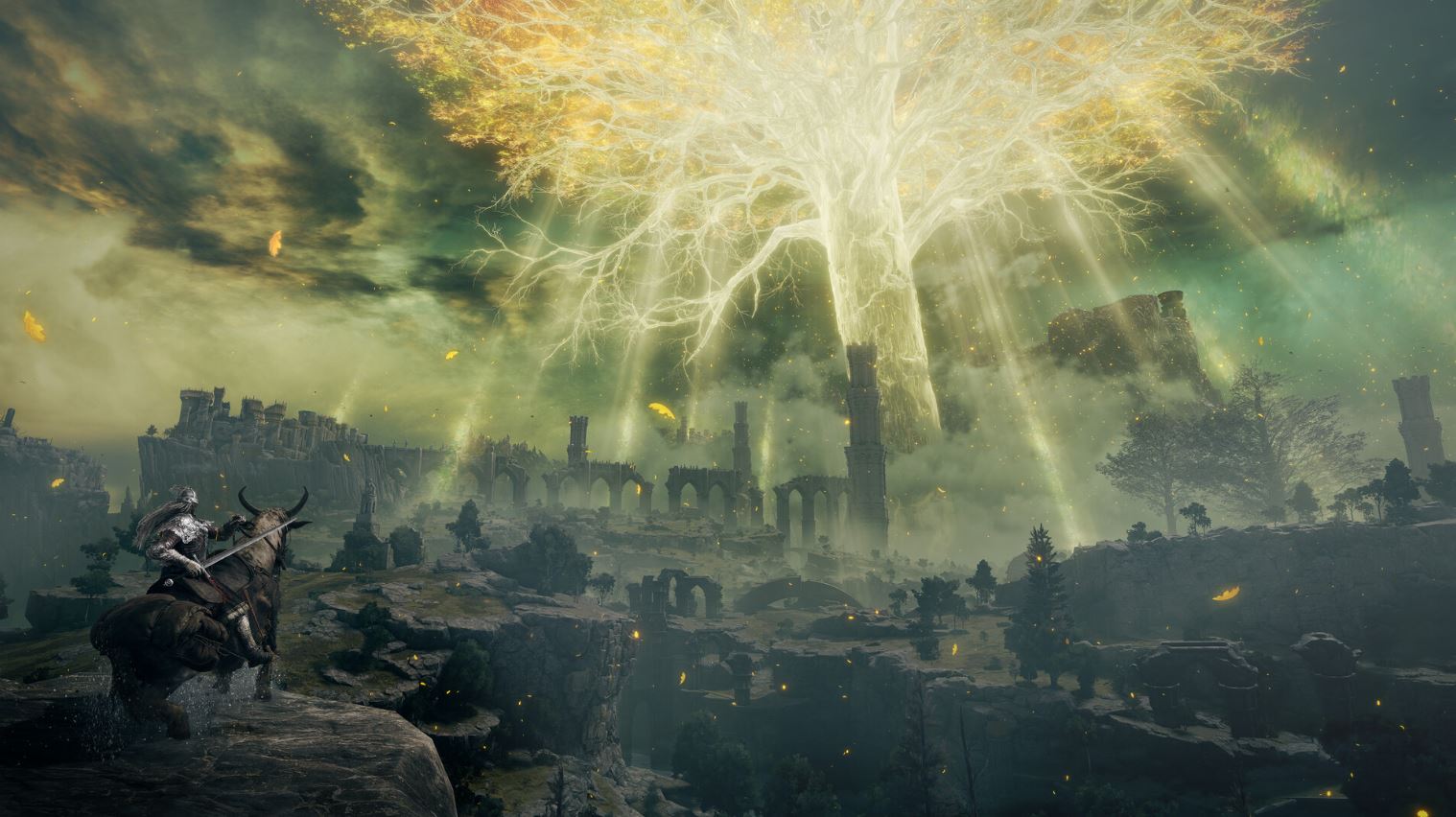
Former Capcom art director and character designer Akiman (Akira Yasuda), best known for his work in Street Fighter II, Red Dead Revolver, and the Mobile Suit Gundam series, recently took to his personal X account to talk about the strengths of Elden Ring’s graphics. This came in response to a (now deleted) tweet from a user who, seeing a side-by-side video comparison of environments in Elden Ring and Pearl Abyss’s Crimson Dessert, pointed out that despite being technically “outdated,” FromSoftware’s graphics still feel more impressive than many higher-fidelity games out there.
Offering an explanation, Akiman says: “Normally, as the level of fidelity increases, the viewer is left with less and less room to supplement what they’re seeing [using their imagination]. However, the graphics in Elden Ring are designed with careful control over the level of fidelity at each turn, in a way that ensures the viewer’s imagination is constantly stimulated to the fullest.” Akiman singles out FromSoftware’s use of atmospheric perspective (creating the illusion of spatial depth by making objects less detailed and vibrant the further they recede into the distance) as a key contributor behind this. He likens the approach to that of ukiyo-e, a genre of Japanese woodblock prints and paintings (think Hokusai and Hiroshige), as well as the illustrations of Alan Lee.
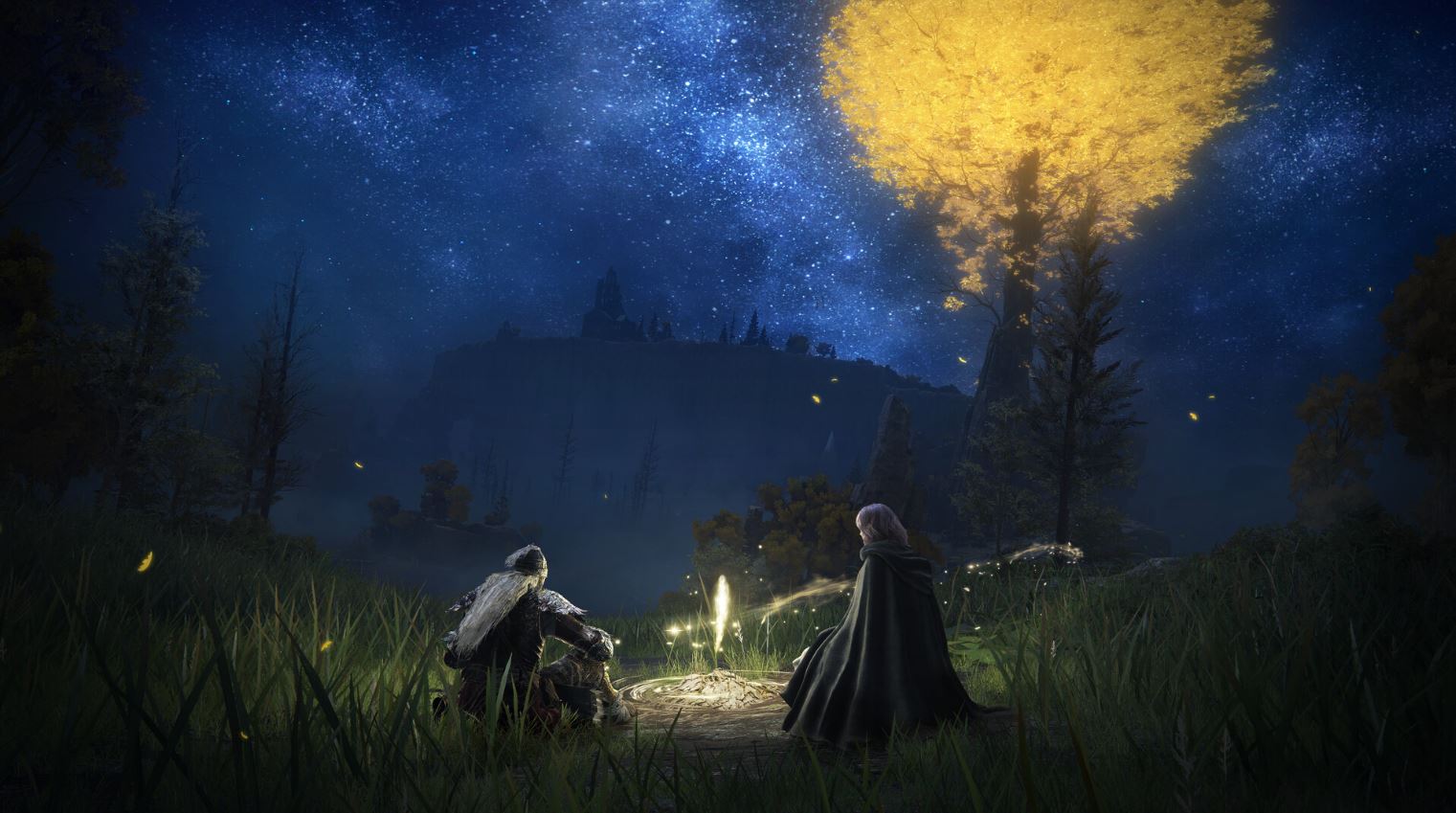
“This is what it means to be good at art,” Akiman concludes. Coincidentally, FromSoftware’s artists themselves have talked at length about their efforts to produce visually impactful graphics in Elden Ring despite the technical and financial constraints they faced. In a CEDEC lecture held in 2025, Elden Ring: Shadow of the Erdtree environment art director Hidenori Sato and lighting/environment artist Reiji Katahira explained that they put a great emphasis on following fundamental compositional rules to create impressive visuals “logically,” without relying too heavily on intuition.
The developers analyzed the layout of Elden Ring’s environmental elements (like landscape, architecture, shadows, and fog) for each scene in the game by capturing still images. This allowed them to spot and eliminate compositional errors like monotonous areas, repetition of the same elements, symmetry or poor visual flow (the player’s line of sight being unstable or led to the wrong places), resulting in environments that feel instinctively appealing to the player.
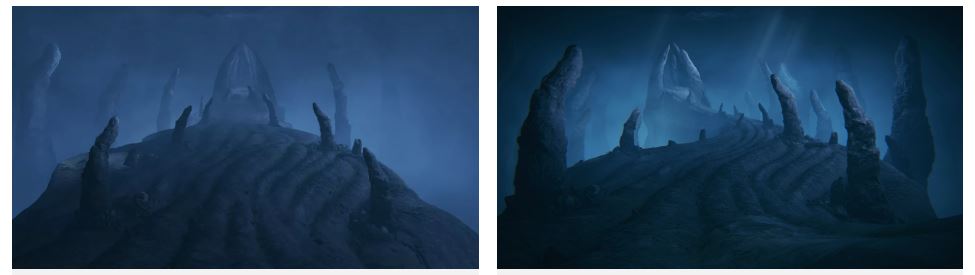
To battle constraints, Elden Ring’s developers also defined what they refer to internally as “viewpoints” – locations that need to be produced in higher quality compared to others (one example in Shadow of the Erdtree being the Cerulean Coast). These are usually areas that come right after a change in surroundings, when the player is most likely to focus on what the environment looks like. The meticulous process Sato and Katahira described, along with the sheer volume of design iterations and corrections they presented from Elden Ring’s development process, definitely seem to go in line with the “careful control” over every scene Akiman talks about.
Related: Elden Ring Nightreign’s devs thought it looked funny to revive teammates by attacking them

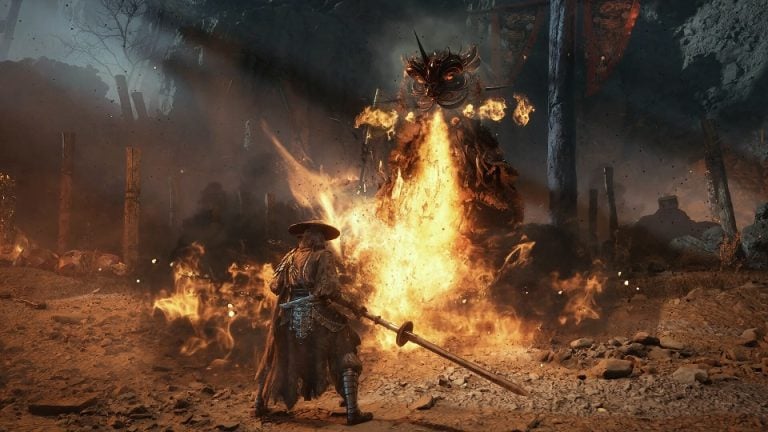


I think something From Software has always been good at that is seldom really “identified” in their various Souls titles is that you’re often even rewarded for “framing the shot” yourself. Control of the camera has similar moments where it creates cinematic types of “shot composition.” In Dark Souls 1, when you first encounter the Asylum Demon, if you orient the camera down, so that it points upward from the feet of your character, you’ll not only see the Asylum Demon perched and waiting to ambush you but the shot is by nature of what is allowed, if memory serves, “Low Angled.”
The thing is that moments like these are recurring, you can create this EXACT SAME TYPE of visual with a Troll near the approach to Stormveil that is waiting to jump down in ambush in Elden Ring. I know that Akiman is referring specifically to how the designers frame shots or compose where player agency isn’t necessarily being accounted for, but I’d say that it’s an overdetermined (in the literary or interpretive sense) element of the games themselves.
When you speak to certain NPCs, the camera angle is often assumed to be from the back and it’s to create the illusion of various interactions. That’s the “interpretive” gap filling that Akiman is alluding to. If you don’t move the camera when talking to Ema in Sekiro, one interaction has her state, in exposition, that she wants to examine Wolf’s face. If you never move the camera, it seems like she puts her hand to your cheek, but if you move it, her model is only gesturing.
That’s cinematography. It’s a novelty of sorts when you don’t have the language to describe it, but From Software’s design incorporates and understands utilizing this kind of visual illusion. It’s not as if we don’t have creators such as Shinji Mikami or Hideo Kojima, but separating it from an auteur and just saying “this is the technique”, you see a lot of games sort of shy away from incorporating this as a conscious element of design, iterating on and developing it into a frequently used language.
It feels like, again, an accident or “novelty” to observers, “Critics”, but it’s something I think gives the various Souls games a distinct kind of identity. Framing shots, enemy composition, even interactions and bouts of dialogue gain elements of intimacy, danger, suspense… “comedy” lol. That’s what is being leveraged and what makes the games so evocative.
It’s something you can uncouple from the arguments that the games are “References and abject suffering.”