

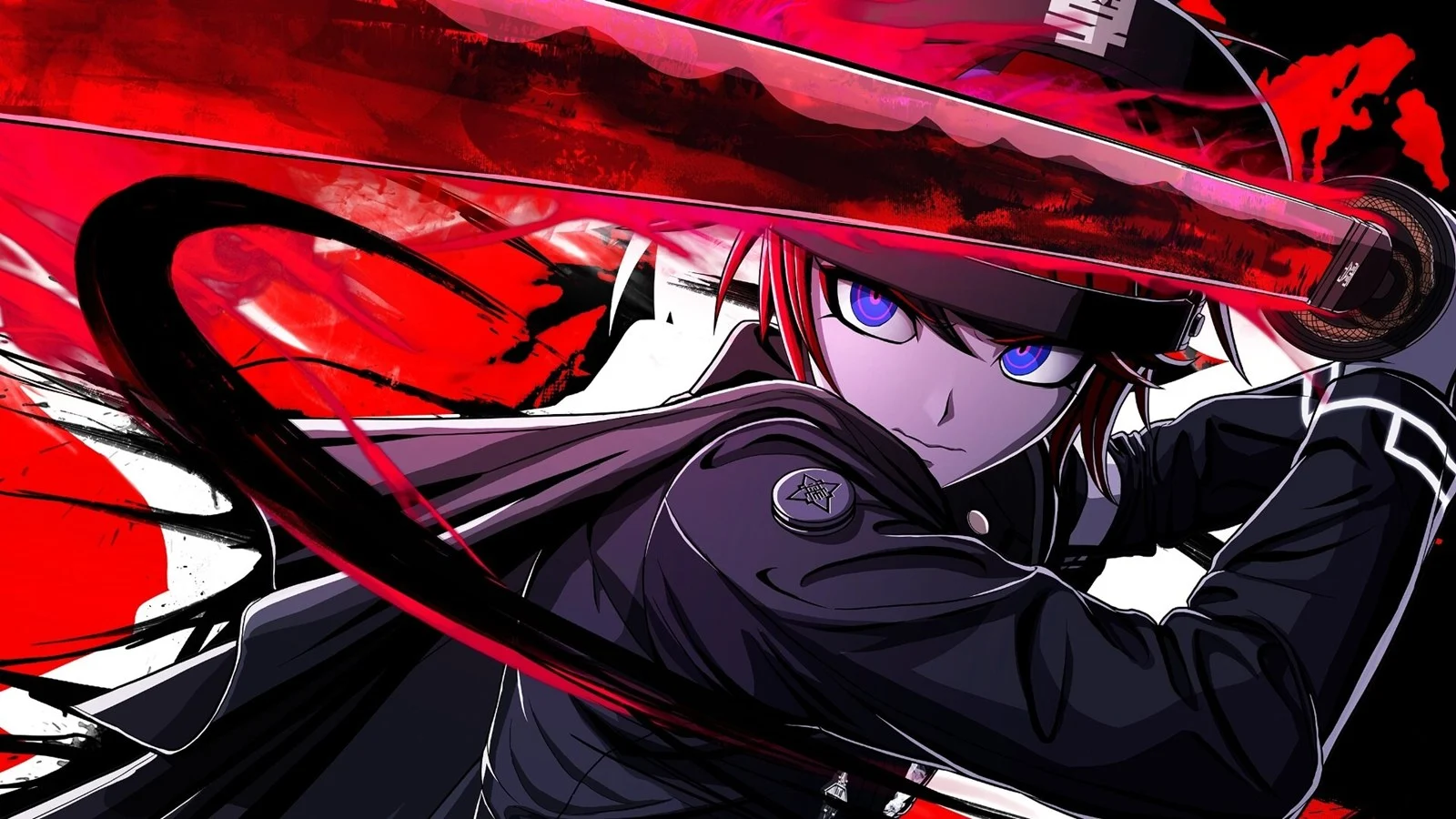
Talking to AUTOMATON Japan, Masafumi Takada, the composer for The Hundred Line: Last Defense Academy, talked about recent changes he’s noticed in game music. Takada feels that lately, music is increasingly being treated as a separate entity, rather than an integral part of gameplay and worldbuilding, which is creating a mismatch in games.
Takada is a veteran composer who has written music for a wide range of games, including Suda 51’s The Silver Case, the Danganronpa series, the Earth Defense Force series, the Digimon Story series, and Super Smash Bros. series. Known for its distinctive use of synthesizers, Takada’s latest work is the massive original soundtrack of Too Kyo Games’ The Hundred Line: Last Defense Academy.
In creating the OST, Takada says he paid special attention to making sure his music functioned as part of The Hundred Line’s eerie setting and framework. In the same vein, he notes that he’s seen an increasing number of games in which the music feels out of sync with the rest of the experience.
“Lately, something that’s been bothering me a bit is that even though game music is often very rich and high in quality, there are more and more instances where it doesn’t really align well with the actual gameplay experience. To be honest, it sometimes feels more like they’re just making good music instead of actually making a game.”
“When you look at game reviews, you sometimes see comments like ‘the music was great,’ and that’s not really praise for the music, it means the music stands out more than the game itself. In other words, it’s not that a cohesive game is being made; it’s that the playing experience and the music are out of sync. I want people to think about it that way. That’s why, when I make music, I’m always considering these things to make the entire game experience entertaining.”
Rather than criticizing the quality of game soundtracks, Takada appears to be pointing out a shift in how deeply the process of music production is interwoven with other aspects of development, like scenario and gameplay systems.
The Hundred Line: Last Defense Academy’s Original Soundtrack by Masafumi Takada is out now on digital streaming services including Spotify, Apple Music, iTunes, and is also available for purchase on Steam. A Director’s Edition of the soundtrack will release on disc on April 24

This is a strange way of thinking. Both can be true at the same time. I think Expedition 33’s music is fantastic and I DO notice how good it is while playing, but I can also jam out with the music and still have the music immerse me into the gameplay. Noticing the music doesn’t mean that the music and gameplay aren’t cohesive.
It’s true. With the increase in production, many games just get an orchestra and call it a day. Few make it thematic to the story and even where some may, not all of the tracks. I can never remember music in Western games for this reason and happening more often in Japanese games.
Sounds like someone is jealous of the Persona 5 ost and it’s insane popularity on yt and TT and all the relevant places while, although takada does make great game music as well, it often not being memorable doesn’t mean it matches gameplay better.
I’d really like to know which games in particular he was referencing, but that wouldn’t be “professional” for him to say what he was saying.
What does this have to do with Persona5
Just letting you know Masufumi has created various Musical Works. Killer7, No More Heroes, the recent two Digimon games Time Stranger and Cyber Sleuth, Global Defense Force, Godhand, Vanquish and many others. I do not think he is jealous of anything. But more or less calling out a lot of games that are awful in the sense that it sounds like generic Movies and generic orchestra’s nowadays than actual Video Game music.
Takada is a good composer and he does make good music, but he is off-base here.
I would say this is not true at all. Music and games are separate entities. Video games themselves are mixed media type art pieces, they combine as many forms of art as the artist (director) wants. Sometimes you have games that have amazing art, but the game is bad, or great gameplay but the story sucks, and so on. It does not mean that the artists involved didn’t make their media to match the game as a whole.
In Takada’s case, I believe he is limiting himself on his own. Music can match a theme, yet be amazing enough to stand on it’s own outside the game. Expedition 33 may be the most recent example of this, but the Final Fantasy series is a long running example. All of the Final Fantasy soundtracks are phenomenal, but they still match the games they are from and do not detract from the experience. As an anecdote, there are some games I only found out about through the music that came from it. If the music is great more players will come to a game, and if a game is great more players will listen to it’s music. These are not opposing forces.
I don’t mean this to be offensive or as an ad-hominem, but this sounds like his criticism is coming from a place of ‘hey, look at me’ or ‘why is my music not grtting the same praise?’ rather than a genuine concern for music and video games.
An artist should make it their goal for the music to be so good that people want to come back to it even when they aren’t playing the game. Millions of people attend the Final Fantasy Orchestra tour, but sadly I don’t think many would attend a Hundred Line or Danganronpa tour.
No you have it wrong. Even in older Final Fantasy games with Uematsu, or even in Ace Attorney or any of the most memorable works any of us can remember in the last 30 years was because Artists had more freedom to make what they like. A funny irony you mention is Final Fantasy which Uematsu also says the same thing and is vocal if not more vocal than Takeda is. Here is some examples
https://automaton-media.com/en/news/game-directors-and-producers-have-too-much-power-in-their-hands-final-fantasy-composer-says-theres-less-creative-freedom-in-game-music-nowadays/
There is less creative freedom than in the past so everyone is pivoting toward more Hollywood Movie Soundtracks says Uematsu.
https://www.videogameschronicle.com/news/final-fantasy-music-legend-nobuo-uematsu-thinks-modern-movie-like-game-music-is-less-interesting/
Because of that fact, everyone just makes generic Hollywood soundtracks that has nothing memorable about them and that’s all anyone can do or make.
What Masufumi is speaking about is the fact that Producers(not Musicians) have more control over works these days, and basically because of that music does not align with the gameplay or the scenes as much as they used to which is why it’s generic hollywood music or just barely any soundtrack at all, even worse it does not fit with what is going on. You can speak about E33 but that is most likely because the Musician had more freedom compared to their corporate AAA counterparts. This was not him knocking the whole industry, but an issue within the industry at times itself.
I love Takeda’s works, No More Heroes, Danganronpa trilogy, Rain Code, The Hundred Line. I can understand what he means. That music does not align much of what is happening in the games or scenes and is more or less separated and made to “sound cool” or “Movie-Like” than to align itself with scenes or gameplay itself. For example FFX has Tidus and Yuna the song on it’s own means nothing, but when paired with the huge scene in the water and tree’s it is absolutely memorable, even Final Fantasy XIII itself, it might have tracks that feel ambient when you do not play the game, but when you do play the game, you can tell the music was made for the Gameplay and those key scenes itself, and it greatly enhances what is happening to the story and gameplay as a whole. Even the infamous music of Uematsu itself, everything he created was for what was happening in the game, and the gameplay. He never thought to make what sounded cool and overlayed it on top when the scenes made zero sense for it.
I feel bad that people bring up Persona 5, because that is not what he is saying. In fact I can tell he respects Shoji Meguro a lot with his homages in Danganronpa 3, with even the hype trailer being closer to what Persona 5 would become with the Jazzy Techno Soundtrack. The issue comes down to the fact too many games feel like they are just there, they have no impact, you can barely hear them. Nintendo’s BOTW and even Kojima with Death Stranding(compared to MGS 3 and below) and even a few others are guilty of this fact where it’s either no music, or it’s just music but it’s not memorable and trying to sound like a Movie Soundtrack that they can overlay for the game, than making music that fits the scene or the gameplay of what is going on.
I hope I made sense for everyone here because that is what Masafumi Takeda is saying. So in summary Tracks need to be made for the Game and Scenes within the game, they need to not be made outside the game and to “sound cool” or to “sound movie-like” and then overlayed on top. Without that, Music does not become memorable because of the game, but it becomes only memorable because of the music itself.
It is very dependent on two things:
1. Scheduling and studio organization
2. Involvement with & feedback between other department heads / game directors and the composers
The 2nd criterion should be common knowledge and is talked about extensively. It’s more “adjacent” to what is discussed here.
Number one harkens to whether studios still subject themselves to silo mentality, which tends to happen when they employ a separated department strategy and ultimately use a staggered-phase development cycle (i.e. certain departments, like programming, cannot proceed without the conceptual work having been completed first).
That old-fashioned organization has been slowly transformed in many places over the last ten years or so, with more collaborative strategies / project management and “batch” scheduling styles.
I may have misunderstood or there may be an error in translation. The way the article reads is that Takada is disappointed with games where the soundtracks are great but produced separately from the game itself to where it appears to stand too strongly on its own outside the game. This is what I get especially when reading thsse quotes:
[quote] “feels more like they’re just making good music instead of actually making a game.” [/quote]
and
[quote] “sometimes see comments like ‘the music was great,’ and that’s not really praise for the music, it means the music stands out more than the game itself. In other words, it’s not that a cohesive game is being made; it’s that the playing experience and the music are out of sync.” [/quote]
From Uematsu my understanding is that he is talking about something different. Rather Uematsu is saying he feels that modern directors have too much control and end up restricting artists to making generic music in genres that are comfortable and popular rather than taking risk with creative music outside that box. In essence he wants to make great music that transcends the sandbox it was supposed to be played in, but modern directors are pressing artists to stick within that box making things more generic and less rememberable.
This all could be a translation error, but the key difference is that Takada is saying artists are making music that is good but not matching the game. Whereas Uematsu is saying he’d like to keep making good music that may end up going outside the game’s lines. I agree with Uematsu.
I believe both of them are too vague though, if they were to speak more concisely about which games and soundtracks they were talking about I’d be able to understand their intent more.
If you’re interested in better understanding music in video games and the role it plays both now and in the past, I highly recommend picking up chance Thomas’s book on the subject titled: making it huge in video games. He’s an instrumental figure in game music, and video game music composer who’s been in it since early days.
So many comments here are missing the point
He is not saying its bad when music and games cant stand apart from each other, or that it always needs to be thematic
What he dislikes is when the music and the game have nothing to do with one another
Inagine if God Of War had My Little Pony music.
Thats what he is referring to, the games out there, where yeah, the music is amazing, but has nothing to do with the game its supposed to represent
You’re not wrong but you definitely missed the point. Here’s a scenario, you are contracted to make music for Fallout, you wouldn’t just put a 2010s cloud trap song in the game, would you? You would probably do something to fit the world that the developers built from the ground up. That being said, let’s do another scenario and ignore the entire theme of Fallout but transplant music from an incredibly talented musicians catalogue into the game that actually sounds incredibly catchy. The game is still good in both scenarios, but the world building between the 2 scenarios is arguably better in the 1st scenario, and THAT is what we are talking about. Yes good music is good music, but in respect to game development, we are making a game, not an elaborate music video
Some people in this comment section apparently play very few games, because there is an extreme diversity in musical style benefitting many games. Music is not just descriptive, it can also be prescriptive. It or its absence implies to you how you should be feeling. The idea that your music should perfectly blend in to the point no one notices it means to create extremely bland music that in fact does not immerse a player as much as it proves that they are playing a video game. You know what blends in? The color beige.
Honestly, as long as the final product is good, the developer can choose how they want to implement their music. All uses of music are valid.
It could be a beat ’em up like Phantom Breaker Battlegrounds where the music is simply based off the stage or boss. It could use leitmotifs like Clair Obscur, OMORI, and Undertale. Or it could be like Left 4 Dead, where the music is exactly like Takada envisions, where it enhances the gameplay.
As long as the music’s good, I don’t care how it’s done.
What people are missing is this major point and I’ll use anime as a better example:
The original funimation dragon ball z DUB with Bruce Faulconer soundtrack. While a lot of us greatly enjoy the soundtrack most of the time the soundtrack is more generic than fitting the mood. It’s made to be loud and hype you up but not necessarily match the series.
Then you have Bleach and Naruto, anytime you hear their music you always know how you should feel the songs bring instant memories and emotions.
Music in video games should compliment the scenes not disagree with the scene.
Opposite for me, I remember a lot of western songs over Japanese ones.
I’m not disagreeing with the Dangaronpa V3 soundtrack composer, whatever you say beautiful
Can’t blame him tbh, imagine being the composer for The Hundred Line carefully composing the music match the gameplay and worldbuilding, then outta nowhere someone just put Paledusk to the game’s first boss.