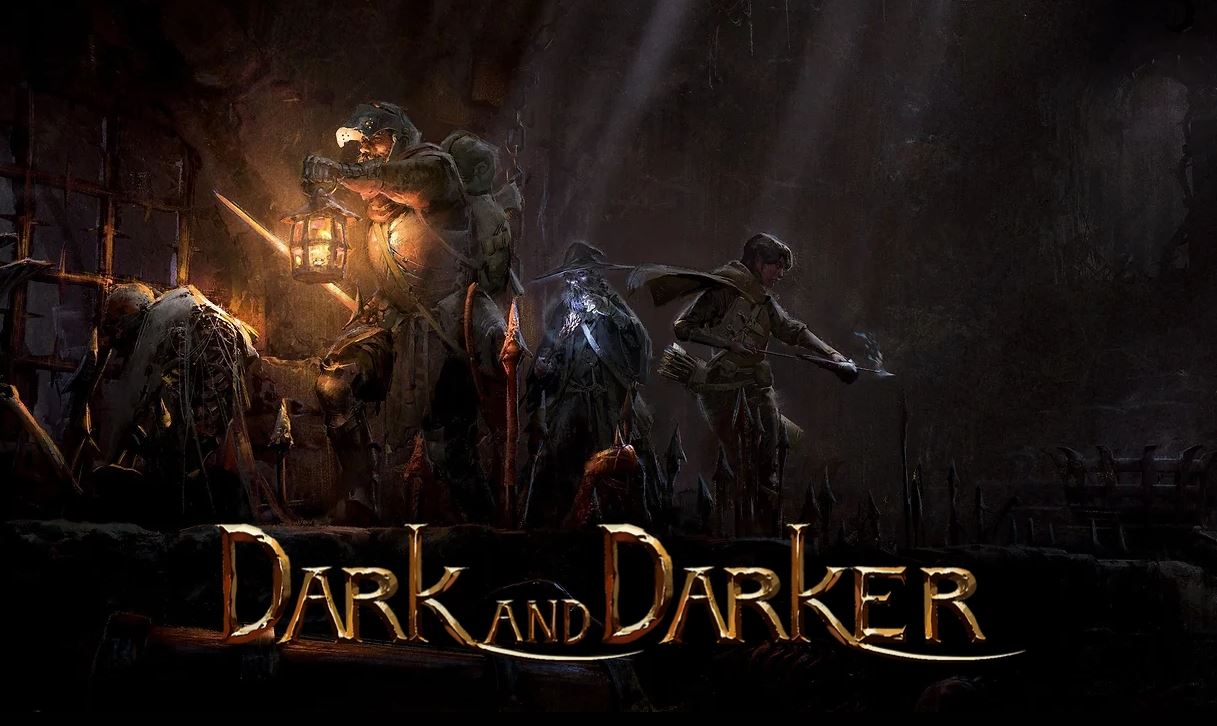
The long-running legal battle between Nexon and game developer Ironmace over the multiplayer action RPG Dark and Darker has come to an end with a ruling from South Korea’s Supreme Court. As reported by Korea JoongAng Daily and ThisIsGame, the court dismissed appeals launched by both sides on April 30, resulting in a partial victory for Nexon. (Note that this refers to the civil lawsuit regarding Dark and Darker, not the still ongoing criminal trial).
To give some background, the legal battle over Dark and Darker started back in 2021, when Nexon filed a lawsuit against Ironmace, alleging that it developed the game using source code and assets belonging to a still-in-development Nexon project codenamed “P3.” The company claimed that a few of its former employees, including P3’s project team leader, intentionally leaked the data to an external server before leaving, and then misappropriated it to create Ironmace’s debut title Dark and Darker. They accused the studio of trade secret infringement as well as copyright infringement.
In the first and second trials in this dispute, the courts acknowledged that Nexon’s unreleased P3 qualified as copyrighted work, but did not recognize that the similarities between it and Ironmace’s Dark and Darker were sufficient to constitute copyright infringement. On the other hand, the courts did determine that Nexon’s source code and build files qualified as protected trade secrets, which Ironmace infringed upon them when developing Dark and Darker.
In the latest trial, the Supreme Court upheld these rulings in full, dismissing appeals from both sides and ordering Ironmace to pay 5.7 billion won in damages (approximately $3.84 million USD). It did not, however, order the developers to take down Dark and Darker. Unhappy with the outcome of the civil trial, Ironmance reportedly declared that it would keep fighting to “prove its innocence” in the still ongoing criminal trial, while ensuring Dark and Darker continues to run smoothly. The studio finds the recognition of trade secret infringement “contradictory,” alleging that it has objective evidence that its employees did not use Nexon’s trade secrets that did not get to be examined in time due to procedural limitations.