
Another Eden Begins was rebuilt from scratch in a new engine so the 10-year-old RPG could live on beyond its service. “We want gamers who hate gacha to try it,” devs say
In-depth interview with Another Eden Begins producer Shinnosuke Hirasawa about how different the new game is, the value of preserving live-service games, and more.

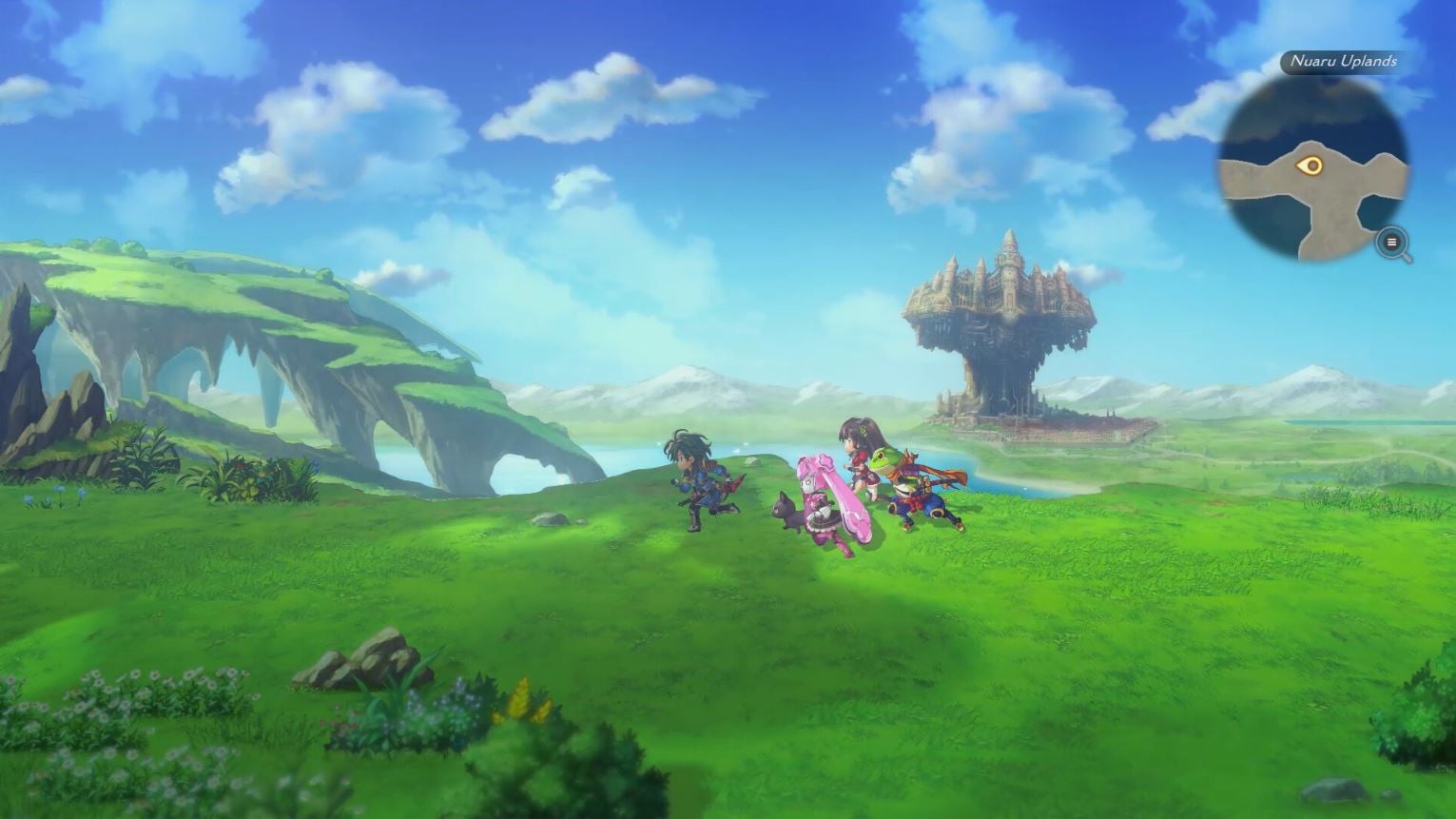
Wright Flyer Studios will release the command-based time-travel JRPG Another Eden Begins on September 17 for PC (Steam), Nintendo Switch, and Nintendo Switch 2. A free demo is available across both platforms.
Another Eden Begins follows protagonist Aldo, a member of the Baruoki village’s guard who lives with his younger sister, Feinne. On the day of the kingdom’s founding festival, the village is attacked by the Beast King, and Feinne is kidnapped. To save his sister, Aldo embarks on an adventure spanning three eras: the present in AD 300, the future in AD 1100, and ancient times in 20,000 BC.
This game is based on “Another Eden: The Cat Beyond Time and Space” (hereafter Another Eden), an ongoing live-service game by Wright Flyer Studio first launched in 2017. The new release rebuilds the game into a one-time-purchase, console experience. To find out how Another Eden Begins differs from the mobile version and how this project came to me, AUTOMATON sat down to talk with producer Shinnosuke Hirasawa.
—To get us started, could you please introduce yourself.
Hirasawa:
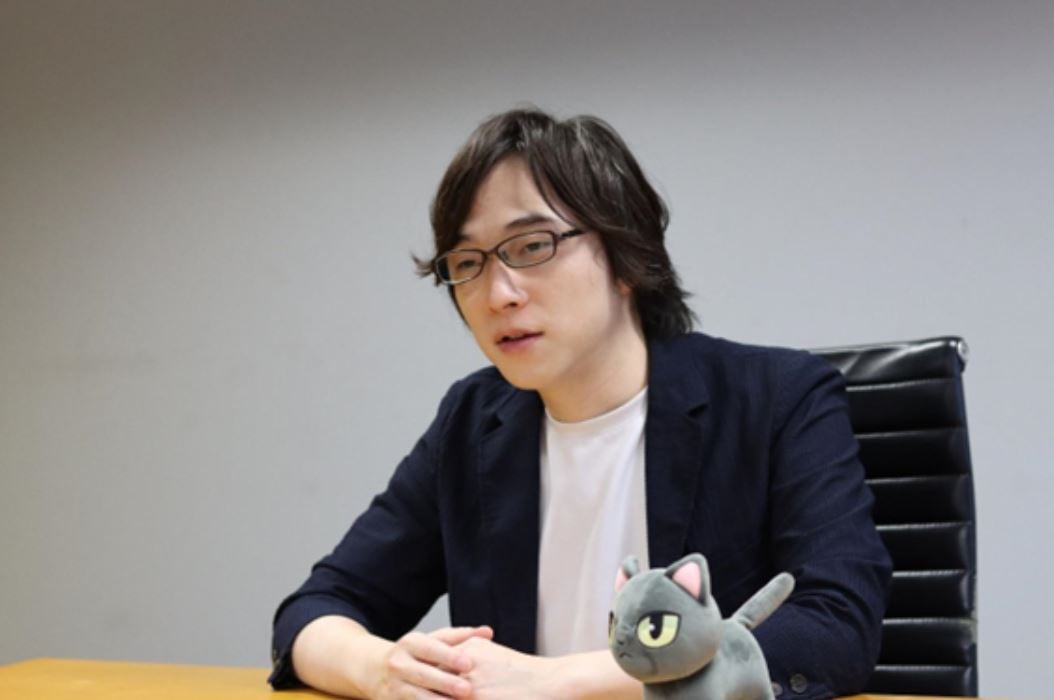
I’m Hirasawa. I joined Sega straight out of university, where I worked primarily on the Like a Dragon series. During my roughly eight years there, I worked as an all-rounder, handling everything from battle action mechanics to scenario writing. Yokoyama-san (Masayoshi Yokoyama), who is now the head of RGG Studio, was one of my direct supervisors at the time. He took great care of me, and I really learned a lot during my time there.
That was my first company. I then moved to Colopl, where I gained know-how about operating live-service games. I’m now the fourth producer of Another Eden, which is a live-service title that leans strongly into a console-like experience. Since I’ve experienced both console games and mobile games, I feel that my career so far has been indispensable in bringing our new title, Another Eden Begins, to the market.
—It’s interesting that you’ve experienced both the console and live-service worlds. You started your career in game design, but where would you say your strengths or key skill sets lie as a creator?
Hirasawa:
I’m very much a jack-of-all-trades, master-of-none type. I haven’t really been able to create anything that I’m exceptionally good at, and there was a period in my career when I struggled with that.
However, once you move into the position of producer, having broad knowledge across many different areas actually becomes an advantage. I’ve had the opportunity to experience various processes – from scenario writing and battle design to management – so I’d say being able to look at everything comprehensively is really paying off for me now.
—I imagine that as producer, you oversee the project as a whole, but is there any particular area where you tend to get more heavily involved?
Hirasawa:
That would be the battles. Of course, I consider an engaging story important too, but I think the core action is what guarantees a game really feels like a game. If that isn’t fun, then it might as well just be a book. I believe that for a game to be a game, the action absolutely has to be entertaining.
—Does that mean you jump in to point out things like the game balance being too easy?
Hirasawa:
Yeah, I’ll say things like, “Do we really need this ability?” or “Isn’t this a little overpowered?” pretty often.
What even is Another Eden?
—To ease into things, what exactly is Another Eden?
Hirasawa:
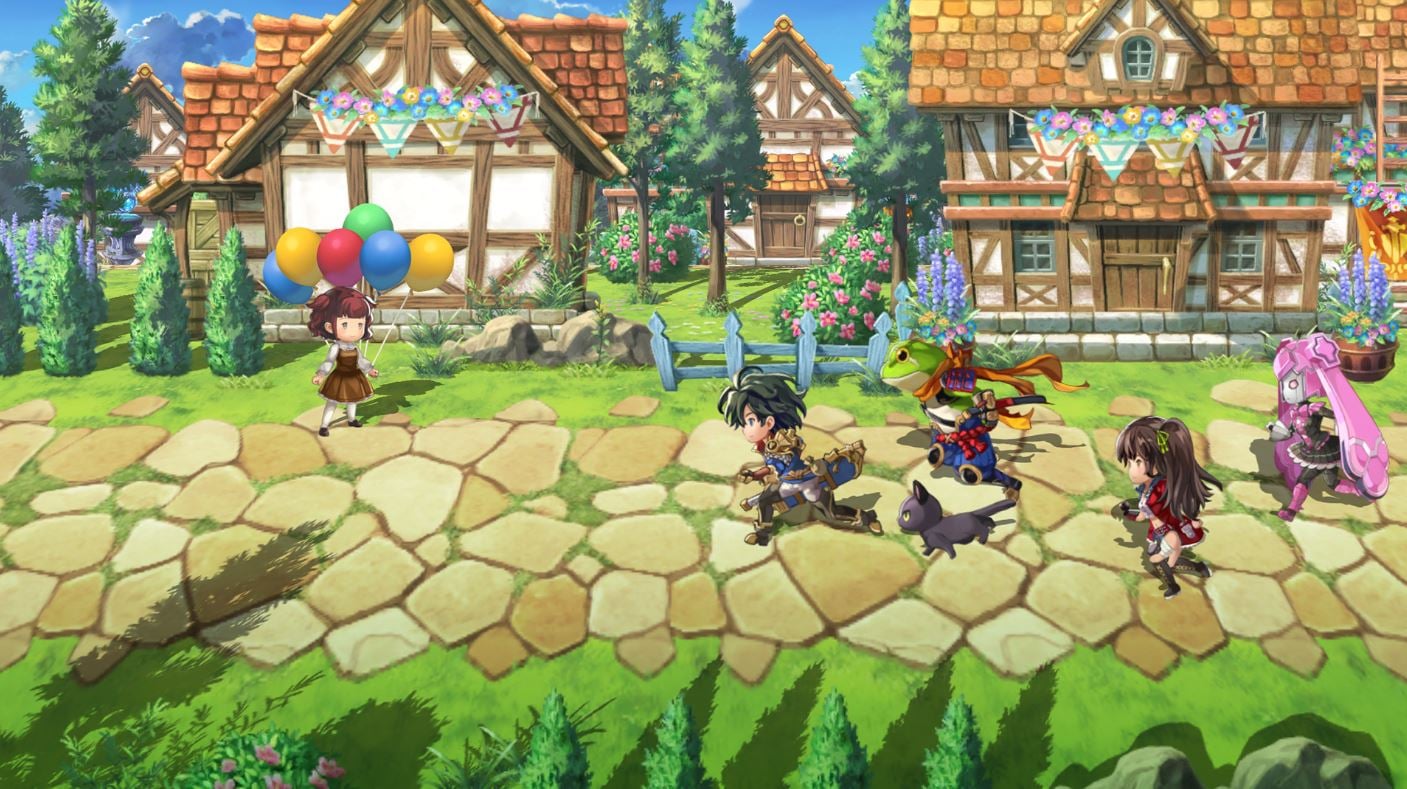
Before I talk about the new game, the original Another Eden that serves as its foundation is a free-to-play RPG for mobile devices. You progress through the story while traversing the game field, with combat unfolding through turn-based command battles.
It’s developed around the core concept of being a “full-fledged RPG that you can play on mobile.” While providing the classic RPG experience of going on adventures, meeting allies, and developing your characters, it’s also designed with the casual accessibility of mobile games in mind.
—Masato Kato, who wrote the scenario for Chrono Trigger, is involved in the project, right?
Hirasawa:
Yes. As a result, the narrative and music have received excellent reception, and we’ve spent the past 10 years developing the game while continuing to build upon those strengths. Another Eden started out by winning over people who love time-travel stories, and I feel it has since grown into a title supported by an even broader range of gamers.
—In that context, I feel like it certainly inherits a Chrono Trigger-like spirit.
Hirasawa:
Kato-san previously wrote the scenarios for Chrono Trigger and Chrono Cross, and he is now part of Wright Flyer Studios and directly involved with the project, so we often hear that. In reality, I think both Another Eden and Another Eden Begins have a lot of Kato’s signature style in them – both his complexity and his depth. He’s a through and through creator who genuinely loves making things, and I respect him immensely.
Why make Another Eden Begins?
—What exactly is your new title, Another Eden Begins?
Hirasawa:
Another Eden Begins is a project to take Part 1 of the main story of Another Eden, which has been running for around 10 years, and rebuild it as a console game.
The original title was already developed to feel close to a console-like experience, but this time, we wanted to release it as a proper, full-fledged premium game and officially expand the IP into the console market.
Live-service games have the inherent issue that once services are terminated, they become unplayable. Also, when a game continues for a long time, it’s common for the scale of development to start shrinking over time. That’s why we thought about how we could expand the wonderful content we’ve created even further. Another Eden Begins is a very important part of making that happen.
—I imagine some people might look at Another Eden Begins and assume you’ve just cut out and re-released Part 1 of the original Another Eden. How different is it actually?
Hirasawa:
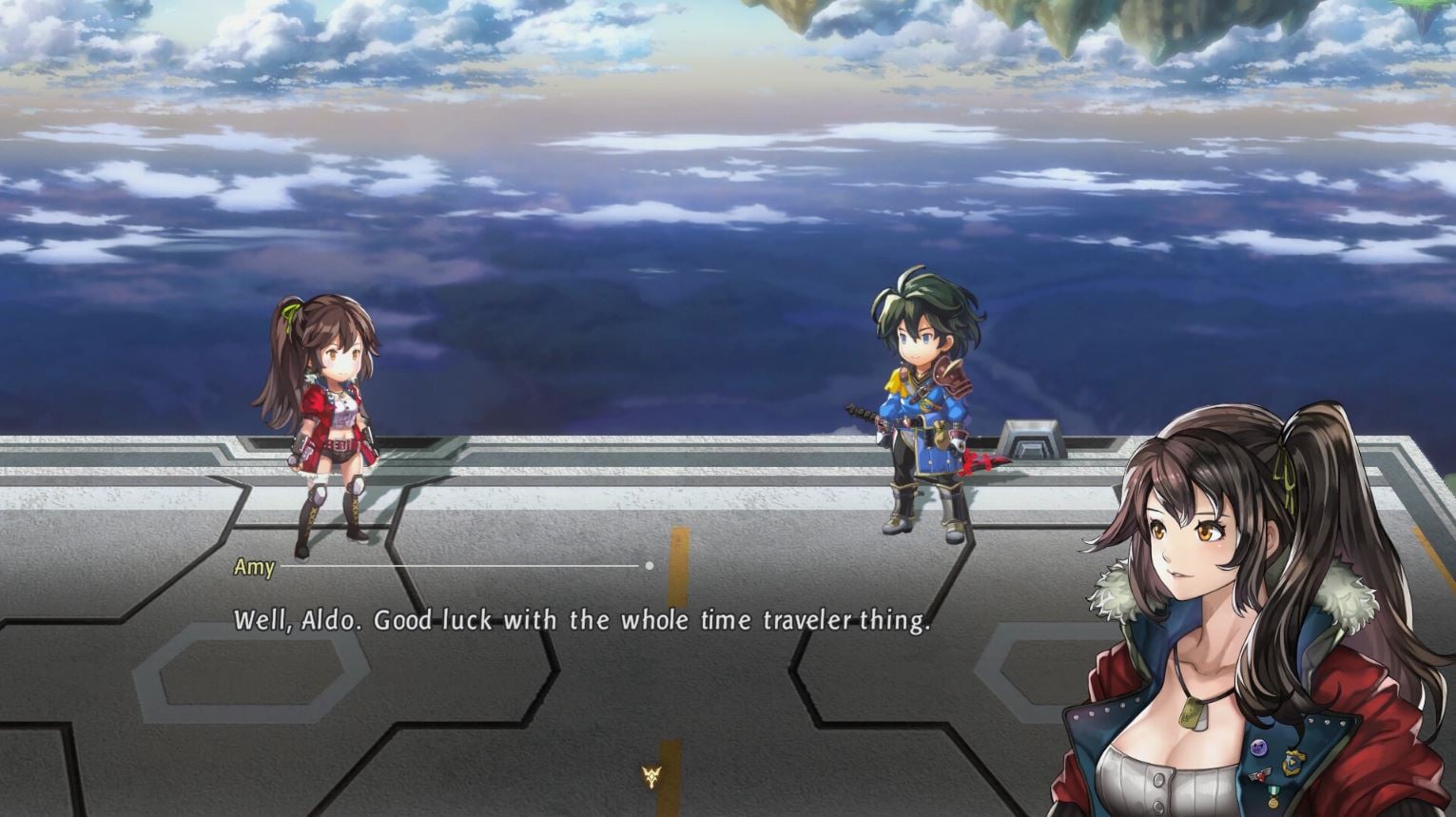
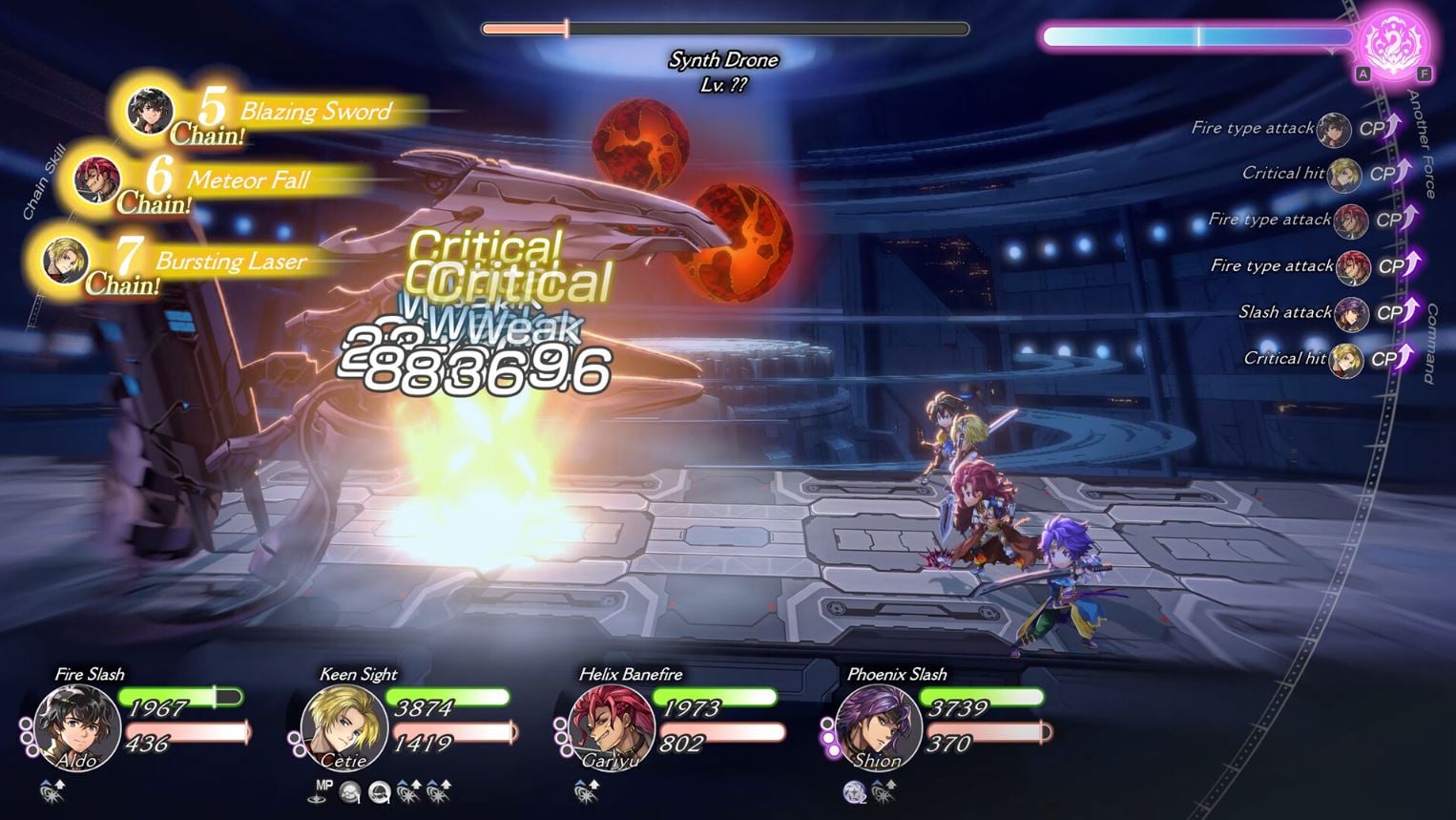
The gameplay, particularly the battle mechanics, has changed significantly. It’s still a command-based RPG, but the core is now a “chain system” where you link skills together. Much like a puzzle, you have to think about what kind of party to build from the team-formation stage and how to create chains. Once you actually play it, I think it feels completely different from the mobile version, starting from how you form your party.
—What about aspects outside of battle? For example, when playing Part 1 of the original Another Eden, there are certain things that remind you of its “age,” like unvoiced sections or the absence of non-essential sound effects. Does Another Eden Begins address things like this?
Hirasawa:
Yes, the scenario is fully voiced this time. We were confident in the dramatic elements of the story to begin with, so we thought adding voices would make them even better, and it really did.
We’ve recorded voices for the main scenario, side quests, and essentially all scenes featuring major characters. I believe this has really transformed the experience.
Also, in the mobile version, characters could only move in one straight line, almost like a side-scrolling format. But if you’re playing a console game with a controller, you naturally want to run freely around the field, so we rebuilt the maps as fully 3D spaces that you can navigate freely. We also strengthened the exploration elements, such as hiding some of the treasure chests. Thanks to the added freedom of movement, we were also able to change encounters from random encounters to symbol encounters, allowing players to choose whether to avoid enemies. Overall, we’ve significantly updated the experience to suit a console game.
—That sounds like a big upgrade.
Hirasawa:
Yes, while we’ve followed the same basic storyline, we’ve honestly rebuilt a great deal of the game itself. Since we’re presenting this as a “new game,” we’ve properly invested the resources to rebuild it from zero.
—Does that mean rewriting it at the source code level?
Hirasawa:
Not just that, we actually changed the entire game engine this time.
—Oh!
Hirasawa:
When we first started the project 10 years ago, we used Cocos2d-x, an engine well-suited to 2D graphics. The live-service Another Eden still uses that engine today. Official support for it has ended though, so our engineers have been aggressively rewriting it themselves and effectively turning it into our own proprietary engine in order to keep operating the game. It’s become a kind of legacy environment at this point.
But when we started development on Another Eden Begins, we switched to Unity. We initially began by looking at the original game screens and copying them by eye, since the old assets wouldn’t work as-is in Unity (laughs). And once we decided to change the battle mechanics as well, we thought we ought to properly rewrite the systems from scratch too. That’s how this new title came to be.
—Rebuilding a game that’s still live and playable from the ground up in a completely different engine is quite a bold move. Was it not a difficult decision?
Hirasawa:
Our team and the company both decided that it was worth investing in. We were confident that the Another Eden IP deserved to be recognized more widely and expanded further. We’re reusing whatever graphics and other assets we can, but in terms of the development environment, we wanted to properly rebuild something that could serve as a “foundation” for any future expansion. That’s why we decided to make the switch to Unity – we migrated engines with the IP’s future in mind.
—This may be a slightly difficult question, but Another Eden has been commercially successful as a live-service game and already has a firmly established identity. By releasing a standalone, one-time-purchase game with the same story, isn’t there a possibility that it could interfere with the existing live-service title? In a sense, you’re created an “internal rival,” and there’s also the risk that the reputation of one could affect the other.
Hirasawa:
At the heart of this is our desire to continue expanding the Another Eden IP. But realistically, I think live-service games have reached a kind of “ceiling” amidst recent trends in the market. Given that situation, our company also adopted a policy to focus more seriously on the console game business.
That said, we’re not particularly worried about the possibility of the live-service and premium versions of Another Eden cannibalizing each other, because we’ve already thought very deeply about how to prevent that from happening.
We wanted people who currently play Another Eden to be able to enjoy Another Eden Begins as a completely distinct game, so we’ve created subtle behind-the-scenes connections in the story. Although it’s seemingly the same story, because it revolves around time-travel, we were able to incorporate a lot of hidden elements that are bound to make players go, “Wait, could this be…?”
—I see, something like an “Another Eden from a parallel world.”
Hirasawa:
Yes, we’ve deliberately sprinkled various elements throughout the game that will make players wonder, “Which timeline’s Aldo is this story actually about?” So even if you’ve already played Another Eden, your perception of Another Eden Begins – specifically, how it fits into the larger story – will likely be quite different.
—So rather than being simply a port or an excerpt from Another Eden, it’s positioned as another world within the Another Eden universe.
Hirasawa:
It doesn’t simply trace Part 1 of the original story as-is. This time, we’ve included a “second playthrough” element, during which the story unfolds very differently. We’ve packed in a bunch of gimmicks that will make players go, “So that’s what was going on!” once they’ve experienced it.
Rather than releasing a simple port, we wanted to make something that would delight fans and feel justified as a new release. We made a major change in direction partway through development and shifted toward investing more resources into properly rebuilding the game.
—At what point during development did you start to feel truly confident in the project?
Hirasawa:
It wasn’t until fairly late in development. Until then, we were kind of feeling our way in the dark. At first, we tried simply getting the existing mobile version running on consoles, but honestly, we ran into a plethora of problems. The game felt cramped on a console screen, and the controls didn’t work well with a controller.
From there, we optimized it for controllers, but then we realized the whole thing was “lacking flavor” as a game. We went through a lot of trial and error trying to figure out what we needed to add to make it fun, and it wasn’t until the beta phase that we finally started thinking, “This might actually work.” It was surprisingly difficult to get to that point.
—I have a question about the story. Does it reach a conclusion within Another Eden Begins? Since it’s based on Part 1 of the live-service game, some people may be wondering whether it will end on a cliffhanger.
Hirasawa:
The story of Another Eden Begins comes to a proper, satisfying conclusion within this one game. However, because it’s a time-travel story, we’ve designed it so that there is effectively a “continuation” for those who want to dig deeper and find out things like, “What happened with that thing that was foreshadowed?”
That said, Aldo’s adventure, for the time being, reaches its ending. It absolutely does not end in an unfinished state. We believe this one game provides enough content to leave players satisfied, so please rest assured.
How do you turn a live-service game into a one-time-purchase game?
—Mobile games come with a gacha system, which provides a particularly powerful form of stimulation. From there, you have the familiar gameplay loop of acquiring characters and developing them. When turning a game like this into a one-time-purchase title, removing the gacha aspect could potentially leave a gap in the experience. How did you address that?
Hirasawa:
As you said, regardless of whether gacha is good or bad in live-service games, it’s a fact that it has become a core part of the experience, and for many players, it’s a major source of enjoyment. That’s why, for this project, we didn’t simply put in a “replacement” for gacha.
Instead, we focused very heavily on carefully depicting the process of characters joining you during your adventure. We added a unique recruitment story for every companion character who appears in the game.
In the mobile version, while there are many cases where you just pull a character; they join you, and that’s it, there are already character stories that delve deeper into the characters’ backgrounds.
In Another Eden Begins, we’ve gone further by adding “bond quests,” which become available as your affinity with a character increases through adventuring together. We carefully fleshed out everything from the initial meeting, to growing close with the character, and all of these scenes are fully voiced as well. This allowed us to tightly weave individual character narratives together with the main adventure. It was an aspect of development we put a lot of effort into.
—So rather than replacing the “stimulation” of gacha with something similar, you’re fleshing out the game experience through extra storytelling and characterization.
Hirasawa:
Precisely. We focused on making the process of meeting and recruiting characters feel like a natural part of the journey, such as helping someone in trouble during your adventure and having them eventually join you.
—What about character progression? In long-running live-service games, the basic system often revolves around spending months or even years farming materials to gradually develop characters. Have you switched to an approach more characteristic of a console RPG when it comes to this?
Hirasawa:
We’ve completely rebuilt character progression as well, in line with the changes made to the battle system. In a live-service game, you often need systems that will let players instantly gain a lot of experience points using items. For Another Eden Begins, however, we redesigned things so that players can properly enjoy the classic console RPG loop of defeating enemies, leveling up, saving money, and buying weapons. We want it to be clear that this isn’t a mobile game.
—What does “not a mobile game” mean for you?
Hirasawa:
I believe mobile games are designed to provide moment-to-moment stimulation, which is what drives player engagement.
On the other hand, I think the appeal of RPGs doesn’t necessarily lie in immediate gratification, but rather in things like seeing the world gradually expand or discovering new landscapes. Even when it comes to defeating a powerful enemy, I think the satisfaction you get from defeating one with a character you’ve developed by spending resources in a live-service game is different from the satisfaction of defeating a powerful enemy as part of an unfolding story.
—Meaning “player motivation” is also designed differently between Another Eden and Another Eden Begins. They really are quite different games.
Hirasawa:
Exactly. That’s why, while the two games have the same roots, I think the kinds of enjoyment you get from playing them are different.
—Another Eden already follows many “classic RPG” conventions, but it sounds like you’ve made some pretty dramatic changes in rebuilding it.
Hirasawa:
I don’t think the fundamental core of the game should be changed. We deliberately retained the tried-and-true aspect of choosing a command to launch an attack. Our approach was to figure out how to make the systems built on top of that foundation more engaging and aligned with modern trends. I think that approach worked well.
Other precedents of live-service games becoming premium titles, and the push for game preservation
—There have been other examples of live-service games being transformed into consoles titles as of late, such as Octopath Traveler: Champions of the Continent being reworked into Octopath Traveler 0, and FFBE being reborn as Final Fantasy Resonance. Were you conscious of these titles?
Hirasawa:
I was more like: “Yes, yes, keep it coming!” I believe creators take pride in the work they’ve created, and I think it’s wonderful when live-service works are released in a form that allows them to remain in the world and keep receiving recognition. It’s good for games as a medium, too, so I’d like to see more and more releases like that.
At the same time, having gone through the process myself, I can say that turning a live-service game into a one-time-purchase game is… pretty difficult (laughs).
By the way, Octopath Traveler 0 was announced while we were in the midst of developing Another Eden Begins.
—Were you like, “Oh no, our concepts overlapped”?
Hirasawa:
Rather than that… I thought, “Well, of course they’d do that” (laughs).
—(Laughs)
Hirasawa:
We’ve also collaborated with Octopath Traveler: Champions of the Continent, and I’m friends with the producer, Suzuki-san. So the announcement made perfect sense to me, I think we’re all thinking the same way.
—Game preservation efforts are currently gaining momentum in Europe and the US, particularly through the Stop Killing Games movement. There’s a growing sentiment that live-service games should remain playable offline. What’s your stance on the matter?
Hirasawa:
There are two sides to me when it comes to this (laughs). I’m the producer of both Another Eden and Another Eden Begins. As the producer of Another Eden – a live-service game – I can’t help but think, “Please don’t ask us for something so difficult. ” On the other hand, as the producer of the console version, I’m like, “This is a great thing to do.” So… it’s kind of a contradiction, but I think it’s important to find a way to properly marry those two perspectives.
—By the way, are there any titles you’ve been particularly impressed by recently?
Hirasawa:
I would say Clair Obscur: Expedition 33. The story, battles, and systems are all incredible individually, but what especially impressed me as someone who makes RPGs was how seamlessly they were all blended together into a cohesive experience. When the story reaches a point where you can’t afford to lose, you get an intense battle, and you can really feel the emotion behind each parry. The experience is designed expertly, and it was highly regarded among everyone on our team as well.
I’m also a FFXIV player, so that’s another game I really love. And from the perspective of someone producing a live-service game, Naoki Yoshida, its producer/director, is someone I look to as a role model as well.
—Thank you. Finally, do you have a message for fans and gamers interested in picking up Another Eden Begins?
Hirasawa:
If you love JRPGs and regularly play Japanese RPGs, this is definitely a game you can enjoy, so I hope you’ll give it a try. At the same time, we’ve designed it to be very accessible and easy to get into even for people who haven’t played much of this genre before. I hope you’ll take this opportunity to give it a shot.
Above all, this is a game where the scenario by Masato Kato, who has worked on numerous classic RPGs since the Super Famicom era, is brought to life with the same passion in a modern environment. It’s also available at an accessible price, so I hope you’ll pick it up and enjoy it as a piece of JRPG history.
—I believe Another Eden also has a dedicated community of English-speaking fans and players of the global version. Could you also say a few words to those fans?
Hirasawa:
In the global version of Another Eden: The Cat Beyond Time and Space, we have had dedicated players across English- and Korean-speaking regions, as well as Traditional Chinese-speaking regions, who have continued to play the game enthusiastically. Of course, I’d love for those existing fans to play Another Eden Begins. At the same time, we understand that there are many overseas JRPG fans who stopped playing because they weren’t comfortable with systems based around loot boxes/gacha. We’ve made Another Eden Begins so that those players can enjoy it as a pure RPG without any gacha elements. I’d be very happy if it could serve to rekindle their interest in the world of Another Eden.
—Thank you very much.
Another Eden Begins launches on September 17 for PC (Steam), Nintendo Switch, and Nintendo Switch 2. A demo is available across both platforms.

AUTOMATON WEST
Articles: 210Related Posts
> We want gamers who hate gacha to try it,
Yeah, that’s why they release it with character DLC packs with 10 bucks for 2 characters each.
Oh no 10 dollars 😭