Phantom Blade Zero Review – 40 hours in: Spectacular kung fu action and a grand, uncanny world that’s worth exploring
Phantom Blade Zero in-depth review.
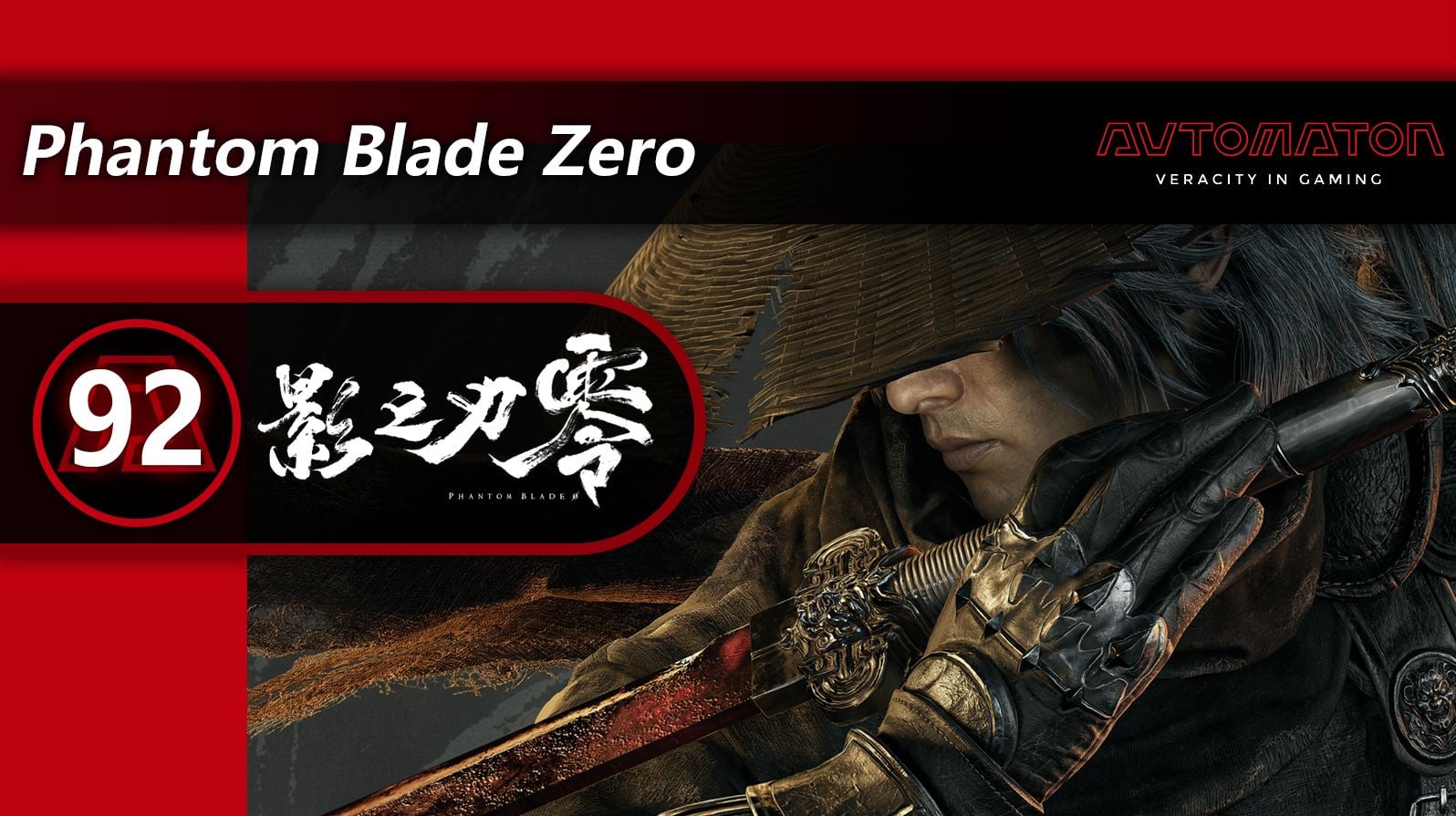
S-GAME’s Phantom Blade Zero is undoubtedly one of the most anticipated Chinese-developed AAA action game of this year. We were fortunate to get our hands on it ahead of release, and after 40 hours with the game, we finally finished it. Here’s our full review.
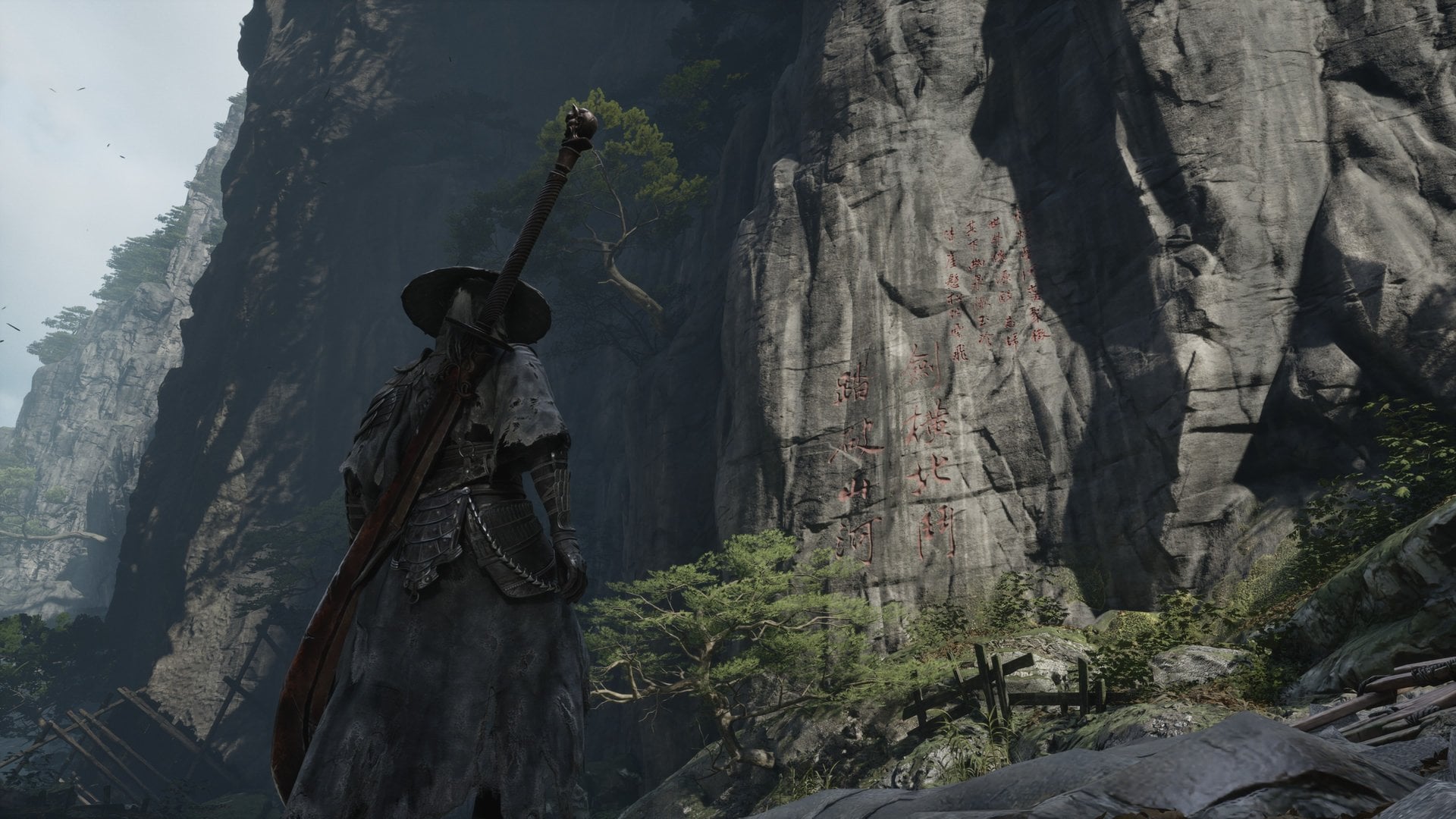
The first thing that stands out is the beauty of the environments. The graceful natural scenery, paired with Chinese-style color grading, makes you feel at once as if you have stepped into a classical landscape-painting scroll. With ray tracing turned on, the lighting is excellent, and the aesthetic quality of the scenes is extremely high. It’s clear that great care went into creating every blade of grass and every tree, making for a visual experience of a very high standard.
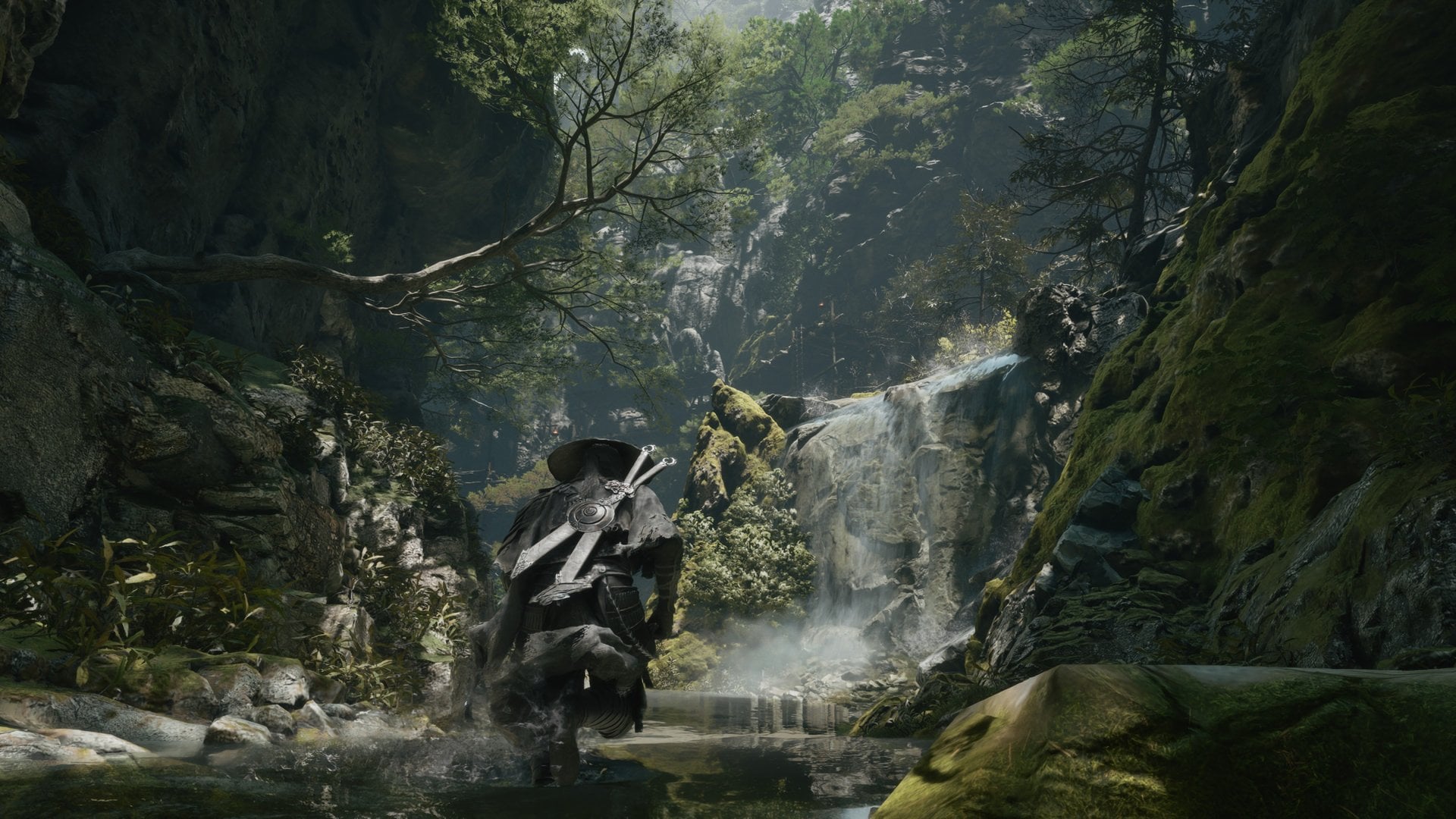
The game is huge. It has several very large maps, and within each vast area are nested several smaller, multi-tiered environments. The sense of discovery as you navigate them is a real pleasure. From beginning to end, the game keeps a decent balance between the pacing of exploration and combat. Most of the items that open doors can be found nearby, and there are many Bells (teleport points), so you won’t be burdened with excessive backtracking. Protagonist Soul is also highly mobile, so even going up and down stairs is designed rather elegantly, and there is even a dedicated animation for going around from the back of a staircase to the front. This attention to small details makes traversing the world feel satisfying.
One thing to note: probably in order not to break the immersion of exploration, this game, unlike many games, has no explicit guidance system for quests. Instead, once an icon is highlighted on the map, holding the prompt button briefly displays the general direction and distance to the objective for a few seconds. Side quests also require you to carefully explore the map or talk to NPCs to start. The map only shows some important plot items, or the icons of side quests that have already been started, and does not mark NPC locations.
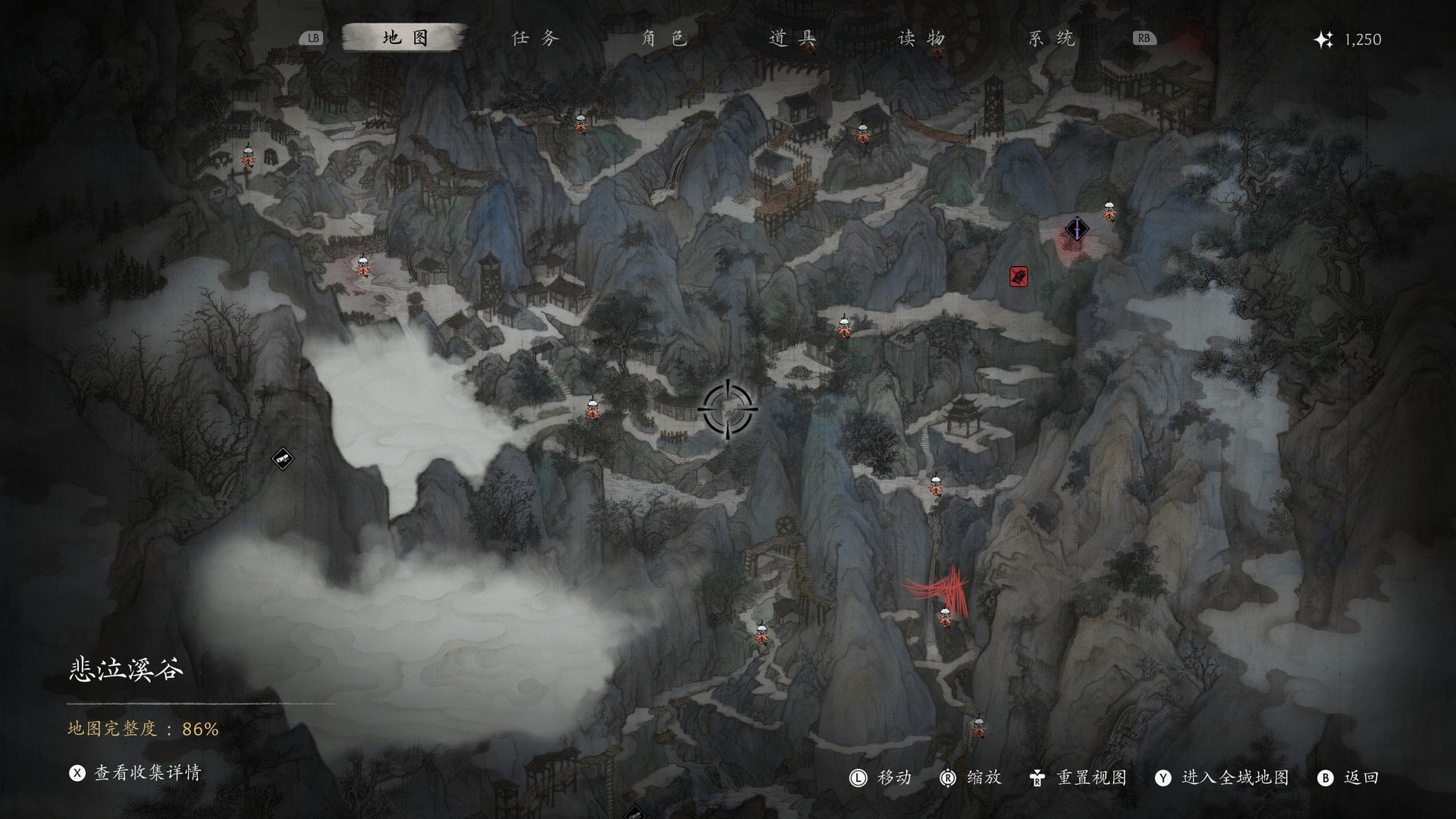
The game’s system guidance is, overall, fairly simple and easy to pick up. Explorable elements are quite conspicuous: a circle prompt appears when you get close, and treasure chests also make sounds, so they’re not easy to miss. Important information you have not yet obtained, like something needing the unlocking of Phantom Edges, or a missing key, is marked on the map. However, the game has many forking paths, yet players cannot place markers on the map, so it is very easy to miss a fork. I myself missed one path and failed to get an important secondary weapon, which cost me a lot of time going back to look for it again.
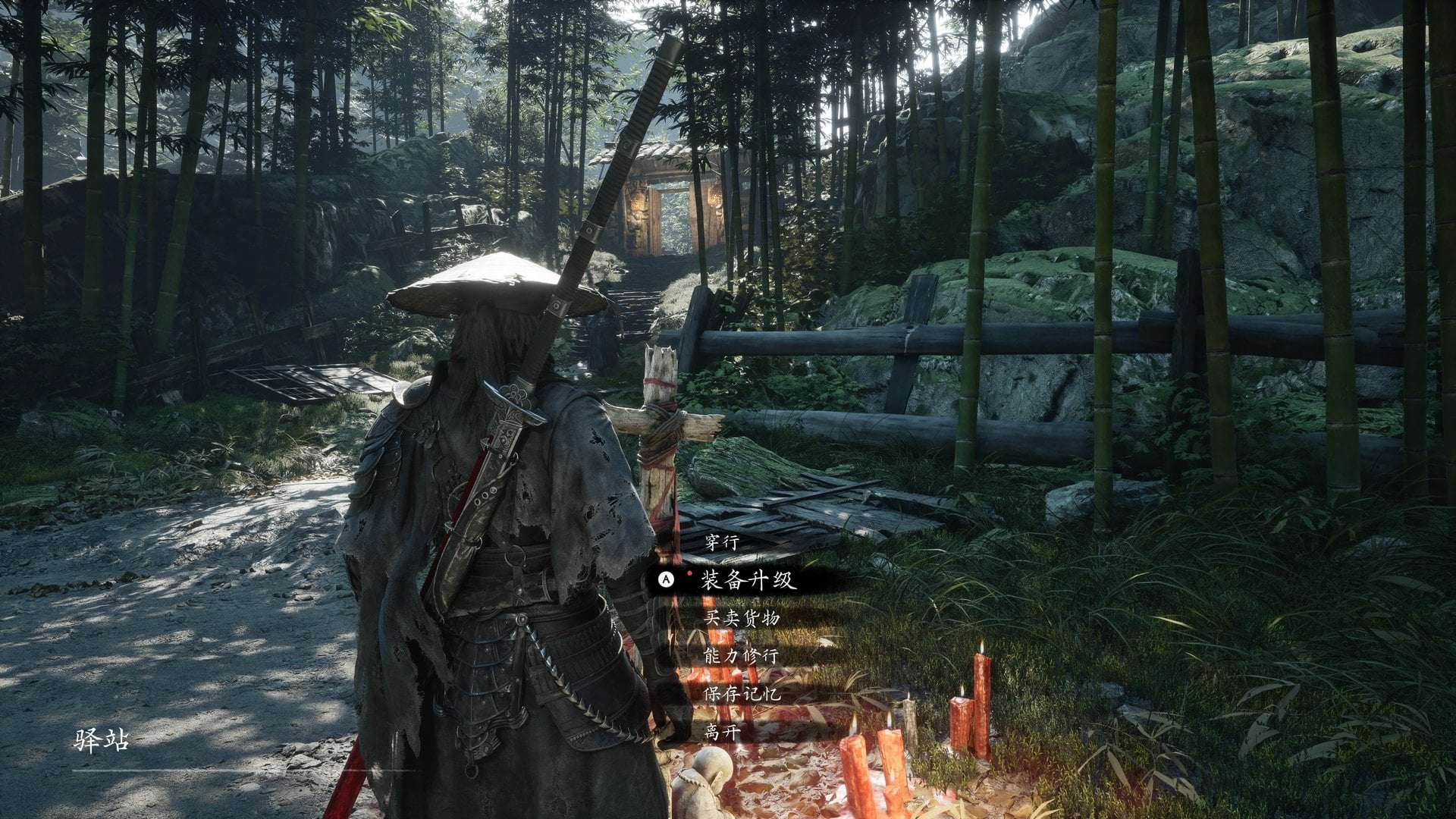
Bells are this game’s save points and upgrade stations. A red-line guide lets you know a Bell is nearby. At a Bell, you can upgrade skills and forge weapons, and also buy things directly. You can teleport freely between Bells, and when you are not near a Bell, you can use a consumable Talisman to return to a Bell, which is very convenient. The overall distribution of resource points fits the rising curve of combat difficulty well, and there are also some hidden shops on the map that provide materials. As long as you make a point of collecting resources and upgrading your skills and weapons, you shouldn’t find yourself noticeably underpowered.
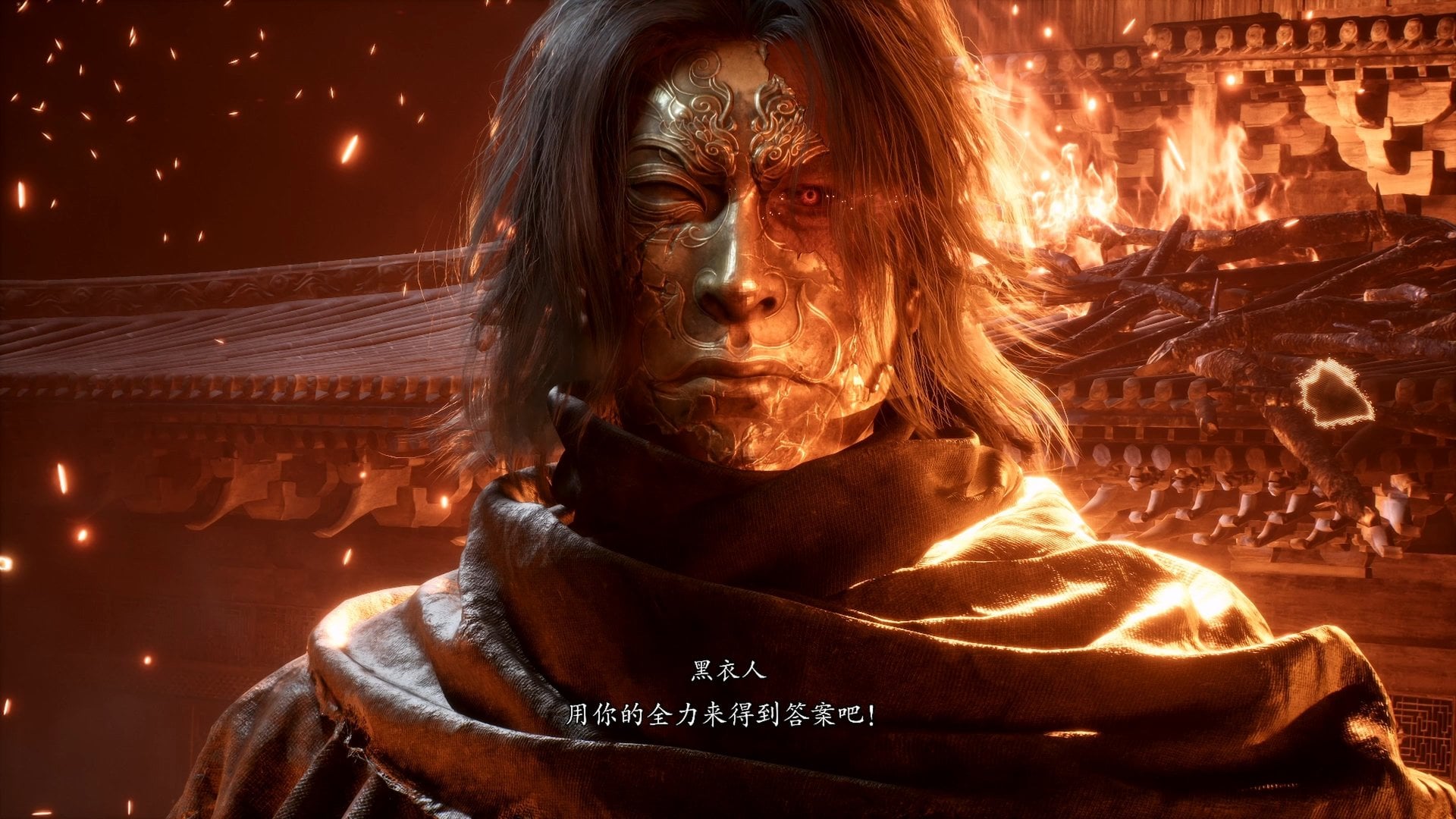
Next, let’s talk about the combat, what many gamers are most curious about. Your Sha-Chi gauge is restored by switching weapons, which is a rather special design. It is equivalent to two stamina bars taking turns to keep you going, and I found it fits the game’s “high-speed combat” concept very well. You can perform a wide variety of moves with relatively simple button combinations, and learning the combos isn’t especially difficult.
A large number of the moves draw from the fight scenes of golden-age kung fu films, and together with the extensive motion capture which professional martial artists took part in, they inject into the combat a kung fu soul unique to Chinese martial arts. Beyond the beautiful action design, it is also clear that the development team put considerable effort into controls and the feedback of each hit, which makes the game’s combat feel easily on par with the best in the industry.
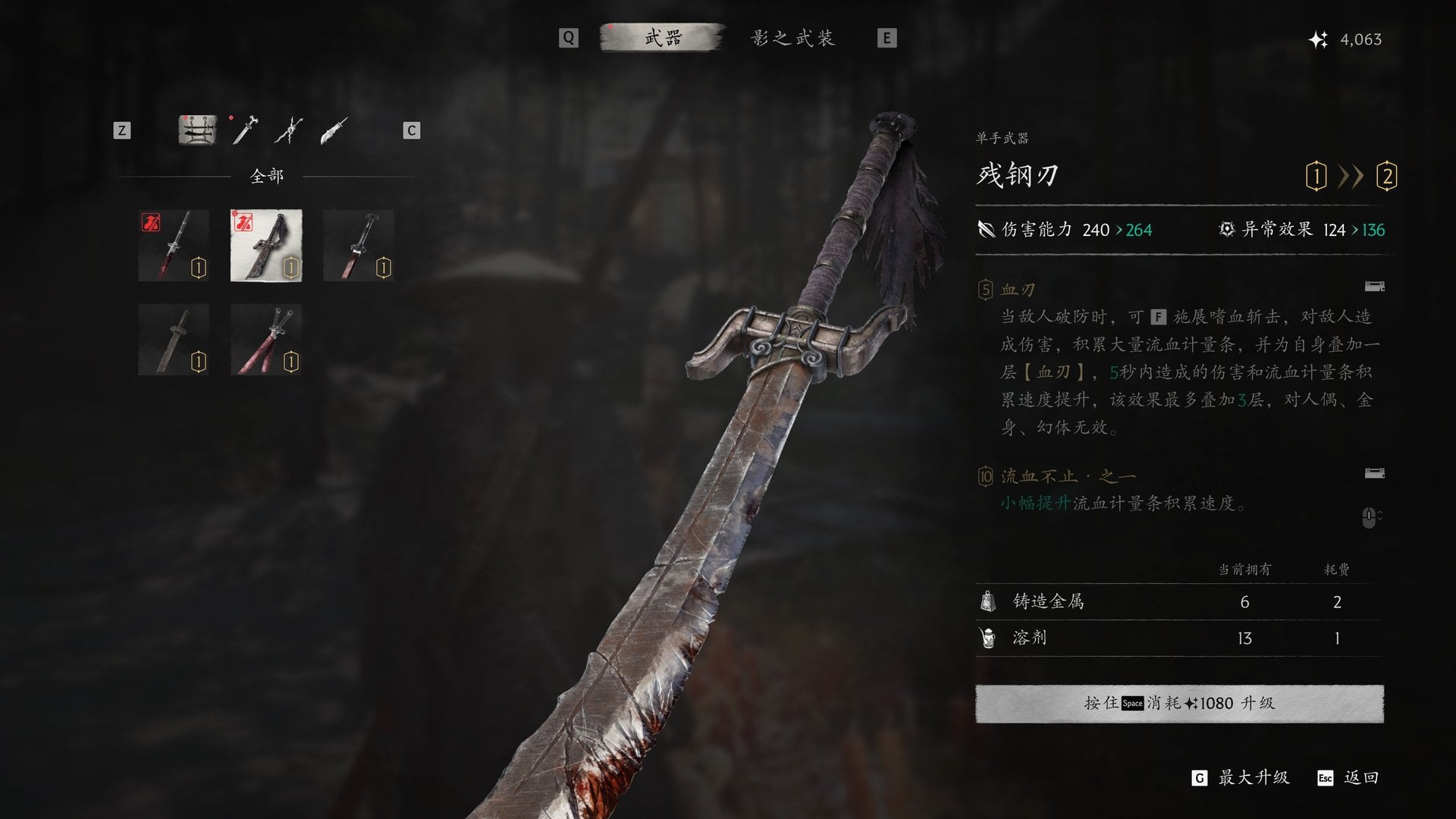
Players can use up to 30 main weapons and 25 secondary weapons. The attack moveset of each weapon is different, and most are strongly specialized. For example, some are for nimble movement, some for kiting from range, and some specifically for breaking shields. Being able to experience the unique handling of different weapons is the most addictive part of this game. I usually choose to equip different types of weapons in each hand. Beyond functional considerations, it is more to add freshness to the controls. For example, when maneuvering around the enemy, I use the nimble type, and when it’s time to break defense and deal damage, I switch to a heavy weapon to pump out damage. They can even be switched into each other to form combos. When a weapon is upgraded to a certain level, some exclusive skills or buff can also be unlocked, so each weapon has substantial playability.
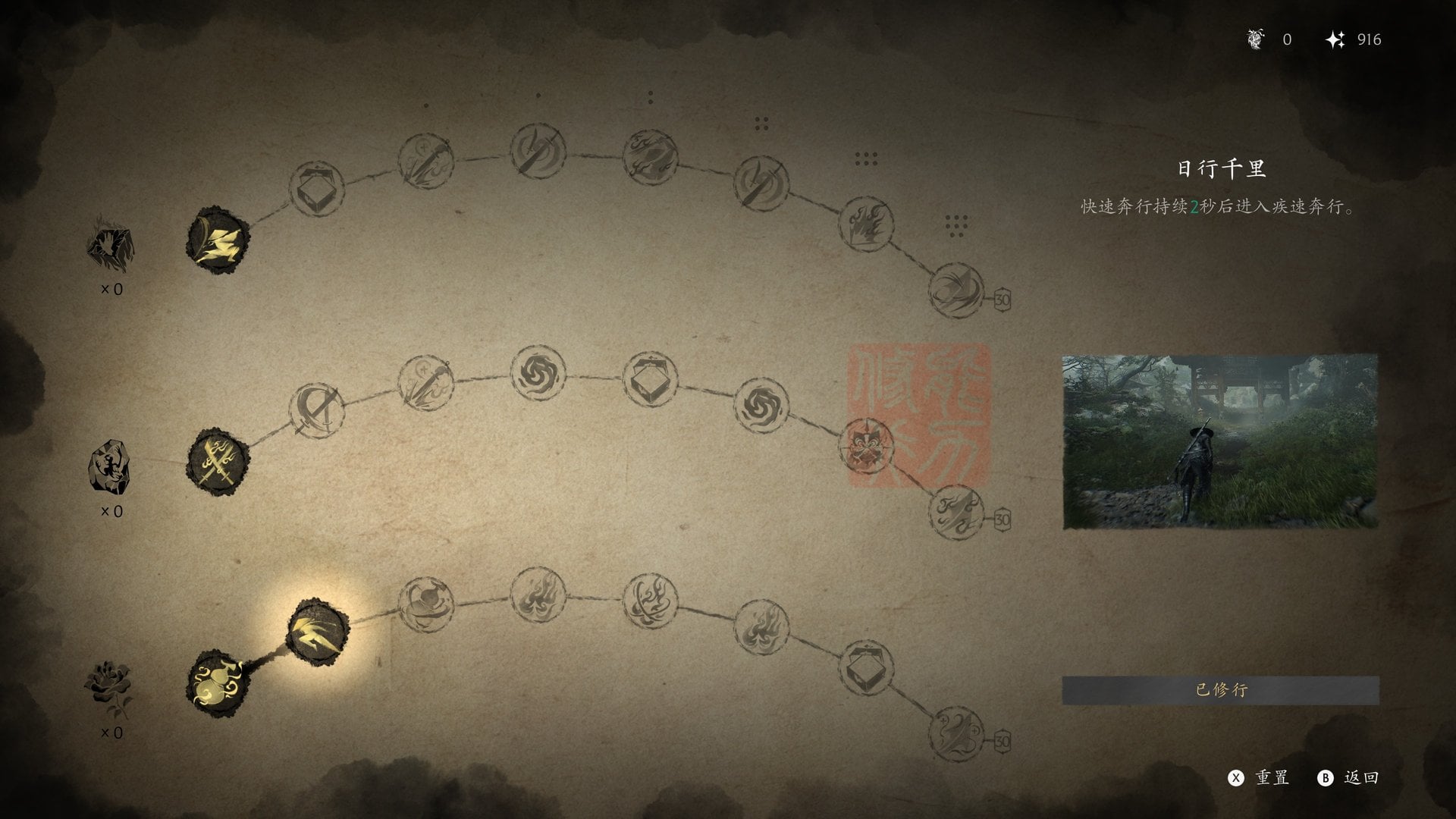
Upgrades to weapons and secondary weapons, as well as skill-tree enhancement, can all be reset with the cost refunded, which greatly lowers the risk of investing in builds. This means you can fully choose weapons based on your own preferences, or choose targeted weapons according to the enemy you’re currently facing. Combined with potion bottles and accessories that offer different effects, there’s a great variety of loadouts. That said, although the development team encourages players to change loadouts often, there is no function to collect and store equipment sets, so switching is somewhat tedious. In addition, the cost of polishing accessories cannot be refunded and requires a lot of resources. Considering that this game cannot be leveled up by farming respawning enemies, you still have to be careful about how you allocate resources.
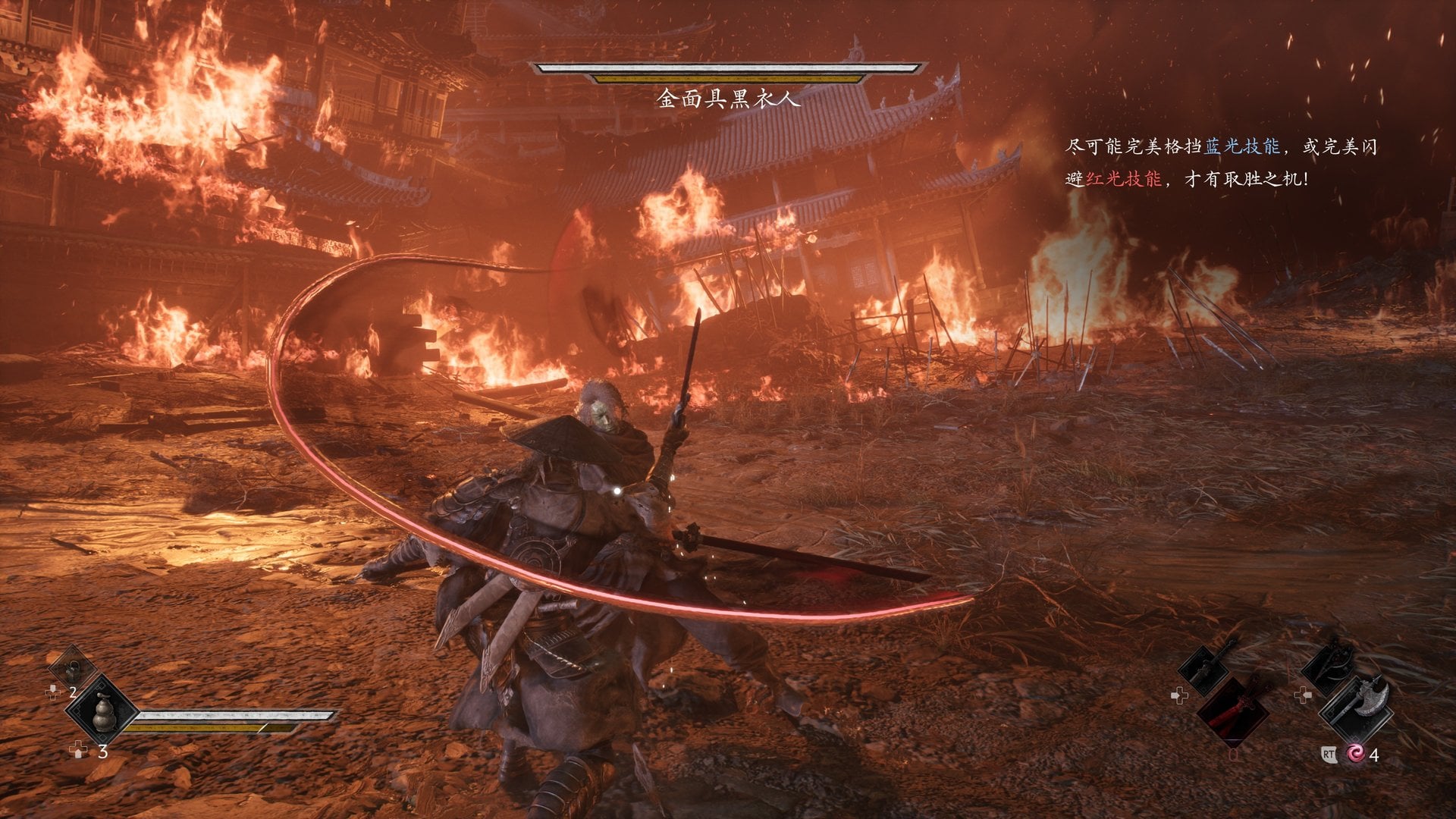
The core difficulty of the game’s combat lies in the either-or judgment between red and blue flashes. If you handle these correctly, you can recover Sha-chi and instantly reverse the situation. Successfully parrying an enemy’s blue-light attack not only deducts the opponent’s Sha-chi, but also leaves them wide open for follow-up attacks. Precisely dodging a red-light attack lets you go behind the enemy or dash straight toward them to unleash a long combo. Both are high-risk, high-reward moves. Spotting the red or blue flashes amid the enemy’s continuous attacks and reversing everything with a single strike feels incredibly thrilling.
Direct blocking is reliable most of the time, but the game also encourages players to actively attack and create opportunities (instead of passively waiting to parry or dodge), by including some attacks that drain a large amount of Sha-chi. Such moves are often accompanied by a very brief screen-darkening effect, and the player needs to react immediately and dodge.
You can also interrupt certain enemy moves with basic attacks, which gives you an opportunity to recover Sha-Chi and prepare for what comes next. I have tried all three difficulty levels of the game, and when enemies are clustered together, they are very likely to rush in all at once and form a pincer attack. On high difficulty, you can get beaten down to low health in an instant, so you need to observe the battlefield carefully and prioritize dealing with troublesome ranged enemies. Another thing to watch out for are enemies with spiked shields – attacking them blindly will get you hurt by reflected damage. In addition, making good use of stealth kills to quickly reduce the number of enemies is also a very important tactic.
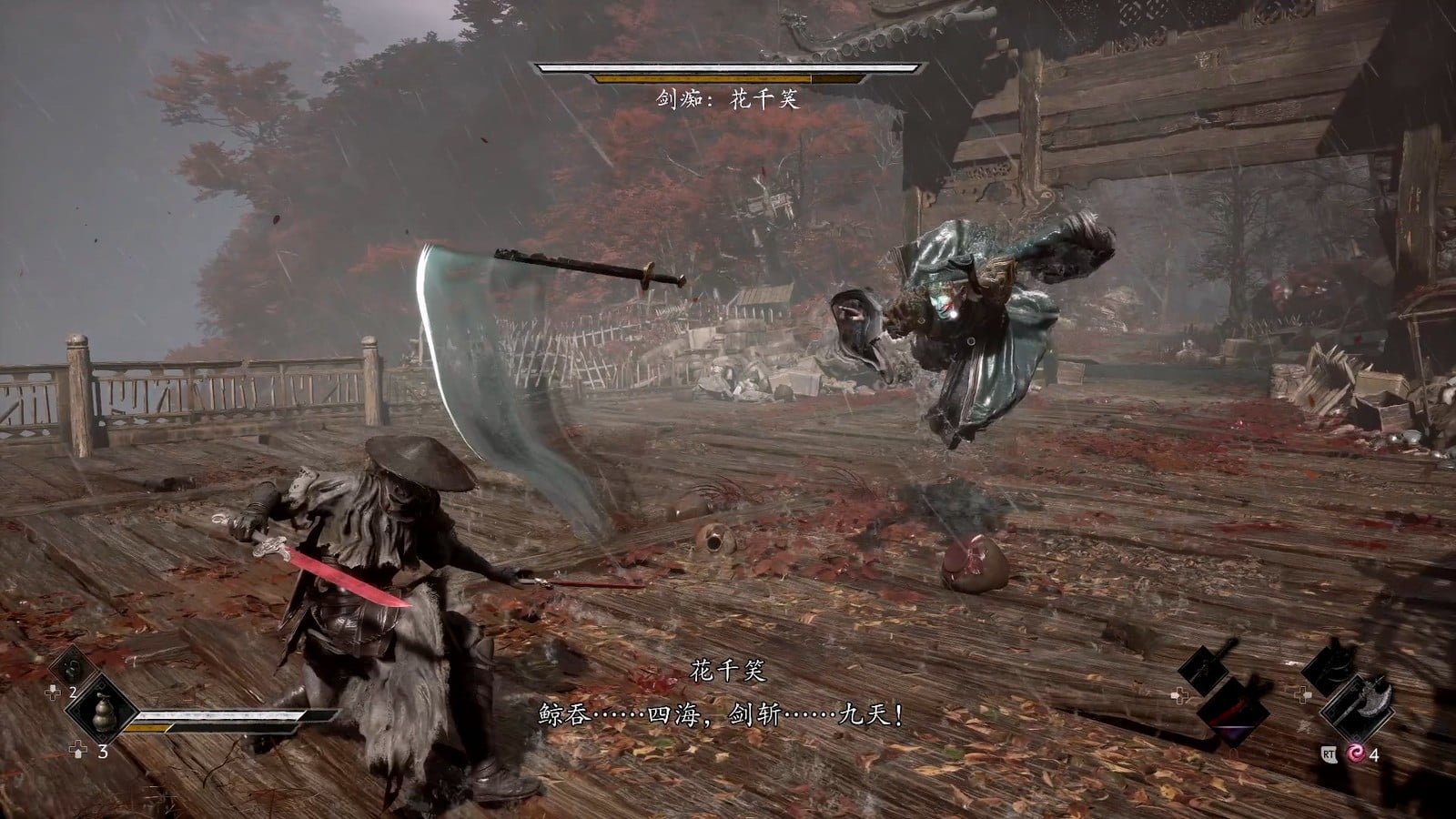
The game features a large number of bosses, but they’re not just there for quantity’s sake. I felt they were designed with care, with a large number of movesets, exclusive skills, and strategic AI behaviors. For example, there is a boss who is extremely hyperactive. If you follow the typical method of waiting to react to the red and blue flashes, your Sha-chi gauge will soon be emptied. After fighting for a while, I found that although this boss is hyperactive, he also consumes his own Sha-chi gauge very quickly, so you can simply retreat to a safe distance and wait for him to dance his own Sha-chi gauge empty, then go up and directly break his stance.
However, the developers clearly anticipated this way of playing, and so gave this boss a very insidious grab move. It has no red-light warning, and if you are grabbed, it adds to the boss’s stance gauge. After I learned when this move was likely to occur, I stopped getting greedy with my attacks and instead kept my distance, baiting the grab so that it missed, which made the fight much easier.
Clearly, the development team intends for the various boss designs to encourage players to come up with countermeasures, change loadouts often, and fully experience every weapon. The game has many Bell points, you do not drop resources on death, and if a boss fight has a second phase you can restart from the second phase after dying – all of which makes it clear that the game wants you to take risks and challenge yourself.
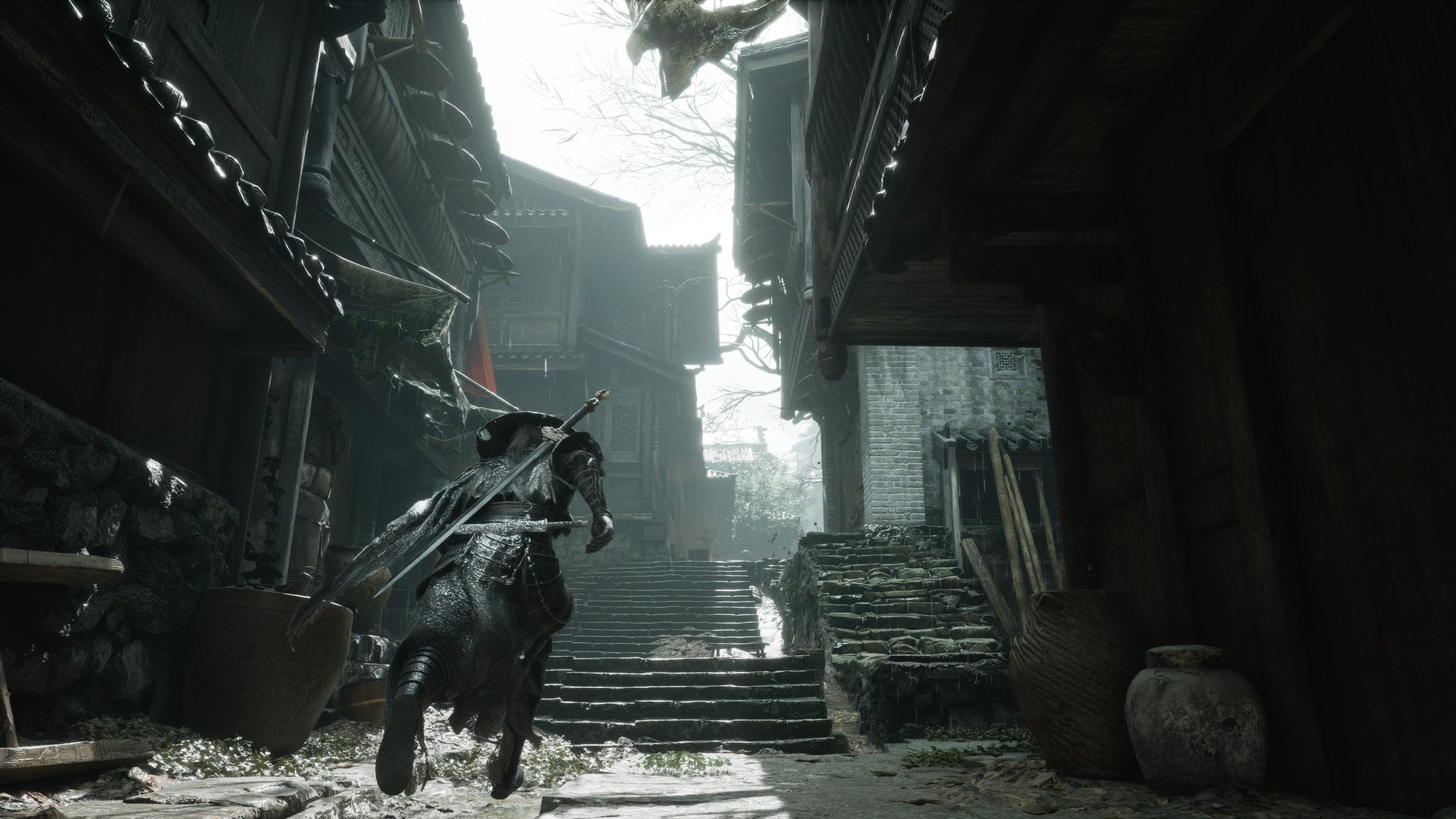
Against the background of traditional Chinese supernatural tales, the incorporation of steampunk-style sci-fi elements has always given the Phantom Blade series a unique identity, and in this entry – the first AAA entry in the series – that identity has been carried on.
As mentioned earlier, this game is huge, but it does not feel empty. The developers have cleverly integrated its massive lore into the game mechanics, making the world feel full and bringing a strong sense of immersion. This is especially reflected in the shaping of the NPCs’ stories. By depicting common people caught up in power struggles, it creates an utterly tragic sense of a doomed, chaotic age. Soul’s determination to save as many of these people as he can also runs throughout his story. Writing NPCs with soul is in fact equivalent to building the protagonist well.
After you complete a plot milestone, some NPC dialogue also changes, which reduces the tedium of repeated exploration and sometimes even offers new side quests. One of them left a deep impression on me – early in the game, you can encounter a hastily buried grave; if you take that question back to the rest stop, a certain NPC will tell you the truth, which leads to a very long side-quest storyline unfolding. Putting effort into tiny places like this can greatly increase the world’s sense of immersion, and it deserves recognition. Scattering pieces of background lore throughout side quests is a demanding storytelling technique, but the game handles it exceptionally well. The whole story is like untangling a tangled ball of thread. When you slowly pull on one loose end and unravel a longer strand, the sense of accomplishment can be just as satisfying as defeating a powerful boss.
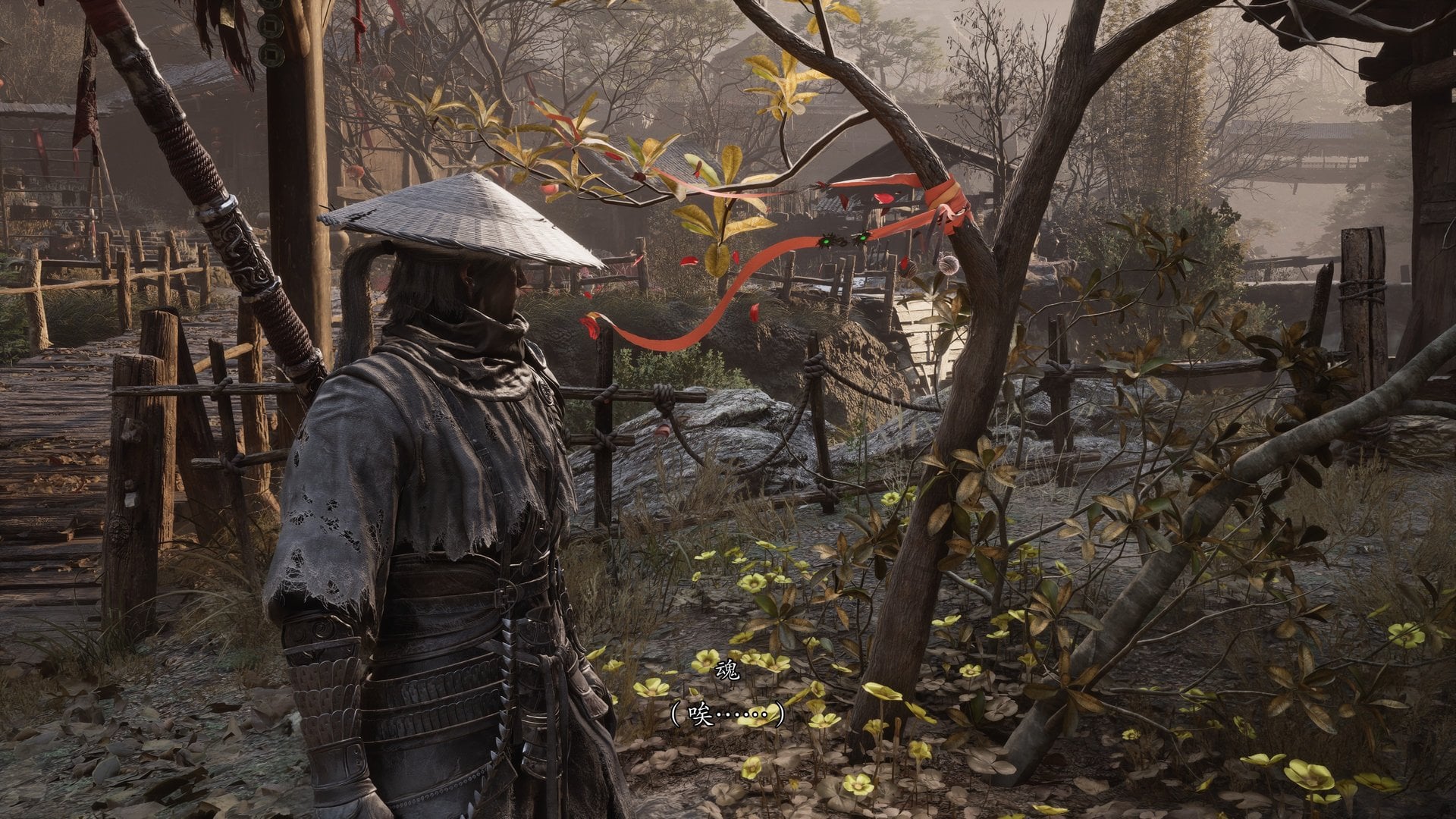
As for the main storyline, it is relatively simple, with some twists but not many. A large part of the plot is conveyed through Soul’s memories, so the narrative pacing may be somewhat loose. Since I’ve played the previous Rainblood games, I had no trouble understanding it, but for new players it may not be so easy to grasp the whole story. Fortunately, the presentation of the story keeps a high standard from beginning to end, and even if you don’t quite understand it, it doesn’t affect how satisfying it is to watch.
Equally outstanding is the game’s music. With a classical Chinese style as the base, it fuses a great deal of modern-style rock and electronic music, adding quite a lot to the staging and atmosphere building. You can also hear new arrangements of some of the series’ famous past tracks.
Verdict
As S-GAME’s first AAA production, Phantom Blade Zero is surprising in its overall quality. The outstanding art and music, combined with a large number of compelling side stories, build a grand and eerie new-style wuxia world. The martial-arts action design is very refined, and the numerous weapons let players experience different martial-arts schools. The large number of diverse boss fights push players to actively think about loadout diversity, increasing the fun of the game. The level design is not bad: interaction points and treasures are fairly conspicuous, and the rhythm of traversing maps and fighting enemies has a good balance of tension and relaxation. The overall experience exceeded my expectations.
That said, there are some areas in the game that could use more polish. For example, the target lock-on can sometimes switch too easily, which feels a bit chaotic. Skill and scene effects are sometimes so over-the-top that they block the view. Additionally, the regular enemy types are somewhat similar to one another. Still, these flaws do not undermine the game’s strengths. It maintains a high quality in the key areas of environment art, combat system, and narrative staging. I’d strongly recommended it to fans of action games
Score: 92/100
Strenghts:
- Authentic, well-choreographed martial arts action
- Wide variety of weapons with plenty of gameplay depth
- Immersive atmosphere and world
- Plenty of save points make for a comfortable experience
Weaknesses:
- No map markers, making it easy to miss branching paths
- No option to save and swiftly switch between equipment loadouts

Killy J
Articles: 1Related Posts