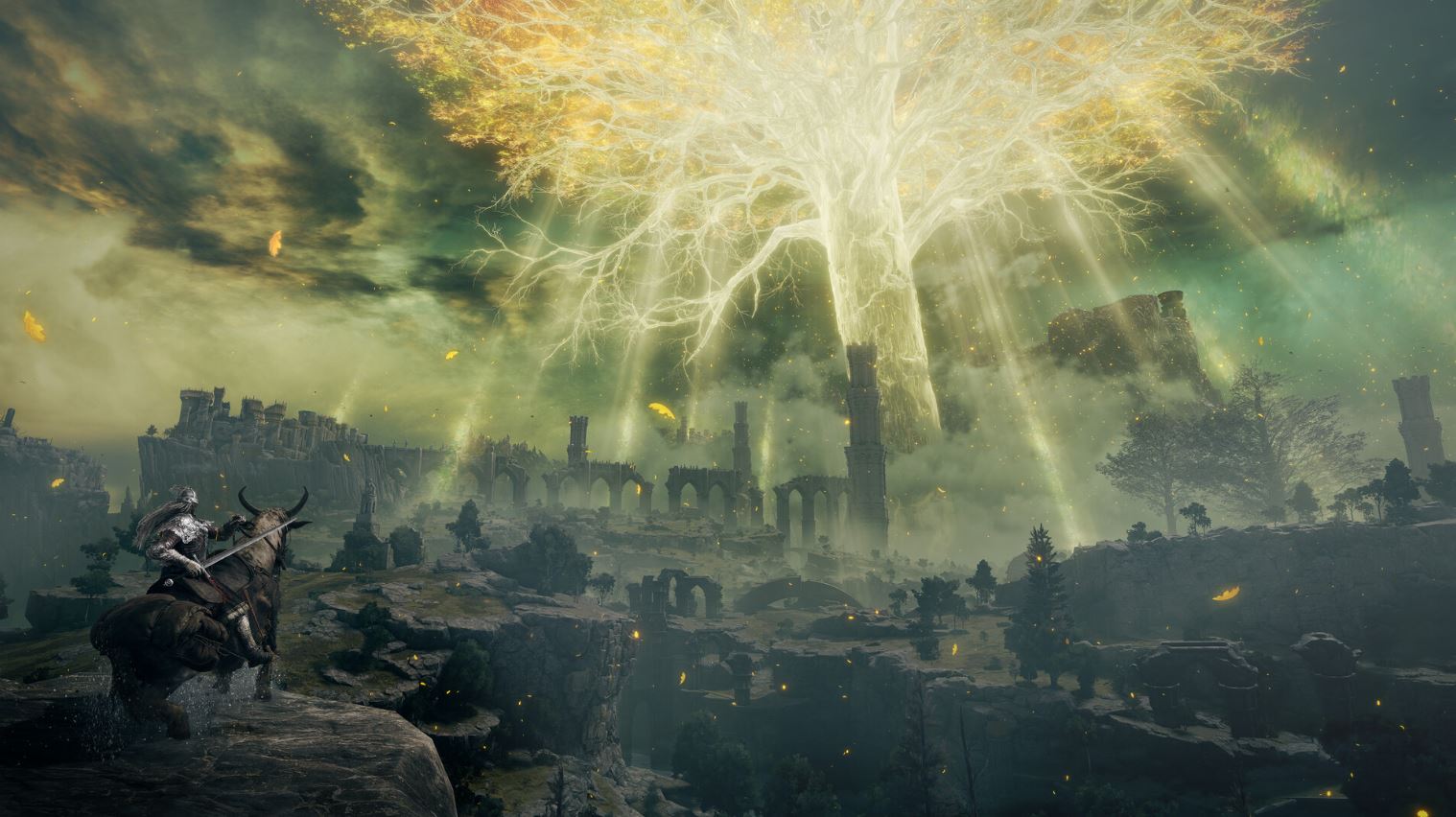
Former Capcom art director and character designer Akiman (Akira Yasuda), best known for his work in Street Fighter II, Red Dead Revolver, and the Mobile Suit Gundam series, recently took to his personal X account to talk about the strengths of Elden Ring’s graphics. This came in response to a (now deleted) tweet from a user who, seeing a side-by-side video comparison of environments in Elden Ring and Pearl Abyss’s Crimson Dessert, pointed out that despite being technically “outdated,” FromSoftware’s graphics still feel more impressive than many higher-fidelity games out there.
Offering an explanation, Akiman says: “Normally, as the level of fidelity increases, the viewer is left with less and less room to supplement what they’re seeing [using their imagination]. However, the graphics in Elden Ring are designed with careful control over the level of fidelity at each turn, in a way that ensures the viewer’s imagination is constantly stimulated to the fullest.” Akiman singles out FromSoftware’s use of atmospheric perspective (creating the illusion of spatial depth by making objects less detailed and vibrant the further they recede into the distance) as a key contributor behind this. He likens the approach to that of ukiyo-e, a genre of Japanese woodblock prints and paintings (think Hokusai and Hiroshige), as well as the illustrations of Alan Lee.
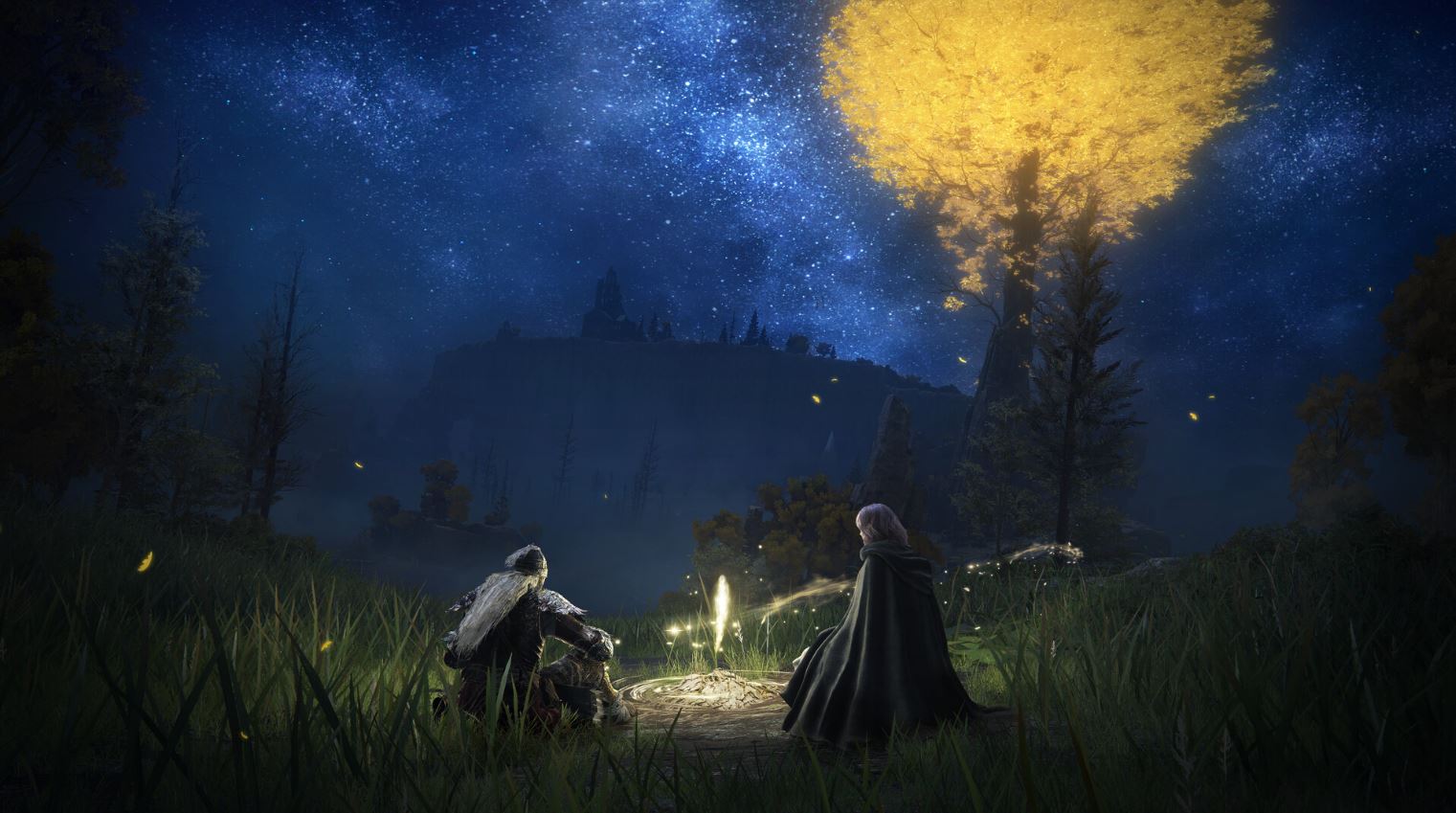
“This is what it means to be good at art,” Akiman concludes. Coincidentally, FromSoftware’s artists themselves have talked at length about their efforts to produce visually impactful graphics in Elden Ring despite the technical and financial constraints they faced. In a CEDEC lecture held in 2025, Elden Ring: Shadow of the Erdtree environment art director Hidenori Sato and lighting/environment artist Reiji Katahira explained that they put a great emphasis on following fundamental compositional rules to create impressive visuals “logically,” without relying too heavily on intuition.
The developers analyzed the layout of Elden Ring’s environmental elements (like landscape, architecture, shadows, and fog) for each scene in the game by capturing still images. This allowed them to spot and eliminate compositional errors like monotonous areas, repetition of the same elements, symmetry or poor visual flow (the player’s line of sight being unstable or led to the wrong places), resulting in environments that feel instinctively appealing to the player.
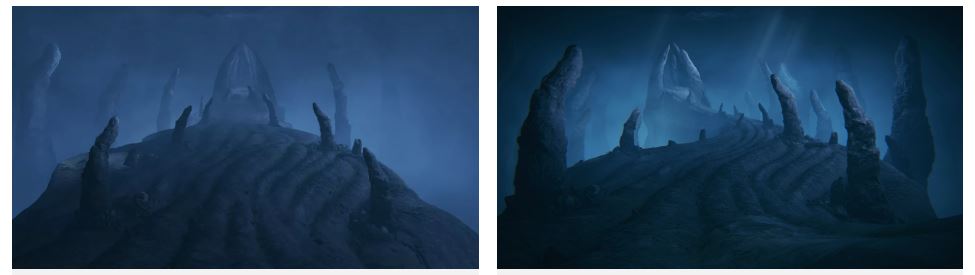
To battle constraints, Elden Ring’s developers also defined what they refer to internally as “viewpoints” – locations that need to be produced in higher quality compared to others (one example in Shadow of the Erdtree being the Cerulean Coast). These are usually areas that come right after a change in surroundings, when the player is most likely to focus on what the environment looks like. The meticulous process Sato and Katahira described, along with the sheer volume of design iterations and corrections they presented from Elden Ring’s development process, definitely seem to go in line with the “careful control” over every scene Akiman talks about.
Related: Elden Ring Nightreign’s devs thought it looked funny to revive teammates by attacking them