STEINS;GATE RE:BOOT developers on adding the game’s “harshest” route yet, their criteria for script revisions, and relaunching the Science Adventure series
Interview with Tatsuya Matsubara, producer of the Science Adventure Series at MAGES., and Naotaka Hayashi, the scenario writer for STEINS;GATE RE:BOOT.

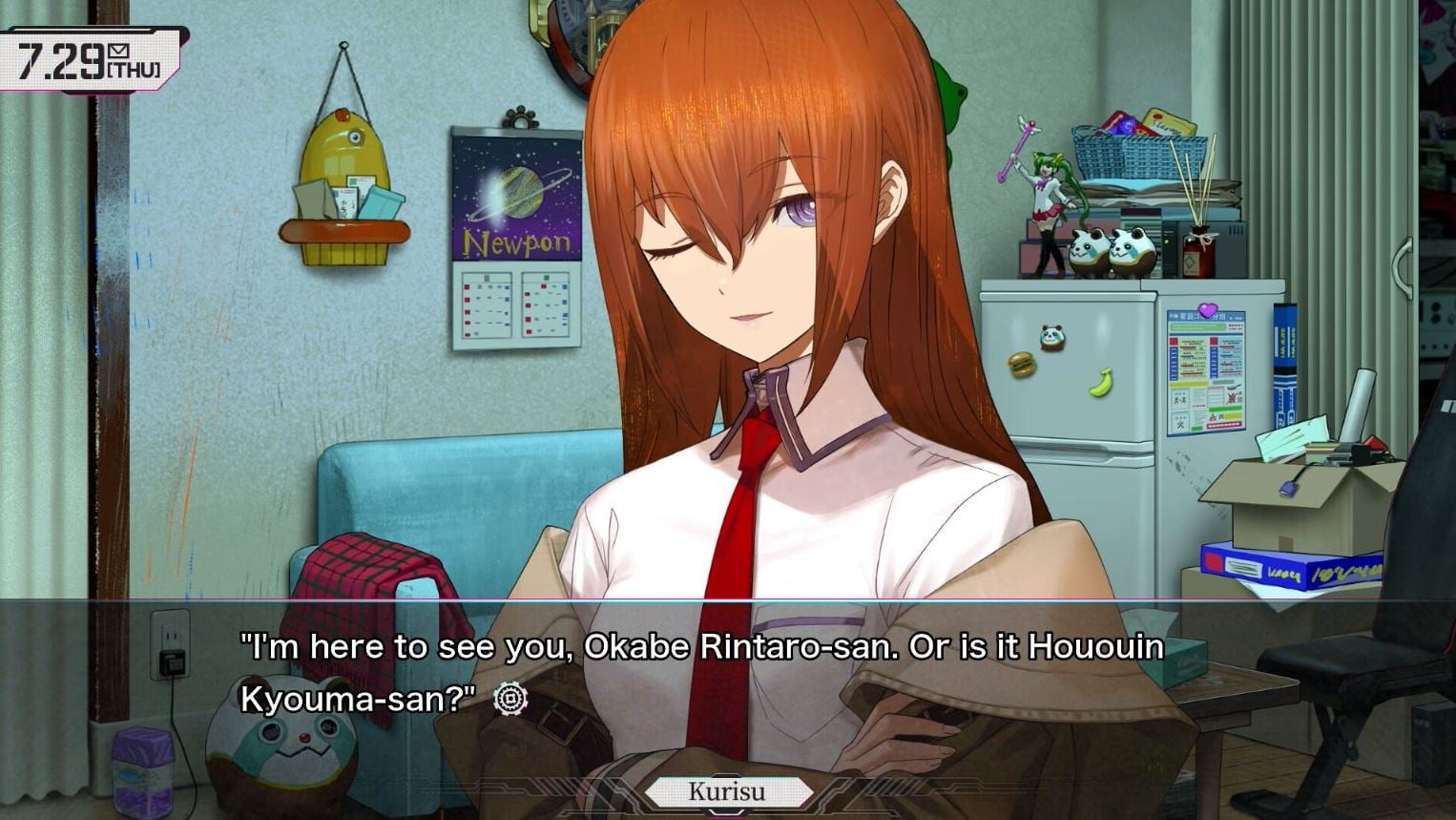
Spike Chunsoft released STEINS;GATE RE:BOOT – a full remake of MAGES.’s cult 2009 sci-fi visual novel – in August 2026 for PC (Steam); with the PS5, Nintendo Switch/Nintendo Switch 2 and Xbox Series X|S editions scheduled to launch on October 29.
The modern remake overhauls the original STEINS;GATE’s visuals with updated character designs, E-mote 2D animation, and new backgrounds. The story is based on the scenario of STEINS;GATE ELITE, while adding new dialogue and, most notably, an additional route and ending. Ahead of the game’s console release, AUTOMATON had the opportunity to interview the developers via email to learn more about the ideas that went into this remake project.
We talked to Tatsuya Matsubara, producer of the Science Adventure Series at MAGES., and Naotaka Hayashi, the scenario writer for RE:BOOT and writer/supervisor for multiple entries in the series.
—Congratulations on the release and the high Metacritic score. How do you feel about the reviews and player reception to RE:BOOT so far? What aspects of the game do you feel landed as intended? Have there been any reactions that surprised you?
Tatsuya Matsubara (hereafter Matsubara):
I’m very happy to see that so many players seem to be enjoying the game. One thing that especially left an impression on me is seeing players who had only watched the anime be surprised at how detailed the explanations in the game are.
Naotaka Hayashi (hereafter Hayashi):
I’m happy so many people are playing the game. Of course, I’m glad that people who had never experienced STEINS;GATE before are playing it, but I’m especially happy that people who played the original version in the past are playing it again this time.
There are also people carefully examining which text was retained, brought back, or removed compared to the original version and ELITE, and I’m very surprised by their passion. Thank you.
—Can you tell us about why you decided to create this new take on STEINS;GATE and how you position RE:BOOT’s role in the Science Adventure series going forward? Has it opened new possibilities for you?
Matsubara:
While considering the future of the series, I wanted to give STEINS;GATE a modern update. So I spoke with the character designer, huke, who suggested that we should also revamp the characters. That became the deciding factor, and we decided to make RE:BOOT. We intend for RE:BOOT to be a flagship title that truly relaunches the series.
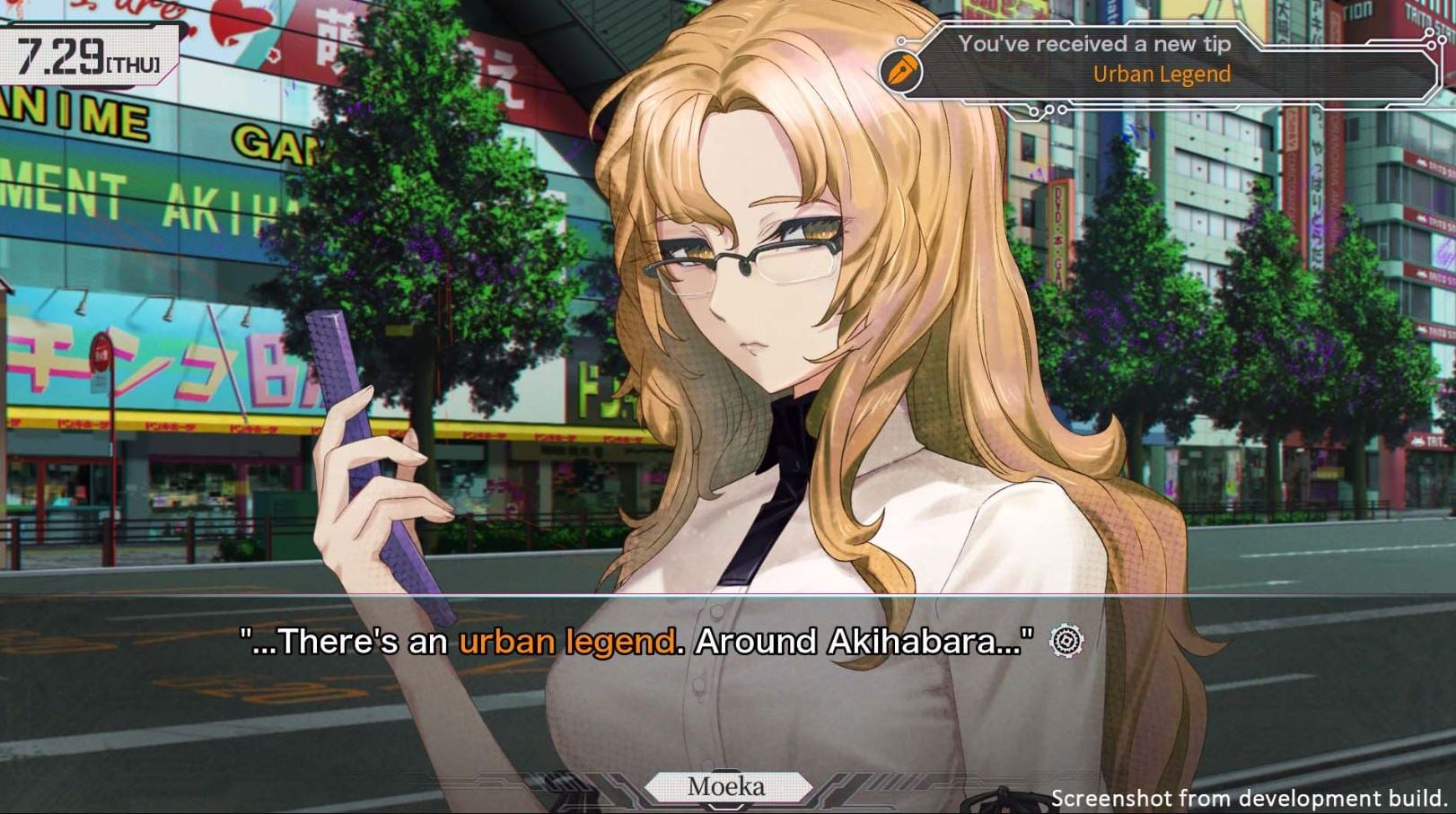
—The Gamma Worldline/Moeka route is arguably the biggest piece of new content. Why did you decide to explore this particular worldline?
Hayashi:
When we were making RE:BOOT and thinking about what new elements to include, I remembered when the original version was released, there were many requests for a Moeka ending. In the 2010 drama CD, we depicted the Gamma worldline with Moeka as the main character, but the story had never been adapted to any other medium, and it’s currently difficult to obtain. I thought that if we based the new content on this, we could connect it to the main story of STEINS;GATE without it feeling out of place.
Okabe makes many choices throughout the story of STEINS;GATE and reaches several different endings, but the Gamma Worldline episode we added this time is the harshest of them all. I believe that presenting this allows us to give greater depth to Okabe’s fate.
—I understand one of your goals with the scenario was to improve pacing and readability. Did you face any difficult compromises when it came to streamlining the text/volume and modernizing the game? What were your criteria?
Hayashi:
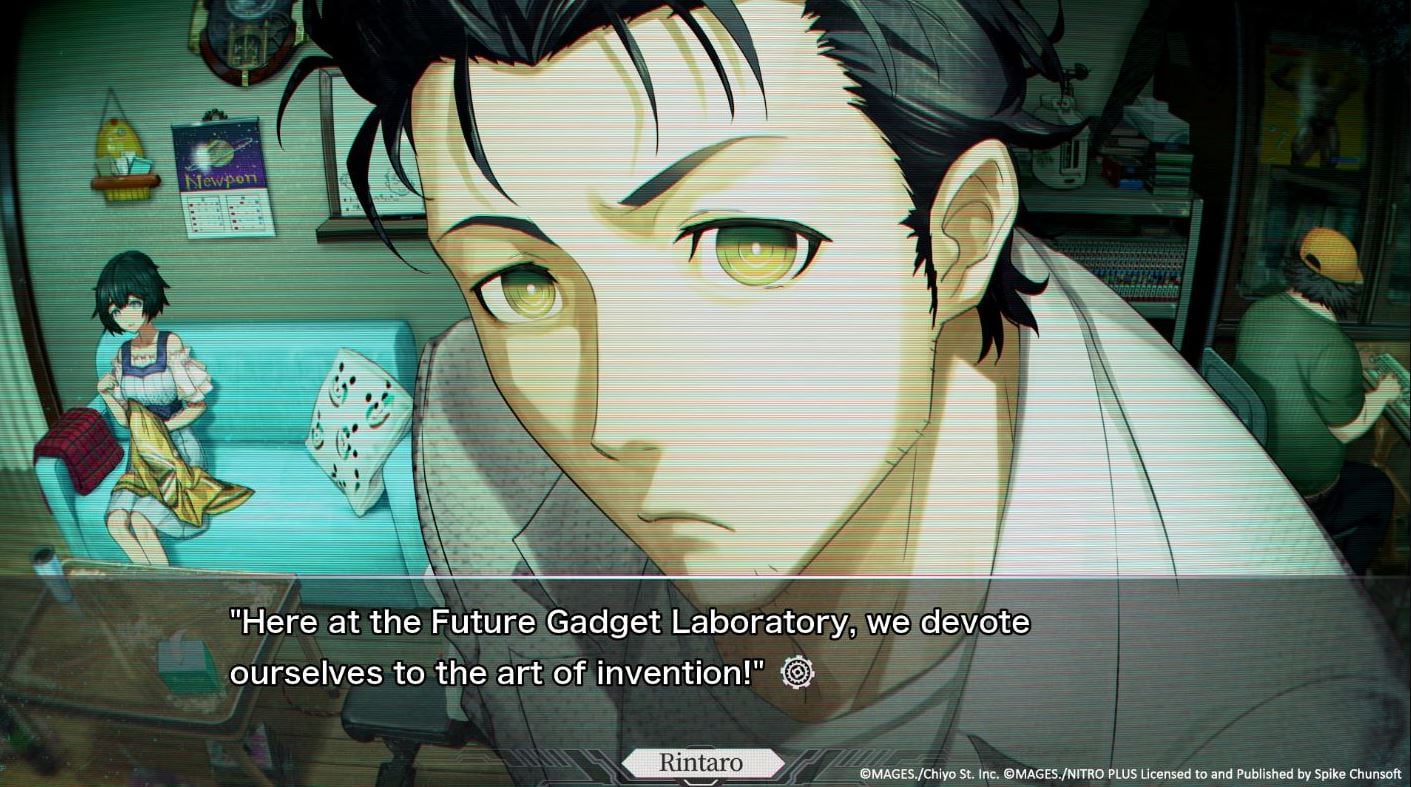
We placed particular emphasis on revising Okabe’s “chuuni-style” remarks. There had been criticism since the original’s release in 2009 that the conversations often went off on tangents, and that the poor pacing in the early part made it difficult to keep reading. So, using the ELITE text as a base, we adjusted it to significantly improve the pacing and reduce those conversational tangents. Conversely, we also went back and carefully reviewed text that had previously been cut from the anime and ELITE because it was judged to be unnecessary. We also restored passages that I personally found entertaining.
—Did you make any special requests when it comes to the revamped character designs and visuals? Was there anything that caused strong internal debate?
Matsubara:
I asked them to make the designs feel modern while still making each character immediately recognizable at a glance. I think the result turned out wonderfully.
—The game went through a delay at one point. Did you get more ambitious about the project mid-way? What did the extra time allow you to accomplish?
Matsubara:
Although this is a remake, we approached it as though we were creating a completely new game from scratch. We redrew and reconstructed everything, starting from the storyboards for the event CGs. Once we saw the E-mote characters come to life, we went further by adding animation to the event CGs and refining effects such as those when the PhoneWave is activated. In the original version, all of the effects were pre-rendered movies, but this time we have recreated them as real-time particle effects. One detail we were particularly proud about was having electrical discharges occur in front of the characters as well.
—For players who have experienced the original, what do you consider RE:BOOT gives them that replaying the original cannot?
Matsubara:
I would say the character animations using E-mote and highly detailed recreation of Akihabara are highlights. But above all else are the incredible performances from the voice actors, whose acting has only become more refined over these past 17 years. The voice recordings were done individually, one actor at a time, but their performances are so convincing that it feels as though they’re speaking directly to one another. It’s definitely something you should hear for yourself.
—You’ve mentioned “recreating the Akihabara and otaku culture of 2010” as one of the core concepts of RE:BOOT. Could you expand on what this means to you and tell us about the special efforts involved in accomplishing this?
Matsubara:
To recreate the unique atmosphere that Akihabara had at the time, we gathered a huge number of reference photos of Akihabara from 2010. To make it as realistic as possible, we were careful not to accidentally include anything that did not exist back then. One thing I remember in particular is that there was very little reference material for the rooftop of Radio Kaikan, so we kept searching for sources right up until the very end of development and were finally able to find enough material.
Hayashi:
In terms of the text, we mainly tried to preserve as much of the internet slang from that time. We initially considered cutting words that have become outdated, but we wanted to avoid losing the atmosphere of that time, so we added TIPS so today’s players would understand those words. Conversely, we avoided adding any new internet slang that appeared after 2010.
—With RE:BOOT introducing new material in terms of narrative, how much do you see the game as a definitive version of STEINS;GATE versus one interpretation of it among several?
Hayashi:
Not only in terms of the story, but above all when it comes to the characters, I believe RE:BOOT can definitely be called the definitive version. Since the original version of STEINS;GATE was released in 2009, the characters have continued to be portrayed through sequels, spin-offs, anime adaptations, collaborations with other works, etc. Over the past 17 years, the characters’ words and actions have been refined through this accumulated history, including the cast’s understanding of them, and that has been reflected in RE:BOOT.
—Is there anything you can tell us about your future plans for the Science Adventure series?
Matsubara:
I can’t go into much detail yet, but we are having daily discussions as we work on plans for a new title.
Hayashi:
We are actively working on the planning of a new title together with the original creator, Chiyomaru Shikura. Please look forward to it.
—Thank you for your time.
STEINS;GATE RE:BOOT is out for PC (Steam). The PS5, Nintendo Switch/Nintendo Switch 2 and Xbox Series X|S versions launch on October 29, 2026.

AUTOMATON WEST
Articles: 210Related Posts