

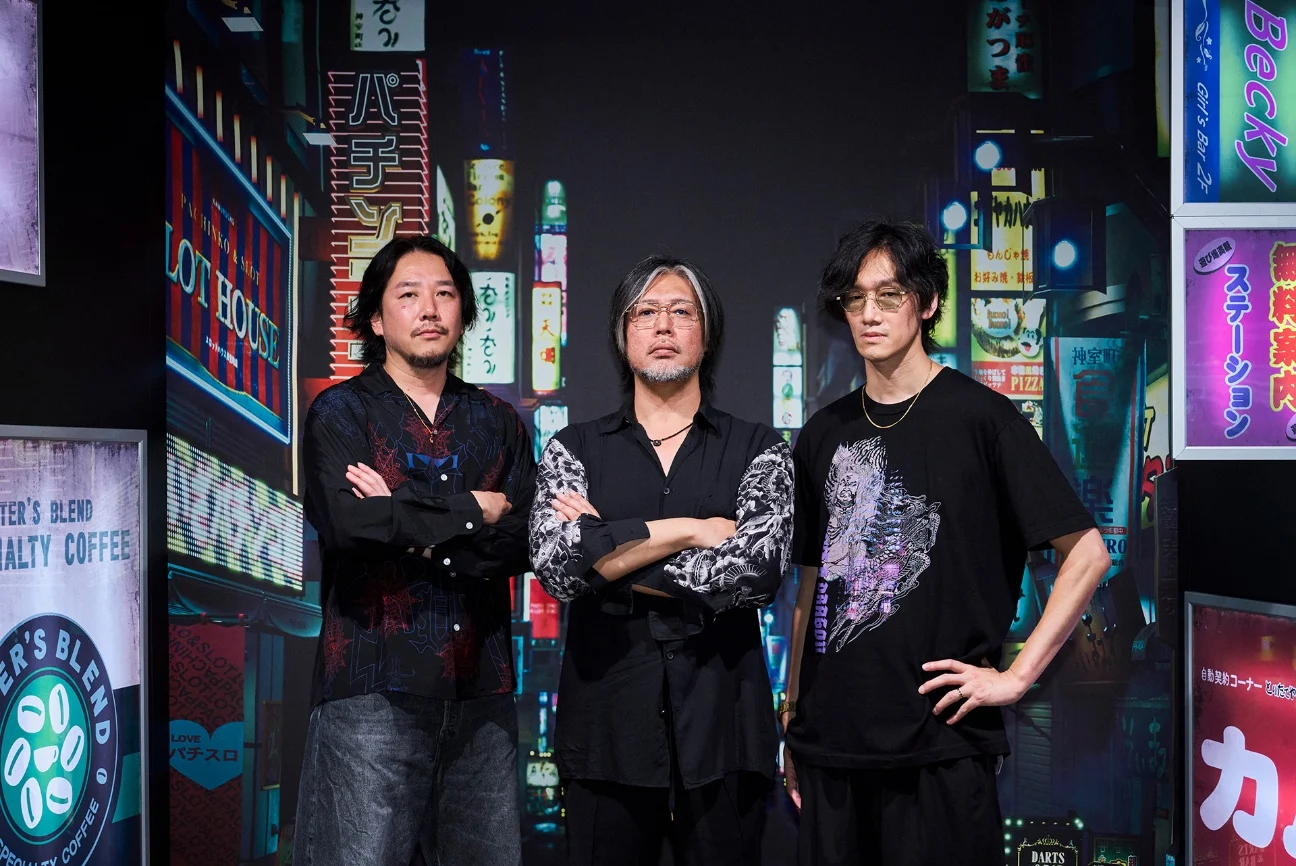
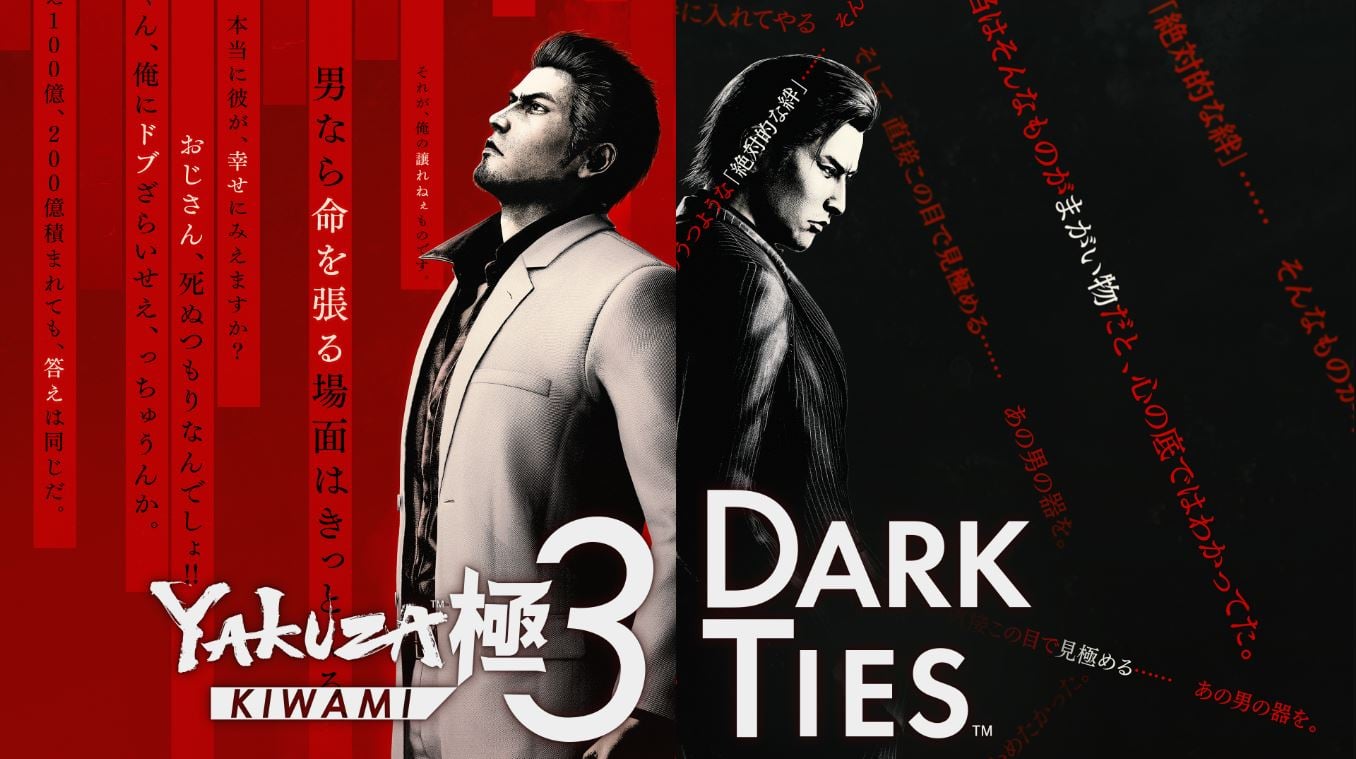
In February 2026, SEGA and RGG Studio will release Yakuza Kiwami 3 and Dark Ties, a bundle title containing a full remake of Yakuza 3 and an original spin-off game featuring Yoshitaka Mine as a playable character. The game was showcased at Tokyo Game Show 2025, where AUTOMATON Japan interviewed RGG Studio’s three top figures: director and executive producer Masayoshi Yokoyama, series chief producer Hiroyuki Sakamoto, and director of Yakuza Kiwami 3 & Dark Ties Ryosuke Horii. We asked them about the franchise’s current status in the West, as well as the studio’s views on incorporating feedback from players and marketing teams into their games.
Note that this interview was conducted in September 2025.
—In a past interview, you mentioned that the Steam version of Yakuza 0 was doing very well globally. At the time, you said people overseas were buying it partly because it felt exotic. It’s been two years since then, but how do you feel the series is positioned now in the Western market?
Yokoyama:
I still think it’s mainly people who already like or understand Japanese games who are picking it up.
That said, Like a Dragon: Pirate Yakuza in Hawaii actually sold very well in Europe, which was completely different from past trends.
—Not the US, but Europe?
Yokoyama:
That’s right, I got the sense that pirate culture is deeply rooted in Europe. Of course, we have a larger player base in the US to begin with, but seeing sales unexpectedly grow in Europe was interesting. In this sense, I think people are discovering the series through various entry points, but I don’t think it’s at a stage where it can be called mainstream yet.
—So you don’t feel you’ve fully reached the market yet, you’re still in the process of expanding? I had the impression that it was a series all readers of our English-language edition were familiar with.
Yokoyama:
I think that’s probably because that’s the kind of readership your publication has (laughs). There is definitely an audience familiar with it, but we still have a long way to go.
Sakamoto:
There are core Like a Dragon fans out there forming communities, so we do have a fanbase, but it’s still actually quite small.
—So in terms of your stance going forward, you’re still figuring out how to break new ground?
Yokoyama:
Yes, even our merchandise strategy is very different between Japan and the West.
In Japan, we design products under the assumption that people already know the source material, since the series has gone through many phases here. But if we did that overseas, it wouldn’t make sense. Right now, our priority is simply to firmly establish the Like a Dragon name and RGG Studio logo.

Even if Like a Dragon’s global popularity rises, our philosophy won’t change
—You’ve always talked about “making what feels true to RGG Studio.” If the series becomes even bigger globally, will that mindset change?
Yokoyama:
No, it won’t. If we really wanted to make a game for overseas audiences, it would obviously be better to make a foreign protagonist and set the story overseas. But if we did that, it wouldn’t be Like a Dragon. There would be no point in us making it.
Instead, we have to preserve what makes us us, and communicate that to the world.
If we’re not doing that, we might as well dissolve the team right now and make a totally different game.
It ties into the question of what you want to do for a living. If our job as creators is to make games, then RGG Studio’s job is to make Like a Dragon and spread it globally.
I think people start making strange things when they misunderstand what their business is supposed to be.
—Does that mean the market is secondary for you?
Yokoyama:
It’s not secondary, it’s always part of the package. But if it means changing what we create, then that’s not the right approach.
—As the series’ popularity rises, you probably receive more feedback and requests. Do you not take those into account?
Yokoyama:
We learn about game design ourselves.
On the other hand, when it comes to operational things, like waiting lines at events being too long or tickets being hard to buy, we listen to user feedback. In other words, only when it applies to services and administrative aspects.
Sakamoto:
It’s because we don’t change the games that fans keep having high expectations of us.
—I see.
Yokoyama:
All we can do is believe that a good game will be appreciated. If the belief that “fun games sell” is invalidated, then what’s the point?
Of course, in reality, there are games that don’t sell despite being entertaining. That’s why we hold events like this to properly convey the fun.
For TGS 2025, we set up many demo stations so people can really experience it.
That’s marketing and promotion; we think of them as a set. But if your actual product is boring, all you’re doing is embarrassing yourself, so in the end, it still comes down to making a good game.
—Right. If the game is lackluster, promotion won’t mean much.
Yokoyama:
Exactly, it’s like advertising a dish you already know tastes bad.
—Is this “good work sells” mindset something ingrained in SEGA’s culture?
Yokoyama:
At least for me, yes.
Sakamoto:
“Creating without compromise” is something the whole team feels strongly about.
Horii:
I’m involved in development as a game director, but it’s not like we know what will make a game entertaining – all we can do is make something we believe is fun. I feel like the whole team is sincere in that they want to make something they find genuinely interesting and good.
Yokoyama:
We spare no effort in that regard. We do everything in our power to create something good, right up until the very last moment.
Horii:
The mindset “let’s do this because we were told do” or “let’s do that because marketing says to” doesn’t exist for us.
Yokoyama:
Or rather, it doesn’t need to exist, because they don’t tell us what to do in the first place.
I think that’s because we’re already very conscious of marketing ourselves.
Horii:
Yes, since we develop games with a stance that respects marketing too, we don’t really get told much anymore.
Yokoyama:
We’re not some stubborn team that refuses to listen.
We make good products, and we work hard to communicate that ourselves, so there’s no need for others to tell us what to do.
For example, we made all the assets for our TGS stage events ourselves.
—You make all of that yourselves??
Yokoyama:
Yes. While working on the game, during spare time, our designers will ask the marketing team things about the stage and displays that’ll be used at the event, and then they’ll pitch ideas to me on how to place characters and the like.
Normally, marketing drafts a plan, presents it to development – they discuss feasibility, and if development can’t do it, it goes to outsourcing. But we don’t work like that.
Sakamoto:
We don’t leave it to agencies; we provide everything ourselves during development.

Yokoyama:
Even booth decorations around demo stations are made by us.
That’s what it means to think about development and marketing together.
RGG Studio’s new challenges may influence the future of Like a Dragon
—It’s been some time since RGG Studio took its current structure. What phase are you in now?
Yokoyama:
I think we’ll step into the next stage in the next two or three years.
With titles like STRANGER THAN HEAVEN and the New VIRTUA FIGHTER Project, we’re working in genres and settings we’ve never tried before.
The results of that will surface a few years from now, and I think those outcomes may influence the direction of the mainline Like a Dragon series.
—So your other projects could actually affect Like a Dragon’s future direction?
Yokoyama:
I think so. What we learn from them will influence us.
For example, with Infinite Wealth, the setting changed to Hawaii, and that proved we can create non-Japanese characters and overseas environments.
—It was a major success for you too.
Yokoyama:
That kind of experience shows us the boundaries of what we can accomplish.
The less “unknown territory” there is for us, the more our repertoire grows, and our options expand.
—As you gain experience, new paths will open up for you.
Yokoyama:
That’s right. We don’t yet know exactly how we’ll evolve, but our options will definitely increase. I don’t know what we’ll be making a few years from now, but we’re definitely in the midst of change.
—Thank you for your time.
Yakuza Kiwami 3 and Dark Ties is set to launch on February 12, 2026 for PC (Steam), PS5/PS4, Nintendo Switch 2 and Xbox Series X|S.
[Interviewer, editor: Ayuo Kawase]
[Writer, editor: Koutaro Sato]


Maybe they should get the games back on game pass!
Tbf, getting mainstream in the west is kinda a monkeys paw rn. Ya gotta keep your pimp hand strong to avoid getting ruined, and the japanese just arent prepared for that kinda mentality.