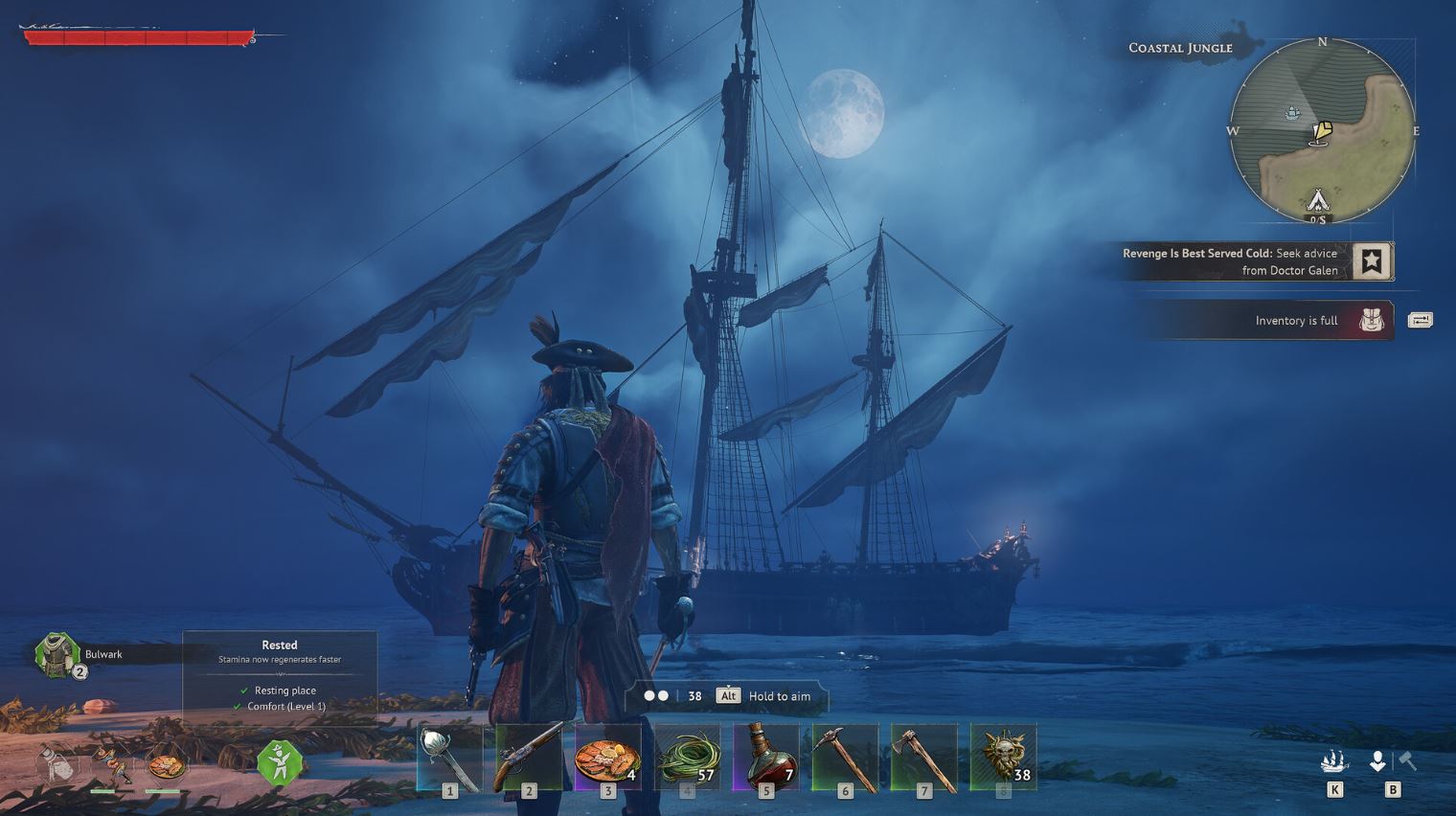
Windrose Crew and Pocketpair Publishing have announced that the pirate survival adventure game Windrose will enter Early Access starting April 14. Following its demo launch on Steam back in February, the game has quickly become one of the most anticipated games on the platform, amassing over 1,500,000 Wishlists. Ahead of Windrose’s upcoming Early Access release, AUTOMATON sat down with the developer to find out more about how the game was created.
Windrose is an open-world survival game set in the Age of Piracy. The player, once the captain of a pirate crew, loses everything – their ship, crew and fortune, in an attack by the powerful pirate Blackbeard. Washed ashore amidst the wreckage of your ship, you must survive and rebuild your pirate life from zero.
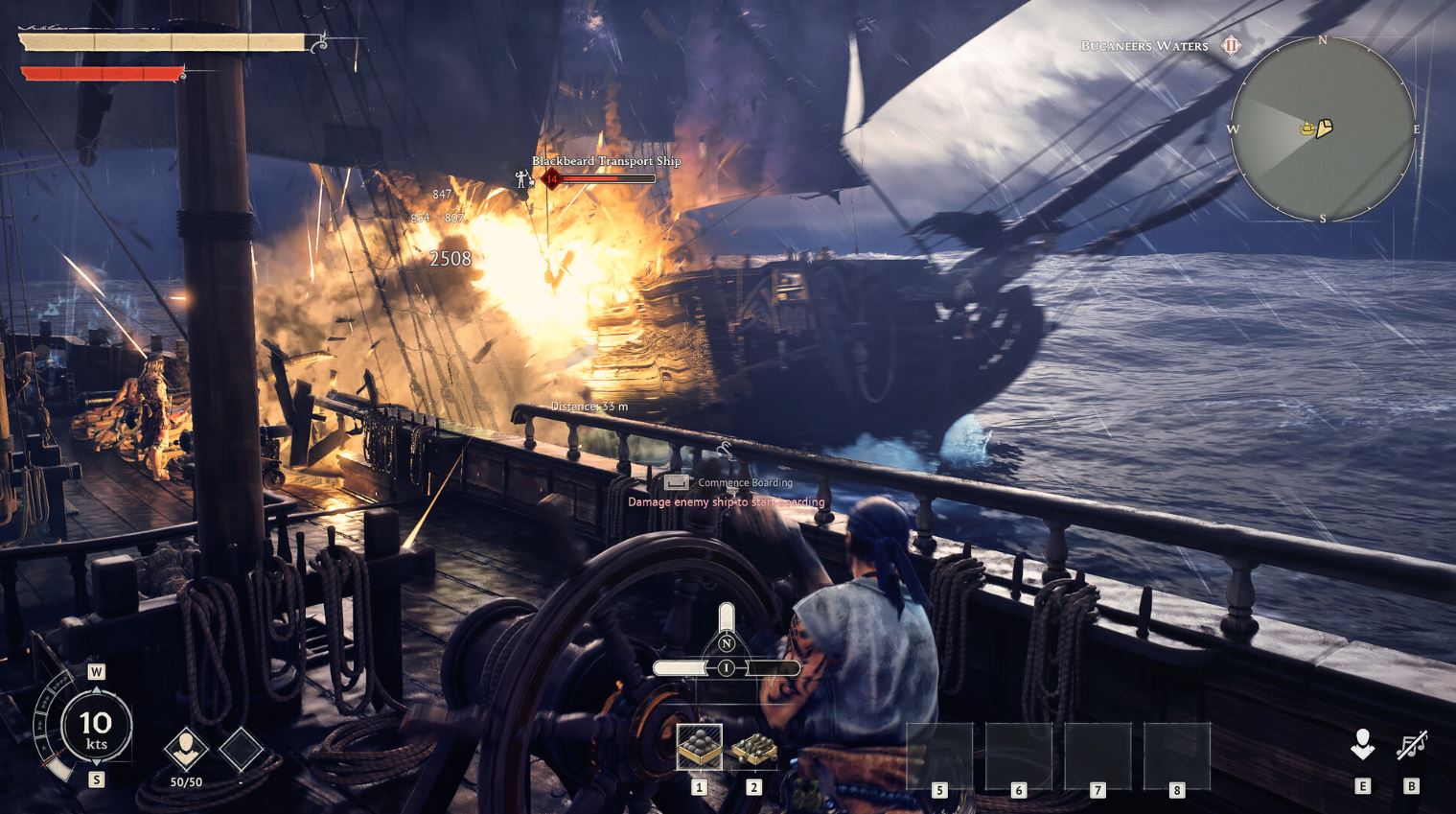
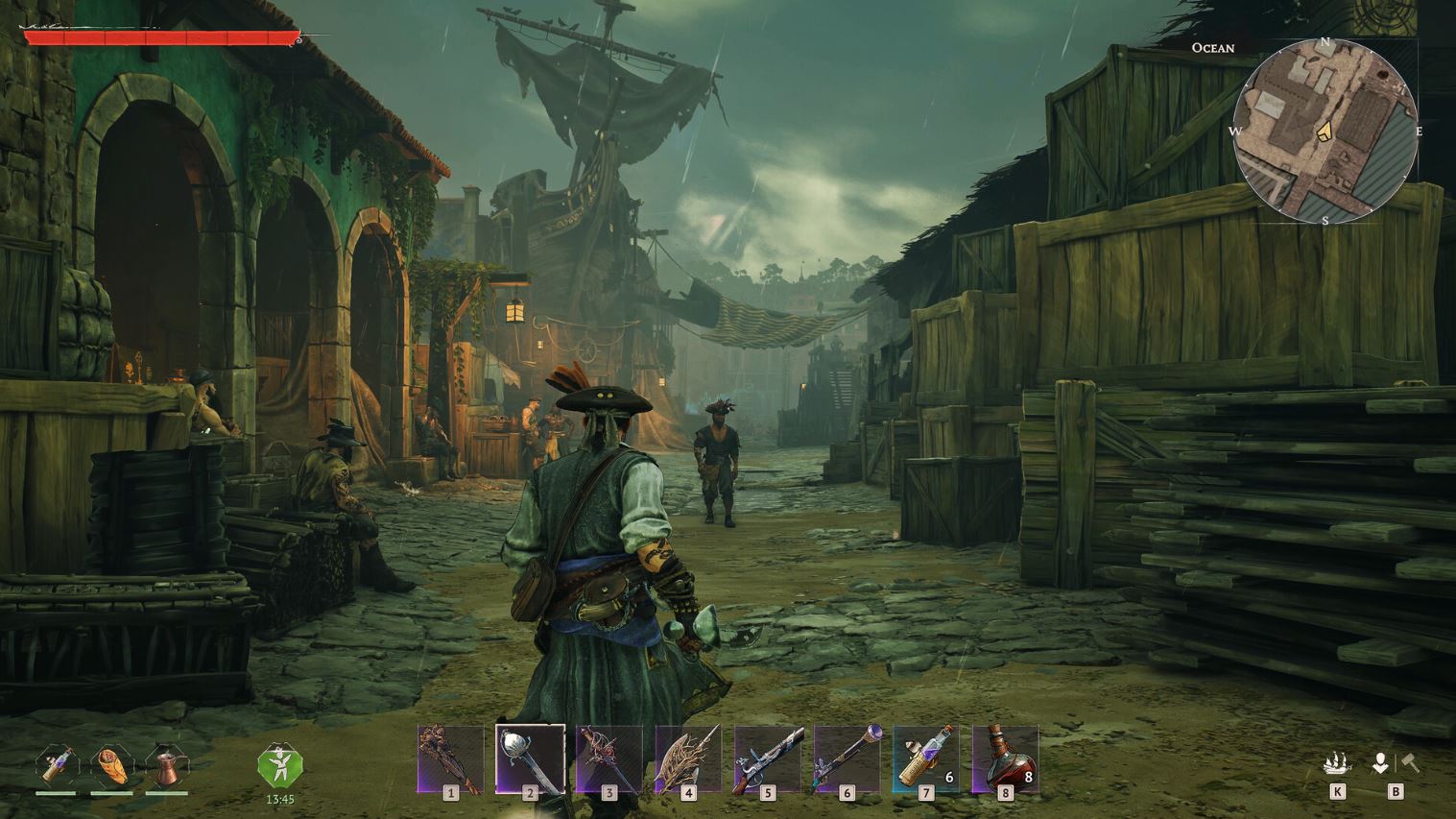
On land, gameplay revolves around building, crafting and survival. Once you’ve secured a ship again, you can assemble a crew and take on battles. The game offers ample variety and customization when it comes to ships – from agile ketches to versatile brigs and imposing frigates, accommodating different playstyles. You can also gather resources and build bases, and by recruiting NPCs to develop your settlement, you can further boost productivity. Windrose supports both singleplayer and co-op multiplayer.
Without further ado, we bring you our interview with Phil, aka Yar_master, producer at development studio Windrose Crew, who told us about how this project came to be and the team of creators behind it.
—Could you please introduce yourself and your team?
Phil:
Hey, I’m Phil, aka Yar_master from Windrose Crew. Thanks for your interest in our game. We appreciate it a lot!
—Even at the demo stage, Windrose feels very polished and high in quality. Could you tell us about the size of the development team and the backgrounds of your staff members?
Phil:
Thanks, we did our best with the demo! Our team is currently around 60 people, plus we occasionally outsource some tasks. Most of our team members are pretty senior, with several jobs in game development under their belt. However, Windrose is our first game as a team.
—What made Windrose Crew decide to create a pirate game? Do you simply love pirates? If so, were there any particular works that inspired you?
Phil:
It’s a combination of what we wanted to create and what we thought the players would want to play. We indeed love the pirate theme, and believe this niche is still underserved today. At the same time, we love survival games. We took inspiration from many great games like Assassin’s Creed Black Flag, Valheim, Enshrouded and others to create our own PvE pirate game with survival at its core, but with a strong focus on adventure and exploration.
—Are there any pirate or seafaring adventure games that your team particularly likes? If there are any you have played extensively, we would also love to hear roughly how many hours you spent with them.
Phil:
With a team of 60, it’s not easy to give an answer on behalf of the whole team. But overall, the overwhelming majority of our team are passionate hardcore gamers with thousands of hours in their favorite games, be it survival games, souls or pirates. The universal consensus in the team, I believe, is that Assassin’s Creed Black Flag is the best pirate game of all time.
—What would you say is the standout feature that makes Windrose unique among existing survival games on Steam themed around pirates, shipbuilding and the like?
Phil:
Well, more pirate games are certainly a win for everyone! Windrose, though, has a unique combination of adventure with questing and exploration, a comprehensive building/crafting system, souls-lite style combat and an engaging naval part of the game with seamless ship-land transition. It’s a challenging goal, but we hope to create the ultimate swashbuckling adventure for the people who hear the call of the sea and want to hoist the black flag!
—In a previous interview, you described the combat in Windrose as drawing some influence from the Souls series, including parrying mechanics, while still being accessible, a so-called “souls-lite.” What made you decide to adopt that style of combat for this game, even in a milder form?
Phil:
We believe this style of combat is very engaging and fits well with the theme of the game, with certain adaptations. For example, we don’t use dodge roll and have dash + parry instead, because we don’t believe a pirate would dodge roll! While doing our research in the early stages, we noticed that a lot of survival games don’t put that much emphasis on combat systems, so we wanted Windrose to stand out in it. It’s a very challenging goal though, and surely there is still much work to do!
—Your demo attracted more than 20,000 concurrent players on Steam. How did that feel for the team?
Phil:
Slightly surreal and very humbling. Of course, going into Steam Next Fest with approximately 800,000 Wishlists, we were expecting some degree of traction for the demo, but we certainly did not expect it to explode like that. Of course, it’s a great “problem” to have, but frankly speaking, it’s also a huge responsibility. We will keep working hard to live up to expectations!
—Windrose had already been drawing quite a bit of attention before the demo, but the response afterward seemed to explode all at once. What do you think were the main reasons behind the success?
Phil:
The main reason is the ability for anyone interested to try the game. Also, we put in a lot of effort to increase the scope of the demo in terms of content and to make co-op work as well. But it was certainly worth it. It seems players had a lot of fun, and with friends, too. We still see some people clocking dozens and even hundreds of hours in the demo, which is honestly amazing. We are very honored and thankful to all the players, content creators and media who took their time to explore the demo.
—More than 800,000 people have played the demo, and you’ve surpassed 1.5 million Wishlists, which are truly remarkable numbers. Did you anticipate this level of success from the beginning? I imagine you also received a huge amount of feedback, was it ever overwhelming?
Phil:
We were not anticipating such an increase in Wishlists. Even our most optimistic guesses were lower. As for the feedback, it is a huge amount of data to work with, but it’s a great problem to have! We’ve already made a scope of improvements and QoL changes to the EA build based on the demo feedback. It was very helpful to us, and we hope players will see all these changes and fine-tuning based on the opinions they shared with us.
—You even held a building contest that attracted nearly 200 entries, and although Windrose hasn’t released yet, it already feels like there’s a very passionate fan community forming around it. What are your impressions of the player community so far?
Phil:
It’s amazing! We feel like the game is attracting all kinds of passionate people. Some are looking for a pirate game to plunder some booty, others are pouring hundreds of hours into creative base building, and in Windrose, it all comes together in its own way. Our Discord server has recently passed the 50,000-member mark, while we had only 16,000 before Next Fest. We love the community that has formed around Windrose and will do our best to ship a good, entertaining game for them!
—Your project originally began development as the PvP-focused MMO Crosswind, before undergoing a major change in direction and being renamed to Windrose, which is quite an unusual development story. Why did you decide to shift into the survival genre despite it being such a competitive scene?
Phil:
We have always been in the survival genre, the main change was basically from MMO (with PvP) to a more traditional PvE adventure, including a change of business model from a live-service game to a traditional buy-to-play title. Nonetheless, it was a big change, and we essentially had to build a new game, but we believe it was the right call. Our initial ambition required much more resources, and in general, sustaining a free-to-play service game is a tremendously huge process we could not have handled properly. More importantly, it seems like the majority of players who got attracted to the game initially preferred to have it this way too – a buy-to-play PvE adventure. We are very happy that the players’ requests and our own vision overlapped here.
—What was the most challenging aspect of changing direction from an MMO? Conversely, were there any elements or remnants from the project’s MMO era that you were able to reuse?
Phil:
It was challenging as a whole – we had to scrap most of the old stuff and start from scratch in all areas of the game, from under-the-hood tech stuff to the player facing content and mechanics. That said, we don’t have any sentimental feelings towards the previous concept of the game; it had to go. And now, we’re building something new, and hopefully, something that players will like more. That was the whole point of the change.
—Were there things you were only able to achieve because of the shift from a free-to-play to a full-priced business model?
Phil:
Well, sustaining a free-to-play live service would require a lot of resources (to produce the monetized content). These resources are now used to improve the core game without the need to worry about constant flow of monetization content. It’s not like one model is bad and the other is good – we simply believe what we have now fits our team AND our players much better.
—If you don’t mind us asking, did you sign a publishing deal with Pocketpair Publishing (for the Japanese market) before or after the release of the demo? Also, what was the deciding factor in choosing them?
Phil:
It was happening somewhere in parallel to the whole demo thing. The deciding factors were Pocketpair’s expertise in the genre, especially in the region we want to service much better – Japan – and, what’s very important to us, the somewhat similar spirit of the company. Pocketpair are also a passionate team who poured their sweat and souls into their prime game, Palworld. And they keep putting in a lot of effort to evolve it and to make their players happy. We respect that, and we feel we share a lot of common values.
—How popular has the demo been in Japan? If you are comfortable sharing, we would be very grateful if you could give us even a rough idea of the number of Japanese players.
Phil:
It’s too early to share this data, but I can safely say that before Pocketpair joined in, we did not have much traction in Japan. Now, even after the first few weeks, we’re already seeing some increases in the demo player count in Japan, and Wishlist numbers have also started to reflect it. We are very happy to see this dynamic and hope that it will keep growing, and we look forward to welcoming more Japanese players in Windrose!
—Finally, do you have a message for your fans and players in Japan?
Phil:
Sure. Thank you for your support and passion for Windrose! We hope our partnership with Pocketpair will allow us to ship a better game for you, and we will do our best to live up to your expectations! See you on the high seas!
Windrose is set to release in Early Access on April 14 for PC (Steam/Epic Games Store).