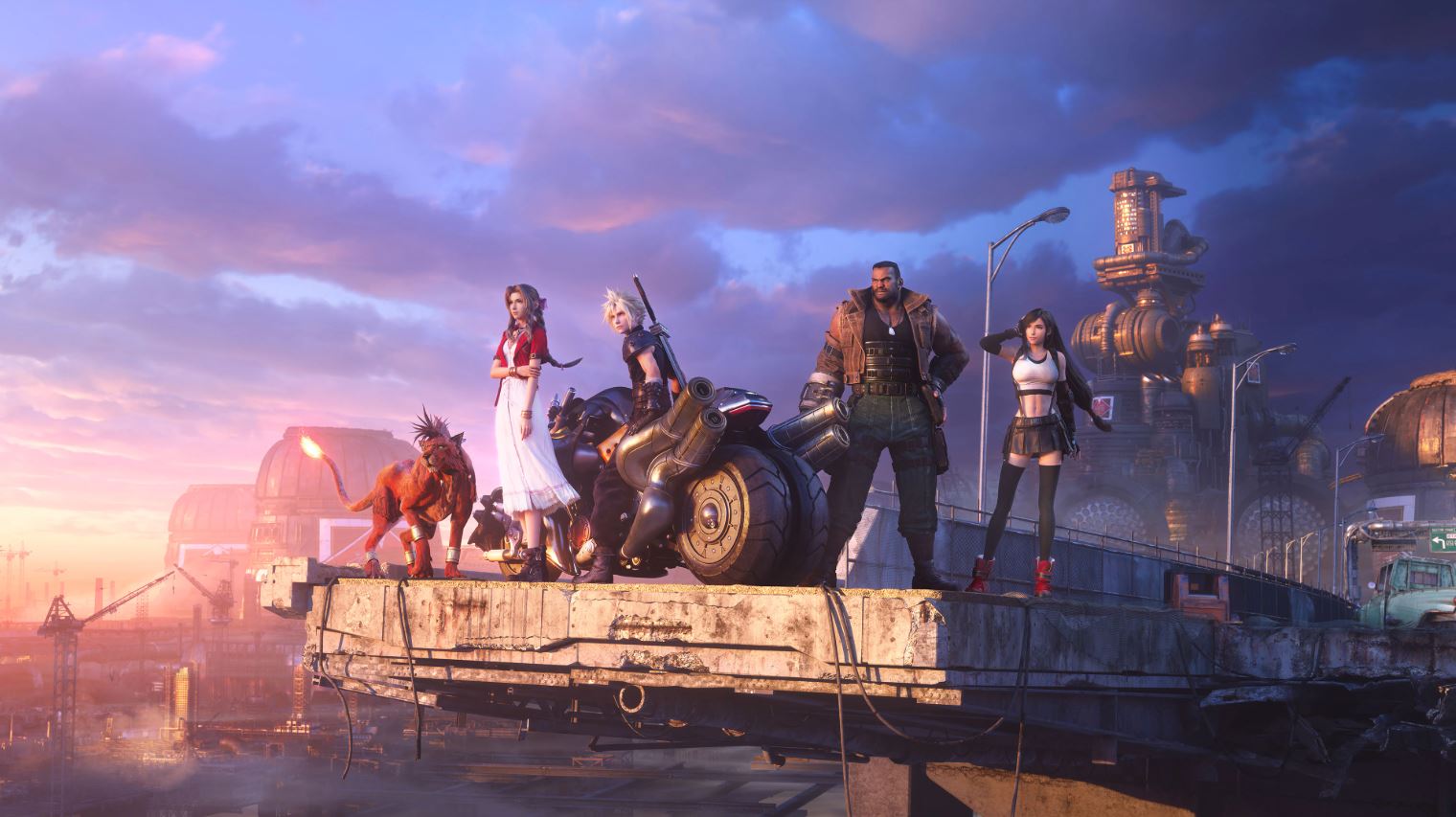
Final Fantasy VII Remake Intergrade, an expanded version of the original remake, came to Nintendo Switch 2, Xbox Series X|S and Xbox on PC on January 22. Following the release, AUTOMATON caught up with series director Naoki Hamaguchi to ask him about how the new Switch 2 and Xbox versions of Intergrade have been performing so far, as well as the much-anticipated third installment of the trilogy.
—Congratulations on the release of the Nintendo Switch 2 and Xbox Series X|S versions of FFVII Remake Intergrade. How has the launch been so far?
Naoki Hamaguchi (hereafter Hamaguchi):
To be frank, the response has been extremely positive. I feel that both the Nintendo Switch 2 and Xbox Series X|S versions have had very strong launches. The game is ranking highly on digital storefronts, and physical copies are selling out at major retailers too, so the numbers clearly show strong performance.
Nintendo fans in particular tend to prefer physical editions, so it was encouraging to see that digital sales remained strong as well. FFVII is a title with a strong presence not only in Japan but globally, and as a result, we’ve been able to achieve sales that are satisfying on a worldwide level.
Both Microsoft and Nintendo have been very positive about bringing the FFVII IP to their platforms. For example, Microsoft arranged opportunities for us to present the future direction of the series directly to Phil Spencer and Sarah Bond, and even invited us onto the Xbox podcast. Nintendo collaborated with us to plan an original launch event at the Nintendo Store in New York. We truly felt a warm welcome from the platform holders, and we’re very grateful for it.
As a result, sales figures came through strongly, and the fans are happy, so it feels like this multiplatform approach itself has led to positive results.
—How is development of the third installment of the trilogy coming along? Can we expect further technological evolution with this entry?
Hamaguchi:
Yes, please look forward to that. Speaking of which, after I mentioned in another interview that we would continue using Unreal Engine 4 for the third game (related article), it became quite the topic online, and it made me realize anew how much interest people have in that side of things. But I think most people aren’t necessarily familiar with the actual differences between Unreal Engine 4 and Unreal Engine 5.

—I think it’s mostly the common notion that a higher version number means it’s more advanced.
Hamaguchi:
I think that’s mostly how the general public sees it, and I do believe it’s true. Around the time we began developing Final Fantasy VII Rebirth, Unreal Engine 5 was just entering its pre-launch phase.
What makes Unreal Engine 5 groundbreaking compared to Unreal Engine 4 are two features: Lumen, its lighting system (related article), and Nanite, which allows you to portray dense graphical detail (related article).
These represent the current trend in graphics pipelines, and of course, such pipelines are important to us as well. However, if we had tied our development schedule and milestones too closely to Unreal Engine 5’s roadmap, we would have risked our own progress being stalled if the engine encountered any kind of delay.
For that reason, we decided early on in development of FFVII Rebirth to stick with Unreal Engine 4. We’re using a graphics pipeline built in-house, which also makes optimization and porting to various hardware more straightforward.


—It’s often said that upgrading the game engine carries significant risk for live-service games or ongoing series, especially when it comes to major version changes.
Hamaguchi:
That’s right. So even for the final installment of the trilogy, rather than rebuilding our pipeline from scratch in Unreal Engine 5, it’s far more efficient for us to use Unreal Engine 4, which we already have a well-established pipeline for. This also allows us to further refine things based on the experience we accumulated with FFVII Rebirth.
With all of this in mind, we judged that continuing with Unreal Engine 4 would definitely lead to a better third installment for our customers. I never imagined it would become such a hot topic (laughs), though a lot of people took it quite positively too.
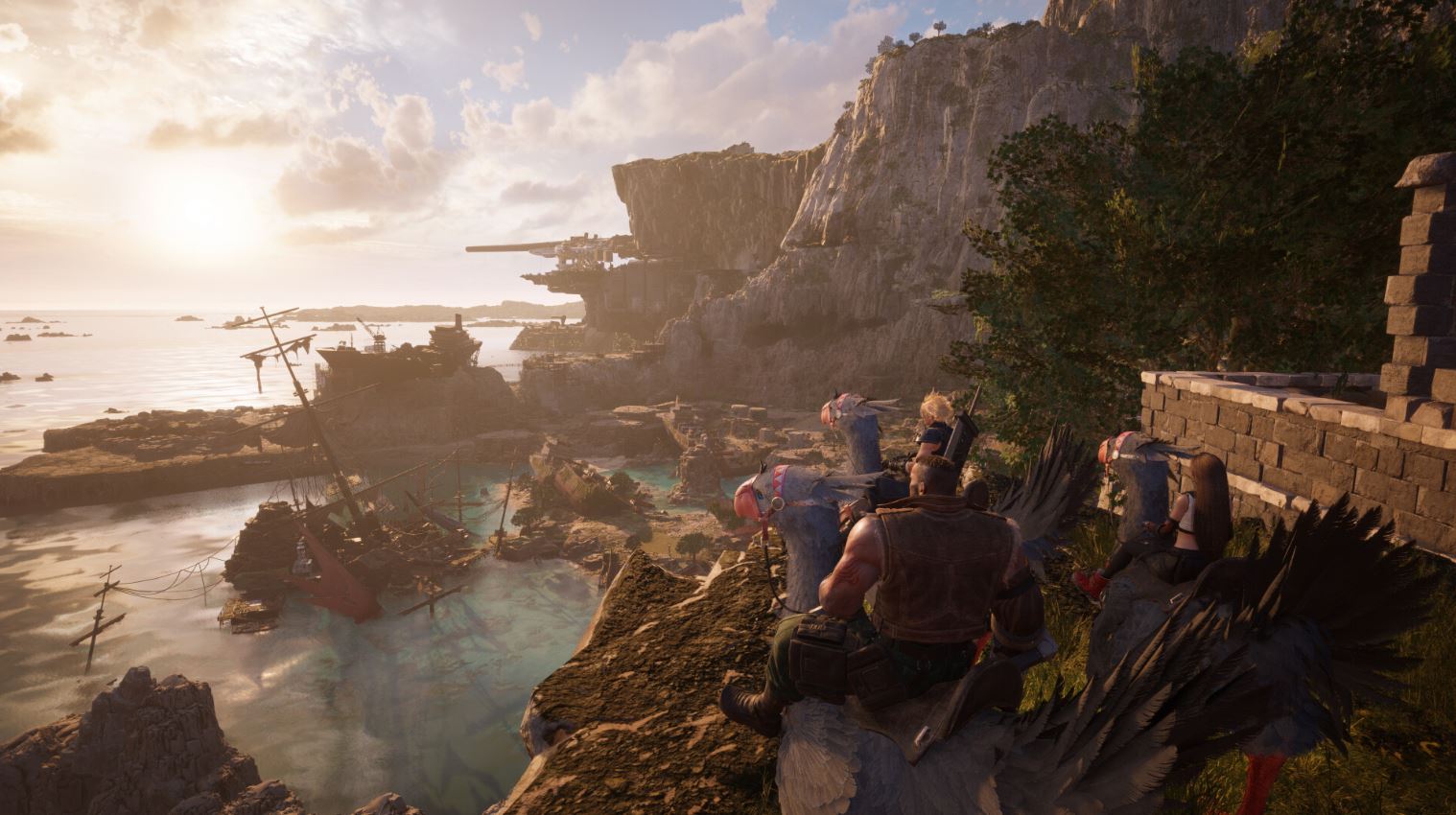
We’re using the know-how and development environment we cultivated with FFVII: Rebirth as a base and further refining it to create the third game. In that sense, the quality will certainly not drop, and we’re working hard to deliver something even better. Production of the third installment itself is progressing very smoothly.
—For such a large-scale project, it’s almost unusual for development to go so smoothly throughout. Why are you able to stay on top of things so well?
Hamaguchi:
The team behind the FFVII Remake series has been working together for over ten years, since day one of the very first project. Moreover, the core members have remained throughout, and I truly respect them for that. Building something together for more than a decade is not easy. You’ll get energy and motivation in bursts, but sustaining it over the long term is challenging.
FFVII is a monumental IP, and it’s where our roots as creators lie, which is why we feel a strong sense of duty towards this project. On top of that, having the same staff continuously on the team ensures a clear chain of command and good communication, which directly contributes to development speed and quality. I believe these are the biggest reasons we’ve had such smooth progress.
—Having everyone aligned toward the same goal feels crucial for a project.
Hamaguchi:
It truly is. If we had finished FFVII Remake and then had to rebuild the team from scratch for FFVII Rebirth, I would have probably said, “It’s impossible. We can’t make this” (laughs).
—Finally, could you share a message for fans awaiting the finale?
Hamaguchi:
After we announced the FFVII Remake series for Nintendo Switch 2 and Xbox Series X|S, I was delighted to see fans on those platforms respond so positively. At the same time, we also received messages from PS5 and PC users asking us to keep them properly in the loop as well.
I’ve often developed titles for specific platforms, so this experience has reminded me that greater care and consideration is needed when addressing a broader playerbase. I want everyone who plays the FFVII Remake series to have a satisfying experience on their chosen platform.
If there’s anything we’ve overlooked, please don’t hesitate to speak up – we’re now in a day and age where your voices can reach us. We genuinely want to address any concerns, so we truly appreciate your feedback.
I believe the many opinions we receive come from people’s love of FFVII. And as the culmination of the fond memories everyone holds of FFVII, I’m looking forward to releasing the third installment to the world and enjoying it alongside all of you.
—It’s rare to hear a developer say, “If something concerns you, speak up on social media.” You seem to have a very resilient stance.
Hamaguchi:
…Well, I would appreciate it if everyone were gentle, of course (laughs).
—(laughs) Thank you very much.
Final Fantasy VII Remake Intergrade, which includes a major additional episode centered on Yuffie Kisaragi, is available on PC (Steam, Epic Games Store, Microsoft Store), PS5, Nintendo Switch 2 and Xbox Series X|S.
The trilogy’s second installment, Final Fantasy VII Rebirth, is available on PC (Steam, Epic Games Store) and PS5, with Nintendo Switch 2 and Xbox Series X|S versions scheduled for release on June 3.